







 Chat with AI

Deck 3: The Organic Molecules of Life
Full screen (f)

Question

Question
Question
Question
Question
Question
Question
Question
Question
Question
Question
Question
Question
Question
Question
Question
Question
Question
Question
Question
Refer to the figure. Which of the following is true regarding the labeled plasma membrane? 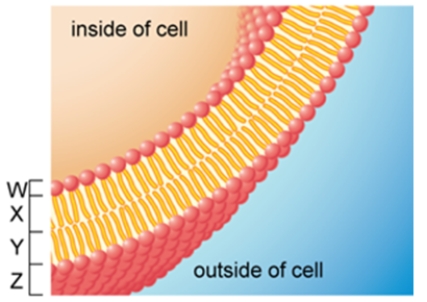
A) Parts X and Z are hydrophobic.
B) Parts W and Z are hydrophilic.
C) Parts X and Y are hydrophilic.
D) Parts W and Y are hydrophobic.
E) Parts W and X are hydrophilic.
A) Parts X and Z are hydrophobic.
B) Parts W and Z are hydrophilic.
C) Parts X and Y are hydrophilic.
D) Parts W and Y are hydrophobic.
E) Parts W and X are hydrophilic.
Question
Question
Question
Question
Question
Question
Question
Question
The figure below represents the formation of a ________ molecule by the process of ________. 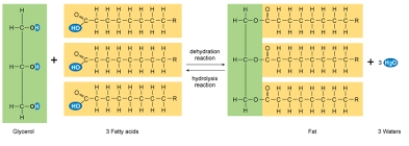
A) glycogen; hydrolysis
B) DNA; dehydration synthesis
C) protein; hydrolysis
D) fat; dehydration synthesis
E) polysaccharide; hydrolysis
A) glycogen; hydrolysis
B) DNA; dehydration synthesis
C) protein; hydrolysis
D) fat; dehydration synthesis
E) polysaccharide; hydrolysis
Question
Question
Question
Question
Question
The following figure represents which process? 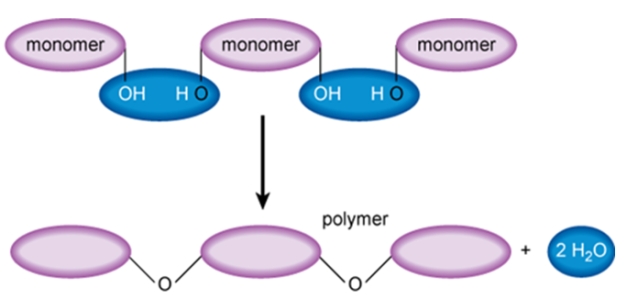
A) dehydration synthesis
B) denaturation
C) polyunsaturation
D) hydrolysis
E) combustion
A) dehydration synthesis
B) denaturation
C) polyunsaturation
D) hydrolysis
E) combustion
Question
Question
Question
Question
Question
The polymer shown below is comprised of what kind of subunits? 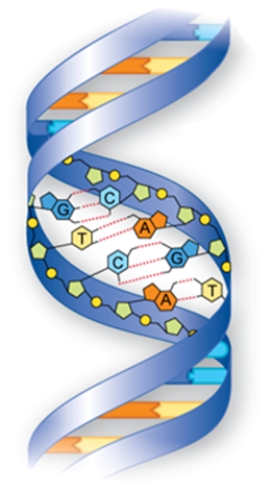
A) nucleotides
B) triglyercides
C) monosaccharides
D) bases
E) amino acids
A) nucleotides
B) triglyercides
C) monosaccharides
D) bases
E) amino acids
Question
Question
Question
Question
Question
Question
Question
Question
Question
Question
Question
Question
Question
Question
Question
Question
Question
Question
Question
Question
Question
Question
Question
Question
Question
Question
Question

Unlock Deck
Sign up to unlock the cards in this deck!
Unlock Deck
Unlock Deck
1/65

Play

Full screen (f)
Deck 3: The Organic Molecules of Life
1
Wood and paper are composed of
A) chitin.
B) cellulose.
C) glycogen.
D) cholesterol.
E) lipid.
A) chitin.
B) cellulose.
C) glycogen.
D) cholesterol.
E) lipid.
B
2
Which of the following correctly lists the parts of a nucleotide of RNA?
A) nitrogen-containing base, deoxyribose, phosphate
B) sulfur-containing base, ribose, phosphate
C) nitrogen-containing base, ribose, phosphate
D) nitrogen-containing base, ribose, sulfur
E) amino acid, glycerol, nitrogen-containing base
A) nitrogen-containing base, deoxyribose, phosphate
B) sulfur-containing base, ribose, phosphate
C) nitrogen-containing base, ribose, phosphate
D) nitrogen-containing base, ribose, sulfur
E) amino acid, glycerol, nitrogen-containing base
C
3
Select the incorrect association.
A) glucose - monosaccharide
B) cellulose - building block for cell walls in plants
C) sucrose - table sugar
D) fructose - a polysaccharide
E) starch - a long chain of glucose molecules
A) glucose - monosaccharide
B) cellulose - building block for cell walls in plants
C) sucrose - table sugar
D) fructose - a polysaccharide
E) starch - a long chain of glucose molecules
D
4
Select the correct association.
A) carbohydrates-serve to insulate, protect, and store energy
B) lipids-contain the codes used to construct proteins
C) proteins-have three forms: monosaccharides, disaccharides, and polysaccharides
D) nucleic acids-provide the body with energy
E) carbohydrates-include glucose, sucrose, and starch
A) carbohydrates-serve to insulate, protect, and store energy
B) lipids-contain the codes used to construct proteins
C) proteins-have three forms: monosaccharides, disaccharides, and polysaccharides
D) nucleic acids-provide the body with energy
E) carbohydrates-include glucose, sucrose, and starch
Unlock Deck
Unlock for access to all 65 flashcards in this deck.
Unlock Deck
k this deck
5
A saturated fat has
A) no double bonds.
B) more than one double bond.
C) only one double bond.
D) many omega-3 fatty acids.
E) long protein chains.
A) no double bonds.
B) more than one double bond.
C) only one double bond.
D) many omega-3 fatty acids.
E) long protein chains.
Unlock Deck
Unlock for access to all 65 flashcards in this deck.
Unlock Deck
k this deck
6
Which of the following is a hydrolysis reaction?
A) amino acids forming proteins
B) glycogen forming glucose molecules
C) nucleotides forming DNA
D) glucose units forming starch
E) fatty acids and glycerol forming a fat
A) amino acids forming proteins
B) glycogen forming glucose molecules
C) nucleotides forming DNA
D) glucose units forming starch
E) fatty acids and glycerol forming a fat
Unlock Deck
Unlock for access to all 65 flashcards in this deck.
Unlock Deck
k this deck
7
Which word should be categorized separately from the others?
A) fats
B) steroids
C) glycogen
D) phospholipids
E) lipids
A) fats
B) steroids
C) glycogen
D) phospholipids
E) lipids
Unlock Deck
Unlock for access to all 65 flashcards in this deck.
Unlock Deck
k this deck
8
Which of the following is in correct order from smallest to largest?
A) peptide - amino acid - polypeptide
B) amino acid - polypeptide - peptide
C) amino acid - peptide - polypeptide
D) protein - glycerol - amino acid
E) disaccharide - polysaccharide - monosaccharide
A) peptide - amino acid - polypeptide
B) amino acid - polypeptide - peptide
C) amino acid - peptide - polypeptide
D) protein - glycerol - amino acid
E) disaccharide - polysaccharide - monosaccharide
Unlock Deck
Unlock for access to all 65 flashcards in this deck.
Unlock Deck
k this deck
9
Which of the following terms should be categorized separately from the others?
A) muscle
B) antibodies
C) sucrose
D) enzymes
E) hair
A) muscle
B) antibodies
C) sucrose
D) enzymes
E) hair
Unlock Deck
Unlock for access to all 65 flashcards in this deck.
Unlock Deck
k this deck
10
A triglyceride is formed when three fatty acids join a glycerol by a
A) hydrolysis reaction.
B) dehydration synthesis reaction.
C) polymeric reaction.
D) digestive reaction.
E) evaporation reaction.
A) hydrolysis reaction.
B) dehydration synthesis reaction.
C) polymeric reaction.
D) digestive reaction.
E) evaporation reaction.
Unlock Deck
Unlock for access to all 65 flashcards in this deck.
Unlock Deck
k this deck
11
A polypeptide forms a beta pleated sheet or an alpha helix as its primary structure.
Unlock Deck
Unlock for access to all 65 flashcards in this deck.
Unlock Deck
k this deck
12
Which of the following is a true statement about proteins?
A) The three dimensional shape of a protein is a result of its secondary structure.
B) Denaturation restores proteins' shape and function.
C) Proteins are used to produce DNA.
D) Proteins are monomers and they are built from amino acid polymers.
E) Proteins are used to produce many types of hormones.
A) The three dimensional shape of a protein is a result of its secondary structure.
B) Denaturation restores proteins' shape and function.
C) Proteins are used to produce DNA.
D) Proteins are monomers and they are built from amino acid polymers.
E) Proteins are used to produce many types of hormones.
Unlock Deck
Unlock for access to all 65 flashcards in this deck.
Unlock Deck
k this deck
13
Hydrolysis of sucrose, a disaccharide, results in
A) two monosaccharides.
B) a polypeptide.
C) three monosaccharides.
D) two glycerol units.
E) the formation of a polysaccharide.
A) two monosaccharides.
B) a polypeptide.
C) three monosaccharides.
D) two glycerol units.
E) the formation of a polysaccharide.
Unlock Deck
Unlock for access to all 65 flashcards in this deck.
Unlock Deck
k this deck
14
Deoxyribose is a sugar found in
A) all proteins.
B) lipids.
C) DNA.
D) glycogen.
E) RNA.
A) all proteins.
B) lipids.
C) DNA.
D) glycogen.
E) RNA.
Unlock Deck
Unlock for access to all 65 flashcards in this deck.
Unlock Deck
k this deck
15
When starch is digested, water molecules are used to break the bonds holding the monosaccharide subunits together.
Unlock Deck
Unlock for access to all 65 flashcards in this deck.
Unlock Deck
k this deck
16
Testosterone is a lipid-based hormone; insulin is a ________-based hormone.
A) saccharide
B) protein
C) steroid
D) carbohydrate
E) nucleic acid
A) saccharide
B) protein
C) steroid
D) carbohydrate
E) nucleic acid
Unlock Deck
Unlock for access to all 65 flashcards in this deck.
Unlock Deck
k this deck
17
In sickle-cell disease, malformation of red blood cells is caused by only one error in the genetic code for hemoglobin.
Unlock Deck
Unlock for access to all 65 flashcards in this deck.
Unlock Deck
k this deck
18
Scientists created an enzyme that will break down any type of carbohydrate. If given to humans, which of the following could be used as a new food source?
A) glucose
B) glycerol
C) cellulose
D) cholesterol
E) protein
A) glucose
B) glycerol
C) cellulose
D) cholesterol
E) protein
Unlock Deck
Unlock for access to all 65 flashcards in this deck.
Unlock Deck
k this deck
19
A gene in DNA is the code for assembling a sequence of
A) amino acids.
B) glucose molecules.
C) fatty acids used in a fat.
D) sugars.
E) functional groups.
A) amino acids.
B) glucose molecules.
C) fatty acids used in a fat.
D) sugars.
E) functional groups.
Unlock Deck
Unlock for access to all 65 flashcards in this deck.
Unlock Deck
k this deck
20
Refer to the figure. Which of the following is true regarding the labeled plasma membrane?
A) Parts X and Z are hydrophobic.
B) Parts W and Z are hydrophilic.
C) Parts X and Y are hydrophilic.
D) Parts W and Y are hydrophobic.
E) Parts W and X are hydrophilic.
A) Parts X and Z are hydrophobic.
B) Parts W and Z are hydrophilic.
C) Parts X and Y are hydrophilic.
D) Parts W and Y are hydrophobic.
E) Parts W and X are hydrophilic.
Unlock Deck
Unlock for access to all 65 flashcards in this deck.
Unlock Deck
k this deck
21
Which of the following is an inorganic molecule?
A) CaCO 3
B) C 6H 12O 6
C) C 256H 381N 65O 79S 6
D) C 18H 34O 2
E) CH 4
A) CaCO 3
B) C 6H 12O 6
C) C 256H 381N 65O 79S 6
D) C 18H 34O 2
E) CH 4
Unlock Deck
Unlock for access to all 65 flashcards in this deck.
Unlock Deck
k this deck
22
When a person orders a cheeseburger with lettuce, tomato, and mayonnaise, which of the following would be a true statement about the nutritional intake?
A) Amino acids can be obtained from the hamburger patty.
B) Glycogen will be obtained from the cheese.
C) Fat will be consumed from the lettuce and tomato.
D) Cellulose will be consumed from the mayonnaise.
E) Carbohydrates and cellulose will be obtained from the hamburger patty.
A) Amino acids can be obtained from the hamburger patty.
B) Glycogen will be obtained from the cheese.
C) Fat will be consumed from the lettuce and tomato.
D) Cellulose will be consumed from the mayonnaise.
E) Carbohydrates and cellulose will be obtained from the hamburger patty.
Unlock Deck
Unlock for access to all 65 flashcards in this deck.
Unlock Deck
k this deck
23
When you eat a salad, which one of the following components will pass through the body with the least amount of digestion?
A) dressing
B) croutons
C) lettuce
D) egg
E) bacon bits
A) dressing
B) croutons
C) lettuce
D) egg
E) bacon bits
Unlock Deck
Unlock for access to all 65 flashcards in this deck.
Unlock Deck
k this deck
24
A starch molecule is to glucose as
A) a protein is to a polypeptide.
B) DNA is to an amino acid.
C) a lipid is to nucleic acid.
D) a protein is to an amino acid.
E) fatty acid is to a fat.
A) a protein is to a polypeptide.
B) DNA is to an amino acid.
C) a lipid is to nucleic acid.
D) a protein is to an amino acid.
E) fatty acid is to a fat.
Unlock Deck
Unlock for access to all 65 flashcards in this deck.
Unlock Deck
k this deck
25
The four main categories of organic macromolecules are
A) monosaccharides, disaccharides, trisaccharides, and polysaccharides.
B) proteins, DNA, waxes, and sugars.
C) carbohydrates, lipids, proteins, and nucleic acids.
D) RNA, DNA, steroids, and fats.
E) lipids, starches, DNA, and protein.
A) monosaccharides, disaccharides, trisaccharides, and polysaccharides.
B) proteins, DNA, waxes, and sugars.
C) carbohydrates, lipids, proteins, and nucleic acids.
D) RNA, DNA, steroids, and fats.
E) lipids, starches, DNA, and protein.
Unlock Deck
Unlock for access to all 65 flashcards in this deck.
Unlock Deck
k this deck
26
Which of the following elements are found in glucose?
A) C, H
B) C, H, O
C) C, H, O, P
D) C, H, O, N
E) C, H, Cl, O
A) C, H
B) C, H, O
C) C, H, O, P
D) C, H, O, N
E) C, H, Cl, O
Unlock Deck
Unlock for access to all 65 flashcards in this deck.
Unlock Deck
k this deck
27
How are lipids different from other categories of biological molecules?
A) They are not seen in all living things.
B) They do not have carbon.
C) They are much more complex.
D) They will not combine with water.
E) They are not organic.
A) They are not seen in all living things.
B) They do not have carbon.
C) They are much more complex.
D) They will not combine with water.
E) They are not organic.
Unlock Deck
Unlock for access to all 65 flashcards in this deck.
Unlock Deck
k this deck
28
The figure below represents the formation of a ________ molecule by the process of ________.
A) glycogen; hydrolysis
B) DNA; dehydration synthesis
C) protein; hydrolysis
D) fat; dehydration synthesis
E) polysaccharide; hydrolysis
A) glycogen; hydrolysis
B) DNA; dehydration synthesis
C) protein; hydrolysis
D) fat; dehydration synthesis
E) polysaccharide; hydrolysis
Unlock Deck
Unlock for access to all 65 flashcards in this deck.
Unlock Deck
k this deck
29
Glycogen is a ________ made of many ________.
A) simple sugar; amino acids
B) peptide; amino acids
C) polymer; glucose molecules
D) protein; fatty acids
E) nucleic acid; nucleotides
A) simple sugar; amino acids
B) peptide; amino acids
C) polymer; glucose molecules
D) protein; fatty acids
E) nucleic acid; nucleotides
Unlock Deck
Unlock for access to all 65 flashcards in this deck.
Unlock Deck
k this deck
30
Plants store their sugar in the form of
A) protein.
B) glycogen.
C) cellulose.
D) starch.
E) glucose.
A) protein.
B) glycogen.
C) cellulose.
D) starch.
E) glucose.
Unlock Deck
Unlock for access to all 65 flashcards in this deck.
Unlock Deck
k this deck
31
Humans store glucose in the form of
A) lactose.
B) starch.
C) glycogen.
D) glucose.
E) cellulose.
A) lactose.
B) starch.
C) glycogen.
D) glucose.
E) cellulose.
Unlock Deck
Unlock for access to all 65 flashcards in this deck.
Unlock Deck
k this deck
32
Which of the following is an organic molecule?
A) CO 2
B) C 6H1 2O 6
C) NaCl
D) CaCl 2
E) H 2O
A) CO 2
B) C 6H1 2O 6
C) NaCl
D) CaCl 2
E) H 2O
Unlock Deck
Unlock for access to all 65 flashcards in this deck.
Unlock Deck
k this deck
33
The following figure represents which process?
A) dehydration synthesis
B) denaturation
C) polyunsaturation
D) hydrolysis
E) combustion
A) dehydration synthesis
B) denaturation
C) polyunsaturation
D) hydrolysis
E) combustion
Unlock Deck
Unlock for access to all 65 flashcards in this deck.
Unlock Deck
k this deck
34
What makes saturated triglycerides considerably less healthy than unsaturated ones?
A) They taste better than other fats.
B) They possess no double bonds between carbon atoms, which makes them more tightly packed together.
C) Individuals tend to consume more saturated fats than unsaturated fats.
D) Unsaturated fats are found in processed foods more frequently.
E) They are digested more quickly by the body.
A) They taste better than other fats.
B) They possess no double bonds between carbon atoms, which makes them more tightly packed together.
C) Individuals tend to consume more saturated fats than unsaturated fats.
D) Unsaturated fats are found in processed foods more frequently.
E) They are digested more quickly by the body.
Unlock Deck
Unlock for access to all 65 flashcards in this deck.
Unlock Deck
k this deck
35
If a material mixes readily with water, it is identified as
A) dehydrated.
B) hydrophobic.
C) saturated.
D) hydrophilic.
E) salty.
A) dehydrated.
B) hydrophobic.
C) saturated.
D) hydrophilic.
E) salty.
Unlock Deck
Unlock for access to all 65 flashcards in this deck.
Unlock Deck
k this deck
36
In a dehydration reaction, ________. In order for this to occur water is ________.
A) monomers are joined to become a polymer; removed
B) polymers are broken up to form monomers; added
C) monomers are broken up to form polymers; added
D) polymers are joined to form monomers; removed
E) polymers are broken up to form monomers; removed
A) monomers are joined to become a polymer; removed
B) polymers are broken up to form monomers; added
C) monomers are broken up to form polymers; added
D) polymers are joined to form monomers; removed
E) polymers are broken up to form monomers; removed
Unlock Deck
Unlock for access to all 65 flashcards in this deck.
Unlock Deck
k this deck
37
Which one of the following is a main function of proteins?
A) energy storage
B) enzymatic activity
C) genetic coding
D) energy source
E) insulation
A) energy storage
B) enzymatic activity
C) genetic coding
D) energy source
E) insulation
Unlock Deck
Unlock for access to all 65 flashcards in this deck.
Unlock Deck
k this deck
38
The polymer shown below is comprised of what kind of subunits?
A) nucleotides
B) triglyercides
C) monosaccharides
D) bases
E) amino acids
A) nucleotides
B) triglyercides
C) monosaccharides
D) bases
E) amino acids
Unlock Deck
Unlock for access to all 65 flashcards in this deck.
Unlock Deck
k this deck
39
Amino acids are needed to build ________,just as ________ are needed to create DNA.
A) proteins; nucleotides
B) fatty acids; amino acids
C) polysaccharides; monosaccharides
D) RNA; amino acids
E) triglycerides; nucleotides
A) proteins; nucleotides
B) fatty acids; amino acids
C) polysaccharides; monosaccharides
D) RNA; amino acids
E) triglycerides; nucleotides
Unlock Deck
Unlock for access to all 65 flashcards in this deck.
Unlock Deck
k this deck
40
The principle role for sugars in living things is to
A) form cell membranes.
B) serve as a form of long-term energy storage.
C) create our genetic code.
D) serve as a form of immediate cellularenergy.
E) produce hormones.
A) form cell membranes.
B) serve as a form of long-term energy storage.
C) create our genetic code.
D) serve as a form of immediate cellularenergy.
E) produce hormones.
Unlock Deck
Unlock for access to all 65 flashcards in this deck.
Unlock Deck
k this deck
41
Steroid are classified as
A) proteins.
B) lipids.
C) carbohydrates.
D) nucleic acids.
E) fats.
A) proteins.
B) lipids.
C) carbohydrates.
D) nucleic acids.
E) fats.
Unlock Deck
Unlock for access to all 65 flashcards in this deck.
Unlock Deck
k this deck
42
Which of the following is an inorganic molecule?
A) C 12H 9SO 3H
B) C 9H 13NO 3
C) C 10H 13N 5O 4
D) H 2NCH 2CN
E) COCl 2
A) C 12H 9SO 3H
B) C 9H 13NO 3
C) C 10H 13N 5O 4
D) H 2NCH 2CN
E) COCl 2
Unlock Deck
Unlock for access to all 65 flashcards in this deck.
Unlock Deck
k this deck
43
Which of the following is a feature that proteins and polysaccharides share?
A) They are made of repeated monomer units.
B) They are both made from fatty acids.
C) They both contain glucose.
D) They are both long chains of repeated nucleotide units.
E) They both contain phosphorus.
A) They are made of repeated monomer units.
B) They are both made from fatty acids.
C) They both contain glucose.
D) They are both long chains of repeated nucleotide units.
E) They both contain phosphorus.
Unlock Deck
Unlock for access to all 65 flashcards in this deck.
Unlock Deck
k this deck
44
A molecule is said to be organic if it contains
A) double bonds.
B) hydrogen bonds.
C) carbon and hydrogen atoms.
D) carbon and oxygen atoms.
E) two or more atoms.
A) double bonds.
B) hydrogen bonds.
C) carbon and hydrogen atoms.
D) carbon and oxygen atoms.
E) two or more atoms.
Unlock Deck
Unlock for access to all 65 flashcards in this deck.
Unlock Deck
k this deck
45
The basic building block or subunit of many biological molecules is called a(n)
A) quaternary structure.
B) polymer.
C) monomer.
D) isomer.
E) chain.
A) quaternary structure.
B) polymer.
C) monomer.
D) isomer.
E) chain.
Unlock Deck
Unlock for access to all 65 flashcards in this deck.
Unlock Deck
k this deck
46
Which of the following is an organic molecule?
A) NaOH
B) HCl
C) CO 2
D) C 43H 64O 4
E) H 2O
A) NaOH
B) HCl
C) CO 2
D) C 43H 64O 4
E) H 2O
Unlock Deck
Unlock for access to all 65 flashcards in this deck.
Unlock Deck
k this deck
47
What functional group makes a carbohydrate hydrophilic?
A) -OH
B) -NH 2
C) -SH
D) -R
E) -C-H
A) -OH
B) -NH 2
C) -SH
D) -R
E) -C-H
Unlock Deck
Unlock for access to all 65 flashcards in this deck.
Unlock Deck
k this deck
48
Which of the following is an organic molecule?
A) CO 2
B) H 2CO 3
C) Na 2CO 3
D) MnCO 3
E) CaCO 3
A) CO 2
B) H 2CO 3
C) Na 2CO 3
D) MnCO 3
E) CaCO 3
Unlock Deck
Unlock for access to all 65 flashcards in this deck.
Unlock Deck
k this deck
49
What is the function ofa peptide bond?
A) joins a sodium atom to a chloride atom
B) helps hold one water molecule to an adjacent one
C) links oxygen to hydrogen atoms
D) joins an amino acid to an adjacent amino acid
E) joins nucleotide bases to one another
A) joins a sodium atom to a chloride atom
B) helps hold one water molecule to an adjacent one
C) links oxygen to hydrogen atoms
D) joins an amino acid to an adjacent amino acid
E) joins nucleotide bases to one another
Unlock Deck
Unlock for access to all 65 flashcards in this deck.
Unlock Deck
k this deck
50
Which of the following is least likely to be affected when a protein is denatured?
A) primary structure
B) secondary structure
C) tertiary structure
D) quaternary structure
E) the folded shape of the protein
A) primary structure
B) secondary structure
C) tertiary structure
D) quaternary structure
E) the folded shape of the protein
Unlock Deck
Unlock for access to all 65 flashcards in this deck.
Unlock Deck
k this deck
51
The term "functional" is used in the phrase "functional group" because it describes a group of atoms that
A) are organic.
B) make the entire molecule hydrophobic.
C) prevent interaction with other molecules.
D) help determine the chemical properties of an organic molecule.
E) make the entire molecule hydrophilic.
A) are organic.
B) make the entire molecule hydrophobic.
C) prevent interaction with other molecules.
D) help determine the chemical properties of an organic molecule.
E) make the entire molecule hydrophilic.
Unlock Deck
Unlock for access to all 65 flashcards in this deck.
Unlock Deck
k this deck
52
Which one of the following is a potential danger of anabolic steroids?
A) liver problems
B) psychological disorders
C) male breast development
D) heart problems
E) All of the above answers are problems associated with anabolic steroids.
A) liver problems
B) psychological disorders
C) male breast development
D) heart problems
E) All of the above answers are problems associated with anabolic steroids.
Unlock Deck
Unlock for access to all 65 flashcards in this deck.
Unlock Deck
k this deck
53
How does DNA differ from RNA?
A) DNA is in plants; RNA is found in animals.
B) DNA is comprised of a double-strand; RNA is a single-strand.
C) DNA is made from amino acids; RNA is made from nucleotides.
D) DNA is used by all living things; RNA is used only in plants.
E) DNA is seen in animals; RNA is seen in all living things.
A) DNA is in plants; RNA is found in animals.
B) DNA is comprised of a double-strand; RNA is a single-strand.
C) DNA is made from amino acids; RNA is made from nucleotides.
D) DNA is used by all living things; RNA is used only in plants.
E) DNA is seen in animals; RNA is seen in all living things.
Unlock Deck
Unlock for access to all 65 flashcards in this deck.
Unlock Deck
k this deck
54
In which of the following is the correct monomer matched with its polymer?
A) fatty acid - DNA
B) monosaccharide - lipid
C) glycerol - carbohydrate
D) amino acid - protein
E) nucleotide - carbohydrate
A) fatty acid - DNA
B) monosaccharide - lipid
C) glycerol - carbohydrate
D) amino acid - protein
E) nucleotide - carbohydrate
Unlock Deck
Unlock for access to all 65 flashcards in this deck.
Unlock Deck
k this deck
55
A fatty acid that has double bonds is called
A) steroid.
B) cholesterol.
C) unsaturated.
D) abonded.
E) organic.
A) steroid.
B) cholesterol.
C) unsaturated.
D) abonded.
E) organic.
Unlock Deck
Unlock for access to all 65 flashcards in this deck.
Unlock Deck
k this deck
56
Which of the following would describe a polypeptide?
A) fatty acids joined to glycerol by hydrolysis reactions
B) glucose molecules joined by dehydration synthesis reactions
C) nucleotides broken by hydrolysis reactions
D) amino acids joined by dehydration synthesis reactions
E) a repeated sequence of carbon and hydrogen atoms
A) fatty acids joined to glycerol by hydrolysis reactions
B) glucose molecules joined by dehydration synthesis reactions
C) nucleotides broken by hydrolysis reactions
D) amino acids joined by dehydration synthesis reactions
E) a repeated sequence of carbon and hydrogen atoms
Unlock Deck
Unlock for access to all 65 flashcards in this deck.
Unlock Deck
k this deck
57
The primary structure of a protein refers to the
A) interactions among two or more polypeptides.
B) alpha helix or pleated sheets.
C) side groups of the amino acids.
D) number and sequence of amino acids.
E) DNA nucleotide sequence that coded for it.
A) interactions among two or more polypeptides.
B) alpha helix or pleated sheets.
C) side groups of the amino acids.
D) number and sequence of amino acids.
E) DNA nucleotide sequence that coded for it.
Unlock Deck
Unlock for access to all 65 flashcards in this deck.
Unlock Deck
k this deck
58
In addition to carbon, an organic molecule must contain
A) nitrogen.
B) oxygen.
C) hydrogen.
D) sulfur.
E) phosphorous.
A) nitrogen.
B) oxygen.
C) hydrogen.
D) sulfur.
E) phosphorous.
Unlock Deck
Unlock for access to all 65 flashcards in this deck.
Unlock Deck
k this deck
59
A nucleotide is made of which of the following chemical components?
A) a nitrogen-containing base, an amino acid, and a five-carbon sugar
B) a nitrogen-containing base, an amino acid, and a phosphate group
C) a nitrogen-containing base, a phosphate group, and a sugar
D) a nitrogen-containing base, a fatty acid, and an amino acid
E) a long chain of glucose units
A) a nitrogen-containing base, an amino acid, and a five-carbon sugar
B) a nitrogen-containing base, an amino acid, and a phosphate group
C) a nitrogen-containing base, a phosphate group, and a sugar
D) a nitrogen-containing base, a fatty acid, and an amino acid
E) a long chain of glucose units
Unlock Deck
Unlock for access to all 65 flashcards in this deck.
Unlock Deck
k this deck
60
Which of the following is a functional group present in amino acids?
A) -PO 4
B) -OH
C) -NH 2
D) -C=O
E) -CH 3
A) -PO 4
B) -OH
C) -NH 2
D) -C=O
E) -CH 3
Unlock Deck
Unlock for access to all 65 flashcards in this deck.
Unlock Deck
k this deck
61
Which nitrogen-containing base is found in RNA but not in DNA?
A) guanine
B) thymine
C) cytosine
D) adenine
E) uracil
A) guanine
B) thymine
C) cytosine
D) adenine
E) uracil
Unlock Deck
Unlock for access to all 65 flashcards in this deck.
Unlock Deck
k this deck
62
DNA and RNA differ in that
A) DNA is single-stranded and contains the sugar deoxyribose and the nitrogen-containing base thymine; RNA is double-stranded and contains sugar ribose and the nitrogen-containing base uracil.
B) DNA is double-stranded and contains the sugar deoxyribose and the nitrogen-containing base thymine; RNA is single-stranded and contains sugar ribose and the nitrogen-containing base uracil.
C) DNA is single-stranded and contains the sugar ribose and the nitrogen-containing base thymine; RNA is single-stranded and contains sugar deoxyribose and the nitrogen-containing base uracil.
D) DNA is single-stranded and contains the sugar deoxyribose and the nitrogen-containing base uracil;RNA is double-stranded and contains sugar ribose and the nitrogen-containing base thymine.
E) DNA is double-stranded and contains the sugar ribose and the nitrogen-containing base thymine; RNA is single-stranded and contains sugar deoxyribose and the nitrogen-containing base uracil.
A) DNA is single-stranded and contains the sugar deoxyribose and the nitrogen-containing base thymine; RNA is double-stranded and contains sugar ribose and the nitrogen-containing base uracil.
B) DNA is double-stranded and contains the sugar deoxyribose and the nitrogen-containing base thymine; RNA is single-stranded and contains sugar ribose and the nitrogen-containing base uracil.
C) DNA is single-stranded and contains the sugar ribose and the nitrogen-containing base thymine; RNA is single-stranded and contains sugar deoxyribose and the nitrogen-containing base uracil.
D) DNA is single-stranded and contains the sugar deoxyribose and the nitrogen-containing base uracil;RNA is double-stranded and contains sugar ribose and the nitrogen-containing base thymine.
E) DNA is double-stranded and contains the sugar ribose and the nitrogen-containing base thymine; RNA is single-stranded and contains sugar deoxyribose and the nitrogen-containing base uracil.
Unlock Deck
Unlock for access to all 65 flashcards in this deck.
Unlock Deck
k this deck
63
Which nitrogen-containing base is found in DNA but not in RNA?
A) guanine
B) thymine
C) cytosine
D) adenine
E) uracil
A) guanine
B) thymine
C) cytosine
D) adenine
E) uracil
Unlock Deck
Unlock for access to all 65 flashcards in this deck.
Unlock Deck
k this deck
64
DNA functions to ________, while RNA's function is to________.
A) store the information to make a new organism; contain the information to make a new cell.
B) store information to produce gametes; contain the information to make a protein.
C) store information to produce proteins; contain the information to make DNA.
D) stores genetic information; aids in the processing of the information within the DNA into proteins.
E) store information to produce a new protein; contain the information to make mRNA.
A) store the information to make a new organism; contain the information to make a new cell.
B) store information to produce gametes; contain the information to make a protein.
C) store information to produce proteins; contain the information to make DNA.
D) stores genetic information; aids in the processing of the information within the DNA into proteins.
E) store information to produce a new protein; contain the information to make mRNA.
Unlock Deck
Unlock for access to all 65 flashcards in this deck.
Unlock Deck
k this deck
65
Which functional group is both polar (hydrophilic) and weakly acidic?
A) -OH
B) -NH 2
C) -SH
D) -COOH
E) -PO 4
A) -OH
B) -NH 2
C) -SH
D) -COOH
E) -PO 4
Unlock Deck
Unlock for access to all 65 flashcards in this deck.
Unlock Deck
k this deck
Unlock Deck
Unlock for access to all 65 flashcards in this deck.






