







 Chat with AI

Deck 20: Sustainable Marketing: Social Responsibility and Ethics
Full screen (f)

Question

Question
Question
Question
Question
Question
Question
Question
Question
Question
Question
The appropriate pricing of a product is an important factor in developing a successful marketing strategy. The price contributes to the profitability of the product and can deter competition from entering the market. A clear understanding of pricing concepts is essential in developing a strategy and marketing plan. Consider the information in this chapter when focusing on the following issues:
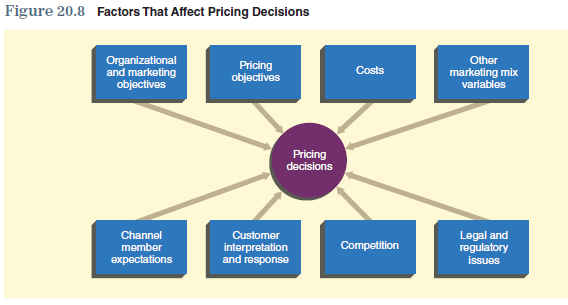
Using Figure 20.8 as a guide, discuss the various factors that affect the pricing of your product.
The information obtained from these questions should assist you in developing various aspects of your marketing plan found in the "Interactive Marketing Plan" exercise at www.cengagebrain.com.
Using Figure 20.8 as a guide, discuss the various factors that affect the pricing of your product.
The information obtained from these questions should assist you in developing various aspects of your marketing plan found in the "Interactive Marketing Plan" exercise at www.cengagebrain.com.
Question
Question
Question
Question
Question
Question
Question
Question
Question
Question
Question
Question
Question
Question
Question
Question
Question
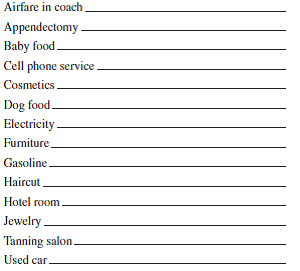
As discussed in this chapter, customers interpret and respond to prices in different ways, depending on the type of product, perceptions of product quality, and the customer's ability to judge product quality independent of the price. Because customers lack the ability to judge product quality, they sometimes use the price of the product as an indicator of product quality. Thus, the price-quality relationship can influence the purchase of some products. For each one of the following, indicate whether customers rely heavily, moderately, or hardly at all on the price to judge the quality of a product.

Unlock Deck
Sign up to unlock the cards in this deck!
Unlock Deck
Unlock Deck
1/28

Play

Full screen (f)
Deck 20: Sustainable Marketing: Social Responsibility and Ethics
1
Take You Out to the Ball Game? Let Me Check the Price First
When the Chicago White Sox play the Chicago Cubs, the Sox raise single-game ticket prices, because the cross-town rivalry attracts so many local fans. The Atlanta Braves raise ticket prices when the Yankees come to town, knowing that fans will flock to the stadium for this matchup. The San Francisco Giants, Minnesota Twins, Oakland Athletics, and other baseball teams also change single-game ticket prices depending on demand. This trend toward dynamic pricing is now spreading to other sports. The Washington Capitals hockey team and the Washington Wizards basketball team are two of a growing list of teams that use this pricing approach for single-game tickets (not for season tickets).
Before baseball's Giants instituted dynamic pricing, team marketers wondered how fans would react. "They are familiar with this type of pricing in the airline and hotel industry," says the head of ticket sales, "but this was a big leap for a sports team to implement the idea into the box office." Although the Giants had been varying prices depending on which team was visiting, its marketers knew that demand was higher at certain points in the season and on different days of the week. Switching to dynamic pricing enables the Giants to stimulate demand during slower periods and increase revenue during periods of peak demand.
The Chicago White Sox team uses dynamic pricing because "we want to get as many bodies in the park as possible," explains the head of marketing. The team has a committee that meets weekly to review sales data for individual games and for the season, and decide on price changes for the coming week. Except for seats that have been sold to season ticket holders, single-game tickets may be priced up or down at any time. Buyers who get their tickets well in advance usually get the best prices, especially for games scheduled early in the season and games against teams that aren't high in the standings. Filling seats also means higher revenues from team merchandise, parking fees, and food sales.
Marketers for the Minnesota Twins like the flexibility of dynamic pricing. In the past, they had to set prices months before the season started, to have time to print brochures and tickets. Now they can make last-minute price adjustments after checking weather forecasts, team rankings, player trades, pitching lineups, and other factors. If they've priced tickets for a particular game too low-meaning sales are much better than expected-or too high, they can boost ticket sales by making price changes as game day approaches. The Twins also use dynamic pricing to get fans excited about specially priced "Steal of the Week" single-game tickets that are offered online only.
Will all major league sports teams eventually adopt dynamic pricing? The answer depends on whether fans raise a fuss over price changes, and whether the teams currently using it are successful in filling seats and raising revenue. Some teams are testing such pricing on a small scale, applying it only to designated seating sections or specific games to determine public reaction. But if a baseball team hits a home run in pricing, chances are good that it will expand this dynamic approach to the rest of its stadium and the rest of its schedule.
Do you think price competition plays a role in the way baseball teams price their single-game tickets? Explain your answer.
When the Chicago White Sox play the Chicago Cubs, the Sox raise single-game ticket prices, because the cross-town rivalry attracts so many local fans. The Atlanta Braves raise ticket prices when the Yankees come to town, knowing that fans will flock to the stadium for this matchup. The San Francisco Giants, Minnesota Twins, Oakland Athletics, and other baseball teams also change single-game ticket prices depending on demand. This trend toward dynamic pricing is now spreading to other sports. The Washington Capitals hockey team and the Washington Wizards basketball team are two of a growing list of teams that use this pricing approach for single-game tickets (not for season tickets).
Before baseball's Giants instituted dynamic pricing, team marketers wondered how fans would react. "They are familiar with this type of pricing in the airline and hotel industry," says the head of ticket sales, "but this was a big leap for a sports team to implement the idea into the box office." Although the Giants had been varying prices depending on which team was visiting, its marketers knew that demand was higher at certain points in the season and on different days of the week. Switching to dynamic pricing enables the Giants to stimulate demand during slower periods and increase revenue during periods of peak demand.
The Chicago White Sox team uses dynamic pricing because "we want to get as many bodies in the park as possible," explains the head of marketing. The team has a committee that meets weekly to review sales data for individual games and for the season, and decide on price changes for the coming week. Except for seats that have been sold to season ticket holders, single-game tickets may be priced up or down at any time. Buyers who get their tickets well in advance usually get the best prices, especially for games scheduled early in the season and games against teams that aren't high in the standings. Filling seats also means higher revenues from team merchandise, parking fees, and food sales.
Marketers for the Minnesota Twins like the flexibility of dynamic pricing. In the past, they had to set prices months before the season started, to have time to print brochures and tickets. Now they can make last-minute price adjustments after checking weather forecasts, team rankings, player trades, pitching lineups, and other factors. If they've priced tickets for a particular game too low-meaning sales are much better than expected-or too high, they can boost ticket sales by making price changes as game day approaches. The Twins also use dynamic pricing to get fans excited about specially priced "Steal of the Week" single-game tickets that are offered online only.
Will all major league sports teams eventually adopt dynamic pricing? The answer depends on whether fans raise a fuss over price changes, and whether the teams currently using it are successful in filling seats and raising revenue. Some teams are testing such pricing on a small scale, applying it only to designated seating sections or specific games to determine public reaction. But if a baseball team hits a home run in pricing, chances are good that it will expand this dynamic approach to the rest of its stadium and the rest of its schedule.
Do you think price competition plays a role in the way baseball teams price their single-game tickets? Explain your answer.
Yes. I think price competition plays a role.
Because the competitive price is set and fixed based on various facts like playing teams, place of game, season, and demand.
There are some teams that attract more number of fans and spectators and fill the seats in which case price competition plays a role, especially when it is in the season.
Likewise there are times when it is not a season to play under which circumstances the price should be competitive to bring more spectators to the stadium.
This is how price competition plays a role.
Because the competitive price is set and fixed based on various facts like playing teams, place of game, season, and demand.
There are some teams that attract more number of fans and spectators and fill the seats in which case price competition plays a role, especially when it is in the season.
Likewise there are times when it is not a season to play under which circumstances the price should be competitive to bring more spectators to the stadium.
This is how price competition plays a role.
2
Why do most demand curves demonstrate an inverse relationship between price and quantity?
There are various reasons as to why the shows an inverse relation between the price and the quantity, some of them are:
• Substitution effect: Whenever there is reduction in the commodity's price, it becomes comparatively cheaper than the other substitute goods. This tempts the customer to buy other goods that substitute which becomes expensive now. As the result, of this effect the demanded quantity for the good, whose price went down, rises.
• Consumer number: When the commodity's price is relatively high, some of the customers only can afford it, and when the price goes down, more consumers start purchasing it , thus when the price falls, more customers come in and this leads to raise the demand for the good.
• Effect of income: When the price falls, consumers buy more with the same income, and this happens, vice-versa and affects the demand inversely.
• Substitution effect: Whenever there is reduction in the commodity's price, it becomes comparatively cheaper than the other substitute goods. This tempts the customer to buy other goods that substitute which becomes expensive now. As the result, of this effect the demanded quantity for the good, whose price went down, rises.
• Consumer number: When the commodity's price is relatively high, some of the customers only can afford it, and when the price goes down, more consumers start purchasing it , thus when the price falls, more customers come in and this leads to raise the demand for the good.
• Effect of income: When the price falls, consumers buy more with the same income, and this happens, vice-versa and affects the demand inversely.
3
The appropriate pricing of a product is an important factor in developing a successful marketing strategy. The price contributes to the profitability of the product and can deter competition from entering the market. A clear understanding of pricing concepts is essential in developing a strategy and marketing plan. Consider the information in this chapter when focusing on the following issues:
At various price points, calculate the break-even point for sales of your product.
The information obtained from these questions should assist you in developing various aspects of your marketing plan found in the "Interactive Marketing Plan" exercise at www.cengagebrain.com.
At various price points, calculate the break-even point for sales of your product.
The information obtained from these questions should assist you in developing various aspects of your marketing plan found in the "Interactive Marketing Plan" exercise at www.cengagebrain.com.
Break-even point is the point when the company is in the condition of no profit no loss. The company's revenue is equal to the cost incurred.
Breakeven when the total fixed cost is $20,000, variable cost per unit is $12, Selling price per unit is $30, and units sold are 10,000.
Breakeven can be calculated using the following formula:
 Substitute
For fixed cost as $20,000, selling price as $30 and variable cost per unit as $12
 Thus, the break-even point in units is
 .
.
Hence, it can be said that the company at these figures of variable cost and selling price and fixed cost would have the breakeven level at 1,111 units.
Breakeven when the total fixed cost is $20,000, variable cost per unit is $12, Selling price per unit is $30, and units sold are 10,000.
Breakeven can be calculated using the following formula:
Substitute For fixed cost as $20,000, selling price as $30 and variable cost per unit as $12
Thus, the break-even point in units is .Hence, it can be said that the company at these figures of variable cost and selling price and fixed cost would have the breakeven level at 1,111 units.
4
Price competition is intense in the fast-food, air travel, and personal computer industries. Discuss a recent situation in which companies had to meet or beat a rival's price in a price-competitive industry. Did you benefit from this situation? Did it change your perception of the companies and/or their products?
Unlock Deck
Unlock for access to all 28 flashcards in this deck.
Unlock Deck
k this deck
5
Autobytel
Autobytel offers car buyers a free, comprehensive website to find the invoice prices for almost all car models. The browser can also access a listing of all the latest new-car rebates and incentives. Visit this company's site at www.autobytel.com.
Is this free site more credible than a "pay" site? Why or why not?
Autobytel offers car buyers a free, comprehensive website to find the invoice prices for almost all car models. The browser can also access a listing of all the latest new-car rebates and incentives. Visit this company's site at www.autobytel.com.
Is this free site more credible than a "pay" site? Why or why not?
Unlock Deck
Unlock for access to all 28 flashcards in this deck.
Unlock Deck
k this deck
6
Take You Out to the Ball Game? Let Me Check the Price First
When the Chicago White Sox play the Chicago Cubs, the Sox raise single-game ticket prices, because the cross-town rivalry attracts so many local fans. The Atlanta Braves raise ticket prices when the Yankees come to town, knowing that fans will flock to the stadium for this matchup. The San Francisco Giants, Minnesota Twins, Oakland Athletics, and other baseball teams also change single-game ticket prices depending on demand. This trend toward dynamic pricing is now spreading to other sports. The Washington Capitals hockey team and the Washington Wizards basketball team are two of a growing list of teams that use this pricing approach for single-game tickets (not for season tickets).
Before baseball's Giants instituted dynamic pricing, team marketers wondered how fans would react. "They are familiar with this type of pricing in the airline and hotel industry," says the head of ticket sales, "but this was a big leap for a sports team to implement the idea into the box office." Although the Giants had been varying prices depending on which team was visiting, its marketers knew that demand was higher at certain points in the season and on different days of the week. Switching to dynamic pricing enables the Giants to stimulate demand during slower periods and increase revenue during periods of peak demand.
The Chicago White Sox team uses dynamic pricing because "we want to get as many bodies in the park as possible," explains the head of marketing. The team has a committee that meets weekly to review sales data for individual games and for the season, and decide on price changes for the coming week. Except for seats that have been sold to season ticket holders, single-game tickets may be priced up or down at any time. Buyers who get their tickets well in advance usually get the best prices, especially for games scheduled early in the season and games against teams that aren't high in the standings. Filling seats also means higher revenues from team merchandise, parking fees, and food sales.
Marketers for the Minnesota Twins like the flexibility of dynamic pricing. In the past, they had to set prices months before the season started, to have time to print brochures and tickets. Now they can make last-minute price adjustments after checking weather forecasts, team rankings, player trades, pitching lineups, and other factors. If they've priced tickets for a particular game too low-meaning sales are much better than expected-or too high, they can boost ticket sales by making price changes as game day approaches. The Twins also use dynamic pricing to get fans excited about specially priced "Steal of the Week" single-game tickets that are offered online only.
Will all major league sports teams eventually adopt dynamic pricing? The answer depends on whether fans raise a fuss over price changes, and whether the teams currently using it are successful in filling seats and raising revenue. Some teams are testing such pricing on a small scale, applying it only to designated seating sections or specific games to determine public reaction. But if a baseball team hits a home run in pricing, chances are good that it will expand this dynamic approach to the rest of its stadium and the rest of its schedule.
How does dynamic pricing allow a team to judge the price elasticity of demand for a particular game and then use this information in future pricing decisions?
When the Chicago White Sox play the Chicago Cubs, the Sox raise single-game ticket prices, because the cross-town rivalry attracts so many local fans. The Atlanta Braves raise ticket prices when the Yankees come to town, knowing that fans will flock to the stadium for this matchup. The San Francisco Giants, Minnesota Twins, Oakland Athletics, and other baseball teams also change single-game ticket prices depending on demand. This trend toward dynamic pricing is now spreading to other sports. The Washington Capitals hockey team and the Washington Wizards basketball team are two of a growing list of teams that use this pricing approach for single-game tickets (not for season tickets).
Before baseball's Giants instituted dynamic pricing, team marketers wondered how fans would react. "They are familiar with this type of pricing in the airline and hotel industry," says the head of ticket sales, "but this was a big leap for a sports team to implement the idea into the box office." Although the Giants had been varying prices depending on which team was visiting, its marketers knew that demand was higher at certain points in the season and on different days of the week. Switching to dynamic pricing enables the Giants to stimulate demand during slower periods and increase revenue during periods of peak demand.
The Chicago White Sox team uses dynamic pricing because "we want to get as many bodies in the park as possible," explains the head of marketing. The team has a committee that meets weekly to review sales data for individual games and for the season, and decide on price changes for the coming week. Except for seats that have been sold to season ticket holders, single-game tickets may be priced up or down at any time. Buyers who get their tickets well in advance usually get the best prices, especially for games scheduled early in the season and games against teams that aren't high in the standings. Filling seats also means higher revenues from team merchandise, parking fees, and food sales.
Marketers for the Minnesota Twins like the flexibility of dynamic pricing. In the past, they had to set prices months before the season started, to have time to print brochures and tickets. Now they can make last-minute price adjustments after checking weather forecasts, team rankings, player trades, pitching lineups, and other factors. If they've priced tickets for a particular game too low-meaning sales are much better than expected-or too high, they can boost ticket sales by making price changes as game day approaches. The Twins also use dynamic pricing to get fans excited about specially priced "Steal of the Week" single-game tickets that are offered online only.
Will all major league sports teams eventually adopt dynamic pricing? The answer depends on whether fans raise a fuss over price changes, and whether the teams currently using it are successful in filling seats and raising revenue. Some teams are testing such pricing on a small scale, applying it only to designated seating sections or specific games to determine public reaction. But if a baseball team hits a home run in pricing, chances are good that it will expand this dynamic approach to the rest of its stadium and the rest of its schedule.
How does dynamic pricing allow a team to judge the price elasticity of demand for a particular game and then use this information in future pricing decisions?
Unlock Deck
Unlock for access to all 28 flashcards in this deck.
Unlock Deck
k this deck
7
Pricing Renewable Energy Projects: Think Long-Term
John Miggins, a sales representative for Standard Renewable Energy in Oklahoma, tells customers to think long-term when they're thinking about buying renewable energy equipment for residential or commercial use. Although solar panels or a wind turbine will allow customers to generate enough power to replace much or all of the electricity they currently buy from a utility company, the out-of-pocket cost is hardly a quick fi x for kilowatt sticker shock. Installing a wind turbine can cost $17,500, and a solar power set-up for an average home can cost up to $40,000.
Still, demand for renewable energy equipment has been steadily rising for more than a decade as consumers and businesses have become interested in environmentally friendly power sources. Manufacturers around the world are constantly introducing new, high-effi ciency offerings for homes, factories, and other buildings. At the same time, the combination of technological advances, higher supply, and increased global competition has put downward pressure on prices. At one point, so many manufacturers were making so many silicon solar panels that the glut and the competition pushed panel prices down by 50 percent in one year.
These dramatic price drops, and a variety of governmental tax incentives for buying energy-efficient products for homes and businesses, are bringing the cost of renewable energy much closer to the cost of energy from conventional sources, such as coal and nuclear power. As prices move ever lower, the market expands, because more consumers and business buyers see solar and wind generation as viable alternatives to their current power sources. These days, small and mid-size solar panel installations and wind turbines are popping up in many places, like homes and individual businesses. In addition, power companies are installing renewable energy equipment to generate electricity on a large scale.
John Miggins warns his customers against expecting a quick return on their investment in renewable energy equipment. He says businesses that install solar panels usually get 60 percent of their investment back within six years and 100 percent back within 10 years. Consumer installations don't earn back their cost as quickly as commercial installations, simply because homes don't use as much electricity as businesses. Miggins also recognizes that customers care about things other than price-they also want a feeling of security and a sense of confidence in the seller who provides their new energy equipment.
Because Miggins works for Standard Renewable Energy, his prices take into account the company's buying power and sales volume. The pieces of equipment he orders for customers are bundled with larger deliveries to the company's facilities, which reduces the shipping costs paid by individual buyers. And toward the end of a month, when Miggins wants to close deals and make his sales quota, customers are likely to get an even better price when they place an order.
Does geographic pricing affect what business customers pay for a wind turbine they buy from Standard Renewable Energy compared to prices paid by nonbusiness customers? Explain your answer.
John Miggins, a sales representative for Standard Renewable Energy in Oklahoma, tells customers to think long-term when they're thinking about buying renewable energy equipment for residential or commercial use. Although solar panels or a wind turbine will allow customers to generate enough power to replace much or all of the electricity they currently buy from a utility company, the out-of-pocket cost is hardly a quick fi x for kilowatt sticker shock. Installing a wind turbine can cost $17,500, and a solar power set-up for an average home can cost up to $40,000.
Still, demand for renewable energy equipment has been steadily rising for more than a decade as consumers and businesses have become interested in environmentally friendly power sources. Manufacturers around the world are constantly introducing new, high-effi ciency offerings for homes, factories, and other buildings. At the same time, the combination of technological advances, higher supply, and increased global competition has put downward pressure on prices. At one point, so many manufacturers were making so many silicon solar panels that the glut and the competition pushed panel prices down by 50 percent in one year.
These dramatic price drops, and a variety of governmental tax incentives for buying energy-efficient products for homes and businesses, are bringing the cost of renewable energy much closer to the cost of energy from conventional sources, such as coal and nuclear power. As prices move ever lower, the market expands, because more consumers and business buyers see solar and wind generation as viable alternatives to their current power sources. These days, small and mid-size solar panel installations and wind turbines are popping up in many places, like homes and individual businesses. In addition, power companies are installing renewable energy equipment to generate electricity on a large scale.
John Miggins warns his customers against expecting a quick return on their investment in renewable energy equipment. He says businesses that install solar panels usually get 60 percent of their investment back within six years and 100 percent back within 10 years. Consumer installations don't earn back their cost as quickly as commercial installations, simply because homes don't use as much electricity as businesses. Miggins also recognizes that customers care about things other than price-they also want a feeling of security and a sense of confidence in the seller who provides their new energy equipment.
Because Miggins works for Standard Renewable Energy, his prices take into account the company's buying power and sales volume. The pieces of equipment he orders for customers are bundled with larger deliveries to the company's facilities, which reduces the shipping costs paid by individual buyers. And toward the end of a month, when Miggins wants to close deals and make his sales quota, customers are likely to get an even better price when they place an order.
Does geographic pricing affect what business customers pay for a wind turbine they buy from Standard Renewable Energy compared to prices paid by nonbusiness customers? Explain your answer.
Unlock Deck
Unlock for access to all 28 flashcards in this deck.
Unlock Deck
k this deck
8
Why are pricing decisions important to an organization?
Unlock Deck
Unlock for access to all 28 flashcards in this deck.
Unlock Deck
k this deck
9
List the characteristics of products that have inelastic demand, and give several examples of such products
Unlock Deck
Unlock for access to all 28 flashcards in this deck.
Unlock Deck
k this deck
10
The appropriate pricing of a product is an important factor in developing a successful marketing strategy. The price contributes to the profitability of the product and can deter competition from entering the market. A clear understanding of pricing concepts is essential in developing a strategy and marketing plan. Consider the information in this chapter when focusing on the following issues:
Does your company currently compete based on price or non-price factors? Should your new product continue with this approach?
The information obtained from these questions should assist you in developing various aspects of your marketing plan found in the "Interactive Marketing Plan" exercise at www.cengagebrain.com.
Does your company currently compete based on price or non-price factors? Should your new product continue with this approach?
The information obtained from these questions should assist you in developing various aspects of your marketing plan found in the "Interactive Marketing Plan" exercise at www.cengagebrain.com.
Unlock Deck
Unlock for access to all 28 flashcards in this deck.
Unlock Deck
k this deck
11
The appropriate pricing of a product is an important factor in developing a successful marketing strategy. The price contributes to the profitability of the product and can deter competition from entering the market. A clear understanding of pricing concepts is essential in developing a strategy and marketing plan. Consider the information in this chapter when focusing on the following issues:
Using Figure 20.8 as a guide, discuss the various factors that affect the pricing of your product.
The information obtained from these questions should assist you in developing various aspects of your marketing plan found in the "Interactive Marketing Plan" exercise at www.cengagebrain.com.
Using Figure 20.8 as a guide, discuss the various factors that affect the pricing of your product.
The information obtained from these questions should assist you in developing various aspects of your marketing plan found in the "Interactive Marketing Plan" exercise at www.cengagebrain.com.
Unlock Deck
Unlock for access to all 28 flashcards in this deck.
Unlock Deck
k this deck
12
Autobytel
Autobytel offers car buyers a free, comprehensive website to find the invoice prices for almost all car models. The browser can also access a listing of all the latest new-car rebates and incentives. Visit this company's site at www.autobytel.com.
Find the lowest-priced Lexus available today, and examine its features. Which Lexus dealer is closest to you?
Autobytel offers car buyers a free, comprehensive website to find the invoice prices for almost all car models. The browser can also access a listing of all the latest new-car rebates and incentives. Visit this company's site at www.autobytel.com.
Find the lowest-priced Lexus available today, and examine its features. Which Lexus dealer is closest to you?
Unlock Deck
Unlock for access to all 28 flashcards in this deck.
Unlock Deck
k this deck
13
Explain why optimal profits should occur when marginal cost equals marginal revenue.
Unlock Deck
Unlock for access to all 28 flashcards in this deck.
Unlock Deck
k this deck
14
Pricing Renewable Energy Projects: Think Long-Term
John Miggins, a sales representative for Standard Renewable Energy in Oklahoma, tells customers to think long-term when they're thinking about buying renewable energy equipment for residential or commercial use. Although solar panels or a wind turbine will allow customers to generate enough power to replace much or all of the electricity they currently buy from a utility company, the out-of-pocket cost is hardly a quick fi x for kilowatt sticker shock. Installing a wind turbine can cost $17,500, and a solar power set-up for an average home can cost up to $40,000.
Still, demand for renewable energy equipment has been steadily rising for more than a decade as consumers and businesses have become interested in environmentally friendly power sources. Manufacturers around the world are constantly introducing new, high-effi ciency offerings for homes, factories, and other buildings. At the same time, the combination of technological advances, higher supply, and increased global competition has put downward pressure on prices. At one point, so many manufacturers were making so many silicon solar panels that the glut and the competition pushed panel prices down by 50 percent in one year.
These dramatic price drops, and a variety of governmental tax incentives for buying energy-efficient products for homes and businesses, are bringing the cost of renewable energy much closer to the cost of energy from conventional sources, such as coal and nuclear power. As prices move ever lower, the market expands, because more consumers and business buyers see solar and wind generation as viable alternatives to their current power sources. These days, small and mid-size solar panel installations and wind turbines are popping up in many places, like homes and individual businesses. In addition, power companies are installing renewable energy equipment to generate electricity on a large scale.
John Miggins warns his customers against expecting a quick return on their investment in renewable energy equipment. He says businesses that install solar panels usually get 60 percent of their investment back within six years and 100 percent back within 10 years. Consumer installations don't earn back their cost as quickly as commercial installations, simply because homes don't use as much electricity as businesses. Miggins also recognizes that customers care about things other than price-they also want a feeling of security and a sense of confidence in the seller who provides their new energy equipment.
Because Miggins works for Standard Renewable Energy, his prices take into account the company's buying power and sales volume. The pieces of equipment he orders for customers are bundled with larger deliveries to the company's facilities, which reduces the shipping costs paid by individual buyers. And toward the end of a month, when Miggins wants to close deals and make his sales quota, customers are likely to get an even better price when they place an order.
When pricing its products, what external factors should Standard Renewable Energy pay particular attention to, and why?
John Miggins, a sales representative for Standard Renewable Energy in Oklahoma, tells customers to think long-term when they're thinking about buying renewable energy equipment for residential or commercial use. Although solar panels or a wind turbine will allow customers to generate enough power to replace much or all of the electricity they currently buy from a utility company, the out-of-pocket cost is hardly a quick fi x for kilowatt sticker shock. Installing a wind turbine can cost $17,500, and a solar power set-up for an average home can cost up to $40,000.
Still, demand for renewable energy equipment has been steadily rising for more than a decade as consumers and businesses have become interested in environmentally friendly power sources. Manufacturers around the world are constantly introducing new, high-effi ciency offerings for homes, factories, and other buildings. At the same time, the combination of technological advances, higher supply, and increased global competition has put downward pressure on prices. At one point, so many manufacturers were making so many silicon solar panels that the glut and the competition pushed panel prices down by 50 percent in one year.
These dramatic price drops, and a variety of governmental tax incentives for buying energy-efficient products for homes and businesses, are bringing the cost of renewable energy much closer to the cost of energy from conventional sources, such as coal and nuclear power. As prices move ever lower, the market expands, because more consumers and business buyers see solar and wind generation as viable alternatives to their current power sources. These days, small and mid-size solar panel installations and wind turbines are popping up in many places, like homes and individual businesses. In addition, power companies are installing renewable energy equipment to generate electricity on a large scale.
John Miggins warns his customers against expecting a quick return on their investment in renewable energy equipment. He says businesses that install solar panels usually get 60 percent of their investment back within six years and 100 percent back within 10 years. Consumer installations don't earn back their cost as quickly as commercial installations, simply because homes don't use as much electricity as businesses. Miggins also recognizes that customers care about things other than price-they also want a feeling of security and a sense of confidence in the seller who provides their new energy equipment.
Because Miggins works for Standard Renewable Energy, his prices take into account the company's buying power and sales volume. The pieces of equipment he orders for customers are bundled with larger deliveries to the company's facilities, which reduces the shipping costs paid by individual buyers. And toward the end of a month, when Miggins wants to close deals and make his sales quota, customers are likely to get an even better price when they place an order.
When pricing its products, what external factors should Standard Renewable Energy pay particular attention to, and why?
Unlock Deck
Unlock for access to all 28 flashcards in this deck.
Unlock Deck
k this deck
15
Chambers Company has just gathered estimates for conducting a break-even analysis for a new product. Variable costs are $7 a unit. The additional plant will cost $48,000. The new product will be charged $18,000 a year for its share of general overhead. Advertising expenditures will be $80,000, and $55,000 will be spent on distribution. If the product sells for $12, what is the break-even point in units? What is the break-even point in dollar sales volume?
Unlock Deck
Unlock for access to all 28 flashcards in this deck.
Unlock Deck
k this deck
16
Customers' interpretations and responses regarding a product and its price are an important influence on marketers' pricing decisions. Perceptions of price are affected by the degree to which a customer is value conscious, price conscious, or prestige sensitive. Discuss how value consciousness, price consciousness, and prestige sensitivity influence the buying decision process for the following products: a. A new house. b. Weekly groceries for a family of five. c. An airline ticket. d. A soft drink from a vending machine.
Unlock Deck
Unlock for access to all 28 flashcards in this deck.
Unlock Deck
k this deck
17
In what ways do other marketing mix variables affect pricing decisions?
Unlock Deck
Unlock for access to all 28 flashcards in this deck.
Unlock Deck
k this deck
18
Take You Out to the Ball Game? Let Me Check the Price First
When the Chicago White Sox play the Chicago Cubs, the Sox raise single-game ticket prices, because the cross-town rivalry attracts so many local fans. The Atlanta Braves raise ticket prices when the Yankees come to town, knowing that fans will flock to the stadium for this matchup. The San Francisco Giants, Minnesota Twins, Oakland Athletics, and other baseball teams also change single-game ticket prices depending on demand. This trend toward dynamic pricing is now spreading to other sports. The Washington Capitals hockey team and the Washington Wizards basketball team are two of a growing list of teams that use this pricing approach for single-game tickets (not for season tickets).
Before baseball's Giants instituted dynamic pricing, team marketers wondered how fans would react. "They are familiar with this type of pricing in the airline and hotel industry," says the head of ticket sales, "but this was a big leap for a sports team to implement the idea into the box office." Although the Giants had been varying prices depending on which team was visiting, its marketers knew that demand was higher at certain points in the season and on different days of the week. Switching to dynamic pricing enables the Giants to stimulate demand during slower periods and increase revenue during periods of peak demand.
The Chicago White Sox team uses dynamic pricing because "we want to get as many bodies in the park as possible," explains the head of marketing. The team has a committee that meets weekly to review sales data for individual games and for the season, and decide on price changes for the coming week. Except for seats that have been sold to season ticket holders, single-game tickets may be priced up or down at any time. Buyers who get their tickets well in advance usually get the best prices, especially for games scheduled early in the season and games against teams that aren't high in the standings. Filling seats also means higher revenues from team merchandise, parking fees, and food sales.
Marketers for the Minnesota Twins like the flexibility of dynamic pricing. In the past, they had to set prices months before the season started, to have time to print brochures and tickets. Now they can make last-minute price adjustments after checking weather forecasts, team rankings, player trades, pitching lineups, and other factors. If they've priced tickets for a particular game too low-meaning sales are much better than expected-or too high, they can boost ticket sales by making price changes as game day approaches. The Twins also use dynamic pricing to get fans excited about specially priced "Steal of the Week" single-game tickets that are offered online only.
Will all major league sports teams eventually adopt dynamic pricing? The answer depends on whether fans raise a fuss over price changes, and whether the teams currently using it are successful in filling seats and raising revenue. Some teams are testing such pricing on a small scale, applying it only to designated seating sections or specific games to determine public reaction. But if a baseball team hits a home run in pricing, chances are good that it will expand this dynamic approach to the rest of its stadium and the rest of its schedule.
What other marketing mix variables must teams consider when using dynamic pricing to set ticket prices? Why?
When the Chicago White Sox play the Chicago Cubs, the Sox raise single-game ticket prices, because the cross-town rivalry attracts so many local fans. The Atlanta Braves raise ticket prices when the Yankees come to town, knowing that fans will flock to the stadium for this matchup. The San Francisco Giants, Minnesota Twins, Oakland Athletics, and other baseball teams also change single-game ticket prices depending on demand. This trend toward dynamic pricing is now spreading to other sports. The Washington Capitals hockey team and the Washington Wizards basketball team are two of a growing list of teams that use this pricing approach for single-game tickets (not for season tickets).
Before baseball's Giants instituted dynamic pricing, team marketers wondered how fans would react. "They are familiar with this type of pricing in the airline and hotel industry," says the head of ticket sales, "but this was a big leap for a sports team to implement the idea into the box office." Although the Giants had been varying prices depending on which team was visiting, its marketers knew that demand was higher at certain points in the season and on different days of the week. Switching to dynamic pricing enables the Giants to stimulate demand during slower periods and increase revenue during periods of peak demand.
The Chicago White Sox team uses dynamic pricing because "we want to get as many bodies in the park as possible," explains the head of marketing. The team has a committee that meets weekly to review sales data for individual games and for the season, and decide on price changes for the coming week. Except for seats that have been sold to season ticket holders, single-game tickets may be priced up or down at any time. Buyers who get their tickets well in advance usually get the best prices, especially for games scheduled early in the season and games against teams that aren't high in the standings. Filling seats also means higher revenues from team merchandise, parking fees, and food sales.
Marketers for the Minnesota Twins like the flexibility of dynamic pricing. In the past, they had to set prices months before the season started, to have time to print brochures and tickets. Now they can make last-minute price adjustments after checking weather forecasts, team rankings, player trades, pitching lineups, and other factors. If they've priced tickets for a particular game too low-meaning sales are much better than expected-or too high, they can boost ticket sales by making price changes as game day approaches. The Twins also use dynamic pricing to get fans excited about specially priced "Steal of the Week" single-game tickets that are offered online only.
Will all major league sports teams eventually adopt dynamic pricing? The answer depends on whether fans raise a fuss over price changes, and whether the teams currently using it are successful in filling seats and raising revenue. Some teams are testing such pricing on a small scale, applying it only to designated seating sections or specific games to determine public reaction. But if a baseball team hits a home run in pricing, chances are good that it will expand this dynamic approach to the rest of its stadium and the rest of its schedule.
What other marketing mix variables must teams consider when using dynamic pricing to set ticket prices? Why?
Unlock Deck
Unlock for access to all 28 flashcards in this deck.
Unlock Deck
k this deck
19
What types of expectations may channel members have about producers' prices? How might these expectations affect pricing decisions?
Unlock Deck
Unlock for access to all 28 flashcards in this deck.
Unlock Deck
k this deck
20
Compare and contrast price and nonprice competition. Describe the conditions under which each form works best.
Unlock Deck
Unlock for access to all 28 flashcards in this deck.
Unlock Deck
k this deck
21
How do legal and regulatory forces influence pricing decisions?
Unlock Deck
Unlock for access to all 28 flashcards in this deck.
Unlock Deck
k this deck
22
The appropriate pricing of a product is an important factor in developing a successful marketing strategy. The price contributes to the profitability of the product and can deter competition from entering the market. A clear understanding of pricing concepts is essential in developing a strategy and marketing plan. Consider the information in this chapter when focusing on the following issues:
Discuss the level of elasticity of demand for your product. Is additional information needed for you to determine its elasticity?
The information obtained from these questions should assist you in developing various aspects of your marketing plan found in the "Interactive Marketing Plan" exercise at www.cengagebrain.com.
Discuss the level of elasticity of demand for your product. Is additional information needed for you to determine its elasticity?
The information obtained from these questions should assist you in developing various aspects of your marketing plan found in the "Interactive Marketing Plan" exercise at www.cengagebrain.com.
Unlock Deck
Unlock for access to all 28 flashcards in this deck.
Unlock Deck
k this deck
23
Compare and contrast a trade discount and a quantity discount.
Unlock Deck
Unlock for access to all 28 flashcards in this deck.
Unlock Deck
k this deck
24
Autobytel
Autobytel offers car buyers a free, comprehensive website to find the invoice prices for almost all car models. The browser can also access a listing of all the latest new-car rebates and incentives. Visit this company's site at www.autobytel.com.
If you wanted to purchase this Lexus, what are the lowest monthly payments you could make over the longest timeperiod?
Autobytel offers car buyers a free, comprehensive website to find the invoice prices for almost all car models. The browser can also access a listing of all the latest new-car rebates and incentives. Visit this company's site at www.autobytel.com.
If you wanted to purchase this Lexus, what are the lowest monthly payments you could make over the longest timeperiod?
Unlock Deck
Unlock for access to all 28 flashcards in this deck.
Unlock Deck
k this deck
25
What is the reason for using the term F.O.B.?
Unlock Deck
Unlock for access to all 28 flashcards in this deck.
Unlock Deck
k this deck
26
Pricing Renewable Energy Projects: Think Long-Term
John Miggins, a sales representative for Standard Renewable Energy in Oklahoma, tells customers to think long-term when they're thinking about buying renewable energy equipment for residential or commercial use. Although solar panels or a wind turbine will allow customers to generate enough power to replace much or all of the electricity they currently buy from a utility company, the out-of-pocket cost is hardly a quick fi x for kilowatt sticker shock. Installing a wind turbine can cost $17,500, and a solar power set-up for an average home can cost up to $40,000.
Still, demand for renewable energy equipment has been steadily rising for more than a decade as consumers and businesses have become interested in environmentally friendly power sources. Manufacturers around the world are constantly introducing new, high-effi ciency offerings for homes, factories, and other buildings. At the same time, the combination of technological advances, higher supply, and increased global competition has put downward pressure on prices. At one point, so many manufacturers were making so many silicon solar panels that the glut and the competition pushed panel prices down by 50 percent in one year.
These dramatic price drops, and a variety of governmental tax incentives for buying energy-efficient products for homes and businesses, are bringing the cost of renewable energy much closer to the cost of energy from conventional sources, such as coal and nuclear power. As prices move ever lower, the market expands, because more consumers and business buyers see solar and wind generation as viable alternatives to their current power sources. These days, small and mid-size solar panel installations and wind turbines are popping up in many places, like homes and individual businesses. In addition, power companies are installing renewable energy equipment to generate electricity on a large scale.
John Miggins warns his customers against expecting a quick return on their investment in renewable energy equipment. He says businesses that install solar panels usually get 60 percent of their investment back within six years and 100 percent back within 10 years. Consumer installations don't earn back their cost as quickly as commercial installations, simply because homes don't use as much electricity as businesses. Miggins also recognizes that customers care about things other than price-they also want a feeling of security and a sense of confidence in the seller who provides their new energy equipment.
Because Miggins works for Standard Renewable Energy, his prices take into account the company's buying power and sales volume. The pieces of equipment he orders for customers are bundled with larger deliveries to the company's facilities, which reduces the shipping costs paid by individual buyers. And toward the end of a month, when Miggins wants to close deals and make his sales quota, customers are likely to get an even better price when they place an order.
How are value-conscious, price-conscious, and prestige-conscious customers likely to react to the price of a wind turbine?
John Miggins, a sales representative for Standard Renewable Energy in Oklahoma, tells customers to think long-term when they're thinking about buying renewable energy equipment for residential or commercial use. Although solar panels or a wind turbine will allow customers to generate enough power to replace much or all of the electricity they currently buy from a utility company, the out-of-pocket cost is hardly a quick fi x for kilowatt sticker shock. Installing a wind turbine can cost $17,500, and a solar power set-up for an average home can cost up to $40,000.
Still, demand for renewable energy equipment has been steadily rising for more than a decade as consumers and businesses have become interested in environmentally friendly power sources. Manufacturers around the world are constantly introducing new, high-effi ciency offerings for homes, factories, and other buildings. At the same time, the combination of technological advances, higher supply, and increased global competition has put downward pressure on prices. At one point, so many manufacturers were making so many silicon solar panels that the glut and the competition pushed panel prices down by 50 percent in one year.
These dramatic price drops, and a variety of governmental tax incentives for buying energy-efficient products for homes and businesses, are bringing the cost of renewable energy much closer to the cost of energy from conventional sources, such as coal and nuclear power. As prices move ever lower, the market expands, because more consumers and business buyers see solar and wind generation as viable alternatives to their current power sources. These days, small and mid-size solar panel installations and wind turbines are popping up in many places, like homes and individual businesses. In addition, power companies are installing renewable energy equipment to generate electricity on a large scale.
John Miggins warns his customers against expecting a quick return on their investment in renewable energy equipment. He says businesses that install solar panels usually get 60 percent of their investment back within six years and 100 percent back within 10 years. Consumer installations don't earn back their cost as quickly as commercial installations, simply because homes don't use as much electricity as businesses. Miggins also recognizes that customers care about things other than price-they also want a feeling of security and a sense of confidence in the seller who provides their new energy equipment.
Because Miggins works for Standard Renewable Energy, his prices take into account the company's buying power and sales volume. The pieces of equipment he orders for customers are bundled with larger deliveries to the company's facilities, which reduces the shipping costs paid by individual buyers. And toward the end of a month, when Miggins wants to close deals and make his sales quota, customers are likely to get an even better price when they place an order.
How are value-conscious, price-conscious, and prestige-conscious customers likely to react to the price of a wind turbine?
Unlock Deck
Unlock for access to all 28 flashcards in this deck.
Unlock Deck
k this deck
27
What are the major methods used for transfer pricing?
Unlock Deck
Unlock for access to all 28 flashcards in this deck.
Unlock Deck
k this deck
28
As discussed in this chapter, customers interpret and respond to prices in different ways, depending on the type of product, perceptions of product quality, and the customer's ability to judge product quality independent of the price. Because customers lack the ability to judge product quality, they sometimes use the price of the product as an indicator of product quality. Thus, the price-quality relationship can influence the purchase of some products. For each one of the following, indicate whether customers rely heavily, moderately, or hardly at all on the price to judge the quality of a product.
Unlock Deck
Unlock for access to all 28 flashcards in this deck.
Unlock Deck
k this deck
Unlock Deck
Unlock for access to all 28 flashcards in this deck.






