







 Chat with AI

Deck 9: Labor Market Discrimination
Full screen (f)

Question

Question
Question
Question
Question
Question
Question
Question
Question
Question
Question
Suppose the firm's production function is given by
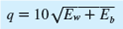
where E w and E b are the number of whites and blacks employed by the firm respectively. It can be shown that the marginal product of labor is then
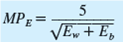
Suppose the market wage for black workers is $10, the market wage for whites is $20, and the price of each unit of output is $100.
a. How many workers would a firm hire if it does not discriminate How much profit does this nondiscriminatory firm earn if there are no other costs
b. Consider a firm that discriminates against blacks with a discrimination coefficient of 0.25. How many workers does this firm hire How much profit does it earn
c. Finally, consider a firm that has a discrimination coefficient equal to 1.25. How many workers does this firm hire How much profit does it earn
where E w and E b are the number of whites and blacks employed by the firm respectively. It can be shown that the marginal product of labor is then
Suppose the market wage for black workers is $10, the market wage for whites is $20, and the price of each unit of output is $100.
a. How many workers would a firm hire if it does not discriminate How much profit does this nondiscriminatory firm earn if there are no other costs
b. Consider a firm that discriminates against blacks with a discrimination coefficient of 0.25. How many workers does this firm hire How much profit does it earn
c. Finally, consider a firm that has a discrimination coefficient equal to 1.25. How many workers does this firm hire How much profit does it earn
Question
Question
Question
Question
Question
Question
Question
Question
Question
Question
Question
Question
Consider a data set with the following descriptive statistics.

Wage is the worker's hourly wage; Black takes on a value of 1 if the worker is black and a value of 0 otherwise; work experience is actual years of work experience; schooling is measured in years; and percent female in occupation is the percent of all employees in the worker's occupation who are female. The following table reports the regression results from a log-wage regression.
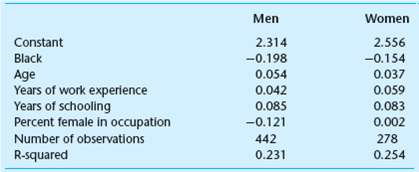
Decompose the raw difference in average wages using the Oaxaca decomposition. Specifically, decompose the raw difference into the portion due to differences in personal characteristics (schooling, race, age, and experience), the portion due to occupation, and the portion left unexplained possibly due to gender discrimination.
Wage is the worker's hourly wage; Black takes on a value of 1 if the worker is black and a value of 0 otherwise; work experience is actual years of work experience; schooling is measured in years; and percent female in occupation is the percent of all employees in the worker's occupation who are female. The following table reports the regression results from a log-wage regression.
Decompose the raw difference in average wages using the Oaxaca decomposition. Specifically, decompose the raw difference into the portion due to differences in personal characteristics (schooling, race, age, and experience), the portion due to occupation, and the portion left unexplained possibly due to gender discrimination.
Question

Unlock Deck
Sign up to unlock the cards in this deck!
Unlock Deck
Unlock Deck
1/24

Play

Full screen (f)
Deck 9: Labor Market Discrimination
1
Feeling that local firms follow discriminatory hiring practices, a nonprofit firm conducts the following experiment. It has 200 white individuals and 200 black individuals, all of whom are similar in age, experience, and education, apply for local retail jobs. Each individual applies to two jobs, one in a predominantly black part of town and one in a predominantly white part of town. Of the white applicants, 120 are offered jobs in the white part of town while only 80 are offered jobs in the black part of town. Meanwhile, 90 of the black applicants are offered jobs in the black part of town while only 50 are offered jobs in the white part of town. Using a difference-in-differences estimator, do you find evidence of discriminatory hiring practices If there is evidence of discrimination, is it appropriate to conclude that all employers in the white part of town are discriminatory
Shown below is the given data,
Table-1
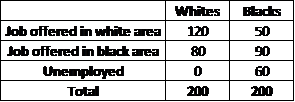 The following observations can be made from the given data:
• 60 blacks are unemployed, while 0 whites are unemployed
• More whites are offered jobs in white areas of the town
• More blacks are offered jobs in the black areas of the town
• Despite this, there are more whites placed in black areas than blacks in white areas
The above observations are strong enough to demonstrate a clear case of discrimination done in the town. More whites have been offered jobs than blacks. Infact, even in black areas, the job offers made are almost equal to whites (80) and blacks (90), whereas there is a high skewness in job offers made to white (120) and blacks (50) in white areas.
This can be said to be a clear case of employer-based discrimination, wherein more whites have been preferred (even in black areas).
Table-1
The following observations can be made from the given data:• 60 blacks are unemployed, while 0 whites are unemployed
• More whites are offered jobs in white areas of the town
• More blacks are offered jobs in the black areas of the town
• Despite this, there are more whites placed in black areas than blacks in white areas
The above observations are strong enough to demonstrate a clear case of discrimination done in the town. More whites have been offered jobs than blacks. Infact, even in black areas, the job offers made are almost equal to whites (80) and blacks (90), whereas there is a high skewness in job offers made to white (120) and blacks (50) in white areas.
This can be said to be a clear case of employer-based discrimination, wherein more whites have been preferred (even in black areas).
2
What is the discrimination coefficient
Discrimination coefficient is way or is coefficient by which discrimination is calculated. Suppose say discrimination factor is "d" so this "d" indicates how much discrimination is there between two in any things like in wage, or in price or anything. Discrimination coefficient plays a role of multiplier which helps in calculating actual figure of discrimination among two.
3
Suppose black and white workers are complements in that the marginal product of whites increases when more blacks are hired. Suppose also that white workers do not like working alongside black workers. Will discrimination by white employees lead to the firm choosing to completely segregate its work place Does it create a wage differential between black and white workers
Complement goods:
A good is said to be a complement goods if both are consumed together. In case of complementary goods, if the price of a good increased, then the demand for other goods will decrease. Because, both the goods are consumed at a time; hence, increase in the price of one good will increase supply of other good.
Wage differential:
Since white and blacks are complements, they have to work together. Since the white people productivity increases when they work with black people, hen white labor get more wage than black people. Because, wage paid to the labor should be equal to their marginal productivity of the labor. Thus, both the employees working in the same place and it creates wage differential between them.
A good is said to be a complement goods if both are consumed together. In case of complementary goods, if the price of a good increased, then the demand for other goods will decrease. Because, both the goods are consumed at a time; hence, increase in the price of one good will increase supply of other good.
Wage differential:
Since white and blacks are complements, they have to work together. Since the white people productivity increases when they work with black people, hen white labor get more wage than black people. Because, wage paid to the labor should be equal to their marginal productivity of the labor. Thus, both the employees working in the same place and it creates wage differential between them.
4
Discuss the implications of employer discrimination for the employment decisions of the firm, for the profitability of the firm, and for the black-white wage ratio in the labor market.
Unlock Deck
Unlock for access to all 24 flashcards in this deck.
Unlock Deck
k this deck
5
a. Suppose a restaurant hires only women to wait on tables, and only men to cook the food and clean the dishes. Is this most likely to be indicative of employer, employee, consumer, or statistical discrimination
b. The dropout rate of minority and international students at U.S. colleges and universities is higher than it is for white American students. Is this empirical pattern most likely indicative of employer (college administrations), employee (college faculty and staff), consumer (students), or statistical discrimination
b. The dropout rate of minority and international students at U.S. colleges and universities is higher than it is for white American students. Is this empirical pattern most likely indicative of employer (college administrations), employee (college faculty and staff), consumer (students), or statistical discrimination
Unlock Deck
Unlock for access to all 24 flashcards in this deck.
Unlock Deck
k this deck
6
Can employer discrimination against blacks lead to a situation where the equilibrium black wage exceeds the equilibrium white wage
Unlock Deck
Unlock for access to all 24 flashcards in this deck.
Unlock Deck
k this deck
7
In 1960, the proportion of blacks in southern states was higher than the proportion of blacks in northern states. The black-white wage ratio in southern states was also much lower than in northern states. Does the difference in the relative black-white wage ratios across regions indicate that southern employers discriminated more than northern employers
Unlock Deck
Unlock for access to all 24 flashcards in this deck.
Unlock Deck
k this deck
8
Derive the implications of employee discrimination for the employment decisions of firms and for the black-white wage differential.
Unlock Deck
Unlock for access to all 24 flashcards in this deck.
Unlock Deck
k this deck
9
Suppose years of schooling, s, is the only variable that affects earnings. The equations for the weekly salaries of male and female workers are given by
w m = 500 + 100 s
and
w f = 300 + 75 s
On average, men have 14 years of schooling and women have 12 years of schooling.
a. What is the male-female wage differential in the labor market
b. Using the Oaxaca decomposition, calculate how much of this wage differential is due to discrimination
w m = 500 + 100 s
and
w f = 300 + 75 s
On average, men have 14 years of schooling and women have 12 years of schooling.
a. What is the male-female wage differential in the labor market
b. Using the Oaxaca decomposition, calculate how much of this wage differential is due to discrimination
Unlock Deck
Unlock for access to all 24 flashcards in this deck.
Unlock Deck
k this deck
10
Discuss the implications of customer discrimination for the employment decisions of firms and for the black-white wage differential.
Unlock Deck
Unlock for access to all 24 flashcards in this deck.
Unlock Deck
k this deck
11
Suppose the firm's production function is given by
where E w and E b are the number of whites and blacks employed by the firm respectively. It can be shown that the marginal product of labor is then
Suppose the market wage for black workers is $10, the market wage for whites is $20, and the price of each unit of output is $100.
a. How many workers would a firm hire if it does not discriminate How much profit does this nondiscriminatory firm earn if there are no other costs
b. Consider a firm that discriminates against blacks with a discrimination coefficient of 0.25. How many workers does this firm hire How much profit does it earn
c. Finally, consider a firm that has a discrimination coefficient equal to 1.25. How many workers does this firm hire How much profit does it earn
where E w and E b are the number of whites and blacks employed by the firm respectively. It can be shown that the marginal product of labor is then
Suppose the market wage for black workers is $10, the market wage for whites is $20, and the price of each unit of output is $100.
a. How many workers would a firm hire if it does not discriminate How much profit does this nondiscriminatory firm earn if there are no other costs
b. Consider a firm that discriminates against blacks with a discrimination coefficient of 0.25. How many workers does this firm hire How much profit does it earn
c. Finally, consider a firm that has a discrimination coefficient equal to 1.25. How many workers does this firm hire How much profit does it earn
Unlock Deck
Unlock for access to all 24 flashcards in this deck.
Unlock Deck
k this deck
12
What is statistical discrimination Why do employers use group membership as an indicator of a worker's productivity What is the impact of statistical discrimination on the wage of the affected workers Must statistical discrimination reduce the average wage of blacks or women
Unlock Deck
Unlock for access to all 24 flashcards in this deck.
Unlock Deck
k this deck
13
Suppose that an additional year of schooling raised wages by 7 percent in 1970, regardless of the worker's race or ethnicity. Suppose also that the wage differential between the average white and the average Hispanic was 36 percent. Finally, assume education is the only factor that affects productivity, and the average white worker had 12 years of schooling in 1970, while the average Hispanic worker had 9 years. By 1980, the average white worker had 13 years of education, while the average Hispanic had 11 years. A year of schooling still increased earnings by 7 percent, regardless of the worker's ethnic background, and the wage differential between the average white worker and the average Hispanic fell to 24 percent. Was there a decrease in wage discrimination during the decade Was there a decrease in the share of the wage differential between whites and Hispanics that can be attributed to discrimination
Unlock Deck
Unlock for access to all 24 flashcards in this deck.
Unlock Deck
k this deck
14
Derive the Oaxaca measure of discrimination. Does this statistic truly measure the impact of discrimination on the relative wage of the affected groups
Unlock Deck
Unlock for access to all 24 flashcards in this deck.
Unlock Deck
k this deck
15
Use Table 220 of the 2008 U.S. Statistical Abstract to do the following. Conditioned on educational attainment (not a high school graduate, high school graduate, bachelor's degree, master's degree, and doctorate degree), how much did the average female worker earn for every one dollar earned by the average male in 2005 Repeat for the average black worker compared to the average white worker, and repeat again for the average Hispanic worker compared to the average white worker.
Unlock Deck
Unlock for access to all 24 flashcards in this deck.
Unlock Deck
k this deck
16
Discuss the factors that might explain why the black-white wage ratio rose significantly in the past few decades.
Unlock Deck
Unlock for access to all 24 flashcards in this deck.
Unlock Deck
k this deck
17
Each employer faces competitive weekly wages of $2,000 for whites and $1,400 for blacks. Suppose employers undervalue the efforts/skills of blacks in the production process. In particular, every firm is associated with a discrimination coefficient, d (0 d 1). In particular, although a firm's actual production function is Q = 10( E W + E B ), the firm manager acts as if its production function is Q = 10 E W + 10(1 - d ) E B. Every firm sells its output at a constant price of $240 per unit up to a weekly total of 150 units of output. No firm can sell more than 150 units of output without reducing its price to $0.
a. What is the value of the marginal product of each white worker
b. What is the value of the marginal product of each black worker
c. Describe the employment decision made by firms for which d = 0.2 and d = 0.8 respectively.
d. For what value(s) of d is a firm willing to hire blacks and whites
a. What is the value of the marginal product of each white worker
b. What is the value of the marginal product of each black worker
c. Describe the employment decision made by firms for which d = 0.2 and d = 0.8 respectively.
d. For what value(s) of d is a firm willing to hire blacks and whites
Unlock Deck
Unlock for access to all 24 flashcards in this deck.
Unlock Deck
k this deck
18
Discuss why a sizable part of the female-male wage differential might be attributable to "supply-side" factors, such as a woman's decision to work and acquire human capital.
Unlock Deck
Unlock for access to all 24 flashcards in this deck.
Unlock Deck
k this deck
19
After controlling for age and education, it is found that the average woman earns $0.80 for every $1.00 earned by the average man. After controlling for occupation to control for compensating differentials (that is, maybe men accept riskier or more stressful jobs than women, and therefore are paid more), the average woman earns $0.92 for every $1.00 earned by the average man. The conclusion is made that occupational choice reduces the wage gap 12 cents and discrimination is left to explain the remaining 8 cents.
a. Explain why discrimination may explain more than 8 cents of the 20-cent differential (and occupational choice may explain less than 12 cents of the differential).
b. Explain why discrimination may explain less than 8 cents of the 20-cent differential.
a. Explain why discrimination may explain more than 8 cents of the 20-cent differential (and occupational choice may explain less than 12 cents of the differential).
b. Explain why discrimination may explain less than 8 cents of the 20-cent differential.
Unlock Deck
Unlock for access to all 24 flashcards in this deck.
Unlock Deck
k this deck
20
Consider a town with a population that is 10 percent black (and the remainder is white). Because blacks are more likely to work the night shifts, 20 percent of all cars driven at night are driven by blacks. One out of every 20 people driving at night is drunk, regardless of race. Persons who are not drunk never swerve their car, but 10 percent of all drunk drivers, regardless of race, swerve their cars. On a typical night, 5,000 cars are observed by the police force.
a. What percent of blacks driving at night are driving drunk What percent of whites driving at night are driving drunk
b. Of the 5,000 cars observed, how many are driven by blacks How many of these cars are driven by a drunk Of the 5,000 cars observed at night, how many are driven by whites How many of these cars are driven by a drunk What percent of nighttime drunk drivers are black
c. The police chief believes the drunk-driving problem is mainly due to black drunk drivers. He orders his policemen to pull over all swerving cars and one in every two nonswerving cars that is driven by a black person. The driver of a nonswerving car is then given a breathalyzer test that is 100 percent accurate in diagnosing drunk driving. Under this enforcement scheme, what percent of people arrested for drunk driving will be black
a. What percent of blacks driving at night are driving drunk What percent of whites driving at night are driving drunk
b. Of the 5,000 cars observed, how many are driven by blacks How many of these cars are driven by a drunk Of the 5,000 cars observed at night, how many are driven by whites How many of these cars are driven by a drunk What percent of nighttime drunk drivers are black
c. The police chief believes the drunk-driving problem is mainly due to black drunk drivers. He orders his policemen to pull over all swerving cars and one in every two nonswerving cars that is driven by a black person. The driver of a nonswerving car is then given a breathalyzer test that is 100 percent accurate in diagnosing drunk driving. Under this enforcement scheme, what percent of people arrested for drunk driving will be black
Unlock Deck
Unlock for access to all 24 flashcards in this deck.
Unlock Deck
k this deck
21
Suppose 100 men and 100 women graduate from high school. After high school, each can work in a low-skill job and earn $200,000 over his or her lifetime, or each can pay $50,000 and go to college. College graduates are given a test. If someone passes the test, he or she is hired for a high-skill job paying lifetime earnings of $300,000. Any college graduate who fails the test, however, is relegated to a low-skill job. Academic performance in high school gives each person some idea of how he or she will do on the test if he or she goes to college. In particular, each person's GPA, call it x, is an "ability score" ranging from 0.01 to 1.00. With probability x, the person will pass the test if he or she attends college. Upon graduating high school, there is one man with x = 0.01, one with x = 0.02, and so on up to x = 1.00. Likewise, there is one woman with x = 0.01, one with x = 0.02, and so on up to x = 1.00.
a. Persons attend college only if the expected lifetime payoff from attending college is higher than that of not attending college. Which men and which women will attend college What is the expected pass rate of men who take the test What is the expected pass rate of women who take the test
b. Suppose policymakers feel not enough women are attending college, so they take actions that reduce the cost of college for women to $10,000. Which women will now attend college What is the expected pass rate of women who take the test
a. Persons attend college only if the expected lifetime payoff from attending college is higher than that of not attending college. Which men and which women will attend college What is the expected pass rate of men who take the test What is the expected pass rate of women who take the test
b. Suppose policymakers feel not enough women are attending college, so they take actions that reduce the cost of college for women to $10,000. Which women will now attend college What is the expected pass rate of women who take the test
Unlock Deck
Unlock for access to all 24 flashcards in this deck.
Unlock Deck
k this deck
22
Suppose the discrimination coefficient increases as the firm employs more black workers. In particular, suppose the discrimination coefficient is d = 0.01 E B where E B is the number of blacks hired by the firm so that each employer facing competitive wages of w W for whites and w B for blacks acts as if she faces competitive wages of w W for whites and w B (1 + d ) for blacks. As usual, assume the labor market is competitive so that the firm faces wages of w B and w W. Lastly, assume that the firm must employ 200 workers. Define the wage ratio to be w W / w B and do the following:
a. Solve for the number of blacks hired as a function of the wage ratio. Graph the number of blacks hired against the wage ratio.
b. Solve for the number of whites hired ( x -axis) as a function of the wage ratio ( y -axis). Graph the number of whites hired ( x -axis) against the wage ratio ( y -axis).
a. Solve for the number of blacks hired as a function of the wage ratio. Graph the number of blacks hired against the wage ratio.
b. Solve for the number of whites hired ( x -axis) as a function of the wage ratio ( y -axis). Graph the number of whites hired ( x -axis) against the wage ratio ( y -axis).
Unlock Deck
Unlock for access to all 24 flashcards in this deck.
Unlock Deck
k this deck
23
Consider a data set with the following descriptive statistics.
Wage is the worker's hourly wage; Black takes on a value of 1 if the worker is black and a value of 0 otherwise; work experience is actual years of work experience; schooling is measured in years; and percent female in occupation is the percent of all employees in the worker's occupation who are female. The following table reports the regression results from a log-wage regression.
Decompose the raw difference in average wages using the Oaxaca decomposition. Specifically, decompose the raw difference into the portion due to differences in personal characteristics (schooling, race, age, and experience), the portion due to occupation, and the portion left unexplained possibly due to gender discrimination.
Wage is the worker's hourly wage; Black takes on a value of 1 if the worker is black and a value of 0 otherwise; work experience is actual years of work experience; schooling is measured in years; and percent female in occupation is the percent of all employees in the worker's occupation who are female. The following table reports the regression results from a log-wage regression.
Decompose the raw difference in average wages using the Oaxaca decomposition. Specifically, decompose the raw difference into the portion due to differences in personal characteristics (schooling, race, age, and experience), the portion due to occupation, and the portion left unexplained possibly due to gender discrimination.
Unlock Deck
Unlock for access to all 24 flashcards in this deck.
Unlock Deck
k this deck
24
In 2006, Evo Morales assumed the presidency in Bolivia, a South American country in which official commerce is done in Spanish. Morales was the first Bolivian president of indigenous decent. As president, he quickly instituted reforms that were designed to reduce discrimination against indigenous populations with the aim of eventually reducing inequality. Suppose discrimination before Morales took two forms-discrimination in education by not providing state funds to educate all children (and particularly not educating indigenous children in their native language or in Spanish) and discrimination in the job market by firms not willingly hiring indigenous workers.
a. In terms of education, which policy would be better at combating discrimination and inequality:
(1) providing state funds to educate all people in their native languages or
(2) providing state funds for a public education system that requires all people to learn Spanish and a second, indigenous language Why
b. In terms of the job market, which policy would be best at combating discrimination and inequality:
(1) increasing the minimum wage,
(2) requiring all firms with at least 50 workers to hire some indigenous workers, or
(3) improving the legal system to protect economic rights and activities Why
a. In terms of education, which policy would be better at combating discrimination and inequality:
(1) providing state funds to educate all people in their native languages or
(2) providing state funds for a public education system that requires all people to learn Spanish and a second, indigenous language Why
b. In terms of the job market, which policy would be best at combating discrimination and inequality:
(1) increasing the minimum wage,
(2) requiring all firms with at least 50 workers to hire some indigenous workers, or
(3) improving the legal system to protect economic rights and activities Why
Unlock Deck
Unlock for access to all 24 flashcards in this deck.
Unlock Deck
k this deck
Unlock Deck
Unlock for access to all 24 flashcards in this deck.






