







 Chat with AI

Deck 6: Releasing Chemical Energy
Full screen (f)

Question

Question
Question
Question
Question
Question
Question
Question
Question
Question
Question
Question
Question
Question
Question
Question
Question
Question
Question
Question
Question
Question
Question
Question
Question
Question
Question
Question
Question
Question
Question
Question
Question
Question
Question
Question
Question
Question
Question
Question
Question
Question
Question
Question
Question
Question
Question
Question
Question
Question
Question
Question
Question
Question
Question
Question
Question
Question
Question
Question
Question
During aerobic respiration in mitochondria, glucose is converted to ATP. Match each description with the corresponding term or phrase. 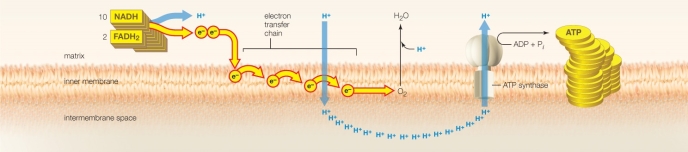 a.final acceptor of electrons
b.transfer of electrons between molecules
c.active transport of hydrogen ions to establish gradient
d.hydrogen ions move down their concentration
e.enzymatic phosphorylation
O2
a.final acceptor of electronsb.transfer of electrons between molecules
c.active transport of hydrogen ions to establish gradient
d.hydrogen ions move down their concentration
e.enzymatic phosphorylation
O2
Question
Question
Question
During aerobic respiration in mitochondria, glucose is converted to ATP. Match each description with the corresponding term or phrase. a.final acceptor of electrons
b.transfer of electrons between molecules
c.active transport of hydrogen ions to establish gradient
d.hydrogen ions move down their concentration
e.enzymatic phosphorylation
conversion of ADP + Pi to ATP
a.final acceptor of electronsb.transfer of electrons between molecules
c.active transport of hydrogen ions to establish gradient
d.hydrogen ions move down their concentration
e.enzymatic phosphorylation
conversion of ADP + Pi to ATP
Question
During aerobic respiration in mitochondria, glucose is converted to ATP. Match each description with the corresponding term or phrase. a.final acceptor of electrons
b.transfer of electrons between molecules
c.active transport of hydrogen ions to establish gradient
d.hydrogen ions move down their concentration
e.enzymatic phosphorylation
ATP synthase
a.final acceptor of electronsb.transfer of electrons between molecules
c.active transport of hydrogen ions to establish gradient
d.hydrogen ions move down their concentration
e.enzymatic phosphorylation
ATP synthase
Question
Question
Question
Question
Question
Question
During aerobic respiration in mitochondria, glucose is converted to ATP. Match each description with the corresponding term or phrase. a.final acceptor of electrons
b.transfer of electrons between molecules
c.active transport of hydrogen ions to establish gradient
d.hydrogen ions move down their concentration
e.enzymatic phosphorylation
electron transfer chain
a.final acceptor of electronsb.transfer of electrons between molecules
c.active transport of hydrogen ions to establish gradient
d.hydrogen ions move down their concentration
e.enzymatic phosphorylation
electron transfer chain
Question
Question
Question
Question
Question
During aerobic respiration in mitochondria, glucose is converted to ATP. Match each description with the corresponding term or phrase. a.final acceptor of electrons
b.transfer of electrons between molecules
c.active transport of hydrogen ions to establish gradient
d.hydrogen ions move down their concentration
e.enzymatic phosphorylation
energy release
a.final acceptor of electronsb.transfer of electrons between molecules
c.active transport of hydrogen ions to establish gradient
d.hydrogen ions move down their concentration
e.enzymatic phosphorylation
energy release
Question

Unlock Deck
Sign up to unlock the cards in this deck!
Unlock Deck
Unlock Deck
1/77

Play

Full screen (f)
Deck 6: Releasing Chemical Energy
1
During electron transfer phosphorylation, in which of the following does electron transfer chains fuel active transport of hydrogen ions?
A) inner membrane
B) matrix
C) the outermost membrane
D) between the outermost and innermost membranes
E) a combination of more than one of these
A) inner membrane
B) matrix
C) the outermost membrane
D) between the outermost and innermost membranes
E) a combination of more than one of these
A
2
Which of the following is not produced by the Krebs cycle?
A) PGAL
B) CO2
C) NADH
D) FADH2
E) ATP
A) PGAL
B) CO2
C) NADH
D) FADH2
E) ATP
A
3
How much energy released from glucose in aerobic respiration is dispersed as metabolic heat?
A) 1 percent
B) 10 percent
C) 6 percent
D) 60 percent
E) 100 percent
A) 1 percent
B) 10 percent
C) 6 percent
D) 60 percent
E) 100 percent
D
4
The first stage of aerobic respiration and fermentation occurs in which cellular structure?
A) ribosomes
B) cell membranes
C) the cytoplasm
D) nuclei
E) mitochondria
A) ribosomes
B) cell membranes
C) the cytoplasm
D) nuclei
E) mitochondria
Unlock Deck
Unlock for access to all 77 flashcards in this deck.
Unlock Deck
k this deck
5
The energy that drives glycolysis comes from ____.
A) sunlight
B) glucose
C) carbon dioxide
D) ATP and NADPH
E) water and oxygen
A) sunlight
B) glucose
C) carbon dioxide
D) ATP and NADPH
E) water and oxygen
Unlock Deck
Unlock for access to all 77 flashcards in this deck.
Unlock Deck
k this deck
6
In which cellular organelle does aerobic respiration conclude in eukaryotes?
A) rough endoplasmic reticulum
B) Golgi bodies
C) mitochondria
D) chloroplasts
E) lysosome
A) rough endoplasmic reticulum
B) Golgi bodies
C) mitochondria
D) chloroplasts
E) lysosome
Unlock Deck
Unlock for access to all 77 flashcards in this deck.
Unlock Deck
k this deck
7
Electrons combine with ____ to form free radicals.
A) carbon dioxide
B) sulfur
C) mitochondria
D) oxygen
E) ATP
A) carbon dioxide
B) sulfur
C) mitochondria
D) oxygen
E) ATP
Unlock Deck
Unlock for access to all 77 flashcards in this deck.
Unlock Deck
k this deck
8
Glycolysis converts glucose into ____.
A) pigments
B) organic compounds
C) proteins
D) electrons and protons
E) heat energy
A) pigments
B) organic compounds
C) proteins
D) electrons and protons
E) heat energy
Unlock Deck
Unlock for access to all 77 flashcards in this deck.
Unlock Deck
k this deck
9
Cellular respiration that requires oxygen is called ____.
A) mitochondrial respiration
B) oxidative respiration
C) anaerobic respiration
D) aerobic respiration
E) electron respiration
A) mitochondrial respiration
B) oxidative respiration
C) anaerobic respiration
D) aerobic respiration
E) electron respiration
Unlock Deck
Unlock for access to all 77 flashcards in this deck.
Unlock Deck
k this deck
10
The first step in aerobic respiration is ____.
A) acetyl-CoA formation
B) the citric acid cycle
C) electron transfer
D) glycolysis
E) photosynthesis
A) acetyl-CoA formation
B) the citric acid cycle
C) electron transfer
D) glycolysis
E) photosynthesis
Unlock Deck
Unlock for access to all 77 flashcards in this deck.
Unlock Deck
k this deck
11
An imbalance of free radicals and antioxidants causes ____.
A) cellular balance
B) mitochondrial malfunctions
C) oxidative stress
D) Parkinson's disease
E) diabetes
A) cellular balance
B) mitochondrial malfunctions
C) oxidative stress
D) Parkinson's disease
E) diabetes
Unlock Deck
Unlock for access to all 77 flashcards in this deck.
Unlock Deck
k this deck
12
The ____ is located between the mitochondrial membranes.
A) intermembrane pore
B) mitochondrial matrix
C) cytoplasm
D) intermembrane space
E) outer membrane
A) intermembrane pore
B) mitochondrial matrix
C) cytoplasm
D) intermembrane space
E) outer membrane
Unlock Deck
Unlock for access to all 77 flashcards in this deck.
Unlock Deck
k this deck
13
Water forms when ____ combine(s) with hydrogen.
A) ATP
B) O2
C) coenzymes
D) CO2
E) ADP
A) ATP
B) O2
C) coenzymes
D) CO2
E) ADP
Unlock Deck
Unlock for access to all 77 flashcards in this deck.
Unlock Deck
k this deck
14
Which component is not found in mitochondria?
A) a single outer membrane
B) DNA
C) ribosomes
D) granules
E) matrix
A) a single outer membrane
B) DNA
C) ribosomes
D) granules
E) matrix
Unlock Deck
Unlock for access to all 77 flashcards in this deck.
Unlock Deck
k this deck
15
Mitochondria have ____ membrane(s).
A) two
B) one
C) five
D) four
E) three
A) two
B) one
C) five
D) four
E) three
Unlock Deck
Unlock for access to all 77 flashcards in this deck.
Unlock Deck
k this deck
16
The harvesting of energy from glucose to make ATP happens during ____.
A) glycolysis
B) photosynthesis
C) cellular respiration
D) fermentation
E) chemosynthesis
A) glycolysis
B) photosynthesis
C) cellular respiration
D) fermentation
E) chemosynthesis
Unlock Deck
Unlock for access to all 77 flashcards in this deck.
Unlock Deck
k this deck
17
Aerobic respiration yields a theoretical maximum of ____ ATP per glucose.
A) 38
B) 24
C) 12
D) 6
E) 2
A) 38
B) 24
C) 12
D) 6
E) 2
Unlock Deck
Unlock for access to all 77 flashcards in this deck.
Unlock Deck
k this deck
18
One difference between aerobic respiration and fermentation is that in fermentation____.
A) ethanol is converted to oxygen
B) oxygen is the final acceptor
C) the cell becomes radioactive
D) electrons are accepted by organic molecules
E) the molecules become ionized
A) ethanol is converted to oxygen
B) oxygen is the final acceptor
C) the cell becomes radioactive
D) electrons are accepted by organic molecules
E) the molecules become ionized
Unlock Deck
Unlock for access to all 77 flashcards in this deck.
Unlock Deck
k this deck
19
The main harvesters of energy directly from the environment are ____.
A) farmers
B) light
C) plants
D) cows
E) methane
A) farmers
B) light
C) plants
D) cows
E) methane
Unlock Deck
Unlock for access to all 77 flashcards in this deck.
Unlock Deck
k this deck
20
Mitochondrial diseases ____.
A) can have minimal impacts on the body
B) are produced by living organisms
C) are genetic
D) can increase muscular function
E) make ATP less efficiently
A) can have minimal impacts on the body
B) are produced by living organisms
C) are genetic
D) can increase muscular function
E) make ATP less efficiently
Unlock Deck
Unlock for access to all 77 flashcards in this deck.
Unlock Deck
k this deck
21
Fermentation reactions occur in the ____.
A) cytoplasm
B) chloroplast outer membrane
C) thylakoid membrane
D) stroma
E) matrix
A) cytoplasm
B) chloroplast outer membrane
C) thylakoid membrane
D) stroma
E) matrix
Unlock Deck
Unlock for access to all 77 flashcards in this deck.
Unlock Deck
k this deck
22
How many ATP molecules (net yield) are produced per molecule of glucose during glycolysis?
A) 1
B) 2
C) 4
D) 36
E) 38
A) 1
B) 2
C) 4
D) 36
E) 38
Unlock Deck
Unlock for access to all 77 flashcards in this deck.
Unlock Deck
k this deck
23
During electron phosphorylation, how do hydrogen ions get back into the mitochondrial matrix?
A) passive diffusion directly across the thylakoid membrane
B) active transport across the thylakoid membrane
C) facilitated diffusion across the thylakoid membrane
D) active transport through ATP synthase
E) passive diffusion through ATP synthase
A) passive diffusion directly across the thylakoid membrane
B) active transport across the thylakoid membrane
C) facilitated diffusion across the thylakoid membrane
D) active transport through ATP synthase
E) passive diffusion through ATP synthase
Unlock Deck
Unlock for access to all 77 flashcards in this deck.
Unlock Deck
k this deck
24
What powers the ATP synthase enzyme at the end of aerobic respiration?
A) energy from ATP
B) energy from NADPH
C) energy from the splitting of water
D) energy from electron transfer chains
E) energy from the flow of hydrogen ions
A) energy from ATP
B) energy from NADPH
C) energy from the splitting of water
D) energy from electron transfer chains
E) energy from the flow of hydrogen ions
Unlock Deck
Unlock for access to all 77 flashcards in this deck.
Unlock Deck
k this deck
25
Aerobic respiration produces carbon dioxide ____.
A) by splitting carbon dioxide
B) during respiration
C) by splitting ribulose bisphosphate
D) by splitting molecules of water
E) by breaking down glucose
A) by splitting carbon dioxide
B) during respiration
C) by splitting ribulose bisphosphate
D) by splitting molecules of water
E) by breaking down glucose
Unlock Deck
Unlock for access to all 77 flashcards in this deck.
Unlock Deck
k this deck
26
Hydrogen ion flowout of the mitochondria ____.
A) occurs between photosystems I and II
B) is called the hydrogen transfer system
C) provides energy to produce ATP molecules
D) causes excitation of chlorophyll molecules
E) requires the intermediary action of acceptor molecules
A) occurs between photosystems I and II
B) is called the hydrogen transfer system
C) provides energy to produce ATP molecules
D) causes excitation of chlorophyll molecules
E) requires the intermediary action of acceptor molecules
Unlock Deck
Unlock for access to all 77 flashcards in this deck.
Unlock Deck
k this deck
27
During aerobic respiration, the electron acceptor at the end of the electron transfer chain is ____.
A) NADH
B) oxygen
C) FADH2
D) glucose
E) acetyl-CoA
A) NADH
B) oxygen
C) FADH2
D) glucose
E) acetyl-CoA
Unlock Deck
Unlock for access to all 77 flashcards in this deck.
Unlock Deck
k this deck
28
ATP is formed when ____ the inner mitochondrial membrane.
A) hydrogen ions enter
B) hydrogen ions leave
C) electrons leave
D) electrons enter
E) water is split into
A) hydrogen ions enter
B) hydrogen ions leave
C) electrons leave
D) electrons enter
E) water is split into
Unlock Deck
Unlock for access to all 77 flashcards in this deck.
Unlock Deck
k this deck
29
Reduction of metabolic rate and body temperature occur during ____.
A) hibernation
B) alcohol fermentation
C) ATP formation
D) oxidation
E) citric acid cycle
A) hibernation
B) alcohol fermentation
C) ATP formation
D) oxidation
E) citric acid cycle
Unlock Deck
Unlock for access to all 77 flashcards in this deck.
Unlock Deck
k this deck
30
The citric acid cycle is a cyclical pathway of reactions that use ____.
A) acetyl-CoA to produce ATP
B) sugar to produce energy
C) sugar to produce starch
D) starch to produce energy
E) oxygen to produce carbon dioxide
A) acetyl-CoA to produce ATP
B) sugar to produce energy
C) sugar to produce starch
D) starch to produce energy
E) oxygen to produce carbon dioxide
Unlock Deck
Unlock for access to all 77 flashcards in this deck.
Unlock Deck
k this deck
31
During beer production, glucose is harnessed from the fermentation of ____.
A) yeast
B) barley
C) sucrose
D) gluten
E) lactate
A) yeast
B) barley
C) sucrose
D) gluten
E) lactate
Unlock Deck
Unlock for access to all 77 flashcards in this deck.
Unlock Deck
k this deck
32
During the Krebs cycle, energy is released ____.
A) in the form of ATP synthase
B) from the flow of hydrogen ions
C) when acetyl-CoA is broken apart
D) when oxygen gas forms
E) in the form of glucose
A) in the form of ATP synthase
B) from the flow of hydrogen ions
C) when acetyl-CoA is broken apart
D) when oxygen gas forms
E) in the form of glucose
Unlock Deck
Unlock for access to all 77 flashcards in this deck.
Unlock Deck
k this deck
33
For glycolysis to occur, ____.
A) glucose must enter the mitochondria
B) there must be an input of energy from ATP
C) oxygen must be available
D) ATP synthase must be activated
E) heat must be supplied
A) glucose must enter the mitochondria
B) there must be an input of energy from ATP
C) oxygen must be available
D) ATP synthase must be activated
E) heat must be supplied
Unlock Deck
Unlock for access to all 77 flashcards in this deck.
Unlock Deck
k this deck
34
The energy generated from the electron transfer chain during electron transfer phosphorylation is used to ____.
A) split water into oxygen, hydrogen ions, and electrons
B) generate NADH
C) power the ATP synthase enzyme to produce ATP
D) pump hydrogen ions into the mitochondrial intermembrane space
E) generate glucose
A) split water into oxygen, hydrogen ions, and electrons
B) generate NADH
C) power the ATP synthase enzyme to produce ATP
D) pump hydrogen ions into the mitochondrial intermembrane space
E) generate glucose
Unlock Deck
Unlock for access to all 77 flashcards in this deck.
Unlock Deck
k this deck
35
Which source of energy powers alcoholic fermentation?
A) light
B) ATP and NADPH
C) photosystem II
D) glucose
E) NADP+
A) light
B) ATP and NADPH
C) photosystem II
D) glucose
E) NADP+
Unlock Deck
Unlock for access to all 77 flashcards in this deck.
Unlock Deck
k this deck
36
Acetyl-CoA accumulation in liver cells triggers____.
A) ketogenesis
B) gluconeogenesis
C) phosphorylation
D) fermentation
E) hibernation
A) ketogenesis
B) gluconeogenesis
C) phosphorylation
D) fermentation
E) hibernation
Unlock Deck
Unlock for access to all 77 flashcards in this deck.
Unlock Deck
k this deck
37
The products of Krebs cycle are ____.
A) NADH and FADH2
B) complex carbohydrates and proteins
C) carbon dioxide and citrate
D) oxygen and glucose
E) NADH and ATP
A) NADH and FADH2
B) complex carbohydrates and proteins
C) carbon dioxide and citrate
D) oxygen and glucose
E) NADH and ATP
Unlock Deck
Unlock for access to all 77 flashcards in this deck.
Unlock Deck
k this deck
38
Consider a glucose molecule that is completely oxidized during the process of cellular respiration. What is the correct sequence in the series of reactions? I.
Glycolysis
II)
Phosphorylation
III)
Krebs cycle
A) I >>> II >>> III
B) I >>> III >>> II
C) II >>> I >>> III
D) II >>> III >>> I
E) III >>> I >>> II
Glycolysis
II)
Phosphorylation
III)
Krebs cycle
A) I >>> II >>> III
B) I >>> III >>> II
C) II >>> I >>> III
D) II >>> III >>> I
E) III >>> I >>> II
Unlock Deck
Unlock for access to all 77 flashcards in this deck.
Unlock Deck
k this deck
39
Glycolysis takes place in ____.
A) the cytoplasm
B) mitochondria
C) chloroplasts
D) thylakoids
E) peroxisomes
A) the cytoplasm
B) mitochondria
C) chloroplasts
D) thylakoids
E) peroxisomes
Unlock Deck
Unlock for access to all 77 flashcards in this deck.
Unlock Deck
k this deck
40
During aerobic respiration, what drives the movement of hydrogen ions from the mitochondrial matrix?
A) passive diffusion of ions from high to low concentration
B) passive diffusion of ions from low to high concentration
C) active transport of ions driven by the hydrolysis of water into oxygen
D) active transport of ions driven by energy from the electron transport chain
E) active transport through the enzyme ATP synthase
A) passive diffusion of ions from high to low concentration
B) passive diffusion of ions from low to high concentration
C) active transport of ions driven by the hydrolysis of water into oxygen
D) active transport of ions driven by energy from the electron transport chain
E) active transport through the enzyme ATP synthase
Unlock Deck
Unlock for access to all 77 flashcards in this deck.
Unlock Deck
k this deck
41
When glucose is used as the energy source, the largest amount of ATP is produced in ____.
A) glycolysis
B) acetyl-CoA formation
C) the Krebs cycle
D) fermentation
E) electron transfer phosphorylation
A) glycolysis
B) acetyl-CoA formation
C) the Krebs cycle
D) fermentation
E) electron transfer phosphorylation
Unlock Deck
Unlock for access to all 77 flashcards in this deck.
Unlock Deck
k this deck
42
The net result of glycolysis is ____.
A) 2 NADH, 2 ATP, and 2 pyruvates
B) 8 NADH, 2 ATP, and 6 carbon dioxides
C) 36 ATP
D) 2 NADH, 4 ATP, and 2 pyruvates
E) 2 NADH, 2 ATP, and 2 acetyl-CoA
A) 2 NADH, 2 ATP, and 2 pyruvates
B) 8 NADH, 2 ATP, and 6 carbon dioxides
C) 36 ATP
D) 2 NADH, 4 ATP, and 2 pyruvates
E) 2 NADH, 2 ATP, and 2 acetyl-CoA
Unlock Deck
Unlock for access to all 77 flashcards in this deck.
Unlock Deck
k this deck
43
Which three-carbon molecule is produced by glycolysis and then enters the Krebs cycle after conversion to a two-carbon molecule?
A) acetyl CoA
B) pyruvate
C) glucose
D) carbon dioxide
E) oxygen
A) acetyl CoA
B) pyruvate
C) glucose
D) carbon dioxide
E) oxygen
Unlock Deck
Unlock for access to all 77 flashcards in this deck.
Unlock Deck
k this deck
44
What is the role of oxygen gas in aerobic respiration?
A) to provide electrons for NADH
B) to accept energy from glucose
C) to accept electrons from electron transport
D) to provide kinetic energy for ATP synthase
E) to donate electrons for electron transport
A) to provide electrons for NADH
B) to accept energy from glucose
C) to accept electrons from electron transport
D) to provide kinetic energy for ATP synthase
E) to donate electrons for electron transport
Unlock Deck
Unlock for access to all 77 flashcards in this deck.
Unlock Deck
k this deck
45
The proportion of white muscle fibers that sustain anaerobic to red muscle fibers that sustain aerobic activity in sprinters is likely to ____.
A) be lower than in marathon runners
B) be higher than in marathon runners
C) be equal to that in marathon runners
D) depend mostly on the sex of the sprinter
E) depend mostly on the age of the sprinter
A) be lower than in marathon runners
B) be higher than in marathon runners
C) be equal to that in marathon runners
D) depend mostly on the sex of the sprinter
E) depend mostly on the age of the sprinter
Unlock Deck
Unlock for access to all 77 flashcards in this deck.
Unlock Deck
k this deck
46
In alcoholic fermentation, the final product is ____.
A) pyruvate
B) ethanol
C) acetaldehyde
D) acetyl-CoA
E) lactate
A) pyruvate
B) ethanol
C) acetaldehyde
D) acetyl-CoA
E) lactate
Unlock Deck
Unlock for access to all 77 flashcards in this deck.
Unlock Deck
k this deck
47
In lactate fermentation, ____ is converted into lactate.
A) pyruvate
B) acetaldehyde
C) ethanol
D) glucose
E) NADH
A) pyruvate
B) acetaldehyde
C) ethanol
D) glucose
E) NADH
Unlock Deck
Unlock for access to all 77 flashcards in this deck.
Unlock Deck
k this deck
48
The yield of ATP per glucose molecule in fermentation is ____.
A) 2
B) 6
C) 12
D) 36
E) 40
A) 2
B) 6
C) 12
D) 36
E) 40
Unlock Deck
Unlock for access to all 77 flashcards in this deck.
Unlock Deck
k this deck
49
To break down a glucose molecule completely, how many "turns" of the Krebs cycle are required?
A) 2
B) 3
C) 4
D) 6
E) 12
A) 2
B) 3
C) 4
D) 6
E) 12
Unlock Deck
Unlock for access to all 77 flashcards in this deck.
Unlock Deck
k this deck
50
When proteins are broken down into their subunits, what happens to the amino group removed from the amino acids that are not used to rebuild proteins or other molecules?
A) They are formed into acetyl-CoA.
B) They are converted into pyruvate.
C) They are excreted in the urine.
D) They are stored as glycogen in liver.
E) They are stored in vacuoles in muscle.
A) They are formed into acetyl-CoA.
B) They are converted into pyruvate.
C) They are excreted in the urine.
D) They are stored as glycogen in liver.
E) They are stored in vacuoles in muscle.
Unlock Deck
Unlock for access to all 77 flashcards in this deck.
Unlock Deck
k this deck
51
The bubbles in beer are ____.
A) carbon dioxide
B) oxygen
C) ethanol
D) pyruvate
E) nitrous oxide
A) carbon dioxide
B) oxygen
C) ethanol
D) pyruvate
E) nitrous oxide
Unlock Deck
Unlock for access to all 77 flashcards in this deck.
Unlock Deck
k this deck
52
In animal skeletal muscles, ____ dominate(s) under most circumstances.
A) myoglobin
B) anaerobic respiration
C) mitochondria
D) ethanol
E) ATP by lactate fermentation
A) myoglobin
B) anaerobic respiration
C) mitochondria
D) ethanol
E) ATP by lactate fermentation
Unlock Deck
Unlock for access to all 77 flashcards in this deck.
Unlock Deck
k this deck
53
Cheese, yogurt, and buttermilk are produced by bacteria that form ____.
A) ethyl alcohol
B) acetaldehyde
C) pyruvate
D) lactate
E) citrate
A) ethyl alcohol
B) acetaldehyde
C) pyruvate
D) lactate
E) citrate
Unlock Deck
Unlock for access to all 77 flashcards in this deck.
Unlock Deck
k this deck
54
Fermentation takes place in ____.
A) mitochondria
B) the endoplasmic reticulum
C) the Golgi apparatus
D) the cytoplasm
E) lysosomes
A) mitochondria
B) the endoplasmic reticulum
C) the Golgi apparatus
D) the cytoplasm
E) lysosomes
Unlock Deck
Unlock for access to all 77 flashcards in this deck.
Unlock Deck
k this deck
55
If an aerobic organism stopped taking in oxygen, which process would stop first?
A) the splitting of glucose into two pyruvates
B) the reduction of NAD+ to NADH
C) the release of carbon dioxide
D) electron transfer phosphorylation
E) the initiation of the Krebs cycle
A) the splitting of glucose into two pyruvates
B) the reduction of NAD+ to NADH
C) the release of carbon dioxide
D) electron transfer phosphorylation
E) the initiation of the Krebs cycle
Unlock Deck
Unlock for access to all 77 flashcards in this deck.
Unlock Deck
k this deck
56
What do free radicals do?
A) improve the efficiency of aerobic respiration
B) act as coenzymes in glycolysis
C) damage biological molecules
D) remove metals that combine with oxygen gas
E) enhance enzyme activity
A) improve the efficiency of aerobic respiration
B) act as coenzymes in glycolysis
C) damage biological molecules
D) remove metals that combine with oxygen gas
E) enhance enzyme activity
Unlock Deck
Unlock for access to all 77 flashcards in this deck.
Unlock Deck
k this deck
57
When oxygen supplies run low, animal skeletal muscles________.
A) generate large quantities of myoglobin to provide the necessary oxygen
B) produce large amounts of ATP through ethanol fermentation
C) rely on aerobic respiration within mitochondria
D) produce ethanol through fermentation
E) produce small amounts of ATP by lactate fermentation
A) generate large quantities of myoglobin to provide the necessary oxygen
B) produce large amounts of ATP through ethanol fermentation
C) rely on aerobic respiration within mitochondria
D) produce ethanol through fermentation
E) produce small amounts of ATP by lactate fermentation
Unlock Deck
Unlock for access to all 77 flashcards in this deck.
Unlock Deck
k this deck
58
In eukaryotes, the electron transfer chain of aerobic respiration is located ____.
A) at the intermembrane space of mitochondria
B) at the matrix of mitochondria
C) at the inner membrane of mitochondria
D) at the outer membrane of mitochondria
E) throughout the cytoplasm of the cell
A) at the intermembrane space of mitochondria
B) at the matrix of mitochondria
C) at the inner membrane of mitochondria
D) at the outer membrane of mitochondria
E) throughout the cytoplasm of the cell
Unlock Deck
Unlock for access to all 77 flashcards in this deck.
Unlock Deck
k this deck
59
In aerobic respiration, what is the ultimate fate of the electrons released from the breakdown of glucose?
A) They are combined with NAD+.
B) They are combined with ATP.
C) They become hydrogen ions.
D) They are moved through the electron transport chain.
E) They are combined with oxygen and hydrogen ions to form water.
A) They are combined with NAD+.
B) They are combined with ATP.
C) They become hydrogen ions.
D) They are moved through the electron transport chain.
E) They are combined with oxygen and hydrogen ions to form water.
Unlock Deck
Unlock for access to all 77 flashcards in this deck.
Unlock Deck
k this deck
60
Which product(s) are/is formed in lactate fermentation?
A) ethanol only
B) lactate only
C) ethanol and lactate
D) ethanol and carbon dioxide
E) lactate and carbon dioxide
A) ethanol only
B) lactate only
C) ethanol and lactate
D) ethanol and carbon dioxide
E) lactate and carbon dioxide
Unlock Deck
Unlock for access to all 77 flashcards in this deck.
Unlock Deck
k this deck
61
During aerobic respiration in mitochondria, glucose is converted to ATP. Match each description with the corresponding term or phrase. a.final acceptor of electrons
b.transfer of electrons between molecules
c.active transport of hydrogen ions to establish gradient
d.hydrogen ions move down their concentration
e.enzymatic phosphorylation
O2
a.final acceptor of electronsb.transfer of electrons between molecules
c.active transport of hydrogen ions to establish gradient
d.hydrogen ions move down their concentration
e.enzymatic phosphorylation
O2
Unlock Deck
Unlock for access to all 77 flashcards in this deck.
Unlock Deck
k this deck
62
Excess glucose in the human diet can result in accumulations of ____.
A) pyruvate
B) NADH
C) fats
D) lactate
E) ATP
A) pyruvate
B) NADH
C) fats
D) lactate
E) ATP
Unlock Deck
Unlock for access to all 77 flashcards in this deck.
Unlock Deck
k this deck
63
Match each description with the corresponding term.
a.glycolysis
b.alcoholic fermentation
c.lactate fermentation
d.the Krebs cycle
e.electron transfer phosphorylation
a process that uses oxygen
a.glycolysis
b.alcoholic fermentation
c.lactate fermentation
d.the Krebs cycle
e.electron transfer phosphorylation
a process that uses oxygen
Unlock Deck
Unlock for access to all 77 flashcards in this deck.
Unlock Deck
k this deck
64
During aerobic respiration in mitochondria, glucose is converted to ATP. Match each description with the corresponding term or phrase. a.final acceptor of electrons
b.transfer of electrons between molecules
c.active transport of hydrogen ions to establish gradient
d.hydrogen ions move down their concentration
e.enzymatic phosphorylation
conversion of ADP + Pi to ATP
a.final acceptor of electronsb.transfer of electrons between molecules
c.active transport of hydrogen ions to establish gradient
d.hydrogen ions move down their concentration
e.enzymatic phosphorylation
conversion of ADP + Pi to ATP
Unlock Deck
Unlock for access to all 77 flashcards in this deck.
Unlock Deck
k this deck
65
During aerobic respiration in mitochondria, glucose is converted to ATP. Match each description with the corresponding term or phrase. a.final acceptor of electrons
b.transfer of electrons between molecules
c.active transport of hydrogen ions to establish gradient
d.hydrogen ions move down their concentration
e.enzymatic phosphorylation
ATP synthase
a.final acceptor of electronsb.transfer of electrons between molecules
c.active transport of hydrogen ions to establish gradient
d.hydrogen ions move down their concentration
e.enzymatic phosphorylation
ATP synthase
Unlock Deck
Unlock for access to all 77 flashcards in this deck.
Unlock Deck
k this deck
66
Match each description with the corresponding term.
a.glycolysis
b.alcoholic fermentation
c.lactate fermentation
d.the Krebs cycle
e.electron transfer phosphorylation
The next to the last step in this pathway is the formation of acetaldehyde.
a.glycolysis
b.alcoholic fermentation
c.lactate fermentation
d.the Krebs cycle
e.electron transfer phosphorylation
The next to the last step in this pathway is the formation of acetaldehyde.
Unlock Deck
Unlock for access to all 77 flashcards in this deck.
Unlock Deck
k this deck
67
Glycogen is stored in ____.
A) liver tissue only
B) muscle tissue only
C) adipose tissue only
D) liver and muscle tissue
E) liver, muscle, and adipose tissue
A) liver tissue only
B) muscle tissue only
C) adipose tissue only
D) liver and muscle tissue
E) liver, muscle, and adipose tissue
Unlock Deck
Unlock for access to all 77 flashcards in this deck.
Unlock Deck
k this deck
68
When fatty acids are broken down to make ATP, which molecule is formed, and at which step in aerobic respiration does it enter?
A) acetyl-CoA, which enters into glycolysis
B) acetyl-CoA, which enters into the Krebs cycle
C) pyruvate, which enters into the Krebs cycle
D) PGAL, which enters into electron transfer phosphorylation
E) PGAL, which enters into glycolysis
A) acetyl-CoA, which enters into glycolysis
B) acetyl-CoA, which enters into the Krebs cycle
C) pyruvate, which enters into the Krebs cycle
D) PGAL, which enters into electron transfer phosphorylation
E) PGAL, which enters into glycolysis
Unlock Deck
Unlock for access to all 77 flashcards in this deck.
Unlock Deck
k this deck
69
Match each description with the corresponding term.
a.glycolysis
b.alcoholic fermentation
c.lactate fermentation
d.the Krebs cycle
e.electron transfer phosphorylation
the first part of aerobic respiration
a.glycolysis
b.alcoholic fermentation
c.lactate fermentation
d.the Krebs cycle
e.electron transfer phosphorylation
the first part of aerobic respiration
Unlock Deck
Unlock for access to all 77 flashcards in this deck.
Unlock Deck
k this deck
70
Why are fats a better source of energy than carbohydrates on a per carbon basis?
A) Fats are comprised of other atoms besides carbon and oxygen that increase its ATP yield.
B) Fats have more hydrogen bond in its fatty acid chains, which allows them to react more with oxygen.
C) Fats do not completely break down, and the by-products increase ATP yield.
D) Fats require fewer reactions with oxygen to completely break down, thus increasing its ATP yield.
E) Fats require more reactions with oxygen to completely break down.
A) Fats are comprised of other atoms besides carbon and oxygen that increase its ATP yield.
B) Fats have more hydrogen bond in its fatty acid chains, which allows them to react more with oxygen.
C) Fats do not completely break down, and the by-products increase ATP yield.
D) Fats require fewer reactions with oxygen to completely break down, thus increasing its ATP yield.
E) Fats require more reactions with oxygen to completely break down.
Unlock Deck
Unlock for access to all 77 flashcards in this deck.
Unlock Deck
k this deck
71
During aerobic respiration in mitochondria, glucose is converted to ATP. Match each description with the corresponding term or phrase. a.final acceptor of electrons
b.transfer of electrons between molecules
c.active transport of hydrogen ions to establish gradient
d.hydrogen ions move down their concentration
e.enzymatic phosphorylation
electron transfer chain
a.final acceptor of electronsb.transfer of electrons between molecules
c.active transport of hydrogen ions to establish gradient
d.hydrogen ions move down their concentration
e.enzymatic phosphorylation
electron transfer chain
Unlock Deck
Unlock for access to all 77 flashcards in this deck.
Unlock Deck
k this deck
72
In animals, when ATP concentrations are high, glucose is converted into ____.
A) starch
B) glycogen
C) pyruvate
D) carbon dioxide
E) glycerol
A) starch
B) glycogen
C) pyruvate
D) carbon dioxide
E) glycerol
Unlock Deck
Unlock for access to all 77 flashcards in this deck.
Unlock Deck
k this deck
73
As ATP begins to accumulate in the cytoplasm of animal cells, the extra glucose ____.
A) enters glycolysis more rapidly
B) is converted into glycogen
C) is converted into starch
D) is converted into proteins
E) is converted into carbohydrates
A) enters glycolysis more rapidly
B) is converted into glycogen
C) is converted into starch
D) is converted into proteins
E) is converted into carbohydrates
Unlock Deck
Unlock for access to all 77 flashcards in this deck.
Unlock Deck
k this deck
74
Match each description with the corresponding term.
a.glycolysis
b.alcoholic fermentation
c.lactate fermentation
d.the Krebs cycle
e.electron transfer phosphorylation
a process resulting in the formation of ATP, NADH, and CO2
a.glycolysis
b.alcoholic fermentation
c.lactate fermentation
d.the Krebs cycle
e.electron transfer phosphorylation
a process resulting in the formation of ATP, NADH, and CO2
Unlock Deck
Unlock for access to all 77 flashcards in this deck.
Unlock Deck
k this deck
75
Match each description with the corresponding term.
a.glycolysis
b.alcoholic fermentation
c.lactate fermentation
d.the Krebs cycle
e.electron transfer phosphorylation
a pathway used by white muscle fibers
a.glycolysis
b.alcoholic fermentation
c.lactate fermentation
d.the Krebs cycle
e.electron transfer phosphorylation
a pathway used by white muscle fibers
Unlock Deck
Unlock for access to all 77 flashcards in this deck.
Unlock Deck
k this deck
76
During aerobic respiration in mitochondria, glucose is converted to ATP. Match each description with the corresponding term or phrase. a.final acceptor of electrons
b.transfer of electrons between molecules
c.active transport of hydrogen ions to establish gradient
d.hydrogen ions move down their concentration
e.enzymatic phosphorylation
energy release
a.final acceptor of electronsb.transfer of electrons between molecules
c.active transport of hydrogen ions to establish gradient
d.hydrogen ions move down their concentration
e.enzymatic phosphorylation
energy release
Unlock Deck
Unlock for access to all 77 flashcards in this deck.
Unlock Deck
k this deck
77
The three main categories of energy-producing foods are ____.
A) fats, carbohydrates, and vitamins
B) fats, vitamins, and proteins
C) fats, carbohydrates, and proteins
D) fats, carbohydrates, and alcohol
E) carbohydrates, vitamins, and proteins
A) fats, carbohydrates, and vitamins
B) fats, vitamins, and proteins
C) fats, carbohydrates, and proteins
D) fats, carbohydrates, and alcohol
E) carbohydrates, vitamins, and proteins
Unlock Deck
Unlock for access to all 77 flashcards in this deck.
Unlock Deck
k this deck
Unlock Deck
Unlock for access to all 77 flashcards in this deck.






