







 Chat with AI

Deck 15: Crucible of Freedom: Civil War, 1861-1865
Full screen (f)

Question

Question
Question
Question
Question
Question
Question
Question
Question
Question
Question
Question
Question
Question
Question
Question
Question
Question
Question
Question
Question
Question
Question
Question
Question
Question
Question
Question
Question
Question
Question
Question
Question
Question
Question
Question
Question
Question
Question
Question
Question
MAP QUESTIONS
Instructions: Choose the letter on the accompanying map of the southeastern United States that correctly identifies each of the following:
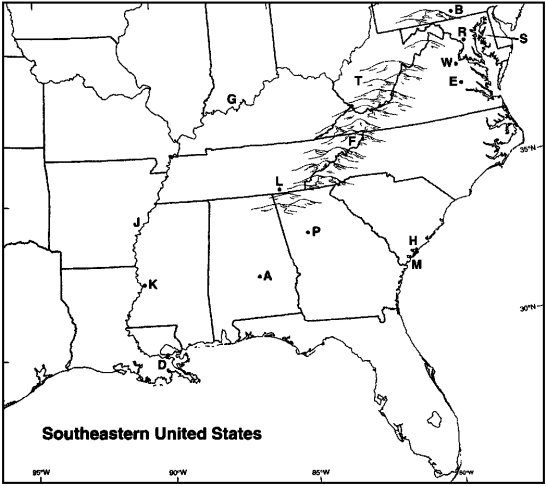
Atlanta, Georgia
Instructions: Choose the letter on the accompanying map of the southeastern United States that correctly identifies each of the following:
Atlanta, Georgia
Question
MAP QUESTIONS
Instructions: Choose the letter on the accompanying map of the southeastern United States that correctly identifies each of the following:
Vicksburg, Mississippi
Instructions: Choose the letter on the accompanying map of the southeastern United States that correctly identifies each of the following:
Vicksburg, Mississippi
Question
MAP QUESTIONS
Instructions: Choose the letter on the accompanying map of the southeastern United States that correctly identifies each of the following:
Fredericksburg, Virginia
Instructions: Choose the letter on the accompanying map of the southeastern United States that correctly identifies each of the following:
Fredericksburg, Virginia
Question
MAP QUESTIONS
Instructions: Choose the letter on the accompanying map of the southeastern United States that correctly identifies each of the following:
Gettysburg, Pennsylvania
Instructions: Choose the letter on the accompanying map of the southeastern United States that correctly identifies each of the following:
Gettysburg, Pennsylvania
Question
MAP QUESTIONS
Instructions: Choose the letter on the accompanying map of the southeastern United States that correctly identifies each of the following:
Mississippi River
Instructions: Choose the letter on the accompanying map of the southeastern United States that correctly identifies each of the following:
Mississippi River
Question
Question
Question
MAP QUESTIONS
Instructions: Choose the letter on the accompanying map of the southeastern United States that correctly identifies each of the following:
Richmond, Virginia
Instructions: Choose the letter on the accompanying map of the southeastern United States that correctly identifies each of the following:
Richmond, Virginia
Question
MAP QUESTIONS
Instructions: Choose the letter on the accompanying map of the southeastern United States that correctly identifies each of the following:
Chattanooga, Tennessee
Instructions: Choose the letter on the accompanying map of the southeastern United States that correctly identifies each of the following:
Chattanooga, Tennessee
Question
Question
Question
MAP QUESTIONS
Instructions: Choose the letter on the accompanying map of the southeastern United States that correctly identifies each of the following:
Maryland
Instructions: Choose the letter on the accompanying map of the southeastern United States that correctly identifies each of the following:
Maryland
Question
Question
MAP QUESTIONS
Instructions: Choose the letter on the accompanying map of the southeastern United States that correctly identifies each of the following:
Charleston, South Carolina
Instructions: Choose the letter on the accompanying map of the southeastern United States that correctly identifies each of the following:
Charleston, South Carolina
Question
MAP QUESTIONS
Instructions: Choose the letter on the accompanying map of the southeastern United States that correctly identifies each of the following:
Washington, D.C.
Instructions: Choose the letter on the accompanying map of the southeastern United States that correctly identifies each of the following:
Washington, D.C.
Question
MAP QUESTIONS
Instructions: Choose the letter on the accompanying map of the southeastern United States that correctly identifies each of the following:
New Orleans, Louisiana
Instructions: Choose the letter on the accompanying map of the southeastern United States that correctly identifies each of the following:
New Orleans, Louisiana
Question
MAP QUESTIONS
Instructions: Choose the letter on the accompanying map of the southeastern United States that correctly identifies each of the following:
Sea Islands
Instructions: Choose the letter on the accompanying map of the southeastern United States that correctly identifies each of the following:
Sea Islands

Unlock Deck
Sign up to unlock the cards in this deck!
Unlock Deck
Unlock Deck
1/57

Play

Full screen (f)
Deck 15: Crucible of Freedom: Civil War, 1861-1865
1
Who was the first and only president of the Confederacy?
A) Alexander Stevens
B) Robert E. Lee
C) Nathan Bedford Forrest
D) Jefferson Davis
E) William Seward
A) Alexander Stevens
B) Robert E. Lee
C) Nathan Bedford Forrest
D) Jefferson Davis
E) William Seward
Jefferson Davis
2
What happened to consumer prices during the Civil War?
A) The North had an inflation rate of 80%, while the South had an inflation rate of 9,000%.
B) Prices remained relatively stable in both the North and the South because of government controls.
C) The South experienced a drastic downward spiral of deflation, while northern prices skyrocketed.
D) Both the northern and southern economies suffered from crippling declines in prices and wages.
E) Both the northern and southern economies boomed, as prices rose slowly and modestly.
A) The North had an inflation rate of 80%, while the South had an inflation rate of 9,000%.
B) Prices remained relatively stable in both the North and the South because of government controls.
C) The South experienced a drastic downward spiral of deflation, while northern prices skyrocketed.
D) Both the northern and southern economies suffered from crippling declines in prices and wages.
E) Both the northern and southern economies boomed, as prices rose slowly and modestly.
The North had an inflation rate of 80%, while the South had an inflation rate of 9,000%.
3
Originally developed by General Winfield Scott and later adopted by General Ulysses S. Grant, the Anaconda Strategy advocated
A) moving cautiously and only attacking when victory was certain.
B) constant pressure on Southern forces by controlling the Mississippi River and blockading the coast.
C) cutting supplies to the South and waiting until the Confederacy starved or surrendered.
D) concentrating Union forces and making an all-out assault on Richmond.
E) the use of spies to infiltrate and disrupt Southern agriculture.
A) moving cautiously and only attacking when victory was certain.
B) constant pressure on Southern forces by controlling the Mississippi River and blockading the coast.
C) cutting supplies to the South and waiting until the Confederacy starved or surrendered.
D) concentrating Union forces and making an all-out assault on Richmond.
E) the use of spies to infiltrate and disrupt Southern agriculture.
constant pressure on Southern forces by controlling the Mississippi River and blockading the coast.
4
Approximately how many Americans died in the Civil War?
A) 125,000
B) 330,000
C) 620,000
D) 950,000
E) 1.2 million
A) 125,000
B) 330,000
C) 620,000
D) 950,000
E) 1.2 million
Unlock Deck
Unlock for access to all 57 flashcards in this deck.
Unlock Deck
k this deck
5
What happened in Exparte Merryman?
A) The Supreme Court ruled that President Lincoln had exceeded his authority in suspending habeas corpus in Maryland.
B) President Lincoln agreed to abide by Supreme Court decisions on questions of presidential power.
C) President Lincoln was indicted for violating the Tenure of Office Act.
D) The Supreme Court ruled that in wartime the president had the authority to banish anyone making treasonable statements.
E) The Supreme Court ruled that civilians could not be tried by military tribunals when the civil courts were open.
A) The Supreme Court ruled that President Lincoln had exceeded his authority in suspending habeas corpus in Maryland.
B) President Lincoln agreed to abide by Supreme Court decisions on questions of presidential power.
C) President Lincoln was indicted for violating the Tenure of Office Act.
D) The Supreme Court ruled that in wartime the president had the authority to banish anyone making treasonable statements.
E) The Supreme Court ruled that civilians could not be tried by military tribunals when the civil courts were open.
Unlock Deck
Unlock for access to all 57 flashcards in this deck.
Unlock Deck
k this deck
6
How did the Confederacy provide for its ordnance needs during the Civil War?
A) It used munitions captured on the battlefield.
B) It made munitions in government-owned factories.
C) It imported munitions from Europe.
D) It bought munitions from private firms.
E) All of these choices
A) It used munitions captured on the battlefield.
B) It made munitions in government-owned factories.
C) It imported munitions from Europe.
D) It bought munitions from private firms.
E) All of these choices
Unlock Deck
Unlock for access to all 57 flashcards in this deck.
Unlock Deck
k this deck
7
Which of the following statements concerning conscription in the Civil War is true?
A) It was unnecessary during the Civil War.
B) It was already in place nationally when the Civil War began.
C) It was used by both sides from the beginning of the war.
D) It was possible in the Union but constitutionally prohibited in the Confederacy.
E) It was instituted first by the Confederacy.
A) It was unnecessary during the Civil War.
B) It was already in place nationally when the Civil War began.
C) It was used by both sides from the beginning of the war.
D) It was possible in the Union but constitutionally prohibited in the Confederacy.
E) It was instituted first by the Confederacy.
Unlock Deck
Unlock for access to all 57 flashcards in this deck.
Unlock Deck
k this deck
8
What did the National Bank Act of 1863 do?
A) It created a national bank in each Confederate state.
B) It established criteria by which a bank could get a federal charter and issue national bank notes.
C) It declared that it was a conflict of interest, and therefore illegal, for federally chartered banks to purchase federal war bonds.
D) It tied the value of Confederate currency to the price of cotton on the European market.
E) It took the Union off the gold standard.
A) It created a national bank in each Confederate state.
B) It established criteria by which a bank could get a federal charter and issue national bank notes.
C) It declared that it was a conflict of interest, and therefore illegal, for federally chartered banks to purchase federal war bonds.
D) It tied the value of Confederate currency to the price of cotton on the European market.
E) It took the Union off the gold standard.
Unlock Deck
Unlock for access to all 57 flashcards in this deck.
Unlock Deck
k this deck
9
Which of the following is not true regarding naval activity during the Civil War?
A) The Confederacy achieved its greatest successes in commerce raiding-harassing and destroying Union merchant shipping.
B) The Union used its superior navy to prevent virtually all blockade runners from making it through.
C) The Union had overwhelming naval superiority throughout the entire war and bolstered its fleet with tugs, whalers, and ferries.
D) During the war, the world's first engagement between two ironclad warships took place.
E) The Confederacy tried to have some of its vessels built in Europe.
A) The Confederacy achieved its greatest successes in commerce raiding-harassing and destroying Union merchant shipping.
B) The Union used its superior navy to prevent virtually all blockade runners from making it through.
C) The Union had overwhelming naval superiority throughout the entire war and bolstered its fleet with tugs, whalers, and ferries.
D) During the war, the world's first engagement between two ironclad warships took place.
E) The Confederacy tried to have some of its vessels built in Europe.
Unlock Deck
Unlock for access to all 57 flashcards in this deck.
Unlock Deck
k this deck
10
The development of the rifle was important because it
A) forced generals to rely less on cavalry.
B) permitted more effective use of the bayonet.
C) eliminated the value of trenches in defensive action.
D) meant that cavalry could be more lethal.
E) invalidated traditional military tactics.
A) forced generals to rely less on cavalry.
B) permitted more effective use of the bayonet.
C) eliminated the value of trenches in defensive action.
D) meant that cavalry could be more lethal.
E) invalidated traditional military tactics.
Unlock Deck
Unlock for access to all 57 flashcards in this deck.
Unlock Deck
k this deck
11
How did the clash between the Virginia and the Monitor in March 1862 revolutionize naval warfare?
A) It showed the value of wind-power over steam.
B) It revealed the value of armor-piercing shells.
C) It indicated the limitations ship-to-ship communications.
D) It marked the first battle between ironclad ships.
E) It signified the importance of rifling in barrels.
A) It showed the value of wind-power over steam.
B) It revealed the value of armor-piercing shells.
C) It indicated the limitations ship-to-ship communications.
D) It marked the first battle between ironclad ships.
E) It signified the importance of rifling in barrels.
Unlock Deck
Unlock for access to all 57 flashcards in this deck.
Unlock Deck
k this deck
12
Which statement accurately describes why that state refused to join the Confederacy?
A) Delaware was mainly a nonslaveholding state that had no desire to be part of a slave Confederacy.
B) Missouri's citizens were united in their loyalty to the Union and in their belief that an independent slave confederacy could not survive.
C) Virginia's nonslaveholding eastern part of the state refused to secede with the western part-which named itself West Virginia when it joined the Confederacy.
D) Maryland's popular politician, Hannibal Hamlin, had just been elected vice president.
E) Kentucky had a Unionist legislature whose resolve was strengthened by the presence of Grant's troops across the river in Illinois.
A) Delaware was mainly a nonslaveholding state that had no desire to be part of a slave Confederacy.
B) Missouri's citizens were united in their loyalty to the Union and in their belief that an independent slave confederacy could not survive.
C) Virginia's nonslaveholding eastern part of the state refused to secede with the western part-which named itself West Virginia when it joined the Confederacy.
D) Maryland's popular politician, Hannibal Hamlin, had just been elected vice president.
E) Kentucky had a Unionist legislature whose resolve was strengthened by the presence of Grant's troops across the river in Illinois.
Unlock Deck
Unlock for access to all 57 flashcards in this deck.
Unlock Deck
k this deck
13
Which of the following was not one of the reasons why both the North and the South were unprepared for war?
A) No one in either section had expected hostilities.
B) Neither the North nor the South had the necessary tax structure to finance the war.
C) Northerners were uncertain about Lincoln's ability to lead the nation.
D) The South had poor railroads and virtually no navy.
E) The Union had only a small army, and one third of its officers had joined the Confederacy.
A) No one in either section had expected hostilities.
B) Neither the North nor the South had the necessary tax structure to finance the war.
C) Northerners were uncertain about Lincoln's ability to lead the nation.
D) The South had poor railroads and virtually no navy.
E) The Union had only a small army, and one third of its officers had joined the Confederacy.
Unlock Deck
Unlock for access to all 57 flashcards in this deck.
Unlock Deck
k this deck
14
Of all the methods the northern and southern governments used to finance the war, which was the most effective in raising revenue?
A) Income taxes
B) Property taxes
C) Government war bonds
D) Printing paper money
E) Sales taxes
A) Income taxes
B) Property taxes
C) Government war bonds
D) Printing paper money
E) Sales taxes
Unlock Deck
Unlock for access to all 57 flashcards in this deck.
Unlock Deck
k this deck
15
Who was exempted from conscription during the Civil War?
A) Northerners who paid the government $300
B) All white southerners
C) Southerners who could not afford the $300 conscription fee
D) Southerners who sent their slaves to fight as substitutes
E) Northerners who objected to war on moral grounds
A) Northerners who paid the government $300
B) All white southerners
C) Southerners who could not afford the $300 conscription fee
D) Southerners who sent their slaves to fight as substitutes
E) Northerners who objected to war on moral grounds
Unlock Deck
Unlock for access to all 57 flashcards in this deck.
Unlock Deck
k this deck
16
The Battle of Antietam in September 1862
A) was a strategic victory for the South because General Grant called off his invasion of Richmond.
B) encouraged Lincoln to issue the Emancipation Proclamation.
C) encouraged Great Britain and France to recognize the Confederacy as an independent nation.
D) was General Ambrose Burnside's most famous victory
E) revealed Robert E. Lee's genius in staging a battle.
A) was a strategic victory for the South because General Grant called off his invasion of Richmond.
B) encouraged Lincoln to issue the Emancipation Proclamation.
C) encouraged Great Britain and France to recognize the Confederacy as an independent nation.
D) was General Ambrose Burnside's most famous victory
E) revealed Robert E. Lee's genius in staging a battle.
Unlock Deck
Unlock for access to all 57 flashcards in this deck.
Unlock Deck
k this deck
17
The South had an advantage over the North in terms of
A) population.
B) firearm production.
C) farm acreage.
D) corn production.
E) soldier morale.
A) population.
B) firearm production.
C) farm acreage.
D) corn production.
E) soldier morale.
Unlock Deck
Unlock for access to all 57 flashcards in this deck.
Unlock Deck
k this deck
18
The Civil War can be considered the first modern war for all of the following reasons except
A) There was an extensive reliance on the new communication technology of the telegraph.
B) There was large-scale use of trench warfare by armies on both sides.
C) The size of the armies on both sides was larger than ever.
D) Tactics changed dramatically.
E) Airplanes significantly altered the experience of combat.
A) There was an extensive reliance on the new communication technology of the telegraph.
B) There was large-scale use of trench warfare by armies on both sides.
C) The size of the armies on both sides was larger than ever.
D) Tactics changed dramatically.
E) Airplanes significantly altered the experience of combat.
Unlock Deck
Unlock for access to all 57 flashcards in this deck.
Unlock Deck
k this deck
19
Which Union general burned Atlanta during the Civil War?
A) William Tecumseh Sherman
B) Philip Sheridan
C) Ulysses S. Grant
D) George Hooker
E) Ambrose Burnside
A) William Tecumseh Sherman
B) Philip Sheridan
C) Ulysses S. Grant
D) George Hooker
E) Ambrose Burnside
Unlock Deck
Unlock for access to all 57 flashcards in this deck.
Unlock Deck
k this deck
20
Why was the Union more politically cohesive than the Confederacy?
A) There was little political dissent in the North because northerners were united in a crusade against slavery.
B) The multiplicity of political parties in the South made Confederate party politics vicious and divisive.
C) The presence of a vocal and politically powerful opposition in the North forced the Republicans to unite behind their leader.
D) Jefferson Davis encouraged dissent as a way of sharpening Confederate resolve.
E) The South had no tradition of vigorous politics or strong political leadership.
A) There was little political dissent in the North because northerners were united in a crusade against slavery.
B) The multiplicity of political parties in the South made Confederate party politics vicious and divisive.
C) The presence of a vocal and politically powerful opposition in the North forced the Republicans to unite behind their leader.
D) Jefferson Davis encouraged dissent as a way of sharpening Confederate resolve.
E) The South had no tradition of vigorous politics or strong political leadership.
Unlock Deck
Unlock for access to all 57 flashcards in this deck.
Unlock Deck
k this deck
21
Which organization did Congress create to provide relief, education, and employment for former slaves?
A) Salvation Army
B) Ku Klux Klan
C) Former Slaves Society
D) Freedmen's Bureau
E) Transition Group
A) Salvation Army
B) Ku Klux Klan
C) Former Slaves Society
D) Freedmen's Bureau
E) Transition Group
Unlock Deck
Unlock for access to all 57 flashcards in this deck.
Unlock Deck
k this deck
22
Which of the following did not happen to southern agriculture during the Civil War?
A) Wheat and corn production declined.
B) Planters continued to plant cotton rather than grow food.
C) There was a serious shortage of agricultural workers.
D) Cotton production declined.
E) Southern farmwives took control of their farms and encouraged their husbands to stay in the army.
A) Wheat and corn production declined.
B) Planters continued to plant cotton rather than grow food.
C) There was a serious shortage of agricultural workers.
D) Cotton production declined.
E) Southern farmwives took control of their farms and encouraged their husbands to stay in the army.
Unlock Deck
Unlock for access to all 57 flashcards in this deck.
Unlock Deck
k this deck
23
Which of the following is an accurate generalization about health and sanitation at the Civil War battlefront?
A) Neither the Union nor the Confederate government devoted much energy to sanitary measures in hospitals.
B) Because of the large number of volunteer nurses in northern hospitals, army camps were free from typhoid, malaria, diarrhea, and dysentery.
C) Although the ratio of disease to battle deaths was much better than during the Mexican War, two-thirds of deaths came from disease rather than battle wounds.
D) Health conditions at the battlefront were so horrific that women were prohibited from coming within five miles of battlefields.
E) None of these choices
A) Neither the Union nor the Confederate government devoted much energy to sanitary measures in hospitals.
B) Because of the large number of volunteer nurses in northern hospitals, army camps were free from typhoid, malaria, diarrhea, and dysentery.
C) Although the ratio of disease to battle deaths was much better than during the Mexican War, two-thirds of deaths came from disease rather than battle wounds.
D) Health conditions at the battlefront were so horrific that women were prohibited from coming within five miles of battlefields.
E) None of these choices
Unlock Deck
Unlock for access to all 57 flashcards in this deck.
Unlock Deck
k this deck
24
How did the Civil War affect ordinary workers in the North?
A) Most suffered from higher prices, increased taxes, and lagging wages.
B) Setbacks in the clothing industry caused large numbers of garment workers and seamstresses to lose their jobs.
C) Because of general prosperity, a smaller proportion of women had to work outside the home.
D) Income for ordinary workers in defense plants soared.
E) Because of the wartime emergency, national unions were able to win sizable wage increases for many workers.
A) Most suffered from higher prices, increased taxes, and lagging wages.
B) Setbacks in the clothing industry caused large numbers of garment workers and seamstresses to lose their jobs.
C) Because of general prosperity, a smaller proportion of women had to work outside the home.
D) Income for ordinary workers in defense plants soared.
E) Because of the wartime emergency, national unions were able to win sizable wage increases for many workers.
Unlock Deck
Unlock for access to all 57 flashcards in this deck.
Unlock Deck
k this deck
25
Why did Cotton Diplomacy fail?
A) The Confederacy overestimated Britain's dependence on southern cotton.
B) Northern border states were able to supply Great Britain with all the cotton it needed.
C) Union forces destroyed most of the South's cotton fields in 1861 and 1862.
D) All of these choices
E) None of these choices
A) The Confederacy overestimated Britain's dependence on southern cotton.
B) Northern border states were able to supply Great Britain with all the cotton it needed.
C) Union forces destroyed most of the South's cotton fields in 1861 and 1862.
D) All of these choices
E) None of these choices
Unlock Deck
Unlock for access to all 57 flashcards in this deck.
Unlock Deck
k this deck
26
Hardtack was
A) the nickname for the bayonet that was used by Union forces.
B) a type of biscuit was that was a mainstay in the rations of Union forces.
C) the tactic of quickly changing the direction of a military unit and hitting the enemy from an unexpected direction.
D) the ammunition that was used in the Enfield rifle.
E) a medal that all Union forces got to where after the war recognizing their service.
A) the nickname for the bayonet that was used by Union forces.
B) a type of biscuit was that was a mainstay in the rations of Union forces.
C) the tactic of quickly changing the direction of a military unit and hitting the enemy from an unexpected direction.
D) the ammunition that was used in the Enfield rifle.
E) a medal that all Union forces got to where after the war recognizing their service.
Unlock Deck
Unlock for access to all 57 flashcards in this deck.
Unlock Deck
k this deck
27
The Morrill Land Grant Act provided
A) 160 acres free to settlers who lived on the land for five years.
B) money to states to establish universities that emphasized agriculture and mechanical arts.
C) free land to Union veterans after the war.
D) land to former slaves along the coast of South Carolina.
E) Union widows 50 acres of land and a mule.
A) 160 acres free to settlers who lived on the land for five years.
B) money to states to establish universities that emphasized agriculture and mechanical arts.
C) free land to Union veterans after the war.
D) land to former slaves along the coast of South Carolina.
E) Union widows 50 acres of land and a mule.
Unlock Deck
Unlock for access to all 57 flashcards in this deck.
Unlock Deck
k this deck
28
How did the Union and Confederate governments compare in their handling of dissent?
A) Because both governments originated from the same political tradition, they both viewed dissent the same way.
B) Abraham Lincoln was far less hesitant about imposing martial law and suspending the fundamental right of habeas corpus than was Jefferson Davis.
C) Compared with Jefferson Davis, Abraham Lincoln had greater faith in democracy and therefore thought that dissent was a beneficial part of the political process.
D) Because of the Confederacy's belief in states' rights, dissent was expected and encouraged.
E) The Confederate government was prepared to act swiftly and harshly to stamp out dissent, which it equated with treason.
A) Because both governments originated from the same political tradition, they both viewed dissent the same way.
B) Abraham Lincoln was far less hesitant about imposing martial law and suspending the fundamental right of habeas corpus than was Jefferson Davis.
C) Compared with Jefferson Davis, Abraham Lincoln had greater faith in democracy and therefore thought that dissent was a beneficial part of the political process.
D) Because of the Confederacy's belief in states' rights, dissent was expected and encouraged.
E) The Confederate government was prepared to act swiftly and harshly to stamp out dissent, which it equated with treason.
Unlock Deck
Unlock for access to all 57 flashcards in this deck.
Unlock Deck
k this deck
29
Which of the following statements concerning the Battle of Shiloh is not correct?
A) Confederate General Beauregard announced victory prematurely.
B) It was the costly battle in American history to that point in time.
C) Confederate forces withdrew after Union reinforcements arrived and launched a successful counterattack.
D) Grant and Sherman won a great victory with relatively few casualties.
E) Confederate armies staged a surprise attack on General Grant's army.
A) Confederate General Beauregard announced victory prematurely.
B) It was the costly battle in American history to that point in time.
C) Confederate forces withdrew after Union reinforcements arrived and launched a successful counterattack.
D) Grant and Sherman won a great victory with relatively few casualties.
E) Confederate armies staged a surprise attack on General Grant's army.
Unlock Deck
Unlock for access to all 57 flashcards in this deck.
Unlock Deck
k this deck
30
During the Civil War, northern African American leaders such as Frederick Douglass worked as army recruiting agents because they believed that
A) it was the best way to prevent blacks from being drafted.
B) blacks were more resistant to the diseases that ravaged white soldiers in the garrisons.
C) blacks would get to see their loved ones in the South only by fighting for the Union.
D) by cooperating during the war they would be rewarded with greater civil rights after the war.
E) black participation in the army would be a step toward black citizenship.
A) it was the best way to prevent blacks from being drafted.
B) blacks were more resistant to the diseases that ravaged white soldiers in the garrisons.
C) blacks would get to see their loved ones in the South only by fighting for the Union.
D) by cooperating during the war they would be rewarded with greater civil rights after the war.
E) black participation in the army would be a step toward black citizenship.
Unlock Deck
Unlock for access to all 57 flashcards in this deck.
Unlock Deck
k this deck
31
Black soldiers in the Union army
A) were less likely than whites to die of diseases.
B) were usually treated as prisoners of war when captured by Confederate troops.
C) comprised nearly one-quarter of the Union army by the end of the war
D) were, from the start, paid the same as white soldiers.
E) typically assigned to labor detachments or garrison duty and were therefore less likely to be killed in action.
A) were less likely than whites to die of diseases.
B) were usually treated as prisoners of war when captured by Confederate troops.
C) comprised nearly one-quarter of the Union army by the end of the war
D) were, from the start, paid the same as white soldiers.
E) typically assigned to labor detachments or garrison duty and were therefore less likely to be killed in action.
Unlock Deck
Unlock for access to all 57 flashcards in this deck.
Unlock Deck
k this deck
32
The Emancipation Proclamation
A) freed the slaves and abolished slavery in all the states of the Union and the Confederacy.
B) freed slaves only in areas under Confederate control but not in areas that remained loyal.
C) was formulated by the Radical Republicans and issued by Lincoln despite his strong personal objections.
D) convinced England and France to enter the war on behalf of the Union in order to win the crusade against slavery.
E) was issued twenty-four hours after General Lee surrendered.
A) freed the slaves and abolished slavery in all the states of the Union and the Confederacy.
B) freed slaves only in areas under Confederate control but not in areas that remained loyal.
C) was formulated by the Radical Republicans and issued by Lincoln despite his strong personal objections.
D) convinced England and France to enter the war on behalf of the Union in order to win the crusade against slavery.
E) was issued twenty-four hours after General Lee surrendered.
Unlock Deck
Unlock for access to all 57 flashcards in this deck.
Unlock Deck
k this deck
33
How did the Trent affair almost trigger a war between the United States and Great Britain?
A) American frontiersmen crossed the Canadian border and attacked some settlers.
B) A Union diplomat insulted the British monarch.
C) The Union navy seized a ship carrying Confederate diplomats going to Great Britain and France.
D) British shipyards built the Trent to serve in the Confederate navy as a commerce raider.
E) None of these choices
A) American frontiersmen crossed the Canadian border and attacked some settlers.
B) A Union diplomat insulted the British monarch.
C) The Union navy seized a ship carrying Confederate diplomats going to Great Britain and France.
D) British shipyards built the Trent to serve in the Confederate navy as a commerce raider.
E) None of these choices
Unlock Deck
Unlock for access to all 57 flashcards in this deck.
Unlock Deck
k this deck
34
Besides providing some soldiers, what was the primary benefit of Union and Confederate conscription laws?
A) They limited the number of men who could protest the harsh conditions caused by the war.
B) They provided a pool of workers who were not qualified to be soldiers.
C) They encouraged men to volunteer for military service.
D) They forced both sides to develop an accurate census.
E) They established the foundation for a larger military after the war.
A) They limited the number of men who could protest the harsh conditions caused by the war.
B) They provided a pool of workers who were not qualified to be soldiers.
C) They encouraged men to volunteer for military service.
D) They forced both sides to develop an accurate census.
E) They established the foundation for a larger military after the war.
Unlock Deck
Unlock for access to all 57 flashcards in this deck.
Unlock Deck
k this deck
35
Thomas Wentworth Higginson who commanded the Union's first African-American regiment, observed that his troops
A) felt no sense of revenge toward their former masters;
B) had strong affection for their former masters
C) were irrelevant to the war effort
D) behaved in such a way as to question the fight for their freedom
E) were never able to function as a disciplined fighting force.
A) felt no sense of revenge toward their former masters;
B) had strong affection for their former masters
C) were irrelevant to the war effort
D) behaved in such a way as to question the fight for their freedom
E) were never able to function as a disciplined fighting force.
Unlock Deck
Unlock for access to all 57 flashcards in this deck.
Unlock Deck
k this deck
36
At the First Battle of Bull Run (or Manassas),
A) amateur armies on both sides fought a bloody battle with confederate forces ultimately prevailing.
B) the two sides fought to a stalemate and withdrew after three days of fighting.
C) President Lincoln personally led the Union army into battle.
D) Confederate forces defeated the Union army and advance unopposed to the outskirts of Washington, D.C.
E) the opposing forces engaged each other from long distances and caused few casualties.
A) amateur armies on both sides fought a bloody battle with confederate forces ultimately prevailing.
B) the two sides fought to a stalemate and withdrew after three days of fighting.
C) President Lincoln personally led the Union army into battle.
D) Confederate forces defeated the Union army and advance unopposed to the outskirts of Washington, D.C.
E) the opposing forces engaged each other from long distances and caused few casualties.
Unlock Deck
Unlock for access to all 57 flashcards in this deck.
Unlock Deck
k this deck
37
Why was Vicksburg so important to the Confederacy?
A) It was a key railroad junction between Chattanooga and Atlanta.
B) It was located at the entrance to Mobile Bay.
C) It allowed trade and communication between Confederate states on either side of the Mississippi River.
D) It was a great supply base.
E) It guarded the Union attack route into Tennessee.
A) It was a key railroad junction between Chattanooga and Atlanta.
B) It was located at the entrance to Mobile Bay.
C) It allowed trade and communication between Confederate states on either side of the Mississippi River.
D) It was a great supply base.
E) It guarded the Union attack route into Tennessee.
Unlock Deck
Unlock for access to all 57 flashcards in this deck.
Unlock Deck
k this deck
38
What happened at Fort Pillow, Tennessee in 1864?
A) Union forces seized the fort and forced Southern forces to abandon Chattanooga.
B) Ulysses S. Grant seized the fort and gained control of the Tennessee River.
C) Confederate forces captured and massacred black soldiers serving in the Union army.
D) Robert E. Lee seized the fort and forced Union forces to evacuate Knoxville.
E) Union forces laid siege to the fort and forced the Confederate forces to surrender.
A) Union forces seized the fort and forced Southern forces to abandon Chattanooga.
B) Ulysses S. Grant seized the fort and gained control of the Tennessee River.
C) Confederate forces captured and massacred black soldiers serving in the Union army.
D) Robert E. Lee seized the fort and forced Union forces to evacuate Knoxville.
E) Union forces laid siege to the fort and forced the Confederate forces to surrender.
Unlock Deck
Unlock for access to all 57 flashcards in this deck.
Unlock Deck
k this deck
39
What was the most important factor in Abraham Lincoln's 1864 reelection victory?
A) He furloughed Union soldiers so that they could vote for him.
B) Atlanta fell to Union forces in September 1864.
C) There was no organized political opposition to his re-election.
D) Lincoln's lenient plan for postwar reconstruction appealed to many.
E) He issued the Emancipation Proclamation.
A) He furloughed Union soldiers so that they could vote for him.
B) Atlanta fell to Union forces in September 1864.
C) There was no organized political opposition to his re-election.
D) Lincoln's lenient plan for postwar reconstruction appealed to many.
E) He issued the Emancipation Proclamation.
Unlock Deck
Unlock for access to all 57 flashcards in this deck.
Unlock Deck
k this deck
40
Which of the following is not one of the reasons why the Confederacy expected assistance, or at least diplomatic recognition, from France or Great Britain?
A) The French and British upper classes were thought to be sympathetic to the South.
B) A permanent division of the United States would benefit European colonial designs in the Western Hemisphere.
C) Britain depended on the South for four-fifths of its cotton.
D) The British Prime Minister had secretly promised aid and recognition to Jefferson Davis in 1860.
E) There was considerable diplomatic friction between Great Britain and the Union.
A) The French and British upper classes were thought to be sympathetic to the South.
B) A permanent division of the United States would benefit European colonial designs in the Western Hemisphere.
C) Britain depended on the South for four-fifths of its cotton.
D) The British Prime Minister had secretly promised aid and recognition to Jefferson Davis in 1860.
E) There was considerable diplomatic friction between Great Britain and the Union.
Unlock Deck
Unlock for access to all 57 flashcards in this deck.
Unlock Deck
k this deck
41
MAP QUESTIONS
Instructions: Choose the letter on the accompanying map of the southeastern United States that correctly identifies each of the following:
Atlanta, Georgia
Instructions: Choose the letter on the accompanying map of the southeastern United States that correctly identifies each of the following:
Atlanta, Georgia
Unlock Deck
Unlock for access to all 57 flashcards in this deck.
Unlock Deck
k this deck
42
MAP QUESTIONS
Instructions: Choose the letter on the accompanying map of the southeastern United States that correctly identifies each of the following:
Vicksburg, Mississippi
Instructions: Choose the letter on the accompanying map of the southeastern United States that correctly identifies each of the following:
Vicksburg, Mississippi
Unlock Deck
Unlock for access to all 57 flashcards in this deck.
Unlock Deck
k this deck
43
MAP QUESTIONS
Instructions: Choose the letter on the accompanying map of the southeastern United States that correctly identifies each of the following:
Fredericksburg, Virginia
Instructions: Choose the letter on the accompanying map of the southeastern United States that correctly identifies each of the following:
Fredericksburg, Virginia
Unlock Deck
Unlock for access to all 57 flashcards in this deck.
Unlock Deck
k this deck
44
MAP QUESTIONS
Instructions: Choose the letter on the accompanying map of the southeastern United States that correctly identifies each of the following:
Gettysburg, Pennsylvania
Instructions: Choose the letter on the accompanying map of the southeastern United States that correctly identifies each of the following:
Gettysburg, Pennsylvania
Unlock Deck
Unlock for access to all 57 flashcards in this deck.
Unlock Deck
k this deck
45
MAP QUESTIONS
Instructions: Choose the letter on the accompanying map of the southeastern United States that correctly identifies each of the following:
Mississippi River
Instructions: Choose the letter on the accompanying map of the southeastern United States that correctly identifies each of the following:
Mississippi River
Unlock Deck
Unlock for access to all 57 flashcards in this deck.
Unlock Deck
k this deck
46
Why did the typical volunteer join the army, either north or south?
A) Local loyalties
B) Ideals of honor and valor
C) Expectations of military glory
D) The desire to archive "manhood"
E) All of these choices
A) Local loyalties
B) Ideals of honor and valor
C) Expectations of military glory
D) The desire to archive "manhood"
E) All of these choices
Unlock Deck
Unlock for access to all 57 flashcards in this deck.
Unlock Deck
k this deck
47
The Civil War resulted in the end of slavery, the weakening of states' rights, the creation of a national banking system, promotion of large-scale business, and expanded federal powers. What conclusion can you draw from those facts?
A) The war had staggering economic cost.
B) The South would have changed even without the war.
C) In many ways, the war initiated a new American revolution.
D) The North changed more than the South as a result of the war.
E) It was good that the war occurred.
A) The war had staggering economic cost.
B) The South would have changed even without the war.
C) In many ways, the war initiated a new American revolution.
D) The North changed more than the South as a result of the war.
E) It was good that the war occurred.
Unlock Deck
Unlock for access to all 57 flashcards in this deck.
Unlock Deck
k this deck
48
MAP QUESTIONS
Instructions: Choose the letter on the accompanying map of the southeastern United States that correctly identifies each of the following:
Richmond, Virginia
Instructions: Choose the letter on the accompanying map of the southeastern United States that correctly identifies each of the following:
Richmond, Virginia
Unlock Deck
Unlock for access to all 57 flashcards in this deck.
Unlock Deck
k this deck
49
MAP QUESTIONS
Instructions: Choose the letter on the accompanying map of the southeastern United States that correctly identifies each of the following:
Chattanooga, Tennessee
Instructions: Choose the letter on the accompanying map of the southeastern United States that correctly identifies each of the following:
Chattanooga, Tennessee
Unlock Deck
Unlock for access to all 57 flashcards in this deck.
Unlock Deck
k this deck
50
Which group of battles is correctly identified as Union or Confederate victories?
A) Confederate victories: Chancellorsville, Chickamauga, and Antietam
B) Union victories: Antietam, Gettysburg, and Vicksburg
C) Confederate victories: Shiloh, New Orleans, and Fredericksburg
D) Union victories: Vicksburg, Shiloh, and Chickamauga
A) Confederate victories: Chancellorsville, Chickamauga, and Antietam
B) Union victories: Antietam, Gettysburg, and Vicksburg
C) Confederate victories: Shiloh, New Orleans, and Fredericksburg
D) Union victories: Vicksburg, Shiloh, and Chickamauga
Unlock Deck
Unlock for access to all 57 flashcards in this deck.
Unlock Deck
k this deck
51
Which Union city experience a violent draft riot in 1863?
A) Boston
B) Washington, D.C.
C) Chicago
D) Philadelphia
E) New York City
A) Boston
B) Washington, D.C.
C) Chicago
D) Philadelphia
E) New York City
Unlock Deck
Unlock for access to all 57 flashcards in this deck.
Unlock Deck
k this deck
52
MAP QUESTIONS
Instructions: Choose the letter on the accompanying map of the southeastern United States that correctly identifies each of the following:
Maryland
Instructions: Choose the letter on the accompanying map of the southeastern United States that correctly identifies each of the following:
Maryland
Unlock Deck
Unlock for access to all 57 flashcards in this deck.
Unlock Deck
k this deck
53
Why was Dorothea Dix significant during the Civil War?
A) She headed the Union's nursing corps.
B) She became the first woman general in the army.
C) She was one of President Lincoln's principal advisers.
D) She served as a Union spy in the Confederate government.
E) None of these choices
A) She headed the Union's nursing corps.
B) She became the first woman general in the army.
C) She was one of President Lincoln's principal advisers.
D) She served as a Union spy in the Confederate government.
E) None of these choices
Unlock Deck
Unlock for access to all 57 flashcards in this deck.
Unlock Deck
k this deck
54
MAP QUESTIONS
Instructions: Choose the letter on the accompanying map of the southeastern United States that correctly identifies each of the following:
Charleston, South Carolina
Instructions: Choose the letter on the accompanying map of the southeastern United States that correctly identifies each of the following:
Charleston, South Carolina
Unlock Deck
Unlock for access to all 57 flashcards in this deck.
Unlock Deck
k this deck
55
MAP QUESTIONS
Instructions: Choose the letter on the accompanying map of the southeastern United States that correctly identifies each of the following:
Washington, D.C.
Instructions: Choose the letter on the accompanying map of the southeastern United States that correctly identifies each of the following:
Washington, D.C.
Unlock Deck
Unlock for access to all 57 flashcards in this deck.
Unlock Deck
k this deck
56
MAP QUESTIONS
Instructions: Choose the letter on the accompanying map of the southeastern United States that correctly identifies each of the following:
New Orleans, Louisiana
Instructions: Choose the letter on the accompanying map of the southeastern United States that correctly identifies each of the following:
New Orleans, Louisiana
Unlock Deck
Unlock for access to all 57 flashcards in this deck.
Unlock Deck
k this deck
57
MAP QUESTIONS
Instructions: Choose the letter on the accompanying map of the southeastern United States that correctly identifies each of the following:
Sea Islands
Instructions: Choose the letter on the accompanying map of the southeastern United States that correctly identifies each of the following:
Sea Islands
Unlock Deck
Unlock for access to all 57 flashcards in this deck.
Unlock Deck
k this deck
Unlock Deck
Unlock for access to all 57 flashcards in this deck.






