







 Chat with AI

Deck 7: Organohalides: Nucleophilic Substitutions and Eliminations
Full screen (f)

Question
Instructions: Provide a IUPAC name for each of the following alkyl halides.
Name: (Halothane)
Name:
(Halothane)
Question
Instructions: Circle the correct response in each set below.
Refer to instructions. The least reactive compound in an SN1 reaction.
Refer to instructions. The least reactive compound in an SN1 reaction.
Question
Instructions: Provide a IUPAC name for each of the following alkyl halides.
Name:
Name:
Question
Question
Question
Instructions: Consider the reaction below to answer the following question.

Refer to instructions. The mechanism for this reaction is:
A) SN2
B) E2
C) SN1
D) E1
Refer to instructions. The mechanism for this reaction is:
A) SN2
B) E2
C) SN1
D) E1
Question
Instructions: Consider the pair of reactions below to answer the following question(s).
a.
or
b.
-Refer to instructions. The nucleophile in these reactions is:
A) K+
B) alkyl group
C) Br-
D) I-
a.
or
b.
-Refer to instructions. The nucleophile in these reactions is:
A) K+
B) alkyl group
C) Br-
D) I-
Question
Question
Instructions: Consider the pair of reactions below to answer the following question(s).
a.
or
b.
Refer to instructions. The mechanism for these reactions is:
A) SN2
B) E2
C) SN1
D) E1
a.
or
b.
Refer to instructions. The mechanism for these reactions is:
A) SN2
B) E2
C) SN1
D) E1
Question
Instructions: Consider the reaction below to answer the following question(s).
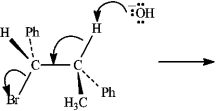
Refer to instructions. Write the product that results from the indicated electron flow in the reaction, showing any resulting stereochemistry
Refer to instructions. Write the product that results from the indicated electron flow in the reaction, showing any resulting stereochemistry
Question
Instructions: Circle the correct response in each set below.
Refer to instructions. The least reactive compound in an SN2 reaction. Explain your choice.
Refer to instructions. The least reactive compound in an SN2 reaction. Explain your choice.
Question
Instructions: For each question, provide structures for the reactants, intermediates, or products, as indicated. Draw the structures in the boxes provided.
Draw: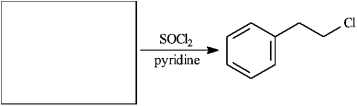
Draw:
Question
Question
Instructions: Consider the reaction below to answer the following question(s).
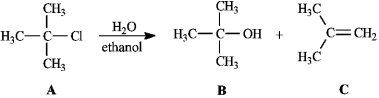
Refer to instructions. Compound C is the:
A) SN2 product
B) SN1 product
C) E2 product
D) E1 product
Refer to instructions. Compound C is the:
A) SN2 product
B) SN1 product
C) E2 product
D) E1 product
Question
Instructions: Consider the reaction below to answer the following question(s).
Refer to instructions. Compound B is the:
A) SN2 product
B) SN1 product
C) E2 product
D) E1 product
Refer to instructions. Compound B is the:
A) SN2 product
B) SN1 product
C) E2 product
D) E1 product
Question
Instructions: Provide a IUPAC name for each of the following alkyl halides.
Name: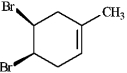
Name:
Question
Question
Instructions: Consider the pair of reactions below to answer the following question(s).
a.
or
b.
-Refer to instructions. The alkyl bromide starting materials in these reactions are classified as:
A) 3
B) 2
C) 1
D) 4
a.
or
b.
-Refer to instructions. The alkyl bromide starting materials in these reactions are classified as:
A) 3
B) 2
C) 1
D) 4
Question
Question
Instructions: For each question, provide structures for the reactants, intermediates, or products, as indicated. Draw the structures in the boxes provided.
Draw: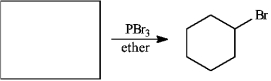
Draw:
Question
Instructions: Consider the reaction below to answer the following question(s).
Refer to instructions. The mechanism of this reaction is:
A) SN1
B) SN2
C) E1
D) E2
Refer to instructions. The mechanism of this reaction is:
A) SN1
B) SN2
C) E1
D) E2
Question
Which is most reactive in an SN1 reaction? Explain your choice.
A)
B)CH3I
C)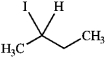
D)
E)
A)
B)CH3I
C)
D)
E)
Question
Propose a synthesis of the following compound from the given starting material and any inorganic reagents necessary. 
Question
Question
Instructions:
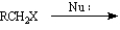
For each substrate below, choose which reaction type is favored. Place the letter of the reaction type in the blank above the substrate.
Refer to Instructions.
_____
A)SN1
B)SN2
C)E1
D)E2
For each substrate below, choose which reaction type is favored. Place the letter of the reaction type in the blank above the substrate.
Refer to Instructions.
_____
A)SN1
B)SN2
C)E1
D)E2
Question
Question
Consider the reactions below to answer the following questions.
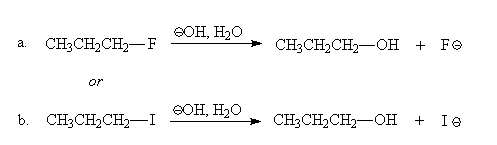
Which reaction would be predicted to be faster? Explain.
Which reaction would be predicted to be faster? Explain.
Question
Instructions: Consider the reaction below to answer the following question(s).
Refer to instructions. Draw a Newman projection of the reactive conformation of the starting material.
Refer to instructions. Draw a Newman projection of the reactive conformation of the starting material.
Question
Question
Which of the following represents the transition state of the SN2 reaction between methyl iodide and ammonia?
A)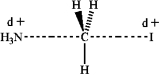
B)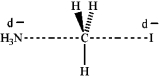
C)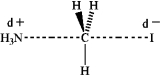
D)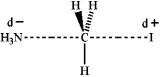
A)
B)
C)
D)
Question
Instructions:
For each substrate below, choose which reaction type is favored. Place the letter of the reaction type in the blank above the substrate.
Refer to Instructions.
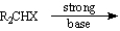
_____
A)SN1
B)SN2
C)E1
D)E2
For each substrate below, choose which reaction type is favored. Place the letter of the reaction type in the blank above the substrate.
Refer to Instructions.
_____
A)SN1
B)SN2
C)E1
D)E2
Question
Instructions:
For each substrate below, choose which reaction type is favored. Place the letter of the reaction type in the blank above the substrate.
Refer to Instructions.
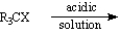
_____
A)SN1
B)SN2
C)E1
D)E2
For each substrate below, choose which reaction type is favored. Place the letter of the reaction type in the blank above the substrate.
Refer to Instructions.
_____
A)SN1
B)SN2
C)E1
D)E2
Question
Question
What is the IUPAC name of the following compound? 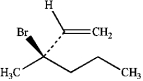
A) (R)-2-bromo-2-vinylpentane
B) (S)-2-bromo-2-vinylpentane
C) (S)-3-bromo-3-propylbut-1-ene
D) (R)-3-bromo-3-methylhex-1-ene
A) (R)-2-bromo-2-vinylpentane
B) (S)-2-bromo-2-vinylpentane
C) (S)-3-bromo-3-propylbut-1-ene
D) (R)-3-bromo-3-methylhex-1-ene
Question
Question
Question
Consider the reactions below to answer the following questions.
The mechanism for these reactions is:
A) SN1
B) SN2
C) E1
D) E2
The mechanism for these reactions is:
A) SN1
B) SN2
C) E1
D) E2
Question
Predict the product of the following reaction: 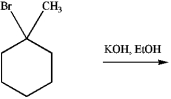
Question
Question

Unlock Deck
Sign up to unlock the cards in this deck!
Unlock Deck
Unlock Deck
1/40

Play

Full screen (f)
Deck 7: Organohalides: Nucleophilic Substitutions and Eliminations
1
Instructions: Provide a IUPAC name for each of the following alkyl halides.
Name: (Halothane)
Name:
(Halothane)2-bromo-2-chloro-1,1,1-trifluoroethane
2
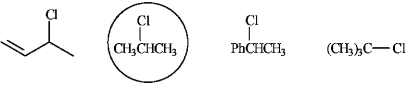
Instructions: Circle the correct response in each set below.
Refer to instructions. The least reactive compound in an SN1 reaction.
Refer to instructions. The least reactive compound in an SN1 reaction.
3
Instructions: Provide a IUPAC name for each of the following alkyl halides.
Name:
Name:
1-bromo-1-chloroethane
4
Instructions: For each question, draw a structure corresponding to the given name.
Draw:
1,2-dichloro-1,1,2,2-tetrafluoroethane (Cryofluorane)
Draw:
1,2-dichloro-1,1,2,2-tetrafluoroethane (Cryofluorane)
Unlock Deck
Unlock for access to all 40 flashcards in this deck.
Unlock Deck
k this deck
5
Instructions: For each question, draw a structure corresponding to the given name.
Draw:
(S)-2-bromobutane
Draw:
(S)-2-bromobutane
Unlock Deck
Unlock for access to all 40 flashcards in this deck.
Unlock Deck
k this deck
6
Instructions: Consider the reaction below to answer the following question.
Refer to instructions. The mechanism for this reaction is:
A) SN2
B) E2
C) SN1
D) E1
Refer to instructions. The mechanism for this reaction is:
A) SN2
B) E2
C) SN1
D) E1
Unlock Deck
Unlock for access to all 40 flashcards in this deck.
Unlock Deck
k this deck
7
Instructions: Consider the pair of reactions below to answer the following question(s).
a.
or
b.
-Refer to instructions. The nucleophile in these reactions is:
A) K+
B) alkyl group
C) Br-
D) I-
a.
or
b.
-Refer to instructions. The nucleophile in these reactions is:
A) K+
B) alkyl group
C) Br-
D) I-
Unlock Deck
Unlock for access to all 40 flashcards in this deck.
Unlock Deck
k this deck
8
Instructions: For each question, draw a structure corresponding to the given name.
Draw:
3-iodoprop-1-ene
Draw:
3-iodoprop-1-ene
Unlock Deck
Unlock for access to all 40 flashcards in this deck.
Unlock Deck
k this deck
9
Instructions: Consider the pair of reactions below to answer the following question(s).
a.
or
b.
Refer to instructions. The mechanism for these reactions is:
A) SN2
B) E2
C) SN1
D) E1
a.
or
b.
Refer to instructions. The mechanism for these reactions is:
A) SN2
B) E2
C) SN1
D) E1
Unlock Deck
Unlock for access to all 40 flashcards in this deck.
Unlock Deck
k this deck
10
Instructions: Consider the reaction below to answer the following question(s).
Refer to instructions. Write the product that results from the indicated electron flow in the reaction, showing any resulting stereochemistry
Refer to instructions. Write the product that results from the indicated electron flow in the reaction, showing any resulting stereochemistry
Unlock Deck
Unlock for access to all 40 flashcards in this deck.
Unlock Deck
k this deck
11
Instructions: Circle the correct response in each set below.
Refer to instructions. The least reactive compound in an SN2 reaction. Explain your choice.
Refer to instructions. The least reactive compound in an SN2 reaction. Explain your choice.
Unlock Deck
Unlock for access to all 40 flashcards in this deck.
Unlock Deck
k this deck
12
Instructions: For each question, provide structures for the reactants, intermediates, or products, as indicated. Draw the structures in the boxes provided.
Draw:
Draw:
Unlock Deck
Unlock for access to all 40 flashcards in this deck.
Unlock Deck
k this deck
13
Instructions: Provide a IUPAC name for each of the following alkyl halides.
Name:
The solvents: CCl4 and CH2Cl2
Name:
The solvents: CCl4 and CH2Cl2
Unlock Deck
Unlock for access to all 40 flashcards in this deck.
Unlock Deck
k this deck
14
Instructions: Consider the reaction below to answer the following question(s).
Refer to instructions. Compound C is the:
A) SN2 product
B) SN1 product
C) E2 product
D) E1 product
Refer to instructions. Compound C is the:
A) SN2 product
B) SN1 product
C) E2 product
D) E1 product
Unlock Deck
Unlock for access to all 40 flashcards in this deck.
Unlock Deck
k this deck
15
Instructions: Consider the reaction below to answer the following question(s).
Refer to instructions. Compound B is the:
A) SN2 product
B) SN1 product
C) E2 product
D) E1 product
Refer to instructions. Compound B is the:
A) SN2 product
B) SN1 product
C) E2 product
D) E1 product
Unlock Deck
Unlock for access to all 40 flashcards in this deck.
Unlock Deck
k this deck
16
Instructions: Provide a IUPAC name for each of the following alkyl halides.
Name:
Name:
Unlock Deck
Unlock for access to all 40 flashcards in this deck.
Unlock Deck
k this deck
17
Instructions: For each question, draw a structure corresponding to the given name.
Draw:
trans-1-sec-butyl-3-chlorocyclohexane
Draw:
trans-1-sec-butyl-3-chlorocyclohexane
Unlock Deck
Unlock for access to all 40 flashcards in this deck.
Unlock Deck
k this deck
18
Instructions: Consider the pair of reactions below to answer the following question(s).
a.
or
b.
-Refer to instructions. The alkyl bromide starting materials in these reactions are classified as:
A) 3
B) 2
C) 1
D) 4
a.
or
b.
-Refer to instructions. The alkyl bromide starting materials in these reactions are classified as:
A) 3
B) 2
C) 1
D) 4
Unlock Deck
Unlock for access to all 40 flashcards in this deck.
Unlock Deck
k this deck
19
Instructions: Provide a IUPAC name for each of the following alkyl halides.
Name:
CHI3 (iodoform)
Name:
CHI3 (iodoform)
Unlock Deck
Unlock for access to all 40 flashcards in this deck.
Unlock Deck
k this deck
20
Instructions: For each question, provide structures for the reactants, intermediates, or products, as indicated. Draw the structures in the boxes provided.
Draw:
Draw:
Unlock Deck
Unlock for access to all 40 flashcards in this deck.
Unlock Deck
k this deck
21
Instructions: Consider the reaction below to answer the following question(s).
Refer to instructions. The mechanism of this reaction is:
A) SN1
B) SN2
C) E1
D) E2
Refer to instructions. The mechanism of this reaction is:
A) SN1
B) SN2
C) E1
D) E2
Unlock Deck
Unlock for access to all 40 flashcards in this deck.
Unlock Deck
k this deck
22
Which is most reactive in an SN1 reaction? Explain your choice.
A)
B)CH3I
C)
D)
E)
A)
B)CH3I
C)
D)
E)
Unlock Deck
Unlock for access to all 40 flashcards in this deck.
Unlock Deck
k this deck
23
Propose a synthesis of the following compound from the given starting material and any inorganic reagents necessary.
Unlock Deck
Unlock for access to all 40 flashcards in this deck.
Unlock Deck
k this deck
24
Grignard Reagents are prepared by reaction of:
A) an alkyl halide with magnesium in ether solvent.
B) an alkyl halide with cuprous iodide in ether solvent.
C) an alkyl halide with lithium metal in ether solvent.
D) all of the above reactions prepare Grignard reagents.
A) an alkyl halide with magnesium in ether solvent.
B) an alkyl halide with cuprous iodide in ether solvent.
C) an alkyl halide with lithium metal in ether solvent.
D) all of the above reactions prepare Grignard reagents.
Unlock Deck
Unlock for access to all 40 flashcards in this deck.
Unlock Deck
k this deck
25
Instructions:
For each substrate below, choose which reaction type is favored. Place the letter of the reaction type in the blank above the substrate.
Refer to Instructions.
_____
A)SN1
B)SN2
C)E1
D)E2
For each substrate below, choose which reaction type is favored. Place the letter of the reaction type in the blank above the substrate.
Refer to Instructions.
_____
A)SN1
B)SN2
C)E1
D)E2
Unlock Deck
Unlock for access to all 40 flashcards in this deck.
Unlock Deck
k this deck
26
Which mechanism is favored by the reaction of a secondary alkyl bromide with potassium t-butoxide?
A) SN1
B) SN2
C) E1
D) E1CB
E) E2
A) SN1
B) SN2
C) E1
D) E1CB
E) E2
Unlock Deck
Unlock for access to all 40 flashcards in this deck.
Unlock Deck
k this deck
27
Consider the reactions below to answer the following questions.
Which reaction would be predicted to be faster? Explain.
Which reaction would be predicted to be faster? Explain.
Unlock Deck
Unlock for access to all 40 flashcards in this deck.
Unlock Deck
k this deck
28
Instructions: Consider the reaction below to answer the following question(s).
Refer to instructions. Draw a Newman projection of the reactive conformation of the starting material.
Refer to instructions. Draw a Newman projection of the reactive conformation of the starting material.
Unlock Deck
Unlock for access to all 40 flashcards in this deck.
Unlock Deck
k this deck
29
Which of the following statements about an SN1 reaction is true?
A) the reaction occurs in one-step
B) there is no effect on reaction rate by nucleophile
C) primary alkyl halides react faster than secondary alkyl halides
D) the reaction proceeds with inversion of stereochemistry
E) the reaction is favored by aprotic solvents
A) the reaction occurs in one-step
B) there is no effect on reaction rate by nucleophile
C) primary alkyl halides react faster than secondary alkyl halides
D) the reaction proceeds with inversion of stereochemistry
E) the reaction is favored by aprotic solvents
Unlock Deck
Unlock for access to all 40 flashcards in this deck.
Unlock Deck
k this deck
30
Which of the following represents the transition state of the SN2 reaction between methyl iodide and ammonia?
A)
B)
C)
D)
A)
B)
C)
D)
Unlock Deck
Unlock for access to all 40 flashcards in this deck.
Unlock Deck
k this deck
31
Instructions:
For each substrate below, choose which reaction type is favored. Place the letter of the reaction type in the blank above the substrate.
Refer to Instructions.
_____
A)SN1
B)SN2
C)E1
D)E2
For each substrate below, choose which reaction type is favored. Place the letter of the reaction type in the blank above the substrate.
Refer to Instructions.
_____
A)SN1
B)SN2
C)E1
D)E2
Unlock Deck
Unlock for access to all 40 flashcards in this deck.
Unlock Deck
k this deck
32
Instructions:
For each substrate below, choose which reaction type is favored. Place the letter of the reaction type in the blank above the substrate.
Refer to Instructions.
_____
A)SN1
B)SN2
C)E1
D)E2
For each substrate below, choose which reaction type is favored. Place the letter of the reaction type in the blank above the substrate.
Refer to Instructions.
_____
A)SN1
B)SN2
C)E1
D)E2
Unlock Deck
Unlock for access to all 40 flashcards in this deck.
Unlock Deck
k this deck
33
Which of the following statements about an SN2 reaction is true?
A) the reaction occurs in two steps
B) rate = k[RX]
C) stabilization of R+ is important
D) the reaction causes racemization
E) the reaction is favored by aprotic solvents
A) the reaction occurs in two steps
B) rate = k[RX]
C) stabilization of R+ is important
D) the reaction causes racemization
E) the reaction is favored by aprotic solvents
Unlock Deck
Unlock for access to all 40 flashcards in this deck.
Unlock Deck
k this deck
34
What is the IUPAC name of the following compound?
A) (R)-2-bromo-2-vinylpentane
B) (S)-2-bromo-2-vinylpentane
C) (S)-3-bromo-3-propylbut-1-ene
D) (R)-3-bromo-3-methylhex-1-ene
A) (R)-2-bromo-2-vinylpentane
B) (S)-2-bromo-2-vinylpentane
C) (S)-3-bromo-3-propylbut-1-ene
D) (R)-3-bromo-3-methylhex-1-ene
Unlock Deck
Unlock for access to all 40 flashcards in this deck.
Unlock Deck
k this deck
35
Which mechanism is favored by the reaction of a tertiary alkyl chloride with ethanol?
A) SN1
B) SN2
C) E1
D) E1CB
E) E2
A) SN1
B) SN2
C) E1
D) E1CB
E) E2
Unlock Deck
Unlock for access to all 40 flashcards in this deck.
Unlock Deck
k this deck
36
What is the rate law for the E2 reaction of an alkyl halide (RX) with sodium ethoxide (NaOEt) in ethanol solvent (EtOH)?
A) rate = k[RX]
B) rate = k[RX]2
C) rate = k[RX][Na+]
D) rate = k[RX][OEt-]
E) rate = k[OEt-]
A) rate = k[RX]
B) rate = k[RX]2
C) rate = k[RX][Na+]
D) rate = k[RX][OEt-]
E) rate = k[OEt-]
Unlock Deck
Unlock for access to all 40 flashcards in this deck.
Unlock Deck
k this deck
37
Consider the reactions below to answer the following questions.
The mechanism for these reactions is:
A) SN1
B) SN2
C) E1
D) E2
The mechanism for these reactions is:
A) SN1
B) SN2
C) E1
D) E2
Unlock Deck
Unlock for access to all 40 flashcards in this deck.
Unlock Deck
k this deck
38
Predict the product of the following reaction:
Unlock Deck
Unlock for access to all 40 flashcards in this deck.
Unlock Deck
k this deck
39
Halving the concentration of hydroxide in these reactions:
A)causes the reaction mechanism to change
B)halves the rate of reaction
C)has no effect on the rate of reaction
D)doubles the rate of reaction
A)causes the reaction mechanism to change
B)halves the rate of reaction
C)has no effect on the rate of reaction
D)doubles the rate of reaction
Unlock Deck
Unlock for access to all 40 flashcards in this deck.
Unlock Deck
k this deck
40
Draw all the monochlorination products of methylcyclopentane (ignore stereoisomers).
Unlock Deck
Unlock for access to all 40 flashcards in this deck.
Unlock Deck
k this deck
Unlock Deck
Unlock for access to all 40 flashcards in this deck.






