







 Chat with AI

Deck 11: Leadership in Organizational Settings
Full screen (f)

Question

Question
Question
Question
Question
Question
Question
Question
Question
Question
Question
Question
Question
Question
Question
Question
Question
Question
Question
Instructions
Step 1: The class is organized around three, six, or nine tables, depending on class size. Classes up to about 36 students can have three large tables. Classes with up to about 72 students would have six tables, and larger classes would have nine tables. Tables should be sufficiently apart (may be in different breakout rooms) for comfortable conversation among people at each table.
Step 2: Each table is permanently assigned one of the three world café topics listed below. If the class has six or nine tables, then two or three tables would have the same topic.
Step 3: Students are randomly organized into three, six, or nine groups (equal to the number of tables), and initially assigned to one of the tables. One student in each group volunteers to be the "scribe" for that table. She or he will remain at that table throughout the world café exercise. The scribe will document the main ideas discussed at that table and will later facilitate debriefing of that world café topic with the entire class.
Step 4: Groups are given a fixed time (usually 10-20 minutes) to discuss their particular topic. At the end of that time, each group moves to another table assigned one of the other two topics. The scribe remains at the first table and documents discussion of the arriving second group. Although the scribe can encourage discussion, he/she should allow each group to talk freely even if the conversation repeats what the previous group discussed.
Step 5: After a fixed time, groups move for a third time to a table with the third topic. Again, scribes remain at their original tables and document discussion of the arriving third group.
Step 6: After the third round of discussion, the class reconvenes and scribes are asked to briefly summarize the key discussion points from their table. Scribes should invite a few students to repeat ideas they mentioned at the table.
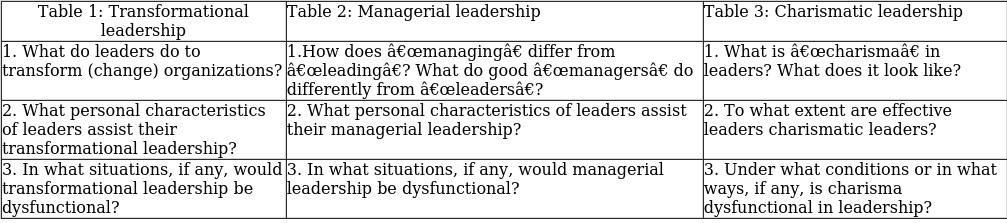
World Café Table Discussion Topics (One topic for each table)
Step 1: The class is organized around three, six, or nine tables, depending on class size. Classes up to about 36 students can have three large tables. Classes with up to about 72 students would have six tables, and larger classes would have nine tables. Tables should be sufficiently apart (may be in different breakout rooms) for comfortable conversation among people at each table.
Step 2: Each table is permanently assigned one of the three world café topics listed below. If the class has six or nine tables, then two or three tables would have the same topic.
Step 3: Students are randomly organized into three, six, or nine groups (equal to the number of tables), and initially assigned to one of the tables. One student in each group volunteers to be the "scribe" for that table. She or he will remain at that table throughout the world café exercise. The scribe will document the main ideas discussed at that table and will later facilitate debriefing of that world café topic with the entire class.
Step 4: Groups are given a fixed time (usually 10-20 minutes) to discuss their particular topic. At the end of that time, each group moves to another table assigned one of the other two topics. The scribe remains at the first table and documents discussion of the arriving second group. Although the scribe can encourage discussion, he/she should allow each group to talk freely even if the conversation repeats what the previous group discussed.
Step 5: After a fixed time, groups move for a third time to a table with the third topic. Again, scribes remain at their original tables and document discussion of the arriving third group.
Step 6: After the third round of discussion, the class reconvenes and scribes are asked to briefly summarize the key discussion points from their table. Scribes should invite a few students to repeat ideas they mentioned at the table.
World Café Table Discussion Topics (One topic for each table)
Question
Question
Question
Question
Question
Question
Question
Question
Question
Question
Question
Question
Question
Question
Question
Question
Question
Question
Question
Question
Question
Question
Question
Question
Question
Question
Question
Question
Question
Question
Question
Question
Question
Question
Question
Question
Question
Question
Question
Question
Question
Question
Question
Question
Question
Question
Question
Question
Question
Question
Question
Question
Question
Question
Question
Question
Question
Question
Question
Question
Question

Unlock Deck
Sign up to unlock the cards in this deck!
Unlock Deck
Unlock Deck
1/150

Play

Full screen (f)
Deck 11: Leadership in Organizational Settings
1
Unlike the traditional view of leadership, shared leadership does not depend on formal authority.
True
Shared leadership lacks formal authority, so it operates best when employees learn to influence others through their enthusiasm, logical analysis, and involvement of coworkers in their ideas or visions.
Shared leadership lacks formal authority, so it operates best when employees learn to influence others through their enthusiasm, logical analysis, and involvement of coworkers in their ideas or visions.
2
The behavioral perspective of leadership focuses on the effectiveness of participative and achievement-oriented leadership styles.
False
The behavioral perspective of leadership focuses on the effectiveness of people and task-oriented leadership styles.
The behavioral perspective of leadership focuses on the effectiveness of people and task-oriented leadership styles.
3
Research on situational leadership theory has concluded that it mostly lacks empirical support.
True
Several studies and at least three reviews have concluded that the situational leadership model lacks empirical support.
Several studies and at least three reviews have concluded that the situational leadership model lacks empirical support.
4
Transformational leadership is more appropriate when organizations have stable environmental conditions.
Unlock Deck
Unlock for access to all 150 flashcards in this deck.
Unlock Deck
k this deck
5
Which of these characteristics addresses leaders' high need for achievement?
A) Integrity
B) Emotional intelligence
C) Drive
D) Self confidence
E) Personality
A) Integrity
B) Emotional intelligence
C) Drive
D) Self confidence
E) Personality
Unlock Deck
Unlock for access to all 150 flashcards in this deck.
Unlock Deck
k this deck
6
Which of the following is a leadership style identified in path-goal theory?
A) Achievement-oriented
B) Selling
C) Transformational
D) Managerial
E) Transactional
A) Achievement-oriented
B) Selling
C) Transformational
D) Managerial
E) Transactional
Unlock Deck
Unlock for access to all 150 flashcards in this deck.
Unlock Deck
k this deck
7
_____ theory identifies conditions that either limit the leader's ability to influence subordinates or make a particular leadership style unnecessary.
A) Transformational leadership
B) Transactional leadership
C) Leadership substitutes
D) Path-goal
E) Implicit leadership
A) Transformational leadership
B) Transactional leadership
C) Leadership substitutes
D) Path-goal
E) Implicit leadership
Unlock Deck
Unlock for access to all 150 flashcards in this deck.
Unlock Deck
k this deck
8
Which of the following statements about leadership and gender is true?
A) Male leaders tend to use the participative style more often than do female leaders.
B) Male and female leaders generally do not differ in their use of participative leadership.
C) Men tend to have better interpersonal skills compared to women.
D) Typically, female leaders do not comply with follower expectations.
E) Male and female leaders generally do not differ in their use of task-oriented and people-oriented leadership.
A) Male leaders tend to use the participative style more often than do female leaders.
B) Male and female leaders generally do not differ in their use of participative leadership.
C) Men tend to have better interpersonal skills compared to women.
D) Typically, female leaders do not comply with follower expectations.
E) Male and female leaders generally do not differ in their use of task-oriented and people-oriented leadership.
Unlock Deck
Unlock for access to all 150 flashcards in this deck.
Unlock Deck
k this deck
9
What leadership styles does the behavioral perspective identify and what is/are the hypothesized relationship(s) between these styles?
Unlock Deck
Unlock for access to all 150 flashcards in this deck.
Unlock Deck
k this deck
10
Describe the implicit leadership perspective.
Unlock Deck
Unlock for access to all 150 flashcards in this deck.
Unlock Deck
k this deck
11
Task-oriented leaders clarify duties and procedures, ensure that employees follow company rules and push them to reach their performance capacity.
Unlock Deck
Unlock for access to all 150 flashcards in this deck.
Unlock Deck
k this deck
12
The situational leadership model states that a person's leadership style cannot be changed and leaders should be put in situations that match their natural style.
Unlock Deck
Unlock for access to all 150 flashcards in this deck.
Unlock Deck
k this deck
13
Implicit leadership theory states that everyone has beliefs about what leaders look and act like.
Unlock Deck
Unlock for access to all 150 flashcards in this deck.
Unlock Deck
k this deck
14
Drive, integrity and emotional intelligence are identified by the competency perspective of leadership as:
A) substitutes for leadership.
B) the main elements of situational leadership.
C) competencies of effective leaders.
D) contingencies in path-goal theory.
E) the essential traits of engaging in transactional leadership.
A) substitutes for leadership.
B) the main elements of situational leadership.
C) competencies of effective leaders.
D) contingencies in path-goal theory.
E) the essential traits of engaging in transactional leadership.
Unlock Deck
Unlock for access to all 150 flashcards in this deck.
Unlock Deck
k this deck
15
Which leadership style in path-goal theory is the same as the task-oriented leadership style as described in the behavioral perspective of leadership?
A) Directive
B) Supportive
C) Participative
D) Achievement-oriented
E) Encouraging
A) Directive
B) Supportive
C) Participative
D) Achievement-oriented
E) Encouraging
Unlock Deck
Unlock for access to all 150 flashcards in this deck.
Unlock Deck
k this deck
16
Which leadership theory adopts the view that leaders are agents of change?
A) Transformational
B) Path-goal theory
C) Implicit leadership
D) Behavioral
E) Leadership substitutes
A) Transformational
B) Path-goal theory
C) Implicit leadership
D) Behavioral
E) Leadership substitutes
Unlock Deck
Unlock for access to all 150 flashcards in this deck.
Unlock Deck
k this deck
17
How do women differ from men in their use of leadership styles?
A) Women tend to use more of the people-oriented leadership style than do men.
B) Women tend to use more of the participative leadership style than do men.
C) Women tend to use more of the task-oriented leadership style than do men.
D) Women and men use all leadership styles to about the same extent.
E) Women tend to use directive styles of leadership in organizations.
A) Women tend to use more of the people-oriented leadership style than do men.
B) Women tend to use more of the participative leadership style than do men.
C) Women tend to use more of the task-oriented leadership style than do men.
D) Women and men use all leadership styles to about the same extent.
E) Women tend to use directive styles of leadership in organizations.
Unlock Deck
Unlock for access to all 150 flashcards in this deck.
Unlock Deck
k this deck
18
Briefly explain the four leadership styles described in the path-goal leadership model.
Unlock Deck
Unlock for access to all 150 flashcards in this deck.
Unlock Deck
k this deck
19
Instructions
Step 1: The class is organized around three, six, or nine tables, depending on class size. Classes up to about 36 students can have three large tables. Classes with up to about 72 students would have six tables, and larger classes would have nine tables. Tables should be sufficiently apart (may be in different breakout rooms) for comfortable conversation among people at each table.
Step 2: Each table is permanently assigned one of the three world café topics listed below. If the class has six or nine tables, then two or three tables would have the same topic.
Step 3: Students are randomly organized into three, six, or nine groups (equal to the number of tables), and initially assigned to one of the tables. One student in each group volunteers to be the "scribe" for that table. She or he will remain at that table throughout the world café exercise. The scribe will document the main ideas discussed at that table and will later facilitate debriefing of that world café topic with the entire class.
Step 4: Groups are given a fixed time (usually 10-20 minutes) to discuss their particular topic. At the end of that time, each group moves to another table assigned one of the other two topics. The scribe remains at the first table and documents discussion of the arriving second group. Although the scribe can encourage discussion, he/she should allow each group to talk freely even if the conversation repeats what the previous group discussed.
Step 5: After a fixed time, groups move for a third time to a table with the third topic. Again, scribes remain at their original tables and document discussion of the arriving third group.
Step 6: After the third round of discussion, the class reconvenes and scribes are asked to briefly summarize the key discussion points from their table. Scribes should invite a few students to repeat ideas they mentioned at the table.
World Café Table Discussion Topics (One topic for each table)
Step 1: The class is organized around three, six, or nine tables, depending on class size. Classes up to about 36 students can have three large tables. Classes with up to about 72 students would have six tables, and larger classes would have nine tables. Tables should be sufficiently apart (may be in different breakout rooms) for comfortable conversation among people at each table.
Step 2: Each table is permanently assigned one of the three world café topics listed below. If the class has six or nine tables, then two or three tables would have the same topic.
Step 3: Students are randomly organized into three, six, or nine groups (equal to the number of tables), and initially assigned to one of the tables. One student in each group volunteers to be the "scribe" for that table. She or he will remain at that table throughout the world café exercise. The scribe will document the main ideas discussed at that table and will later facilitate debriefing of that world café topic with the entire class.
Step 4: Groups are given a fixed time (usually 10-20 minutes) to discuss their particular topic. At the end of that time, each group moves to another table assigned one of the other two topics. The scribe remains at the first table and documents discussion of the arriving second group. Although the scribe can encourage discussion, he/she should allow each group to talk freely even if the conversation repeats what the previous group discussed.
Step 5: After a fixed time, groups move for a third time to a table with the third topic. Again, scribes remain at their original tables and document discussion of the arriving third group.
Step 6: After the third round of discussion, the class reconvenes and scribes are asked to briefly summarize the key discussion points from their table. Scribes should invite a few students to repeat ideas they mentioned at the table.
World Café Table Discussion Topics (One topic for each table)
Unlock Deck
Unlock for access to all 150 flashcards in this deck.
Unlock Deck
k this deck
20
Shared leadership roles are formally assigned by the team and managers.
Unlock Deck
Unlock for access to all 150 flashcards in this deck.
Unlock Deck
k this deck
21
Research indicates that university students value people-oriented instructors over task-oriented instructors.
Unlock Deck
Unlock for access to all 150 flashcards in this deck.
Unlock Deck
k this deck
22
Fiedler's contingency model has extensive research support.
Unlock Deck
Unlock for access to all 150 flashcards in this deck.
Unlock Deck
k this deck
23
According to the implicit leadership perspective, we are more likely to believe that a leader is effective if the leader looks and acts consistently with our prototype.
Unlock Deck
Unlock for access to all 150 flashcards in this deck.
Unlock Deck
k this deck
24
Effective leaders have a strong need for socialized power, meaning that they want power as a means to accomplish organizational objectives and similar good deeds. This behavior of leaders refers to:
A) emotional intelligence.
B) cognitive intelligence.
C) integrity.
D) personality.
E) leadership motivation.
A) emotional intelligence.
B) cognitive intelligence.
C) integrity.
D) personality.
E) leadership motivation.
Unlock Deck
Unlock for access to all 150 flashcards in this deck.
Unlock Deck
k this deck
25
Which leadership style in path-goal theory is the same as the people-oriented leadership style as described in the behavioral perspective of leadership?
A) Directive
B) Supportive
C) Participative
D) Achievement-oriented
E) Collaborative
A) Directive
B) Supportive
C) Participative
D) Achievement-oriented
E) Collaborative
Unlock Deck
Unlock for access to all 150 flashcards in this deck.
Unlock Deck
k this deck
26
Transactional leaders:
A) build a strategic vision to change the organization.
B) engage in participative leadership.
C) influence subordinates by using rewards.
D) possess none of the competencies of great leaders.
E) act as change agents in the organization.
A) build a strategic vision to change the organization.
B) engage in participative leadership.
C) influence subordinates by using rewards.
D) possess none of the competencies of great leaders.
E) act as change agents in the organization.
Unlock Deck
Unlock for access to all 150 flashcards in this deck.
Unlock Deck
k this deck
27
People tend to evaluate female leaders slightly less favorably than male leaders because:
A) women tend to adopt a directive style of leadership.
B) people have more trust in authoritarian leadership than participative leadership.
C) women tend to use one leadership style whereas effective leaders have to use many styles.
D) women are more people oriented than task oriented.
E) people tend to rely on gender stereotypes and prototypes of leaders.
A) women tend to adopt a directive style of leadership.
B) people have more trust in authoritarian leadership than participative leadership.
C) women tend to use one leadership style whereas effective leaders have to use many styles.
D) women are more people oriented than task oriented.
E) people tend to rely on gender stereotypes and prototypes of leaders.
Unlock Deck
Unlock for access to all 150 flashcards in this deck.
Unlock Deck
k this deck
28
Briefly explain the important contingencies of path-goal theory.
Unlock Deck
Unlock for access to all 150 flashcards in this deck.
Unlock Deck
k this deck
29
Why is it important for top executives to value and support shared leadership?
Unlock Deck
Unlock for access to all 150 flashcards in this deck.
Unlock Deck
k this deck
30
Discuss cultural and gender similarities and differences in leadership.
Unlock Deck
Unlock for access to all 150 flashcards in this deck.
Unlock Deck
k this deck
31
Job performance is higher among employees who work for supervisors with low levels of task-oriented leadership and high levels of people oriented leadership.
Unlock Deck
Unlock for access to all 150 flashcards in this deck.
Unlock Deck
k this deck
32
Fiedler's contingency model of leadership suggests that the best leadership style depends on the degree of power and influence the leader possesses in the situation.
Unlock Deck
Unlock for access to all 150 flashcards in this deck.
Unlock Deck
k this deck
33
The "romance of leadership" effect exists because in most cultures people want to believe that leaders make a difference.
Unlock Deck
Unlock for access to all 150 flashcards in this deck.
Unlock Deck
k this deck
34
What is the relevance of emotional intelligence in leadership?
A) Emotional intelligence is one of the most frequently identified contingencies of employees when choosing the best leadership style.
B) Emotional intelligence is one of the desired competencies of effective leaders.
C) Emotional intelligence is the psychological condition that makes people to believe that leaders make a difference.
D) A high level of emotional intelligence encourages people to be individualistic and this makes them lack leadership qualities.
E) Emotional intelligence makes leaders function with a transactional, rather than a transformational, orientation.
A) Emotional intelligence is one of the most frequently identified contingencies of employees when choosing the best leadership style.
B) Emotional intelligence is one of the desired competencies of effective leaders.
C) Emotional intelligence is the psychological condition that makes people to believe that leaders make a difference.
D) A high level of emotional intelligence encourages people to be individualistic and this makes them lack leadership qualities.
E) Emotional intelligence makes leaders function with a transactional, rather than a transformational, orientation.
Unlock Deck
Unlock for access to all 150 flashcards in this deck.
Unlock Deck
k this deck
35
Which leadership style in path-goal theory is most closely associated with goal setting and positive self-fulfilling prophecy?
A) Directive
B) Supportive
C) Participative
D) Achievement-oriented
E) Facultative
A) Directive
B) Supportive
C) Participative
D) Achievement-oriented
E) Facultative
Unlock Deck
Unlock for access to all 150 flashcards in this deck.
Unlock Deck
k this deck
36
Transformational leadership is about:
A) improving the operational efficiency of an organization.
B) performing tasks more effectively.
C) changing the organization's strategies and culture.
D) managing employees to ensure highly efficient working.
E) making sure employees perform tasks more effectively.
A) improving the operational efficiency of an organization.
B) performing tasks more effectively.
C) changing the organization's strategies and culture.
D) managing employees to ensure highly efficient working.
E) making sure employees perform tasks more effectively.
Unlock Deck
Unlock for access to all 150 flashcards in this deck.
Unlock Deck
k this deck
37
Scenario: EFT, Inc.
EFG, Inc. wants to empower and engage its employees. They have several teams consisting of highly skilled employees and no one person on these teams has a specifically assigned position. Instead, employees lead each other as the occasion arises so there is no formal hierarchy or organizational chart.
This type of leadership is known as:
A) Shared
B) Perspective
C) Managerial
D) Resource
E) Transformational
EFG, Inc. wants to empower and engage its employees. They have several teams consisting of highly skilled employees and no one person on these teams has a specifically assigned position. Instead, employees lead each other as the occasion arises so there is no formal hierarchy or organizational chart.
This type of leadership is known as:
A) Shared
B) Perspective
C) Managerial
D) Resource
E) Transformational
Unlock Deck
Unlock for access to all 150 flashcards in this deck.
Unlock Deck
k this deck
38
Briefly explain the concept of leadership substitutes.
Unlock Deck
Unlock for access to all 150 flashcards in this deck.
Unlock Deck
k this deck
39
Define leadership and shared leadership.
Unlock Deck
Unlock for access to all 150 flashcards in this deck.
Unlock Deck
k this deck
40
Extraversion is a one of the strongest predictors of leadership.
Unlock Deck
Unlock for access to all 150 flashcards in this deck.
Unlock Deck
k this deck
41
Servant leaders try to understand employee needs and facilitate their work performance.
Unlock Deck
Unlock for access to all 150 flashcards in this deck.
Unlock Deck
k this deck
42
According to Fiedler's contingency model, leaders should attempt to change their style to fit the situation.
Unlock Deck
Unlock for access to all 150 flashcards in this deck.
Unlock Deck
k this deck
43
The fundamental attribution error causes employees attribute too much credit or blame to external forces that affect the company's success or failure.
Unlock Deck
Unlock for access to all 150 flashcards in this deck.
Unlock Deck
k this deck
44
_____ leadership refers to how well leaders are aware of, feel comfortable with, and act consistently with their self- concepts.
A) Authentic
B) Transformational
C) Transactional
D) Behavioral
E) Implicit
A) Authentic
B) Transformational
C) Transactional
D) Behavioral
E) Implicit
Unlock Deck
Unlock for access to all 150 flashcards in this deck.
Unlock Deck
k this deck
45
Path-goal theory argues that:
A) leadership is relatively unimportant in high-performance organizations.
B) participative leadership is the most effective style of leadership.
C) supportive leadership is best suited to maximize organizational performance.
D) great leaders have certain common personal characteristics and goals.
E) to be effective, leaders should select the most appropriate behavior based on the situation.
A) leadership is relatively unimportant in high-performance organizations.
B) participative leadership is the most effective style of leadership.
C) supportive leadership is best suited to maximize organizational performance.
D) great leaders have certain common personal characteristics and goals.
E) to be effective, leaders should select the most appropriate behavior based on the situation.
Unlock Deck
Unlock for access to all 150 flashcards in this deck.
Unlock Deck
k this deck
46
Charisma refers to:
A) the personal traits that provide referent power over others.
B) the traits that lead to transactional leadership.
C) the traits that lead to leadership substitutes.
D) people-oriented behaviors displayed by individuals.
E) any situation where followers attribute positive things to leaders.
A) the personal traits that provide referent power over others.
B) the traits that lead to transactional leadership.
C) the traits that lead to leadership substitutes.
D) people-oriented behaviors displayed by individuals.
E) any situation where followers attribute positive things to leaders.
Unlock Deck
Unlock for access to all 150 flashcards in this deck.
Unlock Deck
k this deck
47
Scenario: EFT, Inc.
EFG, Inc. wants to empower and engage its employees. They have several teams consisting of highly skilled employees and no one person on these teams has a specifically assigned position. Instead, employees lead each other as the occasion arises so there is no formal hierarchy or organizational chart.
This type of leadership is most effective when:
A) there is an internally competitive culture.
B) when formal authority is distributed properly.
C) coworkers maintain separate work areas and do not involve themselves with others work.
D) employees have a fear of failure.
E) there is a learning orientation culture.
EFG, Inc. wants to empower and engage its employees. They have several teams consisting of highly skilled employees and no one person on these teams has a specifically assigned position. Instead, employees lead each other as the occasion arises so there is no formal hierarchy or organizational chart.
This type of leadership is most effective when:
A) there is an internally competitive culture.
B) when formal authority is distributed properly.
C) coworkers maintain separate work areas and do not involve themselves with others work.
D) employees have a fear of failure.
E) there is a learning orientation culture.
Unlock Deck
Unlock for access to all 150 flashcards in this deck.
Unlock Deck
k this deck
48
Can transformational leaders be called charismatic leaders? Explain your answer.
Unlock Deck
Unlock for access to all 150 flashcards in this deck.
Unlock Deck
k this deck
49
Leadership is the ability to influence, motivate, and enable others to contribute to organizational effectiveness.
Unlock Deck
Unlock for access to all 150 flashcards in this deck.
Unlock Deck
k this deck
50
The competency perspective of leadership advocates the view that leaders behave based on situational factors.
Unlock Deck
Unlock for access to all 150 flashcards in this deck.
Unlock Deck
k this deck
51
Servant leadership occurs when employees believe that their energy should be put into serving their leader rather than accomplishing organizational objectives.
Unlock Deck
Unlock for access to all 150 flashcards in this deck.
Unlock Deck
k this deck
52
The leadership substitutes model states that well-defined team norms that support organizational goals can substitute for task-oriented leadership.
Unlock Deck
Unlock for access to all 150 flashcards in this deck.
Unlock Deck
k this deck
53
Middle managers around the world recognize the concept of the "charismatic visionary" as a characteristic of effective leaders.
Unlock Deck
Unlock for access to all 150 flashcards in this deck.
Unlock Deck
k this deck
54
_____ is knowing yourself and being yourself.
A) Authenticity
B) Integrity
C) Cognition
D) Humility
E) Effectiveness
A) Authenticity
B) Integrity
C) Cognition
D) Humility
E) Effectiveness
Unlock Deck
Unlock for access to all 150 flashcards in this deck.
Unlock Deck
k this deck
55
According to path-goal theory, if employees are highly skilled and have plenty of experience, _____ style(s) should NOT be used.
A) directive
B) supportive
C) participative
D) achievement-oriented
E) supportive and achievement-oriented
A) directive
B) supportive
C) participative
D) achievement-oriented
E) supportive and achievement-oriented
Unlock Deck
Unlock for access to all 150 flashcards in this deck.
Unlock Deck
k this deck
56
Organizational behavior research indicates that transformational leaders produce _____ followers, whereas charismatic leaders produce ______ followers.
A) unskilled, skilled
B) directive, participative
C) collectivist, individualistic
D) empowered, dependent
E) servant, command-and-control
A) unskilled, skilled
B) directive, participative
C) collectivist, individualistic
D) empowered, dependent
E) servant, command-and-control
Unlock Deck
Unlock for access to all 150 flashcards in this deck.
Unlock Deck
k this deck
57
Scenario: Bob's Small Business
Bob owns a small business with 12 employees. He is anticipating a large contract in the near future which will triple his profit and double the number of employees he can hire. Bob has always been a very likable man and a dependable, hard-working person. He is very worried about his ability to take on twice as many employees and continue on a successful path.
From the information provided, which of the following best encompasses Bob's strongest leadership competency according to the competency perspective?
A) Self-concept
B) Integrity
C) Cognitive intelligence
D) Personality
E) Practical intelligence
Bob owns a small business with 12 employees. He is anticipating a large contract in the near future which will triple his profit and double the number of employees he can hire. Bob has always been a very likable man and a dependable, hard-working person. He is very worried about his ability to take on twice as many employees and continue on a successful path.
From the information provided, which of the following best encompasses Bob's strongest leadership competency according to the competency perspective?
A) Self-concept
B) Integrity
C) Cognitive intelligence
D) Personality
E) Practical intelligence
Unlock Deck
Unlock for access to all 150 flashcards in this deck.
Unlock Deck
k this deck
58
List the various elements of transformational leadership.
Unlock Deck
Unlock for access to all 150 flashcards in this deck.
Unlock Deck
k this deck
59
Your employees are skilled and experienced customer service representatives who perform nonroutine tasks, such as solving unique customer problems or meeting special needs with the company's equipment. Use path- goal theory to identify the most appropriate leadership style(s) you should use in this situation. Be sure to fully explain your answer, and discuss why other styles are less appropriate.
Unlock Deck
Unlock for access to all 150 flashcards in this deck.
Unlock Deck
k this deck
60
According to the competency perspective of leadership, self-concept, integrity, knowledge of the business, and emotional intelligence are important leadership competencies.
Unlock Deck
Unlock for access to all 150 flashcards in this deck.
Unlock Deck
k this deck
61
Path-goal theory has its roots in the expectancy theory of motivation.
Unlock Deck
Unlock for access to all 150 flashcards in this deck.
Unlock Deck
k this deck
62
Employee benefit systems, such as performance-based reward systems, can never replace or reduce the need for task-oriented leadership.
Unlock Deck
Unlock for access to all 150 flashcards in this deck.
Unlock Deck
k this deck
63
Participative leadership is perceived as characteristic of effective leadership in low power distance cultures but less so in high power distance cultures.
Unlock Deck
Unlock for access to all 150 flashcards in this deck.
Unlock Deck
k this deck
64
Which of the following is a limitation of the competency perspective of leadership?
A) It ignores the potential traits of a leader and hence cannot be used to identify leaders.
B) It suggests that leadership varies according to situations but does not provide remedies to it.
C) It supports the view that every individual possesses leadership qualities.
D) It does not consider the importance of integrity and emotional intelligence in leadership.
E) It views leadership as something within a person.
A) It ignores the potential traits of a leader and hence cannot be used to identify leaders.
B) It suggests that leadership varies according to situations but does not provide remedies to it.
C) It supports the view that every individual possesses leadership qualities.
D) It does not consider the importance of integrity and emotional intelligence in leadership.
E) It views leadership as something within a person.
Unlock Deck
Unlock for access to all 150 flashcards in this deck.
Unlock Deck
k this deck
65
According to path-goal theory, a combination of directive and supportive leadership is most appropriate when:
A) the job is routine and employees are skilled.
B) the employee works in a highly cohesive team.
C) the employee lacks experience in the job.
D) the employee has an internal locus of control.
E) the employee has an external locus of control.
A) the job is routine and employees are skilled.
B) the employee works in a highly cohesive team.
C) the employee lacks experience in the job.
D) the employee has an internal locus of control.
E) the employee has an external locus of control.
Unlock Deck
Unlock for access to all 150 flashcards in this deck.
Unlock Deck
k this deck
66
_____ represents the substance of transformational leadership.
A) Effectiveness
B) Operational efficiency
C) Charisma
D) Shared strategic vision
E) Emotional intelligence
A) Effectiveness
B) Operational efficiency
C) Charisma
D) Shared strategic vision
E) Emotional intelligence
Unlock Deck
Unlock for access to all 150 flashcards in this deck.
Unlock Deck
k this deck
67
Scenario: Bob's Small Business
Bob owns a small business with 12 employees. He is anticipating a large contract in the near future which will triple his profit and double the number of employees he can hire. Bob has always been a very likable man and a dependable, hard-working person. He is very worried about his ability to take on twice as many employees and continue on a successful path.
From the information provided, which of the following best encompasses Bob's weakest leadership competency according to the competency perspective?
A) Self-concept
B) Integrity
C) Cognitive intelligence
D) Personality
E) Practical intelligence
Bob owns a small business with 12 employees. He is anticipating a large contract in the near future which will triple his profit and double the number of employees he can hire. Bob has always been a very likable man and a dependable, hard-working person. He is very worried about his ability to take on twice as many employees and continue on a successful path.
From the information provided, which of the following best encompasses Bob's weakest leadership competency according to the competency perspective?
A) Self-concept
B) Integrity
C) Cognitive intelligence
D) Personality
E) Practical intelligence
Unlock Deck
Unlock for access to all 150 flashcards in this deck.
Unlock Deck
k this deck
68
Briefly describe implicit leadership theory.
Unlock Deck
Unlock for access to all 150 flashcards in this deck.
Unlock Deck
k this deck
69
Identify eight competencies associated with effective leaders and describe authentic leadership
Unlock Deck
Unlock for access to all 150 flashcards in this deck.
Unlock Deck
k this deck
70
Leaders should not monitor others' emotions and discriminate among them.
Unlock Deck
Unlock for access to all 150 flashcards in this deck.
Unlock Deck
k this deck
71
Supportive leadership is the same as people-oriented leadership.
Unlock Deck
Unlock for access to all 150 flashcards in this deck.
Unlock Deck
k this deck
72
The leadership substitutes model has intuitive appeal and the research evidence so far supports it strongly.
Unlock Deck
Unlock for access to all 150 flashcards in this deck.
Unlock Deck
k this deck
73
Research indicates that male and female leaders widely differ in their levels of task-oriented and people-oriented leadership.
Unlock Deck
Unlock for access to all 150 flashcards in this deck.
Unlock Deck
k this deck
74
According to the competency perspective of leadership, competencies indicate leadership:
A) performance.
B) potential.
C) talent.
D) contingency.
E) transformation.
A) performance.
B) potential.
C) talent.
D) contingency.
E) transformation.
Unlock Deck
Unlock for access to all 150 flashcards in this deck.
Unlock Deck
k this deck
75
People with an external locus of control tend to be more satisfied with _____ leadership styles.
A) achievement oriented and directive
B) participative and directive
C) directive and supportive
D) supportive and achievement oriented
E) supportive and participative
A) achievement oriented and directive
B) participative and directive
C) directive and supportive
D) supportive and achievement oriented
E) supportive and participative
Unlock Deck
Unlock for access to all 150 flashcards in this deck.
Unlock Deck
k this deck
76
If vision is the substance of transformational leadership, then _____ is the process.
A) framing consistent values
B) establishing a mission
C) showing integrity
D) embedding the vision in strategy
E) communicating the vision
A) framing consistent values
B) establishing a mission
C) showing integrity
D) embedding the vision in strategy
E) communicating the vision
Unlock Deck
Unlock for access to all 150 flashcards in this deck.
Unlock Deck
k this deck
77
Scenario: CPA4U
Gina and Chen are both managers at CPA4U, a large accounting firm. Each one has a very different management style. Gina is very outgoing and constantly checking on her subordinates to see if there is any way she can help them to complete their projects. She also brings in fresh flowers for the lunchroom weekly and always remembers everyone's birthday. Chen is much more introverted and communicates with his subordinates mainly through email and he has his subordinates submit daily reports on their progress towards the weekly goals he has assigned them.
Which type of leader is Gina, according to the behavioral perspective?
A) Servant leader
B) Emotional leader
C) Path-goal leader
D) Task-oriented leader
E) Transformational Leader
Gina and Chen are both managers at CPA4U, a large accounting firm. Each one has a very different management style. Gina is very outgoing and constantly checking on her subordinates to see if there is any way she can help them to complete their projects. She also brings in fresh flowers for the lunchroom weekly and always remembers everyone's birthday. Chen is much more introverted and communicates with his subordinates mainly through email and he has his subordinates submit daily reports on their progress towards the weekly goals he has assigned them.
Which type of leader is Gina, according to the behavioral perspective?
A) Servant leader
B) Emotional leader
C) Path-goal leader
D) Task-oriented leader
E) Transformational Leader
Unlock Deck
Unlock for access to all 150 flashcards in this deck.
Unlock Deck
k this deck
78
Discuss the accuracy of the following statement: Women are less effective than men in leadership positions because they tend to rely too much on the supportive style of leadership.
Unlock Deck
Unlock for access to all 150 flashcards in this deck.
Unlock Deck
k this deck
79
A supervisor uses subtle persuasion to ensure that subordinates have the motivation and role clarity to achieve specified goals. This cannot be considered leadership.
Unlock Deck
Unlock for access to all 150 flashcards in this deck.
Unlock Deck
k this deck
80
Effective leaders are good at expressing emotions, as well as regulating emotions in themselves and others.
Unlock Deck
Unlock for access to all 150 flashcards in this deck.
Unlock Deck
k this deck
Unlock Deck
Unlock for access to all 150 flashcards in this deck.






