







 Chat with AI

Deck 13: Marketing Channels and Supply-Chain Management
Full screen (f)

Question

Question
Question
Question
Question
Question
Question
Question
Question
Question
Question
One of the key components in a successful marketing strategy is the plan for getting the products to your customer. To make the best decisions about where, when, and how your products will be made available to the customer, you need to know more about how these distribution decisions relate to other marketing mix elements in your marketing plan. To assist you in relating the information in this chapter to your marketing plan, consider the following issues:
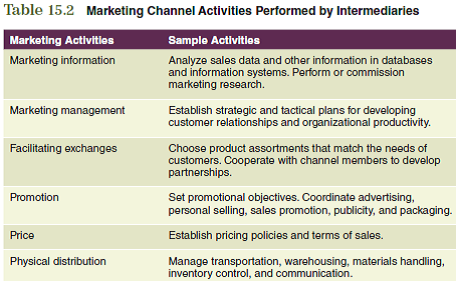
Marketing intermediaries perform many activities. Using Table 15.2 as a guide, discuss the types of activities where a channel member could provide needed assistance.
The information obtained from these questions should assist you in developing various aspects of your marketing plan found in the "Interactive Marketing Plan" exercise at www.cengagebrain.com.
Marketing intermediaries perform many activities. Using Table 15.2 as a guide, discuss the types of activities where a channel member could provide needed assistance.
The information obtained from these questions should assist you in developing various aspects of your marketing plan found in the "Interactive Marketing Plan" exercise at www.cengagebrain.com.
Question
Question
Question
Question
Question
Question
One of the key components in a successful marketing strategy is the plan for getting the products to your customer. To make the best decisions about where, when, and how your products will be made available to the customer, you need to know more about how these distribution decisions relate to other marketing mix elements in your marketing plan. To assist you in relating the information in this chapter to your marketing plan, consider the following issues:
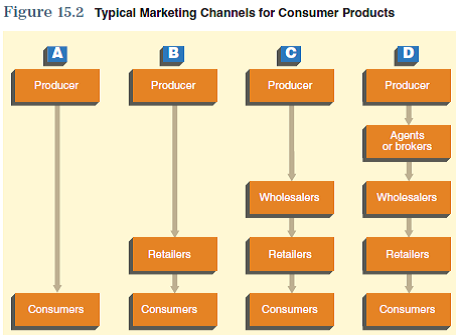
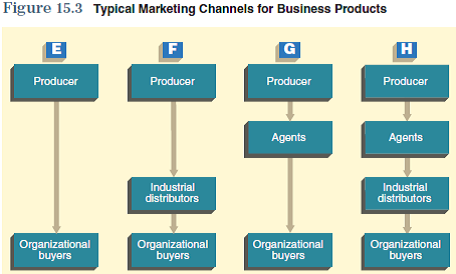
Using Figure 15.2 (or 15.3 if your product is a business product), determine which of the channel distribution paths is most appropriate for your product. Given the nature of your product, could it be distributed through more than one of these paths?
The information obtained from these questions should assist you in developing various aspects of your marketing plan found in the "Interactive Marketing Plan" exercise at www.cengagebrain.com.
Using Figure 15.2 (or 15.3 if your product is a business product), determine which of the channel distribution paths is most appropriate for your product. Given the nature of your product, could it be distributed through more than one of these paths?
The information obtained from these questions should assist you in developing various aspects of your marketing plan found in the "Interactive Marketing Plan" exercise at www.cengagebrain.com.
Question
Question
Question
Question
Question
Question
Question

Unlock Deck
Sign up to unlock the cards in this deck!
Unlock Deck
Unlock Deck
1/24

Play

Full screen (f)
Deck 13: Marketing Channels and Supply-Chain Management
1
List several reasons consumers often blame intermediaries for distribution inefficiencies.
The following are some of the reasons that consumers may blame intermediaries for distribution inefficiencies:
• Consumers often view wholesalers as an inefficient member of the supply chain.
• Consumers often think that the presence of the wholesaler will make products more expensive and that they will have to spend more money.
• Consumer can save time getting the products with the elimination of intermediaries like wholesalers.
• In the case of perishable, complex, and expensive products, consumers always prefer to buy directly from the producers rather than through wholesalers; for example, dairy products and computer software.
• Consumers often view wholesalers as an inefficient member of the supply chain.
• Consumers often think that the presence of the wholesaler will make products more expensive and that they will have to spend more money.
• Consumer can save time getting the products with the elimination of intermediaries like wholesalers.
• In the case of perishable, complex, and expensive products, consumers always prefer to buy directly from the producers rather than through wholesalers; for example, dairy products and computer software.
2
Under what conditions are tying agreements, exclusive dealing, and dual distribution judged illegal?
Under following conditions tying agreements, exclusive dealing and dual distribution can be judged illegal:
• Tying agreements:
Under tying agreements a supplier requires from channel members that in order to purchase any of his products they needs to buy the complete line of the products from him. Tying agreements are illegal except the case where only supplier can provide products meeting a good quality and an organization is a new entrant.
• Exclusive dealing:
It refers to manufacturer not allowing intermediary to sell products of its competitors. It is called illegal when exclusive dealing restricts competitors from approximately fifteen per cent of the market, volume of sales is quite high and the size of the producer is significantly bigger than the retailer.
• Dual distribution:
It refers to using of more than one distribution channel to distribute the same products to the same kind of consumers. It is considered as illegal when a manufacturer uses company owned stores to throw retail outlets or distributors that sells their products out of the competition.
• Tying agreements:
Under tying agreements a supplier requires from channel members that in order to purchase any of his products they needs to buy the complete line of the products from him. Tying agreements are illegal except the case where only supplier can provide products meeting a good quality and an organization is a new entrant.
• Exclusive dealing:
It refers to manufacturer not allowing intermediary to sell products of its competitors. It is called illegal when exclusive dealing restricts competitors from approximately fifteen per cent of the market, volume of sales is quite high and the size of the producer is significantly bigger than the retailer.
• Dual distribution:
It refers to using of more than one distribution channel to distribute the same products to the same kind of consumers. It is considered as illegal when a manufacturer uses company owned stores to throw retail outlets or distributors that sells their products out of the competition.
3
Taza Cultivates Channel Relationships with Chocolate Taza Chocolate is a small Massachusetts-based manufacturer of stone-ground organic chocolate made in the classic Mexican tradition. Founded in 2006, Taza markets most of its products through U.S. retailers, wholesalers, and distributors. Individual customers around the world can also buy Taza chocolate bars, baking squares, chocolate-covered nuts, and other specialty items directly from the Taza website. If they live in Somerville, Massachusetts, they might even find a Taza employee riding a "chococycle," selling products and distributing samples at an upscale food truck festival or a weekend market festival.
Taza seeks to make personal connections with all the certified organic growers who supply its ingredients. "Because our process here at the factory is so minimal," says the company's director of sales, "it's really important that we get a very high-quality ingredient. To make sure that we're getting the absolute cream of the [cocoa] crop, we have a direct face-to-face human relationship between us and the actual farmer who's producing those beans."
Dealing directly with suppliers allows Taza to meet its social responsibility goals while ensuring the kind of quality that commands a premium price. "We're a premium brand," explains the director of sales, "and because of the way we do what we do, we have to charge more than your average chocolate bar." A Taza chocolate bar that sells at a retail price of $4.50 carries a wholesale price of about $2.70. The distributor's price, however, is even lower, closer to $2.00.
Distributors buy in the largest quantities, which for Taza means a pallet load rather than a case that a wholesaler would buy. "But wholesale will always be our bread and butter, where we really move the volume and we have good margins," says Taza's director of sales. In the company's experience, distributors are very price-conscious and more interested than wholesalers in promotions and extras.
Taza offers factory tours at its Somerville site, charging a small entrance fee that includes a donation to Sustainable Harvest International. There, visitors can watch the bean-tobar process from beginning to end, learning about the beans and the stone-ground tradition that differentiates Taza from European chocolates. Visitors enjoy product samples along the way and, at the end of the tour, they can browse through the factory store and buy freshly-made specialties like chipotle chili chocolate and ginger chocolate. On holidays like Halloween and Valentine's Day, Taza hosts special tastings and limited-edition treats to attract customers to its factory store. Its annual beer-and-chocolate pairing event, hosted with the Drink Craft Beer website, is another way to introduce Taza to consumers who appreciate quality foods and drinks.
Taza's marketing communications focus mainly on Facebook, Twitter, blogs, e-mail, and specialty food shows. Also, the company frequently offers samples in upscale and organic food stores in major metropolitan areas. As it does with its growers, Taza seeks to forge personal relationships with its channel partners. "When we send a shipment of chocolate," says the sales director, "sometimes we'll put in a little extra for the people who work there. That always helps because [it's] building that kind of human relationship."
Privately-owned Taza has begun shipping to Canada and a handful of European countries. Its channel arrangements must allow for delivering perishable products that stay fresh and firm, no matter what the weather. As a result, distributors often hold some Taza inventory in refrigerated warehouses to have ready for next-day delivery when retailers place orders.
In what ways are Taza's distribution efforts influenced by the fact that its products are organic?
Taza seeks to make personal connections with all the certified organic growers who supply its ingredients. "Because our process here at the factory is so minimal," says the company's director of sales, "it's really important that we get a very high-quality ingredient. To make sure that we're getting the absolute cream of the [cocoa] crop, we have a direct face-to-face human relationship between us and the actual farmer who's producing those beans."
Dealing directly with suppliers allows Taza to meet its social responsibility goals while ensuring the kind of quality that commands a premium price. "We're a premium brand," explains the director of sales, "and because of the way we do what we do, we have to charge more than your average chocolate bar." A Taza chocolate bar that sells at a retail price of $4.50 carries a wholesale price of about $2.70. The distributor's price, however, is even lower, closer to $2.00.
Distributors buy in the largest quantities, which for Taza means a pallet load rather than a case that a wholesaler would buy. "But wholesale will always be our bread and butter, where we really move the volume and we have good margins," says Taza's director of sales. In the company's experience, distributors are very price-conscious and more interested than wholesalers in promotions and extras.
Taza offers factory tours at its Somerville site, charging a small entrance fee that includes a donation to Sustainable Harvest International. There, visitors can watch the bean-tobar process from beginning to end, learning about the beans and the stone-ground tradition that differentiates Taza from European chocolates. Visitors enjoy product samples along the way and, at the end of the tour, they can browse through the factory store and buy freshly-made specialties like chipotle chili chocolate and ginger chocolate. On holidays like Halloween and Valentine's Day, Taza hosts special tastings and limited-edition treats to attract customers to its factory store. Its annual beer-and-chocolate pairing event, hosted with the Drink Craft Beer website, is another way to introduce Taza to consumers who appreciate quality foods and drinks.
Taza's marketing communications focus mainly on Facebook, Twitter, blogs, e-mail, and specialty food shows. Also, the company frequently offers samples in upscale and organic food stores in major metropolitan areas. As it does with its growers, Taza seeks to forge personal relationships with its channel partners. "When we send a shipment of chocolate," says the sales director, "sometimes we'll put in a little extra for the people who work there. That always helps because [it's] building that kind of human relationship."
Privately-owned Taza has begun shipping to Canada and a handful of European countries. Its channel arrangements must allow for delivering perishable products that stay fresh and firm, no matter what the weather. As a result, distributors often hold some Taza inventory in refrigerated warehouses to have ready for next-day delivery when retailers place orders.
In what ways are Taza's distribution efforts influenced by the fact that its products are organic?
The attempt of the Taza factory to conduct tours at its Somerville site allows visitors to watch the bean-to-bar process from beginning to end. As a result, visitors learning about the stone-ground tradition prove that,
• the process is organic.
• create trust among people regarding its quality.
• the process is organic.
• create trust among people regarding its quality.
4
One of the key components in a successful marketing strategy is the plan for getting the products to your customer. To make the best decisions about where, when, and how your products will be made available to the customer, you need to know more about how these distribution decisions relate to other marketing mix elements in your marketing plan. To assist you in relating the information in this chapter to your marketing plan, consider the following issues:
Discuss the physical functions that will be required for distributing your product, focusing on materials handling, warehousing, and transportation.
The information obtained from these questions should assist you in developing various aspects of your marketing plan found in the "Interactive Marketing Plan" exercise at www.cengagebrain.com.
Discuss the physical functions that will be required for distributing your product, focusing on materials handling, warehousing, and transportation.
The information obtained from these questions should assist you in developing various aspects of your marketing plan found in the "Interactive Marketing Plan" exercise at www.cengagebrain.com.
Unlock Deck
Unlock for access to all 24 flashcards in this deck.
Unlock Deck
k this deck
5
Compare and contrast the four major types of marketing channels for consumer products. Through which type of channel is each of the following products most likely to be distributed?
a. New automobiles
b. Saltine crackers
c. Cut-your-own Christmas trees
d. New textbooks
e. Sofas
f. Soft drinks
a. New automobiles
b. Saltine crackers
c. Cut-your-own Christmas trees
d. New textbooks
e. Sofas
f. Soft drinks
Unlock Deck
Unlock for access to all 24 flashcards in this deck.
Unlock Deck
k this deck
6
Outline the four most common channels for business products. Describe the products or situations that lead marketers to choose each channel.
Unlock Deck
Unlock for access to all 24 flashcards in this deck.
Unlock Deck
k this deck
7
Describe an industrial distributor. What types of products are marketed through an industrial distributor?
Unlock Deck
Unlock for access to all 24 flashcards in this deck.
Unlock Deck
k this deck
8
Under what conditions is a producer most likely to use more than one marketing channel?
Unlock Deck
Unlock for access to all 24 flashcards in this deck.
Unlock Deck
k this deck
9
Identify and describe the factors that may influence marketing channel selection decisions.
Unlock Deck
Unlock for access to all 24 flashcards in this deck.
Unlock Deck
k this deck
10
Explain the differences among intensive, selective, and exclusive methods of distribution.
Unlock Deck
Unlock for access to all 24 flashcards in this deck.
Unlock Deck
k this deck
11
One of the key components in a successful marketing strategy is the plan for getting the products to your customer. To make the best decisions about where, when, and how your products will be made available to the customer, you need to know more about how these distribution decisions relate to other marketing mix elements in your marketing plan. To assist you in relating the information in this chapter to your marketing plan, consider the following issues:
Marketing intermediaries perform many activities. Using Table 15.2 as a guide, discuss the types of activities where a channel member could provide needed assistance.
The information obtained from these questions should assist you in developing various aspects of your marketing plan found in the "Interactive Marketing Plan" exercise at www.cengagebrain.com.
Marketing intermediaries perform many activities. Using Table 15.2 as a guide, discuss the types of activities where a channel member could provide needed assistance.
The information obtained from these questions should assist you in developing various aspects of your marketing plan found in the "Interactive Marketing Plan" exercise at www.cengagebrain.com.
Unlock Deck
Unlock for access to all 24 flashcards in this deck.
Unlock Deck
k this deck
12
"Channel cooperation requires that members support the overall channel goals to achieve individual goals." Comment on this statement.
Unlock Deck
Unlock for access to all 24 flashcards in this deck.
Unlock Deck
k this deck
13
Define supply-chain management. Why is it important?
Unlock Deck
Unlock for access to all 24 flashcards in this deck.
Unlock Deck
k this deck
14
Explain the major characteristics of each of the three types of vertical marketing systems (VMSs): corporate, administered, and contractual.
Unlock Deck
Unlock for access to all 24 flashcards in this deck.
Unlock Deck
k this deck
15
Taza Cultivates Channel Relationships with Chocolate Taza Chocolate is a small Massachusetts-based manufacturer of stone-ground organic chocolate made in the classic Mexican tradition. Founded in 2006, Taza markets most of its products through U.S. retailers, wholesalers, and distributors. Individual customers around the world can also buy Taza chocolate bars, baking squares, chocolate-covered nuts, and other specialty items directly from the Taza website. If they live in Somerville, Massachusetts, they might even find a Taza employee riding a "chococycle," selling products and distributing samples at an upscale food truck festival or a weekend market festival.
Taza seeks to make personal connections with all the certified organic growers who supply its ingredients. "Because our process here at the factory is so minimal," says the company's director of sales, "it's really important that we get a very high-quality ingredient. To make sure that we're getting the absolute cream of the [cocoa] crop, we have a direct face-to-face human relationship between us and the actual farmer who's producing those beans."
Dealing directly with suppliers allows Taza to meet its social responsibility goals while ensuring the kind of quality that commands a premium price. "We're a premium brand," explains the director of sales, "and because of the way we do what we do, we have to charge more than your average chocolate bar." A Taza chocolate bar that sells at a retail price of $4.50 carries a wholesale price of about $2.70. The distributor's price, however, is even lower, closer to $2.00.
Distributors buy in the largest quantities, which for Taza means a pallet load rather than a case that a wholesaler would buy. "But wholesale will always be our bread and butter, where we really move the volume and we have good margins," says Taza's director of sales. In the company's experience, distributors are very price-conscious and more interested than wholesalers in promotions and extras.
Taza offers factory tours at its Somerville site, charging a small entrance fee that includes a donation to Sustainable Harvest International. There, visitors can watch the bean-tobar process from beginning to end, learning about the beans and the stone-ground tradition that differentiates Taza from European chocolates. Visitors enjoy product samples along the way and, at the end of the tour, they can browse through the factory store and buy freshly-made specialties like chipotle chili chocolate and ginger chocolate. On holidays like Halloween and Valentine's Day, Taza hosts special tastings and limited-edition treats to attract customers to its factory store. Its annual beer-and-chocolate pairing event, hosted with the Drink Craft Beer website, is another way to introduce Taza to consumers who appreciate quality foods and drinks.
Taza's marketing communications focus mainly on Facebook, Twitter, blogs, e-mail, and specialty food shows. Also, the company frequently offers samples in upscale and organic food stores in major metropolitan areas. As it does with its growers, Taza seeks to forge personal relationships with its channel partners. "When we send a shipment of chocolate," says the sales director, "sometimes we'll put in a little extra for the people who work there. That always helps because [it's] building that kind of human relationship."
Privately-owned Taza has begun shipping to Canada and a handful of European countries. Its channel arrangements must allow for delivering perishable products that stay fresh and firm, no matter what the weather. As a result, distributors often hold some Taza inventory in refrigerated warehouses to have ready for next-day delivery when retailers place orders.
Which distribution channels does Taza use, and why are they appropriate for this company?
Taza seeks to make personal connections with all the certified organic growers who supply its ingredients. "Because our process here at the factory is so minimal," says the company's director of sales, "it's really important that we get a very high-quality ingredient. To make sure that we're getting the absolute cream of the [cocoa] crop, we have a direct face-to-face human relationship between us and the actual farmer who's producing those beans."
Dealing directly with suppliers allows Taza to meet its social responsibility goals while ensuring the kind of quality that commands a premium price. "We're a premium brand," explains the director of sales, "and because of the way we do what we do, we have to charge more than your average chocolate bar." A Taza chocolate bar that sells at a retail price of $4.50 carries a wholesale price of about $2.70. The distributor's price, however, is even lower, closer to $2.00.
Distributors buy in the largest quantities, which for Taza means a pallet load rather than a case that a wholesaler would buy. "But wholesale will always be our bread and butter, where we really move the volume and we have good margins," says Taza's director of sales. In the company's experience, distributors are very price-conscious and more interested than wholesalers in promotions and extras.
Taza offers factory tours at its Somerville site, charging a small entrance fee that includes a donation to Sustainable Harvest International. There, visitors can watch the bean-tobar process from beginning to end, learning about the beans and the stone-ground tradition that differentiates Taza from European chocolates. Visitors enjoy product samples along the way and, at the end of the tour, they can browse through the factory store and buy freshly-made specialties like chipotle chili chocolate and ginger chocolate. On holidays like Halloween and Valentine's Day, Taza hosts special tastings and limited-edition treats to attract customers to its factory store. Its annual beer-and-chocolate pairing event, hosted with the Drink Craft Beer website, is another way to introduce Taza to consumers who appreciate quality foods and drinks.
Taza's marketing communications focus mainly on Facebook, Twitter, blogs, e-mail, and specialty food shows. Also, the company frequently offers samples in upscale and organic food stores in major metropolitan areas. As it does with its growers, Taza seeks to forge personal relationships with its channel partners. "When we send a shipment of chocolate," says the sales director, "sometimes we'll put in a little extra for the people who work there. That always helps because [it's] building that kind of human relationship."
Privately-owned Taza has begun shipping to Canada and a handful of European countries. Its channel arrangements must allow for delivering perishable products that stay fresh and firm, no matter what the weather. As a result, distributors often hold some Taza inventory in refrigerated warehouses to have ready for next-day delivery when retailers place orders.
Which distribution channels does Taza use, and why are they appropriate for this company?
Unlock Deck
Unlock for access to all 24 flashcards in this deck.
Unlock Deck
k this deck
16
Discuss the cost and service trade-offs involved in developing a physical distribution system.
Unlock Deck
Unlock for access to all 24 flashcards in this deck.
Unlock Deck
k this deck
17
One of the key components in a successful marketing strategy is the plan for getting the products to your customer. To make the best decisions about where, when, and how your products will be made available to the customer, you need to know more about how these distribution decisions relate to other marketing mix elements in your marketing plan. To assist you in relating the information in this chapter to your marketing plan, consider the following issues:
Using Figure 15.2 (or 15.3 if your product is a business product), determine which of the channel distribution paths is most appropriate for your product. Given the nature of your product, could it be distributed through more than one of these paths?
The information obtained from these questions should assist you in developing various aspects of your marketing plan found in the "Interactive Marketing Plan" exercise at www.cengagebrain.com.
Using Figure 15.2 (or 15.3 if your product is a business product), determine which of the channel distribution paths is most appropriate for your product. Given the nature of your product, could it be distributed through more than one of these paths?
The information obtained from these questions should assist you in developing various aspects of your marketing plan found in the "Interactive Marketing Plan" exercise at www.cengagebrain.com.
Unlock Deck
Unlock for access to all 24 flashcards in this deck.
Unlock Deck
k this deck
18
What are the main tasks involved in order processing?
Unlock Deck
Unlock for access to all 24 flashcards in this deck.
Unlock Deck
k this deck
19
Describe the major functions of marketing channels. Why are these functions better accomplished through combined efforts of channel members?
Unlock Deck
Unlock for access to all 24 flashcards in this deck.
Unlock Deck
k this deck
20
Explain the trade-offs that inventory managers face when they reorder products or supplies. How is the reorder point computed?
Unlock Deck
Unlock for access to all 24 flashcards in this deck.
Unlock Deck
k this deck
21
Taza Cultivates Channel Relationships with Chocolate Taza Chocolate is a small Massachusetts-based manufacturer of stone-ground organic chocolate made in the classic Mexican tradition. Founded in 2006, Taza markets most of its products through U.S. retailers, wholesalers, and distributors. Individual customers around the world can also buy Taza chocolate bars, baking squares, chocolate-covered nuts, and other specialty items directly from the Taza website. If they live in Somerville, Massachusetts, they might even find a Taza employee riding a "chococycle," selling products and distributing samples at an upscale food truck festival or a weekend market festival.
Taza seeks to make personal connections with all the certified organic growers who supply its ingredients. "Because our process here at the factory is so minimal," says the company's director of sales, "it's really important that we get a very high-quality ingredient. To make sure that we're getting the absolute cream of the [cocoa] crop, we have a direct face-to-face human relationship between us and the actual farmer who's producing those beans."
Dealing directly with suppliers allows Taza to meet its social responsibility goals while ensuring the kind of quality that commands a premium price. "We're a premium brand," explains the director of sales, "and because of the way we do what we do, we have to charge more than your average chocolate bar." A Taza chocolate bar that sells at a retail price of $4.50 carries a wholesale price of about $2.70. The distributor's price, however, is even lower, closer to $2.00.
Distributors buy in the largest quantities, which for Taza means a pallet load rather than a case that a wholesaler would buy. "But wholesale will always be our bread and butter, where we really move the volume and we have good margins," says Taza's director of sales. In the company's experience, distributors are very price-conscious and more interested than wholesalers in promotions and extras.
Taza offers factory tours at its Somerville site, charging a small entrance fee that includes a donation to Sustainable Harvest International. There, visitors can watch the bean-tobar process from beginning to end, learning about the beans and the stone-ground tradition that differentiates Taza from European chocolates. Visitors enjoy product samples along the way and, at the end of the tour, they can browse through the factory store and buy freshly-made specialties like chipotle chili chocolate and ginger chocolate. On holidays like Halloween and Valentine's Day, Taza hosts special tastings and limited-edition treats to attract customers to its factory store. Its annual beer-and-chocolate pairing event, hosted with the Drink Craft Beer website, is another way to introduce Taza to consumers who appreciate quality foods and drinks.
Taza's marketing communications focus mainly on Facebook, Twitter, blogs, e-mail, and specialty food shows. Also, the company frequently offers samples in upscale and organic food stores in major metropolitan areas. As it does with its growers, Taza seeks to forge personal relationships with its channel partners. "When we send a shipment of chocolate," says the sales director, "sometimes we'll put in a little extra for the people who work there. That always helps because [it's] building that kind of human relationship."
Privately-owned Taza has begun shipping to Canada and a handful of European countries. Its channel arrangements must allow for delivering perishable products that stay fresh and firm, no matter what the weather. As a result, distributors often hold some Taza inventory in refrigerated warehouses to have ready for next-day delivery when retailers place orders.
In what ways does Taza benefit from selling directly to some consumers? What are some potential problems of selling directly to consumers?
Taza seeks to make personal connections with all the certified organic growers who supply its ingredients. "Because our process here at the factory is so minimal," says the company's director of sales, "it's really important that we get a very high-quality ingredient. To make sure that we're getting the absolute cream of the [cocoa] crop, we have a direct face-to-face human relationship between us and the actual farmer who's producing those beans."
Dealing directly with suppliers allows Taza to meet its social responsibility goals while ensuring the kind of quality that commands a premium price. "We're a premium brand," explains the director of sales, "and because of the way we do what we do, we have to charge more than your average chocolate bar." A Taza chocolate bar that sells at a retail price of $4.50 carries a wholesale price of about $2.70. The distributor's price, however, is even lower, closer to $2.00.
Distributors buy in the largest quantities, which for Taza means a pallet load rather than a case that a wholesaler would buy. "But wholesale will always be our bread and butter, where we really move the volume and we have good margins," says Taza's director of sales. In the company's experience, distributors are very price-conscious and more interested than wholesalers in promotions and extras.
Taza offers factory tours at its Somerville site, charging a small entrance fee that includes a donation to Sustainable Harvest International. There, visitors can watch the bean-tobar process from beginning to end, learning about the beans and the stone-ground tradition that differentiates Taza from European chocolates. Visitors enjoy product samples along the way and, at the end of the tour, they can browse through the factory store and buy freshly-made specialties like chipotle chili chocolate and ginger chocolate. On holidays like Halloween and Valentine's Day, Taza hosts special tastings and limited-edition treats to attract customers to its factory store. Its annual beer-and-chocolate pairing event, hosted with the Drink Craft Beer website, is another way to introduce Taza to consumers who appreciate quality foods and drinks.
Taza's marketing communications focus mainly on Facebook, Twitter, blogs, e-mail, and specialty food shows. Also, the company frequently offers samples in upscale and organic food stores in major metropolitan areas. As it does with its growers, Taza seeks to forge personal relationships with its channel partners. "When we send a shipment of chocolate," says the sales director, "sometimes we'll put in a little extra for the people who work there. That always helps because [it's] building that kind of human relationship."
Privately-owned Taza has begun shipping to Canada and a handful of European countries. Its channel arrangements must allow for delivering perishable products that stay fresh and firm, no matter what the weather. As a result, distributors often hold some Taza inventory in refrigerated warehouses to have ready for next-day delivery when retailers place orders.
In what ways does Taza benefit from selling directly to some consumers? What are some potential problems of selling directly to consumers?
Unlock Deck
Unlock for access to all 24 flashcards in this deck.
Unlock Deck
k this deck
22
Explain the major differences between private and public warehouses. How do they differ from a distribution center?
Unlock Deck
Unlock for access to all 24 flashcards in this deck.
Unlock Deck
k this deck
23
One of the key components in a successful marketing strategy is the plan for getting the products to your customer. To make the best decisions about where, when, and how your products will be made available to the customer, you need to know more about how these distribution decisions relate to other marketing mix elements in your marketing plan. To assist you in relating the information in this chapter to your marketing plan, consider the following issues:
Determine the level of distribution intensity that is appropriate for your product. Consider the characteristics of your target market(s), the product attributes, and environmental factors in your deliberation.
The information obtained from these questions should assist you in developing various aspects of your marketing plan found in the "Interactive Marketing Plan" exercise at www.cengagebrain.com.
Determine the level of distribution intensity that is appropriate for your product. Consider the characteristics of your target market(s), the product attributes, and environmental factors in your deliberation.
The information obtained from these questions should assist you in developing various aspects of your marketing plan found in the "Interactive Marketing Plan" exercise at www.cengagebrain.com.
Unlock Deck
Unlock for access to all 24 flashcards in this deck.
Unlock Deck
k this deck
24
Compare and contrast the five major transportation modes in terms of cost, speed, and dependability.
Unlock Deck
Unlock for access to all 24 flashcards in this deck.
Unlock Deck
k this deck
Unlock Deck
Unlock for access to all 24 flashcards in this deck.






