







 Chat with AI

Deck 23: Global Ecology
Full screen (f)

Question

Question
Question
Question
Question
Question
Question
Ecologists predict that global diversity is threatened by land use change and by the reductions in habitat area and the fragmentation that accompany land use change. Vitousek (1994) suggested that land use change may be the greatest current threat to biological diversity (see fig. 23.3 ). What role do studies of diversity on islands and species area relationships on continents (see chapter 22) play in these predictions

Question
Question
Question
Question
How are the influences of El Niño and La Niña related to the concepts of top-down versus bottom-up control of populations, communities, and ecosystems (p. 401)
Question
Question
Question
Question
Throughout this series of discussions of investigating the evidence, we have emphasized one main source of evidence- original research. While original research is the foundation on which science rests, our emphasis has neglected one of the most valuable sources of information, the published literature. A researcher in any discipline needs to keep up with developments in his or her areas of interest and in related areas. In addition, some researchers may use published literature to weigh the evidence for or against some hypothesis or theory. In the section in chapter 13 titled "Evidence for Competition in Nature" (see p. 000), we reviewed three studies that took such an approach. Students of ecology may use published literature to learn more about a particular subject, to read additional papers by researchers whose work interests them, or to do literature surveys in support of their own independent research. As pointed out in the preface of this book, however, the explosive pace of scientific discovery makes staying current very difficult. Fortunately, there are now many databases and searching tools that can help.
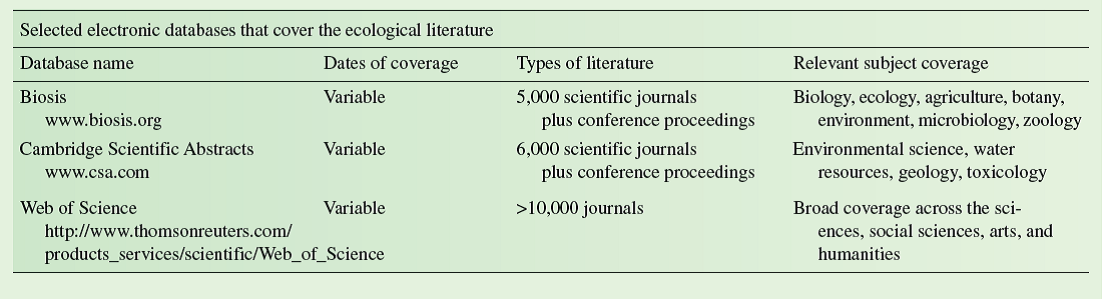
The databases available for searching ecological literature are far too many to review here. So, we'll focus on three contemporary ones: Biosis, Cambridge Scientific Abstracts, and SciSearch, which are widely available in university libraries and include many journals of significance to ecology. Some of their characteristics are listed in the accompanying table.
The important point here is that these databases provide access to millions of published papers often covering several decades of research. Of course, few people would want to spend the time laboriously sorting through all those articles. Fortunately, each of these databases includes a powerful search tool that will help you locate articles of interest. Let's consider some basic tips on how to use these tools to conduct an effective search.
You should generally begin your search by summarizing your subject or research interest. Next, divide your subject into major concepts or key terms. Be sure to think of alternative terms for the same subject-for example, beetles or Coleoptera, daisy or Asteraceae, competition or interference. Next determine the time period in which you are interested. For instance, do you want only the most current literature on your subject or do you want all literature available in the database
Once you have your terms listed and have selected a time period, try a search using one or more terms. If you get too many references, too few references, or unwanted references, you can use Boolean Logical Operators to adjust your search. The main Boolean Logical Operators are and, or, and not. The operator or will broaden your search and will generally yield more references. For instance, the search specified by "daisy or Asteraceae" will retrieve references containing either daisy or Asteraceae. In contrast the operator and will narrow your search. The search specified by "daisy or Asteraceae and desert" will retrieve references containing either daisy or Asteraceae, but restrict the list of references to those concerned with these flowers in desert areas. The search specified by "daisy or Asteraceae and alpine" would yield literature on these flowers in alpine zones. If you want to exclude certain types of references from your search, you may choose to use the operator not. For example the search "daisy or Asteraceae not sunflower" will exclude references that include the term sunflower.
Another useful tool for refining searches is the wild card. A wild card is used to locate references including a particular word or term with alternative endings. For example, you may encounter references to the insect order to which beetles belong as Coleoptera, coleopteran, or coleopterans. In the three databases listed below, an asterisk, * , is generally used as a wild card. In all of these databases, the search term coleoptera * would locate references that included the terms Coleoptera, coleopteran, or coleopterans. Similarly, the search term dais * would retrieve references to both daisy and daisies.
This review is intended to suggest only general guidelines to searching literature. There are many other databases besides the ones listed here, and the creators of all of them work very hard to improve the functioning of their products. As a consequence, the operating details of the various databases are highly dynamic. Therefore, you should periodically review the tips and instructions provided with any database that you might use. The main point of this discussion is to open a door to the rich world of ecological literature, to the world of discovery. Exploring that world can quickly extend your knowledge of the discipline of ecology far beyond the introduction provided by this textbook.
When and why is it often necessary to narrow a search of the research literature
The databases available for searching ecological literature are far too many to review here. So, we'll focus on three contemporary ones: Biosis, Cambridge Scientific Abstracts, and SciSearch, which are widely available in university libraries and include many journals of significance to ecology. Some of their characteristics are listed in the accompanying table.
The important point here is that these databases provide access to millions of published papers often covering several decades of research. Of course, few people would want to spend the time laboriously sorting through all those articles. Fortunately, each of these databases includes a powerful search tool that will help you locate articles of interest. Let's consider some basic tips on how to use these tools to conduct an effective search.
You should generally begin your search by summarizing your subject or research interest. Next, divide your subject into major concepts or key terms. Be sure to think of alternative terms for the same subject-for example, beetles or Coleoptera, daisy or Asteraceae, competition or interference. Next determine the time period in which you are interested. For instance, do you want only the most current literature on your subject or do you want all literature available in the database
Once you have your terms listed and have selected a time period, try a search using one or more terms. If you get too many references, too few references, or unwanted references, you can use Boolean Logical Operators to adjust your search. The main Boolean Logical Operators are and, or, and not. The operator or will broaden your search and will generally yield more references. For instance, the search specified by "daisy or Asteraceae" will retrieve references containing either daisy or Asteraceae. In contrast the operator and will narrow your search. The search specified by "daisy or Asteraceae and desert" will retrieve references containing either daisy or Asteraceae, but restrict the list of references to those concerned with these flowers in desert areas. The search specified by "daisy or Asteraceae and alpine" would yield literature on these flowers in alpine zones. If you want to exclude certain types of references from your search, you may choose to use the operator not. For example the search "daisy or Asteraceae not sunflower" will exclude references that include the term sunflower.
Another useful tool for refining searches is the wild card. A wild card is used to locate references including a particular word or term with alternative endings. For example, you may encounter references to the insect order to which beetles belong as Coleoptera, coleopteran, or coleopterans. In the three databases listed below, an asterisk, * , is generally used as a wild card. In all of these databases, the search term coleoptera * would locate references that included the terms Coleoptera, coleopteran, or coleopterans. Similarly, the search term dais * would retrieve references to both daisy and daisies.
This review is intended to suggest only general guidelines to searching literature. There are many other databases besides the ones listed here, and the creators of all of them work very hard to improve the functioning of their products. As a consequence, the operating details of the various databases are highly dynamic. Therefore, you should periodically review the tips and instructions provided with any database that you might use. The main point of this discussion is to open a door to the rich world of ecological literature, to the world of discovery. Exploring that world can quickly extend your knowledge of the discipline of ecology far beyond the introduction provided by this textbook.
When and why is it often necessary to narrow a search of the research literature
Question
Question
Question
Question
Throughout this series of discussions of investigating the evidence, we have emphasized one main source of evidence- original research. While original research is the foundation on which science rests, our emphasis has neglected one of the most valuable sources of information, the published literature. A researcher in any discipline needs to keep up with developments in his or her areas of interest and in related areas. In addition, some researchers may use published literature to weigh the evidence for or against some hypothesis or theory. In the section in chapter 13 titled "Evidence for Competition in Nature" (see p. 000), we reviewed three studies that took such an approach. Students of ecology may use published literature to learn more about a particular subject, to read additional papers by researchers whose work interests them, or to do literature surveys in support of their own independent research. As pointed out in the preface of this book, however, the explosive pace of scientific discovery makes staying current very difficult. Fortunately, there are now many databases and searching tools that can help.
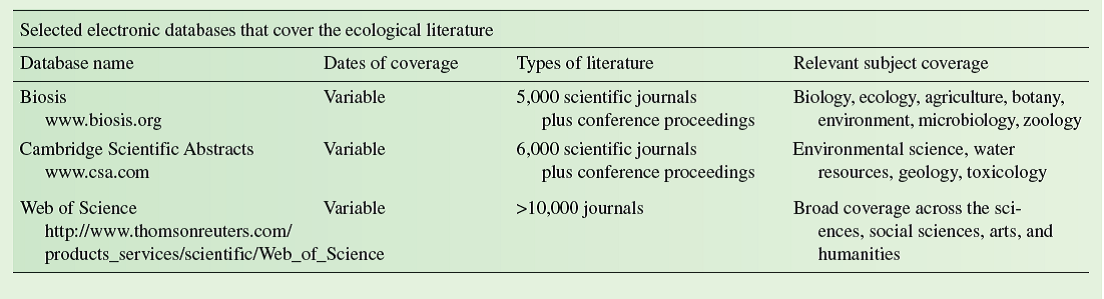
The databases available for searching ecological literature are far too many to review here. So, we'll focus on three contemporary ones: Biosis, Cambridge Scientific Abstracts, and SciSearch, which are widely available in university libraries and include many journals of significance to ecology. Some of their characteristics are listed in the accompanying table.
The important point here is that these databases provide access to millions of published papers often covering several decades of research. Of course, few people would want to spend the time laboriously sorting through all those articles. Fortunately, each of these databases includes a powerful search tool that will help you locate articles of interest. Let's consider some basic tips on how to use these tools to conduct an effective search.
You should generally begin your search by summarizing your subject or research interest. Next, divide your subject into major concepts or key terms. Be sure to think of alternative terms for the same subject-for example, beetles or Coleoptera, daisy or Asteraceae, competition or interference. Next determine the time period in which you are interested. For instance, do you want only the most current literature on your subject or do you want all literature available in the database
Once you have your terms listed and have selected a time period, try a search using one or more terms. If you get too many references, too few references, or unwanted references, you can use Boolean Logical Operators to adjust your search. The main Boolean Logical Operators are and, or, and not. The operator or will broaden your search and will generally yield more references. For instance, the search specified by "daisy or Asteraceae" will retrieve references containing either daisy or Asteraceae. In contrast the operator and will narrow your search. The search specified by "daisy or Asteraceae and desert" will retrieve references containing either daisy or Asteraceae, but restrict the list of references to those concerned with these flowers in desert areas. The search specified by "daisy or Asteraceae and alpine" would yield literature on these flowers in alpine zones. If you want to exclude certain types of references from your search, you may choose to use the operator not. For example the search "daisy or Asteraceae not sunflower" will exclude references that include the term sunflower.
Another useful tool for refining searches is the wild card. A wild card is used to locate references including a particular word or term with alternative endings. For example, you may encounter references to the insect order to which beetles belong as Coleoptera, coleopteran, or coleopterans. In the three databases listed below, an asterisk, * , is generally used as a wild card. In all of these databases, the search term coleoptera * would locate references that included the terms Coleoptera, coleopteran, or coleopterans. Similarly, the search term dais * would retrieve references to both daisy and daisies.
This review is intended to suggest only general guidelines to searching literature. There are many other databases besides the ones listed here, and the creators of all of them work very hard to improve the functioning of their products. As a consequence, the operating details of the various databases are highly dynamic. Therefore, you should periodically review the tips and instructions provided with any database that you might use. The main point of this discussion is to open a door to the rich world of ecological literature, to the world of discovery. Exploring that world can quickly extend your knowledge of the discipline of ecology far beyond the introduction provided by this textbook.
When and why may it be important to broaden a literature search
The databases available for searching ecological literature are far too many to review here. So, we'll focus on three contemporary ones: Biosis, Cambridge Scientific Abstracts, and SciSearch, which are widely available in university libraries and include many journals of significance to ecology. Some of their characteristics are listed in the accompanying table.
The important point here is that these databases provide access to millions of published papers often covering several decades of research. Of course, few people would want to spend the time laboriously sorting through all those articles. Fortunately, each of these databases includes a powerful search tool that will help you locate articles of interest. Let's consider some basic tips on how to use these tools to conduct an effective search.
You should generally begin your search by summarizing your subject or research interest. Next, divide your subject into major concepts or key terms. Be sure to think of alternative terms for the same subject-for example, beetles or Coleoptera, daisy or Asteraceae, competition or interference. Next determine the time period in which you are interested. For instance, do you want only the most current literature on your subject or do you want all literature available in the database
Once you have your terms listed and have selected a time period, try a search using one or more terms. If you get too many references, too few references, or unwanted references, you can use Boolean Logical Operators to adjust your search. The main Boolean Logical Operators are and, or, and not. The operator or will broaden your search and will generally yield more references. For instance, the search specified by "daisy or Asteraceae" will retrieve references containing either daisy or Asteraceae. In contrast the operator and will narrow your search. The search specified by "daisy or Asteraceae and desert" will retrieve references containing either daisy or Asteraceae, but restrict the list of references to those concerned with these flowers in desert areas. The search specified by "daisy or Asteraceae and alpine" would yield literature on these flowers in alpine zones. If you want to exclude certain types of references from your search, you may choose to use the operator not. For example the search "daisy or Asteraceae not sunflower" will exclude references that include the term sunflower.
Another useful tool for refining searches is the wild card. A wild card is used to locate references including a particular word or term with alternative endings. For example, you may encounter references to the insect order to which beetles belong as Coleoptera, coleopteran, or coleopterans. In the three databases listed below, an asterisk, * , is generally used as a wild card. In all of these databases, the search term coleoptera * would locate references that included the terms Coleoptera, coleopteran, or coleopterans. Similarly, the search term dais * would retrieve references to both daisy and daisies.
This review is intended to suggest only general guidelines to searching literature. There are many other databases besides the ones listed here, and the creators of all of them work very hard to improve the functioning of their products. As a consequence, the operating details of the various databases are highly dynamic. Therefore, you should periodically review the tips and instructions provided with any database that you might use. The main point of this discussion is to open a door to the rich world of ecological literature, to the world of discovery. Exploring that world can quickly extend your knowledge of the discipline of ecology far beyond the introduction provided by this textbook.
When and why may it be important to broaden a literature search
Question
Question
Question
Question
Question
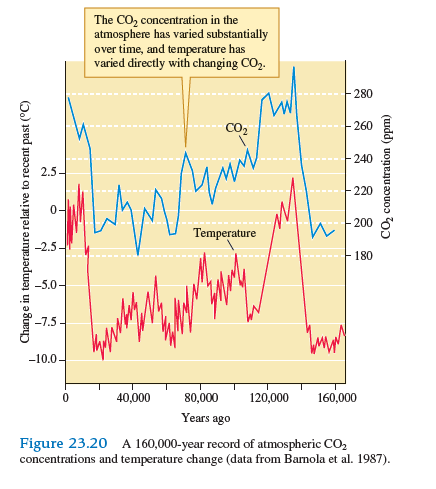
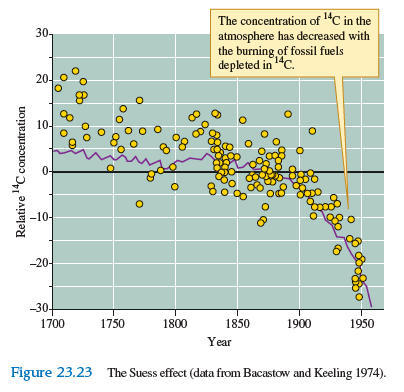
What can we conclude from the evidence summarized by figures 23.20 tO₂3.23

Unlock Deck
Sign up to unlock the cards in this deck!
Unlock Deck
Unlock Deck
1/24

Play

Full screen (f)
Deck 23: Global Ecology
1
Review evidence that the El Niño Southern Oscillation significantly influences populations around the globe. Much of our discussion in chapter 23 focused on the effects of the El Niño Southern Oscillation on populations. Considering our discussions in chapters 18 and 19 of physical controls on rates of terrestrial primary production and decomposition, how does the El Niño Southern Oscillation likely affect these ecosystem processes in Australia or the American Southwest How would you test your ideas
The El Niño Southern Oscillation is a global phenomenon that affects the ecosystems of the earth. It is the climatic pattern that arises due to the interaction of the oceans and the atmosphere. The variations in the surface temperature and the pressure across the Pacific and the Indian Oceans have been found to be responsible for the phenomenon.
The El Niño Southern Oscillation involves two climatic patterns namely El Niño and La Niña.
The El Niño is responsible for heavy precipitation and warmer temperatures over North and South America. It causes drought and decrease in temperature over the western Pacific region including Australia.
The La Niña is responsible for heavy precipitation and warmer temperatures over the western Pacific and Australia. It causes drought and decrease in temperature over North and South America.
The El Niño Southern Oscillation has been found to influence the populations worldwide. This finding is supported by the studies of the effect of El Niño Southern Oscillation on the species of the Galápagos Islands. The effects of El Niño were as follows:
• Reduction in the amount of primary production around the islands.
• Shift in the location of primary production.
• Decline in the population of fish along the coast.
• Migration and decline of the populations of the seabirds.
• High mortality of species of seals due to reduced food supply.
The rate of terrestrial primary production and decomposition is found to be affected by physical controls such as temperature and moisture. The rate of primary production and decomposition is found to be higher under warm and moist conditions. The rate is also high in the regions of high nutrient availability.
El Niño Southern Oscillation causes the periodic fluctuations in the environment of Australia and the American Southwest. The El Niño causes drought and La Niña causes heavy precipitation in Australia and the American Southwest. These periodic fluctuations have been found to influence the rates of primary production and decomposition. The El Niño is likely to reduce the rate of primary production and decomposition along the west coast of South America and in Australia. Ecological studies indicate a possibility of shift in primary production to the areas where El Niño produces heavy precipitation and warm climate.
The reduction in primary production and decomposition on the western coast of South America and Australia and its shift to favourable areas can be confirmed by using remote sensing technology.
Remote sensing technology has been used by the ecologists to determine the fluctuations in the amount and distribution of the phytoplankton biomass on the ocean surface with the changes in the climate.
The decline in primary production can lead to decline of the primary and secondary consumer population in the marine environments. These include fish, sea birds, seals, and other species.
Hence, study of the population of species can indirectly help to understand the effect of El Niño Southern Oscillation on ecosystems.
The El Niño Southern Oscillation involves two climatic patterns namely El Niño and La Niña.
The El Niño is responsible for heavy precipitation and warmer temperatures over North and South America. It causes drought and decrease in temperature over the western Pacific region including Australia.
The La Niña is responsible for heavy precipitation and warmer temperatures over the western Pacific and Australia. It causes drought and decrease in temperature over North and South America.
The El Niño Southern Oscillation has been found to influence the populations worldwide. This finding is supported by the studies of the effect of El Niño Southern Oscillation on the species of the Galápagos Islands. The effects of El Niño were as follows:
• Reduction in the amount of primary production around the islands.
• Shift in the location of primary production.
• Decline in the population of fish along the coast.
• Migration and decline of the populations of the seabirds.
• High mortality of species of seals due to reduced food supply.
The rate of terrestrial primary production and decomposition is found to be affected by physical controls such as temperature and moisture. The rate of primary production and decomposition is found to be higher under warm and moist conditions. The rate is also high in the regions of high nutrient availability.
El Niño Southern Oscillation causes the periodic fluctuations in the environment of Australia and the American Southwest. The El Niño causes drought and La Niña causes heavy precipitation in Australia and the American Southwest. These periodic fluctuations have been found to influence the rates of primary production and decomposition. The El Niño is likely to reduce the rate of primary production and decomposition along the west coast of South America and in Australia. Ecological studies indicate a possibility of shift in primary production to the areas where El Niño produces heavy precipitation and warm climate.
The reduction in primary production and decomposition on the western coast of South America and Australia and its shift to favourable areas can be confirmed by using remote sensing technology.
Remote sensing technology has been used by the ecologists to determine the fluctuations in the amount and distribution of the phytoplankton biomass on the ocean surface with the changes in the climate.
The decline in primary production can lead to decline of the primary and secondary consumer population in the marine environments. These include fish, sea birds, seals, and other species.
Hence, study of the population of species can indirectly help to understand the effect of El Niño Southern Oscillation on ecosystems.
2
What aspects of global warming are widely supported by available evidence
The human activities such as deforestation, industrialization, and increased burning of fossil fuels have led to global climatic changes.
One of the major changes is continued increase in global temperature that has been referred as global warming. Global warming has caused worldwide concern due to its potential threat to all life forms on earth.
Evidences are available that support the following aspects of global warming:
• Increased levels of the greenhouse gas, CO₂ due to the burning of fossil fuels.
• Increase in atmospheric CO₂ leading to increase in global temperature.
• Melting and retreating glaciers.
• Increase in sea levels.
• Decrease in size of Polar Regions.
• Seasonal fluctuations.
• Altered pattern and intensity of precipitation.
• Higher incidences of natural disasters.
• Changes in temperature and pH of oceans.
One of the major changes is continued increase in global temperature that has been referred as global warming. Global warming has caused worldwide concern due to its potential threat to all life forms on earth.
Evidences are available that support the following aspects of global warming:
• Increased levels of the greenhouse gas, CO₂ due to the burning of fossil fuels.
• Increase in atmospheric CO₂ leading to increase in global temperature.
• Melting and retreating glaciers.
• Increase in sea levels.
• Decrease in size of Polar Regions.
• Seasonal fluctuations.
• Altered pattern and intensity of precipitation.
• Higher incidences of natural disasters.
• Changes in temperature and pH of oceans.
3
In chapter 23, we briefly discussed how humans have more than doubled the quantity of fixed nitrogen cycling through the biosphere. In chapter 15, we reviewed studies by Nancy Johnson (1993) on the effects of fertilization on the mutualistic relationship between mycorrhizal fungi and grasses. The increases in fixed nitrogen cycling through the biosphere, particularly that portion deposited by rain, are analogous to a global-scale fertilization experiment. Reasoning from the results of Johnson's study, how should increased fixed nitrogen supplies affect the relationship between mycorrhizal fungi and their plant partners How would you test your ideas
Human activities have been found to have global implications. Burning of fossil fuels, industrialization, and agriculture have been found to increase the amount of nitrogen fixation.
The atmosphere also shows increased concentration of nitrogen compounds such as oxides of nitrogen. These can be delivered to the soil through rain and cause nitrogen enrichment of soils. This can be a considered as a mode of fertilization of the soil.
Nancy Johnson found that fertilization affects the mutualistic relationship between the grasses and the mycorrhizal fungi.
Depending on her studies one can predict following effects of increased fixed nitrogen on the relationship between plants and their mycorrhizal fungal partners:
• Selection of less mutualistic and more aggressive species of mycorrhizal fungi.
• Imbalance in the mutualistic relationship shifting it in favour of the mycorrhizal fungus.
• Change in the composition of the mycorrhizal fungi.
• More shoot growth and less root growth of the plants.
• Reduction in the number of inflorescences.
The predictions about the effects of increased fixed nitrogen on the mutualistic relationship between the plants and their mycorrhizal fungal partners can be tested by the following ways:
• Analysis of the composition of mycorrhizal fungi.
• Determination of proportion of root and shoot mass.
• Determination of the number of inflorescences.
The plants found in the open environment can be considered as the test plants. Their performance is influenced by the increased amount of fixed nitrogen. They can be compared with the control plants, grown in presence of the mycorrhizal inoculums from the unfertilized soils.
The atmosphere also shows increased concentration of nitrogen compounds such as oxides of nitrogen. These can be delivered to the soil through rain and cause nitrogen enrichment of soils. This can be a considered as a mode of fertilization of the soil.
Nancy Johnson found that fertilization affects the mutualistic relationship between the grasses and the mycorrhizal fungi.
Depending on her studies one can predict following effects of increased fixed nitrogen on the relationship between plants and their mycorrhizal fungal partners:
• Selection of less mutualistic and more aggressive species of mycorrhizal fungi.
• Imbalance in the mutualistic relationship shifting it in favour of the mycorrhizal fungus.
• Change in the composition of the mycorrhizal fungi.
• More shoot growth and less root growth of the plants.
• Reduction in the number of inflorescences.
The predictions about the effects of increased fixed nitrogen on the mutualistic relationship between the plants and their mycorrhizal fungal partners can be tested by the following ways:
• Analysis of the composition of mycorrhizal fungi.
• Determination of proportion of root and shoot mass.
• Determination of the number of inflorescences.
The plants found in the open environment can be considered as the test plants. Their performance is influenced by the increased amount of fixed nitrogen. They can be compared with the control plants, grown in presence of the mycorrhizal inoculums from the unfertilized soils.
4
Are there uncertainties remaining regarding global warming
Unlock Deck
Unlock for access to all 24 flashcards in this deck.
Unlock Deck
k this deck
5
As we saw in chapters 18 and 19, nitrogen availability seems to control the rates of several ecosystem processes. How should nitrogen enrichment affect rates of primary production and decomposition in terrestrial, freshwater, and marine environments How could you test your ideas What role might geographic comparisons play in your studies
Unlock Deck
Unlock for access to all 24 flashcards in this deck.
Unlock Deck
k this deck
6
Why may the history of CFCs in the atmosphere in the years following the Montreal Protocol offer encouragement as humanity strives to reverse the modern buildup of atmospheric CO₂
Unlock Deck
Unlock for access to all 24 flashcards in this deck.
Unlock Deck
k this deck
7
Ecologists predict that global diversity is threatened by land use change and by the reductions in habitat area and the fragmentation that accompany land use change. Vitousek (1994) suggested that land use change may be the greatest current threat to biological diversity (see fig. 23.3 ). What role do studies of diversity on islands and species area relationships on continents (see chapter 22) play in these predictions
Unlock Deck
Unlock for access to all 24 flashcards in this deck.
Unlock Deck
k this deck
8
Skole and Tucker (1993) documented the rate and extent of recent deforestation in the Amazon Basin in Brazil. This is a prominent example of the land cover changes that likely threaten biological diversity. However, scientists have documented agricultural activity in New World tropical forests beginning at least 6,000 years ago. What makes present-day deforestation in the Amazon Basin different from this historical activity What does the long history of agriculture in the Amazon Basin suggest about the potential for coexistence of agriculture and biological diversity there
Unlock Deck
Unlock for access to all 24 flashcards in this deck.
Unlock Deck
k this deck
9
Review the long-term atmospheric CO₂ record as revealed by studies of air trapped in ice cores. What is the evidence that burning of fossil fuels is responsible for recent increases in atmospheric CO₂ concentrations
Unlock Deck
Unlock for access to all 24 flashcards in this deck.
Unlock Deck
k this deck
10
What evidence is there that variation in atmospheric CO₂ concentration is linked to variation in global temperatures In recent years, the governments of most countries of the world have been working hard to develop international agreements to regulate CO₂ emissions. Why are these governments concerned How might rapid changes in global temperatures lead to the extinction of large numbers of species How might changes in global temperatures affect agriculture around the world
Unlock Deck
Unlock for access to all 24 flashcards in this deck.
Unlock Deck
k this deck
11
How are the influences of El Niño and La Niña related to the concepts of top-down versus bottom-up control of populations, communities, and ecosystems (p. 401)
Unlock Deck
Unlock for access to all 24 flashcards in this deck.
Unlock Deck
k this deck
12
How does the example of El Niño and the Great Salt Lake confound the concepts of top-down and bottom-up control
Unlock Deck
Unlock for access to all 24 flashcards in this deck.
Unlock Deck
k this deck
13
The example of El Niño and the Great Salt Lake might lead us to what general conclusion concerning the concepts of top-down and bottom-up control
Unlock Deck
Unlock for access to all 24 flashcards in this deck.
Unlock Deck
k this deck
14
How might human-induced alterations to the global nitrogen cycle impact aquatic ecosystems (see chapters 3, 18, and 19, pp. 396-398, and 422)
Unlock Deck
Unlock for access to all 24 flashcards in this deck.
Unlock Deck
k this deck
15
Throughout this series of discussions of investigating the evidence, we have emphasized one main source of evidence- original research. While original research is the foundation on which science rests, our emphasis has neglected one of the most valuable sources of information, the published literature. A researcher in any discipline needs to keep up with developments in his or her areas of interest and in related areas. In addition, some researchers may use published literature to weigh the evidence for or against some hypothesis or theory. In the section in chapter 13 titled "Evidence for Competition in Nature" (see p. 000), we reviewed three studies that took such an approach. Students of ecology may use published literature to learn more about a particular subject, to read additional papers by researchers whose work interests them, or to do literature surveys in support of their own independent research. As pointed out in the preface of this book, however, the explosive pace of scientific discovery makes staying current very difficult. Fortunately, there are now many databases and searching tools that can help.
The databases available for searching ecological literature are far too many to review here. So, we'll focus on three contemporary ones: Biosis, Cambridge Scientific Abstracts, and SciSearch, which are widely available in university libraries and include many journals of significance to ecology. Some of their characteristics are listed in the accompanying table.
The important point here is that these databases provide access to millions of published papers often covering several decades of research. Of course, few people would want to spend the time laboriously sorting through all those articles. Fortunately, each of these databases includes a powerful search tool that will help you locate articles of interest. Let's consider some basic tips on how to use these tools to conduct an effective search.
You should generally begin your search by summarizing your subject or research interest. Next, divide your subject into major concepts or key terms. Be sure to think of alternative terms for the same subject-for example, beetles or Coleoptera, daisy or Asteraceae, competition or interference. Next determine the time period in which you are interested. For instance, do you want only the most current literature on your subject or do you want all literature available in the database
Once you have your terms listed and have selected a time period, try a search using one or more terms. If you get too many references, too few references, or unwanted references, you can use Boolean Logical Operators to adjust your search. The main Boolean Logical Operators are and, or, and not. The operator or will broaden your search and will generally yield more references. For instance, the search specified by "daisy or Asteraceae" will retrieve references containing either daisy or Asteraceae. In contrast the operator and will narrow your search. The search specified by "daisy or Asteraceae and desert" will retrieve references containing either daisy or Asteraceae, but restrict the list of references to those concerned with these flowers in desert areas. The search specified by "daisy or Asteraceae and alpine" would yield literature on these flowers in alpine zones. If you want to exclude certain types of references from your search, you may choose to use the operator not. For example the search "daisy or Asteraceae not sunflower" will exclude references that include the term sunflower.
Another useful tool for refining searches is the wild card. A wild card is used to locate references including a particular word or term with alternative endings. For example, you may encounter references to the insect order to which beetles belong as Coleoptera, coleopteran, or coleopterans. In the three databases listed below, an asterisk, * , is generally used as a wild card. In all of these databases, the search term coleoptera * would locate references that included the terms Coleoptera, coleopteran, or coleopterans. Similarly, the search term dais * would retrieve references to both daisy and daisies.
This review is intended to suggest only general guidelines to searching literature. There are many other databases besides the ones listed here, and the creators of all of them work very hard to improve the functioning of their products. As a consequence, the operating details of the various databases are highly dynamic. Therefore, you should periodically review the tips and instructions provided with any database that you might use. The main point of this discussion is to open a door to the rich world of ecological literature, to the world of discovery. Exploring that world can quickly extend your knowledge of the discipline of ecology far beyond the introduction provided by this textbook.
When and why is it often necessary to narrow a search of the research literature
The databases available for searching ecological literature are far too many to review here. So, we'll focus on three contemporary ones: Biosis, Cambridge Scientific Abstracts, and SciSearch, which are widely available in university libraries and include many journals of significance to ecology. Some of their characteristics are listed in the accompanying table.
The important point here is that these databases provide access to millions of published papers often covering several decades of research. Of course, few people would want to spend the time laboriously sorting through all those articles. Fortunately, each of these databases includes a powerful search tool that will help you locate articles of interest. Let's consider some basic tips on how to use these tools to conduct an effective search.
You should generally begin your search by summarizing your subject or research interest. Next, divide your subject into major concepts or key terms. Be sure to think of alternative terms for the same subject-for example, beetles or Coleoptera, daisy or Asteraceae, competition or interference. Next determine the time period in which you are interested. For instance, do you want only the most current literature on your subject or do you want all literature available in the database
Once you have your terms listed and have selected a time period, try a search using one or more terms. If you get too many references, too few references, or unwanted references, you can use Boolean Logical Operators to adjust your search. The main Boolean Logical Operators are and, or, and not. The operator or will broaden your search and will generally yield more references. For instance, the search specified by "daisy or Asteraceae" will retrieve references containing either daisy or Asteraceae. In contrast the operator and will narrow your search. The search specified by "daisy or Asteraceae and desert" will retrieve references containing either daisy or Asteraceae, but restrict the list of references to those concerned with these flowers in desert areas. The search specified by "daisy or Asteraceae and alpine" would yield literature on these flowers in alpine zones. If you want to exclude certain types of references from your search, you may choose to use the operator not. For example the search "daisy or Asteraceae not sunflower" will exclude references that include the term sunflower.
Another useful tool for refining searches is the wild card. A wild card is used to locate references including a particular word or term with alternative endings. For example, you may encounter references to the insect order to which beetles belong as Coleoptera, coleopteran, or coleopterans. In the three databases listed below, an asterisk, * , is generally used as a wild card. In all of these databases, the search term coleoptera * would locate references that included the terms Coleoptera, coleopteran, or coleopterans. Similarly, the search term dais * would retrieve references to both daisy and daisies.
This review is intended to suggest only general guidelines to searching literature. There are many other databases besides the ones listed here, and the creators of all of them work very hard to improve the functioning of their products. As a consequence, the operating details of the various databases are highly dynamic. Therefore, you should periodically review the tips and instructions provided with any database that you might use. The main point of this discussion is to open a door to the rich world of ecological literature, to the world of discovery. Exploring that world can quickly extend your knowledge of the discipline of ecology far beyond the introduction provided by this textbook.
When and why is it often necessary to narrow a search of the research literature
Unlock Deck
Unlock for access to all 24 flashcards in this deck.
Unlock Deck
k this deck
16
How might human-induced alterations to the global nitrogen cycle affect terrestrial ecosystems (see chapters 15, 16, and 19, pp. 334-336, 363, and 420-422)
Unlock Deck
Unlock for access to all 24 flashcards in this deck.
Unlock Deck
k this deck
17
Ecologists are now challenged to study global ecology. The apparent role played by humans in changing the global environment makes it imperative that we understand the workings of the earth as a global system. However, this study requires approaches that are significantly different from those that can be applied to traditional areas of ecological study. Historically, much of ecology focused on small areas and short-term studies. What are some of the main differences between global ecology and, for instance, the study of interspecific competition (see chapter 13) or forest succession (see chapter 20) How will these differences affect the design of studies at the global scale
Unlock Deck
Unlock for access to all 24 flashcards in this deck.
Unlock Deck
k this deck
18
Why is reducing forest area through deforestation a fundamental threat to biodiversity (see chapter 22)
Unlock Deck
Unlock for access to all 24 flashcards in this deck.
Unlock Deck
k this deck
19
Throughout this series of discussions of investigating the evidence, we have emphasized one main source of evidence- original research. While original research is the foundation on which science rests, our emphasis has neglected one of the most valuable sources of information, the published literature. A researcher in any discipline needs to keep up with developments in his or her areas of interest and in related areas. In addition, some researchers may use published literature to weigh the evidence for or against some hypothesis or theory. In the section in chapter 13 titled "Evidence for Competition in Nature" (see p. 000), we reviewed three studies that took such an approach. Students of ecology may use published literature to learn more about a particular subject, to read additional papers by researchers whose work interests them, or to do literature surveys in support of their own independent research. As pointed out in the preface of this book, however, the explosive pace of scientific discovery makes staying current very difficult. Fortunately, there are now many databases and searching tools that can help.
The databases available for searching ecological literature are far too many to review here. So, we'll focus on three contemporary ones: Biosis, Cambridge Scientific Abstracts, and SciSearch, which are widely available in university libraries and include many journals of significance to ecology. Some of their characteristics are listed in the accompanying table.
The important point here is that these databases provide access to millions of published papers often covering several decades of research. Of course, few people would want to spend the time laboriously sorting through all those articles. Fortunately, each of these databases includes a powerful search tool that will help you locate articles of interest. Let's consider some basic tips on how to use these tools to conduct an effective search.
You should generally begin your search by summarizing your subject or research interest. Next, divide your subject into major concepts or key terms. Be sure to think of alternative terms for the same subject-for example, beetles or Coleoptera, daisy or Asteraceae, competition or interference. Next determine the time period in which you are interested. For instance, do you want only the most current literature on your subject or do you want all literature available in the database
Once you have your terms listed and have selected a time period, try a search using one or more terms. If you get too many references, too few references, or unwanted references, you can use Boolean Logical Operators to adjust your search. The main Boolean Logical Operators are and, or, and not. The operator or will broaden your search and will generally yield more references. For instance, the search specified by "daisy or Asteraceae" will retrieve references containing either daisy or Asteraceae. In contrast the operator and will narrow your search. The search specified by "daisy or Asteraceae and desert" will retrieve references containing either daisy or Asteraceae, but restrict the list of references to those concerned with these flowers in desert areas. The search specified by "daisy or Asteraceae and alpine" would yield literature on these flowers in alpine zones. If you want to exclude certain types of references from your search, you may choose to use the operator not. For example the search "daisy or Asteraceae not sunflower" will exclude references that include the term sunflower.
Another useful tool for refining searches is the wild card. A wild card is used to locate references including a particular word or term with alternative endings. For example, you may encounter references to the insect order to which beetles belong as Coleoptera, coleopteran, or coleopterans. In the three databases listed below, an asterisk, * , is generally used as a wild card. In all of these databases, the search term coleoptera * would locate references that included the terms Coleoptera, coleopteran, or coleopterans. Similarly, the search term dais * would retrieve references to both daisy and daisies.
This review is intended to suggest only general guidelines to searching literature. There are many other databases besides the ones listed here, and the creators of all of them work very hard to improve the functioning of their products. As a consequence, the operating details of the various databases are highly dynamic. Therefore, you should periodically review the tips and instructions provided with any database that you might use. The main point of this discussion is to open a door to the rich world of ecological literature, to the world of discovery. Exploring that world can quickly extend your knowledge of the discipline of ecology far beyond the introduction provided by this textbook.
When and why may it be important to broaden a literature search
The databases available for searching ecological literature are far too many to review here. So, we'll focus on three contemporary ones: Biosis, Cambridge Scientific Abstracts, and SciSearch, which are widely available in university libraries and include many journals of significance to ecology. Some of their characteristics are listed in the accompanying table.
The important point here is that these databases provide access to millions of published papers often covering several decades of research. Of course, few people would want to spend the time laboriously sorting through all those articles. Fortunately, each of these databases includes a powerful search tool that will help you locate articles of interest. Let's consider some basic tips on how to use these tools to conduct an effective search.
You should generally begin your search by summarizing your subject or research interest. Next, divide your subject into major concepts or key terms. Be sure to think of alternative terms for the same subject-for example, beetles or Coleoptera, daisy or Asteraceae, competition or interference. Next determine the time period in which you are interested. For instance, do you want only the most current literature on your subject or do you want all literature available in the database
Once you have your terms listed and have selected a time period, try a search using one or more terms. If you get too many references, too few references, or unwanted references, you can use Boolean Logical Operators to adjust your search. The main Boolean Logical Operators are and, or, and not. The operator or will broaden your search and will generally yield more references. For instance, the search specified by "daisy or Asteraceae" will retrieve references containing either daisy or Asteraceae. In contrast the operator and will narrow your search. The search specified by "daisy or Asteraceae and desert" will retrieve references containing either daisy or Asteraceae, but restrict the list of references to those concerned with these flowers in desert areas. The search specified by "daisy or Asteraceae and alpine" would yield literature on these flowers in alpine zones. If you want to exclude certain types of references from your search, you may choose to use the operator not. For example the search "daisy or Asteraceae not sunflower" will exclude references that include the term sunflower.
Another useful tool for refining searches is the wild card. A wild card is used to locate references including a particular word or term with alternative endings. For example, you may encounter references to the insect order to which beetles belong as Coleoptera, coleopteran, or coleopterans. In the three databases listed below, an asterisk, * , is generally used as a wild card. In all of these databases, the search term coleoptera * would locate references that included the terms Coleoptera, coleopteran, or coleopterans. Similarly, the search term dais * would retrieve references to both daisy and daisies.
This review is intended to suggest only general guidelines to searching literature. There are many other databases besides the ones listed here, and the creators of all of them work very hard to improve the functioning of their products. As a consequence, the operating details of the various databases are highly dynamic. Therefore, you should periodically review the tips and instructions provided with any database that you might use. The main point of this discussion is to open a door to the rich world of ecological literature, to the world of discovery. Exploring that world can quickly extend your knowledge of the discipline of ecology far beyond the introduction provided by this textbook.
When and why may it be important to broaden a literature search
Unlock Deck
Unlock for access to all 24 flashcards in this deck.
Unlock Deck
k this deck
20
How does fragmentation of habitat as a result of human changes in land cover threaten populations (see chapters 4, 10, and 21, pp. 94-95, 224-225 and 462-465)
Unlock Deck
Unlock for access to all 24 flashcards in this deck.
Unlock Deck
k this deck
21
Geologists, atmospheric scientists, and oceanographers have been conducting global-scale studies for some time. What role will information from these disciplines play in the study of global ecology Why will global ecological studies generally be pursued by interdisciplinary teams How can ecologists play a useful role in global studies
Unlock Deck
Unlock for access to all 24 flashcards in this deck.
Unlock Deck
k this deck
22
Why is the ecological impact of deforestation always greater than the area of forest removed
Unlock Deck
Unlock for access to all 24 flashcards in this deck.
Unlock Deck
k this deck
23
What changes in sea surface temperatures and atmospheric pressures over the Pacific Ocean accompany El Niño What physical changes accompany La Niña How do El Niño and La Niña affect precipitation in North America, South America, and Australia
Unlock Deck
Unlock for access to all 24 flashcards in this deck.
Unlock Deck
k this deck
24
What can we conclude from the evidence summarized by figures 23.20 tO₂3.23
Unlock Deck
Unlock for access to all 24 flashcards in this deck.
Unlock Deck
k this deck
Unlock Deck
Unlock for access to all 24 flashcards in this deck.






