







 Chat with AI

Deck 7: Strategic Planning
Full screen (f)

Question
Cruise Ship Building: Europe and Asia
For a long time, Italy, France, Germany, Finland, and very occasionally Japan, have been the only serious builders in the world to produce large cruise ships. But with recent shipbuilding takeovers, this may now be changing.
In Italy, Fincantieri's biggest customers are Carnival Cruise Lines, Holland America Line, and Princess Cruises, all of whom have taken most of their new deliveries from the Italian shipbuilders. To these can now be added Cunard and P O. In 2010, Fincantieri delivered the Queen Elizabeth, the new flagship of Cunard Line. Carnival's new 130,000-ton Carnival Magic became Fincantieri's largest product when it was delivered in 2011. Fincantieri, one of the largest shipbuilders in the world, designs and produces cruise ships, ferries, naval vessels, offshore units, and megayachts. With nine shipyards-eight in Italy-it has 10,000 employees. Fincantieri, a world leader in the sector, has built 59 cruise ships.
STX Group, the South Korean conglomerate, last year had a daring swoop on Aker Yards (a Finnish-based company) that will see it take two-thirds of Aker Yards and leave the French with 34 to 25 percent already held by Alstom and another 9 percent STX will now sell to the French government. Aker Yards gives STX Group, a conglomerate involved in shipbuilding and energy production, specialized cruise ship and offshore vessel capabilities. STX is presently the sixth largest shipbuilder worldwide, with its strength in bulk carriers and container ships. Aker Yards, meanwhile, controls 13 shipyards and has 15 cruise- and ferry-type vessels on its order book. However, Aker Yards has suffered losses, and building cruise ships is vulnerable not only to the economic downturn but also to changes in the dollar-euro exchange rates. However, Aker Yards' advanced technologies in cruise ships, icebreakers, and specialized ships should put it less head-to-head with its national competitors.
In a generally difficult context, the European shipbuilding industry is in a very weak position. The main shipbuilding groups have had to face a drastic reduction in their order backlogs and requests by many ship owners to postpone deliveries. This has led to underutilization of production capacity, with the consequent job losses in the shipyards estimated at some 20 percent of the total workforce of 180,000.
In view of the difficult market conditions, STX Europe, Fincantieri's main competitor (together with Meyer Werft shipyards in Germany), purchased by STX Shipbuilding of Korea in 2007, has considered the option of partially refocusing its cruise and ferries business unit on other segments. In the meantime, the absence of new orders led the company in 2009 first to temporarily lay off workers from its French and Finnish shipyards, and later to significantly reduce headcount, with a consequent downsizing of production capacity. Germany was one of the countries hardest hit by the shipbuilding crisis: many shipyards are about to go bankrupt, others have already failed or shut down, and others have been or are about to be sold.
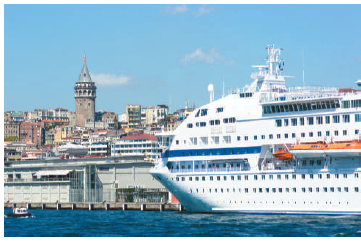
The leadership gained with a distinctive product "Made in Italy," is the result of top quality and a privileged relationship with the best international customers. Why?
For a long time, Italy, France, Germany, Finland, and very occasionally Japan, have been the only serious builders in the world to produce large cruise ships. But with recent shipbuilding takeovers, this may now be changing.
In Italy, Fincantieri's biggest customers are Carnival Cruise Lines, Holland America Line, and Princess Cruises, all of whom have taken most of their new deliveries from the Italian shipbuilders. To these can now be added Cunard and P O. In 2010, Fincantieri delivered the Queen Elizabeth, the new flagship of Cunard Line. Carnival's new 130,000-ton Carnival Magic became Fincantieri's largest product when it was delivered in 2011. Fincantieri, one of the largest shipbuilders in the world, designs and produces cruise ships, ferries, naval vessels, offshore units, and megayachts. With nine shipyards-eight in Italy-it has 10,000 employees. Fincantieri, a world leader in the sector, has built 59 cruise ships.
STX Group, the South Korean conglomerate, last year had a daring swoop on Aker Yards (a Finnish-based company) that will see it take two-thirds of Aker Yards and leave the French with 34 to 25 percent already held by Alstom and another 9 percent STX will now sell to the French government. Aker Yards gives STX Group, a conglomerate involved in shipbuilding and energy production, specialized cruise ship and offshore vessel capabilities. STX is presently the sixth largest shipbuilder worldwide, with its strength in bulk carriers and container ships. Aker Yards, meanwhile, controls 13 shipyards and has 15 cruise- and ferry-type vessels on its order book. However, Aker Yards has suffered losses, and building cruise ships is vulnerable not only to the economic downturn but also to changes in the dollar-euro exchange rates. However, Aker Yards' advanced technologies in cruise ships, icebreakers, and specialized ships should put it less head-to-head with its national competitors.
In a generally difficult context, the European shipbuilding industry is in a very weak position. The main shipbuilding groups have had to face a drastic reduction in their order backlogs and requests by many ship owners to postpone deliveries. This has led to underutilization of production capacity, with the consequent job losses in the shipyards estimated at some 20 percent of the total workforce of 180,000.
In view of the difficult market conditions, STX Europe, Fincantieri's main competitor (together with Meyer Werft shipyards in Germany), purchased by STX Shipbuilding of Korea in 2007, has considered the option of partially refocusing its cruise and ferries business unit on other segments. In the meantime, the absence of new orders led the company in 2009 first to temporarily lay off workers from its French and Finnish shipyards, and later to significantly reduce headcount, with a consequent downsizing of production capacity. Germany was one of the countries hardest hit by the shipbuilding crisis: many shipyards are about to go bankrupt, others have already failed or shut down, and others have been or are about to be sold.
The leadership gained with a distinctive product "Made in Italy," is the result of top quality and a privileged relationship with the best international customers. Why?

Question
Question
Question
Cruise Ship Building: Europe and Asia
For a long time, Italy, France, Germany, Finland, and very occasionally Japan, have been the only serious builders in the world to produce large cruise ships. But with recent shipbuilding takeovers, this may now be changing.
In Italy, Fincantieri's biggest customers are Carnival Cruise Lines, Holland America Line, and Princess Cruises, all of whom have taken most of their new deliveries from the Italian shipbuilders. To these can now be added Cunard and P O. In 2010, Fincantieri delivered the Queen Elizabeth, the new flagship of Cunard Line. Carnival's new 130,000-ton Carnival Magic became Fincantieri's largest product when it was delivered in 2011. Fincantieri, one of the largest shipbuilders in the world, designs and produces cruise ships, ferries, naval vessels, offshore units, and megayachts. With nine shipyards-eight in Italy-it has 10,000 employees. Fincantieri, a world leader in the sector, has built 59 cruise ships.
STX Group, the South Korean conglomerate, last year had a daring swoop on Aker Yards (a Finnish-based company) that will see it take two-thirds of Aker Yards and leave the French with 34 to 25 percent already held by Alstom and another 9 percent STX will now sell to the French government. Aker Yards gives STX Group, a conglomerate involved in shipbuilding and energy production, specialized cruise ship and offshore vessel capabilities. STX is presently the sixth largest shipbuilder worldwide, with its strength in bulk carriers and container ships. Aker Yards, meanwhile, controls 13 shipyards and has 15 cruise- and ferry-type vessels on its order book. However, Aker Yards has suffered losses, and building cruise ships is vulnerable not only to the economic downturn but also to changes in the dollar-euro exchange rates. However, Aker Yards' advanced technologies in cruise ships, icebreakers, and specialized ships should put it less head-to-head with its national competitors.
In a generally difficult context, the European shipbuilding industry is in a very weak position. The main shipbuilding groups have had to face a drastic reduction in their order backlogs and requests by many ship owners to postpone deliveries. This has led to underutilization of production capacity, with the consequent job losses in the shipyards estimated at some 20 percent of the total workforce of 180,000.
In view of the difficult market conditions, STX Europe, Fincantieri's main competitor (together with Meyer Werft shipyards in Germany), purchased by STX Shipbuilding of Korea in 2007, has considered the option of partially refocusing its cruise and ferries business unit on other segments. In the meantime, the absence of new orders led the company in 2009 first to temporarily lay off workers from its French and Finnish shipyards, and later to significantly reduce headcount, with a consequent downsizing of production capacity. Germany was one of the countries hardest hit by the shipbuilding crisis: many shipyards are about to go bankrupt, others have already failed or shut down, and others have been or are about to be sold.
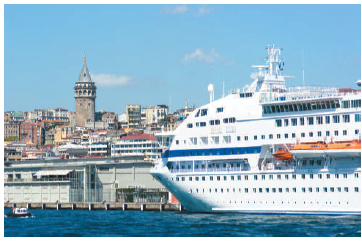
STX offers a wide variety of ships including icebreakers. Will this variation allow them to retain their market share?
SOURCES: Fincantieri AnnualReport 2009, http://www.fincantieri.it/cms/data/pages/files/000128_resource1_orig.pdf; "Top 90 Cruise Ships in the World," Conde Nast Traveler, February 2009, 66; Robert Anderson, "Korea's STX Takes Control of Aker Yards," Financial Times, August 19, 2008, 17; and "Cruise Ship Building: Asia Invades Europe," Cybercruises.com, January 9, 2008, http://www.cybercruises.com/cruisecolumn_sep2.htm.
For a long time, Italy, France, Germany, Finland, and very occasionally Japan, have been the only serious builders in the world to produce large cruise ships. But with recent shipbuilding takeovers, this may now be changing.
In Italy, Fincantieri's biggest customers are Carnival Cruise Lines, Holland America Line, and Princess Cruises, all of whom have taken most of their new deliveries from the Italian shipbuilders. To these can now be added Cunard and P O. In 2010, Fincantieri delivered the Queen Elizabeth, the new flagship of Cunard Line. Carnival's new 130,000-ton Carnival Magic became Fincantieri's largest product when it was delivered in 2011. Fincantieri, one of the largest shipbuilders in the world, designs and produces cruise ships, ferries, naval vessels, offshore units, and megayachts. With nine shipyards-eight in Italy-it has 10,000 employees. Fincantieri, a world leader in the sector, has built 59 cruise ships.
STX Group, the South Korean conglomerate, last year had a daring swoop on Aker Yards (a Finnish-based company) that will see it take two-thirds of Aker Yards and leave the French with 34 to 25 percent already held by Alstom and another 9 percent STX will now sell to the French government. Aker Yards gives STX Group, a conglomerate involved in shipbuilding and energy production, specialized cruise ship and offshore vessel capabilities. STX is presently the sixth largest shipbuilder worldwide, with its strength in bulk carriers and container ships. Aker Yards, meanwhile, controls 13 shipyards and has 15 cruise- and ferry-type vessels on its order book. However, Aker Yards has suffered losses, and building cruise ships is vulnerable not only to the economic downturn but also to changes in the dollar-euro exchange rates. However, Aker Yards' advanced technologies in cruise ships, icebreakers, and specialized ships should put it less head-to-head with its national competitors.
In a generally difficult context, the European shipbuilding industry is in a very weak position. The main shipbuilding groups have had to face a drastic reduction in their order backlogs and requests by many ship owners to postpone deliveries. This has led to underutilization of production capacity, with the consequent job losses in the shipyards estimated at some 20 percent of the total workforce of 180,000.
In view of the difficult market conditions, STX Europe, Fincantieri's main competitor (together with Meyer Werft shipyards in Germany), purchased by STX Shipbuilding of Korea in 2007, has considered the option of partially refocusing its cruise and ferries business unit on other segments. In the meantime, the absence of new orders led the company in 2009 first to temporarily lay off workers from its French and Finnish shipyards, and later to significantly reduce headcount, with a consequent downsizing of production capacity. Germany was one of the countries hardest hit by the shipbuilding crisis: many shipyards are about to go bankrupt, others have already failed or shut down, and others have been or are about to be sold.
STX offers a wide variety of ships including icebreakers. Will this variation allow them to retain their market share?
SOURCES: Fincantieri AnnualReport 2009, http://www.fincantieri.it/cms/data/pages/files/000128_resource1_orig.pdf; "Top 90 Cruise Ships in the World," Conde Nast Traveler, February 2009, 66; Robert Anderson, "Korea's STX Takes Control of Aker Yards," Financial Times, August 19, 2008, 17; and "Cruise Ship Building: Asia Invades Europe," Cybercruises.com, January 9, 2008, http://www.cybercruises.com/cruisecolumn_sep2.htm.
Question
Question
Question
Question
Question
Question

Unlock Deck
Sign up to unlock the cards in this deck!
Unlock Deck
Unlock Deck
1/10

Play

Full screen (f)
Deck 7: Strategic Planning
1
Cruise Ship Building: Europe and Asia
For a long time, Italy, France, Germany, Finland, and very occasionally Japan, have been the only serious builders in the world to produce large cruise ships. But with recent shipbuilding takeovers, this may now be changing.
In Italy, Fincantieri's biggest customers are Carnival Cruise Lines, Holland America Line, and Princess Cruises, all of whom have taken most of their new deliveries from the Italian shipbuilders. To these can now be added Cunard and P O. In 2010, Fincantieri delivered the Queen Elizabeth, the new flagship of Cunard Line. Carnival's new 130,000-ton Carnival Magic became Fincantieri's largest product when it was delivered in 2011. Fincantieri, one of the largest shipbuilders in the world, designs and produces cruise ships, ferries, naval vessels, offshore units, and megayachts. With nine shipyards-eight in Italy-it has 10,000 employees. Fincantieri, a world leader in the sector, has built 59 cruise ships.
STX Group, the South Korean conglomerate, last year had a daring swoop on Aker Yards (a Finnish-based company) that will see it take two-thirds of Aker Yards and leave the French with 34 to 25 percent already held by Alstom and another 9 percent STX will now sell to the French government. Aker Yards gives STX Group, a conglomerate involved in shipbuilding and energy production, specialized cruise ship and offshore vessel capabilities. STX is presently the sixth largest shipbuilder worldwide, with its strength in bulk carriers and container ships. Aker Yards, meanwhile, controls 13 shipyards and has 15 cruise- and ferry-type vessels on its order book. However, Aker Yards has suffered losses, and building cruise ships is vulnerable not only to the economic downturn but also to changes in the dollar-euro exchange rates. However, Aker Yards' advanced technologies in cruise ships, icebreakers, and specialized ships should put it less head-to-head with its national competitors.
In a generally difficult context, the European shipbuilding industry is in a very weak position. The main shipbuilding groups have had to face a drastic reduction in their order backlogs and requests by many ship owners to postpone deliveries. This has led to underutilization of production capacity, with the consequent job losses in the shipyards estimated at some 20 percent of the total workforce of 180,000.
In view of the difficult market conditions, STX Europe, Fincantieri's main competitor (together with Meyer Werft shipyards in Germany), purchased by STX Shipbuilding of Korea in 2007, has considered the option of partially refocusing its cruise and ferries business unit on other segments. In the meantime, the absence of new orders led the company in 2009 first to temporarily lay off workers from its French and Finnish shipyards, and later to significantly reduce headcount, with a consequent downsizing of production capacity. Germany was one of the countries hardest hit by the shipbuilding crisis: many shipyards are about to go bankrupt, others have already failed or shut down, and others have been or are about to be sold.
The leadership gained with a distinctive product "Made in Italy," is the result of top quality and a privileged relationship with the best international customers. Why?
For a long time, Italy, France, Germany, Finland, and very occasionally Japan, have been the only serious builders in the world to produce large cruise ships. But with recent shipbuilding takeovers, this may now be changing.
In Italy, Fincantieri's biggest customers are Carnival Cruise Lines, Holland America Line, and Princess Cruises, all of whom have taken most of their new deliveries from the Italian shipbuilders. To these can now be added Cunard and P O. In 2010, Fincantieri delivered the Queen Elizabeth, the new flagship of Cunard Line. Carnival's new 130,000-ton Carnival Magic became Fincantieri's largest product when it was delivered in 2011. Fincantieri, one of the largest shipbuilders in the world, designs and produces cruise ships, ferries, naval vessels, offshore units, and megayachts. With nine shipyards-eight in Italy-it has 10,000 employees. Fincantieri, a world leader in the sector, has built 59 cruise ships.
STX Group, the South Korean conglomerate, last year had a daring swoop on Aker Yards (a Finnish-based company) that will see it take two-thirds of Aker Yards and leave the French with 34 to 25 percent already held by Alstom and another 9 percent STX will now sell to the French government. Aker Yards gives STX Group, a conglomerate involved in shipbuilding and energy production, specialized cruise ship and offshore vessel capabilities. STX is presently the sixth largest shipbuilder worldwide, with its strength in bulk carriers and container ships. Aker Yards, meanwhile, controls 13 shipyards and has 15 cruise- and ferry-type vessels on its order book. However, Aker Yards has suffered losses, and building cruise ships is vulnerable not only to the economic downturn but also to changes in the dollar-euro exchange rates. However, Aker Yards' advanced technologies in cruise ships, icebreakers, and specialized ships should put it less head-to-head with its national competitors.
In a generally difficult context, the European shipbuilding industry is in a very weak position. The main shipbuilding groups have had to face a drastic reduction in their order backlogs and requests by many ship owners to postpone deliveries. This has led to underutilization of production capacity, with the consequent job losses in the shipyards estimated at some 20 percent of the total workforce of 180,000.
In view of the difficult market conditions, STX Europe, Fincantieri's main competitor (together with Meyer Werft shipyards in Germany), purchased by STX Shipbuilding of Korea in 2007, has considered the option of partially refocusing its cruise and ferries business unit on other segments. In the meantime, the absence of new orders led the company in 2009 first to temporarily lay off workers from its French and Finnish shipyards, and later to significantly reduce headcount, with a consequent downsizing of production capacity. Germany was one of the countries hardest hit by the shipbuilding crisis: many shipyards are about to go bankrupt, others have already failed or shut down, and others have been or are about to be sold.
The leadership gained with a distinctive product "Made in Italy," is the result of top quality and a privileged relationship with the best international customers. Why?
As per the mentioned case, it is stated that S is a cruise manufacturing company that offers varieties of cruises and ships to its customers as per their requirement. S has been originated from a K conglomerate swooping on A Yards which is a Finnish company.
In the given case, S offers variations in its ship offerings to the customers which also include ice breakers and this kind of variations are really helpful in capturing the major market share. It is well known that higher the variety of the product variants, it is more likely to become the best choice of its customers because everyone look something different at the next time.
Thus, it is likely that S will be able to capture and spread its market share and retain it to its maximum. The variations S offers in its ships and cruises make it vulnerable for getting progressive in the minds of its customers.
In the given case, S offers variations in its ship offerings to the customers which also include ice breakers and this kind of variations are really helpful in capturing the major market share. It is well known that higher the variety of the product variants, it is more likely to become the best choice of its customers because everyone look something different at the next time.
Thus, it is likely that S will be able to capture and spread its market share and retain it to its maximum. The variations S offers in its ships and cruises make it vulnerable for getting progressive in the minds of its customers.
2
Whirlpool's goal is "a Whirlpool product in every home, everywhere." Using its website, www.whirlpoolcorp.com/about/strategy.aspx, describe what needs to take place for this vision to become a reality.
Not Answer
3
What is the danger in oversimplifying the globalization approach? Would you agree with the statement that "if something is working in a big way in one market, you better assume it will work in all markets"?
Globalization is all about when a company spreads its products and services beyond its origination and national boundaries. Globalization has led to immense focus given over expansion of business making a presence felt in the international market. There is no doubt about the sales and profits generation when the company puts its products or services internationally crossing border.
The danger that comes in oversimplifying the globalization approach is that the companies might start taking the whole process of globalization very lightly and this may affect the value of the whole globalization over its targeted customers.
Moreover, when it comes about the statement "If something is working in a big way in one market, you better assume it will work in all markets" it could be stated that there is no assurance that if some product or a service worked really well in one market, it will again work on a similar positive way in al other places or markets. As the geographical location, the taste and preferences, climatic conditions and also the demand and needs of the customers out there at that particular location will decide upon the future of that particular service or product.
The danger that comes in oversimplifying the globalization approach is that the companies might start taking the whole process of globalization very lightly and this may affect the value of the whole globalization over its targeted customers.
Moreover, when it comes about the statement "If something is working in a big way in one market, you better assume it will work in all markets" it could be stated that there is no assurance that if some product or a service worked really well in one market, it will again work on a similar positive way in al other places or markets. As the geographical location, the taste and preferences, climatic conditions and also the demand and needs of the customers out there at that particular location will decide upon the future of that particular service or product.
4
Cruise Ship Building: Europe and Asia
For a long time, Italy, France, Germany, Finland, and very occasionally Japan, have been the only serious builders in the world to produce large cruise ships. But with recent shipbuilding takeovers, this may now be changing.
In Italy, Fincantieri's biggest customers are Carnival Cruise Lines, Holland America Line, and Princess Cruises, all of whom have taken most of their new deliveries from the Italian shipbuilders. To these can now be added Cunard and P O. In 2010, Fincantieri delivered the Queen Elizabeth, the new flagship of Cunard Line. Carnival's new 130,000-ton Carnival Magic became Fincantieri's largest product when it was delivered in 2011. Fincantieri, one of the largest shipbuilders in the world, designs and produces cruise ships, ferries, naval vessels, offshore units, and megayachts. With nine shipyards-eight in Italy-it has 10,000 employees. Fincantieri, a world leader in the sector, has built 59 cruise ships.
STX Group, the South Korean conglomerate, last year had a daring swoop on Aker Yards (a Finnish-based company) that will see it take two-thirds of Aker Yards and leave the French with 34 to 25 percent already held by Alstom and another 9 percent STX will now sell to the French government. Aker Yards gives STX Group, a conglomerate involved in shipbuilding and energy production, specialized cruise ship and offshore vessel capabilities. STX is presently the sixth largest shipbuilder worldwide, with its strength in bulk carriers and container ships. Aker Yards, meanwhile, controls 13 shipyards and has 15 cruise- and ferry-type vessels on its order book. However, Aker Yards has suffered losses, and building cruise ships is vulnerable not only to the economic downturn but also to changes in the dollar-euro exchange rates. However, Aker Yards' advanced technologies in cruise ships, icebreakers, and specialized ships should put it less head-to-head with its national competitors.
In a generally difficult context, the European shipbuilding industry is in a very weak position. The main shipbuilding groups have had to face a drastic reduction in their order backlogs and requests by many ship owners to postpone deliveries. This has led to underutilization of production capacity, with the consequent job losses in the shipyards estimated at some 20 percent of the total workforce of 180,000.
In view of the difficult market conditions, STX Europe, Fincantieri's main competitor (together with Meyer Werft shipyards in Germany), purchased by STX Shipbuilding of Korea in 2007, has considered the option of partially refocusing its cruise and ferries business unit on other segments. In the meantime, the absence of new orders led the company in 2009 first to temporarily lay off workers from its French and Finnish shipyards, and later to significantly reduce headcount, with a consequent downsizing of production capacity. Germany was one of the countries hardest hit by the shipbuilding crisis: many shipyards are about to go bankrupt, others have already failed or shut down, and others have been or are about to be sold.
STX offers a wide variety of ships including icebreakers. Will this variation allow them to retain their market share?
SOURCES: Fincantieri AnnualReport 2009, http://www.fincantieri.it/cms/data/pages/files/000128_resource1_orig.pdf; "Top 90 Cruise Ships in the World," Conde Nast Traveler, February 2009, 66; Robert Anderson, "Korea's STX Takes Control of Aker Yards," Financial Times, August 19, 2008, 17; and "Cruise Ship Building: Asia Invades Europe," Cybercruises.com, January 9, 2008, http://www.cybercruises.com/cruisecolumn_sep2.htm.
For a long time, Italy, France, Germany, Finland, and very occasionally Japan, have been the only serious builders in the world to produce large cruise ships. But with recent shipbuilding takeovers, this may now be changing.
In Italy, Fincantieri's biggest customers are Carnival Cruise Lines, Holland America Line, and Princess Cruises, all of whom have taken most of their new deliveries from the Italian shipbuilders. To these can now be added Cunard and P O. In 2010, Fincantieri delivered the Queen Elizabeth, the new flagship of Cunard Line. Carnival's new 130,000-ton Carnival Magic became Fincantieri's largest product when it was delivered in 2011. Fincantieri, one of the largest shipbuilders in the world, designs and produces cruise ships, ferries, naval vessels, offshore units, and megayachts. With nine shipyards-eight in Italy-it has 10,000 employees. Fincantieri, a world leader in the sector, has built 59 cruise ships.
STX Group, the South Korean conglomerate, last year had a daring swoop on Aker Yards (a Finnish-based company) that will see it take two-thirds of Aker Yards and leave the French with 34 to 25 percent already held by Alstom and another 9 percent STX will now sell to the French government. Aker Yards gives STX Group, a conglomerate involved in shipbuilding and energy production, specialized cruise ship and offshore vessel capabilities. STX is presently the sixth largest shipbuilder worldwide, with its strength in bulk carriers and container ships. Aker Yards, meanwhile, controls 13 shipyards and has 15 cruise- and ferry-type vessels on its order book. However, Aker Yards has suffered losses, and building cruise ships is vulnerable not only to the economic downturn but also to changes in the dollar-euro exchange rates. However, Aker Yards' advanced technologies in cruise ships, icebreakers, and specialized ships should put it less head-to-head with its national competitors.
In a generally difficult context, the European shipbuilding industry is in a very weak position. The main shipbuilding groups have had to face a drastic reduction in their order backlogs and requests by many ship owners to postpone deliveries. This has led to underutilization of production capacity, with the consequent job losses in the shipyards estimated at some 20 percent of the total workforce of 180,000.
In view of the difficult market conditions, STX Europe, Fincantieri's main competitor (together with Meyer Werft shipyards in Germany), purchased by STX Shipbuilding of Korea in 2007, has considered the option of partially refocusing its cruise and ferries business unit on other segments. In the meantime, the absence of new orders led the company in 2009 first to temporarily lay off workers from its French and Finnish shipyards, and later to significantly reduce headcount, with a consequent downsizing of production capacity. Germany was one of the countries hardest hit by the shipbuilding crisis: many shipyards are about to go bankrupt, others have already failed or shut down, and others have been or are about to be sold.
STX offers a wide variety of ships including icebreakers. Will this variation allow them to retain their market share?
SOURCES: Fincantieri AnnualReport 2009, http://www.fincantieri.it/cms/data/pages/files/000128_resource1_orig.pdf; "Top 90 Cruise Ships in the World," Conde Nast Traveler, February 2009, 66; Robert Anderson, "Korea's STX Takes Control of Aker Yards," Financial Times, August 19, 2008, 17; and "Cruise Ship Building: Asia Invades Europe," Cybercruises.com, January 9, 2008, http://www.cybercruises.com/cruisecolumn_sep2.htm.
Unlock Deck
Unlock for access to all 10 flashcards in this deck.
Unlock Deck
k this deck
5
Innovators solve problems in two key ways: by acquiring or developing technologies and by altering business models or capabilities. In India, IT-based software and service providers used off-the-shelf hardware from the West but devised new ways of organizing work. Tata Motors focused on technology as well as capabilities when it set out to create the world's cheapest car (www.tatamotors.com/products-services/passenger.php?ref=worldwide). Examine the advantages of both of these methods.
Unlock Deck
Unlock for access to all 10 flashcards in this deck.
Unlock Deck
k this deck
6
In addition to teenagers as a global segment, are there possibly other such groups with similar traits and behaviors that have emerged worldwide?
Unlock Deck
Unlock for access to all 10 flashcards in this deck.
Unlock Deck
k this deck
7
The concept dubbed "reverse innovation" encompasses any innovation that is adopted first in the developing world and then migrates into mature markets. Why?
Unlock Deck
Unlock for access to all 10 flashcards in this deck.
Unlock Deck
k this deck
8
Carrefour has adapted many aspects of its product offerings and processes to fit the different consumer demands in various countries. Why?
Unlock Deck
Unlock for access to all 10 flashcards in this deck.
Unlock Deck
k this deck
9
What is the key to a successful global assignment? Why do some assignments fail?
Unlock Deck
Unlock for access to all 10 flashcards in this deck.
Unlock Deck
k this deck
10
What are the basic reasons why country operations would not embrace a new regional or global plan (i.e., why the not-invented-here syndrome might emerge)?
Unlock Deck
Unlock for access to all 10 flashcards in this deck.
Unlock Deck
k this deck
Unlock Deck
Unlock for access to all 10 flashcards in this deck.






