







 Chat with AI

Deck 15: The Biology of Fungi
Full screen (f)

Question

Question
Question
Question
Question
Question
Question
Question
Question
Question
Question
Question
Question
Question
Question
Question
Question
Question
Question
Question
Question
Question
Question
Question
Question
Question
Question
Question
Question
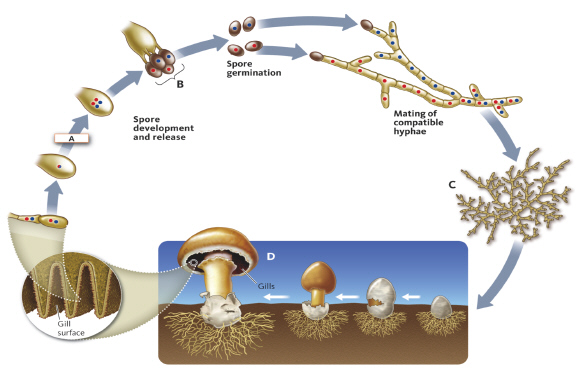 __________ (A) occurs to produce four genetically unique __________ (B).
A) Mitosis; diploid spores
B) Meiosis; diploid spores
C) Mitosis; haploid spores
D) Meiosis; haploid spores
Question
Question
Question
Question
Question
Question
Question
Question
Question
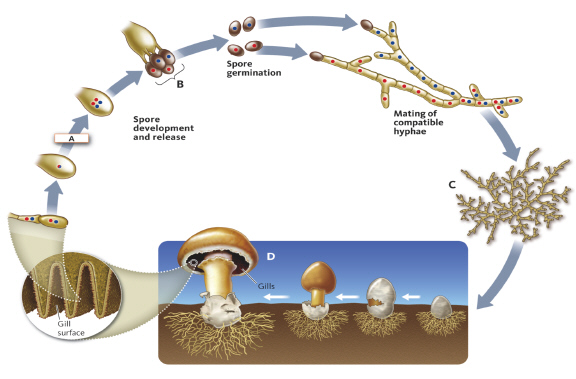 The __________ (C) develops into the __________ (D).
A) fruiting body; mycelium
B) mycelium; fruiting body
C) hypha; mycelium
D) mycelium; hypha
Question
Question
Question
Question
Question
Question
Question
Question
Question
Question
Question
Question
Question
Question
Question
Question
Question
Question

Unlock Deck
Sign up to unlock the cards in this deck!
Unlock Deck
Unlock Deck
1/56

Play

Full screen (f)
Deck 15: The Biology of Fungi
1
In a mutualistic relationship with a fungus, the plant can receive
A) minerals.
B) protection.
C) water.
D) all of these
A) minerals.
B) protection.
C) water.
D) all of these
D
2
Most yeast cells reproduce via
A) budding, which is an asexual process utilizing mitosis.
B) budding, which is a sexual process using meiosis.
C) mating of compatible hyphae, which is an asexual process utilizing mitosis.
D) mating of compatible hyphae, which is a sexual process utilizing meiosis.
A) budding, which is an asexual process utilizing mitosis.
B) budding, which is a sexual process using meiosis.
C) mating of compatible hyphae, which is an asexual process utilizing mitosis.
D) mating of compatible hyphae, which is a sexual process utilizing meiosis.
A
3
There is a compound found in dung that helps the fungus to absorb which of the following macronutrients?
A) iron
B) nitrogen
C) phosphorus
D) potassium
A) iron
B) nitrogen
C) phosphorus
D) potassium
A
4
Approximately _____ percent of all fungi are yeasts.
A) 1
B) 25
C) 50
D) 99
A) 1
B) 25
C) 50
D) 99
Unlock Deck
Unlock for access to all 56 flashcards in this deck.
Unlock Deck
k this deck
5
The cell walls of plants are composed of __________, and the cell walls of fungi are composed of __________.
A) cellulose; cellulose
B) cellulose; chitin
C) chitin; cellulose
D) chitin; chitin
A) cellulose; cellulose
B) cellulose; chitin
C) chitin; cellulose
D) chitin; chitin
Unlock Deck
Unlock for access to all 56 flashcards in this deck.
Unlock Deck
k this deck
6
Which of the following statements is correct?
A) Fungi are autotrophs that can be predators.
B) Fungi are autotrophs that cannot be predators.
C) Fungi are heterotrophs that can be predators.
D) Fungi are heterotrophs that cannot be predators.
A) Fungi are autotrophs that can be predators.
B) Fungi are autotrophs that cannot be predators.
C) Fungi are heterotrophs that can be predators.
D) Fungi are heterotrophs that cannot be predators.
Unlock Deck
Unlock for access to all 56 flashcards in this deck.
Unlock Deck
k this deck
7
One of the most common types of mold spores are from
A) Aspergillu s.
B) Candida .
C) Penicillium .
D) Pilobolus .
A) Aspergillu s.
B) Candida .
C) Penicillium .
D) Pilobolus .
Unlock Deck
Unlock for access to all 56 flashcards in this deck.
Unlock Deck
k this deck
8
What structures in the cell of a fungus are not present in animal cells?
A) cell walls of cellulose and chloroplasts
B) cell walls of cellulose
C) cell walls of chitin and chloroplasts
D) cell walls of chitin
A) cell walls of cellulose and chloroplasts
B) cell walls of cellulose
C) cell walls of chitin and chloroplasts
D) cell walls of chitin
Unlock Deck
Unlock for access to all 56 flashcards in this deck.
Unlock Deck
k this deck
9
Most lichens are the result of the combination of a fungus and
A) brown algae.
B) cyanobacteria.
C) green algae.
D) red algae.
A) brown algae.
B) cyanobacteria.
C) green algae.
D) red algae.
Unlock Deck
Unlock for access to all 56 flashcards in this deck.
Unlock Deck
k this deck
10
Hydrolysis requires __________ to break down macromolecules.
A) hydrogen
B) nitrogen
C) oxygen
D) water
A) hydrogen
B) nitrogen
C) oxygen
D) water
Unlock Deck
Unlock for access to all 56 flashcards in this deck.
Unlock Deck
k this deck
11
Which of the following are not present in the cells of fungi?
A) cell walls
B) chloroplasts
C) endoplasmic reticulum
D) mitochondria
A) cell walls
B) chloroplasts
C) endoplasmic reticulum
D) mitochondria
Unlock Deck
Unlock for access to all 56 flashcards in this deck.
Unlock Deck
k this deck
12
The leading edge of a hypha is in the __________ stage of cell division.
A) anaphase
B) interphase
C) metaphase
D) prophase
A) anaphase
B) interphase
C) metaphase
D) prophase
Unlock Deck
Unlock for access to all 56 flashcards in this deck.
Unlock Deck
k this deck
13
In a mutualistic relationship with a plant, the fungus receives
A) minerals.
B) protection.
C) sugar.
D) water.
A) minerals.
B) protection.
C) sugar.
D) water.
Unlock Deck
Unlock for access to all 56 flashcards in this deck.
Unlock Deck
k this deck
14
The zombie-ant fungus lives in the __________ of a carpenter ant.
A) bloodstream
B) brain
C) digestive tract
D) exoskeleton
A) bloodstream
B) brain
C) digestive tract
D) exoskeleton
Unlock Deck
Unlock for access to all 56 flashcards in this deck.
Unlock Deck
k this deck
15
When an individual experiences a yeast infection, the yeast is in the __________ form.
A) filamentous
B) fruiting body
C) lichen
D) single-cell
A) filamentous
B) fruiting body
C) lichen
D) single-cell
Unlock Deck
Unlock for access to all 56 flashcards in this deck.
Unlock Deck
k this deck
16
A fungus that has enzymes capable of breaking down cellulose could digest
A) bone.
B) feathers.
C) skin.
D) wood.
A) bone.
B) feathers.
C) skin.
D) wood.
Unlock Deck
Unlock for access to all 56 flashcards in this deck.
Unlock Deck
k this deck
17
The Pilobolus fungus aims at __________ and releases its spores.
A) a cow
B) a dung pile
C) a grassy field
D) sunlight
A) a cow
B) a dung pile
C) a grassy field
D) sunlight
Unlock Deck
Unlock for access to all 56 flashcards in this deck.
Unlock Deck
k this deck
18
The majority of the bulk of a lichen is
A) algae.
B) cyanobacteria.
C) fruiting bodies.
D) fungal mycelium.
A) algae.
B) cyanobacteria.
C) fruiting bodies.
D) fungal mycelium.
Unlock Deck
Unlock for access to all 56 flashcards in this deck.
Unlock Deck
k this deck
19
The lobster mushroom results when a fungus acts as a parasite to
A) cow dung.
B) a fungus.
C) plants.
D) skin.
A) cow dung.
B) a fungus.
C) plants.
D) skin.
Unlock Deck
Unlock for access to all 56 flashcards in this deck.
Unlock Deck
k this deck
20
Directly on the underside of the fruiting body of a mushroom, you will find __________.
A) hyphae
B) mycelia
C) seeds
D) spores
A) hyphae
B) mycelia
C) seeds
D) spores
Unlock Deck
Unlock for access to all 56 flashcards in this deck.
Unlock Deck
k this deck
21
The end results of alcoholic fermentation are
A) ethanol and carbon dioxide.
B) ethanol and oxygen.
C) sugar and carbon dioxide.
D) sugar and oxygen.
A) ethanol and carbon dioxide.
B) ethanol and oxygen.
C) sugar and carbon dioxide.
D) sugar and oxygen.
Unlock Deck
Unlock for access to all 56 flashcards in this deck.
Unlock Deck
k this deck
22
Antibiotics can destroy bacteria because they interfere with the production of ____________ in the bacterial cell.
A) cell walls
B) DNA
C) ribosomes
D) More than one of these answers is correct.
A) cell walls
B) DNA
C) ribosomes
D) More than one of these answers is correct.
Unlock Deck
Unlock for access to all 56 flashcards in this deck.
Unlock Deck
k this deck
23
Most fungi require __________ and are therefore __________.
A) carbon dioxide; aerobic
B) carbon dioxide; anaerobic
C) oxygen; aerobic
D) oxygen; anaerobic
A) carbon dioxide; aerobic
B) carbon dioxide; anaerobic
C) oxygen; aerobic
D) oxygen; anaerobic
Unlock Deck
Unlock for access to all 56 flashcards in this deck.
Unlock Deck
k this deck
24
Alcoholic fermentation requires __________ and is an __________ type of reaction.
A) oxygen; aerobic
B) oxygen; anaerobic
C) sugar; aerobic
D) sugar; anaerobic
A) oxygen; aerobic
B) oxygen; anaerobic
C) sugar; aerobic
D) sugar; anaerobic
Unlock Deck
Unlock for access to all 56 flashcards in this deck.
Unlock Deck
k this deck
25
Penicillin is effective against bacterial infections because it interferes with the construction of new __________ in the bacteria.
A) DNA
B) cell walls
C) endoplasmic reticulum
D) mitochondria
A) DNA
B) cell walls
C) endoplasmic reticulum
D) mitochondria
Unlock Deck
Unlock for access to all 56 flashcards in this deck.
Unlock Deck
k this deck
26
In the life cycle of a fungus, the binucleate mycelium becomes
A) compatible hyphae.
B) a fruiting body.
C) a new mycelium.
D) many spores.
A) compatible hyphae.
B) a fruiting body.
C) a new mycelium.
D) many spores.
Unlock Deck
Unlock for access to all 56 flashcards in this deck.
Unlock Deck
k this deck
27
Alcoholic fermentation differs from lactic acid fermentation because
A) only one of these processes is aerobic.
B) the products are different.
C) the reactants are different.
D) the reactants and products are different.
A) only one of these processes is aerobic.
B) the products are different.
C) the reactants are different.
D) the reactants and products are different.
Unlock Deck
Unlock for access to all 56 flashcards in this deck.
Unlock Deck
k this deck
28
During the production of beer, the barley must be "malted," which means it is
A) converted to simple sugars.
B) exposed to baker's yeast.
C) exposed to brewer's yeast.
D) fermented.
A) converted to simple sugars.
B) exposed to baker's yeast.
C) exposed to brewer's yeast.
D) fermented.
Unlock Deck
Unlock for access to all 56 flashcards in this deck.
Unlock Deck
k this deck
29
__________ (A) occurs to produce four genetically unique __________ (B).A) Mitosis; diploid spores
B) Meiosis; diploid spores
C) Mitosis; haploid spores
D) Meiosis; haploid spores
Unlock Deck
Unlock for access to all 56 flashcards in this deck.
Unlock Deck
k this deck
30
What is the effect of aflatoxins on humans?
A) cause hallucinations
B) cure bacterial infections
C) cure viral infections
D) make stored foods toxic to the liver
A) cause hallucinations
B) cure bacterial infections
C) cure viral infections
D) make stored foods toxic to the liver
Unlock Deck
Unlock for access to all 56 flashcards in this deck.
Unlock Deck
k this deck
31
The purpose of the distasteful odor emitted from the stinkhorn fern is to
A) attract flies.
B) discourage predators.
C) mimic another fungus.
D) prevent plants from growing nearby.
A) attract flies.
B) discourage predators.
C) mimic another fungus.
D) prevent plants from growing nearby.
Unlock Deck
Unlock for access to all 56 flashcards in this deck.
Unlock Deck
k this deck
32
Slime molds are classified as
A) animals.
B) fungi.
C) plants.
D) protists.
A) animals.
B) fungi.
C) plants.
D) protists.
Unlock Deck
Unlock for access to all 56 flashcards in this deck.
Unlock Deck
k this deck
33
A type of fungus that produces toxic alkaloids is
A) Aspergillus .
B) the death cap mushroom.
C) ergot.
D) the Psilocybe mushroom.
A) Aspergillus .
B) the death cap mushroom.
C) ergot.
D) the Psilocybe mushroom.
Unlock Deck
Unlock for access to all 56 flashcards in this deck.
Unlock Deck
k this deck
34
Ingesting the Psilocybe mushroom usually causes
A) a burning sensation.
B) death.
C) hallucinations.
D) liver and kidney shutdown.
A) a burning sensation.
B) death.
C) hallucinations.
D) liver and kidney shutdown.
Unlock Deck
Unlock for access to all 56 flashcards in this deck.
Unlock Deck
k this deck
35
The bubbles seen during fermentation contain
A) alcohol.
B) carbon dioxide.
C) oxygen.
D) sugars.
A) alcohol.
B) carbon dioxide.
C) oxygen.
D) sugars.
Unlock Deck
Unlock for access to all 56 flashcards in this deck.
Unlock Deck
k this deck
36
__________ is used in the manufacturing of pizza, and this type of yeast grows __________ than most other varieties.
A) Baker's yeast; faster
B) Baker's yeast; slower
C) Brewer's yeast; faster
D) Brewer's yeast; slower
A) Baker's yeast; faster
B) Baker's yeast; slower
C) Brewer's yeast; faster
D) Brewer's yeast; slower
Unlock Deck
Unlock for access to all 56 flashcards in this deck.
Unlock Deck
k this deck
37
If two hyphae are compatible,
A) the hyphae and the nuclei remain separate.
B) the hyphae and the nuclei fuse together.
C) the hyphae fuse together and the nuclei remain separate.
D) the hyphae remain separate and the nuclei fuse together.
A) the hyphae and the nuclei remain separate.
B) the hyphae and the nuclei fuse together.
C) the hyphae fuse together and the nuclei remain separate.
D) the hyphae remain separate and the nuclei fuse together.
Unlock Deck
Unlock for access to all 56 flashcards in this deck.
Unlock Deck
k this deck
38
The __________ (C) develops into the __________ (D).A) fruiting body; mycelium
B) mycelium; fruiting body
C) hypha; mycelium
D) mycelium; hypha
Unlock Deck
Unlock for access to all 56 flashcards in this deck.
Unlock Deck
k this deck
39
Water molds have cell walls made of
A) cellulose.
B) chitin.
C) complex carbohydrates.
D) phospholipids.
A) cellulose.
B) chitin.
C) complex carbohydrates.
D) phospholipids.
Unlock Deck
Unlock for access to all 56 flashcards in this deck.
Unlock Deck
k this deck
40
The bird's nest fungus utilizes __________ to distribute its spores.
A) insects
B) rain
C) wind
D) all of these
A) insects
B) rain
C) wind
D) all of these
Unlock Deck
Unlock for access to all 56 flashcards in this deck.
Unlock Deck
k this deck
41
__________ is required for the production of pizza, and the bubbles in the crust contain __________.
A) Baker's yeast; carbon dioxide
B) Baker's yeast; oxygen
C) Brewer's yeast; carbon dioxide
D) Brewer's yeast; oxygen
A) Baker's yeast; carbon dioxide
B) Baker's yeast; oxygen
C) Brewer's yeast; carbon dioxide
D) Brewer's yeast; oxygen
Unlock Deck
Unlock for access to all 56 flashcards in this deck.
Unlock Deck
k this deck
42
A mycorrhiza is a relationship between a fungus and
A) another fungus.
B) animals.
C) plants.
D) protists.
A) another fungus.
B) animals.
C) plants.
D) protists.
Unlock Deck
Unlock for access to all 56 flashcards in this deck.
Unlock Deck
k this deck
43
Ergot is a fungus that often grows on
A) cow dung.
B) fruits.
C) grains.
D) water.
A) cow dung.
B) fruits.
C) grains.
D) water.
Unlock Deck
Unlock for access to all 56 flashcards in this deck.
Unlock Deck
k this deck
44
Old folklore legends often refer to fairy rings where elf-like beings were supposed to be found. Fairy rings actually do exist as a circular formation of mushrooms, which may grow as large as ten meters across. Often plant growth within the fairy ring is impaired. With your knowledge of fungi, how would you attempt to explain this phenomenon?
Unlock Deck
Unlock for access to all 56 flashcards in this deck.
Unlock Deck
k this deck
45
The ideal environment for the growth of fungi, such as mushrooms, is
A) damp and dark.
B) damp and light.
C) dry and dark.
D) dry and light.
A) damp and dark.
B) damp and light.
C) dry and dark.
D) dry and light.
Unlock Deck
Unlock for access to all 56 flashcards in this deck.
Unlock Deck
k this deck
46
Put the following events of the mushroom life cycle in order, beginning with the development of a fruiting body: i. Formation of a mycelium ii.Mating of compatible hyphae iii.Spore development and release iv.Spore germination
A) i, ii, iii, iv
B) ii, iii, iv, i
C) ii, iii, i, iv
D) iii, iv, ii, i
A) i, ii, iii, iv
B) ii, iii, iv, i
C) ii, iii, i, iv
D) iii, iv, ii, i
Unlock Deck
Unlock for access to all 56 flashcards in this deck.
Unlock Deck
k this deck
47
You may be aware of a fungal pathogen known as Dutch elm disease. This disease is transferred via a vector-the elm bark beetle. Damage to the plant actually results from the plant's attempts to limit the fungal growth. The plant typically forms a plug in its xylem so that the fungal growth cannot receive the necessary water and minerals. This causes damage to the tree from the top down. Currently, there are three methods of treatment for this disease. Below is list of the three methods and the numbers of trees per thousand that survived after treatment: Treatment A = removing limbs that show signs of disease; 350/1000 survived Treatment B = use of a fungicide; 700/1000 survived Treatment C = another fungus is injected into the tree to boost immunity; 500/1000 survived What percentage of the trees died after treatment A?
A) 35 percent
B) 50 percent
C) 65 percent
D) 70 percent
A) 35 percent
B) 50 percent
C) 65 percent
D) 70 percent
Unlock Deck
Unlock for access to all 56 flashcards in this deck.
Unlock Deck
k this deck
48
Ringworm is a skin infection with a fungus, not a worm! In this case, the fungus acts as a
A) decomposer.
B) parasite.
C) pathogen.
D) predator.
A) decomposer.
B) parasite.
C) pathogen.
D) predator.
Unlock Deck
Unlock for access to all 56 flashcards in this deck.
Unlock Deck
k this deck
49
Anaerobic metabolism produces
A) large amounts of energy.
B) small amounts of energy.
C) the same amount of energy as aerobic metabolism.
D) no energy.
A) large amounts of energy.
B) small amounts of energy.
C) the same amount of energy as aerobic metabolism.
D) no energy.
Unlock Deck
Unlock for access to all 56 flashcards in this deck.
Unlock Deck
k this deck
50
Candida is another name for
A) baker's yeast.
B) brewer's yeast.
C) slime molds.
D) yeast that can cause vaginal infections.
A) baker's yeast.
B) brewer's yeast.
C) slime molds.
D) yeast that can cause vaginal infections.
Unlock Deck
Unlock for access to all 56 flashcards in this deck.
Unlock Deck
k this deck
51
A fungus reproduces via
A) asexual reproduction only.
B) sexual reproduction only.
C) both asexual and sexual reproduction.
D) neither asexual nor sexual reproduction.
A) asexual reproduction only.
B) sexual reproduction only.
C) both asexual and sexual reproduction.
D) neither asexual nor sexual reproduction.
Unlock Deck
Unlock for access to all 56 flashcards in this deck.
Unlock Deck
k this deck
52
You may be aware of a fungal pathogen known as Dutch elm disease. This disease is transferred via a vector-the elm bark beetle. Damage to the plant actually results from the plant's attempts to limit the fungal growth. The plant typically forms a plug in its xylem so that the fungal growth cannot receive the necessary water and minerals. This causes damage to the tree from the top down. Currently, there are three methods of treatment for this disease. Below is list of the three methods and the numbers of trees per thousand that survived after treatment: Treatment A = removing limbs that show signs of disease; 350/1000 survived Treatment B = use of a fungicide; 700/1000 survived Treatment C = another fungus is injected into the tree to boost immunity; 500/1000 survived What percentage died after treatment C?
A) 35 percent
B) 50 percent
C) 65 percent
D) 70 percent
A) 35 percent
B) 50 percent
C) 65 percent
D) 70 percent
Unlock Deck
Unlock for access to all 56 flashcards in this deck.
Unlock Deck
k this deck
53
You may be aware of a fungal pathogen known as Dutch elm disease. This disease is transferred via a vector-the elm bark beetle. Damage to the plant actually results from the plant's attempts to limit the fungal growth. The plant typically forms a plug in its xylem so that the fungal growth cannot receive the necessary water and minerals. This causes damage to the tree from the top down. Currently, there are three methods of treatment for this disease. Below is list of the three methods and the numbers of trees per thousand that survived after treatment: Treatment A = removing limbs that show signs of disease; 350/1000 survived Treatment B = use of a fungicide; 700/1000 survived Treatment C = another fungus is injected into the tree to boost immunity; 500/1000 survived What percentage survived after treatment B?
A) 30 percent
B) 50 percent
C) 70 percent
D) 75 percent
A) 30 percent
B) 50 percent
C) 70 percent
D) 75 percent
Unlock Deck
Unlock for access to all 56 flashcards in this deck.
Unlock Deck
k this deck
54
You may be aware of a fungal pathogen known as Dutch elm disease. This disease is transferred via a vector-the elm bark beetle. Damage to the plant actually results from the plant's attempts to limit the fungal growth. The plant typically forms a plug in its xylem so that the fungal growth cannot receive the necessary water and minerals. This causes damage to the tree from the top down. Currently, there are three methods of treatment for this disease. Below is list of the three methods and the numbers of trees per thousand that survived after treatment: Treatment A = removing limbs that show signs of disease; 350/1000 survived Treatment B = use of a fungicide; 700/1000 survived Treatment C = another fungus is injected into the tree to boost immunity; 500/1000 survived From this study, which treatment appears to be the most effective against Dutch elm disease?
A) treatment A
B) treatment B
C) treatment C
D) They are all totally ineffective.
A) treatment A
B) treatment B
C) treatment C
D) They are all totally ineffective.
Unlock Deck
Unlock for access to all 56 flashcards in this deck.
Unlock Deck
k this deck
55
Scientists often study lichens to look at the effects of acid rain. Why?
A) Lichens absorb water directly from air.
B) Lichens are located in many diverse environments.
C) Lichens can withstand droughts.
D) Lichens get water from the area directly beneath trees.
A) Lichens absorb water directly from air.
B) Lichens are located in many diverse environments.
C) Lichens can withstand droughts.
D) Lichens get water from the area directly beneath trees.
Unlock Deck
Unlock for access to all 56 flashcards in this deck.
Unlock Deck
k this deck
56
If a new species with root-like structures is discovered, how could you tell if it is a plant or a fungus?
A) Compare the composition of the cell walls.
B) Look for green coloration.
C) Look for the presence of chloroplasts.
D) All of these would be useful.
A) Compare the composition of the cell walls.
B) Look for green coloration.
C) Look for the presence of chloroplasts.
D) All of these would be useful.
Unlock Deck
Unlock for access to all 56 flashcards in this deck.
Unlock Deck
k this deck
Unlock Deck
Unlock for access to all 56 flashcards in this deck.






