







 Chat with AI

Deck 21: The Biology of Chronic Disease
Full screen (f)

Question

Question
Based on this figure, which of the following is the largest risk factor for cancer?
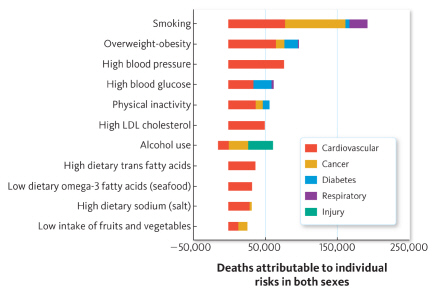
A) alcohol use
B) obesity
C) high blood glucose
D) hypertension
A) alcohol use
B) obesity
C) high blood glucose
D) hypertension
Question
Question
Question
Question
Question
Question
Question
Question
Question
Question
Question
Question
Question
Question
Question
Question
Question
Question
Question
Question
Question
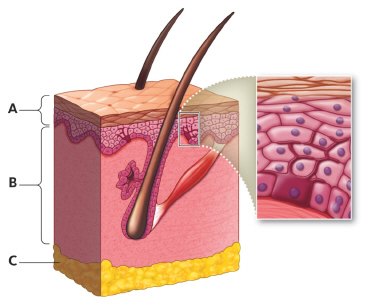 In this figure, _____ is the subcutaneous layer, and its function is to __________.
A) C; cushion organs, as well as insulation
B) A; constantly divide to replace skin cells
C) B; provide strength and flexibility
D) A; secrete collagen and elastic fibers
Question
Question
Question
Question
Question
Question
Question
Question
Question
Question
Question
Question
Question
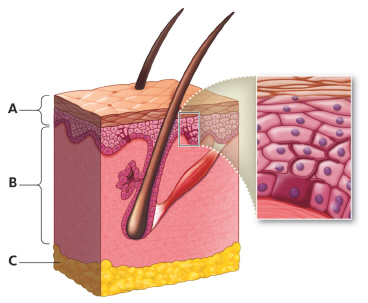 Skin cancer usually occurs in layer A, which is the __________, and is most often caused by _____.
A) epidermis; UVA
B) epidermis; UVB
C) dermis; UVA
D) dermis; UVB
Question
Question
Question
Question

Unlock Deck
Sign up to unlock the cards in this deck!
Unlock Deck
Unlock Deck
1/40

Play

Full screen (f)
Deck 21: The Biology of Chronic Disease
1
Why is hypertension common among elderly people?
A) It arises from years of improper diet.
B) It is due to constant exposure to chronic diseases.
C) As blood vessels age, blood vessels stiffen and lose flexibility.
D) Risk factors tend to increase with increasing age.
A) It arises from years of improper diet.
B) It is due to constant exposure to chronic diseases.
C) As blood vessels age, blood vessels stiffen and lose flexibility.
D) Risk factors tend to increase with increasing age.
C
2
Based on this figure, which of the following is the largest risk factor for cancer?
A) alcohol use
B) obesity
C) high blood glucose
D) hypertension
A) alcohol use
B) obesity
C) high blood glucose
D) hypertension
A
3
Obesity is an example of a chronic disease because it
A) can affect people of all ages.
B) is a top cause of death around the world.
C) persists long term and may cause physiological changes.
D) is an infectious disease that can be managed.
A) can affect people of all ages.
B) is a top cause of death around the world.
C) persists long term and may cause physiological changes.
D) is an infectious disease that can be managed.
C
4
Which of the following is considered normal for systolic pressure?
A) 90
B) 120
C) 140
D) 80
A) 90
B) 120
C) 140
D) 80
Unlock Deck
Unlock for access to all 40 flashcards in this deck.
Unlock Deck
k this deck
5
Which of the following occurs during systolic pressure?
A) The ventricles contract.
B) The atria contract.
C) Both the ventricles and atria contract.
D) The heart is at rest.
A) The ventricles contract.
B) The atria contract.
C) Both the ventricles and atria contract.
D) The heart is at rest.
Unlock Deck
Unlock for access to all 40 flashcards in this deck.
Unlock Deck
k this deck
6
Which of the following statements about leptin and obesity is correct?
A) Obese people tend to have unusually low levels of leptin.
B) As a result of low levels of leptin in obese people, food cravings are not regulated adequately.
C) Obese people often develop resistance to leptin and thus appetite is not suppressed.
D) A diet high in saturated fats tends to block leptin production and thus stimulates appetite.
A) Obese people tend to have unusually low levels of leptin.
B) As a result of low levels of leptin in obese people, food cravings are not regulated adequately.
C) Obese people often develop resistance to leptin and thus appetite is not suppressed.
D) A diet high in saturated fats tends to block leptin production and thus stimulates appetite.
Unlock Deck
Unlock for access to all 40 flashcards in this deck.
Unlock Deck
k this deck
7
Which of the following have a thicker muscular wall?
A) arteries
B) veins
C) capillaries
A) arteries
B) veins
C) capillaries
Unlock Deck
Unlock for access to all 40 flashcards in this deck.
Unlock Deck
k this deck
8
The smallest blood vessels are __________.
A) capillaries
B) arteries
C) veins
D) both arteries and veins
A) capillaries
B) arteries
C) veins
D) both arteries and veins
Unlock Deck
Unlock for access to all 40 flashcards in this deck.
Unlock Deck
k this deck
9
As levels of body fat increase, leptin levels __________ and appetite is __________.
A) increase; suppressed
B) increase; stimulated
C) decrease; stimulated
D) decrease; suppressed
A) increase; suppressed
B) increase; stimulated
C) decrease; stimulated
D) decrease; suppressed
Unlock Deck
Unlock for access to all 40 flashcards in this deck.
Unlock Deck
k this deck
10
Blood from the body enters the __________ of the heart.
A) atria
B) ventricles
C) aorta
D) coronary arteries
A) atria
B) ventricles
C) aorta
D) coronary arteries
Unlock Deck
Unlock for access to all 40 flashcards in this deck.
Unlock Deck
k this deck
11
DNA replication occurs during the __________ of the cell cycle.
A) S phase
B) G1 phase
C) G2 phase
D) interphase
A) S phase
B) G1 phase
C) G2 phase
D) interphase
Unlock Deck
Unlock for access to all 40 flashcards in this deck.
Unlock Deck
k this deck
12
Alex has just given blood at the Red Cross blood drive. Immediately afterward, his systolic blood pressure would likely be __________.
A) a little below 120
B) a little below 80
C) a little above 120
D) much below 80
A) a little below 120
B) a little below 80
C) a little above 120
D) much below 80
Unlock Deck
Unlock for access to all 40 flashcards in this deck.
Unlock Deck
k this deck
13
Mutations in which of the following are most likely to lead to cancer?
A) genes that control the cell cycle
B) genes that code for muscle proteins
C) genes that code for nerve cells
D) genes that control for eye color
A) genes that control the cell cycle
B) genes that code for muscle proteins
C) genes that code for nerve cells
D) genes that control for eye color
Unlock Deck
Unlock for access to all 40 flashcards in this deck.
Unlock Deck
k this deck
14
An agent that causes genetic mutations is called __________.
A) a carcinogen
B) cancer
C) a virus
D) a malignant tumor
A) a carcinogen
B) cancer
C) a virus
D) a malignant tumor
Unlock Deck
Unlock for access to all 40 flashcards in this deck.
Unlock Deck
k this deck
15
Alex has just given blood at the Red Cross blood drive, and immediately after the event, his blood pressure is a little lower than normal. How might his body respond to this?
A) Arteries can constrict to increase blood pressure.
B) His body is able to immediately manufacture new blood cells.
C) All the lost blood cells are replaced with water.
D) Veins can dilate to reduce blood flow.
A) Arteries can constrict to increase blood pressure.
B) His body is able to immediately manufacture new blood cells.
C) All the lost blood cells are replaced with water.
D) Veins can dilate to reduce blood flow.
Unlock Deck
Unlock for access to all 40 flashcards in this deck.
Unlock Deck
k this deck
16
Although high caloric input is an obvious cause of obesity, which of the following factors also contribute(s) to this disease?
A) an inactive lifestyle
B) a strong genetic component
C) the availability of nonhealthy foods
D) both an inactive lifestyle and the availability of nonhealthy foods
A) an inactive lifestyle
B) a strong genetic component
C) the availability of nonhealthy foods
D) both an inactive lifestyle and the availability of nonhealthy foods
Unlock Deck
Unlock for access to all 40 flashcards in this deck.
Unlock Deck
k this deck
17
Judy had plaque buildup in her arteries. When one of these ruptured, a blood clot traveled to her brain where it blocked blood flow, resulting in death of some of the brain cells. This is an example of __________.
A) a stroke
B) atherosclerosis
C) coronary heart disease
D) a carcinogen
A) a stroke
B) atherosclerosis
C) coronary heart disease
D) a carcinogen
Unlock Deck
Unlock for access to all 40 flashcards in this deck.
Unlock Deck
k this deck
18
Sarah is a little underweight for her size. As a result, her leptin levels will be __________ if she gained a bit more weight.
A) higher than
B) lower than
C) the same as
D) either higher than or the same as
A) higher than
B) lower than
C) the same as
D) either higher than or the same as
Unlock Deck
Unlock for access to all 40 flashcards in this deck.
Unlock Deck
k this deck
19
All of the following are examples of chronic diseases EXCEPT
A) cancer.
B) diabetes.
C) heart disease.
D) influenza.
A) cancer.
B) diabetes.
C) heart disease.
D) influenza.
Unlock Deck
Unlock for access to all 40 flashcards in this deck.
Unlock Deck
k this deck
20
Which of the following is true about plaques?
A) This is another name for atherosclerosis.
B) They cause narrowing of the arteries.
C) They lead to increased blood flow in the arteries and veins.
D) They are formed primarily of protein.
A) This is another name for atherosclerosis.
B) They cause narrowing of the arteries.
C) They lead to increased blood flow in the arteries and veins.
D) They are formed primarily of protein.
Unlock Deck
Unlock for access to all 40 flashcards in this deck.
Unlock Deck
k this deck
21
Stacy has a dog that has a tumor on its back leg. This means the _______________.
A) dog has cancer
B) dog has an abnormal mass of cells
C) cells are metastasizing
D) dog has been exposed to a carcinogen
A) dog has cancer
B) dog has an abnormal mass of cells
C) cells are metastasizing
D) dog has been exposed to a carcinogen
Unlock Deck
Unlock for access to all 40 flashcards in this deck.
Unlock Deck
k this deck
22
The minimum number of mutations that is required before cancer is likely to develop is _____.
A) one
B) two
C) three
D) four
A) one
B) two
C) three
D) four
Unlock Deck
Unlock for access to all 40 flashcards in this deck.
Unlock Deck
k this deck
23
In this figure, _____ is the subcutaneous layer, and its function is to __________.A) C; cushion organs, as well as insulation
B) A; constantly divide to replace skin cells
C) B; provide strength and flexibility
D) A; secrete collagen and elastic fibers
Unlock Deck
Unlock for access to all 40 flashcards in this deck.
Unlock Deck
k this deck
24
David has just been told by his doctor that he has a malignant growth. Which of the following is true?
A) He has a noncancerous tumor.
B) The tumor cells are spreading through his body.
C) He has a single mutation in one of his oncogenes.
D) both (b) and (c)
A) He has a noncancerous tumor.
B) The tumor cells are spreading through his body.
C) He has a single mutation in one of his oncogenes.
D) both (b) and (c)
Unlock Deck
Unlock for access to all 40 flashcards in this deck.
Unlock Deck
k this deck
25
Cancer can be considered an inherited disease if ____________________.
A) at least one mutation is inherited
B) a family member has some type of cancer
C) all members of the family share the same gene
D) a person inherits a tumor suppressor gene from one of his parents
A) at least one mutation is inherited
B) a family member has some type of cancer
C) all members of the family share the same gene
D) a person inherits a tumor suppressor gene from one of his parents
Unlock Deck
Unlock for access to all 40 flashcards in this deck.
Unlock Deck
k this deck
26
Vance Alexander is a professor of epidemiology and environmental medicine at Washington State University's School of Veterinary Medicine. He and his team reported that they had found an association between the risk of transitional cell carcinoma (TCC) of the urinary bladder in Scotties and the terriers' exposure to lawns treated with commonly used herbicides. The study was based on a survey of owners of 83 Scottish terriers, all of which were about the same age and had bladder cancer. The dog owners documented their terriers' housing, exposure time to the lawn, and information on the lawn treatment used. Those results were then compared to a group of 83 unexposed similarly aged Scotties that were undergoing treatment for unrelated ailments. Dr. Alexander found the occurrence of bladder cancer was between four and seven times higher in the group of dogs exposed to the herbicides. Dr. Alexander stated that Scotties seem to have a genetic susceptibility to this type of cancer. "We choose the Scottish terrier because we had done a previous study to show that this breed had a higher risk of bladder cancer compared to all other breeds-about 18-fold greater risk." If scientists were able to identify a specific gene mutation that was strongly correlated with bladder cancer in dogs, this might be considered a __________.
A) plaque
B) genetic marker
C) loci
D) germ cell
A) plaque
B) genetic marker
C) loci
D) germ cell
Unlock Deck
Unlock for access to all 40 flashcards in this deck.
Unlock Deck
k this deck
27
Prior to the S phase of the cell cycle, a cell passes through a regulatory checkpoint. If mutations are detected in the cell, the __________ will initiate cell death.
A) tumor suppressor genes
B) oncogenes
C) DNA repair genes
D) metastatic cells
A) tumor suppressor genes
B) oncogenes
C) DNA repair genes
D) metastatic cells
Unlock Deck
Unlock for access to all 40 flashcards in this deck.
Unlock Deck
k this deck
28
Vance Alexander is a professor of epidemiology and environmental medicine at Washington State University's School of Veterinary Medicine. He and his team reported that they had found an association between the risk of transitional cell carcinoma (TCC) of the urinary bladder in Scotties and the terriers' exposure to lawns treated with commonly used herbicides. The study was based on a survey of owners of 83 Scottish terriers, all of which were about the same age and had bladder cancer. The dog owners documented their terriers' housing, exposure time to the lawn, and information on the lawn treatment used. Those results were then compared to a group of 83 unexposed similarly aged Scotties that were undergoing treatment for unrelated ailments. Dr. Alexander found the occurrence of bladder cancer was between four and seven times higher in the group of dogs exposed to the herbicides. Dr. Alexander stated that Scotties seem to have a genetic susceptibility to this type of cancer. "We choose the Scottish terrier because we had done a previous study to show that this breed had a higher risk of bladder cancer compared to all other breeds-about 18-fold greater risk." What would be considered the control group in this experiment?
A) the Scottish terriers exposed to herbicide
B) the Scottish terriers without cancer
C) any type of dog that does not have cancer
D) all dogs that are exposed to herbicides
A) the Scottish terriers exposed to herbicide
B) the Scottish terriers without cancer
C) any type of dog that does not have cancer
D) all dogs that are exposed to herbicides
Unlock Deck
Unlock for access to all 40 flashcards in this deck.
Unlock Deck
k this deck
29
Which of the following is incorrectly paired?
A) lumpectomy-removal of metastasized cells
B) radiation therapy-ionizing radiation that kills cells
C) chemotherapy-drugs that often target processes associated with cell growth
D) mastectomy-surgery that results in removal of the entire breast
A) lumpectomy-removal of metastasized cells
B) radiation therapy-ionizing radiation that kills cells
C) chemotherapy-drugs that often target processes associated with cell growth
D) mastectomy-surgery that results in removal of the entire breast
Unlock Deck
Unlock for access to all 40 flashcards in this deck.
Unlock Deck
k this deck
30
Vance Alexander is a professor of epidemiology and environmental medicine at Washington State University's School of Veterinary Medicine. He and his team reported that they had found an association between the risk of transitional cell carcinoma (TCC) of the urinary bladder in Scotties and the terriers' exposure to lawns treated with commonly used herbicides. The study was based on a survey of owners of 83 Scottish terriers, all of which were about the same age and had bladder cancer. The dog owners documented their terriers' housing, exposure time to the lawn, and information on the lawn treatment used. Those results were then compared to a group of 83 unexposed similarly aged Scotties that were undergoing treatment for unrelated ailments. Dr. Alexander found the occurrence of bladder cancer was between four and seven times higher in the group of dogs exposed to the herbicides. Dr. Alexander stated that Scotties seem to have a genetic susceptibility to this type of cancer. "We choose the Scottish terrier because we had done a previous study to show that this breed had a higher risk of bladder cancer compared to all other breeds-about 18-fold greater risk." What might be the best treatment for bladder cancer?
A) radiation therapy
B) surgery
C) chemotherapy
D) gene therapy
A) radiation therapy
B) surgery
C) chemotherapy
D) gene therapy
Unlock Deck
Unlock for access to all 40 flashcards in this deck.
Unlock Deck
k this deck
31
Vance Alexander is a professor of epidemiology and environmental medicine at Washington State University's School of Veterinary Medicine. He and his team reported that they had found an association between the risk of transitional cell carcinoma (TCC) of the urinary bladder in Scotties and the terriers' exposure to lawns treated with commonly used herbicides. The study was based on a survey of owners of 83 Scottish terriers, all of which were about the same age and had bladder cancer. The dog owners documented their terriers' housing, exposure time to the lawn, and information on the lawn treatment used. Those results were then compared to a group of 83 unexposed similarly aged Scotties that were undergoing treatment for unrelated ailments. Dr. Alexander found the occurrence of bladder cancer was between four and seven times higher in the group of dogs exposed to the herbicides. Dr. Alexander stated that Scotties seem to have a genetic susceptibility to this type of cancer. "We choose the Scottish terrier because we had done a previous study to show that this breed had a higher risk of bladder cancer compared to all other breeds-about 18-fold greater risk." In this study, genetic susceptibility likely means
A) the dogs' genes are promoting cancer.
B) they do not have any functional tumor suppressor cells.
C) that additional mutations occur very quickly, leading to cancer.
D) there is a mutation in one of the genes associated with cell division.
A) the dogs' genes are promoting cancer.
B) they do not have any functional tumor suppressor cells.
C) that additional mutations occur very quickly, leading to cancer.
D) there is a mutation in one of the genes associated with cell division.
Unlock Deck
Unlock for access to all 40 flashcards in this deck.
Unlock Deck
k this deck
32
The family of BRCA genes is associated with some forms of __________ cancer.
A) breast
B) ovarian
C) prostate
D) all of these
A) breast
B) ovarian
C) prostate
D) all of these
Unlock Deck
Unlock for access to all 40 flashcards in this deck.
Unlock Deck
k this deck
33
Vance Alexander is a professor of epidemiology and environmental medicine at Washington State University's School of Veterinary Medicine. He and his team reported that they had found an association between the risk of transitional cell carcinoma (TCC) of the urinary bladder in Scotties and the terriers' exposure to lawns treated with commonly used herbicides. The study was based on a survey of owners of 83 Scottish terriers, all of which were about the same age and had bladder cancer. The dog owners documented their terriers' housing, exposure time to the lawn, and information on the lawn treatment used. Those results were then compared to a group of 83 unexposed similarly aged Scotties that were undergoing treatment for unrelated ailments. Dr. Alexander found the occurrence of bladder cancer was between four and seven times higher in the group of dogs exposed to the herbicides. Dr. Alexander stated that Scotties seem to have a genetic susceptibility to this type of cancer. "We choose the Scottish terrier because we had done a previous study to show that this breed had a higher risk of bladder cancer compared to all other breeds-about 18-fold greater risk." With Scotties that have a genetic susceptibility to cancer, the mutated gene would be an example of a(n) __________.
A) oncogene
B) carcinogen
C) type of receptor
D) plaque
A) oncogene
B) carcinogen
C) type of receptor
D) plaque
Unlock Deck
Unlock for access to all 40 flashcards in this deck.
Unlock Deck
k this deck
34
Which of the following are involved with tumor suppression?
A) oncogenes
B) tumor suppressor genes
C) DNA repair genes
D) both tumor suppressor genes and DNA repair genes
A) oncogenes
B) tumor suppressor genes
C) DNA repair genes
D) both tumor suppressor genes and DNA repair genes
Unlock Deck
Unlock for access to all 40 flashcards in this deck.
Unlock Deck
k this deck
35
Vance Alexander is a professor of epidemiology and environmental medicine at Washington State University's School of Veterinary Medicine. He and his team reported that they had found an association between the risk of transitional cell carcinoma (TCC) of the urinary bladder in Scotties and the terriers' exposure to lawns treated with commonly used herbicides. The study was based on a survey of owners of 83 Scottish terriers, all of which were about the same age and had bladder cancer. The dog owners documented their terriers' housing, exposure time to the lawn, and information on the lawn treatment used. Those results were then compared to a group of 83 unexposed similarly aged Scotties that were undergoing treatment for unrelated ailments. Dr. Alexander found the occurrence of bladder cancer was between four and seven times higher in the group of dogs exposed to the herbicides. Dr. Alexander stated that Scotties seem to have a genetic susceptibility to this type of cancer. "We choose the Scottish terrier because we had done a previous study to show that this breed had a higher risk of bladder cancer compared to all other breeds-about 18-fold greater risk." As with people, cancer is much more common among dogs that are obese and have low activity levels. Obesity and activity level are thus considered __________ for cancer in dogs.
A) carcinogens
B) risk factors
C) indicators
D) oncogenes
A) carcinogens
B) risk factors
C) indicators
D) oncogenes
Unlock Deck
Unlock for access to all 40 flashcards in this deck.
Unlock Deck
k this deck
36
Skin cancer usually occurs in layer A, which is the __________, and is most often caused by _____.A) epidermis; UVA
B) epidermis; UVB
C) dermis; UVA
D) dermis; UVB
Unlock Deck
Unlock for access to all 40 flashcards in this deck.
Unlock Deck
k this deck
37
Which of the following is incorrectly paired?
A) tumor-mass of cells resulting from uncontrolled growth
B) metastasize-cancerous cells spreading throughout the body
C) oncogenes-mutated forms of genes that regulate cell growth
D) tumor suppressor gene-mutated form of a gene that suppresses growth
A) tumor-mass of cells resulting from uncontrolled growth
B) metastasize-cancerous cells spreading throughout the body
C) oncogenes-mutated forms of genes that regulate cell growth
D) tumor suppressor gene-mutated form of a gene that suppresses growth
Unlock Deck
Unlock for access to all 40 flashcards in this deck.
Unlock Deck
k this deck
38
Erica is taking birth control pills that have high levels of estrogen. Which of the following is true about estrogen?
A) Having high levels of estrogen is a risk factor associated with breast cancer.
B) Estrogen moves into the DNA to signal cell division.
C) The production of estrogen decreases when females reach puberty.
D) All of these are true.
A) Having high levels of estrogen is a risk factor associated with breast cancer.
B) Estrogen moves into the DNA to signal cell division.
C) The production of estrogen decreases when females reach puberty.
D) All of these are true.
Unlock Deck
Unlock for access to all 40 flashcards in this deck.
Unlock Deck
k this deck
39
Vance Alexander is a professor of epidemiology and environmental medicine at Washington State University's School of Veterinary Medicine. He and his team reported that they had found an association between the risk of transitional cell carcinoma (TCC) of the urinary bladder in Scotties and the terriers' exposure to lawns treated with commonly used herbicides. The study was based on a survey of owners of 83 Scottish terriers, all of which were about the same age and had bladder cancer. The dog owners documented their terriers' housing, exposure time to the lawn, and information on the lawn treatment used. Those results were then compared to a group of 83 unexposed similarly aged Scotties that were undergoing treatment for unrelated ailments. Dr. Alexander found the occurrence of bladder cancer was between four and seven times higher in the group of dogs exposed to the herbicides. Dr. Alexander stated that Scotties seem to have a genetic susceptibility to this type of cancer. "We choose the Scottish terrier because we had done a previous study to show that this breed had a higher risk of bladder cancer compared to all other breeds-about 18-fold greater risk." The herbicide is an example of a __________.
A) risk factor
B) carcinogen
C) type of radiation
D) chemotherapy
A) risk factor
B) carcinogen
C) type of radiation
D) chemotherapy
Unlock Deck
Unlock for access to all 40 flashcards in this deck.
Unlock Deck
k this deck
40
Sandra has spent quite a bit of time in the sun. UVA has led to mutations in some of her cells, but this damage was repaired by __________.
A) DNA repair genes
B) oncogenes
C) tumor suppressor genes
D) all of these
A) DNA repair genes
B) oncogenes
C) tumor suppressor genes
D) all of these
Unlock Deck
Unlock for access to all 40 flashcards in this deck.
Unlock Deck
k this deck
Unlock Deck
Unlock for access to all 40 flashcards in this deck.






