







 Chat with AI

Deck 9: Animal Respiration, Circulation, and Metabolism
Full screen (f)

Question

Question
Question
Question
Question
Question
Question
Question
Question
Question
Question
Question
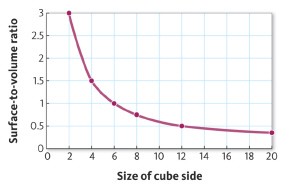 Based on this figure, which of the following cube-shaped animals can obtain more oxygen across its body surface?
A) animal with 4-cm side
B) animal with 6-cm side
C) animal with 8-cm side
D) animal with 10-cm side
Question
Question
Question
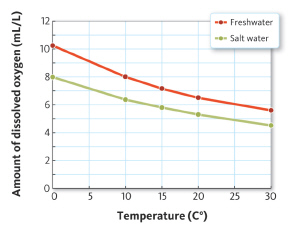 Based on this figure, in which environment would a very active aquatic animal survive the best?
A) a cold, freshwater stream
B) a warm freshwater pond
C) the deep ocean where temperatures are low
D) a tidal pool where temperatures tend to be warm
Question
Question
Question
Question
Question
Question
Question
Question
Question
Question
Question
Question
Question
Question
Question
Question
Question
Question
Question
Question
Question
Question
Question
Question
Question
Question
Question
Question
Question
Question
Question

Unlock Deck
Sign up to unlock the cards in this deck!
Unlock Deck
Unlock Deck
1/46

Play

Full screen (f)
Deck 9: Animal Respiration, Circulation, and Metabolism
1
Larval salamanders tend to consume their insect prey whole. Thus, they are __________.
A) bulk feeders
B) filter feeders
C) fluid feeders
D) omnivores
A) bulk feeders
B) filter feeders
C) fluid feeders
D) omnivores
A
2
Larval salamanders eat small insects and crustaceans. These insects and crustaceans are herbivores. Thus, the salamanders are __________.
A) primary producers
B) primary consumers
C) secondary consumers
D) tertiary consumers
A) primary producers
B) primary consumers
C) secondary consumers
D) tertiary consumers
C
3
You are sitting in lecture waiting for the start of class when a friend comes and sits down next to you. After about 30 seconds, you become aware of the scent of their deodorant. The movement of these scent particles is an example of __________.
A) diffusion
B) thin air
C) osmosis
D) low atmospheric pressure
A) diffusion
B) thin air
C) osmosis
D) low atmospheric pressure
A
4
You buy some flowers to give to your mother, but on the drive to her house, the flowers start to wilt. Your mother quickly puts the flowers into a vase of water. Which of the following is true?
A) The concentration gradient between the plant and the water surrounding it causes water to move into the plant.
B) There is a low concentration gradient between the plant and the water into which it is placed.
C) The low concentration gradient allows for fast movement of water into the plant.
D) The water is used to produce energy in the mitochondria so that the plant no longer wilts.
A) The concentration gradient between the plant and the water surrounding it causes water to move into the plant.
B) There is a low concentration gradient between the plant and the water into which it is placed.
C) The low concentration gradient allows for fast movement of water into the plant.
D) The water is used to produce energy in the mitochondria so that the plant no longer wilts.
Unlock Deck
Unlock for access to all 46 flashcards in this deck.
Unlock Deck
k this deck
5
All of the following allow for fast gas exchange EXCEPT
A) more dense medium.
B) colder temperatures.
C) a steep gradient.
D) a large surface area.
A) more dense medium.
B) colder temperatures.
C) a steep gradient.
D) a large surface area.
Unlock Deck
Unlock for access to all 46 flashcards in this deck.
Unlock Deck
k this deck
6
In a food pyramid that includes larval salamanders and the herbivorous insect and crustacean prey they consume, the smaller biomass would be found with the __________.
A) salamanders
B) insects
C) crustaceans
D) plants that the herbivores eat
A) salamanders
B) insects
C) crustaceans
D) plants that the herbivores eat
Unlock Deck
Unlock for access to all 46 flashcards in this deck.
Unlock Deck
k this deck
7
Typically, the __________ an animal becomes, the less likely it is that it can meet its oxygen demands by diffusion across the body surface.
A) larger
B) smaller
C) more developed
D) less active
A) larger
B) smaller
C) more developed
D) less active
Unlock Deck
Unlock for access to all 46 flashcards in this deck.
Unlock Deck
k this deck
8
All of the following are respiratory structures associated with the exchange of gases EXCEPT
A) the tracheal system.
B) lungs.
C) gills.
D) villi.
A) the tracheal system.
B) lungs.
C) gills.
D) villi.
Unlock Deck
Unlock for access to all 46 flashcards in this deck.
Unlock Deck
k this deck
9
In terms of surface area for exchanges, gill filaments are analogous to the __________ in the digestive system.
A) small intestine
B) villi
C) stomach
D) pancreas
A) small intestine
B) villi
C) stomach
D) pancreas
Unlock Deck
Unlock for access to all 46 flashcards in this deck.
Unlock Deck
k this deck
10
A sudden or total lack of oxygen can cause unconsciousness in 5-10 seconds. Why?
A) The brain has very high energy requirements and lack of oxygen reduces available energy.
B) Oxygen is required for ventilation and lack of ventilation causes fainting.
C) Lack of oxygen causes an increase in carbon dioxide, which is toxic.
D) The brain needs oxygen to breathe, and when oxygen is not available, it signals the nervous system to cause fainting.
A) The brain has very high energy requirements and lack of oxygen reduces available energy.
B) Oxygen is required for ventilation and lack of ventilation causes fainting.
C) Lack of oxygen causes an increase in carbon dioxide, which is toxic.
D) The brain needs oxygen to breathe, and when oxygen is not available, it signals the nervous system to cause fainting.
Unlock Deck
Unlock for access to all 46 flashcards in this deck.
Unlock Deck
k this deck
11
In salamander reproduction, another name for the fertilized egg is the __________.
A) zygote
B) gamete
C) blastula
D) gastrula
A) zygote
B) gamete
C) blastula
D) gastrula
Unlock Deck
Unlock for access to all 46 flashcards in this deck.
Unlock Deck
k this deck
12
Based on this figure, which of the following cube-shaped animals can obtain more oxygen across its body surface?A) animal with 4-cm side
B) animal with 6-cm side
C) animal with 8-cm side
D) animal with 10-cm side
Unlock Deck
Unlock for access to all 46 flashcards in this deck.
Unlock Deck
k this deck
13
Which of the following is not an accurate comparison of human and insect respiratory systems?
A) The insect tracheal system provides a large surface, while the lungs have only a small surface-to-volume ratio.
B) Oxygen is transported via the circulatory system in humans, but the tracheal system in insects is separate from body fluids.
C) Only humans can increase airflow using ventilation.
D) Both gas exchange systems consist of a system of tubules to transport gases.
A) The insect tracheal system provides a large surface, while the lungs have only a small surface-to-volume ratio.
B) Oxygen is transported via the circulatory system in humans, but the tracheal system in insects is separate from body fluids.
C) Only humans can increase airflow using ventilation.
D) Both gas exchange systems consist of a system of tubules to transport gases.
Unlock Deck
Unlock for access to all 46 flashcards in this deck.
Unlock Deck
k this deck
14
All of the following occur in a countercurrent exchange EXCEPT
A) flow in opposite directions.
B) a concentration gradient.
C) a large surface area.
D) short contact time for exchange.
A) flow in opposite directions.
B) a concentration gradient.
C) a large surface area.
D) short contact time for exchange.
Unlock Deck
Unlock for access to all 46 flashcards in this deck.
Unlock Deck
k this deck
15
Based on this figure, in which environment would a very active aquatic animal survive the best?A) a cold, freshwater stream
B) a warm freshwater pond
C) the deep ocean where temperatures are low
D) a tidal pool where temperatures tend to be warm
Unlock Deck
Unlock for access to all 46 flashcards in this deck.
Unlock Deck
k this deck
16
A large pond on a farm contains blue gill and some crayfish. The pond is not very deep, and with the changing seasons, the temperature of the water can vary substantially. Based on this, which of the following is true?
A) More oxygen is available during the winter months.
B) Both blue gill and crayfish breath less during the summer months.
C) Less oxygen is available during the winter months.
D) Temperature impacts animal physiology, but not the availability of oxygen.
A) More oxygen is available during the winter months.
B) Both blue gill and crayfish breath less during the summer months.
C) Less oxygen is available during the winter months.
D) Temperature impacts animal physiology, but not the availability of oxygen.
Unlock Deck
Unlock for access to all 46 flashcards in this deck.
Unlock Deck
k this deck
17
Larval salamanders eat small insects and crustaceans. These insects and crustaceans are herbivores. Thus, the salamanders belong to the __________ trophic level.
A) first
B) second
C) third
D) fourth
A) first
B) second
C) third
D) fourth
Unlock Deck
Unlock for access to all 46 flashcards in this deck.
Unlock Deck
k this deck
18
What is the role of a countercurrent exchange?
A) It allows for an efficient exchange.
B) It reduces a concentration gradient.
C) It allows ventilation to occur more rapidly.
D) all of these
A) It allows for an efficient exchange.
B) It reduces a concentration gradient.
C) It allows ventilation to occur more rapidly.
D) all of these
Unlock Deck
Unlock for access to all 46 flashcards in this deck.
Unlock Deck
k this deck
19
Which of the following animals would have access to the most oxygen in its environment?
A) a termite living in its underground nest
B) a snow leopard living high in the Himalayan mountains
C) a zebra living close to sea level
D) a deep-sea ray
A) a termite living in its underground nest
B) a snow leopard living high in the Himalayan mountains
C) a zebra living close to sea level
D) a deep-sea ray
Unlock Deck
Unlock for access to all 46 flashcards in this deck.
Unlock Deck
k this deck
20
One of the major differences between plants and animals with regard to oxygen is that __________.
A) plants do not require oxygen
B) animals produce oxygen
C) plants produce oxygen
D) plants use oxygen to generate energy
A) plants do not require oxygen
B) animals produce oxygen
C) plants produce oxygen
D) plants use oxygen to generate energy
Unlock Deck
Unlock for access to all 46 flashcards in this deck.
Unlock Deck
k this deck
21
Which of the following correctly indicates the terms in order of increasing size?
A) oxygen, hemoglobin, red blood cell, capillary
B) hemoglobin, oxygen, capillary, red blood cell
C) red blood cell, oxygen, capillary, hemoglobin
D) capillary, red blood cell, hemoglobin, oxygen
A) oxygen, hemoglobin, red blood cell, capillary
B) hemoglobin, oxygen, capillary, red blood cell
C) red blood cell, oxygen, capillary, hemoglobin
D) capillary, red blood cell, hemoglobin, oxygen
Unlock Deck
Unlock for access to all 46 flashcards in this deck.
Unlock Deck
k this deck
22
Trace the flow of blood in mammals starting from the left ventricle.
A) systemic circuit, right atrium, right ventricle, pulmonary circuit, left atrium
B) right ventricle, right atrium, pulmonary circuit, left atrium, systemic circuit
C) pulmonary circuit, right atrium, right ventricle, systemic circuit, left atrium
D) left atrium, pulmonary circuit, right ventricle, right atrium, systemic circuit
A) systemic circuit, right atrium, right ventricle, pulmonary circuit, left atrium
B) right ventricle, right atrium, pulmonary circuit, left atrium, systemic circuit
C) pulmonary circuit, right atrium, right ventricle, systemic circuit, left atrium
D) left atrium, pulmonary circuit, right ventricle, right atrium, systemic circuit
Unlock Deck
Unlock for access to all 46 flashcards in this deck.
Unlock Deck
k this deck
23
In which of the following animals do blood vessels carry a mixture of oxygenated and deoxygenated blood?
A) swordfish
B) blue-spotted salamander
C) hawk
D) kangaroo
A) swordfish
B) blue-spotted salamander
C) hawk
D) kangaroo
Unlock Deck
Unlock for access to all 46 flashcards in this deck.
Unlock Deck
k this deck
24
A man is locked in a small room with a limited supply of oxygen. There is one other animal in the room with him. Which of the following organisms would ensure the longest survival time for the man and thus enhance his chances of rescue?
A) 300-kg gorilla
B) 5-g mouse
C) 150-kg Galapagos tortoise
D) 6-g lizard
A) 300-kg gorilla
B) 5-g mouse
C) 150-kg Galapagos tortoise
D) 6-g lizard
Unlock Deck
Unlock for access to all 46 flashcards in this deck.
Unlock Deck
k this deck
25
During anaerobic metabolism, pyruvate is broken down to __________.
A) lactic acid
B) water
C) oxygen
D) ATP
A) lactic acid
B) water
C) oxygen
D) ATP
Unlock Deck
Unlock for access to all 46 flashcards in this deck.
Unlock Deck
k this deck
26
The carbon dioxide that we breathe out is a breakdown product of cellular respiration; the carbon atoms come primarily from which molecules?
A) glucose
B) proteins
C) oxygen
D) water
A) glucose
B) proteins
C) oxygen
D) water
Unlock Deck
Unlock for access to all 46 flashcards in this deck.
Unlock Deck
k this deck
27
Which of the following is an example of cardiac output?
A) The hummingbird heart beats approximately 800 times per minute.
B) During exercise, the heart rate in humans can double.
C) The human heart pumps about 1500 gallons of blood per day.
D) All of these are examples of cardiac output.
A) The hummingbird heart beats approximately 800 times per minute.
B) During exercise, the heart rate in humans can double.
C) The human heart pumps about 1500 gallons of blood per day.
D) All of these are examples of cardiac output.
Unlock Deck
Unlock for access to all 46 flashcards in this deck.
Unlock Deck
k this deck
28
On cool mornings, some species of bumblebee are able to generate heat from their flight muscles. This heat warms their bodies so that they are able to fly at relatively cold temperatures and thus seek out flowers and mates earlier than most other insects. Both bumblebees and honeybees feed on nectar, which is a sugar-rich fluid produced by many flowers. Based on the above information, in the early mornings when the bumblebee heats its body via metabolic processes, it would be considered a(n) __________ and thus will have __________ oxygen demands.
A) ectotherm; higher
B) endotherm; higher
C) ectotherm; lower
D) endotherm; lower
A) ectotherm; higher
B) endotherm; higher
C) ectotherm; lower
D) endotherm; lower
Unlock Deck
Unlock for access to all 46 flashcards in this deck.
Unlock Deck
k this deck
29
Which of the following is incorrectly paired?
A) veins-typically carry deoxygenated blood
B) capillaries-blood vessels with smallest diameter
C) lymph vessels-contain mainly water and some blood cells
D) alveolus-increases surface area for exchange
A) veins-typically carry deoxygenated blood
B) capillaries-blood vessels with smallest diameter
C) lymph vessels-contain mainly water and some blood cells
D) alveolus-increases surface area for exchange
Unlock Deck
Unlock for access to all 46 flashcards in this deck.
Unlock Deck
k this deck
30
The advantage of avian respiration over mammalian respiration is that _______________.
A) there is a one way flow of air
B) they have spiracles to control airflow
C) they have air sacs that allow them to store oxygen
D) they do not need to ventilate their lungs
A) there is a one way flow of air
B) they have spiracles to control airflow
C) they have air sacs that allow them to store oxygen
D) they do not need to ventilate their lungs
Unlock Deck
Unlock for access to all 46 flashcards in this deck.
Unlock Deck
k this deck
31
All of the following are inputs to the electron transport chain EXCEPT
A) an H-carrier.
B) oxygen.
C) ADP.
D) water.
A) an H-carrier.
B) oxygen.
C) ADP.
D) water.
Unlock Deck
Unlock for access to all 46 flashcards in this deck.
Unlock Deck
k this deck
32
When the diaphragm __________, air moves into the lungs.
A) contracts
B) relaxes
C) expands
D) depressurizes
A) contracts
B) relaxes
C) expands
D) depressurizes
Unlock Deck
Unlock for access to all 46 flashcards in this deck.
Unlock Deck
k this deck
33
Spiders are "blue bloods" because their __________ proteins contain copper instead of iron.
A) oxygen-binding
B) ventilation
C) open circulatory
D) atrial
A) oxygen-binding
B) ventilation
C) open circulatory
D) atrial
Unlock Deck
Unlock for access to all 46 flashcards in this deck.
Unlock Deck
k this deck
34
Certain toxins cause muscle paralysis. If the diaphragm is paralyzed, the most immediate consequence is that _______________.
A) all gas exchange will stop
B) ventilation will not occur
C) all diffusion will stop
D) gas exchange will occur across the body
A) all gas exchange will stop
B) ventilation will not occur
C) all diffusion will stop
D) gas exchange will occur across the body
Unlock Deck
Unlock for access to all 46 flashcards in this deck.
Unlock Deck
k this deck
35
__________ produces the most amount of energy.
A) Anaerobic metabolism
B) Aerobic metabolism
C) Carbon dioxide
D) Oxygen
A) Anaerobic metabolism
B) Aerobic metabolism
C) Carbon dioxide
D) Oxygen
Unlock Deck
Unlock for access to all 46 flashcards in this deck.
Unlock Deck
k this deck
36
Which animal has a lung with a single lobe?
A) rattlesnake
B) American toad
C) crow
D) shrew
A) rattlesnake
B) American toad
C) crow
D) shrew
Unlock Deck
Unlock for access to all 46 flashcards in this deck.
Unlock Deck
k this deck
37
Under which conditions would an endotherm have the lowest metabolic demands?
A) after eating a large meal
B) sitting outside on a winter's day
C) sitting in front of the television
D) jogging on a warm spring morning
A) after eating a large meal
B) sitting outside on a winter's day
C) sitting in front of the television
D) jogging on a warm spring morning
Unlock Deck
Unlock for access to all 46 flashcards in this deck.
Unlock Deck
k this deck
38
The immediate source of energy that is available to organisms is __________.
A) ATP
B) glucose
C) oxygen
D) fat
A) ATP
B) glucose
C) oxygen
D) fat
Unlock Deck
Unlock for access to all 46 flashcards in this deck.
Unlock Deck
k this deck
39
All of the following are stages of aerobic cellular respiration EXCEPT
A) glycolysis.
B) the citric acid cycle.
C) the electron transport chain.
D) acetyl CoA.
A) glycolysis.
B) the citric acid cycle.
C) the electron transport chain.
D) acetyl CoA.
Unlock Deck
Unlock for access to all 46 flashcards in this deck.
Unlock Deck
k this deck
40
Which of the following is found ONLY in the cytoplasm of the cell?
A) glycolysis
B) pyruvate
C) the citric acid cycle
D) acetyl CoA
A) glycolysis
B) pyruvate
C) the citric acid cycle
D) acetyl CoA
Unlock Deck
Unlock for access to all 46 flashcards in this deck.
Unlock Deck
k this deck
41
On cool mornings, some species of bumblebee are able to generate heat from their flight muscles. This heat warms their bodies so that they are able to fly at relatively cold temperatures and thus seek out flowers and mates earlier than most other insects. Both bumblebees and honeybees feed on nectar, which is a sugar-rich fluid produced by many flowers. The nectar that bumblebees feed on is an example of a(n) __________.
A) carbohydrate
B) protein
C) amino acid
D) peptide
A) carbohydrate
B) protein
C) amino acid
D) peptide
Unlock Deck
Unlock for access to all 46 flashcards in this deck.
Unlock Deck
k this deck
42
On cool mornings, some species of bumblebee are able to generate heat from their flight muscles. This heat warms their bodies so that they are able to fly at relatively cold temperatures and thus seek out flowers and mates earlier than most other insects. Both bumblebees and honeybees feed on nectar, which is a sugar-rich fluid produced by many flowers. Bumblebees are significantly larger than honeybees; thus, bumblebees have a ___________.
A) smaller surface-to-volume ratio
B) larger surface-to-volume ratio
C) smaller volume
D) more complete respiratory system
A) smaller surface-to-volume ratio
B) larger surface-to-volume ratio
C) smaller volume
D) more complete respiratory system
Unlock Deck
Unlock for access to all 46 flashcards in this deck.
Unlock Deck
k this deck
43
On cool mornings, some species of bumblebee are able to generate heat from their flight muscles. This heat warms their bodies so that they are able to fly at relatively cold temperatures and thus seek out flowers and mates earlier than most other insects. Both bumblebees and honeybees feed on nectar, which is a sugar-rich fluid produced by many flowers. Based on their feeding habits, bumblebees are considered __________.
A) bulk feeders
B) fluid feeders
C) filter feeders
D) omnivores
A) bulk feeders
B) fluid feeders
C) filter feeders
D) omnivores
Unlock Deck
Unlock for access to all 46 flashcards in this deck.
Unlock Deck
k this deck
44
A gardener is concerned about some of the insect pests in his yard, including Japanese beetles that are destroying his flowering plants. He uses a pesticide that contains diphenol phosphates. This toxin makes holes in the inner mitochondrial membrane. This toxin kills all insects, not just the pest species, and can also be toxic to vertebrates. A hole in the inner mitochondrial membrane means that there is a(n) __________ in the concentration gradient of H+ ions.
A) increase
B) decrease
A) increase
B) decrease
Unlock Deck
Unlock for access to all 46 flashcards in this deck.
Unlock Deck
k this deck
45
A gardener is concerned about some of the insect pests in his yard, including Japanese beetles that are destroying his flowering plants. He uses a pesticide that contains diphenol phosphates. This toxin makes holes in the inner mitochondrial membrane. This toxin kills all insects, not just the pest species, and can also be toxic to vertebrates. Which of the following is most likely to happen when an insect ingests this toxin?
A) ATP production will decrease.
B) Oxygen will no longer diffuse into the body.
C) Water will be used more efficiently.
D) Energy requirements will increase.
A) ATP production will decrease.
B) Oxygen will no longer diffuse into the body.
C) Water will be used more efficiently.
D) Energy requirements will increase.
Unlock Deck
Unlock for access to all 46 flashcards in this deck.
Unlock Deck
k this deck
46
On cool mornings, some species of bumblebee are able to generate heat from their flight muscles. This heat warms their bodies so that they are able to fly at relatively cold temperatures and thus seek out flowers and mates earlier than most other insects. Both bumblebees and honeybees feed on nectar, which is a sugar-rich fluid produced by many flowers. During times of intensive flying, bumblebees use anaerobic respiration to convert glucose to __________.
A) lactic acid
B) carbon dioxide
C) acetyl CoA
D) oxygen
A) lactic acid
B) carbon dioxide
C) acetyl CoA
D) oxygen
Unlock Deck
Unlock for access to all 46 flashcards in this deck.
Unlock Deck
k this deck
Unlock Deck
Unlock for access to all 46 flashcards in this deck.






