







 Chat with AI

Deck 44: Internal Transport
Full screen (f)

Question

Question
Question
Question
Figure 44-2
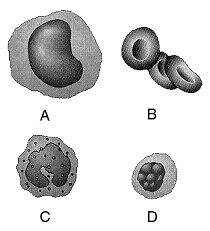
Refer to the accompanying figure. Which cell type is the source of antibodies?
A) A only
B) B only
C) C only
D) D only
E) both A and B
Refer to the accompanying figure. Which cell type is the source of antibodies?
A) A only
B) B only
C) C only
D) D only
E) both A and B
Question
Figure 44-2
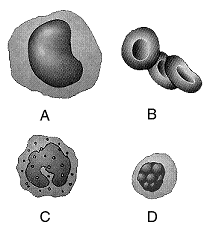
Refer to the accompanying figure. Which cell type or types are primarily responsible for the release of histamine in injured tissues and in allergic responses?
A) A only
B) B only
C) C only
D) D only
E) A and cell type D
Refer to the accompanying figure. Which cell type or types are primarily responsible for the release of histamine in injured tissues and in allergic responses?
A) A only
B) B only
C) C only
D) D only
E) A and cell type D
Question
Question
Figure 44-2
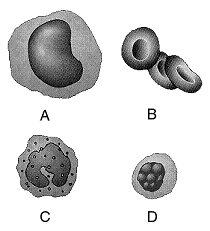
In the accompanying figure, an inadequate supply of which cell may be responsible for anemia?
A) Cell type A only
B) Cell type B only
C) Cell type C only
D) Cell type D only
E) Both cell type A and cell type C
In the accompanying figure, an inadequate supply of which cell may be responsible for anemia?
A) Cell type A only
B) Cell type B only
C) Cell type C only
D) Cell type D only
E) Both cell type A and cell type C
Question
Question
Figure 44-1
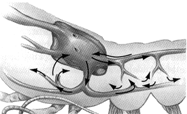
Consider the fluid transported by the system depicted in the accompanying figure. Which statement is FALSE with regard to this system?
A) It accumulates in a blood cavity called a hemocoel.
B) It is also called hemolymph.
C) It can be found in grasshoppers.
D) It has hemoglobin as the oxygen transporting pigment.
E) It fills spaces called sinuses.
Consider the fluid transported by the system depicted in the accompanying figure. Which statement is FALSE with regard to this system?
A) It accumulates in a blood cavity called a hemocoel.
B) It is also called hemolymph.
C) It can be found in grasshoppers.
D) It has hemoglobin as the oxygen transporting pigment.
E) It fills spaces called sinuses.
Question
Question
Question
Figure 44-1
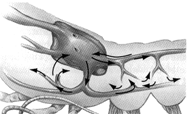
The type of system depicted in the accompanying figure:
A) can be found in arthropods.
B) can be found in cephalopods.
C) can be found in annelids.
D) has hemoglobin as the oxygen transporting pigment.
E) can be found in arthropods and annelids.
The type of system depicted in the accompanying figure:
A) can be found in arthropods.
B) can be found in cephalopods.
C) can be found in annelids.
D) has hemoglobin as the oxygen transporting pigment.
E) can be found in arthropods and annelids.
Question
Figure 44-1
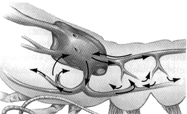
The oxygen-transporting pigment found in the system depicted in the accompanying figure is most likely:
A) hemoglobin.
B) hemolymph.
C) hemocyanin.
D) globulin.
E) erythropoietin.
The oxygen-transporting pigment found in the system depicted in the accompanying figure is most likely:
A) hemoglobin.
B) hemolymph.
C) hemocyanin.
D) globulin.
E) erythropoietin.
Question
Figure 44-1
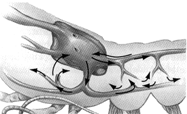
The type of system depicted in the accompanying figure is a(n):
A) open circulatory system.
B) vertebrate circulatory system.
C) closed circulatory system.
D) lymph system.
E) open digestive system.
The type of system depicted in the accompanying figure is a(n):
A) open circulatory system.
B) vertebrate circulatory system.
C) closed circulatory system.
D) lymph system.
E) open digestive system.
Question
Question
Question
Question
Question
Question
Question
Question
Question
Question
Question
Question
Question
Question
Question
Question
Question
Question
Question
Question
Question
Question
Question
Question
Question
Question
Question
Question
Question
Question
Question
Question
Question
Question
Question
Figure 44-3 Use the figure to answer the corresponding question(s).
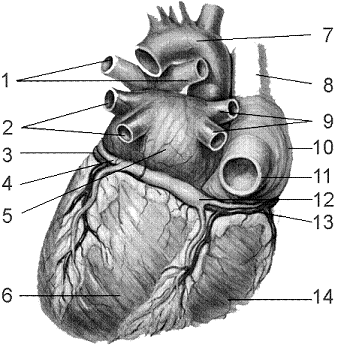
(Posterior View)
Refer to the accompanying figure. The structure labeled as 7 is called the:
A) superior vena cava.
B) aorta.
C) pulmonary veins.
D) right atrium.
E) right ventricle.
(Posterior View)
Refer to the accompanying figure. The structure labeled as 7 is called the:
A) superior vena cava.
B) aorta.
C) pulmonary veins.
D) right atrium.
E) right ventricle.
Question
Question
Figure 44-3 Use the figure to answer the corresponding question(s).
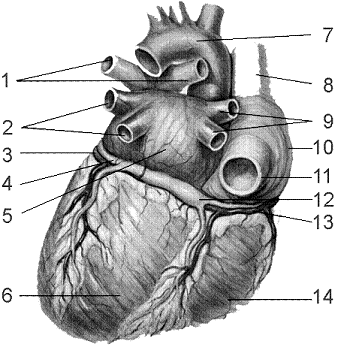
(Posterior View)
Refer to the accompanying figure. Which structure would carry blood to the systemic (body) circulation?
A) 1
B) 2
C) 6
D) 7
E) 14
(Posterior View)
Refer to the accompanying figure. Which structure would carry blood to the systemic (body) circulation?
A) 1
B) 2
C) 6
D) 7
E) 14
Question
Question
Question
Question
Figure 44-3 Use the figure to answer the corresponding question(s).
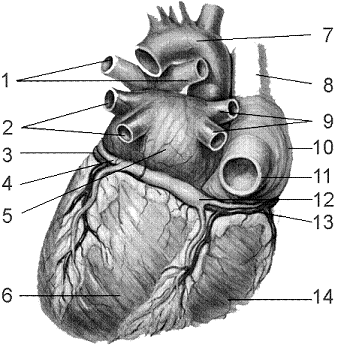
(Posterior View)
Refer to the accompanying figure. The function of the structure labeled as 14 is to:
A) stimulate the ventricles to contract.
B) pump blood to the lungs.
C) pump blood into the systemic circulation.
D) receive blood from the systemic circulation.
E) receive blood from the pulmonary circulation.
(Posterior View)
Refer to the accompanying figure. The function of the structure labeled as 14 is to:
A) stimulate the ventricles to contract.
B) pump blood to the lungs.
C) pump blood into the systemic circulation.
D) receive blood from the systemic circulation.
E) receive blood from the pulmonary circulation.
Question
Figure 44-3 Use the figure to answer the corresponding question(s).
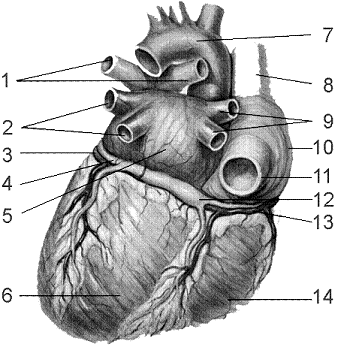
(Posterior View)
Refer to the accompanying figure. A semilunar valve regulates blood flow into which structures?
A) 1 and 2
B) 1 and 5
C) 1 and 7
D) 2 and 7
E) 7 and 11
(Posterior View)
Refer to the accompanying figure. A semilunar valve regulates blood flow into which structures?
A) 1 and 2
B) 1 and 5
C) 1 and 7
D) 2 and 7
E) 7 and 11
Question
Question
Question
Question
Question
Question
Question
Question
Question
Question
Question
Question
Question
Question
Question
Question
Question
Question
Question
Question
Question
Question
Question
Question

Unlock Deck
Sign up to unlock the cards in this deck!
Unlock Deck
Unlock Deck
1/119

Play

Full screen (f)
Deck 44: Internal Transport
1
Why doesn't a flatworm have a circulatory system?
A) The animal is flat enough to permit effective gas exchange by diffusion.
B) There is not enough room for a circulatory system.
C) The animal lacks muscles, so it could not have a heart to pump blood.
D) Only bilaterally symmetrical animals need a circulatory system.
E) Only vertebrates have circulatory systems.
A) The animal is flat enough to permit effective gas exchange by diffusion.
B) There is not enough room for a circulatory system.
C) The animal lacks muscles, so it could not have a heart to pump blood.
D) Only bilaterally symmetrical animals need a circulatory system.
E) Only vertebrates have circulatory systems.
A
2
In which animals would diffusion alone not be an effective transport mechanism for gas exchange?
A) Nematodes
B) Sponges
C) Cnidarians
D) Annelids
E) Flatworms
A) Nematodes
B) Sponges
C) Cnidarians
D) Annelids
E) Flatworms
D
3
What is one difference between the erythrocytes of mammals and other vertebrates?
A) Mammalian erythrocytes lack nuclei.
B) Mammalian erythrocytes respond to changes in water concentration.
C) Mammalian erythrocytes are oval with swollen centers.
D) Other vertebrates do not have erythrocytes.
E) Other vertebrates use a respiratory pigment other than hemoglobin.
A) Mammalian erythrocytes lack nuclei.
B) Mammalian erythrocytes respond to changes in water concentration.
C) Mammalian erythrocytes are oval with swollen centers.
D) Other vertebrates do not have erythrocytes.
E) Other vertebrates use a respiratory pigment other than hemoglobin.
A
4
Figure 44-2
Refer to the accompanying figure. Which cell type is the source of antibodies?
A) A only
B) B only
C) C only
D) D only
E) both A and B
Refer to the accompanying figure. Which cell type is the source of antibodies?
A) A only
B) B only
C) C only
D) D only
E) both A and B
Unlock Deck
Unlock for access to all 119 flashcards in this deck.
Unlock Deck
k this deck
5
Figure 44-2
Refer to the accompanying figure. Which cell type or types are primarily responsible for the release of histamine in injured tissues and in allergic responses?
A) A only
B) B only
C) C only
D) D only
E) A and cell type D
Refer to the accompanying figure. Which cell type or types are primarily responsible for the release of histamine in injured tissues and in allergic responses?
A) A only
B) B only
C) C only
D) D only
E) A and cell type D
Unlock Deck
Unlock for access to all 119 flashcards in this deck.
Unlock Deck
k this deck
6
A vertebrate's circulatory system would include:
A) open blood vessels.
B) closed blood vessels.
C) hemolymph.
D) a hemocoel.
E) hemocyanin.
A) open blood vessels.
B) closed blood vessels.
C) hemolymph.
D) a hemocoel.
E) hemocyanin.
Unlock Deck
Unlock for access to all 119 flashcards in this deck.
Unlock Deck
k this deck
7
Figure 44-2
In the accompanying figure, an inadequate supply of which cell may be responsible for anemia?
A) Cell type A only
B) Cell type B only
C) Cell type C only
D) Cell type D only
E) Both cell type A and cell type C
In the accompanying figure, an inadequate supply of which cell may be responsible for anemia?
A) Cell type A only
B) Cell type B only
C) Cell type C only
D) Cell type D only
E) Both cell type A and cell type C
Unlock Deck
Unlock for access to all 119 flashcards in this deck.
Unlock Deck
k this deck
8
Which of the following are agranular leukocytes?
A) Neutrophils and basophils
B) Basophils and eosinophils
C) Monocytes and lymphocytes
D) Eosinophils and lymphocytes
E) Neutrophils and monocytes
A) Neutrophils and basophils
B) Basophils and eosinophils
C) Monocytes and lymphocytes
D) Eosinophils and lymphocytes
E) Neutrophils and monocytes
Unlock Deck
Unlock for access to all 119 flashcards in this deck.
Unlock Deck
k this deck
9
Figure 44-1
Consider the fluid transported by the system depicted in the accompanying figure. Which statement is FALSE with regard to this system?
A) It accumulates in a blood cavity called a hemocoel.
B) It is also called hemolymph.
C) It can be found in grasshoppers.
D) It has hemoglobin as the oxygen transporting pigment.
E) It fills spaces called sinuses.
Consider the fluid transported by the system depicted in the accompanying figure. Which statement is FALSE with regard to this system?
A) It accumulates in a blood cavity called a hemocoel.
B) It is also called hemolymph.
C) It can be found in grasshoppers.
D) It has hemoglobin as the oxygen transporting pigment.
E) It fills spaces called sinuses.
Unlock Deck
Unlock for access to all 119 flashcards in this deck.
Unlock Deck
k this deck
10
Which of the following contributes to an erythrocyte's efficiency in distributing oxygen?
A) Presence of mitochondria
B) Biconcave shape
C) Lobed nuclei
D) Granules
E) Extraordinarily large size
A) Presence of mitochondria
B) Biconcave shape
C) Lobed nuclei
D) Granules
E) Extraordinarily large size
Unlock Deck
Unlock for access to all 119 flashcards in this deck.
Unlock Deck
k this deck
11
Which of the following is a key feature of an open circulatory system?
A) No vessels carry the blood.
B) Open-ended vessels carry the blood.
C) Closed vessels carry the blood.
D) No heart pumps the blood.
E) Hemoglobin is carried in the blood.
A) No vessels carry the blood.
B) Open-ended vessels carry the blood.
C) Closed vessels carry the blood.
D) No heart pumps the blood.
E) Hemoglobin is carried in the blood.
Unlock Deck
Unlock for access to all 119 flashcards in this deck.
Unlock Deck
k this deck
12
Figure 44-1
The type of system depicted in the accompanying figure:
A) can be found in arthropods.
B) can be found in cephalopods.
C) can be found in annelids.
D) has hemoglobin as the oxygen transporting pigment.
E) can be found in arthropods and annelids.
The type of system depicted in the accompanying figure:
A) can be found in arthropods.
B) can be found in cephalopods.
C) can be found in annelids.
D) has hemoglobin as the oxygen transporting pigment.
E) can be found in arthropods and annelids.
Unlock Deck
Unlock for access to all 119 flashcards in this deck.
Unlock Deck
k this deck
13
Figure 44-1
The oxygen-transporting pigment found in the system depicted in the accompanying figure is most likely:
A) hemoglobin.
B) hemolymph.
C) hemocyanin.
D) globulin.
E) erythropoietin.
The oxygen-transporting pigment found in the system depicted in the accompanying figure is most likely:
A) hemoglobin.
B) hemolymph.
C) hemocyanin.
D) globulin.
E) erythropoietin.
Unlock Deck
Unlock for access to all 119 flashcards in this deck.
Unlock Deck
k this deck
14
Figure 44-1
The type of system depicted in the accompanying figure is a(n):
A) open circulatory system.
B) vertebrate circulatory system.
C) closed circulatory system.
D) lymph system.
E) open digestive system.
The type of system depicted in the accompanying figure is a(n):
A) open circulatory system.
B) vertebrate circulatory system.
C) closed circulatory system.
D) lymph system.
E) open digestive system.
Unlock Deck
Unlock for access to all 119 flashcards in this deck.
Unlock Deck
k this deck
15
Which of the following is a correct statement regarding plasma proteins?
A) They help regulate the distribution of fluid between the plasma and interstitial fluid.
B) They readily pass through the walls of blood vessels.
C) They contribute to the blood's sugar balance.
D) They help maintain blood viscosity.
E) They are not acid-base buffers.
A) They help regulate the distribution of fluid between the plasma and interstitial fluid.
B) They readily pass through the walls of blood vessels.
C) They contribute to the blood's sugar balance.
D) They help maintain blood viscosity.
E) They are not acid-base buffers.
Unlock Deck
Unlock for access to all 119 flashcards in this deck.
Unlock Deck
k this deck
16
An open circulatory system usually consists of which of the following?
A) Blood
B) Pumping organ
C) Arteries
D) Veins
E) Hemocoel
A) Blood
B) Pumping organ
C) Arteries
D) Veins
E) Hemocoel
Unlock Deck
Unlock for access to all 119 flashcards in this deck.
Unlock Deck
k this deck
17
Which of the following statements is false ?
A) The tissues of arthropods are bathed with hemolymph, which delivers oxygen to their cells.
B) In an open circulatory system, the heart is still responsible for pumping oxygen-rich fluid.
C) Earthworms have a central heart that pumps blood to all their tissues.
D) Blood vessels are found in the open circulatory systems common to some invertebrates.
E) Hemocyanin is the oxygen transport pigment found in the open circulatory system of invertebrates.
A) The tissues of arthropods are bathed with hemolymph, which delivers oxygen to their cells.
B) In an open circulatory system, the heart is still responsible for pumping oxygen-rich fluid.
C) Earthworms have a central heart that pumps blood to all their tissues.
D) Blood vessels are found in the open circulatory systems common to some invertebrates.
E) Hemocyanin is the oxygen transport pigment found in the open circulatory system of invertebrates.
Unlock Deck
Unlock for access to all 119 flashcards in this deck.
Unlock Deck
k this deck
18
Which of the following has the largest impact on whether diffusion alone will move nutrients within an organism?
A) Shape of organism
B) Size of organism
C) Environment of organism
D) Nutrient being moved
E) Atmosphere around organism
A) Shape of organism
B) Size of organism
C) Environment of organism
D) Nutrient being moved
E) Atmosphere around organism
Unlock Deck
Unlock for access to all 119 flashcards in this deck.
Unlock Deck
k this deck
19
Which of the following is the oxygen-transport pigment that gives vertebrate blood its pink color?
A) Hemoglobin
B) Myoglobin
C) Chlorophyll
D) Hemocyanin
E) Erythropoietin
A) Hemoglobin
B) Myoglobin
C) Chlorophyll
D) Hemocyanin
E) Erythropoietin
Unlock Deck
Unlock for access to all 119 flashcards in this deck.
Unlock Deck
k this deck
20
Mammalian red blood cells:
A) are phagocytic.
B) contain a lobed nucleus.
C) have a one-day lifespan.
D) are produced in the liver.
E) are produced in response to erythropoietin.
A) are phagocytic.
B) contain a lobed nucleus.
C) have a one-day lifespan.
D) are produced in the liver.
E) are produced in response to erythropoietin.
Unlock Deck
Unlock for access to all 119 flashcards in this deck.
Unlock Deck
k this deck
21
Adding a fibrinogen inactivator to blood would prevent:
A) the formation of thrombin.
B) platelet formation.
C) the blood from clotting.
D) constriction of the blood vessels.
E) hemoglobin synthesis.
A) the formation of thrombin.
B) platelet formation.
C) the blood from clotting.
D) constriction of the blood vessels.
E) hemoglobin synthesis.
Unlock Deck
Unlock for access to all 119 flashcards in this deck.
Unlock Deck
k this deck
22
The characteristic that enables efficient gas exchange in capillaries is:
A) the very short total length of the capillaries.
B) their proximity to the heart.
C) thick walls of connective and muscle tissue.
D) thin walls that are only one cell wide.
E) the long total length of the capillaries.
A) the very short total length of the capillaries.
B) their proximity to the heart.
C) thick walls of connective and muscle tissue.
D) thin walls that are only one cell wide.
E) the long total length of the capillaries.
Unlock Deck
Unlock for access to all 119 flashcards in this deck.
Unlock Deck
k this deck
23
The capillary walls of blood vessels are how many cells thick?
A) One
B) Two
C) Three
D) Four
E) Five
A) One
B) Two
C) Three
D) Four
E) Five
Unlock Deck
Unlock for access to all 119 flashcards in this deck.
Unlock Deck
k this deck
24
Choose the correct order of the chambers through which oxygen-poor blood flows in an amphibian heart.
A) Atrium → ventricle → sinus venosus → conus arteriosus
B) Atrium → conus arteriosus → ventricle → sinus venosus
C) Sinus venosus → atrium → ventricle → conus arteriosus
D) Conus arteriosus → atrium → sinus venosus → ventricle
E) Ventricle → atrium → conus arteriosus → sinus venosus
A) Atrium → ventricle → sinus venosus → conus arteriosus
B) Atrium → conus arteriosus → ventricle → sinus venosus
C) Sinus venosus → atrium → ventricle → conus arteriosus
D) Conus arteriosus → atrium → sinus venosus → ventricle
E) Ventricle → atrium → conus arteriosus → sinus venosus
Unlock Deck
Unlock for access to all 119 flashcards in this deck.
Unlock Deck
k this deck
25
Which of the following structures is considered to be the pacemaker of the heart?
A) Atrioventricular node
B) Sinoatrial node
C) Atrioventricular bundle
D) Purkinje fibers
E) Intercalated discs
A) Atrioventricular node
B) Sinoatrial node
C) Atrioventricular bundle
D) Purkinje fibers
E) Intercalated discs
Unlock Deck
Unlock for access to all 119 flashcards in this deck.
Unlock Deck
k this deck
26
Which of the following depicts the correct sequence of protein activity in clot formation?
A) Thrombin → prothrombin → fibrinogen → fibrin
B) Prothrombin → thrombin → fibrinogen → fibrin
C) Prothrombin → thrombin → fibrin → fibrinogen
D) Prothrombin → thrombin → fibrin
E) Prothrombin → thrombin → fibrinogen → erythrocytes
A) Thrombin → prothrombin → fibrinogen → fibrin
B) Prothrombin → thrombin → fibrinogen → fibrin
C) Prothrombin → thrombin → fibrin → fibrinogen
D) Prothrombin → thrombin → fibrin
E) Prothrombin → thrombin → fibrinogen → erythrocytes
Unlock Deck
Unlock for access to all 119 flashcards in this deck.
Unlock Deck
k this deck
27
Which chemical, contained in the granules of basophils, helps prevent blood clot formation?
A) Histamine
B) Leukotrienes
C) Prostaglandins
D) Heparin
E) SRS-A
A) Histamine
B) Leukotrienes
C) Prostaglandins
D) Heparin
E) SRS-A
Unlock Deck
Unlock for access to all 119 flashcards in this deck.
Unlock Deck
k this deck
28
Smooth muscle in the arteriole walls can vasoconstrict or vasodilate, which:
A) helps to regulate blood pressure.
B) helps to accelerate the flow of blood through the vessels.
C) prevents the back flow of blood into the tissues.
D) squeezes oxygen out of the blood.
E) adds strength to the blood vessels.
A) helps to regulate blood pressure.
B) helps to accelerate the flow of blood through the vessels.
C) prevents the back flow of blood into the tissues.
D) squeezes oxygen out of the blood.
E) adds strength to the blood vessels.
Unlock Deck
Unlock for access to all 119 flashcards in this deck.
Unlock Deck
k this deck
29
When a blood vessel is cut, why does vasoconstriction take place?
A) To expose collagen fibers to which platelets can adhere
B) To trigger the release of platelets from the surrounding tissues
C) To initiate the activation of thrombin
D) To entrap white blood cells
E) To reduce the flow of blood
A) To expose collagen fibers to which platelets can adhere
B) To trigger the release of platelets from the surrounding tissues
C) To initiate the activation of thrombin
D) To entrap white blood cells
E) To reduce the flow of blood
Unlock Deck
Unlock for access to all 119 flashcards in this deck.
Unlock Deck
k this deck
30
A vein always carries:
A) blood to the heart.
B) blood from the heart.
C) oxygen-rich blood.
D) oxygen-poor blood.
E) blood rich in carbon dioxide.
A) blood to the heart.
B) blood from the heart.
C) oxygen-rich blood.
D) oxygen-poor blood.
E) blood rich in carbon dioxide.
Unlock Deck
Unlock for access to all 119 flashcards in this deck.
Unlock Deck
k this deck
31
Chordae tendineae:
A) hold the AV valves in place.
B) contract when the heart contracts.
C) are one part of the conductance system of the heart.
D) regulate blood flow into the ventricles.
E) are stretched during ventricular systole.
A) hold the AV valves in place.
B) contract when the heart contracts.
C) are one part of the conductance system of the heart.
D) regulate blood flow into the ventricles.
E) are stretched during ventricular systole.
Unlock Deck
Unlock for access to all 119 flashcards in this deck.
Unlock Deck
k this deck
32
Which of the white blood cells primarily function in phagocytosis?
A) Neutrophils
B) Eosinophils
C) Basophils
D) Lymphocytes
E) Monocytes
A) Neutrophils
B) Eosinophils
C) Basophils
D) Lymphocytes
E) Monocytes
Unlock Deck
Unlock for access to all 119 flashcards in this deck.
Unlock Deck
k this deck
33
The rapid onset of overproduction of immature white blood cells is known as:
A) anemia.
B) hemolytic anemia.
C) leukemia.
D) thrombocytopenia.
E) pernicious anemia.
A) anemia.
B) hemolytic anemia.
C) leukemia.
D) thrombocytopenia.
E) pernicious anemia.
Unlock Deck
Unlock for access to all 119 flashcards in this deck.
Unlock Deck
k this deck
34
The four-chambered heart first evolved among the:
A) arthropods.
B) birds.
C) nonavian reptiles.
D) mammals.
E) fishes.
A) arthropods.
B) birds.
C) nonavian reptiles.
D) mammals.
E) fishes.
Unlock Deck
Unlock for access to all 119 flashcards in this deck.
Unlock Deck
k this deck
35
Which of the following guard the exits from the heart?
A) Semilunar valves
B) Mitral valves
C) Tricuspid valves
D) Pulmonary valves
E) Aortic valves
A) Semilunar valves
B) Mitral valves
C) Tricuspid valves
D) Pulmonary valves
E) Aortic valves
Unlock Deck
Unlock for access to all 119 flashcards in this deck.
Unlock Deck
k this deck
36
Which plasma protein(s) will be important immediately following a small cut on your finger?
A) Serum
B) High-density lipoproteins
C) Beta globulins
D) Fibrinogen
E) Gamma globulin
A) Serum
B) High-density lipoproteins
C) Beta globulins
D) Fibrinogen
E) Gamma globulin
Unlock Deck
Unlock for access to all 119 flashcards in this deck.
Unlock Deck
k this deck
37
Too many of which of the following white blood cells may be attributable to an allergic reaction or a parasitic infestation?
A) Neutrophils
B) Eosinophils
C) Basophils
D) Lymphocytes
E) Monocytes
A) Neutrophils
B) Eosinophils
C) Basophils
D) Lymphocytes
E) Monocytes
Unlock Deck
Unlock for access to all 119 flashcards in this deck.
Unlock Deck
k this deck
38
Which of the following is a component of plasma?
A) Erythrocytes
B) Hemoglobin
C) Dissolved gases
D) Leukocytes
E) Histamine
A) Erythrocytes
B) Hemoglobin
C) Dissolved gases
D) Leukocytes
E) Histamine
Unlock Deck
Unlock for access to all 119 flashcards in this deck.
Unlock Deck
k this deck
39
Platelets are formed by:
A) cell division in the spleen.
B) disruption of a phagocyte.
C) fragmentation of the cytoplasm of a B lymphocyte.
D) small pieces pinching from very large cells in the bone marrow.
E) the release of granules from a neutrophil.
A) cell division in the spleen.
B) disruption of a phagocyte.
C) fragmentation of the cytoplasm of a B lymphocyte.
D) small pieces pinching from very large cells in the bone marrow.
E) the release of granules from a neutrophil.
Unlock Deck
Unlock for access to all 119 flashcards in this deck.
Unlock Deck
k this deck
40
Blood returning from the lungs passes directly into which of the following?
A) Central ventricle
B) Right ventricle
C) Left ventricle
D) Right atrium
E) Left atrium
A) Central ventricle
B) Right ventricle
C) Left ventricle
D) Right atrium
E) Left atrium
Unlock Deck
Unlock for access to all 119 flashcards in this deck.
Unlock Deck
k this deck
41
An electrocardiogram (ECG, EKG) is a measure of the heart's:
A) electrical system.
B) blood flow to the body.
C) contraction rate.
D) blood flow to heart muscle.
E) pumping ability.
A) electrical system.
B) blood flow to the body.
C) contraction rate.
D) blood flow to heart muscle.
E) pumping ability.
Unlock Deck
Unlock for access to all 119 flashcards in this deck.
Unlock Deck
k this deck
42
The fluid-filled space that helps reduce the friction of a beating heart is called the:
A) endocardium.
B) pericardial cavity.
C) interventricular septum.
D) fossa ovalis.
E) auricle.
A) endocardium.
B) pericardial cavity.
C) interventricular septum.
D) fossa ovalis.
E) auricle.
Unlock Deck
Unlock for access to all 119 flashcards in this deck.
Unlock Deck
k this deck
43
Due to recent changes in blood pressure guidelines, a reading of 120/80 is now considered to be:
A) a low normal reading.
B) a high normal reading.
C) prehypertensive.
D) hypotensive.
E) hypertensive.
A) a low normal reading.
B) a high normal reading.
C) prehypertensive.
D) hypotensive.
E) hypertensive.
Unlock Deck
Unlock for access to all 119 flashcards in this deck.
Unlock Deck
k this deck
44
Which of the following is the correct sequence of blood flow through pulmonary circulation?
A) Right atrium → right ventricle → pulmonary arteries → pulmonary capillaries (in lungs) → pulmonary veins → left atrium
B) Left atrium → left ventricle → pulmonary arteries → pulmonary capillaries (in lungs) → pulmonary veins → right atrium
C) Right atrium → right ventricle → pulmonary capillaries (in lungs) → pulmonary arteries → pulmonary veins → left atrium
D) Left atrium → left ventricle → pulmonary capillaries (in lungs) → pulmonary arteries → pulmonary veins → right atrium
E) Left atrium → left ventricle → pulmonary veins → pulmonary arteries → pulmonary capillaries (in lungs) → right atrium
A) Right atrium → right ventricle → pulmonary arteries → pulmonary capillaries (in lungs) → pulmonary veins → left atrium
B) Left atrium → left ventricle → pulmonary arteries → pulmonary capillaries (in lungs) → pulmonary veins → right atrium
C) Right atrium → right ventricle → pulmonary capillaries (in lungs) → pulmonary arteries → pulmonary veins → left atrium
D) Left atrium → left ventricle → pulmonary capillaries (in lungs) → pulmonary arteries → pulmonary veins → right atrium
E) Left atrium → left ventricle → pulmonary veins → pulmonary arteries → pulmonary capillaries (in lungs) → right atrium
Unlock Deck
Unlock for access to all 119 flashcards in this deck.
Unlock Deck
k this deck
45
The semilunar valves prevent blood from moving:
A) from the atria back into the veins.
B) from the ventricles back into the atria.
C) from the arteries back into the ventricles.
D) moving backward in the capillaries.
E) moving backward in the arteries.
A) from the atria back into the veins.
B) from the ventricles back into the atria.
C) from the arteries back into the ventricles.
D) moving backward in the capillaries.
E) moving backward in the arteries.
Unlock Deck
Unlock for access to all 119 flashcards in this deck.
Unlock Deck
k this deck
46
During ventricular systole (contraction):
A) the ventricles relax.
B) blood flows from the ventricles into the atria.
C) the tricuspid and mitral valves are open.
D) blood flows from the ventricles to the pulmonary artery and aorta.
E) the atria contract.
A) the ventricles relax.
B) blood flows from the ventricles into the atria.
C) the tricuspid and mitral valves are open.
D) blood flows from the ventricles to the pulmonary artery and aorta.
E) the atria contract.
Unlock Deck
Unlock for access to all 119 flashcards in this deck.
Unlock Deck
k this deck
47
Which of the following is a hormone that increases reabsorption of water in the kidneys, which increases blood volume and blood pressure?
A) Renin
B) Angiotensin II
C) Aldosterone
D) Antidiuretic hormone
E) Atrial natriuretic peptide
A) Renin
B) Angiotensin II
C) Aldosterone
D) Antidiuretic hormone
E) Atrial natriuretic peptide
Unlock Deck
Unlock for access to all 119 flashcards in this deck.
Unlock Deck
k this deck
48
What is the correct order for the following events that follow a nerve impulse along a sympathetic neuron to innervate the heart?
1) G protein activates adenylyl cyclase.
2) Neuron releases norepinephrine.
3) Cyclic AMP activates protein kinase.
4) Receptor activates G protein.
5) Protein kinase phosphorylates Ca2+ channels.
6) Receptors activated on the membrane of the cardiac muscle.
A) 1, 3, 4, 5, 2, 6
B) 5, 3, 4, 1, 2, 6
C) 6, 2, 4, 1, 3, 5
D) 2, 6, 4, 1, 3, 5
E) 2, 3, 4, 1, 6, 5
1) G protein activates adenylyl cyclase.
2) Neuron releases norepinephrine.
3) Cyclic AMP activates protein kinase.
4) Receptor activates G protein.
5) Protein kinase phosphorylates Ca2+ channels.
6) Receptors activated on the membrane of the cardiac muscle.
A) 1, 3, 4, 5, 2, 6
B) 5, 3, 4, 1, 2, 6
C) 6, 2, 4, 1, 3, 5
D) 2, 6, 4, 1, 3, 5
E) 2, 3, 4, 1, 6, 5
Unlock Deck
Unlock for access to all 119 flashcards in this deck.
Unlock Deck
k this deck
49
Figure 44-3 Use the figure to answer the corresponding question(s).
(Posterior View)
Refer to the accompanying figure. The structure labeled as 7 is called the:
A) superior vena cava.
B) aorta.
C) pulmonary veins.
D) right atrium.
E) right ventricle.
(Posterior View)
Refer to the accompanying figure. The structure labeled as 7 is called the:
A) superior vena cava.
B) aorta.
C) pulmonary veins.
D) right atrium.
E) right ventricle.
Unlock Deck
Unlock for access to all 119 flashcards in this deck.
Unlock Deck
k this deck
50
Which of the following systolic/diastolic blood pressures is considered to be within the prehypertensive state?
A) 150/95
B) 145/95
C) 130/85
D) 110/70
E) 90/60
A) 150/95
B) 145/95
C) 130/85
D) 110/70
E) 90/60
Unlock Deck
Unlock for access to all 119 flashcards in this deck.
Unlock Deck
k this deck
51
Figure 44-3 Use the figure to answer the corresponding question(s).
(Posterior View)
Refer to the accompanying figure. Which structure would carry blood to the systemic (body) circulation?
A) 1
B) 2
C) 6
D) 7
E) 14
(Posterior View)
Refer to the accompanying figure. Which structure would carry blood to the systemic (body) circulation?
A) 1
B) 2
C) 6
D) 7
E) 14
Unlock Deck
Unlock for access to all 119 flashcards in this deck.
Unlock Deck
k this deck
52
Starling's law of the heart states that the heart pumps:
A) more forcefully when more blood is delivered to it.
B) more rapidly when less blood is delivered to it.
C) less forcefully when oxygen-rich blood is delivered to it.
D) slower when more blood is delivered to it.
E) slower when norepinephrine is secreted.
A) more forcefully when more blood is delivered to it.
B) more rapidly when less blood is delivered to it.
C) less forcefully when oxygen-rich blood is delivered to it.
D) slower when more blood is delivered to it.
E) slower when norepinephrine is secreted.
Unlock Deck
Unlock for access to all 119 flashcards in this deck.
Unlock Deck
k this deck
53
Blood pressure depends on:
A) the height and weight of an individual.
B) atrial volume and stroke rate.
C) blood flow and resistance of blood against the vessel walls.
D) total blood volume.
E) heart rate.
A) the height and weight of an individual.
B) atrial volume and stroke rate.
C) blood flow and resistance of blood against the vessel walls.
D) total blood volume.
E) heart rate.
Unlock Deck
Unlock for access to all 119 flashcards in this deck.
Unlock Deck
k this deck
54
Cardiac output is determined by:
A) blood volume.
B) venous return.
C) blood volume and venous return.
D) stroke volume only.
E) stroke volume and heart rate.
A) blood volume.
B) venous return.
C) blood volume and venous return.
D) stroke volume only.
E) stroke volume and heart rate.
Unlock Deck
Unlock for access to all 119 flashcards in this deck.
Unlock Deck
k this deck
55
Figure 44-3 Use the figure to answer the corresponding question(s).
(Posterior View)
Refer to the accompanying figure. The function of the structure labeled as 14 is to:
A) stimulate the ventricles to contract.
B) pump blood to the lungs.
C) pump blood into the systemic circulation.
D) receive blood from the systemic circulation.
E) receive blood from the pulmonary circulation.
(Posterior View)
Refer to the accompanying figure. The function of the structure labeled as 14 is to:
A) stimulate the ventricles to contract.
B) pump blood to the lungs.
C) pump blood into the systemic circulation.
D) receive blood from the systemic circulation.
E) receive blood from the pulmonary circulation.
Unlock Deck
Unlock for access to all 119 flashcards in this deck.
Unlock Deck
k this deck
56
Figure 44-3 Use the figure to answer the corresponding question(s).
(Posterior View)
Refer to the accompanying figure. A semilunar valve regulates blood flow into which structures?
A) 1 and 2
B) 1 and 5
C) 1 and 7
D) 2 and 7
E) 7 and 11
(Posterior View)
Refer to the accompanying figure. A semilunar valve regulates blood flow into which structures?
A) 1 and 2
B) 1 and 5
C) 1 and 7
D) 2 and 7
E) 7 and 11
Unlock Deck
Unlock for access to all 119 flashcards in this deck.
Unlock Deck
k this deck
57
The foramen ovale functions to:
A) permit blood to bypass the nonfunctional lungs in a fetus.
B) establish the basic heart rate.
C) prevent blood from flowing backward.
D) carry blood to the lungs in a fetus.
E) transport poorly oxygenated blood.
A) permit blood to bypass the nonfunctional lungs in a fetus.
B) establish the basic heart rate.
C) prevent blood from flowing backward.
D) carry blood to the lungs in a fetus.
E) transport poorly oxygenated blood.
Unlock Deck
Unlock for access to all 119 flashcards in this deck.
Unlock Deck
k this deck
58
Which of the following valves are held in place by the chordae tendineae?
A) Semilunar valves
B) Mitral valves
C) Septal valves
D) Pulmonary valves
E) Aortic valves
A) Semilunar valves
B) Mitral valves
C) Septal valves
D) Pulmonary valves
E) Aortic valves
Unlock Deck
Unlock for access to all 119 flashcards in this deck.
Unlock Deck
k this deck
59
When you hear a soft, hissing noise known as a heart murmur, which of the following valves are injured?
A) Semilunar valves
B) Mitral valves
C) Tricuspid valves
D) Pulmonary valves
E) Aortic valves
A) Semilunar valves
B) Mitral valves
C) Tricuspid valves
D) Pulmonary valves
E) Aortic valves
Unlock Deck
Unlock for access to all 119 flashcards in this deck.
Unlock Deck
k this deck
60
Which of the following is a hormone that increases sodium excretion, which results in production of a large volume of dilute urine, thereby reducing blood pressure?
A) Renin
B) Angiotensin II
C) Aldosterone
D) Antidiuretic hormone
E) Atrial natriuretic peptide
A) Renin
B) Angiotensin II
C) Aldosterone
D) Antidiuretic hormone
E) Atrial natriuretic peptide
Unlock Deck
Unlock for access to all 119 flashcards in this deck.
Unlock Deck
k this deck
61
Serum is plasma without the proteins involved in clotting.
Unlock Deck
Unlock for access to all 119 flashcards in this deck.
Unlock Deck
k this deck
62
In the clotting process, fibrinogen is converted to fibrin.
Unlock Deck
Unlock for access to all 119 flashcards in this deck.
Unlock Deck
k this deck
63
Which of the following is the correct sequence of blood flow through systemic circulation?
A) Left atrium → left ventricle → smaller arteries in leg → capillaries in leg → small veins in leg → common iliac vein → aorta → inferior vena cava → right common iliac artery → right atrium
B) Right atrium → right ventricle → aorta → left common iliac artery → capillaries in leg → smaller arteries in leg → small veins in leg → common iliac vein → inferior vena cava → left atrium
C) Left atrium → left ventricle → right common iliac artery → smaller arteries in leg → aorta → capillaries in leg → small veins in leg → inferior vena cava → common iliac vein → right atrium
D) Right atrium → right ventricle → aorta → left common iliac artery → smaller arteries in leg → capillaries in leg → small veins in leg → common iliac vein → inferior vena cava → left atrium
E) Left atrium → left ventricle → aorta → right common iliac artery → smaller arteries in leg → capillaries in leg → small veins in leg → common iliac vein → inferior vena cava → right atrium
A) Left atrium → left ventricle → smaller arteries in leg → capillaries in leg → small veins in leg → common iliac vein → aorta → inferior vena cava → right common iliac artery → right atrium
B) Right atrium → right ventricle → aorta → left common iliac artery → capillaries in leg → smaller arteries in leg → small veins in leg → common iliac vein → inferior vena cava → left atrium
C) Left atrium → left ventricle → right common iliac artery → smaller arteries in leg → aorta → capillaries in leg → small veins in leg → inferior vena cava → common iliac vein → right atrium
D) Right atrium → right ventricle → aorta → left common iliac artery → smaller arteries in leg → capillaries in leg → small veins in leg → common iliac vein → inferior vena cava → left atrium
E) Left atrium → left ventricle → aorta → right common iliac artery → smaller arteries in leg → capillaries in leg → small veins in leg → common iliac vein → inferior vena cava → right atrium
Unlock Deck
Unlock for access to all 119 flashcards in this deck.
Unlock Deck
k this deck
64
Briefly outline the events involved in blood clotting.
Unlock Deck
Unlock for access to all 119 flashcards in this deck.
Unlock Deck
k this deck
65
Cardiac output is obtained by multiplying stroke volume by heart rate.
Unlock Deck
Unlock for access to all 119 flashcards in this deck.
Unlock Deck
k this deck
66
One purpose of the lymphatic system is to:
A) transport nutrients and oxygen.
B) return interstitial fluid to the blood.
C) block the transport of blood proteins.
D) produce red blood cells.
E) deliver carbon dioxide to the heart.
A) transport nutrients and oxygen.
B) return interstitial fluid to the blood.
C) block the transport of blood proteins.
D) produce red blood cells.
E) deliver carbon dioxide to the heart.
Unlock Deck
Unlock for access to all 119 flashcards in this deck.
Unlock Deck
k this deck
67
The pacemaker is located in the atrioventricular node.
Unlock Deck
Unlock for access to all 119 flashcards in this deck.
Unlock Deck
k this deck
68
Which of the following is a mass of lymph tissue under the lining of the oral cavity and throat?
A) Thymus gland
B) Spleen
C) Thoracic duct
D) Thyroid
E) Tonsil
A) Thymus gland
B) Spleen
C) Thoracic duct
D) Thyroid
E) Tonsil
Unlock Deck
Unlock for access to all 119 flashcards in this deck.
Unlock Deck
k this deck
69
Identify two hormones that are involved in regulating blood pressure and briefly describe the role of each.
Unlock Deck
Unlock for access to all 119 flashcards in this deck.
Unlock Deck
k this deck
70
By definition, an animal having an closed circulatory system will also have a hemocoel.
Unlock Deck
Unlock for access to all 119 flashcards in this deck.
Unlock Deck
k this deck
71
The amphibian heart consists of two atria and two ventricle(s).
Unlock Deck
Unlock for access to all 119 flashcards in this deck.
Unlock Deck
k this deck
72
Compare and contrast internal transportation as conducted by an open and closed circulatory system. Also, identify two animals representative of each type of circulatory system.
Unlock Deck
Unlock for access to all 119 flashcards in this deck.
Unlock Deck
k this deck
73
Metarterioles directly link arterioles with venules.
Unlock Deck
Unlock for access to all 119 flashcards in this deck.
Unlock Deck
k this deck
74
The tricuspid valve is located between the right atrium and the right ventricle.
Unlock Deck
Unlock for access to all 119 flashcards in this deck.
Unlock Deck
k this deck
75
Eosinophils are filled with hemoglobin.
Unlock Deck
Unlock for access to all 119 flashcards in this deck.
Unlock Deck
k this deck
76
Compare the structure and function of three of the following types of blood vessels: arteries, arterioles, veins, venules, and capillaries.
Unlock Deck
Unlock for access to all 119 flashcards in this deck.
Unlock Deck
k this deck
77
An example of a granular leucocyte is a monocyte.
Unlock Deck
Unlock for access to all 119 flashcards in this deck.
Unlock Deck
k this deck
78
The coronary sinus drains blood directly into the:
A) inferior vena cava.
B) superior vena cava.
C) left atrium.
D) right atrium.
E) coronary arteries.
A) inferior vena cava.
B) superior vena cava.
C) left atrium.
D) right atrium.
E) coronary arteries.
Unlock Deck
Unlock for access to all 119 flashcards in this deck.
Unlock Deck
k this deck
79
The blood pressure in the veins of your toe is most likely higher than the blood pressure in the arteries of your little finger.
Unlock Deck
Unlock for access to all 119 flashcards in this deck.
Unlock Deck
k this deck
80
A blocked coronary sinus would block blood flow:
A) into the superior vena cava.
B) into the inferior vena cava.
C) into the pulmonary arteries.
D) returning from the pulmonary arteries.
E) returning from the coronary circulation.
A) into the superior vena cava.
B) into the inferior vena cava.
C) into the pulmonary arteries.
D) returning from the pulmonary arteries.
E) returning from the coronary circulation.
Unlock Deck
Unlock for access to all 119 flashcards in this deck.
Unlock Deck
k this deck
Unlock Deck
Unlock for access to all 119 flashcards in this deck.






