







 Chat with AI

Deck 19: Animal Tissues and Organs
Full screen (f)

Question

Question
Question
Question
Question
Question
Question
Question
Question
Question
Question
Question
Question
Question
Question
Question
Question
Question
Question
Question
Question
Question
Question
Question
Question
Question
Question
Question
Question
Question
Question
Question
Question
Question
Question
Question
Question
Question
Question
Question
Question
Question
Question
Question
Question
Question
Question
Question
Question
Question
Question
Question
Question
Question
Question
Question
Question
Question
Question
Question
Question
Match between columns
Question
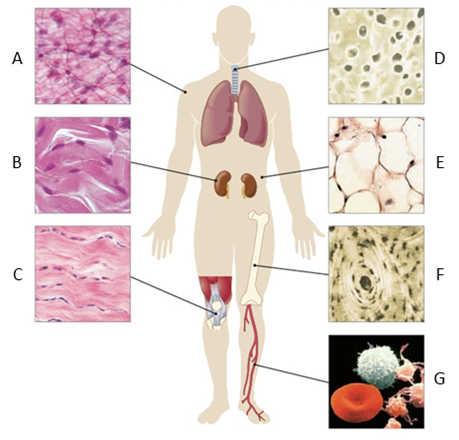
The organization of _____ allows this tissue to stretch in response to physical activity.
A)tissue A
B)tissue B
C)tissue C
D)tissue D
E)tissue E
Question
Match between columns
Question
Match between columns
Question
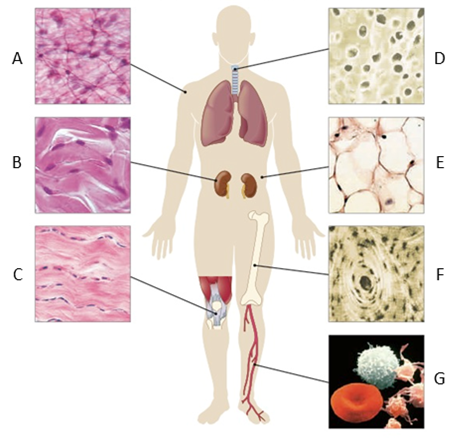
In the figure above, ____ is responsible for soft tissue support.
A)tissue A
B)tissue B
C)tissue C
D)tissue D
E)tissue E
Question
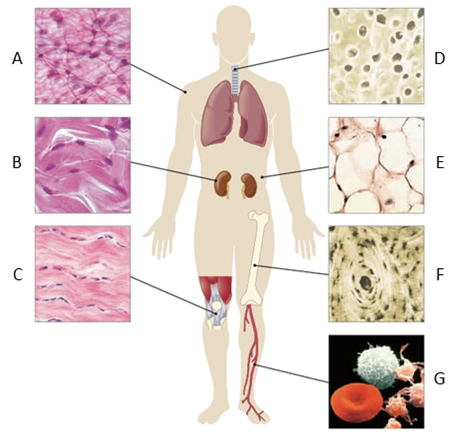
In the figure above, ____ is responsible for producing cells needed to defend the body.
A)tissue C
B)tissue D
C)tissue E
D)tissue F
E)tissue G
Question
Match between columns
Question
Question
Question
Question
Question
Match between columns
Question
Match between columns
Question
Match between columns
Question
Match between columns
Question
Question
Question
Match between columns
Question
Question
Match between columns

Unlock Deck
Sign up to unlock the cards in this deck!
Unlock Deck
Unlock Deck
1/100

Play

Full screen (f)
Deck 19: Animal Tissues and Organs
1
The outer layer of the skin is composed of protective____ epithelium.
A)simple squamous
B)simple cuboidal
C)stratified columnar
D)simple columnar
E)stratified squamous
A)simple squamous
B)simple cuboidal
C)stratified columnar
D)simple columnar
E)stratified squamous
E
2
____ epithelial tissue is only one cell layer thick.
A)Stratified
B)Dense connective
C)Loose connective
D)Simple
E)Cuboidal
A)Stratified
B)Dense connective
C)Loose connective
D)Simple
E)Cuboidal
D
3
Keeping internal conditions within tolerable limits is called ____.
A)maintenance
B)anatomy
C)physiology
D)homeostasis
E)equilibrium
A)maintenance
B)anatomy
C)physiology
D)homeostasis
E)equilibrium
D
4
____ epithelial tissue is several cell layers thick.
A)Stratified
B)Loose connective
C)Dense connective
D)Simple
E)Cuboidal
A)Stratified
B)Loose connective
C)Dense connective
D)Simple
E)Cuboidal
Unlock Deck
Unlock for access to all 100 flashcards in this deck.
Unlock Deck
k this deck
5
Why is blood considered a connective tissue?
A)blood cells are derived from bone cells
B)blood cells are derived from pluripotent cells
C)blood cells help anchor muscle to bone
D)blood cells derive from epithelial cells
E)blood cells give structural support to blood vessels
A)blood cells are derived from bone cells
B)blood cells are derived from pluripotent cells
C)blood cells help anchor muscle to bone
D)blood cells derive from epithelial cells
E)blood cells give structural support to blood vessels
Unlock Deck
Unlock for access to all 100 flashcards in this deck.
Unlock Deck
k this deck
6
____ tissue is a sheet-like tissue with one surface always facing a body cavity or an external environment.
A)Dense connective
B)Muscular
C)Epithelial
D)Nervous
E)Loose connective
A)Dense connective
B)Muscular
C)Epithelial
D)Nervous
E)Loose connective
Unlock Deck
Unlock for access to all 100 flashcards in this deck.
Unlock Deck
k this deck
7
____ glands release products onto an internal or external surface.
A)Endocrine
B)Muscular
C)Neural
D)Exocrine
E)Connective
A)Endocrine
B)Muscular
C)Neural
D)Exocrine
E)Connective
Unlock Deck
Unlock for access to all 100 flashcards in this deck.
Unlock Deck
k this deck
8
____ tissue contains glands.
A)Connective
B)Muscular
C)Epithelial
D)Neural
E)Adipose
A)Connective
B)Muscular
C)Epithelial
D)Neural
E)Adipose
Unlock Deck
Unlock for access to all 100 flashcards in this deck.
Unlock Deck
k this deck
9
A stem cell is a cell that ____.
A)can differentiate into specialized cell types
B)has already differentiated
C)can develop into two or three cell types
D)can only develop into skin cells
E)can only develop into bone cells
A)can differentiate into specialized cell types
B)has already differentiated
C)can develop into two or three cell types
D)can only develop into skin cells
E)can only develop into bone cells
Unlock Deck
Unlock for access to all 100 flashcards in this deck.
Unlock Deck
k this deck
10
Every tissue is defined by the type of ____.
A)organ it is in
B)organ system it is a part of
C)organism that possesses it
D)cells that make it up
E)function it plays
A)organ it is in
B)organ system it is a part of
C)organism that possesses it
D)cells that make it up
E)function it plays
Unlock Deck
Unlock for access to all 100 flashcards in this deck.
Unlock Deck
k this deck
11
A tissue is defined as ____.
A)one or more cell types that perform a common task
B)a cell that is unique in its function
C)various cells that perform different functions
D)the structural unit of an organ system
E)one or more organ types that perform a common task
A)one or more cell types that perform a common task
B)a cell that is unique in its function
C)various cells that perform different functions
D)the structural unit of an organ system
E)one or more organ types that perform a common task
Unlock Deck
Unlock for access to all 100 flashcards in this deck.
Unlock Deck
k this deck
12
____ allow(s)land animals to exchange gases with air across a moist surface.
A)Gills
B)Moist skin
C)A digestive system
D)Lungs
E)Nasal passages
A)Gills
B)Moist skin
C)A digestive system
D)Lungs
E)Nasal passages
Unlock Deck
Unlock for access to all 100 flashcards in this deck.
Unlock Deck
k this deck
13
In the body, stem cells in bone marrow will develop into ____.
A)muscle cells
B)bone cells
C)blood cells
D)skin cells
E)nerve cells
A)muscle cells
B)bone cells
C)blood cells
D)skin cells
E)nerve cells
Unlock Deck
Unlock for access to all 100 flashcards in this deck.
Unlock Deck
k this deck
14
An organ is defined as ____.
A)one or more cell types that perform specific functions
B)a tissue that is unique is its function
C)various tissues that perform different functions
D)two or more tissues organized and capable of carrying out a specific task
E)two or more tissues co-localized to one part of the body
A)one or more cell types that perform specific functions
B)a tissue that is unique is its function
C)various tissues that perform different functions
D)two or more tissues organized and capable of carrying out a specific task
E)two or more tissues co-localized to one part of the body
Unlock Deck
Unlock for access to all 100 flashcards in this deck.
Unlock Deck
k this deck
15
____ are projections on epithelial tissue that increase the surface area.
A)Cilia
B)Microvilli
C)Flagella
D)Pseudopodia
E)Exocrines
A)Cilia
B)Microvilli
C)Flagella
D)Pseudopodia
E)Exocrines
Unlock Deck
Unlock for access to all 100 flashcards in this deck.
Unlock Deck
k this deck
16
The human body temperature is 37o Celsius. If a person goes outside on a very cold day, the temperature will still be close to 37 o Celsius. This is an example of ____.
A)pluripotency
B)homology
C)homeostasis
D)differentiation
E)regeneration
A)pluripotency
B)homology
C)homeostasis
D)differentiation
E)regeneration
Unlock Deck
Unlock for access to all 100 flashcards in this deck.
Unlock Deck
k this deck
17
Vertebrate lungs originally evolved from ____.
A)fish gills
B)fish guts
C)lizard gills
D)lizard guts
E)salamander gills
A)fish gills
B)fish guts
C)lizard gills
D)lizard guts
E)salamander gills
Unlock Deck
Unlock for access to all 100 flashcards in this deck.
Unlock Deck
k this deck
18
A(n)____ contains pluripotent stem cells.
A)embryo before implantation in the uterus
B)embryo shortly after implantation in the uterus
C)placenta
D)umbilical cord
E)uterus
A)embryo before implantation in the uterus
B)embryo shortly after implantation in the uterus
C)placenta
D)umbilical cord
E)uterus
Unlock Deck
Unlock for access to all 100 flashcards in this deck.
Unlock Deck
k this deck
19
Epithelial tissues are held together by ____ junctions.
A)tight
B)loose
C)solid
D)gap
E)permeable
A)tight
B)loose
C)solid
D)gap
E)permeable
Unlock Deck
Unlock for access to all 100 flashcards in this deck.
Unlock Deck
k this deck
20
Embryonic stem cells are pluripotent, able to ____.
A)divide an unlimited amount of times
B)give rise to most, but not all body cell types
C)give rise to any of the body cell types
D)divide a limited amount of times
E)give rise to different, unique individuals
A)divide an unlimited amount of times
B)give rise to most, but not all body cell types
C)give rise to any of the body cell types
D)divide a limited amount of times
E)give rise to different, unique individuals
Unlock Deck
Unlock for access to all 100 flashcards in this deck.
Unlock Deck
k this deck
21
The ____ system is physically the outermost system in vertebrates.
A)endocrine
B)integumentary
C)lymphatic
D)skeletal
E)urinary
A)endocrine
B)integumentary
C)lymphatic
D)skeletal
E)urinary
Unlock Deck
Unlock for access to all 100 flashcards in this deck.
Unlock Deck
k this deck
22
Cells that comprise ____ tissue have gap junctions, a single nucleus, and many mitochondria; in addition, this tissue is striated and functions involuntarily.
A)skeletal muscle
B)smooth muscle
C)cardiac muscle
D)striated columnar epithelium
E)more than one of these
A)skeletal muscle
B)smooth muscle
C)cardiac muscle
D)striated columnar epithelium
E)more than one of these
Unlock Deck
Unlock for access to all 100 flashcards in this deck.
Unlock Deck
k this deck
23
A ____ secretes a chemical message for the purpose of cellular communication.
A)muscle
B)neuron
C)keratinocyte
D)fibroblast
E)platelet
A)muscle
B)neuron
C)keratinocyte
D)fibroblast
E)platelet
Unlock Deck
Unlock for access to all 100 flashcards in this deck.
Unlock Deck
k this deck
24
The most abundant tissue type in the human body is ____ tissue.
A)connective
B)muscular
C)epithelial
D)neural
E)adipose
A)connective
B)muscular
C)epithelial
D)neural
E)adipose
Unlock Deck
Unlock for access to all 100 flashcards in this deck.
Unlock Deck
k this deck
25
____ is a main function of adipose tissue.
A)Energy utilization
B)Physical support of organs
C)Structural integrity
D)Insulation
E)Hormone storage
A)Energy utilization
B)Physical support of organs
C)Structural integrity
D)Insulation
E)Hormone storage
Unlock Deck
Unlock for access to all 100 flashcards in this deck.
Unlock Deck
k this deck
26
____ tissue allows the body to detect and respond to internal and external changes.
A)Nervous
B)Adipose
C)Epithelial
D)Connective
E)Skeletal muscle
A)Nervous
B)Adipose
C)Epithelial
D)Connective
E)Skeletal muscle
Unlock Deck
Unlock for access to all 100 flashcards in this deck.
Unlock Deck
k this deck
27
Epithelial cells are more likely to become cancerous than other tissue cells because epithelial cells ____.
A)lack a nucleus
B)are always exposed to the external environment
C)are only found in simple tissues
D)undergo DNA replication more often
E)have an extensive blood vascular system
A)lack a nucleus
B)are always exposed to the external environment
C)are only found in simple tissues
D)undergo DNA replication more often
E)have an extensive blood vascular system
Unlock Deck
Unlock for access to all 100 flashcards in this deck.
Unlock Deck
k this deck
28
____ glands lack ducts.
A)Endocrine
B)Muscular
C)Nervous
D)Exocrine
E)Connective
A)Endocrine
B)Muscular
C)Nervous
D)Exocrine
E)Connective
Unlock Deck
Unlock for access to all 100 flashcards in this deck.
Unlock Deck
k this deck
29
____ tissue serves as a scaffold in the developing embryo, but most of it is replaced by bone in adults.
A)Bone
B)Cartilage
C)Tendon
D)Cardiac
E)Loose connective
A)Bone
B)Cartilage
C)Tendon
D)Cardiac
E)Loose connective
Unlock Deck
Unlock for access to all 100 flashcards in this deck.
Unlock Deck
k this deck
30
The ____ is the end of the neuron responsible for conveying electrical signals away from the cell body.
A)nuclear end
B)dendrite
C)spinal tap
D)axon
E)cytoplasmic end
A)nuclear end
B)dendrite
C)spinal tap
D)axon
E)cytoplasmic end
Unlock Deck
Unlock for access to all 100 flashcards in this deck.
Unlock Deck
k this deck
31
The predominant cell type in connective tissue is the ____, which secretes components of the _____.
A)neuroglia; nerve fiber sheath
B)fibroblast; extracellular matrix
C)cartilage; extracellular matrix
D)melanocytes; melanin
E)bone; skeleton
A)neuroglia; nerve fiber sheath
B)fibroblast; extracellular matrix
C)cartilage; extracellular matrix
D)melanocytes; melanin
E)bone; skeleton
Unlock Deck
Unlock for access to all 100 flashcards in this deck.
Unlock Deck
k this deck
32
A tissue type that is composed of fibroblasts and collagen fibers, provides support for intestinal muscles and forms capsules around kidneys is known as ____ tissue.
A)dense, irregular connective
B)dense, regular connective
C)cartilage
D)stratified epithelium
E)simple squamous epithelium
A)dense, irregular connective
B)dense, regular connective
C)cartilage
D)stratified epithelium
E)simple squamous epithelium
Unlock Deck
Unlock for access to all 100 flashcards in this deck.
Unlock Deck
k this deck
33
The kidneys are protected by ____ tissue.
A)adipose
B)loose irregular connective
C)dense regular connective
D)stratified cuboidal epithelium
E)simple squamous epithelium
A)adipose
B)loose irregular connective
C)dense regular connective
D)stratified cuboidal epithelium
E)simple squamous epithelium
Unlock Deck
Unlock for access to all 100 flashcards in this deck.
Unlock Deck
k this deck
34
____ tissue consists of fibroblasts, has cells surrounded by a calcium matrix, and works with other tissues to move the body.
A)Bone
B)Cartilage
C)Tendon
D)Cardiac
E)Loose connective
A)Bone
B)Cartilage
C)Tendon
D)Cardiac
E)Loose connective
Unlock Deck
Unlock for access to all 100 flashcards in this deck.
Unlock Deck
k this deck
35
Endocrine glands release ____.
A)mucus
B)hormones
C)saliva
D)milk
E)tears
A)mucus
B)hormones
C)saliva
D)milk
E)tears
Unlock Deck
Unlock for access to all 100 flashcards in this deck.
Unlock Deck
k this deck
36
Constriction of the pupil of the eye is caused by ____.
A)skeletal muscle
B)cartilage
C)tendons
D)smooth muscle
E)cardiac muscle
A)skeletal muscle
B)cartilage
C)tendons
D)smooth muscle
E)cardiac muscle
Unlock Deck
Unlock for access to all 100 flashcards in this deck.
Unlock Deck
k this deck
37
____ are the signaling cells in nervous tissue.
A)Neuroglia
B)Dendrites
C)Neurons
D)Axons
E)Nerve fibers
A)Neuroglia
B)Dendrites
C)Neurons
D)Axons
E)Nerve fibers
Unlock Deck
Unlock for access to all 100 flashcards in this deck.
Unlock Deck
k this deck
38
____ is composed of dense connective tissue.
A)Adipose
B)Blood
C)Bone
D)Cartilage
E)A tendon
A)Adipose
B)Blood
C)Bone
D)Cartilage
E)A tendon
Unlock Deck
Unlock for access to all 100 flashcards in this deck.
Unlock Deck
k this deck
39
Electrical signals are converted into chemical signals at the end of a(n)_____.
A)neuroglial cell
B)muscle cell
C)microvillus
D)neuron cell body
E)axon
A)neuroglial cell
B)muscle cell
C)microvillus
D)neuron cell body
E)axon
Unlock Deck
Unlock for access to all 100 flashcards in this deck.
Unlock Deck
k this deck
40
____ tissue attaches to bones and is responsible for producing body movements.
A)Skeletal muscle
B)Neural
C)Epithelial
D)Smooth muscle
E)Connective
A)Skeletal muscle
B)Neural
C)Epithelial
D)Smooth muscle
E)Connective
Unlock Deck
Unlock for access to all 100 flashcards in this deck.
Unlock Deck
k this deck
41
When pH levels in the blood get too low, chemical buffers are released that return blood pH back to normal levels. This is an example of ___.
A)negative feedback
B)positive feedback
C)ectothermal reactions
D)sensory perception
E)endothermal reactions
A)negative feedback
B)positive feedback
C)ectothermal reactions
D)sensory perception
E)endothermal reactions
Unlock Deck
Unlock for access to all 100 flashcards in this deck.
Unlock Deck
k this deck
42
A sweat gland is an example of a(n)____ gland.
A)exocrine
B)endocrine
C)sensory
D)dermal
E)follicle
A)exocrine
B)endocrine
C)sensory
D)dermal
E)follicle
Unlock Deck
Unlock for access to all 100 flashcards in this deck.
Unlock Deck
k this deck
43
____ in the skin protects us from harmful ultraviolet light energy.
A)Keratin
B)Collagen
C)Elastin
D)Myosin
E)Melanin
A)Keratin
B)Collagen
C)Elastin
D)Myosin
E)Melanin
Unlock Deck
Unlock for access to all 100 flashcards in this deck.
Unlock Deck
k this deck
44
The ____ functions as the body's thermostat.
A)glands
B)muscles
C)brain stem
D)sensory receptors
E)hypothalamus
A)glands
B)muscles
C)brain stem
D)sensory receptors
E)hypothalamus
Unlock Deck
Unlock for access to all 100 flashcards in this deck.
Unlock Deck
k this deck
45
The ____ system is responsible for filtering wastes from the blood.
A)respiratory
B)urinary
C)digestive
D)endocrine
E)circulatory
A)respiratory
B)urinary
C)digestive
D)endocrine
E)circulatory
Unlock Deck
Unlock for access to all 100 flashcards in this deck.
Unlock Deck
k this deck
46
The ____ system is responsible for mineral storage in the body.
A)circulatory
B)digestive
C)respiratory
D)skeletal
E)urinary
A)circulatory
B)digestive
C)respiratory
D)skeletal
E)urinary
Unlock Deck
Unlock for access to all 100 flashcards in this deck.
Unlock Deck
k this deck
47
Most epidermal cells are ___.
A)melanocytes
B)keratinocytes
C)collagenocytes
D)neuroglia
E)striated
A)melanocytes
B)keratinocytes
C)collagenocytes
D)neuroglia
E)striated
Unlock Deck
Unlock for access to all 100 flashcards in this deck.
Unlock Deck
k this deck
48
The ____ is the largest organ in the human body.
A)brain
B)lungs
C)liver
D)stomach
E)skin
A)brain
B)lungs
C)liver
D)stomach
E)skin
Unlock Deck
Unlock for access to all 100 flashcards in this deck.
Unlock Deck
k this deck
49
In what order would a vaccination needle pass through the layers of the skin?
A)dermis-hypodermis-epidermis
B)dermis-epidermis-hypodermis
C)hypodermis-dermis-epidermis
D)epidermis-dermis-hypodermis
E)epidermis-hypodermis-dermis
A)dermis-hypodermis-epidermis
B)dermis-epidermis-hypodermis
C)hypodermis-dermis-epidermis
D)epidermis-dermis-hypodermis
E)epidermis-hypodermis-dermis
Unlock Deck
Unlock for access to all 100 flashcards in this deck.
Unlock Deck
k this deck
50
Loose connective tissue is found in the ____ of skin.
A)epidermis
B)dermis
C)hypodermis
D)glandular portion
E)hairy portion
A)epidermis
B)dermis
C)hypodermis
D)glandular portion
E)hairy portion
Unlock Deck
Unlock for access to all 100 flashcards in this deck.
Unlock Deck
k this deck
51
A ____ will cause the skeletal muscles to contract rapidly to produce the shivering response.
A)decrease in body temperature
B)increase in body temperature
C)electrical stimulus
D)mechanical stimulus
E)chemical stimulus
A)decrease in body temperature
B)increase in body temperature
C)electrical stimulus
D)mechanical stimulus
E)chemical stimulus
Unlock Deck
Unlock for access to all 100 flashcards in this deck.
Unlock Deck
k this deck
52
Sensory information is acted upon by the ____, which sends signals to muscles and glands to effect a response.
A)skin
B)ears
C)intestinal organs
D)brain
E)heart
A)skin
B)ears
C)intestinal organs
D)brain
E)heart
Unlock Deck
Unlock for access to all 100 flashcards in this deck.
Unlock Deck
k this deck
53
A ____ mechanism controls body temperature in the human body by reversing the body's attempt to generate heat when body temperature rises.
A)positive feedback
B)inhibition
C)negative feedback
D)cyclical feedback
E)none of these
A)positive feedback
B)inhibition
C)negative feedback
D)cyclical feedback
E)none of these
Unlock Deck
Unlock for access to all 100 flashcards in this deck.
Unlock Deck
k this deck
54
The accumulation of dead keratinocytes and the protein ____ on the skin surface forms a waterproof barrier.
A)collagen
B)elastin
C)keratin
D)albumin
E)myosin
A)collagen
B)elastin
C)keratin
D)albumin
E)myosin
Unlock Deck
Unlock for access to all 100 flashcards in this deck.
Unlock Deck
k this deck
55
The ____ system is responsible for delivering nutrients and oxygen throughout the body.
A)circulatory
B)digestive
C)respiratory
D)skeletal
E)urinary
A)circulatory
B)digestive
C)respiratory
D)skeletal
E)urinary
Unlock Deck
Unlock for access to all 100 flashcards in this deck.
Unlock Deck
k this deck
56
The ____ system delivers nutrients and oxygen to the cells.
A)respiratory
B)urinary
C)digestive
D)lymphatic
E)circulatory
A)respiratory
B)urinary
C)digestive
D)lymphatic
E)circulatory
Unlock Deck
Unlock for access to all 100 flashcards in this deck.
Unlock Deck
k this deck
57
A ____ causes the blood vessels of the skin to relax and increase in diameter.
A)decrease in body temperature
B)increase in body temperature
C)electrical stimulus
D)mechanical stimulus
E)chemical stimulus
A)decrease in body temperature
B)increase in body temperature
C)electrical stimulus
D)mechanical stimulus
E)chemical stimulus
Unlock Deck
Unlock for access to all 100 flashcards in this deck.
Unlock Deck
k this deck
58
The ____ system is responsible for capturing nutrients from food.
A)circulatory
B)digestive
C)respiratory
D)skeletal
E)urinary
A)circulatory
B)digestive
C)respiratory
D)skeletal
E)urinary
Unlock Deck
Unlock for access to all 100 flashcards in this deck.
Unlock Deck
k this deck
59
____ would most likely lead to a rapid decrease in body temperature.
A)Cutting the grass
B)Exercising
C)Falling through the ice
D)Getting the flu
E)Entering an air conditioned building
A)Cutting the grass
B)Exercising
C)Falling through the ice
D)Getting the flu
E)Entering an air conditioned building
Unlock Deck
Unlock for access to all 100 flashcards in this deck.
Unlock Deck
k this deck
60
Sensory information is received by the ____.
A)brain
B)muscle
C)gland
D)skin
E)heart
A)brain
B)muscle
C)gland
D)skin
E)heart
Unlock Deck
Unlock for access to all 100 flashcards in this deck.
Unlock Deck
k this deck
61
Match between columns
Unlock Deck
Unlock for access to all 100 flashcards in this deck.
Unlock Deck
k this deck
62
The organization of _____ allows this tissue to stretch in response to physical activity.
A)tissue A
B)tissue B
C)tissue C
D)tissue D
E)tissue E
Unlock Deck
Unlock for access to all 100 flashcards in this deck.
Unlock Deck
k this deck
63
Match between columns
Unlock Deck
Unlock for access to all 100 flashcards in this deck.
Unlock Deck
k this deck
64
Match between columns
Unlock Deck
Unlock for access to all 100 flashcards in this deck.
Unlock Deck
k this deck
65
In the figure above, ____ is responsible for soft tissue support.
A)tissue A
B)tissue B
C)tissue C
D)tissue D
E)tissue E
Unlock Deck
Unlock for access to all 100 flashcards in this deck.
Unlock Deck
k this deck
66
In the figure above, ____ is responsible for producing cells needed to defend the body.
A)tissue C
B)tissue D
C)tissue E
D)tissue F
E)tissue G
Unlock Deck
Unlock for access to all 100 flashcards in this deck.
Unlock Deck
k this deck
67
Match between columns
Unlock Deck
Unlock for access to all 100 flashcards in this deck.
Unlock Deck
k this deck
68
____ have a body temperature similar to that of their surroundings.
A)Endotherms
B)Ectotherms
C)Mice
D)Humans
E)Birds
A)Endotherms
B)Ectotherms
C)Mice
D)Humans
E)Birds
Unlock Deck
Unlock for access to all 100 flashcards in this deck.
Unlock Deck
k this deck
69
A/the ____ detects a stimulus and sends this information to the nervous system.
A)gland
B)muscle
C)brain stem
D)sensory receptor
E)hypothalamus
A)gland
B)muscle
C)brain stem
D)sensory receptor
E)hypothalamus
Unlock Deck
Unlock for access to all 100 flashcards in this deck.
Unlock Deck
k this deck
70
Because they are capable of regenerating a complete body from an arm and a piece of the central disk, sea stars must contain many ____.
A)blood cells
B)stem cells
C)differentiated cells
D)marrow cells
E)embryonic cells
A)blood cells
B)stem cells
C)differentiated cells
D)marrow cells
E)embryonic cells
Unlock Deck
Unlock for access to all 100 flashcards in this deck.
Unlock Deck
k this deck
71
Only ____ can be voluntarily controlled.
A)skeletal muscles
B)cardiac muscles
C)smooth muscles
D)dense connective tissue
E)loose connective tissue
A)skeletal muscles
B)cardiac muscles
C)smooth muscles
D)dense connective tissue
E)loose connective tissue
Unlock Deck
Unlock for access to all 100 flashcards in this deck.
Unlock Deck
k this deck
72
Match between columns
Unlock Deck
Unlock for access to all 100 flashcards in this deck.
Unlock Deck
k this deck
73
Match between columns
Unlock Deck
Unlock for access to all 100 flashcards in this deck.
Unlock Deck
k this deck
74
Match between columns
Unlock Deck
Unlock for access to all 100 flashcards in this deck.
Unlock Deck
k this deck
75
Match between columns
Unlock Deck
Unlock for access to all 100 flashcards in this deck.
Unlock Deck
k this deck
76
Evaporation of sweat helps ____ a(n)____ body temperature.
A)lower; depressed
B)raise; depressed
C)lower; elevated
D)raise; elevated
E)maintain; average
A)lower; depressed
B)raise; depressed
C)lower; elevated
D)raise; elevated
E)maintain; average
Unlock Deck
Unlock for access to all 100 flashcards in this deck.
Unlock Deck
k this deck
77
In 2011, clinical medical trials using _____ to replace diseased cells in the eyes of blind patients showed some success of restoring vision.
A)bone marrow cells
B)central disk cells
C)nervous tissue
D)embryonic stem cells
E)induced pluripotent stem cells
A)bone marrow cells
B)central disk cells
C)nervous tissue
D)embryonic stem cells
E)induced pluripotent stem cells
Unlock Deck
Unlock for access to all 100 flashcards in this deck.
Unlock Deck
k this deck
78
Match between columns
Unlock Deck
Unlock for access to all 100 flashcards in this deck.
Unlock Deck
k this deck
79
____ tissue can be thought of as analogous to a central switchboard.
A)Epithelial
B)Connective
C)Nervous
D)Muscle
E)Endocrine
A)Epithelial
B)Connective
C)Nervous
D)Muscle
E)Endocrine
Unlock Deck
Unlock for access to all 100 flashcards in this deck.
Unlock Deck
k this deck
80
Match between columns
Unlock Deck
Unlock for access to all 100 flashcards in this deck.
Unlock Deck
k this deck
Unlock Deck
Unlock for access to all 100 flashcards in this deck.






