







 Chat with AI

Deck 9: The Family of Stars
Full screen (f)

Question

Question
Question
Question
Question
Question
Question
Question
Question
Question
Question
Question
Question
Question
Question
Question
Question
Question
Question
Question
Question
Question
Question
Question
Question
Question
Question
Question
Question
Question
Question
Question
Question
Question
Question
Question
Question
Question
Question
Question
Question
Question
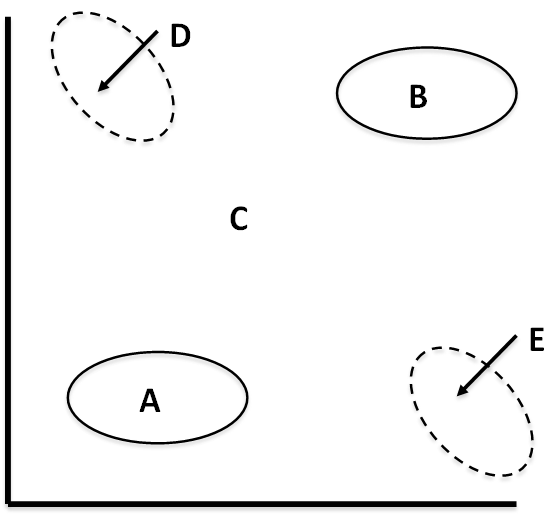
In the above, which figure represents stars with the longest main-sequence lifetimes? Note: (C) represents the entire main sequence while (D) and (E) represent only small parts of the main sequence.
Question
Question
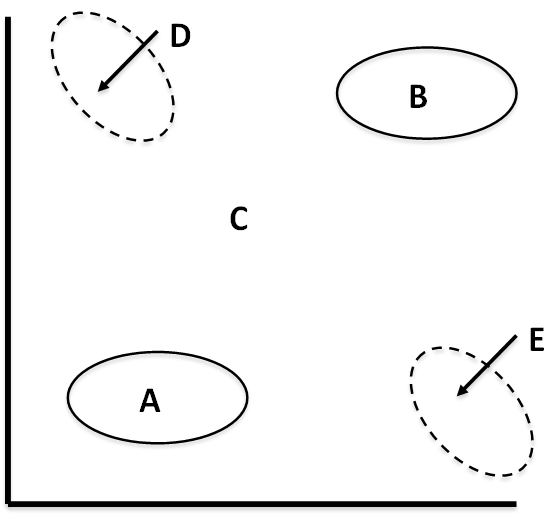
In the accompanying figure, which region represents stars that have ceased ongoing nuclear fusion? Note: (C) represents the entire main sequence while (D) and (E) represent only small parts of the main sequence.
Question
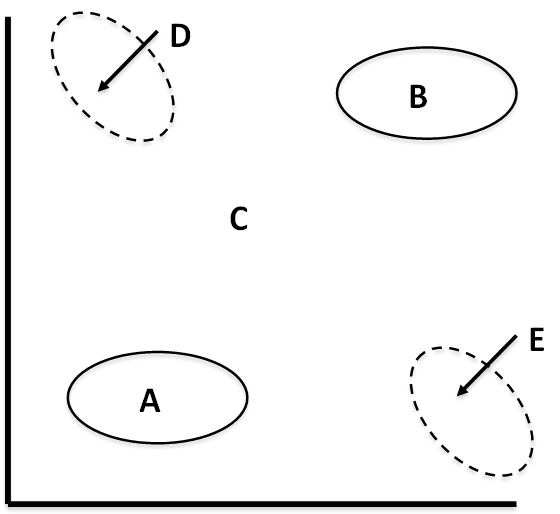
In the accompanying figure, which region represents white dwarfs? Note: (C) represents the entire main sequence while (D) and (E) represent only small parts of the main sequence.
Question
Question
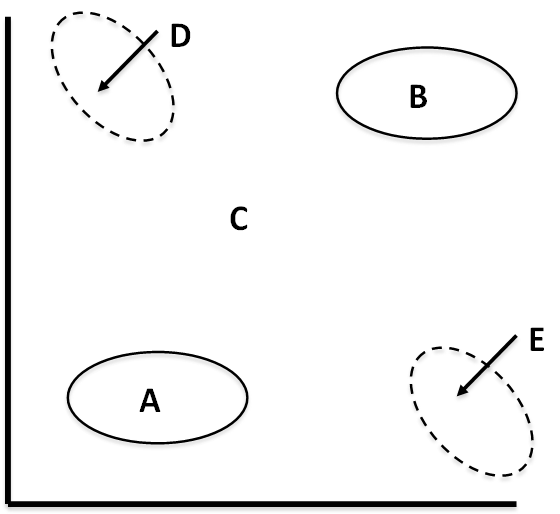 The vertical axis in the accompanying figure is labeled _____.
A) temperature
B) radius
C) apparent visual magnitude
D) absolute visual magnitude
E) mass
Question
Question
Question
Question
Question

In the accompanying figure, which region represents the largest diameter stars? Note: (C) represents the entire main sequence while (D) and (E) represent only small parts of the main sequence.
Question
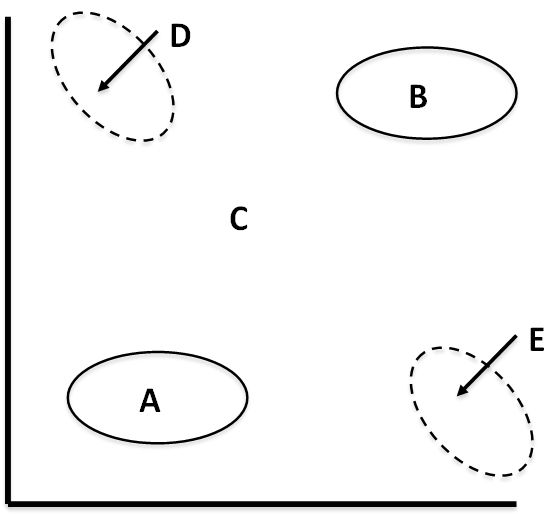 The sloped lines from top left to bottom right in the accompanying figure are labeled ____.
A) temperature
B) radius
C) apparent magnitude
D) absolute magnitude
E) mass
Question
 The horizontal axis in the accompanying figure is labeled _____.
A) temperature
B) radius
C) apparent magnitude
D) absolute magnitude
E) luminosity
Question

In the accompanying figure, which region represents approximately 80 percent of normal stars? Note: (C) represents the entire main sequence while (D) and (E) represent only small parts of the main sequence.
Question
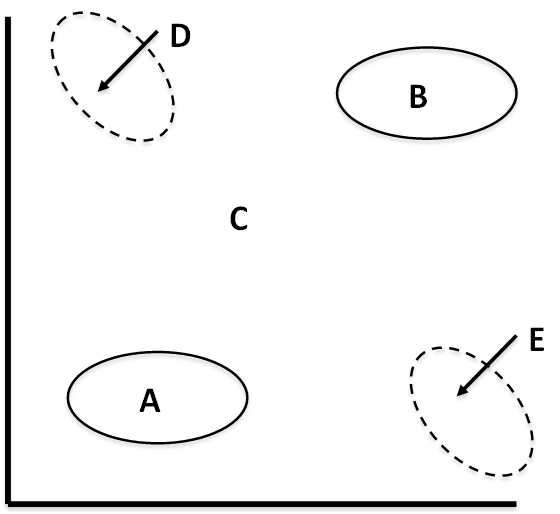
In the accompanying figure, which region represents stars that are extremely bright and emit most of their radiation as ultraviolet light? Note: (C) represents the entire main sequence while (D) and (E) represent only small parts of the main sequence?
Question
Question
Question
Question
Question
Question
Question
Question
Question
Question
Question
Question
Question
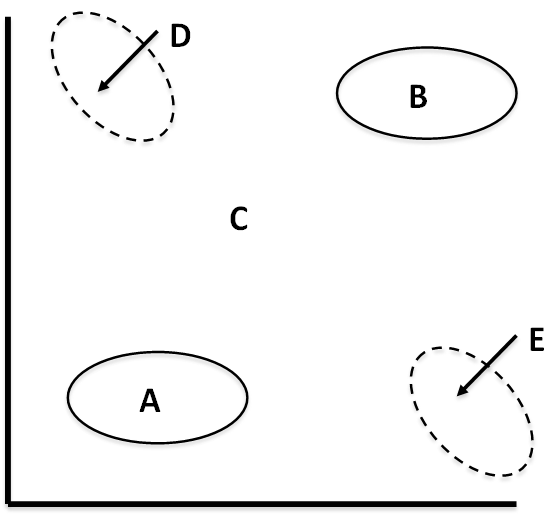
In the accompanying figure, which region represents supergiant stars? Note: (C) represents the entire main sequence while (D) and (E) represent only small parts of the main sequence.
Question

Unlock Deck
Sign up to unlock the cards in this deck!
Unlock Deck
Unlock Deck
1/70

Play

Full screen (f)
Deck 9: The Family of Stars
1
The classification of stellar spectra started with the amount of hydrogen in the star's spectrum; however, now a better scheme uses the star's _____.
A) mass
B) diameter
C) radius
D) temperature
E) luminosity
A) mass
B) diameter
C) radius
D) temperature
E) luminosity
D
2
A star's apparent magnitude is a measure of how bright it appears to us if it is at its actual distance.
True
3
The formula can be used to calculate a star's _____.
A) mass
B) distance
C) rotation speed
D) revolution period
E) diameter
A) mass
B) distance
C) rotation speed
D) revolution period
E) diameter
distance
4
The spectral classification of stars started with the amount of hydrogen present in their spectra, but a better method now uses the amount of oxygen in the star's spectra.
Unlock Deck
Unlock for access to all 70 flashcards in this deck.
Unlock Deck
k this deck
5
Careful measurements reveal that a star maintains a steady apparent brightness at most times, except that at precise intervals of 93 hours. the star becomes dimmer for about 2 hours. The most likely explanation for this is that the star ________.
A) has a very large "sunspot" on its surface
B) is a member of an eclipsing binary star system
C) is a white dwarf
D) is a Cepheid variable
E) is periodically ejecting gas into space, every 93 hours
A) has a very large "sunspot" on its surface
B) is a member of an eclipsing binary star system
C) is a white dwarf
D) is a Cepheid variable
E) is periodically ejecting gas into space, every 93 hours
Unlock Deck
Unlock for access to all 70 flashcards in this deck.
Unlock Deck
k this deck
6
The Hertzsprung-Russell Diagram is a plot for stars using absolute magnitude versus temperature.
Unlock Deck
Unlock for access to all 70 flashcards in this deck.
Unlock Deck
k this deck
7
All stars produce an absorption spectra.
Unlock Deck
Unlock for access to all 70 flashcards in this deck.
Unlock Deck
k this deck
8
The most accurate way to determine the surface temperature of a star is to study the pattern of emission lines from various atoms.
Unlock Deck
Unlock for access to all 70 flashcards in this deck.
Unlock Deck
k this deck
9
S tars of low luminosity will always have large positive absolute magnitude.
Unlock Deck
Unlock for access to all 70 flashcards in this deck.
Unlock Deck
k this deck
10
Recent discoveries of two types of brown dwarfs have placed these stars near which spectral type of star?
A) hotter than O stars
B) cooler than O stars
C) hotter than M stars
D) cooler than M stars
E) at exactly the same level as G stars
A) hotter than O stars
B) cooler than O stars
C) hotter than M stars
D) cooler than M stars
E) at exactly the same level as G stars
Unlock Deck
Unlock for access to all 70 flashcards in this deck.
Unlock Deck
k this deck
11
Which star has the highest density (mass per unit volume)?
A) white dwarf
B) main sequence
C) supergiant
D) red giant
E) regular giant
A) white dwarf
B) main sequence
C) supergiant
D) red giant
E) regular giant
Unlock Deck
Unlock for access to all 70 flashcards in this deck.
Unlock Deck
k this deck
12
If two stars are emitting the same amount of light, the star that is farther will appear dimmer.
Unlock Deck
Unlock for access to all 70 flashcards in this deck.
Unlock Deck
k this deck
13
If a star has an apparent magnitude of +5 and an absolute magnitude of -10, what can we say about that star?
A) The star is farther than 10 parsecs away.
B) The star is closer than 10 parsecs away.
C) The star has a very large chromosphere.
D) The star has a very large corona.
E) The star is fainter than the Sun.
A) The star is farther than 10 parsecs away.
B) The star is closer than 10 parsecs away.
C) The star has a very large chromosphere.
D) The star has a very large corona.
E) The star is fainter than the Sun.
Unlock Deck
Unlock for access to all 70 flashcards in this deck.
Unlock Deck
k this deck
14
Our Sun's spectral temperature type is classified as a(n) ____ on the spectral sequence.
A) O star
B) F star
C) G star
D) K star
E) M star
A) O star
B) F star
C) G star
D) K star
E) M star
Unlock Deck
Unlock for access to all 70 flashcards in this deck.
Unlock Deck
k this deck
15
Recently discovered brown dwarfs have spectra similar to cool O-type stars.
Unlock Deck
Unlock for access to all 70 flashcards in this deck.
Unlock Deck
k this deck
16
The Hertzsprung-Russell diagram can be labeled many different ways. Which coordinates CANNOT be used on an H-R diagram?
A) luminosity versus spectral type
B) luminosity versus temperature
C) radius versus temperature
D) absolute magnitude versus temperature
E) luminosity versus color
A) luminosity versus spectral type
B) luminosity versus temperature
C) radius versus temperature
D) absolute magnitude versus temperature
E) luminosity versus color
Unlock Deck
Unlock for access to all 70 flashcards in this deck.
Unlock Deck
k this deck
17
Which star has the largest diameter?
A) white dwarf
B) main sequence
C) red giant
D) supergiant
E) regular giant
A) white dwarf
B) main sequence
C) red giant
D) supergiant
E) regular giant
Unlock Deck
Unlock for access to all 70 flashcards in this deck.
Unlock Deck
k this deck
18
The luminosity class is assigned to a star by studying the absorption lines in the spectrum of the star.
Unlock Deck
Unlock for access to all 70 flashcards in this deck.
Unlock Deck
k this deck
19
In which spectral sequence are the hottest stars categorized?
A) O stars
B) B stars
C) A stars
D) F stars
E) K stars
A) O stars
B) B stars
C) A stars
D) F stars
E) K stars
Unlock Deck
Unlock for access to all 70 flashcards in this deck.
Unlock Deck
k this deck
20
A star's absolute brightness is calculated at a standard distance of 10 parsecs.
Unlock Deck
Unlock for access to all 70 flashcards in this deck.
Unlock Deck
k this deck
21
The stellar parallax limit for ground-based telescopes is accurate for stars closer than ____.
A) 10 parsecs
B) 50 parsecs
C) 100 parsecs
D) 200 parsecs
E) 500 parsecs
A) 10 parsecs
B) 50 parsecs
C) 100 parsecs
D) 200 parsecs
E) 500 parsecs
Unlock Deck
Unlock for access to all 70 flashcards in this deck.
Unlock Deck
k this deck
22
The least common type of star is a(n) ____.
A) white dwarf
B) lower main sequence
C) upper main sequence
D) giant
E) supergiant
A) white dwarf
B) lower main sequence
C) upper main sequence
D) giant
E) supergiant
Unlock Deck
Unlock for access to all 70 flashcards in this deck.
Unlock Deck
k this deck
23
Veg a i s a n A 0 main sequence star . Base d o n thi s informatio n, whic h statement is true?
A) Vega has a surface temperature that is less than the Sun
B) Vega has mass that is greater than the Sun
C) Vega is less luminous than the Sun
D) Vega has mass that is less than the Sun
E) Vega is located near the lower right hand corner on the HR diagram
A) Vega has a surface temperature that is less than the Sun
B) Vega has mass that is greater than the Sun
C) Vega is less luminous than the Sun
D) Vega has mass that is less than the Sun
E) Vega is located near the lower right hand corner on the HR diagram
Unlock Deck
Unlock for access to all 70 flashcards in this deck.
Unlock Deck
k this deck
24
The most common type of star is a(n) ____.
A) white dwarf
B) lower-main-sequence star
C) upper-main-sequence star
D) giant
E) supergiant
A) white dwarf
B) lower-main-sequence star
C) upper-main-sequence star
D) giant
E) supergiant
Unlock Deck
Unlock for access to all 70 flashcards in this deck.
Unlock Deck
k this deck
25
How did astronomers discover the relationship between spectral type and mass for main sequence stars?
A) by measuring stellar radii with very powerful optical telescopes
B) by measuring stellar radii with very powerful radio telescopes
C) by comparing stars with the same spectral type but different luminosities
D) by using computer models of hydrogen fusion and stellar structure
E) by measuring the masses and spectral types of main-sequence stars in binary systems
A) by measuring stellar radii with very powerful optical telescopes
B) by measuring stellar radii with very powerful radio telescopes
C) by comparing stars with the same spectral type but different luminosities
D) by using computer models of hydrogen fusion and stellar structure
E) by measuring the masses and spectral types of main-sequence stars in binary systems
Unlock Deck
Unlock for access to all 70 flashcards in this deck.
Unlock Deck
k this deck
26
The Balmer series of hydrogen absorption lines in stars is located in what part of the electromagnetic spectrum?
A) gamma ray region
B) ultraviolet region
C) visible region
D) infrared region
E) microwave region
A) gamma ray region
B) ultraviolet region
C) visible region
D) infrared region
E) microwave region
Unlock Deck
Unlock for access to all 70 flashcards in this deck.
Unlock Deck
k this deck
27
Which type of binary system have pairs of stars that are so close together that they look like one single point?
A) radio binary
B) eclipsing binary
C) visual binary
D) spectroscopic binary
E) neutron star binary
A) radio binary
B) eclipsing binary
C) visual binary
D) spectroscopic binary
E) neutron star binary
Unlock Deck
Unlock for access to all 70 flashcards in this deck.
Unlock Deck
k this deck
28
A star's absolute visual magnitude depends only on the star's ______ and _____.
A) temperature; mass
B) diameter; mass
C) temperature; density
D) diameter; density
E) distance; magnitude
A) temperature; mass
B) diameter; mass
C) temperature; density
D) diameter; density
E) distance; magnitude
Unlock Deck
Unlock for access to all 70 flashcards in this deck.
Unlock Deck
k this deck
29
Groombridge 34 i s an M2 main sequence star . Base d o n thi s informatio n, whic h statement is true?
A) Groombridge 34 has a surface temperature that is more than the Sun.
B) Groombridge 34 has mass that is greater than the Sun.
C) Groombridge 34 is less luminous than the Sun.
D) Groombridge 34 is more luminous than the Sun.
E) Groombridge 34 is located near the upper left hand corner on the HR diagram.
A) Groombridge 34 has a surface temperature that is more than the Sun.
B) Groombridge 34 has mass that is greater than the Sun.
C) Groombridge 34 is less luminous than the Sun.
D) Groombridge 34 is more luminous than the Sun.
E) Groombridge 34 is located near the upper left hand corner on the HR diagram.
Unlock Deck
Unlock for access to all 70 flashcards in this deck.
Unlock Deck
k this deck
30
The hydrogen lines of spectral type A main sequence stars are ____.
A) the strongest
B) the weakest
C) the most narrow
D) useful in determining apparent magnitude
E) used to estimate the luminosity of the star
A) the strongest
B) the weakest
C) the most narrow
D) useful in determining apparent magnitude
E) used to estimate the luminosity of the star
Unlock Deck
Unlock for access to all 70 flashcards in this deck.
Unlock Deck
k this deck
31
How do astronomers determine the distance to stars that are farther than 100 parsecs away?
A) measuring the shift of the stellar parallax
B) estimating a star's spectral type and comparing it to the spectroscopic parallax
C) subtracting absolute from apparent magnitudes
D) using trigonometry in the triangulation method
E) measuring the proper motion of a star
A) measuring the shift of the stellar parallax
B) estimating a star's spectral type and comparing it to the spectroscopic parallax
C) subtracting absolute from apparent magnitudes
D) using trigonometry in the triangulation method
E) measuring the proper motion of a star
Unlock Deck
Unlock for access to all 70 flashcards in this deck.
Unlock Deck
k this deck
32
The Sun is what spectral type?
A) S2
B) G2
C) F2
D) K2
E) ST2 (Spectral Type 2)
A) S2
B) G2
C) F2
D) K2
E) ST2 (Spectral Type 2)
Unlock Deck
Unlock for access to all 70 flashcards in this deck.
Unlock Deck
k this deck
33
On the H-R diagram, 90 percent of all stars are ____.
A) either giant or supergiant stars
B) white dwarfs
C) main sequence stars
D) sred dwarfs
E) binary stars
A) either giant or supergiant stars
B) white dwarfs
C) main sequence stars
D) sred dwarfs
E) binary stars
Unlock Deck
Unlock for access to all 70 flashcards in this deck.
Unlock Deck
k this deck
34
Any star that is more luminous than the Sun, but has the same temperature as the Sun, is a(n) ____.
A) pulsating star
B) white dwarf
C) zero age main sequence star
D) giant
E) brown dwarf
A) pulsating star
B) white dwarf
C) zero age main sequence star
D) giant
E) brown dwarf
Unlock Deck
Unlock for access to all 70 flashcards in this deck.
Unlock Deck
k this deck
35
Absolute visual magnitude is calculated at a standard distance of ____.
A) one light year
B) one parsec
C) 10 light years
D) 10 parsecs
E) 100 parsecs
A) one light year
B) one parsec
C) 10 light years
D) 10 parsecs
E) 100 parsecs
Unlock Deck
Unlock for access to all 70 flashcards in this deck.
Unlock Deck
k this deck
36
A supergiant star's radii may extend out to the _____.
A) half the orbit of Mercury
B) orbit of Mercury
C) orbit of Venus
D) orbit of the Earth
E) orbit of Saturn
A) half the orbit of Mercury
B) orbit of Mercury
C) orbit of Venus
D) orbit of the Earth
E) orbit of Saturn
Unlock Deck
Unlock for access to all 70 flashcards in this deck.
Unlock Deck
k this deck
37
On the H-R diagram, lines of constant radius are illustrated as _____.
A) sloping downward from right to left
B) sloping downward from left to right
C) running vertically on the right side
D) running horizontally on the top
E) moving in various direction depending on the type of star
A) sloping downward from right to left
B) sloping downward from left to right
C) running vertically on the right side
D) running horizontally on the top
E) moving in various direction depending on the type of star
Unlock Deck
Unlock for access to all 70 flashcards in this deck.
Unlock Deck
k this deck
38
Remember Kepler's third law, which relates the period of revolution to the average distance to a planet. How do we modify that law to use with binary stars?
A) Add the total mass of the two stars.
B) Add Newton's Law of Gravitation.
C) Add Einstein's Law of Relativity.
D) Add the difference of their masses.
E) Add the distance between the two stars.
A) Add the total mass of the two stars.
B) Add Newton's Law of Gravitation.
C) Add Einstein's Law of Relativity.
D) Add the difference of their masses.
E) Add the distance between the two stars.
Unlock Deck
Unlock for access to all 70 flashcards in this deck.
Unlock Deck
k this deck
39
The luminosity of a star is the ____.
A) total energy radiated by the star at 100 parsecs
B) total energy radiated by the star
C) total energy radiated by the star in one second
D) average energy radiated by the star in one month
E) average energy radiated by the star in one year
A) total energy radiated by the star at 100 parsecs
B) total energy radiated by the star
C) total energy radiated by the star in one second
D) average energy radiated by the star in one month
E) average energy radiated by the star in one year
Unlock Deck
Unlock for access to all 70 flashcards in this deck.
Unlock Deck
k this deck
40
Hydrogen lines are weak in the spectra of hot O-type stars because ____.
A) most of the hydrogen has been converted to helium
B) a good spectrum of these stars is difficult to obtain
C) these stars have no atmosphere
D) gravitational pressure pushes all the hydrogen lines out of the visible spectrum
E) most of the hydrogen is ionized to high energy levels
A) most of the hydrogen has been converted to helium
B) a good spectrum of these stars is difficult to obtain
C) these stars have no atmosphere
D) gravitational pressure pushes all the hydrogen lines out of the visible spectrum
E) most of the hydrogen is ionized to high energy levels
Unlock Deck
Unlock for access to all 70 flashcards in this deck.
Unlock Deck
k this deck
41
A star's absolute visual magnitude depends on its _______________ and _______________.
Unlock Deck
Unlock for access to all 70 flashcards in this deck.
Unlock Deck
k this deck
42
In the above, which figure represents stars with the longest main-sequence lifetimes? Note: (C) represents the entire main sequence while (D) and (E) represent only small parts of the main sequence.
Unlock Deck
Unlock for access to all 70 flashcards in this deck.
Unlock Deck
k this deck
43
On the H-R diagram, 90 percent of all stars are _______________.
Unlock Deck
Unlock for access to all 70 flashcards in this deck.
Unlock Deck
k this deck
44
In the accompanying figure, which region represents stars that have ceased ongoing nuclear fusion? Note: (C) represents the entire main sequence while (D) and (E) represent only small parts of the main sequence.
Unlock Deck
Unlock for access to all 70 flashcards in this deck.
Unlock Deck
k this deck
45
In the accompanying figure, which region represents white dwarfs? Note: (C) represents the entire main sequence while (D) and (E) represent only small parts of the main sequence.
Unlock Deck
Unlock for access to all 70 flashcards in this deck.
Unlock Deck
k this deck
46
The horizontal axis (X-axis) of the Hertzsprung-Russell diagram is labeled with _______________.
Unlock Deck
Unlock for access to all 70 flashcards in this deck.
Unlock Deck
k this deck
47
The vertical axis in the accompanying figure is labeled _____.A) temperature
B) radius
C) apparent visual magnitude
D) absolute visual magnitude
E) mass
Unlock Deck
Unlock for access to all 70 flashcards in this deck.
Unlock Deck
k this deck
48
Th e apparen t magnitud e o f a sta r observe d fro m a distanc e o f 1 0 pc is called _____.
Unlock Deck
Unlock for access to all 70 flashcards in this deck.
Unlock Deck
k this deck
49
If luminosity depends on radius and temperature, what does flux depend on? _______________
Unlock Deck
Unlock for access to all 70 flashcards in this deck.
Unlock Deck
k this deck
50
The least common stars are _______________ stars.
Unlock Deck
Unlock for access to all 70 flashcards in this deck.
Unlock Deck
k this deck
51
One type of binary star is _______________ binary.
Unlock Deck
Unlock for access to all 70 flashcards in this deck.
Unlock Deck
k this deck
52
In the accompanying figure, which region represents the largest diameter stars? Note: (C) represents the entire main sequence while (D) and (E) represent only small parts of the main sequence.
Unlock Deck
Unlock for access to all 70 flashcards in this deck.
Unlock Deck
k this deck
53
The sloped lines from top left to bottom right in the accompanying figure are labeled ____.A) temperature
B) radius
C) apparent magnitude
D) absolute magnitude
E) mass
Unlock Deck
Unlock for access to all 70 flashcards in this deck.
Unlock Deck
k this deck
54
The horizontal axis in the accompanying figure is labeled _____.A) temperature
B) radius
C) apparent magnitude
D) absolute magnitude
E) luminosity
Unlock Deck
Unlock for access to all 70 flashcards in this deck.
Unlock Deck
k this deck
55
In the accompanying figure, which region represents approximately 80 percent of normal stars? Note: (C) represents the entire main sequence while (D) and (E) represent only small parts of the main sequence.
Unlock Deck
Unlock for access to all 70 flashcards in this deck.
Unlock Deck
k this deck
56
In the accompanying figure, which region represents stars that are extremely bright and emit most of their radiation as ultraviolet light? Note: (C) represents the entire main sequence while (D) and (E) represent only small parts of the main sequence?
Unlock Deck
Unlock for access to all 70 flashcards in this deck.
Unlock Deck
k this deck
57
Explain why the current spectral classification letters are all jumbled and not in alphabetical order.
Unlock Deck
Unlock for access to all 70 flashcards in this deck.
Unlock Deck
k this deck
58
The most common stars are _______________ stars.
Unlock Deck
Unlock for access to all 70 flashcards in this deck.
Unlock Deck
k this deck
59
The luminosity (L) of a star is the total energy the star radiates in _______________.
Unlock Deck
Unlock for access to all 70 flashcards in this deck.
Unlock Deck
k this deck
60
The vertical axis (Y-axis) of the Hertzsprung-Russell Diagram is labeled with _______________.
Unlock Deck
Unlock for access to all 70 flashcards in this deck.
Unlock Deck
k this deck
61
Explain the difference between apparent visual brightness and absolute visual brightness.
Unlock Deck
Unlock for access to all 70 flashcards in this deck.
Unlock Deck
k this deck
62
Stellar spectra started with the amount of hydrogen found in the star's spectrum and started with the letters A through Q. What are the current letters used to classify stellar spectra?
Unlock Deck
Unlock for access to all 70 flashcards in this deck.
Unlock Deck
k this deck
63
A star has a parallax angle of 0.019 seconds of arc. How far away is this star from Earth?
Unlock Deck
Unlock for access to all 70 flashcards in this deck.
Unlock Deck
k this deck
64
List the three types of binary stars.
Unlock Deck
Unlock for access to all 70 flashcards in this deck.
Unlock Deck
k this deck
65
Explain why it would be better to obtain stellar parallax for stars if we could observe from the planet Mars instead of the Earth.
Unlock Deck
Unlock for access to all 70 flashcards in this deck.
Unlock Deck
k this deck
66
Briefly state or explain the mass-luminosity relation for stars.
Unlock Deck
Unlock for access to all 70 flashcards in this deck.
Unlock Deck
k this deck
67
Determine the mass of a theorized black hole from the following information. The mass of the companion main sequence star is 6 solar masses. The observed period and semi-major axis of the binary system are 3.5 years and 5.5 AUs, respectively.
Unlock Deck
Unlock for access to all 70 flashcards in this deck.
Unlock Deck
k this deck
68
Star A has an apparent visual magnitude of +5 and an absolute visual magnitude of -4. What is the distance to Star A?
Unlock Deck
Unlock for access to all 70 flashcards in this deck.
Unlock Deck
k this deck
69
In the accompanying figure, which region represents supergiant stars? Note: (C) represents the entire main sequence while (D) and (E) represent only small parts of the main sequence.
Unlock Deck
Unlock for access to all 70 flashcards in this deck.
Unlock Deck
k this deck
70
Star B has an apparent visual magnitude of +5 and is at a distance of 330 pc. What is the absolute visual magnitude of Star B?
Unlock Deck
Unlock for access to all 70 flashcards in this deck.
Unlock Deck
k this deck
Unlock Deck
Unlock for access to all 70 flashcards in this deck.






