







 Chat with AI

Deck 14: Proteins
Full screen (f)

Question

Question
The following representation accurately depicts the structure of a peptide group. 
Question
Question
The amino acid shown below maybe associated with ALS (Lou Gehrig's disease) and Parkinson's disease. 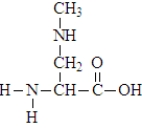 The side chain of this amino acid listed below would be classified as:
A) hydrophilic
B) hydrophobic
C) acidic
D) basic
E) a and c
F) a and d
The side chain of this amino acid listed below would be classified as:A) hydrophilic
B) hydrophobic
C) acidic
D) basic
E) a and c
F) a and d
Question
Question
Question
Question
If an amino acid contained the following side chain would be classified as hydrophobic. 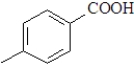
Question
Question
Question
Question
An amino acid can be correctly characterized as: 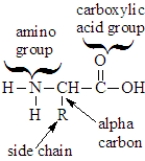
Question
The following amino acid would be found in the interior of a protein. 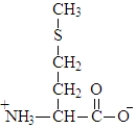
Question
Question
Question
Question
Question
The following is an example of a secondary protein structure. 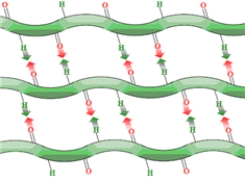
Question
Question
Consider a protein at 25 °C which is heated to 48 °C then cooled back to 25 °C. The following shows schematically the protein structure at these three temperatures, respectively. 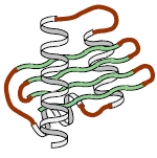

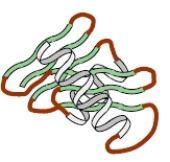 25 °C
25 °C  48 °C
48 °C  25 °C
25 °C
Based on this information, the enzyme activity will return at the final temperature (25 °C).
25 °C 48 °C 25 °CBased on this information, the enzyme activity will return at the final temperature (25 °C).
Question
The following represents the nitrogen cycle. Which of the choices correctly pairs the lettered reactions with the type of organism? 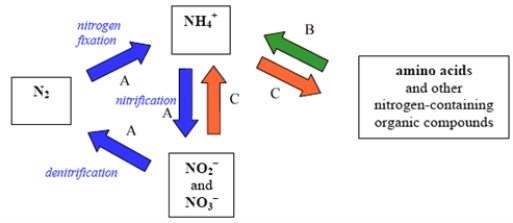
A) A - bacteria B - animals
C - plants
B) A - plants B - animals
C - bacteria
C) A - plants B - bacteria
C - animals
D) A - animals B - bacteria
C - plants
A) A - bacteria B - animals
C - plants
B) A - plants B - animals
C - bacteria
C) A - plants B - bacteria
C - animals
D) A - animals B - bacteria
C - plants
Question
What class of protein is represented by the following? 
A) fibrous
B) globular
C) membrane
D) either fibrous or membrane
A) fibrous
B) globular
C) membrane
D) either fibrous or membrane
Question
Consider the level of protein structure that forms when the two polypeptides shown below interact. 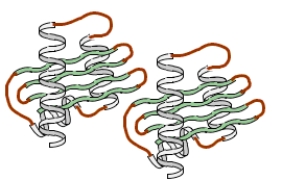 Which type of side chain interaction is particularly important in forming this level of structure?
A) ion pair
B) disulfide bridge
C) hydrophobic interaction
D) hydrophilic interaction
Which type of side chain interaction is particularly important in forming this level of structure?A) ion pair
B) disulfide bridge
C) hydrophobic interaction
D) hydrophilic interaction
Question
The amino acid shown below maybe associated with ALS (Lou Gehrig's disease) and Parkinson's disease. 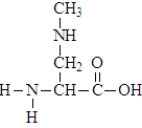 Which of the following is the form of this amino acid at a physiological pH?
A)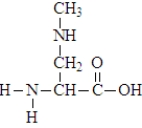
B)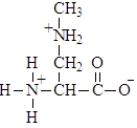
C)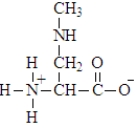
D)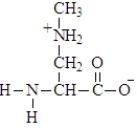
E) None of these
Which of the following is the form of this amino acid at a physiological pH?A)
B)
C)
D)
E) None of these
Question
What type of interaction would occur between the side chains of the two amino acids shown below? 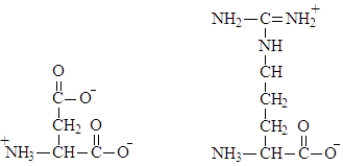
A) ion-ion attraction
B) disulfide bridge
C) hydrophobic interaction
D) hydrophilic interaction
A) ion-ion attraction
B) disulfide bridge
C) hydrophobic interaction
D) hydrophilic interaction
Question
What type of interaction would occur between the side chains of two molecules of the amino acid shown below? 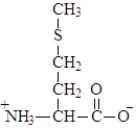
A) ion pair
B) disulfide bridge
C) hydrophobic interaction
D) hydrophilic interaction
A) ion pair
B) disulfide bridge
C) hydrophobic interaction
D) hydrophilic interaction
Question
Question
The following represents the results of an experiment on a metabolic enzyme. 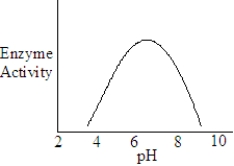 What is the optimum pH of this enzyme?
A) 3.0
B) 5.5
C) 6.5
D) 9.5
What is the optimum pH of this enzyme?A) 3.0
B) 5.5
C) 6.5
D) 9.5
Question
Question
Question
Question
Consider the tertiary structure of a protein containing two peptides with the segments shown below. 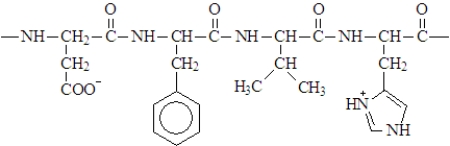 What types of interactions would be possible?
A) hydrogen bonding
B) hydrophobic interactions
C) ion-ion attractions
D) all of the above
What types of interactions would be possible?A) hydrogen bonding
B) hydrophobic interactions
C) ion-ion attractions
D) all of the above
Question
Question
Question
How many chiral carbon atoms are present in the amino acid shown below? 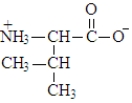
A) 1
B) 2
C) 3
D) 4
A) 1
B) 2
C) 3
D) 4
Question
Question
Question
What is the three-letter representation for the peptide given below? 
A) Ala-Ser-Ala-Gly-Gly
B) Gly-Gly-Ala-Ser-Ala
C) Gly-Ala-Ser
D) Gly-Ala-Ser-Ala
A) Ala-Ser-Ala-Gly-Gly
B) Gly-Gly-Ala-Ser-Ala
C) Gly-Ala-Ser
D) Gly-Ala-Ser-Ala
Question
The amino acid shown below maybe associated with ALS (Lou Gehrig's disease) and Parkinson's disease. 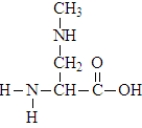 Which of the following is the zwitterion ion form of the uncommon amino acid?
A)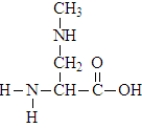
B)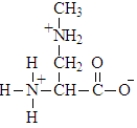
C)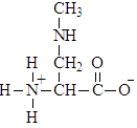
D)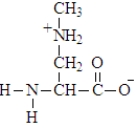
Which of the following is the zwitterion ion form of the uncommon amino acid?A)
B)
C)
D)
Question
Question
Consider the structure shown below. 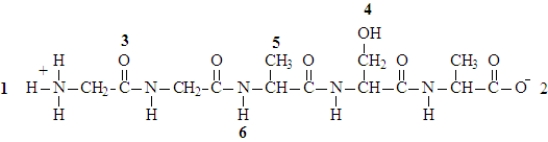 Fill in the blanks with an integer (1, 2, 3, 4, 5....) as shown in the diagram or to represent a specified number.
The atom represented by the number _______________________ would carry a δ- charge.
Fill in the blanks with an integer (1, 2, 3, 4, 5....) as shown in the diagram or to represent a specified number.The atom represented by the number _______________________ would carry a δ- charge.
Question
Consider the structure shown below. Fill in the blanks with an integer (1, 2, 3, 4, 5....) as shown in the diagram or to represent a specified number.
The N-terminal group is represented by the number___________________,
Fill in the blanks with an integer (1, 2, 3, 4, 5....) as shown in the diagram or to represent a specified number.The N-terminal group is represented by the number___________________,
Question
The reaction given below  would be classifed as:
A) oxidative decarboxylation.
B) transamination.
C) oxidative deamination.
D) nitrogen fixation
would be classifed as:A) oxidative decarboxylation.
B) transamination.
C) oxidative deamination.
D) nitrogen fixation
Question
Question
Question
Question
Question
Question
Question
Question
Consider the following representation of an enzyme-catalyzed reaction. 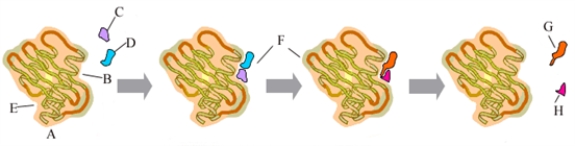
The reactants, water and lactose, are represented in the image by __________________ and _________________.
The reactants, water and lactose, are represented in the image by __________________ and _________________.
Question
Consider the following image. 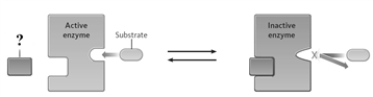 The " ? " in the image represents
A) negative effector.
B) competition inhibitor.
C) positive effector.
D) denaturing agent.
The " ? " in the image representsA) negative effector.
B) competition inhibitor.
C) positive effector.
D) denaturing agent.
Question
Consider the structure shown below. Fill in the blanks with an integer (1, 2, 3, 4, 5....) as shown in the diagram or to represent a specified number.
A hydrophilic side chain is indicated by the number__________________.
Fill in the blanks with an integer (1, 2, 3, 4, 5....) as shown in the diagram or to represent a specified number.A hydrophilic side chain is indicated by the number__________________.
Question
Question
Consider the structure shown below. Fill in the blanks with an integer (1, 2, 3, 4, 5....) as shown in the diagram or to represent a specified number.
The free carboxylate group is represented by the number _____________________.
Fill in the blanks with an integer (1, 2, 3, 4, 5....) as shown in the diagram or to represent a specified number.The free carboxylate group is represented by the number _____________________.
Question
Question
Consider the structure shown below. Fill in the blanks with an integer (1, 2, 3, 4, 5....) as shown in the diagram or to represent a specified number.
This structure contains _______________________ peptide groups.
Fill in the blanks with an integer (1, 2, 3, 4, 5....) as shown in the diagram or to represent a specified number.This structure contains _______________________ peptide groups.
Question
Question
Consider the structure shown below. Fill in the blanks with an integer (1, 2, 3, 4, 5....) as shown in the diagram or to represent a specified number.
The backbone contains ______________________ amino acids.
Fill in the blanks with an integer (1, 2, 3, 4, 5....) as shown in the diagram or to represent a specified number.The backbone contains ______________________ amino acids.
Question
Consider the structure shown below. Fill in the blanks with an integer (1, 2, 3, 4, 5....) as shown in the diagram or to represent a specified number.
The atom represented by the number ____________________ could act as a proton acceptor in the hydrogen bonding present in an alpha helix.
Fill in the blanks with an integer (1, 2, 3, 4, 5....) as shown in the diagram or to represent a specified number.The atom represented by the number ____________________ could act as a proton acceptor in the hydrogen bonding present in an alpha helix.
Question
Question
Question
Question
Question
Question
Question

Unlock Deck
Sign up to unlock the cards in this deck!
Unlock Deck
Unlock Deck
1/67

Play

Full screen (f)
Deck 14: Proteins
1
Glycogen phosphorylase breaks down glycogen in the liver to produce glucose-1-phosphate. The activity of this enzyme increases in the presence of AMP. AMP is therefore a negative effector in controlling this pathway.
False
2
The following representation accurately depicts the structure of a peptide group.
False
3
Enzymes are sensitive to agitation and will be denatured by violent stirring.
True
4
The amino acid shown below maybe associated with ALS (Lou Gehrig's disease) and Parkinson's disease. The side chain of this amino acid listed below would be classified as:
A) hydrophilic
B) hydrophobic
C) acidic
D) basic
E) a and c
F) a and d
The side chain of this amino acid listed below would be classified as:A) hydrophilic
B) hydrophobic
C) acidic
D) basic
E) a and c
F) a and d
Unlock Deck
Unlock for access to all 67 flashcards in this deck.
Unlock Deck
k this deck
5
When the term "essential" is applied to a substance, this means that it cannot be synthesized by an organism and must be obtained from dietary sources.
Unlock Deck
Unlock for access to all 67 flashcards in this deck.
Unlock Deck
k this deck
6
Nonessential amino acids are those which can be synthesized by the body.
Unlock Deck
Unlock for access to all 67 flashcards in this deck.
Unlock Deck
k this deck
7
The secondary structure of proteins is stabilized by covalent bonds.
Unlock Deck
Unlock for access to all 67 flashcards in this deck.
Unlock Deck
k this deck
8
If an amino acid contained the following side chain would be classified as hydrophobic.
Unlock Deck
Unlock for access to all 67 flashcards in this deck.
Unlock Deck
k this deck
9
Consider the two "peptides" shown below. Ala-Gly-Phe-Phe-Ala-Gly-Val
Val-Leu-Iso-Ala-Gly-Val-Phe
The side chains of these two "peptides" could form hydrophilic interactions with one another.
Val-Leu-Iso-Ala-Gly-Val-Phe
The side chains of these two "peptides" could form hydrophilic interactions with one another.
Unlock Deck
Unlock for access to all 67 flashcards in this deck.
Unlock Deck
k this deck
10
How many different amino acids are commonly found in proteins?
A) 10
B) 20
C) 200
D) 1000
A) 10
B) 20
C) 200
D) 1000
Unlock Deck
Unlock for access to all 67 flashcards in this deck.
Unlock Deck
k this deck
11
An alpha amino acid contains
A) an amine group on the carbon next to the carboxylic acid group.
B) two amine groups.
C) two carboxylic acid groups.
D) an amine group on the end carbon.
A) an amine group on the carbon next to the carboxylic acid group.
B) two amine groups.
C) two carboxylic acid groups.
D) an amine group on the end carbon.
Unlock Deck
Unlock for access to all 67 flashcards in this deck.
Unlock Deck
k this deck
12
An amino acid can be correctly characterized as:
Unlock Deck
Unlock for access to all 67 flashcards in this deck.
Unlock Deck
k this deck
13
The following amino acid would be found in the interior of a protein.
Unlock Deck
Unlock for access to all 67 flashcards in this deck.
Unlock Deck
k this deck
14
Which of the following contains a sulfur atom as part of the side chain?
A) cysteine
B) glycine
C) proline
D) tryptophan
A) cysteine
B) glycine
C) proline
D) tryptophan
Unlock Deck
Unlock for access to all 67 flashcards in this deck.
Unlock Deck
k this deck
15
Pyruvate dehydrogenase contains a Mg2+ ion. The magnesium ion is called a coenzyme.
Unlock Deck
Unlock for access to all 67 flashcards in this deck.
Unlock Deck
k this deck
16
Albumin is a protein found in blood.
Unlock Deck
Unlock for access to all 67 flashcards in this deck.
Unlock Deck
k this deck
17
Both isoleucine and alanine can be synthesized from other nutrients.
Unlock Deck
Unlock for access to all 67 flashcards in this deck.
Unlock Deck
k this deck
18
The following is an example of a secondary protein structure.
Unlock Deck
Unlock for access to all 67 flashcards in this deck.
Unlock Deck
k this deck
19
During the urea cycle, nitrogen is removed from amino acids and subsequently converted it to urea.
Unlock Deck
Unlock for access to all 67 flashcards in this deck.
Unlock Deck
k this deck
20
Consider a protein at 25 °C which is heated to 48 °C then cooled back to 25 °C. The following shows schematically the protein structure at these three temperatures, respectively. 25 °C 48 °C 25 °C
Based on this information, the enzyme activity will return at the final temperature (25 °C).
25 °C 48 °C 25 °CBased on this information, the enzyme activity will return at the final temperature (25 °C).
Unlock Deck
Unlock for access to all 67 flashcards in this deck.
Unlock Deck
k this deck
21
The following represents the nitrogen cycle. Which of the choices correctly pairs the lettered reactions with the type of organism?
A) A - bacteria B - animals
C - plants
B) A - plants B - animals
C - bacteria
C) A - plants B - bacteria
C - animals
D) A - animals B - bacteria
C - plants
A) A - bacteria B - animals
C - plants
B) A - plants B - animals
C - bacteria
C) A - plants B - bacteria
C - animals
D) A - animals B - bacteria
C - plants
Unlock Deck
Unlock for access to all 67 flashcards in this deck.
Unlock Deck
k this deck
22
What class of protein is represented by the following?
A) fibrous
B) globular
C) membrane
D) either fibrous or membrane
A) fibrous
B) globular
C) membrane
D) either fibrous or membrane
Unlock Deck
Unlock for access to all 67 flashcards in this deck.
Unlock Deck
k this deck
23
Consider the level of protein structure that forms when the two polypeptides shown below interact. Which type of side chain interaction is particularly important in forming this level of structure?
A) ion pair
B) disulfide bridge
C) hydrophobic interaction
D) hydrophilic interaction
Which type of side chain interaction is particularly important in forming this level of structure?A) ion pair
B) disulfide bridge
C) hydrophobic interaction
D) hydrophilic interaction
Unlock Deck
Unlock for access to all 67 flashcards in this deck.
Unlock Deck
k this deck
24
The amino acid shown below maybe associated with ALS (Lou Gehrig's disease) and Parkinson's disease. Which of the following is the form of this amino acid at a physiological pH?
A)
B)
C)
D)
E) None of these
Which of the following is the form of this amino acid at a physiological pH?A)
B)
C)
D)
E) None of these
Unlock Deck
Unlock for access to all 67 flashcards in this deck.
Unlock Deck
k this deck
25
What type of interaction would occur between the side chains of the two amino acids shown below?
A) ion-ion attraction
B) disulfide bridge
C) hydrophobic interaction
D) hydrophilic interaction
A) ion-ion attraction
B) disulfide bridge
C) hydrophobic interaction
D) hydrophilic interaction
Unlock Deck
Unlock for access to all 67 flashcards in this deck.
Unlock Deck
k this deck
26
What type of interaction would occur between the side chains of two molecules of the amino acid shown below?
A) ion pair
B) disulfide bridge
C) hydrophobic interaction
D) hydrophilic interaction
A) ion pair
B) disulfide bridge
C) hydrophobic interaction
D) hydrophilic interaction
Unlock Deck
Unlock for access to all 67 flashcards in this deck.
Unlock Deck
k this deck
27
Total nitrogen in the diet must provide enough nitrogen for the synthesis of
A) essential amino acids.
B) nonessential amino acids.
C) nonessential amino acids and any other synthesized nitrogen-containing compounds.
D) essential amino acids and any other synthesized nitrogen-containing compounds.
A) essential amino acids.
B) nonessential amino acids.
C) nonessential amino acids and any other synthesized nitrogen-containing compounds.
D) essential amino acids and any other synthesized nitrogen-containing compounds.
Unlock Deck
Unlock for access to all 67 flashcards in this deck.
Unlock Deck
k this deck
28
The following represents the results of an experiment on a metabolic enzyme. What is the optimum pH of this enzyme?
A) 3.0
B) 5.5
C) 6.5
D) 9.5
What is the optimum pH of this enzyme?A) 3.0
B) 5.5
C) 6.5
D) 9.5
Unlock Deck
Unlock for access to all 67 flashcards in this deck.
Unlock Deck
k this deck
29
The addition of a 0.10 M solution of Mg(NO3)2 would most likely affect which type of interaction in the tertiary structure of a protein?
A) hydrogen bonding
B) hydrophobic interactions
C) hydrophilic interactions
D) ion-ion attractions
A) hydrogen bonding
B) hydrophobic interactions
C) hydrophilic interactions
D) ion-ion attractions
Unlock Deck
Unlock for access to all 67 flashcards in this deck.
Unlock Deck
k this deck
30
Addition of 0.050 M NaOH to a protein solution would have the most profound effect on which of the listed amino acids?
A) phenylalanine
B) serine
C) methionine
D) aspartic acid
A) phenylalanine
B) serine
C) methionine
D) aspartic acid
Unlock Deck
Unlock for access to all 67 flashcards in this deck.
Unlock Deck
k this deck
31
Protein denaturation results in a disruption of the
A) primary structure.
B) secondary and tertiary structure.
C) primary and secondary structure.
D) primary, secondary and tertiary structure.
A) primary structure.
B) secondary and tertiary structure.
C) primary and secondary structure.
D) primary, secondary and tertiary structure.
Unlock Deck
Unlock for access to all 67 flashcards in this deck.
Unlock Deck
k this deck
32
Consider the tertiary structure of a protein containing two peptides with the segments shown below. What types of interactions would be possible?
A) hydrogen bonding
B) hydrophobic interactions
C) ion-ion attractions
D) all of the above
What types of interactions would be possible?A) hydrogen bonding
B) hydrophobic interactions
C) ion-ion attractions
D) all of the above
Unlock Deck
Unlock for access to all 67 flashcards in this deck.
Unlock Deck
k this deck
33
Which of the following must be supplied by the diet?
A) essential amino acids
B) iron
C) zinc
D) All must be part of the diet.
A) essential amino acids
B) iron
C) zinc
D) All must be part of the diet.
Unlock Deck
Unlock for access to all 67 flashcards in this deck.
Unlock Deck
k this deck
34
Which of the following is the form that human body uses to excrete nitrogen?
A) nitrate ion
B) urea
C) ammonium ion
D) molecular nitrogen
A) nitrate ion
B) urea
C) ammonium ion
D) molecular nitrogen
Unlock Deck
Unlock for access to all 67 flashcards in this deck.
Unlock Deck
k this deck
35
How many chiral carbon atoms are present in the amino acid shown below?
A) 1
B) 2
C) 3
D) 4
A) 1
B) 2
C) 3
D) 4
Unlock Deck
Unlock for access to all 67 flashcards in this deck.
Unlock Deck
k this deck
36
Consider the following description of an area of current research. "Beta-polypeptides are polymers of beta amino acids with backbones one carbon longer than alpha-polypetptides. Like the alpha-polypeptides found in nature, beta-polypeptides can form stable helices and pleated sheets." Which levels of protein structure are cited in this statement?
A) primary
B) secondary
C) tertiary
D) quaternary
E) primary and secondary
F) primary, secondary, and tertiary
G) primary, secondary, tertiary, and quaternary
A) primary
B) secondary
C) tertiary
D) quaternary
E) primary and secondary
F) primary, secondary, and tertiary
G) primary, secondary, tertiary, and quaternary
Unlock Deck
Unlock for access to all 67 flashcards in this deck.
Unlock Deck
k this deck
37
Which of the following levels of protein structure can involve covalent bond formation?
A) primary
B) secondary
C) tertiary
D) quaternary
E) primary and tertiary
F) primary, tertiary and quaternary
A) primary
B) secondary
C) tertiary
D) quaternary
E) primary and tertiary
F) primary, tertiary and quaternary
Unlock Deck
Unlock for access to all 67 flashcards in this deck.
Unlock Deck
k this deck
38
What is the three-letter representation for the peptide given below?
A) Ala-Ser-Ala-Gly-Gly
B) Gly-Gly-Ala-Ser-Ala
C) Gly-Ala-Ser
D) Gly-Ala-Ser-Ala
A) Ala-Ser-Ala-Gly-Gly
B) Gly-Gly-Ala-Ser-Ala
C) Gly-Ala-Ser
D) Gly-Ala-Ser-Ala
Unlock Deck
Unlock for access to all 67 flashcards in this deck.
Unlock Deck
k this deck
39
The amino acid shown below maybe associated with ALS (Lou Gehrig's disease) and Parkinson's disease. Which of the following is the zwitterion ion form of the uncommon amino acid?
A)
B)
C)
D)
Which of the following is the zwitterion ion form of the uncommon amino acid?A)
B)
C)
D)
Unlock Deck
Unlock for access to all 67 flashcards in this deck.
Unlock Deck
k this deck
40
Which of the following statements does not characterize coenyzmes?
A) non-amino acid composition
B) structure is organic in composition
C) do not bind permanently to the enzyme
D) all of these characterize coenzymes
A) non-amino acid composition
B) structure is organic in composition
C) do not bind permanently to the enzyme
D) all of these characterize coenzymes
Unlock Deck
Unlock for access to all 67 flashcards in this deck.
Unlock Deck
k this deck
41
Consider the structure shown below. Fill in the blanks with an integer (1, 2, 3, 4, 5....) as shown in the diagram or to represent a specified number.
The atom represented by the number _______________________ would carry a δ- charge.
Fill in the blanks with an integer (1, 2, 3, 4, 5....) as shown in the diagram or to represent a specified number.The atom represented by the number _______________________ would carry a δ- charge.
Unlock Deck
Unlock for access to all 67 flashcards in this deck.
Unlock Deck
k this deck
42
Consider the structure shown below. Fill in the blanks with an integer (1, 2, 3, 4, 5....) as shown in the diagram or to represent a specified number.
The N-terminal group is represented by the number___________________,
Fill in the blanks with an integer (1, 2, 3, 4, 5....) as shown in the diagram or to represent a specified number.The N-terminal group is represented by the number___________________,
Unlock Deck
Unlock for access to all 67 flashcards in this deck.
Unlock Deck
k this deck
43
The reaction given below would be classifed as:
A) oxidative decarboxylation.
B) transamination.
C) oxidative deamination.
D) nitrogen fixation
would be classifed as:A) oxidative decarboxylation.
B) transamination.
C) oxidative deamination.
D) nitrogen fixation
Unlock Deck
Unlock for access to all 67 flashcards in this deck.
Unlock Deck
k this deck
44
Which type of protein has the most compact structure?
A) globular
B) fibrous
C) membrane
A) globular
B) fibrous
C) membrane
Unlock Deck
Unlock for access to all 67 flashcards in this deck.
Unlock Deck
k this deck
45
This image could represent the reaction in which lactase catalyzes the hydrolysis of lactose (a disaccharide) into glucose and galactose (two monosaccharides). Fill in the blanks with the appropriate letter (A, B, C, D,....) from the image.
The enzyme-substrate complex is represented by __________________.
The enzyme-substrate complex is represented by __________________.
Unlock Deck
Unlock for access to all 67 flashcards in this deck.
Unlock Deck
k this deck
46
This image could represent the reaction in which lactase catalyzes the hydrolysis of lactose (a disaccharide) into glucose and galactose (two monosaccharides). Fill in the blanks with the appropriate letter (A, B, C, D,....) from the image.
A competitive inhibitor would resemble _____________________.
A competitive inhibitor would resemble _____________________.
Unlock Deck
Unlock for access to all 67 flashcards in this deck.
Unlock Deck
k this deck
47
This image could represent the reaction in which lactase catalyzes the hydrolysis of lactose (a disaccharide) into glucose and galactose (two monosaccharides). Fill in the blanks with the appropriate letter (A, B, C, D,....) from the image.
___________________ represents lactase.
___________________ represents lactase.
Unlock Deck
Unlock for access to all 67 flashcards in this deck.
Unlock Deck
k this deck
48
This image could represent the reaction in which lactase catalyzes the hydrolysis of lactose (a disaccharide) into glucose and galactose (two monosaccharides). Fill in the blanks with the appropriate letter (A, B, C, D,....) from the image.
Galactose could be represented by __________________.
Galactose could be represented by __________________.
Unlock Deck
Unlock for access to all 67 flashcards in this deck.
Unlock Deck
k this deck
49
An enzyme found in the blood would be expected to have maximum activity at a pH
A) slightly above 7.
B) slightly below 7.
C) of 7.
A) slightly above 7.
B) slightly below 7.
C) of 7.
Unlock Deck
Unlock for access to all 67 flashcards in this deck.
Unlock Deck
k this deck
50
Consider the amino acid sequence given below. Gly-Ala-Thr-Cys Ala would be considered
A) neither C-terminal or N-terminal.
B) C-terminal.
C) N-terminal.
A) neither C-terminal or N-terminal.
B) C-terminal.
C) N-terminal.
Unlock Deck
Unlock for access to all 67 flashcards in this deck.
Unlock Deck
k this deck
51
Consider the following representation of an enzyme-catalyzed reaction.
The reactants, water and lactose, are represented in the image by __________________ and _________________.
The reactants, water and lactose, are represented in the image by __________________ and _________________.
Unlock Deck
Unlock for access to all 67 flashcards in this deck.
Unlock Deck
k this deck
52
Consider the following image. The " ? " in the image represents
A) negative effector.
B) competition inhibitor.
C) positive effector.
D) denaturing agent.
The " ? " in the image representsA) negative effector.
B) competition inhibitor.
C) positive effector.
D) denaturing agent.
Unlock Deck
Unlock for access to all 67 flashcards in this deck.
Unlock Deck
k this deck
53
Consider the structure shown below. Fill in the blanks with an integer (1, 2, 3, 4, 5....) as shown in the diagram or to represent a specified number.
A hydrophilic side chain is indicated by the number__________________.
Fill in the blanks with an integer (1, 2, 3, 4, 5....) as shown in the diagram or to represent a specified number.A hydrophilic side chain is indicated by the number__________________.
Unlock Deck
Unlock for access to all 67 flashcards in this deck.
Unlock Deck
k this deck
54
The reaction in the breakdown of amino acids that involves the removal of nitrogen is
A) oxidative decarboxylation.
B) transamination.
C) oxidative deamination.
D) nitrogen fixation
A) oxidative decarboxylation.
B) transamination.
C) oxidative deamination.
D) nitrogen fixation
Unlock Deck
Unlock for access to all 67 flashcards in this deck.
Unlock Deck
k this deck
55
Consider the structure shown below. Fill in the blanks with an integer (1, 2, 3, 4, 5....) as shown in the diagram or to represent a specified number.
The free carboxylate group is represented by the number _____________________.
Fill in the blanks with an integer (1, 2, 3, 4, 5....) as shown in the diagram or to represent a specified number.The free carboxylate group is represented by the number _____________________.
Unlock Deck
Unlock for access to all 67 flashcards in this deck.
Unlock Deck
k this deck
56
The ultimate fate of the nitrogen from the metabolism of amino acids in mammals is:
A) excretion as NH4+.
B) incorporation into intermediates in the citric acid cycle.
C) removal as urea in the kidneys.
D) used to fuel ATP producing reactions.
A) excretion as NH4+.
B) incorporation into intermediates in the citric acid cycle.
C) removal as urea in the kidneys.
D) used to fuel ATP producing reactions.
Unlock Deck
Unlock for access to all 67 flashcards in this deck.
Unlock Deck
k this deck
57
Consider the structure shown below. Fill in the blanks with an integer (1, 2, 3, 4, 5....) as shown in the diagram or to represent a specified number.
This structure contains _______________________ peptide groups.
Fill in the blanks with an integer (1, 2, 3, 4, 5....) as shown in the diagram or to represent a specified number.This structure contains _______________________ peptide groups.
Unlock Deck
Unlock for access to all 67 flashcards in this deck.
Unlock Deck
k this deck
58
This image could represent the reaction in which lactase catalyzes the hydrolysis of lactose (a disaccharide) into glucose and galactose (two monosaccharides). Fill in the blanks with the appropriate letter (A, B, C, D,....) from the image.
The active site of the enzyme is represented by ___________________.
The active site of the enzyme is represented by ___________________.
Unlock Deck
Unlock for access to all 67 flashcards in this deck.
Unlock Deck
k this deck
59
Consider the structure shown below. Fill in the blanks with an integer (1, 2, 3, 4, 5....) as shown in the diagram or to represent a specified number.
The backbone contains ______________________ amino acids.
Fill in the blanks with an integer (1, 2, 3, 4, 5....) as shown in the diagram or to represent a specified number.The backbone contains ______________________ amino acids.
Unlock Deck
Unlock for access to all 67 flashcards in this deck.
Unlock Deck
k this deck
60
Consider the structure shown below. Fill in the blanks with an integer (1, 2, 3, 4, 5....) as shown in the diagram or to represent a specified number.
The atom represented by the number ____________________ could act as a proton acceptor in the hydrogen bonding present in an alpha helix.
Fill in the blanks with an integer (1, 2, 3, 4, 5....) as shown in the diagram or to represent a specified number.The atom represented by the number ____________________ could act as a proton acceptor in the hydrogen bonding present in an alpha helix.
Unlock Deck
Unlock for access to all 67 flashcards in this deck.
Unlock Deck
k this deck
61
This image could represent the reaction in which lactase catalyzes the hydrolysis of lactose (a disaccharide) into glucose and galactose (two monosaccharides). Fill in the blanks with the appropriate letter (A, B, C, D,....) from the image.
An effector would bind at ______________________.
An effector would bind at ______________________.
Unlock Deck
Unlock for access to all 67 flashcards in this deck.
Unlock Deck
k this deck
62
A month after Micah's fourth birthday, his mother notices that Micah's eyes seem puffy and his ankles look swollen. Over the next couple of weeks, Micah's feet and ankles continue to swell and he seems to be short on energy, so his mother takes him to the local clinic. The nurse practitioner orders several lab tests, including a measurement of the concentration of albumin in Micah's blood and urine.
a.) Is it normal to exhibit increasing puffiness, also known as edema, around the eyes, ankles, and feet? Why or why not?
b.) Micah's urine test results showed significant amounts of albumin. Why would this be of concern?
c.) Given Micah's significant amount of proteinuria/albuminuria, why would his serum blood level of albumin be significantly lower than usual?
a.) Is it normal to exhibit increasing puffiness, also known as edema, around the eyes, ankles, and feet? Why or why not?
b.) Micah's urine test results showed significant amounts of albumin. Why would this be of concern?
c.) Given Micah's significant amount of proteinuria/albuminuria, why would his serum blood level of albumin be significantly lower than usual?
Unlock Deck
Unlock for access to all 67 flashcards in this deck.
Unlock Deck
k this deck
63
Draw the structure of a tripeptide that has a C-terminal alanine, an N-terminal serine and an leucine. Indicate the backbone in the structure.
Unlock Deck
Unlock for access to all 67 flashcards in this deck.
Unlock Deck
k this deck
64
Draw the zwitterion ion form of phenylalanine.
Unlock Deck
Unlock for access to all 67 flashcards in this deck.
Unlock Deck
k this deck
65
Draw two ways serine can hydrogen bond with water.
Unlock Deck
Unlock for access to all 67 flashcards in this deck.
Unlock Deck
k this deck
66
Is it possible for a person who consumes substantial amounts of protein in their diet to suffer from protein deficiency? Explain.
Unlock Deck
Unlock for access to all 67 flashcards in this deck.
Unlock Deck
k this deck
67
Lysine is a weak acid under physiological conditions but it is classified as a basic amino acid. Briefly explain.
Unlock Deck
Unlock for access to all 67 flashcards in this deck.
Unlock Deck
k this deck
Unlock Deck
Unlock for access to all 67 flashcards in this deck.






