







 Chat with AI

Deck 9: Civilization Beyond the Near East, Greece, and Rome 2300-31 BCE
Full screen (f)

Question

Question
Question
Question
Question
Question
Question
Question
Question
Question
Question
Question
Question
Question
Question
Question
Question
Question
Question
Which of the cities located on this map became the most powerful by the early third century BCE?
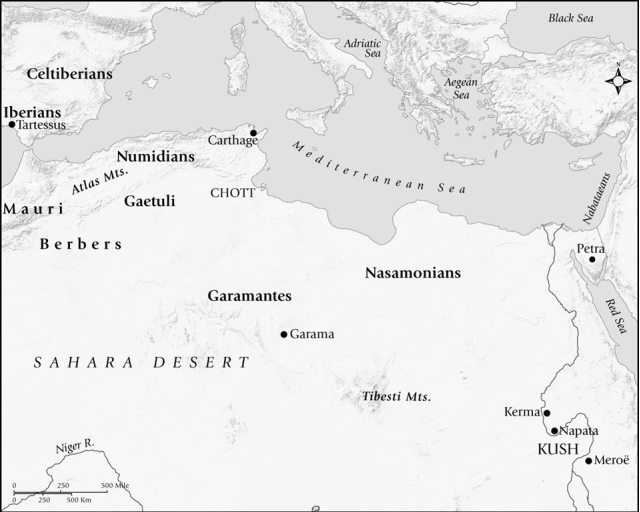
A)Garama
B)Tartessus
C)Carthage
D)Meroë
A)Garama
B)Tartessus
C)Carthage
D)Meroë
Question
The fact that this gold shekel depicts the goddess Tanit on one side reveals that it is a coin of the _______.
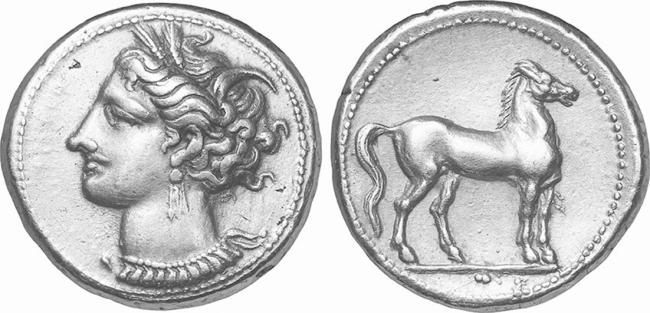
A)Scythians
B)Carthaginians
C)Bactrians
D)Kushites
A)Scythians
B)Carthaginians
C)Bactrians
D)Kushites

Unlock Deck
Sign up to unlock the cards in this deck!
Unlock Deck
Unlock Deck
1/20

Play

Full screen (f)
Deck 9: Civilization Beyond the Near East, Greece, and Rome 2300-31 BCE
1
Which of the following were names given to the Scythians by various other ancient cultures?
A)Cimmerians
B)Ashkuza
C)Mauri
D)Saka
A)Cimmerians
B)Ashkuza
C)Mauri
D)Saka
A,B,D
2
Which Scythian philosopher was counted as one of the Seven Wise Men of the Greek world?
A)Herodotus
B)Mithridates
C)Anacharsis
D)Chandragupta
A)Herodotus
B)Mithridates
C)Anacharsis
D)Chandragupta
C
3
Alexander the Great's admiral _______ surveyed the coast between India and Persia and then wrote an account of India, some of which is preserved by the later author Arrian.
A)Nearchus
B)Polyperchon
C)Parmenion
D)Cleitus
A)Nearchus
B)Polyperchon
C)Parmenion
D)Cleitus
A
4
Who led a revolt against the Nanda Empire in India and founded the Mauryan Empire in the late fourth century BCE?
A)Antiochus
B)Chandragupta
C)Menander
D)Mauryus
A)Antiochus
B)Chandragupta
C)Menander
D)Mauryus
Unlock Deck
Unlock for access to all 20 flashcards in this deck.
Unlock Deck
k this deck
5
The great Mauryan king Asoka abandoned the traditional Indian Hindu religion and converted to _______.
A)Judaism
B)Zoroastrianism
C)Buddhism
D)Mithraism
A)Judaism
B)Zoroastrianism
C)Buddhism
D)Mithraism
Unlock Deck
Unlock for access to all 20 flashcards in this deck.
Unlock Deck
k this deck
6
Which of the following are among the classes into which Parthian society was structured?
A)hunters
B)merchants
C)nobles and priests
D)farmers and herders
A)hunters
B)merchants
C)nobles and priests
D)farmers and herders
Unlock Deck
Unlock for access to all 20 flashcards in this deck.
Unlock Deck
k this deck
7
The four-thousand-mile trade route known as the _______ was opened in 114 BCE, linking China with Parthia.
A)"Royal Road"
B)"Silk Road"
C)"Merchants' Path"
D)"Kerma"
A)"Royal Road"
B)"Silk Road"
C)"Merchants' Path"
D)"Kerma"
Unlock Deck
Unlock for access to all 20 flashcards in this deck.
Unlock Deck
k this deck
8
A cursive form of the Nabataean script evolved into the _______ alphabet.
A)Latin
B)Gothic
C)Arabic
D)Cyrillic
A)Latin
B)Gothic
C)Arabic
D)Cyrillic
Unlock Deck
Unlock for access to all 20 flashcards in this deck.
Unlock Deck
k this deck
9
The Kushites invented an alphabet, known as the _______, in order to write their still undeciphered language.
A)Giligammaean script
B)Lotophagic script
C)Meroïtic script
D)Tiberian script
A)Giligammaean script
B)Lotophagic script
C)Meroïtic script
D)Tiberian script
Unlock Deck
Unlock for access to all 20 flashcards in this deck.
Unlock Deck
k this deck
10
The distinctive use of the cosmetic kohl is associated with which culture?
A)Punt
B)Nasamonians
C)Scythians
D)Turditani
A)Punt
B)Nasamonians
C)Scythians
D)Turditani
Unlock Deck
Unlock for access to all 20 flashcards in this deck.
Unlock Deck
k this deck
11
The use of hundreds of miles of foggara to access fossil water sources are especially associated with which culture?
A)Scythians
B)Garamantes
C)Carthaginians
D)Parthians
A)Scythians
B)Garamantes
C)Carthaginians
D)Parthians
Unlock Deck
Unlock for access to all 20 flashcards in this deck.
Unlock Deck
k this deck
12
According to tradition, Dido cut an oxhide into thin strips that encircled the _______, a high point that became the acropolis of Carthage.
A)Byrsa
B)Meroë
C)Torque
D)oppidum
A)Byrsa
B)Meroë
C)Torque
D)oppidum
Unlock Deck
Unlock for access to all 20 flashcards in this deck.
Unlock Deck
k this deck
13
A treatise on agriculture written by the Carthaginian writer _______ was later translated into Latin and became a standard work on the subject.
A)Himilco
B)Hanno
C)Jugurtha
D)Mago
A)Himilco
B)Hanno
C)Jugurtha
D)Mago
Unlock Deck
Unlock for access to all 20 flashcards in this deck.
Unlock Deck
k this deck
14
Which divine couple was at the top of the Carthaginian pantheon?
A)Astarte and Mot
B)Melqart and Tanit
C)Melqart and Astarte
D)Tanit and Ba'al Hammon
A)Astarte and Mot
B)Melqart and Tanit
C)Melqart and Astarte
D)Tanit and Ba'al Hammon
Unlock Deck
Unlock for access to all 20 flashcards in this deck.
Unlock Deck
k this deck
15
Some of the best-preserved Greek pottery comes not from Greece but from _______.
A)Celtiberia
B)Etruria
C)Scythia
D)The Hallstatt Culture
A)Celtiberia
B)Etruria
C)Scythia
D)The Hallstatt Culture
Unlock Deck
Unlock for access to all 20 flashcards in this deck.
Unlock Deck
k this deck
16
_______ vanished from history toward the end of the sixth century BCE, perhaps because of flooding and/or Carthaginian expansion?
A)Bactria
B)Etruria
C)Tartessus
D)Kush
A)Bactria
B)Etruria
C)Tartessus
D)Kush
Unlock Deck
Unlock for access to all 20 flashcards in this deck.
Unlock Deck
k this deck
17
Which of the following were cultures of inland Europe in the Bronze Age?
A)The Únetice Culture
B)The Urnfield Culture
C)The Tumulus Culture
D)The Corded-Ware Culture
A)The Únetice Culture
B)The Urnfield Culture
C)The Tumulus Culture
D)The Corded-Ware Culture
Unlock Deck
Unlock for access to all 20 flashcards in this deck.
Unlock Deck
k this deck
18
The distinctive use of _______ was frequent among northern European peoples for the deposit of both votive offerings and human corpses.
A)caves
B)mountain peaks
C)trees
D)peat bogs
A)caves
B)mountain peaks
C)trees
D)peat bogs
Unlock Deck
Unlock for access to all 20 flashcards in this deck.
Unlock Deck
k this deck
19
Which of the cities located on this map became the most powerful by the early third century BCE?
A)Garama
B)Tartessus
C)Carthage
D)Meroë
A)Garama
B)Tartessus
C)Carthage
D)Meroë
Unlock Deck
Unlock for access to all 20 flashcards in this deck.
Unlock Deck
k this deck
20
The fact that this gold shekel depicts the goddess Tanit on one side reveals that it is a coin of the _______.
A)Scythians
B)Carthaginians
C)Bactrians
D)Kushites
A)Scythians
B)Carthaginians
C)Bactrians
D)Kushites
Unlock Deck
Unlock for access to all 20 flashcards in this deck.
Unlock Deck
k this deck
Unlock Deck
Unlock for access to all 20 flashcards in this deck.






