







 Chat with AI

Deck 8: Photography, Film, and Video
Full screen (f)

Question

Question
Question
Question
Question
Question
Question
Question
Question
Question
Question
Question
Question
Question
Question
Question
Question
Question
Question
Question
Question
Question
Question
Question
Question
Question
Question
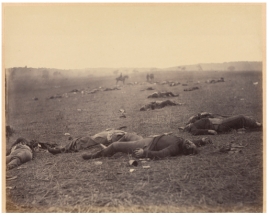
 and contrast Timothy H. O'Sullivan's A Harvest of Death, Gettysburg, Pennsylvania (figure 8.10) with the film still from Sharmeen Obaid-Chinoy's A Girl in the River: The Price of Forgiveness (figure 8.28). How might the similarities and differences between the two media affect how they convey their messages?
 Question
Question
Question
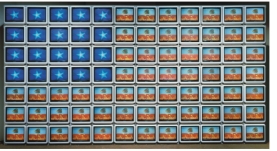
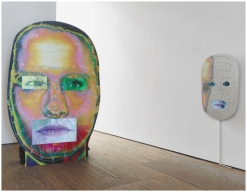 Nam June Paik's Video Flag Z (figure 8.37) used videos displayed on old-fashioned TV sets, and Tony Oursler's exhibition at the Lehmann Maupin Gallery in New York (figure 8.38) used videos of people's eyes and mouths inserted into sculptures. Discuss what other ways video artists might want to present their work and why. Give examples.
Unlock Deck
Sign up to unlock the cards in this deck!
Unlock Deck
Unlock Deck
1/30

Play

Full screen (f)
Deck 8: Photography, Film, and Video
1
What technical elements are necessary to create a photograph?
A) Light-sensitive material, a negative, and a lens
B) A camera obscura, photogenic drawing, and light tight box
C) A daguerreotype, multiple prints, and a lens
D) A light-tight box, a lens, and a light-sensitive material
A) Light-sensitive material, a negative, and a lens
B) A camera obscura, photogenic drawing, and light tight box
C) A daguerreotype, multiple prints, and a lens
D) A light-tight box, a lens, and a light-sensitive material
D
2
What can you do to determine whether a photograph is realistic or manipulated?
A) Be skeptical
B) Check for inaccuracies in the image
C) Consider the photographer's agenda
D) All of these
A) Be skeptical
B) Check for inaccuracies in the image
C) Consider the photographer's agenda
D) All of these
D
3
What elements of their photographs can artists control?
A) How their camera works
B) A and C
C) The lighting
D) The weather
A) How their camera works
B) A and C
C) The lighting
D) The weather
B
4
Unlike traditional still cameras that use film, digital photography allows for:
A) Merging multiple images and controlling how much light to let into the camera
B) Controlling how much light to let in the camera and deciding what to keep in the frame
C) Changing colors and merging multiple images
D) Manipulating the time of day and choosing an angle
A) Merging multiple images and controlling how much light to let into the camera
B) Controlling how much light to let in the camera and deciding what to keep in the frame
C) Changing colors and merging multiple images
D) Manipulating the time of day and choosing an angle
Unlock Deck
Unlock for access to all 30 flashcards in this deck.
Unlock Deck
k this deck
5
A selfie taken at the Grand Canyon would be considered to be this type of image:
A) Landscape
B) Portrait
C) Documentary
D) Photojournalism
A) Landscape
B) Portrait
C) Documentary
D) Photojournalism
Unlock Deck
Unlock for access to all 30 flashcards in this deck.
Unlock Deck
k this deck
6
If a photographer wants to provide a factual record of something, what kind of photographs is he or she making?
A) Photojournalism
B) Portrait
C) Artistic expression
D) Documentary
A) Photojournalism
B) Portrait
C) Artistic expression
D) Documentary
Unlock Deck
Unlock for access to all 30 flashcards in this deck.
Unlock Deck
k this deck
7
Photographs made to capture an inner feeling are of this type:
A) Artistic expression
B) Portrait
C) Documentary
D) Traditional
A) Artistic expression
B) Portrait
C) Documentary
D) Traditional
Unlock Deck
Unlock for access to all 30 flashcards in this deck.
Unlock Deck
k this deck
8
Filmmakers must consider which of the following when making a movie?
A) Mise en scène, editing, and artistic expression
B) Editing, sound, and optical illusion
C) Sound, cinematography, and stop-action
D) Mise en scène, editing, and sound
A) Mise en scène, editing, and artistic expression
B) Editing, sound, and optical illusion
C) Sound, cinematography, and stop-action
D) Mise en scène, editing, and sound
Unlock Deck
Unlock for access to all 30 flashcards in this deck.
Unlock Deck
k this deck
9
Cinematography refers to:
A) The expansion size of the aperture
B) Everything that is filmed
C) How the shots are put in order
D) How the camera is used
A) The expansion size of the aperture
B) Everything that is filmed
C) How the shots are put in order
D) How the camera is used
Unlock Deck
Unlock for access to all 30 flashcards in this deck.
Unlock Deck
k this deck
10
Shots can be put together:
A) Spacially, temporally, and emotionally
B) Spacially, temporally, and rhythmically
C) Temporally, rhythmically, and artistically
D) Collaboratively, individually, and experimentally
A) Spacially, temporally, and emotionally
B) Spacially, temporally, and rhythmically
C) Temporally, rhythmically, and artistically
D) Collaboratively, individually, and experimentally
Unlock Deck
Unlock for access to all 30 flashcards in this deck.
Unlock Deck
k this deck
11
Playing soft classical music over a scene of warfare might be a case of sound used to:
A) Oppose mise en scène
B) Oppose cinematography
C) Oppose the auteur
D) Oppose the montage
A) Oppose mise en scène
B) Oppose cinematography
C) Oppose the auteur
D) Oppose the montage
Unlock Deck
Unlock for access to all 30 flashcards in this deck.
Unlock Deck
k this deck
12
If a film has a story we can follow, even if it is nonlinear, it is:
A) Avant-garde
B) Live action
C) Animated
D) Narrative
A) Avant-garde
B) Live action
C) Animated
D) Narrative
Unlock Deck
Unlock for access to all 30 flashcards in this deck.
Unlock Deck
k this deck
13
We would expect most documentaries to be:
A) Narrative and experimental
B) Live action and scripted
C) Narrative and unscripted
D) Scripted and avant-garde
A) Narrative and experimental
B) Live action and scripted
C) Narrative and unscripted
D) Scripted and avant-garde
Unlock Deck
Unlock for access to all 30 flashcards in this deck.
Unlock Deck
k this deck
14
Video is different from film because:
A) It directly turns light into negatives
B) It records multiple static moments of motion
C) It uses a camera
D) It turns light into electrical charges
A) It directly turns light into negatives
B) It records multiple static moments of motion
C) It uses a camera
D) It turns light into electrical charges
Unlock Deck
Unlock for access to all 30 flashcards in this deck.
Unlock Deck
k this deck
15
What might be the best method for persuading people that what they are seeing is true and happening at that moment?
A) An experimental video
B) A scripted film
C) A documentary on video
D) A documentary on traditional film
A) An experimental video
B) A scripted film
C) A documentary on video
D) A documentary on traditional film
Unlock Deck
Unlock for access to all 30 flashcards in this deck.
Unlock Deck
k this deck
16
Artists have to accept and work around the lighting where they take their photographs.
Unlock Deck
Unlock for access to all 30 flashcards in this deck.
Unlock Deck
k this deck
17
A photograph could be both a portrait and photojournalism.
Unlock Deck
Unlock for access to all 30 flashcards in this deck.
Unlock Deck
k this deck
18
In a film, a montage can make juxtapositions of shots jarring.
Unlock Deck
Unlock for access to all 30 flashcards in this deck.
Unlock Deck
k this deck
19
All live-action films are scripted.
Unlock Deck
Unlock for access to all 30 flashcards in this deck.
Unlock Deck
k this deck
20
Traditional video cameras use film.
Unlock Deck
Unlock for access to all 30 flashcards in this deck.
Unlock Deck
k this deck
21
One of the early photographs that created a unique positive image was called a ________ .
Unlock Deck
Unlock for access to all 30 flashcards in this deck.
Unlock Deck
k this deck
22
An artist wanting to provide a factual record of damage done by recent forest fires would probably make photographs that could be considered documentary, photojournalism, and ??????_______ .
Unlock Deck
Unlock for access to all 30 flashcards in this deck.
Unlock Deck
k this deck
23
Filmmakers have to make decisions about a movie's mise en scène, cinematography, editing, and ______ .
Unlock Deck
Unlock for access to all 30 flashcards in this deck.
Unlock Deck
k this deck
24
Films that tell a story and proceed in a logical progression are called ______ films.
Unlock Deck
Unlock for access to all 30 flashcards in this deck.
Unlock Deck
k this deck
25
The process of recording moving images electronically with light is referred to as ______ .
Unlock Deck
Unlock for access to all 30 flashcards in this deck.
Unlock Deck
k this deck
26
Explain whether you think photography is a more technical process than printmaking. Give specific examples.
Unlock Deck
Unlock for access to all 30 flashcards in this deck.
Unlock Deck
k this deck
27
and contrast Timothy H. O'Sullivan's A Harvest of Death, Gettysburg, Pennsylvania (figure 8.10) with the film still from Sharmeen Obaid-Chinoy's A Girl in the River: The Price of Forgiveness (figure 8.28). How might the similarities and differences between the two media affect how they convey their messages? Unlock Deck
Unlock for access to all 30 flashcards in this deck.
Unlock Deck
k this deck
28
Why do you think people tend to prefer narrative films over experimental or documentary films? Give specific examples.
Unlock Deck
Unlock for access to all 30 flashcards in this deck.
Unlock Deck
k this deck
29
Discuss why a filmmaker might choose to use video or traditional film, depending on the message and the type of film. Give specific examples.
Unlock Deck
Unlock for access to all 30 flashcards in this deck.
Unlock Deck
k this deck
30
Nam June Paik's Video Flag Z (figure 8.37) used videos displayed on old-fashioned TV sets, and Tony Oursler's exhibition at the Lehmann Maupin Gallery in New York (figure 8.38) used videos of people's eyes and mouths inserted into sculptures. Discuss what other ways video artists might want to present their work and why. Give examples. Unlock Deck
Unlock for access to all 30 flashcards in this deck.
Unlock Deck
k this deck
Unlock Deck
Unlock for access to all 30 flashcards in this deck.






