







 Chat with AI

Deck 20: Modern Art in the Twentieth-Century Western World
Full screen (f)

Question

Question
Question
Question
Question
Question
Question
Question
Question
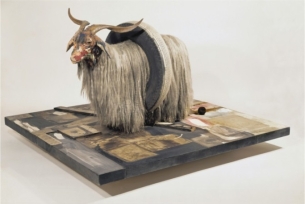
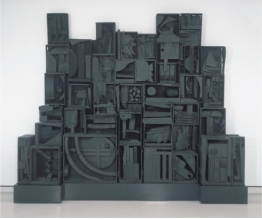 By using found, preexisting objects, artists like Robert Rauschenberg in Monogram (figure 20.34) and Louise Nevelson in Sky Cathedral (figure 20.35) were:
A) Blurring art and life
B) Creating environments
C) Creating Happenings
D) Commenting on life in the city
Question
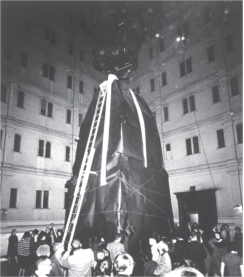 Happenings, like Allan Kaprow's The Courtyard (figure 20.37), have which of the following aspect in common with some types of films:
A) Narrative
B) Unscripted
C) Documentary
D) Animated
Question
Question
Question
Question
Question
Question
Question
Question
Question
Question
Question
Question
Question
Question
Question
Question
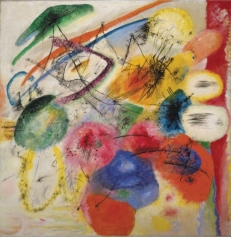
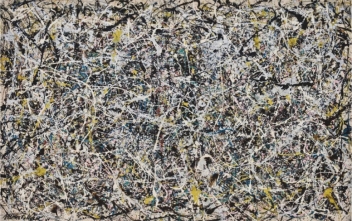 and contrast Vassily Kandinsky's Blank Lines (figure 20.10) and Jackson Pollock's Number 1, 1949 (figure 20.31) in terms of subject matter, form, content, and technique. How are the works similar? How are they different? Give specific examples.
 Question
Question
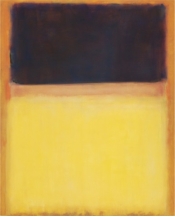 Why should a work like Mark Rothko's No 9 (figure 20.33) be considered art if it does not appear to have taken much skill to create? What definitions can you use to classify the work as art?
 Question
Question
 How can we see Betye Saar's The Liberation of Aunt Jemima (figure 20.46) as containing aspects of assemblage and Pop art? Give examples to support your argument. How do these additional styles add to the meaning of the work?
Unlock Deck
Sign up to unlock the cards in this deck!
Unlock Deck
Unlock Deck
1/30

Play

Full screen (f)
Deck 20: Modern Art in the Twentieth-Century Western World
1
One of the ways Expressionist artists conveyed emotion was through color, and another was through:
A) Distorted form
B) Pointillist technique
C) Sharp facets
D) Controversial subject matters
A) Distorted form
B) Pointillist technique
C) Sharp facets
D) Controversial subject matters
A
2
We can speculate that a Cubist piece that includes more than one medium is from ________ Cubism.
A) Analytic
B) Synthetic
C) Expressionist
D) Futurist
A) Analytic
B) Synthetic
C) Expressionist
D) Futurist
B
3
Both phases of Cubism featured the following characteristic:
A) Using facets to show multiple views
B) Distorting forms to convey emotion
C) Limiting the color palette
D) Calling into question what is real and what is an illusion
A) Using facets to show multiple views
B) Distorting forms to convey emotion
C) Limiting the color palette
D) Calling into question what is real and what is an illusion
D
4
Dada promoted nonsense and the absurd, and Surrealism explored the unconscious mind. Artists from both styles were interested in focussing on:
A) Science and technology
B) Traditional values, culture, and convention
C) Collage
D) The irrational
A) Science and technology
B) Traditional values, culture, and convention
C) Collage
D) The irrational
Unlock Deck
Unlock for access to all 30 flashcards in this deck.
Unlock Deck
k this deck
5
De Stijl, the Bauhaus, and the International Style all used what element in their style?
A) Simple, geometric forms
B) Steel skeletons
C) Monochromatic schemes
D) Applied arts
A) Simple, geometric forms
B) Steel skeletons
C) Monochromatic schemes
D) Applied arts
Unlock Deck
Unlock for access to all 30 flashcards in this deck.
Unlock Deck
k this deck
6
What was the goal of De Stijl?
A) Creating an integrative experience
B) Creating functional and efficient designs
C) Fostering a peaceful world
D) Probing the depths of individual feelings
A) Creating an integrative experience
B) Creating functional and efficient designs
C) Fostering a peaceful world
D) Probing the depths of individual feelings
Unlock Deck
Unlock for access to all 30 flashcards in this deck.
Unlock Deck
k this deck
7
Social Realism was a representational style that:
A) Documented hard times faced by everyday Americans
B) Harkened back to provincial tastes
C) Captured the dignity of the African American experience
D) Portrayed media images
A) Documented hard times faced by everyday Americans
B) Harkened back to provincial tastes
C) Captured the dignity of the African American experience
D) Portrayed media images
Unlock Deck
Unlock for access to all 30 flashcards in this deck.
Unlock Deck
k this deck
8
The New York School split into which two styles of personal expression?
A) Action painting and environments
B) Minimalism and Happenings
C) Action Painting and Color Field painting
D) Pop art and assemblages
A) Action painting and environments
B) Minimalism and Happenings
C) Action Painting and Color Field painting
D) Pop art and assemblages
Unlock Deck
Unlock for access to all 30 flashcards in this deck.
Unlock Deck
k this deck
9
By using found, preexisting objects, artists like Robert Rauschenberg in Monogram (figure 20.34) and Louise Nevelson in Sky Cathedral (figure 20.35) were:A) Blurring art and life
B) Creating environments
C) Creating Happenings
D) Commenting on life in the city
Unlock Deck
Unlock for access to all 30 flashcards in this deck.
Unlock Deck
k this deck
10
Happenings, like Allan Kaprow's The Courtyard (figure 20.37), have which of the following aspect in common with some types of films:A) Narrative
B) Unscripted
C) Documentary
D) Animated
Unlock Deck
Unlock for access to all 30 flashcards in this deck.
Unlock Deck
k this deck
11
Pop artists were interested in:
A) Imitating media images
B) Mimicking mass-production techniques
C) Forming commercial objects
D) All of these
A) Imitating media images
B) Mimicking mass-production techniques
C) Forming commercial objects
D) All of these
Unlock Deck
Unlock for access to all 30 flashcards in this deck.
Unlock Deck
k this deck
12
By making stripped-down nonobjective works produced with little skill, Minimalists rejected:
A) Meaning
B) Form
C) Repetition
D) Art for art's sake
A) Meaning
B) Form
C) Repetition
D) Art for art's sake
Unlock Deck
Unlock for access to all 30 flashcards in this deck.
Unlock Deck
k this deck
13
Conceptual artists frequently produce works of art that are deliberately uninteresting to look at because:
A) People shouldn't be able to own art
B) Art should have no meaning
C) Art objects aren't as important as artistic ideas
D) Art should be more affordable for museums to collect
A) People shouldn't be able to own art
B) Art should have no meaning
C) Art objects aren't as important as artistic ideas
D) Art should be more affordable for museums to collect
Unlock Deck
Unlock for access to all 30 flashcards in this deck.
Unlock Deck
k this deck
14
We most often see earthworks in documenting photographs because the works frequently:
A) Bring religious traditions into the modern world
B) Are connected to early photographic techniques
C) Reject artistic skill
D) Are in remote locations
A) Bring religious traditions into the modern world
B) Are connected to early photographic techniques
C) Reject artistic skill
D) Are in remote locations
Unlock Deck
Unlock for access to all 30 flashcards in this deck.
Unlock Deck
k this deck
15
A common theme of feminist and African American art was protesting:
A) Low pay
B) Discrimination
C) Museum culture
D) Environmental degradation
A) Low pay
B) Discrimination
C) Museum culture
D) Environmental degradation
Unlock Deck
Unlock for access to all 30 flashcards in this deck.
Unlock Deck
k this deck
16
Analytic Cubism sometimes uses collage.
Unlock Deck
Unlock for access to all 30 flashcards in this deck.
Unlock Deck
k this deck
17
Dadaists rejected rationalism and traditional values because they believed these items had led to World War I.
Unlock Deck
Unlock for access to all 30 flashcards in this deck.
Unlock Deck
k this deck
18
Regionalism embraced the European avant-garde.
Unlock Deck
Unlock for access to all 30 flashcards in this deck.
Unlock Deck
k this deck
19
Conceptual art focuses on works that require a high level of skill.
Unlock Deck
Unlock for access to all 30 flashcards in this deck.
Unlock Deck
k this deck
20
Protest art is always feminist.
Unlock Deck
Unlock for access to all 30 flashcards in this deck.
Unlock Deck
k this deck
21
Distorted forms, unrealistic colors and space, and clashing complements are features of various _______ movements.
Unlock Deck
Unlock for access to all 30 flashcards in this deck.
Unlock Deck
k this deck
22
Some Surrealists created works that appear like dreams, while others formed images _______ .
Unlock Deck
Unlock for access to all 30 flashcards in this deck.
Unlock Deck
k this deck
23
The artists of _______ tried to form a definitive artistic language that would promote unity and peace.
Unlock Deck
Unlock for access to all 30 flashcards in this deck.
Unlock Deck
k this deck
24
With ____________ , artists painted with large, distinct, gestural strokes that conveyed emotion.
Unlock Deck
Unlock for access to all 30 flashcards in this deck.
Unlock Deck
k this deck
25
The ___________ style was born from society's obsession with mass culture in the 1950s and '60s.
Unlock Deck
Unlock for access to all 30 flashcards in this deck.
Unlock Deck
k this deck
26
and contrast Vassily Kandinsky's Blank Lines (figure 20.10) and Jackson Pollock's Number 1, 1949 (figure 20.31) in terms of subject matter, form, content, and technique. How are the works similar? How are they different? Give specific examples. Unlock Deck
Unlock for access to all 30 flashcards in this deck.
Unlock Deck
k this deck
27
Explain how Regionalism, Social Realism, and the Harlem Renaissance are rejections of avant-garde European art styles at the time. Give specific examples.
Unlock Deck
Unlock for access to all 30 flashcards in this deck.
Unlock Deck
k this deck
28
Why should a work like Mark Rothko's No 9 (figure 20.33) be considered art if it does not appear to have taken much skill to create? What definitions can you use to classify the work as art? Unlock Deck
Unlock for access to all 30 flashcards in this deck.
Unlock Deck
k this deck
29
Discuss why creating works like performances and earthworks reject the venue of the museum and the idea of the art object. What kind of value can we place on works like these?
Unlock Deck
Unlock for access to all 30 flashcards in this deck.
Unlock Deck
k this deck
30
How can we see Betye Saar's The Liberation of Aunt Jemima (figure 20.46) as containing aspects of assemblage and Pop art? Give examples to support your argument. How do these additional styles add to the meaning of the work? Unlock Deck
Unlock for access to all 30 flashcards in this deck.
Unlock Deck
k this deck
Unlock Deck
Unlock for access to all 30 flashcards in this deck.






