







 Chat with AI

Deck 17: The Art of the Pacific and the Americas
Full screen (f)

Question

Question
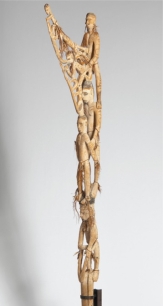 The human figures carved into bisj poles (figure 17.6) from New Guinea were linked to:
A) Ancestors who were already in the spirit world
B) Headhunting spirits
C) Ancestral spirits who had not been avenged
D) Power that must be taken from chiefs
Question
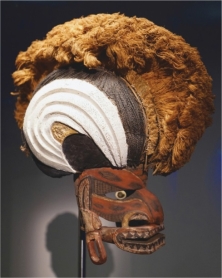 The tatanua mask (figure 17.7) from New Ireland helps ancestral spirits move to the next world because:
A) It is made to look like a spirit
B) It is made using feathers
C) It has a hairstyle that references mourning the dead
D) It contains mana
Question
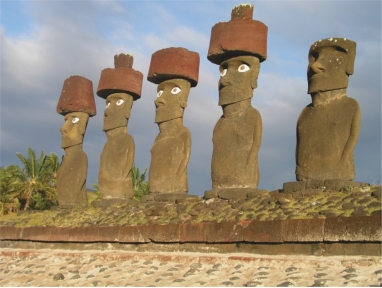 Scholars suggest that the enormous size of moai (figure 17.8) and their placement on altars in Rapa Nui may indicate:
A) The moai are monuments to headhunting
B) The elites wore a common style of hats
C) The elite class wielded great power
D) The people had advanced engineering
Question
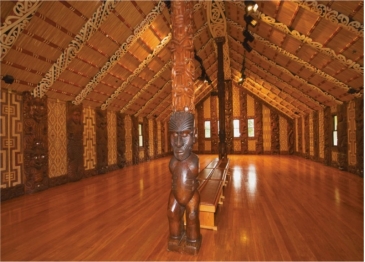 Maori meeting houses (figure 17.9) proclaimed status because of the fact that:
A) The members sat inside an ancestor
B) The house was large
C) The sale of property was discussed inside
D) The houses had ridgepoles running down the peak
Question
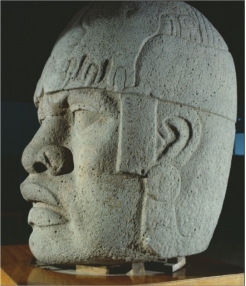 Olmec colossal heads (figure 17.12) placed in ceremonial centers indicate they most likely represented:
A) Enemies
B) Rulers
C) Gods
D) Carvers
Question
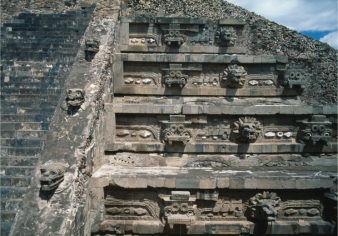 A pyramid like the Temple of the Feathered Serpent (figure 17.13) in Teotihuacán was associated with:
A) Ball games, sacrifice, and rulers
B) Water, sacrifice, and apartments
C) Ancestors, a sacred mountain, and ball games
D) Ancestors, gods, and sacrifice
Question
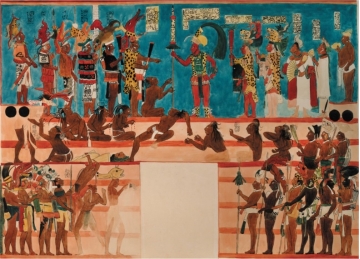 The Mayan mural from Bonampak, Mexico, which shows the presentation of captives to Lord Chan Muwan (figure 17.15), most likely depicts:
A) The proceedings associated with the birth of a royal heir
B) The steps leading up to the ruler's palace
C) A Mayan method of linear perspective
D) All of these
Question
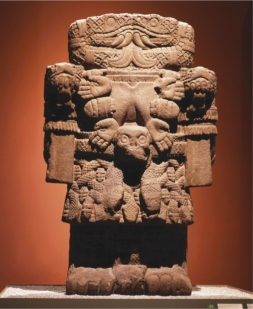 How does the Aztec sculpture of Coatlicue (figure 17.17) from the central pyramid complex of Tenochtitlán embody her formidable and intimidating nature?
A) Snakes for blood, armor, and wood material
B) Abstraction, clawed fingers, and Storm God imagery
C) Human skulls, compact mass, and a beard
D) Large size, compact mass, and imagery of violence
Question
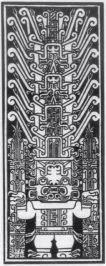 Which two of the four characteristics of South American art are present in the Raimondi Stele (figure 17.18)?
A) Repeating abstract and nonrepresentational elements and images that change from one object into another
B) An overall greater meaning of an object versus its specific visual form and the Staff God
C) Interconnected sets and mirror images and honoring ancestors
D) Images that change from one object into another and shamanism
Question
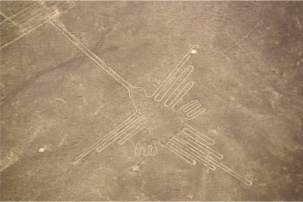 The monumental earthworks of the Nazca (figure 17.19) feature an appreciation for the overall greater meaning of an object versus its specific visual form because:
A) The earthworks feature mirrored designs
B) Multiple people from a variety of groups worked together
C) The design can be seen only from a bird's eye view
D) The earthworks were paths to water
Question
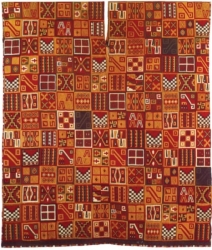 The royal tunic (figure 17.20) from Peru is distinctly Inca because:
A) Taxes were paid in cloth, and the tunic was made in strips
B) Cloth was an indicator of status, and the colors on the tunic are bright
C) Cloth was valuable, and the tunic featured individualized motifs
D) Taxes were paid in cloth, and the tunic was made for the ancestors
Question
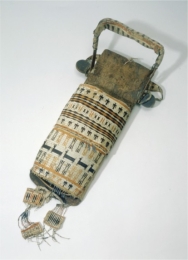 While it was made for a practical purpose, the Sioux Baby carrier (figure 17.22) also involved what sacred and specially trained skill?
A) Embroidery
B) Quillwork
C) Patchwork
D) Featherwork
Question
Question
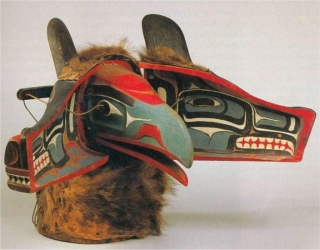 The wolf transformation mask (figure 17.25) from Canada was used in festivals that featured dances designed to:
A) Help the coming harvest
B) Teach girls about supernatural beings
C) Protest the government
D) Initiate elite young men
Question
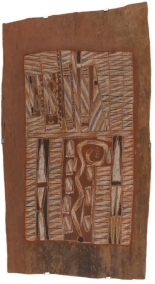 Australian art, such as Yilkari Kitani's Wagilag story (figure 17.5), acts as a way for Dreamings to be brought into the present.
 Question
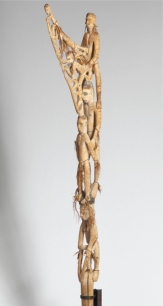 Melanesian art, such as a Bisj spirit pole (figure 17.6), was meant to reinforce the power of women.
 Question
Question
Question
Question
Question
Question
Question
Question
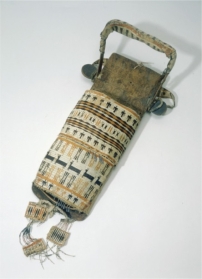 Art in ________ was often used to adorn functional objects, such as baby carriers (figure 17.22).
 Question
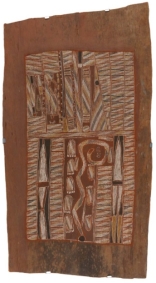 Australian Aboriginal art, such as Yilkari Kitani's Wagilag Story (figure 17.5), describes creation myths about ancestral spirits to younger generations of Aborigines. Explain how other cultures' art might do something similar. Give specific examples and explain how this art is similar.
 Question
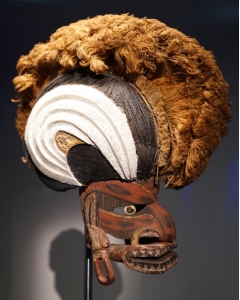
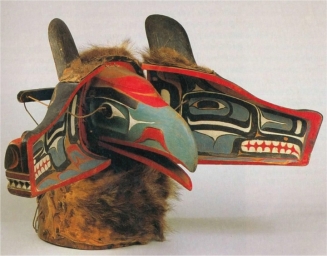 the tatanua mask (figure 17.7) from New Ireland to the wolf transformation mask (figure 17.25) from Canada in terms of style, materials, and cultural meaning. How are they similar? How are they different?
 Question
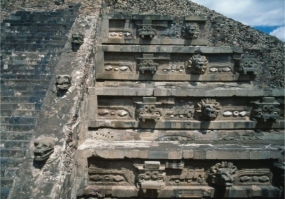
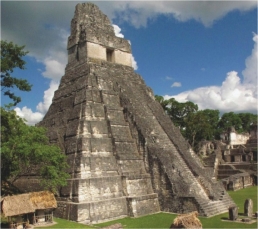 Explain the meaning and use of these two Mesoamerican structures: the Temple of the Feathered Serpent from Teotihuacán (figure 17.13) and the Mayan Temple I at Tikal (Figure 17.14).
 Question
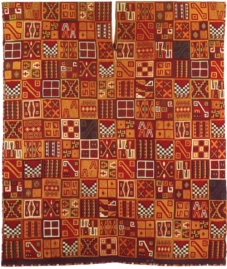 Discuss the royal tunic (figure 17.20) made by the Inca in terms of the principles of design (including unity/variety, balance, emphasis/subordination, scale, proportion, and rhythm). How do these principles support the work's cultural meaning?
 Question
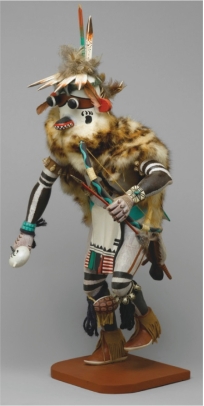 What is the purpose of Henry Shelton's wildcat kachina figure (figure 17.24) (religion and spirituality, politics and the social order, recording and communicating information, decoration, expression, or social action)? Why do you think the work has this purpose?
Unlock Deck
Sign up to unlock the cards in this deck!
Unlock Deck
Unlock Deck
1/30

Play

Full screen (f)
Deck 17: The Art of the Pacific and the Americas
1
Which of the following are characteristics of Australian Aboriginal art?
A) They have patterns formed with hatch marks
B) A and D
C) They are made only by young people
D) They can be viewed from any orientation
A) They have patterns formed with hatch marks
B) A and D
C) They are made only by young people
D) They can be viewed from any orientation
B
2
The human figures carved into bisj poles (figure 17.6) from New Guinea were linked to:A) Ancestors who were already in the spirit world
B) Headhunting spirits
C) Ancestral spirits who had not been avenged
D) Power that must be taken from chiefs
C
3
The tatanua mask (figure 17.7) from New Ireland helps ancestral spirits move to the next world because:A) It is made to look like a spirit
B) It is made using feathers
C) It has a hairstyle that references mourning the dead
D) It contains mana
C
4
Scholars suggest that the enormous size of moai (figure 17.8) and their placement on altars in Rapa Nui may indicate:A) The moai are monuments to headhunting
B) The elites wore a common style of hats
C) The elite class wielded great power
D) The people had advanced engineering
Unlock Deck
Unlock for access to all 30 flashcards in this deck.
Unlock Deck
k this deck
5
Maori meeting houses (figure 17.9) proclaimed status because of the fact that:A) The members sat inside an ancestor
B) The house was large
C) The sale of property was discussed inside
D) The houses had ridgepoles running down the peak
Unlock Deck
Unlock for access to all 30 flashcards in this deck.
Unlock Deck
k this deck
6
Olmec colossal heads (figure 17.12) placed in ceremonial centers indicate they most likely represented:A) Enemies
B) Rulers
C) Gods
D) Carvers
Unlock Deck
Unlock for access to all 30 flashcards in this deck.
Unlock Deck
k this deck
7
A pyramid like the Temple of the Feathered Serpent (figure 17.13) in Teotihuacán was associated with:A) Ball games, sacrifice, and rulers
B) Water, sacrifice, and apartments
C) Ancestors, a sacred mountain, and ball games
D) Ancestors, gods, and sacrifice
Unlock Deck
Unlock for access to all 30 flashcards in this deck.
Unlock Deck
k this deck
8
The Mayan mural from Bonampak, Mexico, which shows the presentation of captives to Lord Chan Muwan (figure 17.15), most likely depicts:A) The proceedings associated with the birth of a royal heir
B) The steps leading up to the ruler's palace
C) A Mayan method of linear perspective
D) All of these
Unlock Deck
Unlock for access to all 30 flashcards in this deck.
Unlock Deck
k this deck
9
How does the Aztec sculpture of Coatlicue (figure 17.17) from the central pyramid complex of Tenochtitlán embody her formidable and intimidating nature?A) Snakes for blood, armor, and wood material
B) Abstraction, clawed fingers, and Storm God imagery
C) Human skulls, compact mass, and a beard
D) Large size, compact mass, and imagery of violence
Unlock Deck
Unlock for access to all 30 flashcards in this deck.
Unlock Deck
k this deck
10
Which two of the four characteristics of South American art are present in the Raimondi Stele (figure 17.18)?A) Repeating abstract and nonrepresentational elements and images that change from one object into another
B) An overall greater meaning of an object versus its specific visual form and the Staff God
C) Interconnected sets and mirror images and honoring ancestors
D) Images that change from one object into another and shamanism
Unlock Deck
Unlock for access to all 30 flashcards in this deck.
Unlock Deck
k this deck
11
The monumental earthworks of the Nazca (figure 17.19) feature an appreciation for the overall greater meaning of an object versus its specific visual form because:A) The earthworks feature mirrored designs
B) Multiple people from a variety of groups worked together
C) The design can be seen only from a bird's eye view
D) The earthworks were paths to water
Unlock Deck
Unlock for access to all 30 flashcards in this deck.
Unlock Deck
k this deck
12
The royal tunic (figure 17.20) from Peru is distinctly Inca because:A) Taxes were paid in cloth, and the tunic was made in strips
B) Cloth was an indicator of status, and the colors on the tunic are bright
C) Cloth was valuable, and the tunic featured individualized motifs
D) Taxes were paid in cloth, and the tunic was made for the ancestors
Unlock Deck
Unlock for access to all 30 flashcards in this deck.
Unlock Deck
k this deck
13
While it was made for a practical purpose, the Sioux Baby carrier (figure 17.22) also involved what sacred and specially trained skill?A) Embroidery
B) Quillwork
C) Patchwork
D) Featherwork
Unlock Deck
Unlock for access to all 30 flashcards in this deck.
Unlock Deck
k this deck
14
Who was responsible for tipi construction among the nomadic people of the Great Plains?
A) Men in a tipi society
B) Women in a guild
C) Specially trained men
D) Women who were married to the chiefs
A) Men in a tipi society
B) Women in a guild
C) Specially trained men
D) Women who were married to the chiefs
Unlock Deck
Unlock for access to all 30 flashcards in this deck.
Unlock Deck
k this deck
15
The wolf transformation mask (figure 17.25) from Canada was used in festivals that featured dances designed to:A) Help the coming harvest
B) Teach girls about supernatural beings
C) Protest the government
D) Initiate elite young men
Unlock Deck
Unlock for access to all 30 flashcards in this deck.
Unlock Deck
k this deck
16
Australian art, such as Yilkari Kitani's Wagilag story (figure 17.5), acts as a way for Dreamings to be brought into the present. Unlock Deck
Unlock for access to all 30 flashcards in this deck.
Unlock Deck
k this deck
17
Melanesian art, such as a Bisj spirit pole (figure 17.6), was meant to reinforce the power of women. Unlock Deck
Unlock for access to all 30 flashcards in this deck.
Unlock Deck
k this deck
18
Ceremonial centers in Mesoamerica often featured pyramids.
Unlock Deck
Unlock for access to all 30 flashcards in this deck.
Unlock Deck
k this deck
19
South American art reflects a concern for order and cooperation.
Unlock Deck
Unlock for access to all 30 flashcards in this deck.
Unlock Deck
k this deck
20
Native North American art focuses on ONLY practical, everyday items.
Unlock Deck
Unlock for access to all 30 flashcards in this deck.
Unlock Deck
k this deck
21
Melanesian art, such as from New Guinea and New Ireland, often aids ________ in moving to the next world.
Unlock Deck
Unlock for access to all 30 flashcards in this deck.
Unlock Deck
k this deck
22
Moai from Rapa Nui, feathered capes from Hawaii, and _______ houses from New Zealand are examples of how Polynesian art reinforced the prestige of certain individuals.
Unlock Deck
Unlock for access to all 30 flashcards in this deck.
Unlock Deck
k this deck
23
The ceremonial centers of ancient Mesoamerica, such as those of the Maya and Aztec, were often places where ______ was conducted to appease the gods.
Unlock Deck
Unlock for access to all 30 flashcards in this deck.
Unlock Deck
k this deck
24
Ancient South American art, such as that of the Chavín and the Inca, often features abstract and nonrepresentational elements that ______ .
Unlock Deck
Unlock for access to all 30 flashcards in this deck.
Unlock Deck
k this deck
25
Art in ________ was often used to adorn functional objects, such as baby carriers (figure 17.22). Unlock Deck
Unlock for access to all 30 flashcards in this deck.
Unlock Deck
k this deck
26
Australian Aboriginal art, such as Yilkari Kitani's Wagilag Story (figure 17.5), describes creation myths about ancestral spirits to younger generations of Aborigines. Explain how other cultures' art might do something similar. Give specific examples and explain how this art is similar. Unlock Deck
Unlock for access to all 30 flashcards in this deck.
Unlock Deck
k this deck
27
the tatanua mask (figure 17.7) from New Ireland to the wolf transformation mask (figure 17.25) from Canada in terms of style, materials, and cultural meaning. How are they similar? How are they different? Unlock Deck
Unlock for access to all 30 flashcards in this deck.
Unlock Deck
k this deck
28
Explain the meaning and use of these two Mesoamerican structures: the Temple of the Feathered Serpent from Teotihuacán (figure 17.13) and the Mayan Temple I at Tikal (Figure 17.14). Unlock Deck
Unlock for access to all 30 flashcards in this deck.
Unlock Deck
k this deck
29
Discuss the royal tunic (figure 17.20) made by the Inca in terms of the principles of design (including unity/variety, balance, emphasis/subordination, scale, proportion, and rhythm). How do these principles support the work's cultural meaning? Unlock Deck
Unlock for access to all 30 flashcards in this deck.
Unlock Deck
k this deck
30
What is the purpose of Henry Shelton's wildcat kachina figure (figure 17.24) (religion and spirituality, politics and the social order, recording and communicating information, decoration, expression, or social action)? Why do you think the work has this purpose? Unlock Deck
Unlock for access to all 30 flashcards in this deck.
Unlock Deck
k this deck
Unlock Deck
Unlock for access to all 30 flashcards in this deck.






