







 Chat with AI

Deck 14: Early Jewish and Christian, Byzantine, and Medieval Art
Full screen (f)

Question

Question
Question
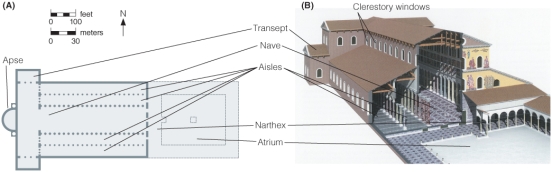 An important influence on the architecture of Old St. Peter's (figure 14.6A and B) was the Roman:
A) Atrium
B) Basilica
C) Catacombs
D) Motif
Question
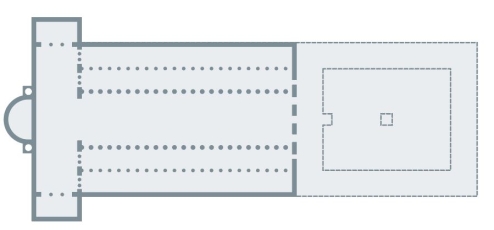
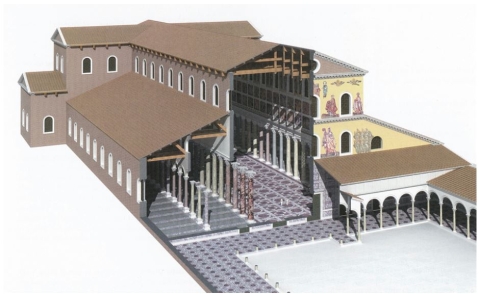 Old St. Peter's (figure 14.7A and B) featured:
A) Room for numerous people and a catacomb
B) Light and pointed arches
C) A nave and aisles
D) A nave and flying buttresses
Question
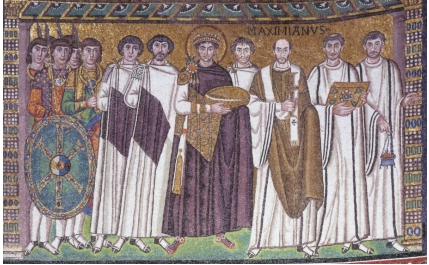 In the San Vitale mosaic (figure 14.11), symbols signal that Emperor Justinian is the leader of the EARTHLY realm because he is:
A) Holding a dish for the Eucharist
B) Standing with twelve men
C) Standing solidly on the floor
D) Wearing a purple robe like a Roman Emperor
Question
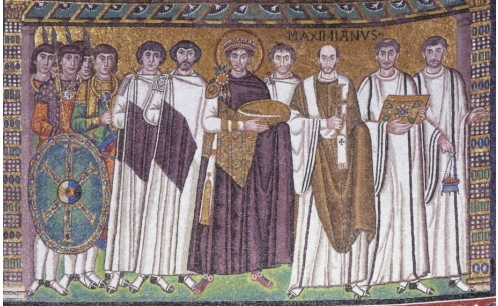 The elongated bodies and wide, staring eyes of the San Vitale mosaic of Emperor Justinian (figure 14.11) reflect:
A) His divine authority
B) The transition from the Roman world
C) The use of colored glass
D) His connection to Constantine
Question
Question
Question
Question
Question
Question
Question
Question
Question
Question
Question
Question
Question
Question
Question
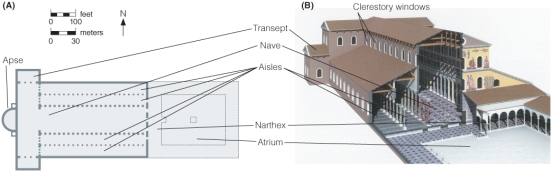 Old St. Peter's (figure 14.6A and B) was based on a Roman building called a _______ .
 Question
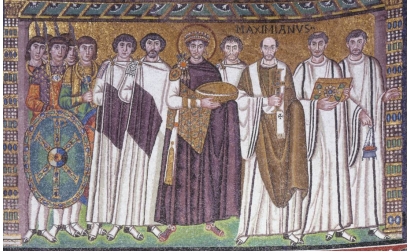 The Justinian mosaic in San Vitale (figure 14.11) shows the emperor as having both worldly and ______ authority.
 Question
Question
Question
Question
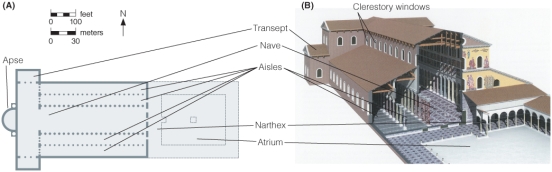
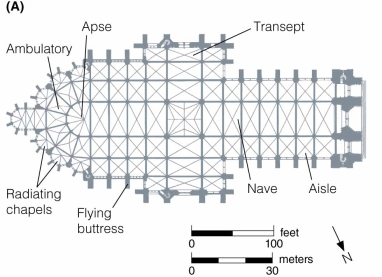
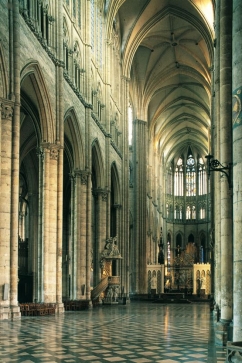 Old St. Peter's (figure 14.6A and B) with Amiens Cathedral (figure 14.21A and B). What architectural elements have stayed the same? Which have changed?
 Question
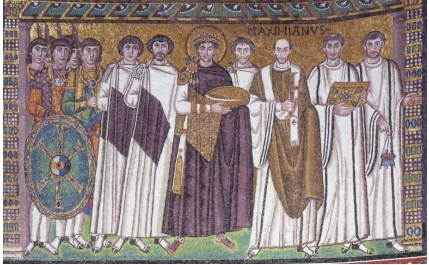 Consider the mosaic depicting Emperor Justinian and his attendants (figure 14.11). What other examples can you think of where art is used to express the authority of the ruler? Is it the same kind of power Justinian is claiming? Give specific examples.
 Question
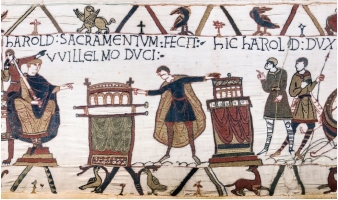
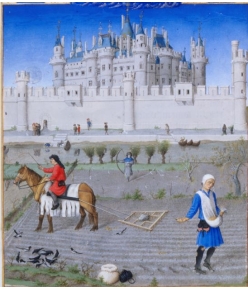 and contrast the image from the Bayeux Tapestry of Harold swearing a scared oath to William (figure 14.17) with the Limbourg brother's depiction of October (figure 14.25). In what way are the images similar and in what way are they different?
 Question
Question

Unlock Deck
Sign up to unlock the cards in this deck!
Unlock Deck
Unlock Deck
1/30

Play

Full screen (f)
Deck 14: Early Jewish and Christian, Byzantine, and Medieval Art
1
Individual groups in the diverse late Roman world asserted their identity through:
A) Artistic style from conventions
B) Subject matter appropriate to the group
C) Realistic portrayals of group members
D) Mural paintings created in fresco
A) Artistic style from conventions
B) Subject matter appropriate to the group
C) Realistic portrayals of group members
D) Mural paintings created in fresco
B
2
The paintings in early Christian catacombs:
A) Combine Roman style and religious stories
B) Combine Christian escape from persecution and Roman subject matter
C) Identify the names of the dead and promote Roman order
D) Allude to salvation and the Roman gods
A) Combine Roman style and religious stories
B) Combine Christian escape from persecution and Roman subject matter
C) Identify the names of the dead and promote Roman order
D) Allude to salvation and the Roman gods
A
3
An important influence on the architecture of Old St. Peter's (figure 14.6A and B) was the Roman:A) Atrium
B) Basilica
C) Catacombs
D) Motif
B
4
Old St. Peter's (figure 14.7A and B) featured:A) Room for numerous people and a catacomb
B) Light and pointed arches
C) A nave and aisles
D) A nave and flying buttresses
Unlock Deck
Unlock for access to all 30 flashcards in this deck.
Unlock Deck
k this deck
5
In the San Vitale mosaic (figure 14.11), symbols signal that Emperor Justinian is the leader of the EARTHLY realm because he is:A) Holding a dish for the Eucharist
B) Standing with twelve men
C) Standing solidly on the floor
D) Wearing a purple robe like a Roman Emperor
Unlock Deck
Unlock for access to all 30 flashcards in this deck.
Unlock Deck
k this deck
6
The elongated bodies and wide, staring eyes of the San Vitale mosaic of Emperor Justinian (figure 14.11) reflect:A) His divine authority
B) The transition from the Roman world
C) The use of colored glass
D) His connection to Constantine
Unlock Deck
Unlock for access to all 30 flashcards in this deck.
Unlock Deck
k this deck
7
An artwork believed to have powers to convey messages to God is:
A) An encaustic
B) A chalice
C) An icon
D) A mosaic
A) An encaustic
B) A chalice
C) An icon
D) A mosaic
Unlock Deck
Unlock for access to all 30 flashcards in this deck.
Unlock Deck
k this deck
8
The iconoclast controversy was based on:
A) Distrust of images in general and wanting more religious ritual
B) Suspicion of idolatry and belief that God was punishing the Byzantine Empire
C) Preference for a naturalistic style rather than the otherworldly style
D) Patriotism in the Byzantine Empire and loyalty to the emperor and empress
A) Distrust of images in general and wanting more religious ritual
B) Suspicion of idolatry and belief that God was punishing the Byzantine Empire
C) Preference for a naturalistic style rather than the otherworldly style
D) Patriotism in the Byzantine Empire and loyalty to the emperor and empress
Unlock Deck
Unlock for access to all 30 flashcards in this deck.
Unlock Deck
k this deck
9
Abstract, geometric designs of interlocking creatures are characteristic of:
A) Carolingian art
B) Animal style
C) Icons
D) Symmetrical patterns
A) Carolingian art
B) Animal style
C) Icons
D) Symmetrical patterns
Unlock Deck
Unlock for access to all 30 flashcards in this deck.
Unlock Deck
k this deck
10
Romanesque churches were meant to impress:
A) Pilgrims
B) Muslims
C) Carolingians
D) The French
A) Pilgrims
B) Muslims
C) Carolingians
D) The French
Unlock Deck
Unlock for access to all 30 flashcards in this deck.
Unlock Deck
k this deck
11
Romanesque churches featured what architectural elements that harkened back to Roman times?
A) Flying buttresses
B) Tiny windows in the walls
C) Naturalistic reliefs
D) Round arches
A) Flying buttresses
B) Tiny windows in the walls
C) Naturalistic reliefs
D) Round arches
Unlock Deck
Unlock for access to all 30 flashcards in this deck.
Unlock Deck
k this deck
12
How did Romanesque churches promote a faithful way of life?
A) By including barrel vaults
B) By looking back to Roman times
C) By featuring complex sculptural programs
D) By depicting the everyday world
A) By including barrel vaults
B) By looking back to Roman times
C) By featuring complex sculptural programs
D) By depicting the everyday world
Unlock Deck
Unlock for access to all 30 flashcards in this deck.
Unlock Deck
k this deck
13
Technological innovation and a new view that focuses on holy figures' humanity may have influenced the establishment of:
A) Gothic style
B) Pilgrimages
C) Monasteries
D) Animal style
A) Gothic style
B) Pilgrimages
C) Monasteries
D) Animal style
Unlock Deck
Unlock for access to all 30 flashcards in this deck.
Unlock Deck
k this deck
14
Flying buttresses transfer forces to the ground even though located:
A) On the exterior
B) In the side aisles
C) Against stained-glass windows
D) In the interior
A) On the exterior
B) In the side aisles
C) Against stained-glass windows
D) In the interior
Unlock Deck
Unlock for access to all 30 flashcards in this deck.
Unlock Deck
k this deck
15
Artists in the fourteenth and early fifteenth centuries increased naturalism in their art by focusing on ______ in the North and ______ in Italy.
A) Precise details / an illusion of solid figures
B) Convincing three-dimensional space / details of the secular world
C) An illusion of solid figures / convincing highlights and shadows
D) Illuminated manuscripts / painted frescos
A) Precise details / an illusion of solid figures
B) Convincing three-dimensional space / details of the secular world
C) An illusion of solid figures / convincing highlights and shadows
D) Illuminated manuscripts / painted frescos
Unlock Deck
Unlock for access to all 30 flashcards in this deck.
Unlock Deck
k this deck
16
Late Roman Empire art was strictly controlled by the Empire and included only Roman elements.
Unlock Deck
Unlock for access to all 30 flashcards in this deck.
Unlock Deck
k this deck
17
The catacombs are an important place where early Christian art can be found.
Unlock Deck
Unlock for access to all 30 flashcards in this deck.
Unlock Deck
k this deck
18
Some people in the Byzantine Empire worried that icons were being used improperly.
Unlock Deck
Unlock for access to all 30 flashcards in this deck.
Unlock Deck
k this deck
19
Romanesque churches featured pointed arches.
Unlock Deck
Unlock for access to all 30 flashcards in this deck.
Unlock Deck
k this deck
20
A focus on Christ's and Mary's kindness influenced the Gothic.
Unlock Deck
Unlock for access to all 30 flashcards in this deck.
Unlock Deck
k this deck
21
Old St. Peter's (figure 14.6A and B) was based on a Roman building called a _______ . Unlock Deck
Unlock for access to all 30 flashcards in this deck.
Unlock Deck
k this deck
22
The Justinian mosaic in San Vitale (figure 14.11) shows the emperor as having both worldly and ______ authority. Unlock Deck
Unlock for access to all 30 flashcards in this deck.
Unlock Deck
k this deck
23
The destruction of religious images is called _______ .
Unlock Deck
Unlock for access to all 30 flashcards in this deck.
Unlock Deck
k this deck
24
The abstract, geometric style of interlocking creatures created by people in the early medieval period is called _______ style.
Unlock Deck
Unlock for access to all 30 flashcards in this deck.
Unlock Deck
k this deck
25
Pilgrims in the Romanesque period often traveled great distances to see and honor objects or remains associated with holy people that were held in ______ .
Unlock Deck
Unlock for access to all 30 flashcards in this deck.
Unlock Deck
k this deck
26
Old St. Peter's (figure 14.6A and B) with Amiens Cathedral (figure 14.21A and B). What architectural elements have stayed the same? Which have changed? Unlock Deck
Unlock for access to all 30 flashcards in this deck.
Unlock Deck
k this deck
27
Consider the mosaic depicting Emperor Justinian and his attendants (figure 14.11). What other examples can you think of where art is used to express the authority of the ruler? Is it the same kind of power Justinian is claiming? Give specific examples. Unlock Deck
Unlock for access to all 30 flashcards in this deck.
Unlock Deck
k this deck
28
and contrast the image from the Bayeux Tapestry of Harold swearing a scared oath to William (figure 14.17) with the Limbourg brother's depiction of October (figure 14.25). In what way are the images similar and in what way are they different? Unlock Deck
Unlock for access to all 30 flashcards in this deck.
Unlock Deck
k this deck
29
Explain how the design and engineering of churches changed from the Romanesque to the Gothic. How did this affect the way that people experienced those spaces?
Unlock Deck
Unlock for access to all 30 flashcards in this deck.
Unlock Deck
k this deck
30
and contrast the different ways that Northern and Italian artists began to address a new interest in naturalism during the fourteenth and fifteenth centuries. Give specific examples.
Unlock Deck
Unlock for access to all 30 flashcards in this deck.
Unlock Deck
k this deck
Unlock Deck
Unlock for access to all 30 flashcards in this deck.






