







 Chat with AI

Deck 16: Our Star, the Sun
Full screen (f)

Question

Question
Question
Question
Question
Question
Question
Question
Question
Question
Question
Question
Question
Question
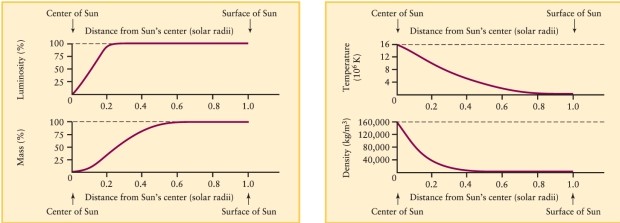
According to the theoretical model of the Sun tabulated in Table 16-2 and shown graphically in Figure 16-3 of Universe, 11th ed., within what radial distance of the solar center is the vast majority of solar energy generated?
A)0.8 or 80%
B)0.25 or 25%
C)100%-because energy is generated throughout the whole Sun
D)0.60 or 60%
A)0.8 or 80%
B)0.25 or 25%
C)100%-because energy is generated throughout the whole Sun
D)0.60 or 60%
Question
Question
Question
Question
Question
Question
Question
Question
Question
Question
Question
Question
Question
Question
Question
Question
Question
Question
Question
Question
Question
Question
Question
Question
Question
Question
Question
Question
Question
Question
Question
Question
Question
Question
Question
Question
Question
Question
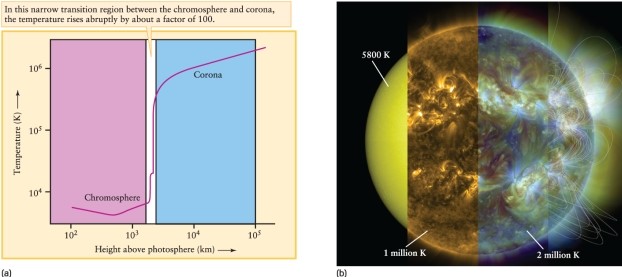
Figure 16-15 of Universe, 11th ed., shows images of the Sun at different wavelengths that correspond to different temperatures. What relationship between wavelength and temperature is being used here?
A)the Doppler shift
B)Wien's law
C)the Stefan-Boltzmann law
D)Kirchhoff's laws
A)the Doppler shift
B)Wien's law
C)the Stefan-Boltzmann law
D)Kirchhoff's laws
Question
Question
Question
Question
Question
Question
Question
Question
Question
Question
Question
Question
Question
Question
Question
Question

Unlock Deck
Sign up to unlock the cards in this deck!
Unlock Deck
Unlock Deck
1/68

Play

Full screen (f)
Deck 16: Our Star, the Sun
1
Thermonuclear fusion reactions in the core of the Sun convert four hydrogen nuclei into one helium nucleus. The helium nucleus has:
A)less mass than the four hydrogen nuclei, the lost mass becoming energy in an amount given by E = mc2.
B)the same mass as the four hydrogen nuclei, because the mass of any product has to equal the mass of the sum of its parts by the law of conservation of matter.
C)an undetermined amount of mass that depends on the temperature at which the reaction occurs.
D)more mass than the four hydrogen nuclei, because energy is produced in the reaction, and this energy adds the extra mass, m = E/c2.
A)less mass than the four hydrogen nuclei, the lost mass becoming energy in an amount given by E = mc2.
B)the same mass as the four hydrogen nuclei, because the mass of any product has to equal the mass of the sum of its parts by the law of conservation of matter.
C)an undetermined amount of mass that depends on the temperature at which the reaction occurs.
D)more mass than the four hydrogen nuclei, because energy is produced in the reaction, and this energy adds the extra mass, m = E/c2.
A
2
By how much does the mass of the Sun decrease each second because of the energy it radiates (its luminosity)?
A)4.2 × 10⁹ kg
B)3.9 × 1026 kg
C)2.0 × 10⁷ kg
D)6.0 × 10¹¹ kg
A)4.2 × 10⁹ kg
B)3.9 × 1026 kg
C)2.0 × 10⁷ kg
D)6.0 × 10¹¹ kg
A
3
If the Sun were the same temperature but twice its present diameter, the amount of energy we would receive would:
A)remain the same.
B)double.
C)increase by a factor of four.
D)increase by a factor of 16.
A)remain the same.
B)double.
C)increase by a factor of four.
D)increase by a factor of 16.
C
4
If the temperature of the surface of the Sun doubled, the amount of energy we would receive would:
A)remain the same.
B)double.
C)increase by a factor of four.
D)increase by a factor of 16.
A)remain the same.
B)double.
C)increase by a factor of four.
D)increase by a factor of 16.
Unlock Deck
Unlock for access to all 68 flashcards in this deck.
Unlock Deck
k this deck
5
How much hydrogen is converted into helium and energy in the Sun each second?
A)600 million tons
B)6 billion tons
C)600 tons
D)6 tons
A)600 million tons
B)6 billion tons
C)600 tons
D)6 tons
Unlock Deck
Unlock for access to all 68 flashcards in this deck.
Unlock Deck
k this deck
6
The contraction of a star (or other object) due to its own gravity generates heat. If this process, known as the Kelvin-Helmholtz contraction, were to be the source of heat energy from the Sun, then the Sun's age:
A)would be about 10,000 years.
B)would be about 1 billion years.
C)would be about 25 million years.
D)could easily be its present age of 4.5 billion years.
A)would be about 10,000 years.
B)would be about 1 billion years.
C)would be about 25 million years.
D)could easily be its present age of 4.5 billion years.
Unlock Deck
Unlock for access to all 68 flashcards in this deck.
Unlock Deck
k this deck
7
The Sun emits light:
A)equally at all wavelengths (flat distribution).
B)most intensely in the visible.
C)most intensely in the infrared.
D)most intensely in the radio spectrum.
A)equally at all wavelengths (flat distribution).
B)most intensely in the visible.
C)most intensely in the infrared.
D)most intensely in the radio spectrum.
Unlock Deck
Unlock for access to all 68 flashcards in this deck.
Unlock Deck
k this deck
8
A positron is:
A)an antielectron, similar to a normal electron but with inverse properties, including a positive electrical charge.
B)another name for a proton, or a positively charged hydrogen nucleus.
C)a charged neutron.
D)a positively charged neutrino, having positive charge and very small or zero mass.
A)an antielectron, similar to a normal electron but with inverse properties, including a positive electrical charge.
B)another name for a proton, or a positively charged hydrogen nucleus.
C)a charged neutron.
D)a positively charged neutrino, having positive charge and very small or zero mass.
Unlock Deck
Unlock for access to all 68 flashcards in this deck.
Unlock Deck
k this deck
9
How much matter is converted into energy in the Sun each second?
A)2 × 10⁷ kg
B)4.2 × 10⁹ kg
C)6.0 × 10¹¹ kg
D)3.9 × 1026 kg
A)2 × 10⁷ kg
B)4.2 × 10⁹ kg
C)6.0 × 10¹¹ kg
D)3.9 × 1026 kg
Unlock Deck
Unlock for access to all 68 flashcards in this deck.
Unlock Deck
k this deck
10
If the Sun were much less massive, how would the pressure at the center compare to its present value?
A)The pressure is unaffected by the mass, so the pressure at the center would be the same as its present value.
B)The pressure would decrease.
C)The pressure would increase.
D)The answer depends on what happens to the radius and thus the resulting density.
A)The pressure is unaffected by the mass, so the pressure at the center would be the same as its present value.
B)The pressure would decrease.
C)The pressure would increase.
D)The answer depends on what happens to the radius and thus the resulting density.
Unlock Deck
Unlock for access to all 68 flashcards in this deck.
Unlock Deck
k this deck
11
What is the dominant mechanism by which energy is transported through the core of the Sun?
A)by photons (radiative transport of energy)
B)by collisions of faster-moving particles with slower-moving particles (conductive transport of energy)
C)by neutrinos streaming outward through the Sun's material (particle transport of energy)
D)by hotter gas rising and cooler gas falling (convective transport of energy)
A)by photons (radiative transport of energy)
B)by collisions of faster-moving particles with slower-moving particles (conductive transport of energy)
C)by neutrinos streaming outward through the Sun's material (particle transport of energy)
D)by hotter gas rising and cooler gas falling (convective transport of energy)
Unlock Deck
Unlock for access to all 68 flashcards in this deck.
Unlock Deck
k this deck
12
Represented as a fraction of the solar radius, convection currents in the Sun's interior occupy what fraction of the Sun?
A)only about 1% of the radius
B)the outer 29% of the radius
C)only the inner 9% of the radius, at the core
D)100%, the whole radius
A)only about 1% of the radius
B)the outer 29% of the radius
C)only the inner 9% of the radius, at the core
D)100%, the whole radius
Unlock Deck
Unlock for access to all 68 flashcards in this deck.
Unlock Deck
k this deck
13
The temperature at the center of the Sun, where thermonuclear processes take place, is approximately:
A)4500 K, as shown by holes in the Sun.
B)1.5 million K.
C)6000 K.
D)1.5 × 10⁷ K.
A)4500 K, as shown by holes in the Sun.
B)1.5 million K.
C)6000 K.
D)1.5 × 10⁷ K.
Unlock Deck
Unlock for access to all 68 flashcards in this deck.
Unlock Deck
k this deck
14
According to the theoretical model of the Sun tabulated in Table 16-2 and shown graphically in Figure 16-3 of Universe, 11th ed., within what radial distance of the solar center is the vast majority of solar energy generated?
A)0.8 or 80%
B)0.25 or 25%
C)100%-because energy is generated throughout the whole Sun
D)0.60 or 60%
A)0.8 or 80%
B)0.25 or 25%
C)100%-because energy is generated throughout the whole Sun
D)0.60 or 60%
Unlock Deck
Unlock for access to all 68 flashcards in this deck.
Unlock Deck
k this deck
15
Virtually all of the Sun's mass is concentrated within what fraction of its radius?
A)the innermost 10%
B)the innermost 30%
C)the innermost 60%
D)the outer 70%
A)the innermost 10%
B)the innermost 30%
C)the innermost 60%
D)the outer 70%
Unlock Deck
Unlock for access to all 68 flashcards in this deck.
Unlock Deck
k this deck
16
The density of the Sun decreases as you move outward from the core. Approximately where is the Sun's density equal to the density of water?
A)20% of the way out from the center
B)50% of the way out from the center
C)80% of the way out from the center
D)Nowhere. The Sun's density is always greater than that of water.
A)20% of the way out from the center
B)50% of the way out from the center
C)80% of the way out from the center
D)Nowhere. The Sun's density is always greater than that of water.
Unlock Deck
Unlock for access to all 68 flashcards in this deck.
Unlock Deck
k this deck
17
What is the nature and extent of the oscillations and waves in the Sun?
A)There are many millions of pure "tones" or frequencies.
B)They have one very specific frequency, the resonant frequency of the Sun, whose period is close to 5 minutes.
C)There are several billion known frequencies or "tones."
D)There are now 10 known harmonics of the resonant frequency of the Sun, all at very specific frequencies.
A)There are many millions of pure "tones" or frequencies.
B)They have one very specific frequency, the resonant frequency of the Sun, whose period is close to 5 minutes.
C)There are several billion known frequencies or "tones."
D)There are now 10 known harmonics of the resonant frequency of the Sun, all at very specific frequencies.
Unlock Deck
Unlock for access to all 68 flashcards in this deck.
Unlock Deck
k this deck
18
How do the low-frequency sound waves associated with the 5-minute oscillations traverse the interior of the Sun?
A)They move in straight lines from point to point but lose energy when they reach the solar surface.
B)They move in straight lines from point to point and reflect from the underside of the surface, bouncing back and forth across the Sun.
C)They follow curved paths through the interior and reflect from the underside of the solar surface.
D)They follow curved paths through the interior but lose energy in raising the solar surface, disappearing when they reach the underside of the surface.
A)They move in straight lines from point to point but lose energy when they reach the solar surface.
B)They move in straight lines from point to point and reflect from the underside of the surface, bouncing back and forth across the Sun.
C)They follow curved paths through the interior and reflect from the underside of the solar surface.
D)They follow curved paths through the interior but lose energy in raising the solar surface, disappearing when they reach the underside of the surface.
Unlock Deck
Unlock for access to all 68 flashcards in this deck.
Unlock Deck
k this deck
19
Solar sound waves:
A)are the mechanism by which most solar energy is transported to the surface from the interior.
B)are generated in the Sun's core by the violent nuclear activity there and move outward through the solar surface into space.
C)reflect back and forth between the solar surface and layers deep in the solar interior.
D)reach Earth, are picked up by sensitive sound detection equipment here, and are analyzed to give us important information about the solar interior.
A)are the mechanism by which most solar energy is transported to the surface from the interior.
B)are generated in the Sun's core by the violent nuclear activity there and move outward through the solar surface into space.
C)reflect back and forth between the solar surface and layers deep in the solar interior.
D)reach Earth, are picked up by sensitive sound detection equipment here, and are analyzed to give us important information about the solar interior.
Unlock Deck
Unlock for access to all 68 flashcards in this deck.
Unlock Deck
k this deck
20
Sound waves on the Sun:
A)cannot exist because of the high temperature.
B)can travel only along the outer surface.
C)can travel only outward from the core.
D)travel both inward and outward.
A)cannot exist because of the high temperature.
B)can travel only along the outer surface.
C)can travel only outward from the core.
D)travel both inward and outward.
Unlock Deck
Unlock for access to all 68 flashcards in this deck.
Unlock Deck
k this deck
21
Solar sound waves are thought to travel:
A)only along the Sun's surface.
B)only in the convective zone.
C)only in the radiation zone.
D)in both the convective and radiation zones.
A)only along the Sun's surface.
B)only in the convective zone.
C)only in the radiation zone.
D)in both the convective and radiation zones.
Unlock Deck
Unlock for access to all 68 flashcards in this deck.
Unlock Deck
k this deck
22
The study of solar oscillations has provided information about each of the following topics EXCEPT ONE. Which one is the EXCEPTION?
A)the amount of helium in the Sun's core
B)the explanation for the solar neutrino problem
C)the thickness of the transition region between the radiation zone and the convection zone
D)the thickness of the convective zone
A)the amount of helium in the Sun's core
B)the explanation for the solar neutrino problem
C)the thickness of the transition region between the radiation zone and the convection zone
D)the thickness of the convective zone
Unlock Deck
Unlock for access to all 68 flashcards in this deck.
Unlock Deck
k this deck
23
Apart from the helium nuclei and energy that are produced in thermonuclear reactions between protons in the center of the Sun, what are the other byproducts?
A)gamma rays, negative electrons, and neutrinos
B)positive electrons (positrons), gamma rays, and neutrinos
C)gamma rays and neutrinos
D)protons, neutrinos, and negative electrons
A)gamma rays, negative electrons, and neutrinos
B)positive electrons (positrons), gamma rays, and neutrinos
C)gamma rays and neutrinos
D)protons, neutrinos, and negative electrons
Unlock Deck
Unlock for access to all 68 flashcards in this deck.
Unlock Deck
k this deck
24
How many neutrinos pass through your outstretched hand (10 × 10 cm) from the Sun every second, day and night?
A)1 trillion or 1012
B)1 trillion or 1012 in daytime-almost none during the night because they are stopped by Earth
C)10 billion or 1010
D)only a few hundred, otherwise we would notice them
A)1 trillion or 1012
B)1 trillion or 1012 in daytime-almost none during the night because they are stopped by Earth
C)10 billion or 1010
D)only a few hundred, otherwise we would notice them
Unlock Deck
Unlock for access to all 68 flashcards in this deck.
Unlock Deck
k this deck
25
The time taken for neutrinos generated in the thermonuclear reactions at the center of the Sun to escape from its surface is:
A)about 170,000 years, just like the electromagnetic energy.
B)about 1 million years.
C)extremely short-a small fraction of a second-because they travel faster than the speed of light.
D)a few seconds.
A)about 170,000 years, just like the electromagnetic energy.
B)about 1 million years.
C)extremely short-a small fraction of a second-because they travel faster than the speed of light.
D)a few seconds.
Unlock Deck
Unlock for access to all 68 flashcards in this deck.
Unlock Deck
k this deck
26
Which technique has been used since the 1960s to attempt to measure solar neutrinos?
A)measuring the interaction of neutrinos with water molecules in huge underground tanks
B)production of radioactive argon nuclei by neutrino interaction with chlorine nuclei in deep underground tanks
C)measuring the proton-proton reaction in liquid hydrogen, where neutrinos play an intermediate role
D)measuring the interactions of neutrinos with radioactive argon nuclei producing chlorine nuclei that can be measured chemically
A)measuring the interaction of neutrinos with water molecules in huge underground tanks
B)production of radioactive argon nuclei by neutrino interaction with chlorine nuclei in deep underground tanks
C)measuring the proton-proton reaction in liquid hydrogen, where neutrinos play an intermediate role
D)measuring the interactions of neutrinos with radioactive argon nuclei producing chlorine nuclei that can be measured chemically
Unlock Deck
Unlock for access to all 68 flashcards in this deck.
Unlock Deck
k this deck
27
The solar neutrino experiment designed by Raymond Davis has detected a rate of solar neutrinos arriving at Earth that is:
A)about 1/3 of the predicted rate.
B)almost exactly equal to the predicted rate.
C)less than 1% of the predicted rate.
D)almost double the predicted rate.
A)about 1/3 of the predicted rate.
B)almost exactly equal to the predicted rate.
C)less than 1% of the predicted rate.
D)almost double the predicted rate.
Unlock Deck
Unlock for access to all 68 flashcards in this deck.
Unlock Deck
k this deck
28
The chlorine-argon neutrino detectors, like the one used by Davis, detect only neutrinos from a low-yield side branch of the main nuclear reaction in the Sun. Galium-germanium neutrino detectors were developed to detect neutrinos from the main nuclear reaction itself. When these detectors were used it was found that the:
A)measured neutrino flux was the originally predicted value-thus solving the solar neutrino problem.
B)neutrino flux was still too low.
C)neutrino flux was considerably higher than predicted, thus indicating a new solar neutrino problem.
D)neutrinos being detected were not from the Sun at all but from other sources.
A)measured neutrino flux was the originally predicted value-thus solving the solar neutrino problem.
B)neutrino flux was still too low.
C)neutrino flux was considerably higher than predicted, thus indicating a new solar neutrino problem.
D)neutrinos being detected were not from the Sun at all but from other sources.
Unlock Deck
Unlock for access to all 68 flashcards in this deck.
Unlock Deck
k this deck
29
The Davis neutrino detection experiment measured only about one-third of the expected solar neutrino flux. The Kamiokande experiment was a great improvement. Why?
A)It detected two-thirds of the expected rate.
B)It was able to detect neutrinos all across the energy spectrum and measured the expected neutrino flux.
C)It was able to measure the direction of the neutrinos it counted and thus confirm their solar origin.
D)It was able to detect neutrinos of all three types.
A)It detected two-thirds of the expected rate.
B)It was able to detect neutrinos all across the energy spectrum and measured the expected neutrino flux.
C)It was able to measure the direction of the neutrinos it counted and thus confirm their solar origin.
D)It was able to detect neutrinos of all three types.
Unlock Deck
Unlock for access to all 68 flashcards in this deck.
Unlock Deck
k this deck
30
Why was "heavy" water used in the Sudbury Neutrino Observatory instead of ordinary water?
A)It is cheaper.
B)Since it is more dense, the required weight can be obtained in a smaller volume.
C)Each nucleus contains a neutron as well as a proton. Heavy water is thus a good source of neutrons.
D)Neutrons convert the "heavy" hydrogen in heavy water into helium.
A)It is cheaper.
B)Since it is more dense, the required weight can be obtained in a smaller volume.
C)Each nucleus contains a neutron as well as a proton. Heavy water is thus a good source of neutrons.
D)Neutrons convert the "heavy" hydrogen in heavy water into helium.
Unlock Deck
Unlock for access to all 68 flashcards in this deck.
Unlock Deck
k this deck
31
The photosphere is the level of the Sun from which most of the visible radiation we see originates. The temperature of the base of the Sun's photosphere is roughly:
A)600 K.
B)6000 K.
C)60,000 K.
D)1 million K.
A)600 K.
B)6000 K.
C)60,000 K.
D)1 million K.
Unlock Deck
Unlock for access to all 68 flashcards in this deck.
Unlock Deck
k this deck
32
The photosphere is:
A)not very dense, and thus very transparent to visible light.
B)very transparent to visible light because negative hydrogen ions absorb light and then re-emit it, thus sending it on its way.
C)rather opaque to visible light because negative hydrogen ions absorb light.
D)rather opaque to visible light because it is more dense than Earth's atmosphere.
A)not very dense, and thus very transparent to visible light.
B)very transparent to visible light because negative hydrogen ions absorb light and then re-emit it, thus sending it on its way.
C)rather opaque to visible light because negative hydrogen ions absorb light.
D)rather opaque to visible light because it is more dense than Earth's atmosphere.
Unlock Deck
Unlock for access to all 68 flashcards in this deck.
Unlock Deck
k this deck
33
The granulation pattern seen on the surface of the Sun results from:
A)heating of the photosphere by solar flares.
B)the differential rotation of the Sun.
C)strong magnetic fields cooling the gas in certain regions.
D)convection of gas in the region under the photosphere.
A)heating of the photosphere by solar flares.
B)the differential rotation of the Sun.
C)strong magnetic fields cooling the gas in certain regions.
D)convection of gas in the region under the photosphere.
Unlock Deck
Unlock for access to all 68 flashcards in this deck.
Unlock Deck
k this deck
34
What is the cellular granulation pattern seen on the visible surface of the Sun?
A)The cells are regions of nuclear energy generation in the Sun's photosphere.
B)The cells are the bases of circulation patterns that extend from the photosphere to the outer corona.
C)Each cell is a region of stronger magnetic field that compresses and heats the gas within it.
D)The cells are the tops of rising blobs of hot gas in the Sun's convective interior.
A)The cells are regions of nuclear energy generation in the Sun's photosphere.
B)The cells are the bases of circulation patterns that extend from the photosphere to the outer corona.
C)Each cell is a region of stronger magnetic field that compresses and heats the gas within it.
D)The cells are the tops of rising blobs of hot gas in the Sun's convective interior.
Unlock Deck
Unlock for access to all 68 flashcards in this deck.
Unlock Deck
k this deck
35
The centers of the granular cells on the surface of the Sun are brighter than the edges of the cells because the centers are:
A)composed of different gases than the edges.
B)hotter than the edges.
C)denser than the edges.
D)cooler than the edges.
A)composed of different gases than the edges.
B)hotter than the edges.
C)denser than the edges.
D)cooler than the edges.
Unlock Deck
Unlock for access to all 68 flashcards in this deck.
Unlock Deck
k this deck
36
If the temperature at the edge of a solar granular cell is 5500 K and the center of the cell is 300 K hotter, what will be the ratio of fluxes of energy out of these two regions of the Sun (i.e., brightness contrast)?
A)center brighter than edge by a factor of 1.11
B)center brighter than edge by a factor of 1.05
C)edge brighter than center by a factor of 1.24
D)center brighter than edge by a factor of 1.24
A)center brighter than edge by a factor of 1.11
B)center brighter than edge by a factor of 1.05
C)edge brighter than center by a factor of 1.24
D)center brighter than edge by a factor of 1.24
Unlock Deck
Unlock for access to all 68 flashcards in this deck.
Unlock Deck
k this deck
37
At visible wavelengths, what type of intensity distribution does one see at the edge or limb of the Sun?
A)an image of uniform brightness right to the limb
B)an image with uniform distribution except where active regions occur
C)limb darkening
D)limb brightening
A)an image of uniform brightness right to the limb
B)an image with uniform distribution except where active regions occur
C)limb darkening
D)limb brightening
Unlock Deck
Unlock for access to all 68 flashcards in this deck.
Unlock Deck
k this deck
38
The chemical composition of the surface layers of the Sun is determined primarily by:
A)examination of samples of meteorites that originated in the Sun.
B)satellite measurements of the solar wind.
C)theoretical modeling and computer calculation.
D)spectroscopy.
A)examination of samples of meteorites that originated in the Sun.
B)satellite measurements of the solar wind.
C)theoretical modeling and computer calculation.
D)spectroscopy.
Unlock Deck
Unlock for access to all 68 flashcards in this deck.
Unlock Deck
k this deck
39
The appearance of the visible spectrum of the Sun, when its light is separated in its component colors, is a:
A)uniform continuous spectrum with no structure.
B)spectrum containing many dark absorption and many bright emission lines on a continuous background.
C)continuous bright spectrum, crossed by thousands of dark absorption lines.
D)spectrum consisting only of a few bright emission lines.
A)uniform continuous spectrum with no structure.
B)spectrum containing many dark absorption and many bright emission lines on a continuous background.
C)continuous bright spectrum, crossed by thousands of dark absorption lines.
D)spectrum consisting only of a few bright emission lines.
Unlock Deck
Unlock for access to all 68 flashcards in this deck.
Unlock Deck
k this deck
40
In order from highest to lowest, what are the names of the three layers in the Sun's atmosphere?
A)photosphere, chromosphere, and corona
B)photosphere, corona, and chromosphere
C)chromosphere, photosphere, and corona
D)corona, chromosphere, and photosphere
A)photosphere, chromosphere, and corona
B)photosphere, corona, and chromosphere
C)chromosphere, photosphere, and corona
D)corona, chromosphere, and photosphere
Unlock Deck
Unlock for access to all 68 flashcards in this deck.
Unlock Deck
k this deck
41
The dark lines in the solar spectrum are caused by:
A)places in the spectrum that would ordinarily be filled in by elements that are not present on the Sun.
B)wavelengths that have been Doppler shifted to higher frequencies beyond the visible spectrum.
C)wavelengths that have been Doppler shifted to lower frequencies beyond the visible spectrum.
D)wavelengths that have been absorbed by atoms between us and the source of the light.
A)places in the spectrum that would ordinarily be filled in by elements that are not present on the Sun.
B)wavelengths that have been Doppler shifted to higher frequencies beyond the visible spectrum.
C)wavelengths that have been Doppler shifted to lower frequencies beyond the visible spectrum.
D)wavelengths that have been absorbed by atoms between us and the source of the light.
Unlock Deck
Unlock for access to all 68 flashcards in this deck.
Unlock Deck
k this deck
42
Supergranules on the Sun are:
A)large and long-lived convecting gas cells, containing hundreds of ordinary granules.
B)very large but otherwise ordinary granules.
C)large areas in which the rapid convection of the gas destroys all granules that would otherwise form in that area.
D)another name for large, long-lived sunspot groups.
A)large and long-lived convecting gas cells, containing hundreds of ordinary granules.
B)very large but otherwise ordinary granules.
C)large areas in which the rapid convection of the gas destroys all granules that would otherwise form in that area.
D)another name for large, long-lived sunspot groups.
Unlock Deck
Unlock for access to all 68 flashcards in this deck.
Unlock Deck
k this deck
43
The visible light coming from the solar chromosphere is dominated by light at what wavelength(s)?
A)the red hydrogen Balmer H emission line
B)a continuous spectrum over all wavelengths, crossed by numerous dark absorption lines
C)a featureless and continuous spectrum over all wavelengths from blue to red, scattered by chromospheric material
D)the green emission line from iron atoms that have lost 13 electrons, Fe XIV
A)the red hydrogen Balmer H emission line
B)a continuous spectrum over all wavelengths, crossed by numerous dark absorption lines
C)a featureless and continuous spectrum over all wavelengths from blue to red, scattered by chromospheric material
D)the green emission line from iron atoms that have lost 13 electrons, Fe XIV
Unlock Deck
Unlock for access to all 68 flashcards in this deck.
Unlock Deck
k this deck
44
How would you view the Sun's chromosphere?
A)You must wait for a total solar eclipse.
B)You would use a filter that allows only the H line to pass through.
C)You would use a filter that allows everything except the H line to pass through.
D)You would take a broad-spectrum image (without a filter) from above Earth's atmosphere.
A)You must wait for a total solar eclipse.
B)You would use a filter that allows only the H line to pass through.
C)You would use a filter that allows everything except the H line to pass through.
D)You would take a broad-spectrum image (without a filter) from above Earth's atmosphere.
Unlock Deck
Unlock for access to all 68 flashcards in this deck.
Unlock Deck
k this deck
45
Where would you expect to find spicules?
A)in interstellar clouds heated by hot, massive stars
B)in supernova remnants
C)in the atmosphere of the Sun
D)in binary star systems in which one star is a neutron star attracting and collecting mass from the other
A)in interstellar clouds heated by hot, massive stars
B)in supernova remnants
C)in the atmosphere of the Sun
D)in binary star systems in which one star is a neutron star attracting and collecting mass from the other
Unlock Deck
Unlock for access to all 68 flashcards in this deck.
Unlock Deck
k this deck
46
Fibrils in the Sun's atmosphere are also called:
A)sunspots.
B)spicules.
C)flares.
D)granules.
A)sunspots.
B)spicules.
C)flares.
D)granules.
Unlock Deck
Unlock for access to all 68 flashcards in this deck.
Unlock Deck
k this deck
47
Material in solar spicules is ejected out of the Sun at typical speeds of 20 km/s. What would be the observed wavelength of the Balmer H hydrogen spectral line emitted by this gas, compared to that from stationary solar material?
A)There will be no shift, because the light is emitted by hydrogen gas in both the spicule and the stationary solar material.
B)0.000067 nm shorter than the H from the stationary solar material
C)0.044 nm longer than the H from stationary solar material
D)0.044 nm shorter than the H from stationary solar material
A)There will be no shift, because the light is emitted by hydrogen gas in both the spicule and the stationary solar material.
B)0.000067 nm shorter than the H from the stationary solar material
C)0.044 nm longer than the H from stationary solar material
D)0.044 nm shorter than the H from stationary solar material
Unlock Deck
Unlock for access to all 68 flashcards in this deck.
Unlock Deck
k this deck
48
The corona contains very little energy because:
A)its temperature is relatively low.
B)its temperature is high but there are very few atoms.
C)its temperature is high but the atoms here are relatively large and thus move slowly.
D)the most energetic particles are carried away by the solar wind, leaving the less energetic behind.
A)its temperature is relatively low.
B)its temperature is high but there are very few atoms.
C)its temperature is high but the atoms here are relatively large and thus move slowly.
D)the most energetic particles are carried away by the solar wind, leaving the less energetic behind.
Unlock Deck
Unlock for access to all 68 flashcards in this deck.
Unlock Deck
k this deck
49
How did astronomers first detect the high temperatures in the corona of the Sun?
A)by measuring the brightness of the corona in visible (white) light
B)by direct measurements using space probes
C)by observing emission lines of highly ionized elements like iron
D)by observing the effects the high temperature has on Mercury and Venus
A)by measuring the brightness of the corona in visible (white) light
B)by direct measurements using space probes
C)by observing emission lines of highly ionized elements like iron
D)by observing the effects the high temperature has on Mercury and Venus
Unlock Deck
Unlock for access to all 68 flashcards in this deck.
Unlock Deck
k this deck
50
Why does the observation of spectral emission from a highly ionized atom such as iron, Fe XIV, with 13 electrons missing, indicate very high gas temperatures?
A)The presence of iron means that nuclear fusion must be occurring, and this process needs very high temperatures.
B)Highly ionized atoms must come from high-density regions that can only exist in high temperature gases.
C)Collisions that remove this number of electrons must be very energetic between fast-moving atoms.
D)Photons that will eject these electrons must be very energetic and come from high-temperature gas.
A)The presence of iron means that nuclear fusion must be occurring, and this process needs very high temperatures.
B)Highly ionized atoms must come from high-density regions that can only exist in high temperature gases.
C)Collisions that remove this number of electrons must be very energetic between fast-moving atoms.
D)Photons that will eject these electrons must be very energetic and come from high-temperature gas.
Unlock Deck
Unlock for access to all 68 flashcards in this deck.
Unlock Deck
k this deck
51
A coronal hole shows up most prominently in photographs taken at what wavelengths?
A)radio wavelengths
B)visible light
C)x ray
D)the specific color of the first Balmer line of hydrogen, , at 656.3 nm
A)radio wavelengths
B)visible light
C)x ray
D)the specific color of the first Balmer line of hydrogen, , at 656.3 nm
Unlock Deck
Unlock for access to all 68 flashcards in this deck.
Unlock Deck
k this deck
52
Figure 16-15 of Universe, 11th ed., shows images of the Sun at different wavelengths that correspond to different temperatures. What relationship between wavelength and temperature is being used here?
A)the Doppler shift
B)Wien's law
C)the Stefan-Boltzmann law
D)Kirchhoff's laws
A)the Doppler shift
B)Wien's law
C)the Stefan-Boltzmann law
D)Kirchhoff's laws
Unlock Deck
Unlock for access to all 68 flashcards in this deck.
Unlock Deck
k this deck
53
How do the physical conditions within a coronal hole compare with those of the rest of the solar corona?
A)higher temperature but very low density
B)lower temperature but very high density
C)higher temperature and higher density
D)lower temperature and lower density
A)higher temperature but very low density
B)lower temperature but very high density
C)higher temperature and higher density
D)lower temperature and lower density
Unlock Deck
Unlock for access to all 68 flashcards in this deck.
Unlock Deck
k this deck
54
What is the source of the solar wind?
A)gas flung out from solar flares
B)gas escaping from x-ray-bright regions of the solar corona
C)gas flung out from the Sun's equatorial region by the centrifugal force due to the Sun's rotation
D)gas escaping through coronal holes
A)gas flung out from solar flares
B)gas escaping from x-ray-bright regions of the solar corona
C)gas flung out from the Sun's equatorial region by the centrifugal force due to the Sun's rotation
D)gas escaping through coronal holes
Unlock Deck
Unlock for access to all 68 flashcards in this deck.
Unlock Deck
k this deck
55
What is the lifetime of a typical sunspot?
A)from a few hours to a few months
B)from a few years to a few decades
C)11 years
D)Here today, gone tomorrow!
A)from a few hours to a few months
B)from a few years to a few decades
C)11 years
D)Here today, gone tomorrow!
Unlock Deck
Unlock for access to all 68 flashcards in this deck.
Unlock Deck
k this deck
56
Sunspots have been observed:
A)since at least 2000 years ago.
B)only since 1610, since they cannot be seen without a telescope.
C)only since 1859, when special filters were developed.
D)only in recent decades, since they must be observed from outside Earth's atmosphere.
A)since at least 2000 years ago.
B)only since 1610, since they cannot be seen without a telescope.
C)only since 1859, when special filters were developed.
D)only in recent decades, since they must be observed from outside Earth's atmosphere.
Unlock Deck
Unlock for access to all 68 flashcards in this deck.
Unlock Deck
k this deck
57
If sunspots are cooler than the photosphere (by at least 1000 K), what will be the peak wavelength in a sunspot spectrum compared with the peak wavelength of the photospheric spectrum?
A)the same, because the spectrum still originates on the Sun
B)either shorter or longer, depending upon the polarity (north or south) of the magnetic field of the spot
C)longer
D)shorter
A)the same, because the spectrum still originates on the Sun
B)either shorter or longer, depending upon the polarity (north or south) of the magnetic field of the spot
C)longer
D)shorter
Unlock Deck
Unlock for access to all 68 flashcards in this deck.
Unlock Deck
k this deck
58
If the temperature near the center of a particular sunspot is 4350 K and the temperature of the surrounding photosphere is 5800 K, then the energy flux (energy passing through each m2/s) from the center of the sunspot is what fraction of the energy flux from the surrounding photosphere?
A)75%
B)87%
C)56%
D)32%
A)75%
B)87%
C)56%
D)32%
Unlock Deck
Unlock for access to all 68 flashcards in this deck.
Unlock Deck
k this deck
59
Due to differential rotation, sunspot groups near the north and south poles of the Sun may take as much as __________ to rotate around the Sun.
A)5 days longer
B)10 days longer
C)5 days less
D)10 days less
A)5 days longer
B)10 days longer
C)5 days less
D)10 days less
Unlock Deck
Unlock for access to all 68 flashcards in this deck.
Unlock Deck
k this deck
60
What is the character of the sunspot cycle?
A)Sunspots increase and decrease in number over 11 years within a band of solar latitude between 10° and 30°, with no discernible dependence of sunspot latitude upon time.
B)Starting at sunspot minimum, new spots appear uniformly over the Sun but gradually, new spots become concentrated at mid-latitudes as they increase and then decrease in number.
C)Starting at sunspot minimum, new spots appear close to the equator, followed by newer spots farther from the equator until, when numbers decrease, they grow and decay at high latitudes.
D)Starting at sunspot minimum, spots first appear far from the equator, followed by new spots appearing successively closer to the equator as they increase in number and finally, spots form close to the equator as numbers begin to decrease.
A)Sunspots increase and decrease in number over 11 years within a band of solar latitude between 10° and 30°, with no discernible dependence of sunspot latitude upon time.
B)Starting at sunspot minimum, new spots appear uniformly over the Sun but gradually, new spots become concentrated at mid-latitudes as they increase and then decrease in number.
C)Starting at sunspot minimum, new spots appear close to the equator, followed by newer spots farther from the equator until, when numbers decrease, they grow and decay at high latitudes.
D)Starting at sunspot minimum, spots first appear far from the equator, followed by new spots appearing successively closer to the equator as they increase in number and finally, spots form close to the equator as numbers begin to decrease.
Unlock Deck
Unlock for access to all 68 flashcards in this deck.
Unlock Deck
k this deck
61
Compressed magnetic fields tend to push themselves apart. Yet sunspots can be stable for as long as 2 months. How do we explain this?
A)Sunspots are stabilized by the circulation of charged gases around the field below the surface of the photosphere.
B)Sunspots tend to occur in pairs of opposite polarity. The repulsive forces tend to keep each group compressed.
C)The energy that is needed to push the field lines apart is instead expended in sending spicules into the chromosphere.
D)The sunspot pairs (preceding and following members) cancel out, relaxing the magnetic fields and their tendency to repel.
A)Sunspots are stabilized by the circulation of charged gases around the field below the surface of the photosphere.
B)Sunspots tend to occur in pairs of opposite polarity. The repulsive forces tend to keep each group compressed.
C)The energy that is needed to push the field lines apart is instead expended in sending spicules into the chromosphere.
D)The sunspot pairs (preceding and following members) cancel out, relaxing the magnetic fields and their tendency to repel.
Unlock Deck
Unlock for access to all 68 flashcards in this deck.
Unlock Deck
k this deck
62
If the magnetic polarity of the north pole of the Sun at a particular time is north, what will be the polarity of the preceding or leading spot of a bipolar sunspot region rotating about the Sun in the northern hemisphere?
A)The polarity will depend upon the latitude of the spot and will be north if greater than 60° latitude and south if less than 60° latitude.
B)It is not possible to determine this from the information given.
C)It is south.
D)It is north.
A)The polarity will depend upon the latitude of the spot and will be north if greater than 60° latitude and south if less than 60° latitude.
B)It is not possible to determine this from the information given.
C)It is south.
D)It is north.
Unlock Deck
Unlock for access to all 68 flashcards in this deck.
Unlock Deck
k this deck
63
At the maximum of the sunspot cycle most sunspots form around north and south latitude:
A)0° (the Sun's equator).
B)15°.
C)30°.
D)90° (the solar poles).
A)0° (the Sun's equator).
B)15°.
C)30°.
D)90° (the solar poles).
Unlock Deck
Unlock for access to all 68 flashcards in this deck.
Unlock Deck
k this deck
64
Most solar variations associated with the so-called solar cycle show a repetitive pattern of magnetic behavior with an approximate period of:
A)about 1 year.
B)11 years.
C)22 years.
D)28 days-close to one solar rotation.
A)about 1 year.
B)11 years.
C)22 years.
D)28 days-close to one solar rotation.
Unlock Deck
Unlock for access to all 68 flashcards in this deck.
Unlock Deck
k this deck
65
The 11-year sunspot cycle on the Sun is:
A)the regular movement of a relatively constant number of sunspots from the poles to the equator of the Sun over an 11-year period.
B)an irregular, sometimes absent variation in the number of visible sunspots.
C)a perfectly regular buildup and decay of the number of sunspots, with a precise period of 11.1 years.
D)a somewhat irregular but always present cycle of buildup and decay of sunspot numbers.
A)the regular movement of a relatively constant number of sunspots from the poles to the equator of the Sun over an 11-year period.
B)an irregular, sometimes absent variation in the number of visible sunspots.
C)a perfectly regular buildup and decay of the number of sunspots, with a precise period of 11.1 years.
D)a somewhat irregular but always present cycle of buildup and decay of sunspot numbers.
Unlock Deck
Unlock for access to all 68 flashcards in this deck.
Unlock Deck
k this deck
66
What is a plage?
A)a bright area on the photosphere, seen in the light of helium and heavier atoms
B)a bright area in the chromosphere, seen in the light of hydrogen and other atoms
C)a sudden eruption on the photosphere in the vicinity of sunspot groups
D)a region in the corona that looks bright against the darkness of space but dark against the brighter photosphere
A)a bright area on the photosphere, seen in the light of helium and heavier atoms
B)a bright area in the chromosphere, seen in the light of hydrogen and other atoms
C)a sudden eruption on the photosphere in the vicinity of sunspot groups
D)a region in the corona that looks bright against the darkness of space but dark against the brighter photosphere
Unlock Deck
Unlock for access to all 68 flashcards in this deck.
Unlock Deck
k this deck
67
Sunspots lie in the photosphere. What influence do they have on the corona above them?
A)The magnetic fields arching upward from the sunspot conduct heat to the corona and cause ultraviolet and x-ray emissions from points directly above the sunspots.
B)The magnetic fields arching upward from the sunspot end directly on coronal holes.
C)Sunspots block energy from flowing to the corona, so the regions directly above sunspots tend to be cooler and to emit longer wavelengths of infrared.
D)The chromosphere acts as a shield between the photosphere and the corona, so these two layers do not influence each other.
A)The magnetic fields arching upward from the sunspot conduct heat to the corona and cause ultraviolet and x-ray emissions from points directly above the sunspots.
B)The magnetic fields arching upward from the sunspot end directly on coronal holes.
C)Sunspots block energy from flowing to the corona, so the regions directly above sunspots tend to be cooler and to emit longer wavelengths of infrared.
D)The chromosphere acts as a shield between the photosphere and the corona, so these two layers do not influence each other.
Unlock Deck
Unlock for access to all 68 flashcards in this deck.
Unlock Deck
k this deck
68
How is sunspot activity on the side of the Sun facing away from Earth monitored?
A)We must wait 1 month until that side rotates to face Earth.
B)This can be done only from a spacecraft on the far side of the Sun.
C)Sunspots on the far side of the Sun influence the reflection of sound waves toward the near side, where they can be monitored.
D)Neutrinos reflecting from the sunspots on the far side add to the number reaching Earth.
A)We must wait 1 month until that side rotates to face Earth.
B)This can be done only from a spacecraft on the far side of the Sun.
C)Sunspots on the far side of the Sun influence the reflection of sound waves toward the near side, where they can be monitored.
D)Neutrinos reflecting from the sunspots on the far side add to the number reaching Earth.
Unlock Deck
Unlock for access to all 68 flashcards in this deck.
Unlock Deck
k this deck
Unlock Deck
Unlock for access to all 68 flashcards in this deck.






