







 Chat with AI

Deck 10: Our Barren Moon
Full screen (f)

Question

Question
Question
Question
Question
Question
Question
Question
Question
Question
Question
Question
Question
Question
Question
Question
Question
Question
Question
Question
Question
Question
Question
Question
Question
Question
Question
Question
Question
Question
Question
Question
Question
Question
Question
Question
Question
Figure 10-4 of Universe, 11th ed., shows the Crater Clavius. It is 232 km in diameter, but it has relatively few smaller craters within it. This suggests that:
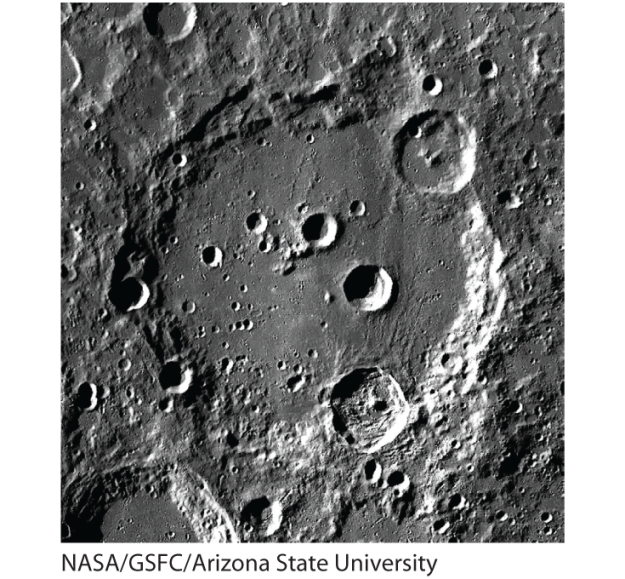
A)Crater Clavius is not very old.
B)the smaller craters are older than Clavius itself.
C)Clavius is of volcanic origin.
D)Clavius is an impact crater but the smaller craters are volcanic.
A)Crater Clavius is not very old.
B)the smaller craters are older than Clavius itself.
C)Clavius is of volcanic origin.
D)Clavius is an impact crater but the smaller craters are volcanic.
Question
Question
Question
Question
Question
Question
Question
Question
Question
Question
Question
Question
Question
Question
Question
Question
Question
Question
Question
Question
Question
Question
Question
Question
Question
Question
Question
Question
Question
Question
Question
Question
Question
Question
Question
Question
Question
Question
Question
Question
Question
Question
Question

Unlock Deck
Sign up to unlock the cards in this deck!
Unlock Deck
Unlock Deck
1/101

Play

Full screen (f)
Deck 10: Our Barren Moon
1
The terminator on the Moon is a line:
A)joining north and south lunar poles, passing through the center of the largest mare, Imbrium, representing 0° of lunar longitude.
B)between the near and far sides of the Moon.
C)between the solar-illuminated and dark hemispheres.
D)along the equator, between northern and southern hemispheres.
A)joining north and south lunar poles, passing through the center of the largest mare, Imbrium, representing 0° of lunar longitude.
B)between the near and far sides of the Moon.
C)between the solar-illuminated and dark hemispheres.
D)along the equator, between northern and southern hemispheres.
C
2
People on Earth see:
A)only the sunlit side of the Moon.
B)the same side of the Moon at all times.
C)the entire Moon once each month as it rotates.
D)the entire surface of the Moon once per year as Earth revolves around the Sun.
A)only the sunlit side of the Moon.
B)the same side of the Moon at all times.
C)the entire Moon once each month as it rotates.
D)the entire surface of the Moon once per year as Earth revolves around the Sun.
B
3
The rotation period of the Moon on its axis with respect to space (its absolute rotation) is:
A)infinitely long, because the Moon never rotates.
B)27.3 days, the sidereal revolution period.
C)365.25 days, to match Earth's revolution period.
D)29.5 days, the synodic period.
A)infinitely long, because the Moon never rotates.
B)27.3 days, the sidereal revolution period.
C)365.25 days, to match Earth's revolution period.
D)29.5 days, the synodic period.
B
4
If you were on the Moon, how long would it take between two crossings of a star in the sky through your zenith?
A)infinite time, because the Moon does not rotate on its axis
B)27.3 days
C)23 hours 56 minutes
D)29.5 days
A)infinite time, because the Moon does not rotate on its axis
B)27.3 days
C)23 hours 56 minutes
D)29.5 days
Unlock Deck
Unlock for access to all 101 flashcards in this deck.
Unlock Deck
k this deck
5
How long is a "lunar day," or the time between two successive sunrises or sunsets on the Moon?
A)about 1 month
B)infinitely long, because the Moon does not rotate about its axis with respect to the Sun
C)about 1 year
D)about 1 day
A)about 1 month
B)infinitely long, because the Moon does not rotate about its axis with respect to the Sun
C)about 1 year
D)about 1 day
Unlock Deck
Unlock for access to all 101 flashcards in this deck.
Unlock Deck
k this deck
6
If you were standing on the Moon with Earth in view, how much time would elapse between two successive "Earthrises"?
A)about 1 synodic month
B)about 1 day
C)about 1 sidereal month
D)infinite time, because the same side of the Moon always faces toward Earth
A)about 1 synodic month
B)about 1 day
C)about 1 sidereal month
D)infinite time, because the same side of the Moon always faces toward Earth
Unlock Deck
Unlock for access to all 101 flashcards in this deck.
Unlock Deck
k this deck
7
If you were stationed at a lunar research facility on the near side of the Moon, what view of Earth would you have?
A)Earth would rise in the east and set in the west.
B)Earth would rise in the west and set in the east.
C)Earth would always be visible overhead.
D)Earth would not be visible at all.
A)Earth would rise in the east and set in the west.
B)Earth would rise in the west and set in the east.
C)Earth would always be visible overhead.
D)Earth would not be visible at all.
Unlock Deck
Unlock for access to all 101 flashcards in this deck.
Unlock Deck
k this deck
8
Which of the following is not true concerning the view from a Moon base that can be seen from Earth?
A)Earth is always in view at approximately the same position in the sky.
B)The Sun is not always in the sky.
C)Earth shows all the phases of crescent, quarter, gibbous, and full in a period of 1 month.
D)Earth rises, sets, and moves across the lunar sky.
A)Earth is always in view at approximately the same position in the sky.
B)The Sun is not always in the sky.
C)Earth shows all the phases of crescent, quarter, gibbous, and full in a period of 1 month.
D)Earth rises, sets, and moves across the lunar sky.
Unlock Deck
Unlock for access to all 101 flashcards in this deck.
Unlock Deck
k this deck
9
Suppose you lived on the rim of the lunar crater Copernicus, which is visible from Earth. How often would Earth set below your horizon?
A)once every 24 hours
B)once every 27.5 days
C)once every 29.5 days
D)never
A)once every 24 hours
B)once every 27.5 days
C)once every 29.5 days
D)never
Unlock Deck
Unlock for access to all 101 flashcards in this deck.
Unlock Deck
k this deck
10
If astronauts set up a permanent settlement at Tranquility Base on the Moon, how many times each year would Earth rise and set as seen by a resident of this base?
A)13 times each year
B)once each year
C)never-Earth would remain essentially motionless in the sky.
D)12 times each year
A)13 times each year
B)once each year
C)never-Earth would remain essentially motionless in the sky.
D)12 times each year
Unlock Deck
Unlock for access to all 101 flashcards in this deck.
Unlock Deck
k this deck
11
More detail is seen on the Moon at quarter phases than at full phases because:
A)surface mists that are prominent at full phase have cleared at quarter phases.
B)parts of the Moon that are visible at these phases show more craters in general.
C)features on the Moon cast distinct shadows to produce high contrast at these phases.
D)the Moon is closer to Earth at these phases.
A)surface mists that are prominent at full phase have cleared at quarter phases.
B)parts of the Moon that are visible at these phases show more craters in general.
C)features on the Moon cast distinct shadows to produce high contrast at these phases.
D)the Moon is closer to Earth at these phases.
Unlock Deck
Unlock for access to all 101 flashcards in this deck.
Unlock Deck
k this deck
12
If the angular resolution of detail on astronomical objects is limited to about 0.5 arcsec by seeing fluctuations in Earth's atmosphere, what is the smallest lunar crater that can be seen from Earth? (Hint: Use the small-angle formula in Chapter 1, Universe, 11th ed.)
A)about 100 m
B)about 3.8 km
C)about 250 m
D)about 1 km
A)about 100 m
B)about 3.8 km
C)about 250 m
D)about 1 km
Unlock Deck
Unlock for access to all 101 flashcards in this deck.
Unlock Deck
k this deck
13
Libration is:
A)apparent wobbling of the Moon due to the shape and orientation of its orbit and rotation axis.
B)a custom of toasting astronauts with champagne when they touch down on the Moon.
C)exact synchronicity between orbital motion of the Moon and its rotation about its own axis.
D)gradual movement of the terminator across the visible face of the Moon.
A)apparent wobbling of the Moon due to the shape and orientation of its orbit and rotation axis.
B)a custom of toasting astronauts with champagne when they touch down on the Moon.
C)exact synchronicity between orbital motion of the Moon and its rotation about its own axis.
D)gradual movement of the terminator across the visible face of the Moon.
Unlock Deck
Unlock for access to all 101 flashcards in this deck.
Unlock Deck
k this deck
14
Over time, what fraction of the Moon's surface can we see from Earth?
A)about 60%, because of the shape and orientation of the Moon's orbit and rotation axis
B)52%, because two observers on Earth see the Moon from slightly different angles
C)100%, because of the rotation of the Moon about its axis
D)exactly 50%, because the Moon is in synchronous rotation around Earth
A)about 60%, because of the shape and orientation of the Moon's orbit and rotation axis
B)52%, because two observers on Earth see the Moon from slightly different angles
C)100%, because of the rotation of the Moon about its axis
D)exactly 50%, because the Moon is in synchronous rotation around Earth
Unlock Deck
Unlock for access to all 101 flashcards in this deck.
Unlock Deck
k this deck
15
Estimates of the heights of lunar mountains can be made by measuring the lengths of their shadows when the Sun angle on them is relatively low. If a shadow length on a photograph of an isolated mountain on a flat plain is measured at 5 km when the solar elevation angle (angle above the horizon as seen by someone on the Moon) is about 6°, what is the mountain height above the plain? (A diagram might help, and the small-angle formula in Chapter 1, Universe, 11th ed. will be useful.)
A)500 m
B)5 km
C)2 km
D)50 km
A)500 m
B)5 km
C)2 km
D)50 km
Unlock Deck
Unlock for access to all 101 flashcards in this deck.
Unlock Deck
k this deck
16
The Moon has:
A)an atmosphere of CO2, but no evidence of water.
B)a lot of evidence for an atmosphere and the presence of liquid water (e.g., wind erosion and winding river valleys).
C)no measurable atmosphere or liquid water.
D)no measurable atmosphere, but plenty of groundwater.
A)an atmosphere of CO2, but no evidence of water.
B)a lot of evidence for an atmosphere and the presence of liquid water (e.g., wind erosion and winding river valleys).
C)no measurable atmosphere or liquid water.
D)no measurable atmosphere, but plenty of groundwater.
Unlock Deck
Unlock for access to all 101 flashcards in this deck.
Unlock Deck
k this deck
17
The so-called maria, or "seas" on the lunar surface, do not and could not contain water because:
A)the water would boil and evaporate away rapidly in the vacuum of space.
B)any water falling on the porous surface would soak into it.
C)the water would have frozen into permafrost in the intense cold on the lunar surface.
D)the water would react chemically with the surface rocks.
A)the water would boil and evaporate away rapidly in the vacuum of space.
B)any water falling on the porous surface would soak into it.
C)the water would have frozen into permafrost in the intense cold on the lunar surface.
D)the water would react chemically with the surface rocks.
Unlock Deck
Unlock for access to all 101 flashcards in this deck.
Unlock Deck
k this deck
18
Most of the craters on the Moon were formed by:
A)slumping of the surface following the outflow of lava from below the region.
B)bombardment by interplanetary meteoritic material.
C)wind and water erosion of mountains and hills in the distant past.
D)volcanic action; the craters are the old calderas of volcanoes.
A)slumping of the surface following the outflow of lava from below the region.
B)bombardment by interplanetary meteoritic material.
C)wind and water erosion of mountains and hills in the distant past.
D)volcanic action; the craters are the old calderas of volcanoes.
Unlock Deck
Unlock for access to all 101 flashcards in this deck.
Unlock Deck
k this deck
19
One piece of experimental evidence that supports the idea that the Moon's craters were formed by high-speed impacts is that the craters are round. Another piece of evidence is the:
A)lava that fills each crater, even the small ones.
B)long rays that project from all lunar craters.
C)central peak in the craters.
D)steep walls of the craters, undercut on the side away from the direction in which the Moon is rotating.
A)lava that fills each crater, even the small ones.
B)long rays that project from all lunar craters.
C)central peak in the craters.
D)steep walls of the craters, undercut on the side away from the direction in which the Moon is rotating.
Unlock Deck
Unlock for access to all 101 flashcards in this deck.
Unlock Deck
k this deck
20
Consider a large lunar crater, say 100 km across. What probably caused its formation?
A)a projectile 100 km across
B)a projectile larger than 100 km across (since much of it would vaporize on impact)
C)the shock wave generated by a projectile considerably less than 100 km across
D)a lunar volcano
A)a projectile 100 km across
B)a projectile larger than 100 km across (since much of it would vaporize on impact)
C)the shock wave generated by a projectile considerably less than 100 km across
D)a lunar volcano
Unlock Deck
Unlock for access to all 101 flashcards in this deck.
Unlock Deck
k this deck
21
Small craters, less than about 400 m, do not last very long on the Moon because they:
A)are obliterated by large impacts producing large craters.
B)are eroded by wind and plate movements.
C)are eroded by micrometeorite impacts.
D)soon collapse into the thick undercarpet of the regolith.
A)are obliterated by large impacts producing large craters.
B)are eroded by wind and plate movements.
C)are eroded by micrometeorite impacts.
D)soon collapse into the thick undercarpet of the regolith.
Unlock Deck
Unlock for access to all 101 flashcards in this deck.
Unlock Deck
k this deck
22
What are the most common shapes of lunar craters and why?
A)round, because the shock wave from the impact that produced them spread out uniformly in all directions
B)random shapes, because mantle convection has deformed the surface and distorted the craters since their production by impacts of meteoroids
C)all shapes from round to long and thin, depending on the angle at which the projectile hit the surface
D)round, because most of the craters were produced by volcanic explosions that formed calderas, not by meteoroid impacts
A)round, because the shock wave from the impact that produced them spread out uniformly in all directions
B)random shapes, because mantle convection has deformed the surface and distorted the craters since their production by impacts of meteoroids
C)all shapes from round to long and thin, depending on the angle at which the projectile hit the surface
D)round, because most of the craters were produced by volcanic explosions that formed calderas, not by meteoroid impacts
Unlock Deck
Unlock for access to all 101 flashcards in this deck.
Unlock Deck
k this deck
23
Maria are:
A)large impact craters infilled by lava.
B)ancient lake beds, now dry.
C)uplifted regions surrounding large shield volcanoes.
D)heavily cratered highland regions.
A)large impact craters infilled by lava.
B)ancient lake beds, now dry.
C)uplifted regions surrounding large shield volcanoes.
D)heavily cratered highland regions.
Unlock Deck
Unlock for access to all 101 flashcards in this deck.
Unlock Deck
k this deck
24
The Moon's appearance, when its whole surface is examined, could be described as:
A)craters only on the near side, smooth surface on the far side.
B)surface features uniformly distributed.
C)many maria distributed uniformly on both the near and far sides.
D)maria only on the near side, no major maria on the far side.
A)craters only on the near side, smooth surface on the far side.
B)surface features uniformly distributed.
C)many maria distributed uniformly on both the near and far sides.
D)maria only on the near side, no major maria on the far side.
Unlock Deck
Unlock for access to all 101 flashcards in this deck.
Unlock Deck
k this deck
25
Maria on the Moon exist:
A)uniformly all over the surface of the Moon.
B)only in a zone around the equator.
C)only in the north and south polar regions.
D)only on Earth-facing side of the Moon.
A)uniformly all over the surface of the Moon.
B)only in a zone around the equator.
C)only in the north and south polar regions.
D)only on Earth-facing side of the Moon.
Unlock Deck
Unlock for access to all 101 flashcards in this deck.
Unlock Deck
k this deck
26
Which of the following statements is NOT true of the Moon?
A)It shows no evidence of ever having liquid water on its surface.
B)Parts of its surface are completely saturated with craters (i.e., no uncratered surface left in these regions).
C)It has extensive lava floodplains over most of its surface, near side and far side.
D)It has large basins that were carved out by asteroid impacts.
A)It shows no evidence of ever having liquid water on its surface.
B)Parts of its surface are completely saturated with craters (i.e., no uncratered surface left in these regions).
C)It has extensive lava floodplains over most of its surface, near side and far side.
D)It has large basins that were carved out by asteroid impacts.
Unlock Deck
Unlock for access to all 101 flashcards in this deck.
Unlock Deck
k this deck
27
Is there any correlation between the color of the Moon's surface material and the elevation at which it is found?
A)No, colors of surface material are mixed at all elevations.
B)Yes, darker materials are generally found at higher elevations.
C)Yes, darker materials are generally found at lower elevations.
D)No, the Moon's surface material is all the same color.
A)No, colors of surface material are mixed at all elevations.
B)Yes, darker materials are generally found at higher elevations.
C)Yes, darker materials are generally found at lower elevations.
D)No, the Moon's surface material is all the same color.
Unlock Deck
Unlock for access to all 101 flashcards in this deck.
Unlock Deck
k this deck
28
Why are the lunar maria concentrated almost entirely on the near side of the Moon?
A)The apparent concentration of maria on the near side is merely an illusion caused by the fact that the near side is the only side that we can see.
B)The crust is thicker on the far side of the Moon, restricting massive lava flows after asteroid impact.
C)Earth's gravity has concentrated asteroid impacts on the near side of the Moon.
D)Earth's gravity has concentrated meteoroid impacts on the far side of the Moon, erasing the ancient, smooth lava plains.
A)The apparent concentration of maria on the near side is merely an illusion caused by the fact that the near side is the only side that we can see.
B)The crust is thicker on the far side of the Moon, restricting massive lava flows after asteroid impact.
C)Earth's gravity has concentrated asteroid impacts on the near side of the Moon.
D)Earth's gravity has concentrated meteoroid impacts on the far side of the Moon, erasing the ancient, smooth lava plains.
Unlock Deck
Unlock for access to all 101 flashcards in this deck.
Unlock Deck
k this deck
29
The mountains on the Moon were mostly caused by:
A)tidal distortion and uplift.
B)volcanic eruption and buildup similar to terrestrial volcanoes.
C)impacts from meteoroids from outer space.
D)collisions of crustal plates under tectonic motion.
A)tidal distortion and uplift.
B)volcanic eruption and buildup similar to terrestrial volcanoes.
C)impacts from meteoroids from outer space.
D)collisions of crustal plates under tectonic motion.
Unlock Deck
Unlock for access to all 101 flashcards in this deck.
Unlock Deck
k this deck
30
What is the current state of plate tectonics on the Moon?
A)Just in the process of beginning; the rilles (or sinuous valleys) are the first signs of continental rifting.
B)Very active, this causes mountain uplift around the edges of several lunar maria.
C)Dying out; only the lunar maria show signs of tectonic movement today.
D)Absent; the Moon is a geologically dead world.
A)Just in the process of beginning; the rilles (or sinuous valleys) are the first signs of continental rifting.
B)Very active, this causes mountain uplift around the edges of several lunar maria.
C)Dying out; only the lunar maria show signs of tectonic movement today.
D)Absent; the Moon is a geologically dead world.
Unlock Deck
Unlock for access to all 101 flashcards in this deck.
Unlock Deck
k this deck
31
What is a scarp?
A)a long wall formed when the Moon's surface cooled and shrank
B)the peak in the center of a large crater
C)an especially high crater wall
D)a deep trench stretching hundreds of kilometers across the lunar surface
A)a long wall formed when the Moon's surface cooled and shrank
B)the peak in the center of a large crater
C)an especially high crater wall
D)a deep trench stretching hundreds of kilometers across the lunar surface
Unlock Deck
Unlock for access to all 101 flashcards in this deck.
Unlock Deck
k this deck
32
Earth has several lithospheric plates that gradually move in a process called plate tectonics. How many such plates are there on the Moon?
A)One; the entire lithosphere is a single plate.
B)Five; one for each of the major lunar seas (maria).
C)Six; one for the highlands (terrae) and one for each of the major lunar seas (maria).
D)Two; the region of the near side occupied by the seas (maria) forms one plate, and the rest of the Moon (the bulk of the highlands, or terrae) forms the other.
A)One; the entire lithosphere is a single plate.
B)Five; one for each of the major lunar seas (maria).
C)Six; one for the highlands (terrae) and one for each of the major lunar seas (maria).
D)Two; the region of the near side occupied by the seas (maria) forms one plate, and the rest of the Moon (the bulk of the highlands, or terrae) forms the other.
Unlock Deck
Unlock for access to all 101 flashcards in this deck.
Unlock Deck
k this deck
33
How many impact craters are there on Earth?
A)fewer than 200, all less than a few hundred million years old
B)only one very recent crater, about 25,000 years old, found in Arizona
C)thousands, their times of formation extending from present times to more than 3 billion years ago
D)about 20, the oldest of which became Chesapeake Bay and resulted in the extinction of the dinosaurs 65 million years ago
A)fewer than 200, all less than a few hundred million years old
B)only one very recent crater, about 25,000 years old, found in Arizona
C)thousands, their times of formation extending from present times to more than 3 billion years ago
D)about 20, the oldest of which became Chesapeake Bay and resulted in the extinction of the dinosaurs 65 million years ago
Unlock Deck
Unlock for access to all 101 flashcards in this deck.
Unlock Deck
k this deck
34
The impact craters on Earth are younger than a few million years old, whereas ages of lunar craters extend back billions of years. Why is this?
A)Earth escaped the heavy bombardment that pelted the Moon early in its history.
B)Earth's surface has been covered by lava flows several times in its history, whereas such activity ceased on the Moon several million years ago.
C)Weathering by rain and melting snow gradually erases craters on Earth, and this does not happen on the Moon.
D)Plate tectonics has erased older craters on Earth, whereas this process has not occurred on the Moon.
A)Earth escaped the heavy bombardment that pelted the Moon early in its history.
B)Earth's surface has been covered by lava flows several times in its history, whereas such activity ceased on the Moon several million years ago.
C)Weathering by rain and melting snow gradually erases craters on Earth, and this does not happen on the Moon.
D)Plate tectonics has erased older craters on Earth, whereas this process has not occurred on the Moon.
Unlock Deck
Unlock for access to all 101 flashcards in this deck.
Unlock Deck
k this deck
35
The major features on the near side of the Moon were named:
A)in prehistoric times.
B)by the ancient Greeks.
C)in the seventeenth century.
D)in the twentieth century.
A)in prehistoric times.
B)by the ancient Greeks.
C)in the seventeenth century.
D)in the twentieth century.
Unlock Deck
Unlock for access to all 101 flashcards in this deck.
Unlock Deck
k this deck
36
The Moon's South Pole-Aitken Basin is the largest known impact crater in the solar system. Yet it was never mentioned by the seventeenth-century astronomers who named most of the Moon's prominent features. What do we believe is the reason for this?
A)Seventeenth-century telescopes were not adequate to resolve the Basin.
B)The Basin is of very recent origin, after the seventeenth century.
C)Dust storms on the Moon have only recently uncovered the Basin.
D)The Basin is on the far side of the Moon.
A)Seventeenth-century telescopes were not adequate to resolve the Basin.
B)The Basin is of very recent origin, after the seventeenth century.
C)Dust storms on the Moon have only recently uncovered the Basin.
D)The Basin is on the far side of the Moon.
Unlock Deck
Unlock for access to all 101 flashcards in this deck.
Unlock Deck
k this deck
37
Figure 10-4 of Universe, 11th ed., shows the Crater Clavius. It is 232 km in diameter, but it has relatively few smaller craters within it. This suggests that:
A)Crater Clavius is not very old.
B)the smaller craters are older than Clavius itself.
C)Clavius is of volcanic origin.
D)Clavius is an impact crater but the smaller craters are volcanic.
A)Crater Clavius is not very old.
B)the smaller craters are older than Clavius itself.
C)Clavius is of volcanic origin.
D)Clavius is an impact crater but the smaller craters are volcanic.
Unlock Deck
Unlock for access to all 101 flashcards in this deck.
Unlock Deck
k this deck
38
How many human beings have walked on the Moon?
A)1
B)12
C)6
D)22
A)1
B)12
C)6
D)22
Unlock Deck
Unlock for access to all 101 flashcards in this deck.
Unlock Deck
k this deck
39
Which was the first country to send a space probe past the Moon?
A)China
B)France
C)Soviet Union
D)United States
A)China
B)France
C)Soviet Union
D)United States
Unlock Deck
Unlock for access to all 101 flashcards in this deck.
Unlock Deck
k this deck
40
What kind of landing did the first spacecraft make in order to reach the surface of the Moon?
A)crewed landing by the Apollo spacecraft
B)crash landing by the Ranger spacecraft
C)"drop and bounce" landing by the Pathfinder spacecraft
D)soft landing by the Surveyor spacecraft
A)crewed landing by the Apollo spacecraft
B)crash landing by the Ranger spacecraft
C)"drop and bounce" landing by the Pathfinder spacecraft
D)soft landing by the Surveyor spacecraft
Unlock Deck
Unlock for access to all 101 flashcards in this deck.
Unlock Deck
k this deck
41
Which was the first country to land humans on the Moon?
A)China
B)France
C)United States
D)Soviet Union
A)China
B)France
C)United States
D)Soviet Union
Unlock Deck
Unlock for access to all 101 flashcards in this deck.
Unlock Deck
k this deck
42
In what year did humans first land on the Moon?
A)1959
B)1966
C)1969
D)1972
A)1959
B)1966
C)1969
D)1972
Unlock Deck
Unlock for access to all 101 flashcards in this deck.
Unlock Deck
k this deck
43
How many countries have soft landed spacecraft on the Moon and returned lunar samples to Earth?
A)one-the Soviet Union
B)To avoid the possibility of contaminating Earth, no country has brought lunar samples to Earth.
C)one-the United States
D)two-the United States and the Soviet Union
A)one-the Soviet Union
B)To avoid the possibility of contaminating Earth, no country has brought lunar samples to Earth.
C)one-the United States
D)two-the United States and the Soviet Union
Unlock Deck
Unlock for access to all 101 flashcards in this deck.
Unlock Deck
k this deck
44
Which spacecraft were the first to make soft landings on the Moon?
A)Apollo
B)Surveyor
C)Luna
D)Ranger
A)Apollo
B)Surveyor
C)Luna
D)Ranger
Unlock Deck
Unlock for access to all 101 flashcards in this deck.
Unlock Deck
k this deck
45
Which robotic spacecraft successfully returned samples of lunar rocks back to Earth?
A)Ranger
B)Surveyor
C)Luna
D)Pathfinder
A)Ranger
B)Surveyor
C)Luna
D)Pathfinder
Unlock Deck
Unlock for access to all 101 flashcards in this deck.
Unlock Deck
k this deck
46
Can regions of ice exist on the surface of the Moon?
A)No, because the Moon never had water from which ice could form.
B)No, because all parts of the Moon are heated by the Sun at one time or another during each orbit, and all ice would evaporate.
C)No, because the Moon has no atmosphere, and ice would quickly evaporate (or "sublime") into space and be lost.
D)Yes, because the floors of craters at the north and south poles can be permanently shaded from the Sun.
A)No, because the Moon never had water from which ice could form.
B)No, because all parts of the Moon are heated by the Sun at one time or another during each orbit, and all ice would evaporate.
C)No, because the Moon has no atmosphere, and ice would quickly evaporate (or "sublime") into space and be lost.
D)Yes, because the floors of craters at the north and south poles can be permanently shaded from the Sun.
Unlock Deck
Unlock for access to all 101 flashcards in this deck.
Unlock Deck
k this deck
47
Why do we believe comets are the source of the water detected near the Moon's south pole?
A)We often see comets crashing into the Moon.
B)The water plume observed was analyzed to contain deuterium rather than regular hydrogen-a characteristic of comets.
C)The water plume observed contained ammonia and methane, substances characteristic of the ice in comets.
D)Only comet impacts could bury the water to the depths at which it has been found.
A)We often see comets crashing into the Moon.
B)The water plume observed was analyzed to contain deuterium rather than regular hydrogen-a characteristic of comets.
C)The water plume observed contained ammonia and methane, substances characteristic of the ice in comets.
D)Only comet impacts could bury the water to the depths at which it has been found.
Unlock Deck
Unlock for access to all 101 flashcards in this deck.
Unlock Deck
k this deck
48
What is considered to be the most likely source for the deposits of ice that have been discovered at the lunar poles?
A)the Moon's original shallow oceans
B)comets that have crashed onto the lunar surface
C)evaporation of subsurface water from lower latitudes on the Moon, which are heated by the Sun, and subsequent condensation at the poles
D)molten lava, which releases water as it cools
A)the Moon's original shallow oceans
B)comets that have crashed onto the lunar surface
C)evaporation of subsurface water from lower latitudes on the Moon, which are heated by the Sun, and subsequent condensation at the poles
D)molten lava, which releases water as it cools
Unlock Deck
Unlock for access to all 101 flashcards in this deck.
Unlock Deck
k this deck
49
Between 1966 and 1968, just prior to the manned Apollo series, five robotic spacecraft of the Surveyor series made soft landings on the lunar surface. The main purpose of these missions was to:
A)test the lunar atmosphere to see if it was breathable.
B)test the intensity of cosmic radiation to see if this radiation would threaten astronauts.
C)test the solidity of the lunar surface to see if it would support a spacecraft.
D)mark a series of landing zones for the Apollo missions.
A)test the lunar atmosphere to see if it was breathable.
B)test the intensity of cosmic radiation to see if this radiation would threaten astronauts.
C)test the solidity of the lunar surface to see if it would support a spacecraft.
D)mark a series of landing zones for the Apollo missions.
Unlock Deck
Unlock for access to all 101 flashcards in this deck.
Unlock Deck
k this deck
50
How were the landing sites for the Apollo missions selected?
A)The first ones were on flat, relatively safe terrain while the final ones were on more challenging upland terrain.
B)All were on the unknown far side of the Moon because the near side had already been thoroughly studied from Earth.
C)Each Apollo set down where a robotic Surveyor had previously landed to explore the landing site.
D)To explore at different latitudes, one Apollo set down at each pole, one at the equator, and the rest at middle latitudes.
A)The first ones were on flat, relatively safe terrain while the final ones were on more challenging upland terrain.
B)All were on the unknown far side of the Moon because the near side had already been thoroughly studied from Earth.
C)Each Apollo set down where a robotic Surveyor had previously landed to explore the landing site.
D)To explore at different latitudes, one Apollo set down at each pole, one at the equator, and the rest at middle latitudes.
Unlock Deck
Unlock for access to all 101 flashcards in this deck.
Unlock Deck
k this deck
51
It was originally thought questionable whether a crewed lunar landing could take place because:
A)of the extreme temperatures on the lunar surface.
B)the lunar surface might be too soft to land upon.
C)of extreme levels of radiation from the decay of radioactive elements and the lack of a shielding atmosphere.
D)the low atmospheric pressure would adversely affect human beings.
A)of the extreme temperatures on the lunar surface.
B)the lunar surface might be too soft to land upon.
C)of extreme levels of radiation from the decay of radioactive elements and the lack of a shielding atmosphere.
D)the low atmospheric pressure would adversely affect human beings.
Unlock Deck
Unlock for access to all 101 flashcards in this deck.
Unlock Deck
k this deck
52
The spacecraft Clementine observed the Moon in 1994 and provided evidence for ice near the South Pole. How was this information gathered?
A)A soft landing was made near an ice field.
B)Radar waves were sent out and their reflection from the lunar surface was detected.
C)Reflections of ultraviolet, visible, and infrared from the lunar surface were analyzed.
D)Sensitive heat detectors monitored the lunar surface temperature.
A)A soft landing was made near an ice field.
B)Radar waves were sent out and their reflection from the lunar surface was detected.
C)Reflections of ultraviolet, visible, and infrared from the lunar surface were analyzed.
D)Sensitive heat detectors monitored the lunar surface temperature.
Unlock Deck
Unlock for access to all 101 flashcards in this deck.
Unlock Deck
k this deck
53
Detailed examination of the overall surface of the Moon and of the rocks brought back by Apollo astronauts reveals that:
A)unlike Earth's rocks, there is no evidence of water locked into crystal structures in lunar rocks, but there are significant quantities of ice in cold lunar polar regions.
B)no water exists in either liquid form or ice now but, like terrestrial rocks, some water is contained within the crystal structure of lunar rocks.
C)there have been short periods in recent history when water existed on the Moon, during which the rilles or river valleys were formed.
D)water probably existed on the Moon earlier and formed lake beds or maria, but it has evaporated.
A)unlike Earth's rocks, there is no evidence of water locked into crystal structures in lunar rocks, but there are significant quantities of ice in cold lunar polar regions.
B)no water exists in either liquid form or ice now but, like terrestrial rocks, some water is contained within the crystal structure of lunar rocks.
C)there have been short periods in recent history when water existed on the Moon, during which the rilles or river valleys were formed.
D)water probably existed on the Moon earlier and formed lake beds or maria, but it has evaporated.
Unlock Deck
Unlock for access to all 101 flashcards in this deck.
Unlock Deck
k this deck
54
The Moon has:
A)a global magnetic field that deflects the solar wind, but is not strong enough to trap high-energy charged particles.
B)no global magnetic field, although weak magnetism in lunar rocks does show that a magnetic field existed earlier in the Moon's history.
C)no detectable magnetism of any kind, either global or in individual rocks.
D)a very weak global field that is not strong enough to deflect the solar wind before it hits the lunar surface.
A)a global magnetic field that deflects the solar wind, but is not strong enough to trap high-energy charged particles.
B)no global magnetic field, although weak magnetism in lunar rocks does show that a magnetic field existed earlier in the Moon's history.
C)no detectable magnetism of any kind, either global or in individual rocks.
D)a very weak global field that is not strong enough to deflect the solar wind before it hits the lunar surface.
Unlock Deck
Unlock for access to all 101 flashcards in this deck.
Unlock Deck
k this deck
55
What can we say about the Moon's magnetic field?
A)The Moon has an iron-rich core that is partly molten, but it is too small to produce a planet-wide magnetic field.
B)The Moon has an iron-rich molten core that produces a planet-wide magnetic field.
C)The Moon's core is solid, so there is no planet-wide magnetic field.
D)The Moon's core contains no iron, so there is no planet-wide magnetic field.
A)The Moon has an iron-rich core that is partly molten, but it is too small to produce a planet-wide magnetic field.
B)The Moon has an iron-rich molten core that produces a planet-wide magnetic field.
C)The Moon's core is solid, so there is no planet-wide magnetic field.
D)The Moon's core contains no iron, so there is no planet-wide magnetic field.
Unlock Deck
Unlock for access to all 101 flashcards in this deck.
Unlock Deck
k this deck
56
The Moon apparently has:
A)a small iron-rich core that was entirely molten in the Moon's history, as shown by magnetic measurements.
B)an iron core that takes up about half the volume of the Moon, as shown by the very high average density of the Moon.
C)no dense iron-rich core of any kind, as indicated by gravity measurements using orbiting spacecraft.
D)a small, molten iron-rich core at the present time, as indicated by the Moon's weak global magnetic field.
A)a small iron-rich core that was entirely molten in the Moon's history, as shown by magnetic measurements.
B)an iron core that takes up about half the volume of the Moon, as shown by the very high average density of the Moon.
C)no dense iron-rich core of any kind, as indicated by gravity measurements using orbiting spacecraft.
D)a small, molten iron-rich core at the present time, as indicated by the Moon's weak global magnetic field.
Unlock Deck
Unlock for access to all 101 flashcards in this deck.
Unlock Deck
k this deck
57
Which of the following is the structure for the interior of the Moon?
A)a core that is entirely solid
B)a core that is entirely liquid
C)a solid inner core and a fluid outer core
D)a fluid inner core and a solid outer core
A)a core that is entirely solid
B)a core that is entirely liquid
C)a solid inner core and a fluid outer core
D)a fluid inner core and a solid outer core
Unlock Deck
Unlock for access to all 101 flashcards in this deck.
Unlock Deck
k this deck
58
Moonquakes occur:
A)at a rate of about 3000 per year, less than the rate of terrestrial earthquakes.
B)at a similar rate to quakes on Earth, hundreds of thousands per year.
C)at a rate of only a few per year.
D)only very rarely; the Moon is almost seismically quiet because it has no molten core.
A)at a rate of about 3000 per year, less than the rate of terrestrial earthquakes.
B)at a similar rate to quakes on Earth, hundreds of thousands per year.
C)at a rate of only a few per year.
D)only very rarely; the Moon is almost seismically quiet because it has no molten core.
Unlock Deck
Unlock for access to all 101 flashcards in this deck.
Unlock Deck
k this deck
59
Compared to earthquakes, moonquakes are:
A)much more frequent but significantly weaker, occurring at any time.
B)much less frequent but significantly stronger, occurring mostly at full moon.
C)much weaker and less frequent, occurring mostly when the Moon is at perigee.
D)nonexistent; the Moon is seismically quiet.
A)much more frequent but significantly weaker, occurring at any time.
B)much less frequent but significantly stronger, occurring mostly at full moon.
C)much weaker and less frequent, occurring mostly when the Moon is at perigee.
D)nonexistent; the Moon is seismically quiet.
Unlock Deck
Unlock for access to all 101 flashcards in this deck.
Unlock Deck
k this deck
60
Moonquakes occur:
A)most often at full moon, not at new or quarter moons.
B)most often when the Moon is near perigee.
C)randomly at all times, at a uniform rate.
D)most often when the Moon is near apogee.
A)most often at full moon, not at new or quarter moons.
B)most often when the Moon is near perigee.
C)randomly at all times, at a uniform rate.
D)most often when the Moon is near apogee.
Unlock Deck
Unlock for access to all 101 flashcards in this deck.
Unlock Deck
k this deck
61
The number of meteoroids with masses between 100 g and 1000 kg (between that of a bag of sugar and that of an automobile!) that hit the Moon each year is:
A)about 1000.
B)less than 10.
C)about 1 million.
D)about 100.
A)about 1000.
B)less than 10.
C)about 1 million.
D)about 100.
Unlock Deck
Unlock for access to all 101 flashcards in this deck.
Unlock Deck
k this deck
62
About 100 meteoroids of masses between 100 g and 1000 kg hit the Moon each year. The Moon is spherical with a total surface area given by 4πR2 (where R = radius). If a future lunar settler owns a parcel of land 1 km by 1 km in size, approximately how often, on average, will a meteoroid of this size strike somewhere in the parcel?
A)once every 4000 years
B)once every 40,000,000 years
C)4 times per year
D)once every 400,000 years
A)once every 4000 years
B)once every 40,000,000 years
C)4 times per year
D)once every 400,000 years
Unlock Deck
Unlock for access to all 101 flashcards in this deck.
Unlock Deck
k this deck
63
If we think about two rocks of equal mass on the Moon, one on the near side and one on the far side, then we can think of the tidal force as the difference between the gravitational force by Earth on the near-side rock and the gravitational force by Earth on the far-side rock. How quickly does this tidal force decrease with increasing distance from Earth?
A)1/r 3
B)1/r 4
C)1/r 2
D)1/r
A)1/r 3
B)1/r 4
C)1/r 2
D)1/r
Unlock Deck
Unlock for access to all 101 flashcards in this deck.
Unlock Deck
k this deck
64
Considering two rocks of equal mass on the Moon, one on the near side and one on the far side, we can think of the tidal force as the difference between the gravitational force by Earth on the near-side rock and on the far-side rock. If the Moon were orbiting at 3 times its present distance from Earth, what would the tidal force be, compared to its present value?
A)0.58
B)1/81
C)1/9
D)1/27
A)0.58
B)1/81
C)1/9
D)1/27
Unlock Deck
Unlock for access to all 101 flashcards in this deck.
Unlock Deck
k this deck
65
The net tidal force on the Moon is the differential force on the tidal bulges raised by Earth's gravity on the Moon's surface; it varies inversely like Earth-Moon distance to the sixth power. What is the ratio of the net tidal force on the Moon at perigee to the net tidal force at apogee?
A)just slightly over 1
B)almost 2
C)about 10
D)almost 40
A)just slightly over 1
B)almost 2
C)about 10
D)almost 40
Unlock Deck
Unlock for access to all 101 flashcards in this deck.
Unlock Deck
k this deck
66
The Moon raises tides on Earth. Does Earth raise tides on the Moon?
A)No. The Moon has no oceans (or liquid water of any kind) so there are no tides.
B)No. Earth exerts differential tidal forces on the Moon, but the Moon is much more rigid than Earth (which is why there are no plate tectonics on the Moon) so these forces have no effect.
C)Yes, but these affect only the deep core of the Moon (the only liquid part of the Moon). The surface remains unaffected.
D)Yes, small tidal bulges are raised on the Moon's surface as Earth's gravity distorts the Moon's shape (and causes moonquakes).
A)No. The Moon has no oceans (or liquid water of any kind) so there are no tides.
B)No. Earth exerts differential tidal forces on the Moon, but the Moon is much more rigid than Earth (which is why there are no plate tectonics on the Moon) so these forces have no effect.
C)Yes, but these affect only the deep core of the Moon (the only liquid part of the Moon). The surface remains unaffected.
D)Yes, small tidal bulges are raised on the Moon's surface as Earth's gravity distorts the Moon's shape (and causes moonquakes).
Unlock Deck
Unlock for access to all 101 flashcards in this deck.
Unlock Deck
k this deck
67
What is the primary cause of moonquakes?
A)the collision of tectonic plates
B)meteoroid impact
C)tidal forces due to the gravitational pull of Earth
D)tidal forces due to the gravitational pull of the Sun
A)the collision of tectonic plates
B)meteoroid impact
C)tidal forces due to the gravitational pull of Earth
D)tidal forces due to the gravitational pull of the Sun
Unlock Deck
Unlock for access to all 101 flashcards in this deck.
Unlock Deck
k this deck
68
We have gained knowledge about the interior of the Moon from each of the following sources except one. Which is the exception?
A)seismic equipment left by the Apollo astronauts to measure moonquakes
B)drilling significant distances into the Moon's interior
C)comparing surfaces on the near and far sides of the Moon
D)comparing the density of the Moon's surface material with its overall density
A)seismic equipment left by the Apollo astronauts to measure moonquakes
B)drilling significant distances into the Moon's interior
C)comparing surfaces on the near and far sides of the Moon
D)comparing the density of the Moon's surface material with its overall density
Unlock Deck
Unlock for access to all 101 flashcards in this deck.
Unlock Deck
k this deck
69
We believe the Moon's core is made of iron-rich materials and is partially liquid. We have formed this opinion based on each of the following activities except one. Which is the exception?
A)observing the orbits of spacecraft near the Moon
B)observing the effect of Earth's tidal forces on the Moon
C)observing the effect of Earth's magnetosphere on the Moon
D)sending radar waves from Earth into the Moon's interior
A)observing the orbits of spacecraft near the Moon
B)observing the effect of Earth's tidal forces on the Moon
C)observing the effect of Earth's magnetosphere on the Moon
D)sending radar waves from Earth into the Moon's interior
Unlock Deck
Unlock for access to all 101 flashcards in this deck.
Unlock Deck
k this deck
70
Which of the following techniques is not used to gather information about the Moon's interior?
A)detection of seismic waves that travel through the Moon's interior
B)studies of the Moon's magnetism
C)studies of tides raised on Earth by the Moon
D)measurements of changes in the Moon's atmosphere
A)detection of seismic waves that travel through the Moon's interior
B)studies of the Moon's magnetism
C)studies of tides raised on Earth by the Moon
D)measurements of changes in the Moon's atmosphere
Unlock Deck
Unlock for access to all 101 flashcards in this deck.
Unlock Deck
k this deck
71
Which one of the following influences has had the most effect on the "weathering" of the surface rocks of the Moon?
A)wind erosion by the fine dust particles
B)bombardment by the solar wind
C)expansion and contraction because of intense temperature changes
D)meteoritic bombardment
A)wind erosion by the fine dust particles
B)bombardment by the solar wind
C)expansion and contraction because of intense temperature changes
D)meteoritic bombardment
Unlock Deck
Unlock for access to all 101 flashcards in this deck.
Unlock Deck
k this deck
72
Lunar rocks brought back by Apollo astronauts and remote-controlled Russian spacecraft are basically:
A)igneous rocks, formed from cooling lava.
B)metamorphic rocks, changed by pressure and heat from their original volcanic lava state.
C)sedimentary rocks, with layered structure from repeated deposition and subsequent compression.
D)a mixture of igneous, volcanic, and sedimentary rocks.
A)igneous rocks, formed from cooling lava.
B)metamorphic rocks, changed by pressure and heat from their original volcanic lava state.
C)sedimentary rocks, with layered structure from repeated deposition and subsequent compression.
D)a mixture of igneous, volcanic, and sedimentary rocks.
Unlock Deck
Unlock for access to all 101 flashcards in this deck.
Unlock Deck
k this deck
73
The lunar maria are composed of which of the following rock types?
A)basalt
B)limestone
C)anorthosite
D)granite
A)basalt
B)limestone
C)anorthosite
D)granite
Unlock Deck
Unlock for access to all 101 flashcards in this deck.
Unlock Deck
k this deck
74
The dominant rock type found on the lunar maria:
A)solidified quickly on the surface of the Moon, as shown by gas bubbles frozen into the rock.
B)is metamorphic rock created from igneous rock by the intense heat and pressure of impacts by meteoroids.
C)is made up of volcanic ash thrown out by lunar eruptions and compressed into rock by later deposits of ash.
D)solidified slowly in the interior of the Moon, as shown by large crystals in the rock.
A)solidified quickly on the surface of the Moon, as shown by gas bubbles frozen into the rock.
B)is metamorphic rock created from igneous rock by the intense heat and pressure of impacts by meteoroids.
C)is made up of volcanic ash thrown out by lunar eruptions and compressed into rock by later deposits of ash.
D)solidified slowly in the interior of the Moon, as shown by large crystals in the rock.
Unlock Deck
Unlock for access to all 101 flashcards in this deck.
Unlock Deck
k this deck
75
The type of rock making up the lunar highlands is:
A)old, low-density rocks-anorthosite.
B)young volcanic rocks-basalt.
C)deposited rocks-limestone.
D)volcanic rocks transformed by subsequent heat and pressure-granite.
A)old, low-density rocks-anorthosite.
B)young volcanic rocks-basalt.
C)deposited rocks-limestone.
D)volcanic rocks transformed by subsequent heat and pressure-granite.
Unlock Deck
Unlock for access to all 101 flashcards in this deck.
Unlock Deck
k this deck
76
The best method for estimating the age of the surface of a celestial body with a solid surface such as a terrestrial planet or a moon (other than bringing rock samples back to Earth) is based on the idea that:
A)volcanic activity occurs at a known rate, so the fewer volcanoes observed, the younger the surface.
B)planets and other bodies are subject to impacts from space at a known rate, so the fewer the number of craters, the younger the surface.
C)lithospheric plates form at a known rate, so the more plates observed, the older the surface.
D)craters are weathered at a known rate, so the more eroded the craters, the older the surface.
A)volcanic activity occurs at a known rate, so the fewer volcanoes observed, the younger the surface.
B)planets and other bodies are subject to impacts from space at a known rate, so the fewer the number of craters, the younger the surface.
C)lithospheric plates form at a known rate, so the more plates observed, the older the surface.
D)craters are weathered at a known rate, so the more eroded the craters, the older the surface.
Unlock Deck
Unlock for access to all 101 flashcards in this deck.
Unlock Deck
k this deck
77
What is the approximate age of the oldest rocks brought back from the Moon by astronauts during the Apollo program?
A)4.3 billion years
B)10 billion years
C)3.5 billion years
D)4.3 million years
A)4.3 billion years
B)10 billion years
C)3.5 billion years
D)4.3 million years
Unlock Deck
Unlock for access to all 101 flashcards in this deck.
Unlock Deck
k this deck
78
The age of Moon rocks has been determined primarily by what method?
A)careful chemical analysis of the constituents
B)measurements of radioactive decay products
C)careful examination of the site and surroundings, and particularly the measurement of the crater density, from which the rocks were acquired
D)counting the numbers of micrometeoroid craters on the rock surface
A)careful chemical analysis of the constituents
B)measurements of radioactive decay products
C)careful examination of the site and surroundings, and particularly the measurement of the crater density, from which the rocks were acquired
D)counting the numbers of micrometeoroid craters on the rock surface
Unlock Deck
Unlock for access to all 101 flashcards in this deck.
Unlock Deck
k this deck
79
The texture of the surface of the Moon may be described as:
A)eroded basalt held together by subsurface ice (permafrost).
B)hard bedrock almost everywhere, because there is very little erosion on the Moon.
C)regolith (pulverized rock) in and near craters but hard bedrock everywhere else.
D)regolith (pulverized rock) covering the entire lunar surface.
A)eroded basalt held together by subsurface ice (permafrost).
B)hard bedrock almost everywhere, because there is very little erosion on the Moon.
C)regolith (pulverized rock) in and near craters but hard bedrock everywhere else.
D)regolith (pulverized rock) covering the entire lunar surface.
Unlock Deck
Unlock for access to all 101 flashcards in this deck.
Unlock Deck
k this deck
80
Recent research has suggested that the Moon's surface might be hazardous to astronauts because:
A)the crater walls are unstable and liable to collapse if disturbed.
B)the regolith is much deeper than previously thought, and an astronaut might easily sink into it.
C)the tiny regolith particles may cause serious lung problems.
D)moonquakes are more severe than previously suspected.
A)the crater walls are unstable and liable to collapse if disturbed.
B)the regolith is much deeper than previously thought, and an astronaut might easily sink into it.
C)the tiny regolith particles may cause serious lung problems.
D)moonquakes are more severe than previously suspected.
Unlock Deck
Unlock for access to all 101 flashcards in this deck.
Unlock Deck
k this deck
Unlock Deck
Unlock for access to all 101 flashcards in this deck.






