







 Chat with AI

Deck 9: The Living Earth
Full screen (f)

Question

Question
Question
Question
Question
Question
Question
Question
Question
Question
Question
Question
Question
Question
Question
Question
Question
Question
Question
Question
Question
The material of Earth's interior (See Figure 9-10 of Universe, 11th ed.) becomes molten at a certain depth below the surface. This depth is:
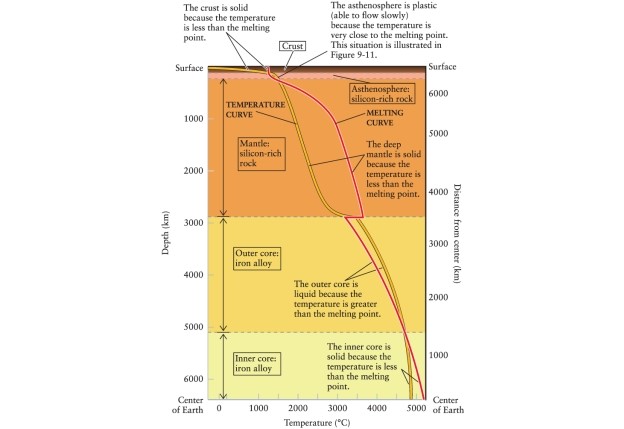
A)5200 km.
B)300 km.
C)This statement is erroneous, because nowhere is the interior molten.
D)2900 km.
A)5200 km.
B)300 km.
C)This statement is erroneous, because nowhere is the interior molten.
D)2900 km.
Question
Question
The depth from the surface of Earth to the top of its liquid core is about (See Figure 9-10 of Universe, 11th ed.):
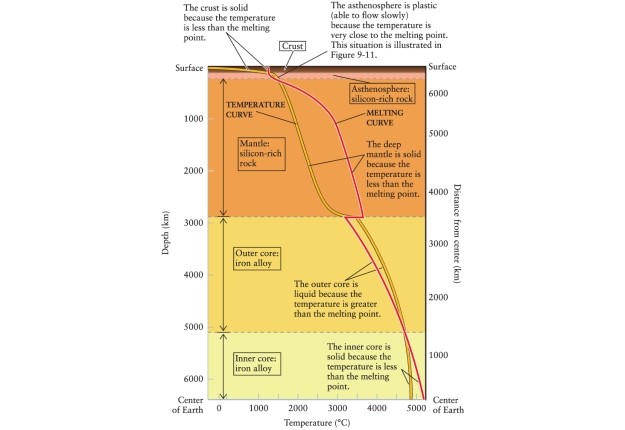
A)30 km.
B)6400 km.
C)5000 km.
D)2900 km.
A)30 km.
B)6400 km.
C)5000 km.
D)2900 km.
Question
Question
Question
Question
Question
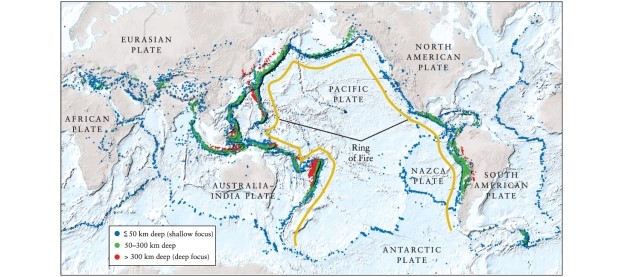
Which of the following places on Earth experiences frequent earthquakes and volcanic activity because of its location? (See Figure 9-15, Universe, 11th ed.)
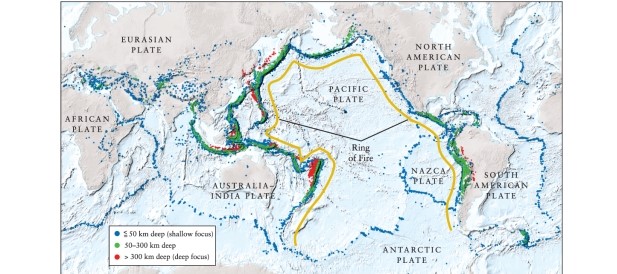
A)Central Canada
B)Iceland
C)Australia
D)Brazil
A)Central Canada
B)Iceland
C)Australia
D)Brazil
Question
Which two tectonic plates are slowly separating from each other along the Mid-Atlantic Ridge in the south Atlantic? (See Figure 9-15 of Universe, 11th ed.)
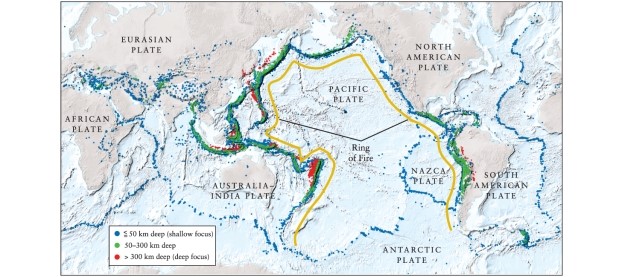
A)Nazca and Pacific plates
B)African and Eurasian plates
C)Pacific and Australia-India plates
D)South American and African plates
A)Nazca and Pacific plates
B)African and Eurasian plates
C)Pacific and Australia-India plates
D)South American and African plates
Question
The Australia-India tectonic plate (See Figure 9-15 of Universe, 11th ed.) is pushing against which plate to form the Himalayan Mountains?
A)Antarctic plate
B)Eurasian plate
C)African plate
D)North American plate
A)Antarctic plate
B)Eurasian plate
C)African plate
D)North American plate
Question
Question
Question
Question
Question
Question
Question
Question
Question
Question
Question
Question
Question
Question
Question
Question
Question
Question
Question
Question
Question
Question
Question
Question
Question
Question
Question
Question
Question
Question
Question
Question
Question
Question
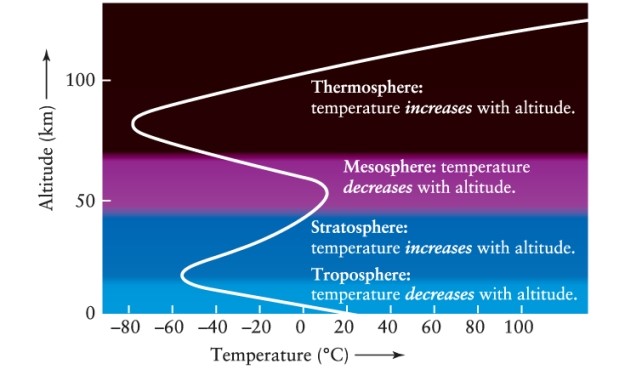
You begin at the base of Earth's atmosphere where the temperature is 0°C. From here you send a weather balloon straight up in order to measure temperature. What will you find? (See Figure 9-25 of Universe, 10th ed.)
A)The temperature will increase steadily as the balloon ascends.
B)The temperature will decrease steadily as the balloon ascends.
C)The temperature will increase and then decrease, so that there will be one additional location where the temperature will again be 0°C.
D)The temperature changes in a complicated way, so that there will be several other locations where the temperature will again be 0°C.
A)The temperature will increase steadily as the balloon ascends.
B)The temperature will decrease steadily as the balloon ascends.
C)The temperature will increase and then decrease, so that there will be one additional location where the temperature will again be 0°C.
D)The temperature changes in a complicated way, so that there will be several other locations where the temperature will again be 0°C.
Question
Question
Question
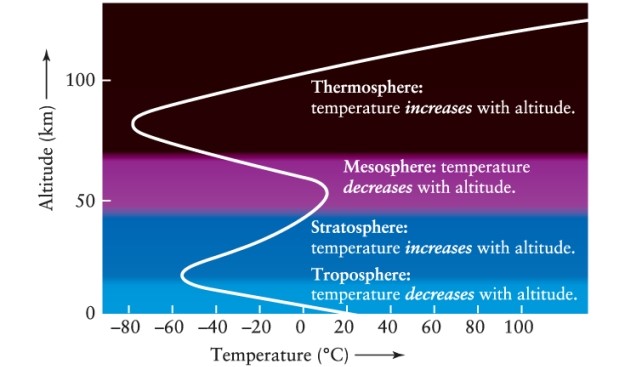
At the altitude of the boundary between the troposphere and the stratosphere in Earth's atmosphere, the temperature is approximately (See Figure 9-25 of Universe, 11th ed.):
A)+20°C.
B)-58°C.
C)-80°C.
D)+10°C.
A)+20°C.
B)-58°C.
C)-80°C.
D)+10°C.
Question
Question
Question
Question
Question
Question
Question
Question
Since 1900, approximately how much has the global temperature risen? (See Figure 9-32 of Universe, 11th ed.) [Instructor note: Students might argue in favor of a different answer from Figure 9-33. This figure specifically gives temperature increase in Fahrenheit on land in the northern hemisphere, where most of Earth's population resides.]
![<strong>Since 1900, approximately how much has the global temperature risen? (See Figure 9-32 of Universe, 11th ed.) [Instructor note: Students might argue in favor of a different answer from Figure 9-33. This figure specifically gives temperature increase in Fahrenheit on land in the northern hemisphere, where most of Earth's population resides.] </strong> A)0.7°C B)2°C C)0.2°C D)1°C <div style=padding-top: 35px>](https://d2lvgg3v3hfg70.cloudfront.net/TBMC1074/11eda2cb_5f45_47b9_9a5a_df3129c4637a_TBMC1074_00.jpg)
A)0.7°C
B)2°C
C)0.2°C
D)1°C
A)0.7°C
B)2°C
C)0.2°C
D)1°C
Question
Question
Question

Unlock Deck
Sign up to unlock the cards in this deck!
Unlock Deck
Unlock Deck
1/78

Play

Full screen (f)
Deck 9: The Living Earth
1
When seen by astronauts traveling to the Moon, the noticeable color(s) of Earth was (were):
A)gray and white.
B)green and brown.
C)brown.
D)blue, white, and green.
A)gray and white.
B)green and brown.
C)brown.
D)blue, white, and green.
D
2
One distinct difference between Earth and its neighboring planets, Venus and Mars, is the presence of:
A)evidence of volcanic action both earlier in history and at present.
B)desert regions.
C)a gaseous atmosphere.
D)liquid water on its surface and water molecules chemically locked into rocks.
A)evidence of volcanic action both earlier in history and at present.
B)desert regions.
C)a gaseous atmosphere.
D)liquid water on its surface and water molecules chemically locked into rocks.
D
3
Earth is the only planet whose atmosphere contains a significant amount of:
A)hydrogen.
B)oxygen.
C)carbon dioxide.
D)water vapor.
A)hydrogen.
B)oxygen.
C)carbon dioxide.
D)water vapor.
B
4
Which of the planets fits the following description: "cool, solid surface with an atmosphere of N2 and O2 and H2O clouds"?
A)Mercury
B)Venus
C)Earth
D)Mars
A)Mercury
B)Venus
C)Earth
D)Mars
Unlock Deck
Unlock for access to all 78 flashcards in this deck.
Unlock Deck
k this deck
5
What percent of incoming solar energy is reflected by Earth's surface and clouds?
A)barely more than 1%
B)about 39%
C)about 61%
D)close to 100%
A)barely more than 1%
B)about 39%
C)about 61%
D)close to 100%
Unlock Deck
Unlock for access to all 78 flashcards in this deck.
Unlock Deck
k this deck
6
The albedo of a black piece of velvet is nearly:
A)0, meaning it absorbs almost all the radiation falling upon it.
B)0, meaning it reflects almost all the radiation falling upon it.
C)1.00, meaning it absorbs almost all the radiation falling upon it.
D)1.00, meaning it reflects almost all the radiation falling upon it.
A)0, meaning it absorbs almost all the radiation falling upon it.
B)0, meaning it reflects almost all the radiation falling upon it.
C)1.00, meaning it absorbs almost all the radiation falling upon it.
D)1.00, meaning it reflects almost all the radiation falling upon it.
Unlock Deck
Unlock for access to all 78 flashcards in this deck.
Unlock Deck
k this deck
7
The albedo of a piece of white paper is nearly:
A)0, meaning it absorbs almost all the radiation falling upon it.
B)0, meaning it reflects almost all the radiation falling upon it.
C)1.00, meaning it absorbs almost all the radiation falling upon it.
D)1.00, meaning it reflects almost all the radiation falling upon it.
A)0, meaning it absorbs almost all the radiation falling upon it.
B)0, meaning it reflects almost all the radiation falling upon it.
C)1.00, meaning it absorbs almost all the radiation falling upon it.
D)1.00, meaning it reflects almost all the radiation falling upon it.
Unlock Deck
Unlock for access to all 78 flashcards in this deck.
Unlock Deck
k this deck
8
Energy calculations that simply equate the influx of solar energy on Earth with the outflow of energy from Earth lead to a very low average equilibrium temperature for Earth, of around -18°C or -0.7°F, which is much lower than the actual average surface temperature of Earth, +14°C or 57°F. What mechanism explains this discrepancy between the simple prediction and observation?
A)kinetic energy of meteoritic material that is dissipated in the atmosphere as the particles are stopped by friction
B)chemical action between molecules in Earth's atmosphere
C)the greenhouse effect-the capture by gases in the atmosphere of heat radiation that would otherwise escape
D)extra energy conducted outward from the hot interior of Earth
A)kinetic energy of meteoritic material that is dissipated in the atmosphere as the particles are stopped by friction
B)chemical action between molecules in Earth's atmosphere
C)the greenhouse effect-the capture by gases in the atmosphere of heat radiation that would otherwise escape
D)extra energy conducted outward from the hot interior of Earth
Unlock Deck
Unlock for access to all 78 flashcards in this deck.
Unlock Deck
k this deck
9
Earth was formed about 4.6 billion years ago, but most of Earth's surface is:
A)much younger than this because of geologic activity.
B)about a billion years younger than this because that is how long it took the surface to solidify.
C)about half that age.
D)even older because it contains sections that solidified on planetesimals before the planet formed.
A)much younger than this because of geologic activity.
B)about a billion years younger than this because that is how long it took the surface to solidify.
C)about half that age.
D)even older because it contains sections that solidified on planetesimals before the planet formed.
Unlock Deck
Unlock for access to all 78 flashcards in this deck.
Unlock Deck
k this deck
10
The greenhouse effect heats a planet because:
A)more sunlight gets in.
B)the albedo is increased.
C)infrared radiation is trapped.
D)the atmosphere becomes ionized.
A)more sunlight gets in.
B)the albedo is increased.
C)infrared radiation is trapped.
D)the atmosphere becomes ionized.
Unlock Deck
Unlock for access to all 78 flashcards in this deck.
Unlock Deck
k this deck
11
What is the direct source of the energy that warms the lowest layers of our atmosphere?
A)visible radiation from the Sun
B)infrared radiation from the ground
C)ultraviolet radiation from the atmosphere
D)heat still emerging from Earth as it continues to cool from its initially molten state
A)visible radiation from the Sun
B)infrared radiation from the ground
C)ultraviolet radiation from the atmosphere
D)heat still emerging from Earth as it continues to cool from its initially molten state
Unlock Deck
Unlock for access to all 78 flashcards in this deck.
Unlock Deck
k this deck
12
Earth has a temperature and thus emits radiation somewhat like a blackbody. What is the source of the energy for this radiation?
A)incoming radiation received from the Sun
B)heat retained by Earth's interior since it was created by the collisions of planetesimals
C)heat from radioactive decay deep within Earth
D)tidal friction
A)incoming radiation received from the Sun
B)heat retained by Earth's interior since it was created by the collisions of planetesimals
C)heat from radioactive decay deep within Earth
D)tidal friction
Unlock Deck
Unlock for access to all 78 flashcards in this deck.
Unlock Deck
k this deck
13
Earth's albedo is 0.39. The total amount of radiant energy emitted (rather than reflected) by Earth is thus:
A)39% of the incoming radiation from the Sun.
B)61% of the incoming radiation from the Sun.
C)100% of the incoming radiation from the Sun.
D)actually slightly more than 100% of the incoming radiation from the Sun because of the greenhouse effect.
A)39% of the incoming radiation from the Sun.
B)61% of the incoming radiation from the Sun.
C)100% of the incoming radiation from the Sun.
D)actually slightly more than 100% of the incoming radiation from the Sun because of the greenhouse effect.
Unlock Deck
Unlock for access to all 78 flashcards in this deck.
Unlock Deck
k this deck
14
Suppose Earth's albedo were greater than 0.39. This would mean that:
A)less radiant energy would be emitted by Earth, and its temperature would be colder.
B)more radiant energy would be emitted by Earth, and its temperature would be warmer.
C)the radiant energy emitted by Earth would be 100% of the incoming radiation from the Sun, as it is now.
D)the greenhouse effect would be stronger, resulting in a higher surface temperature.
A)less radiant energy would be emitted by Earth, and its temperature would be colder.
B)more radiant energy would be emitted by Earth, and its temperature would be warmer.
C)the radiant energy emitted by Earth would be 100% of the incoming radiation from the Sun, as it is now.
D)the greenhouse effect would be stronger, resulting in a higher surface temperature.
Unlock Deck
Unlock for access to all 78 flashcards in this deck.
Unlock Deck
k this deck
15
Which one of the following techniques can be used to determine the mass of a planet most easily?
A)Measure the size by direct observation.
B)Observe the "wobble" its gravitational pull causes in the motion of the Sun.
C)Measure the period and size of the orbit of a satellite moving around it.
D)Observe the spectrum of radiation reflected from its surface.
A)Measure the size by direct observation.
B)Observe the "wobble" its gravitational pull causes in the motion of the Sun.
C)Measure the period and size of the orbit of a satellite moving around it.
D)Observe the spectrum of radiation reflected from its surface.
Unlock Deck
Unlock for access to all 78 flashcards in this deck.
Unlock Deck
k this deck
16
The mean density of Earth in terms of that of water (1000 kg/m3 or 1 gm/cm3) is:
A)smaller.
B)more than 10 times greater.
C)a little larger.
D)5.5 times greater.
A)smaller.
B)more than 10 times greater.
C)a little larger.
D)5.5 times greater.
Unlock Deck
Unlock for access to all 78 flashcards in this deck.
Unlock Deck
k this deck
17
The core of Earth occupies what fraction of its radius?
A)about 25%
B)roughly half
C)less than 10%
D)almost 80%
A)about 25%
B)roughly half
C)less than 10%
D)almost 80%
Unlock Deck
Unlock for access to all 78 flashcards in this deck.
Unlock Deck
k this deck
18
S waves are more restricted in their possible paths through Earth compared to P waves. This is because S waves:
A)are attenuated (lose energy) rapidly as they travel through Earth.
B)are transverse waves and cannot penetrate far into liquid matter.
C)are longitudinal waves and thus cannot penetrate far into liquid matter.
D)do not refract, unlike P waves.
A)are attenuated (lose energy) rapidly as they travel through Earth.
B)are transverse waves and cannot penetrate far into liquid matter.
C)are longitudinal waves and thus cannot penetrate far into liquid matter.
D)do not refract, unlike P waves.
Unlock Deck
Unlock for access to all 78 flashcards in this deck.
Unlock Deck
k this deck
19
Why do transverse seismic S waves not traverse Earth's deep interior?
A)They cannot travel through the liquid part of the core.
B)Earth is not transparent to these electromagnetic waves.
C)They cannot travel through the dense, solid core.
D)They are surface waves and travel only along the surface of Earth.
A)They cannot travel through the liquid part of the core.
B)Earth is not transparent to these electromagnetic waves.
C)They cannot travel through the dense, solid core.
D)They are surface waves and travel only along the surface of Earth.
Unlock Deck
Unlock for access to all 78 flashcards in this deck.
Unlock Deck
k this deck
20
Geologists land on a new planet and begin a series of seismic measurements. A quake occurs, and they detect both S and P waves on the opposite side of the planet from the quake. What does this say about the planet's geology?
A)There must be large liquid oceans beneath the crust.
B)The structure is much like Earth, with a solid inner core surrounded by a liquid outer core.
C)The entire core must be liquid.
D)The entire core must be solid.
A)There must be large liquid oceans beneath the crust.
B)The structure is much like Earth, with a solid inner core surrounded by a liquid outer core.
C)The entire core must be liquid.
D)The entire core must be solid.
Unlock Deck
Unlock for access to all 78 flashcards in this deck.
Unlock Deck
k this deck
21
The material of Earth's interior (See Figure 9-10 of Universe, 11th ed.) becomes molten at a certain depth below the surface. This depth is:
A)5200 km.
B)300 km.
C)This statement is erroneous, because nowhere is the interior molten.
D)2900 km.
A)5200 km.
B)300 km.
C)This statement is erroneous, because nowhere is the interior molten.
D)2900 km.
Unlock Deck
Unlock for access to all 78 flashcards in this deck.
Unlock Deck
k this deck
22
Within Earth the temperature:
A)at every location is less than the condensation temperature of the materials at that location.
B)at every location is greater than the condensation temperature of the materials at that location.
C)at some locations is greater than the condensation temperature of the materials at that location and at other locations it is less.
D)increases constantly from surface to center, but the condensation temperature of the rocks in the interior is constant.
A)at every location is less than the condensation temperature of the materials at that location.
B)at every location is greater than the condensation temperature of the materials at that location.
C)at some locations is greater than the condensation temperature of the materials at that location and at other locations it is less.
D)increases constantly from surface to center, but the condensation temperature of the rocks in the interior is constant.
Unlock Deck
Unlock for access to all 78 flashcards in this deck.
Unlock Deck
k this deck
23
The depth from the surface of Earth to the top of its liquid core is about (See Figure 9-10 of Universe, 11th ed.):
A)30 km.
B)6400 km.
C)5000 km.
D)2900 km.
A)30 km.
B)6400 km.
C)5000 km.
D)2900 km.
Unlock Deck
Unlock for access to all 78 flashcards in this deck.
Unlock Deck
k this deck
24
The outer core of Earth is molten, but the inner core is solid. The reason for this is that the:
A)actual temperature is below the melting point of the core material at the high pressure of the interior.
B)lower pressure in the inner core allows the material to freeze out of the molten rock.
C)inner core has a different composition than the outer core, with a lower melting point.
D)temperature is lower in the inner core than in the surrounding region.
A)actual temperature is below the melting point of the core material at the high pressure of the interior.
B)lower pressure in the inner core allows the material to freeze out of the molten rock.
C)inner core has a different composition than the outer core, with a lower melting point.
D)temperature is lower in the inner core than in the surrounding region.
Unlock Deck
Unlock for access to all 78 flashcards in this deck.
Unlock Deck
k this deck
25
Earth's interior received its heat energy from the impacts of planetesimals and from radioactivity. This heat energy is gradually radiating into space. As Earth's interior continues to cool, we can expect that, in the distant future, the:
A)inner core will become molten like the outer core.
B)outer core will become solid like the inner core.
C)mantle will become molten while the core will become solid.
D)entire interior will become one homogeneous solid.
A)inner core will become molten like the outer core.
B)outer core will become solid like the inner core.
C)mantle will become molten while the core will become solid.
D)entire interior will become one homogeneous solid.
Unlock Deck
Unlock for access to all 78 flashcards in this deck.
Unlock Deck
k this deck
26
Suppose it is proposed that some of Earth's crust might be leftover solid material from the planetesimals that collided to form the planet. What do you think of this idea? Three of the following are reasonable responses to this idea. Which one is not?
A)This is quite possible, because the age of the planetesimals is about 4.5 billion years-the same as the age of Earth.
B)This is not possible, because radioactive decay, among other sources, melted Earth soon after its formation, and the resulting chemical differentiation would have destroyed any original solid crust.
C)This is not possible, because the original impact energy of the planetesimals plus the energy of subsequent impacts, among other sources, melted Earth soon after its formation, and the resulting chemical differentiation would have destroyed any original solid crust.
D)This is not possible, because geologic activity has resurfaced Earth since its formation, leaving no trace of the original solid crust.
A)This is quite possible, because the age of the planetesimals is about 4.5 billion years-the same as the age of Earth.
B)This is not possible, because radioactive decay, among other sources, melted Earth soon after its formation, and the resulting chemical differentiation would have destroyed any original solid crust.
C)This is not possible, because the original impact energy of the planetesimals plus the energy of subsequent impacts, among other sources, melted Earth soon after its formation, and the resulting chemical differentiation would have destroyed any original solid crust.
D)This is not possible, because geologic activity has resurfaced Earth since its formation, leaving no trace of the original solid crust.
Unlock Deck
Unlock for access to all 78 flashcards in this deck.
Unlock Deck
k this deck
27
The Mid-Atlantic Ridge is being produced by:
A)two tectonic plates pushing together and producing upthrust.
B)volcanic upflow pushing two tectonic plates apart.
C)the tidal flow of ocean water meeting in the mid-Atlantic.
D)the weight of the Atlantic Ocean bending the thin crust on the seabed.
A)two tectonic plates pushing together and producing upthrust.
B)volcanic upflow pushing two tectonic plates apart.
C)the tidal flow of ocean water meeting in the mid-Atlantic.
D)the weight of the Atlantic Ocean bending the thin crust on the seabed.
Unlock Deck
Unlock for access to all 78 flashcards in this deck.
Unlock Deck
k this deck
28
Which of the following places on Earth experiences frequent earthquakes and volcanic activity because of its location? (See Figure 9-15, Universe, 11th ed.)
A)Central Canada
B)Iceland
C)Australia
D)Brazil
A)Central Canada
B)Iceland
C)Australia
D)Brazil
Unlock Deck
Unlock for access to all 78 flashcards in this deck.
Unlock Deck
k this deck
29
Which two tectonic plates are slowly separating from each other along the Mid-Atlantic Ridge in the south Atlantic? (See Figure 9-15 of Universe, 11th ed.)
A)Nazca and Pacific plates
B)African and Eurasian plates
C)Pacific and Australia-India plates
D)South American and African plates
A)Nazca and Pacific plates
B)African and Eurasian plates
C)Pacific and Australia-India plates
D)South American and African plates
Unlock Deck
Unlock for access to all 78 flashcards in this deck.
Unlock Deck
k this deck
30
The Australia-India tectonic plate (See Figure 9-15 of Universe, 11th ed.) is pushing against which plate to form the Himalayan Mountains?
A)Antarctic plate
B)Eurasian plate
C)African plate
D)North American plate
A)Antarctic plate
B)Eurasian plate
C)African plate
D)North American plate
Unlock Deck
Unlock for access to all 78 flashcards in this deck.
Unlock Deck
k this deck
31
The Himalayas were formed by the subduction of the Indian plate and the uplifting of the southern edge of the Eurasian plate. The Indian plate is unusual in that it:
A)has moved northward rather than eastward.
B)has subducted rather than sliding past the other plate.
C)has, at times, moved with a speed about 10 times the average for plates.
D)contains many volcanoes in the middle of the plate rather than at the edge.
A)has moved northward rather than eastward.
B)has subducted rather than sliding past the other plate.
C)has, at times, moved with a speed about 10 times the average for plates.
D)contains many volcanoes in the middle of the plate rather than at the edge.
Unlock Deck
Unlock for access to all 78 flashcards in this deck.
Unlock Deck
k this deck
32
In most cases the greatest force that moves seafloor plates is:
A)slab pull. (High-density seafloor slab is pulled by gravity into the lower-density mantle.)
B)ridge push. (Molten rock emerging from an oceanic rift is pulled down the slope by gravity.)
C)convection in lower layers dragging the plates along.
D)the force exerted as the plate tries to drag the lower layers along.
A)slab pull. (High-density seafloor slab is pulled by gravity into the lower-density mantle.)
B)ridge push. (Molten rock emerging from an oceanic rift is pulled down the slope by gravity.)
C)convection in lower layers dragging the plates along.
D)the force exerted as the plate tries to drag the lower layers along.
Unlock Deck
Unlock for access to all 78 flashcards in this deck.
Unlock Deck
k this deck
33
The motions of large portions of Earth's surface, or "plates," are caused by:
A)tidal forces from the Moon and the Sun, acting on continental landmasses.
B)the varying pressure of Earth's atmosphere, both daily and seasonally.
C)flexing of the surface due to solar heating and nighttime cooling.
D)convective flow of matter in Earth's interior.
A)tidal forces from the Moon and the Sun, acting on continental landmasses.
B)the varying pressure of Earth's atmosphere, both daily and seasonally.
C)flexing of the surface due to solar heating and nighttime cooling.
D)convective flow of matter in Earth's interior.
Unlock Deck
Unlock for access to all 78 flashcards in this deck.
Unlock Deck
k this deck
34
Molten rock that has reached the surface is called:
A)lava
B)magma
C)basalt
D)mantle
A)lava
B)magma
C)basalt
D)mantle
Unlock Deck
Unlock for access to all 78 flashcards in this deck.
Unlock Deck
k this deck
35
The asthenosphere is:
A)the layer of Earth's atmosphere that lies above the stratosphere.
B)a layer below Earth's crust.
C)a layer in the atmosphere of Venus containing the densest clouds.
D)one of the colored layers in the atmosphere of Jupiter.
A)the layer of Earth's atmosphere that lies above the stratosphere.
B)a layer below Earth's crust.
C)a layer in the atmosphere of Venus containing the densest clouds.
D)one of the colored layers in the atmosphere of Jupiter.
Unlock Deck
Unlock for access to all 78 flashcards in this deck.
Unlock Deck
k this deck
36
The deepest parts of Earth's oceans are:
A)subduction zones, where one tectonic plate is flowing under an adjacent plate.
B)at the two poles, near the ends of the spin axis, where tidal distortion from the Moon and Sun is least.
C)in the centers of the oceans, where deep and fast ocean currents such as the Gulf Stream have scooped out the troughs.
D)where large asteroids or planetoids have impacted in the past and have produced deep craters.
A)subduction zones, where one tectonic plate is flowing under an adjacent plate.
B)at the two poles, near the ends of the spin axis, where tidal distortion from the Moon and Sun is least.
C)in the centers of the oceans, where deep and fast ocean currents such as the Gulf Stream have scooped out the troughs.
D)where large asteroids or planetoids have impacted in the past and have produced deep craters.
Unlock Deck
Unlock for access to all 78 flashcards in this deck.
Unlock Deck
k this deck
37
What caused the great mountain ranges on Earth, such as the Rocky Mountains and the Andes?
A)collisions of two tectonic plates, where one is folded into mountains while the other is thrust underneath
B)two tectonic plates being pushed apart by molten rock that is being forced up between them
C)heat from Earth's interior causing Earth's crust to expand and then crumple
D)the carving of continents by ice sheets during ice ages, with the mountains left behind as "islands" in a sea of glaciers
A)collisions of two tectonic plates, where one is folded into mountains while the other is thrust underneath
B)two tectonic plates being pushed apart by molten rock that is being forced up between them
C)heat from Earth's interior causing Earth's crust to expand and then crumple
D)the carving of continents by ice sheets during ice ages, with the mountains left behind as "islands" in a sea of glaciers
Unlock Deck
Unlock for access to all 78 flashcards in this deck.
Unlock Deck
k this deck
38
In planetary geology, a mineral is defined as a particular:
A)chemical element or chemical combination of elements in a rock.
B)type of rock, such as granite.
C)rock having undergone a specific formation process, such as an igneous or metamorphic rock.
D)chemical element in a rock.
A)chemical element or chemical combination of elements in a rock.
B)type of rock, such as granite.
C)rock having undergone a specific formation process, such as an igneous or metamorphic rock.
D)chemical element in a rock.
Unlock Deck
Unlock for access to all 78 flashcards in this deck.
Unlock Deck
k this deck
39
On the big island of Hawaii, the most common rocks are:
A)sedimentary rocks.
B)meteoritic rocks.
C)igneous rocks.
D)metamorphic rocks.
A)sedimentary rocks.
B)meteoritic rocks.
C)igneous rocks.
D)metamorphic rocks.
Unlock Deck
Unlock for access to all 78 flashcards in this deck.
Unlock Deck
k this deck
40
Suppose that an astronaut trained in geology lands on the surface of a distant planet and finds that most of the rock at the landing site is composed of limestone. The astronaut can immediately surmise that the location of the landing site:
A)was once subjected to enormous pressure and high temperature deep under the planet's surface, causing the original rock to change structure.
B)solidified from molten rock close to the surface of the planet.
C)solidified from molten rock deep beneath the surface of the planet.
D)was once the bed of an ancient ocean.
A)was once subjected to enormous pressure and high temperature deep under the planet's surface, causing the original rock to change structure.
B)solidified from molten rock close to the surface of the planet.
C)solidified from molten rock deep beneath the surface of the planet.
D)was once the bed of an ancient ocean.
Unlock Deck
Unlock for access to all 78 flashcards in this deck.
Unlock Deck
k this deck
41
What is the difference between minerals and rocks?
A)A mineral is formed of a single element or compound; rocks can be composed of more than one mineral.
B)A rock is formed of a single element or compound; minerals can be composed of more than one rock.
C)Minerals exist only deep in Earth's core; rocks exist in the mantle and crust.
D)Minerals occur only in lava flows; rocks are formed only in nonvolcanic regions.
A)A mineral is formed of a single element or compound; rocks can be composed of more than one mineral.
B)A rock is formed of a single element or compound; minerals can be composed of more than one rock.
C)Minerals exist only deep in Earth's core; rocks exist in the mantle and crust.
D)Minerals occur only in lava flows; rocks are formed only in nonvolcanic regions.
Unlock Deck
Unlock for access to all 78 flashcards in this deck.
Unlock Deck
k this deck
42
Sedimentary rocks are found:
A)only on the present-day ocean floor.
B)only on the floors of ancient oceans.
C)only in the volcanic regions.
D)just about everywhere on Earth's surface.
A)only on the present-day ocean floor.
B)only on the floors of ancient oceans.
C)only in the volcanic regions.
D)just about everywhere on Earth's surface.
Unlock Deck
Unlock for access to all 78 flashcards in this deck.
Unlock Deck
k this deck
43
Earth's magnetic field is generated by:
A)permanent magnetism in Earth's crustal rocks.
B)electric currents in Earth's core.
C)electric currents in Earth's mantle.
D)the flow of electrons and ions in Earth's magnetosphere.
A)permanent magnetism in Earth's crustal rocks.
B)electric currents in Earth's core.
C)electric currents in Earth's mantle.
D)the flow of electrons and ions in Earth's magnetosphere.
Unlock Deck
Unlock for access to all 78 flashcards in this deck.
Unlock Deck
k this deck
44
Earth's magnetic field originates in:
A)a solid, permanently magnetized core in the interior of Earth.
B)intense electric currents flowing in the Van Allen belts within the magnetosphere of Earth.
C)the tidal ebb and flow of electrically conducting seawater in Earth's oceans.
D)slowly moving currents of molten iron that produce electric currents in the deep interior of Earth.
A)a solid, permanently magnetized core in the interior of Earth.
B)intense electric currents flowing in the Van Allen belts within the magnetosphere of Earth.
C)the tidal ebb and flow of electrically conducting seawater in Earth's oceans.
D)slowly moving currents of molten iron that produce electric currents in the deep interior of Earth.
Unlock Deck
Unlock for access to all 78 flashcards in this deck.
Unlock Deck
k this deck
45
Earth's magnetosphere is a region surrounding the planet:
A)that has been swept clean of all charged particles by Earth's magnetic field.
B)into which new charged particles are prevented from entering because of Earth's magnetic field.
C)in which the motions of charged particles are governed by Earth's magnetic field.
D)that is dominated by the magnetic field of the Sun.
A)that has been swept clean of all charged particles by Earth's magnetic field.
B)into which new charged particles are prevented from entering because of Earth's magnetic field.
C)in which the motions of charged particles are governed by Earth's magnetic field.
D)that is dominated by the magnetic field of the Sun.
Unlock Deck
Unlock for access to all 78 flashcards in this deck.
Unlock Deck
k this deck
46
Earth's magnetosphere is the:
A)molten core, whose motions produce the magnetic field.
B)region beyond the atmosphere, where the magnetic field protects us from solar wind.
C)atmospheric layer between the stratosphere and thermosphere, where motions are governed by the magnetic field.
D)region in the crust near each magnetic pole.
A)molten core, whose motions produce the magnetic field.
B)region beyond the atmosphere, where the magnetic field protects us from solar wind.
C)atmospheric layer between the stratosphere and thermosphere, where motions are governed by the magnetic field.
D)region in the crust near each magnetic pole.
Unlock Deck
Unlock for access to all 78 flashcards in this deck.
Unlock Deck
k this deck
47
The magnetopause is the part of the magnetosphere where:
A)high-energy electrons and protons collide with gases in the planet's upper atmosphere, producing fluorescence.
B)supersonic particles in the solar wind are suddenly slowed to subsonic speeds.
C)high-energy charged particles are trapped by the planet's magnetic field.
D)the inward pressure of the solar wind is balanced by the outward magnetic pressure of the planet's magnetic field.
A)high-energy electrons and protons collide with gases in the planet's upper atmosphere, producing fluorescence.
B)supersonic particles in the solar wind are suddenly slowed to subsonic speeds.
C)high-energy charged particles are trapped by the planet's magnetic field.
D)the inward pressure of the solar wind is balanced by the outward magnetic pressure of the planet's magnetic field.
Unlock Deck
Unlock for access to all 78 flashcards in this deck.
Unlock Deck
k this deck
48
The Van Allen belts are:
A)regions of Earth in which no seismic activity is detected from earthquakes.
B)dense collections of small rocks surrounding the major planets.
C)two doughnut-shaped rings of charged particles, surrounding the equatorial regions of Earth at very high altitudes.
D)undersea mountain ranges in the centers of the oceans.
A)regions of Earth in which no seismic activity is detected from earthquakes.
B)dense collections of small rocks surrounding the major planets.
C)two doughnut-shaped rings of charged particles, surrounding the equatorial regions of Earth at very high altitudes.
D)undersea mountain ranges in the centers of the oceans.
Unlock Deck
Unlock for access to all 78 flashcards in this deck.
Unlock Deck
k this deck
49
The Van Allen belts are:
A)zones on Earth where seismic waves from an earthquake are not felt.
B)faint halos of interplanetary dust between Moon and Earth.
C)layers of Earth's atmosphere between troposphere and stratosphere.
D)regions of high-energy charged particles trapped within Earth's magnetosphere.
A)zones on Earth where seismic waves from an earthquake are not felt.
B)faint halos of interplanetary dust between Moon and Earth.
C)layers of Earth's atmosphere between troposphere and stratosphere.
D)regions of high-energy charged particles trapped within Earth's magnetosphere.
Unlock Deck
Unlock for access to all 78 flashcards in this deck.
Unlock Deck
k this deck
50
The Van Allen belts associated with Earth are:
A)layers of meteoritic dust in Earth's atmosphere, trapped in regions where the temperature reaches a minimum.
B)regions of intense radiation of protons and electrons trapped within the magnetosphere above Earth.
C)rings of dust surrounding Earth, similar to the rings of Saturn.
D)zones of varying depths below Earth's surface in which the speed of sound has distinctly different values.
A)layers of meteoritic dust in Earth's atmosphere, trapped in regions where the temperature reaches a minimum.
B)regions of intense radiation of protons and electrons trapped within the magnetosphere above Earth.
C)rings of dust surrounding Earth, similar to the rings of Saturn.
D)zones of varying depths below Earth's surface in which the speed of sound has distinctly different values.
Unlock Deck
Unlock for access to all 78 flashcards in this deck.
Unlock Deck
k this deck
51
In you were able to measure Earth's magnetic field at some time, say, 100,000 to 200,000 years ago, you would:
A)find the field to be zero because Earth's field is a relatively recent development.
B)certainly find the field to be exactly what it is today.
C)most likely find the field to be quite different in magnitude from what it is today.
D)certainly find the field to be the same magnitude it is today, but exactly opposite in direction.
A)find the field to be zero because Earth's field is a relatively recent development.
B)certainly find the field to be exactly what it is today.
C)most likely find the field to be quite different in magnitude from what it is today.
D)certainly find the field to be the same magnitude it is today, but exactly opposite in direction.
Unlock Deck
Unlock for access to all 78 flashcards in this deck.
Unlock Deck
k this deck
52
Evidence for past reversals of Earth's magnetic field comes from:
A)deflected solar radiation particles trapped in polar ice.
B)the breakup of Pangaea.
C)magnetized rock in layers produced by seafloor spreading.
D)various orientations of magnetic directions in the layers of Earth's mantle.
A)deflected solar radiation particles trapped in polar ice.
B)the breakup of Pangaea.
C)magnetized rock in layers produced by seafloor spreading.
D)various orientations of magnetic directions in the layers of Earth's mantle.
Unlock Deck
Unlock for access to all 78 flashcards in this deck.
Unlock Deck
k this deck
53
We have evidence that Earth's magnetic field has reversed its direction several times over geologic time scales. The average time between reversals is about:
A)100 years.
B)30,000 years.
C)300,000 years.
D)3,000,000 years.
A)100 years.
B)30,000 years.
C)300,000 years.
D)3,000,000 years.
Unlock Deck
Unlock for access to all 78 flashcards in this deck.
Unlock Deck
k this deck
54
Which one of the following statements about the solar wind is true?
A)It consists almost entirely of hydrogen and helium.
B)The "solar wind" is another name for the Sun's magnetic field when it extends far beyond the Sun.
C)It originates in the Van Allen radiation belts.
D)Its particles travel at very high speeds.
A)It consists almost entirely of hydrogen and helium.
B)The "solar wind" is another name for the Sun's magnetic field when it extends far beyond the Sun.
C)It originates in the Van Allen radiation belts.
D)Its particles travel at very high speeds.
Unlock Deck
Unlock for access to all 78 flashcards in this deck.
Unlock Deck
k this deck
55
On Venus, large amounts of carbon dioxide (CO2) have come from the planet's interior to form a thick CO2 atmosphere. What is the carbon dioxide situation on Earth?
A)Earth, too, has an atmosphere that is mostly CO2.
B)Earth's interior is entirely different from that of Venus, so that it never produced much carbon dioxide.
C)Earth's carbon dioxide is mostly dissolved in the oceans and locked up in carbonate rocks.
D)Earth's carbon dioxide has mostly escaped because Earth's gravity is so much weaker than that of Venus.
A)Earth, too, has an atmosphere that is mostly CO2.
B)Earth's interior is entirely different from that of Venus, so that it never produced much carbon dioxide.
C)Earth's carbon dioxide is mostly dissolved in the oceans and locked up in carbonate rocks.
D)Earth's carbon dioxide has mostly escaped because Earth's gravity is so much weaker than that of Venus.
Unlock Deck
Unlock for access to all 78 flashcards in this deck.
Unlock Deck
k this deck
56
How stable is the nitrogen in Earth's atmosphere?
A)Nitrogen is an inert gas and reacts very little, so it remains essentially constant.
B)Nitrogen is light enough that it is continually escaping Earth's gravity in significant amounts, so it must be replaced by outgassing from volcanoes.
C)Nitrogen reacts with water vapor to form various hydrocarbons. These are subducted under the crust and then outgassed from volcanoes.
D)Bacteria process nitrate minerals and release nitrogen. Atmospheric nitrogen combines with oxygen to eventually form nitrates.
A)Nitrogen is an inert gas and reacts very little, so it remains essentially constant.
B)Nitrogen is light enough that it is continually escaping Earth's gravity in significant amounts, so it must be replaced by outgassing from volcanoes.
C)Nitrogen reacts with water vapor to form various hydrocarbons. These are subducted under the crust and then outgassed from volcanoes.
D)Bacteria process nitrate minerals and release nitrogen. Atmospheric nitrogen combines with oxygen to eventually form nitrates.
Unlock Deck
Unlock for access to all 78 flashcards in this deck.
Unlock Deck
k this deck
57
The first atmosphere on Earth probably originated:
A)from comet impacts.
B)from gases trapped in Earth's interior.
C)through gravitational attraction from the solar nebula.
D)from primitive plants.
A)from comet impacts.
B)from gases trapped in Earth's interior.
C)through gravitational attraction from the solar nebula.
D)from primitive plants.
Unlock Deck
Unlock for access to all 78 flashcards in this deck.
Unlock Deck
k this deck
58
The gases trapped in Earth's interior at its formation probably had the same abundances as the solar nebula. What happened to the light elements hydrogen and helium?
A)They are still present in our atmosphere in approximately solar abundances.
B)They dissolved in the oceans.
C)They escaped into space.
D)They formed chemical compounds with minerals in rocks on the surface.
A)They are still present in our atmosphere in approximately solar abundances.
B)They dissolved in the oceans.
C)They escaped into space.
D)They formed chemical compounds with minerals in rocks on the surface.
Unlock Deck
Unlock for access to all 78 flashcards in this deck.
Unlock Deck
k this deck
59
Earth's atmosphere contains about 20% oxygen. What is believed to be the source of this molecular oxygen?
A)It is outgassed from the interior of Earth through volcanoes.
B)It is part of the original solar nebula from which the solar system condensed.
C)It is the by-product of radioactive decay.
D)It is created by green plants.
A)It is outgassed from the interior of Earth through volcanoes.
B)It is part of the original solar nebula from which the solar system condensed.
C)It is the by-product of radioactive decay.
D)It is created by green plants.
Unlock Deck
Unlock for access to all 78 flashcards in this deck.
Unlock Deck
k this deck
60
Once the light gases escaped, the dominant gas in Earth's first atmosphere was probably:
A)nitrogen.
B)carbon dioxide.
C)water vapor.
D)oxygen.
A)nitrogen.
B)carbon dioxide.
C)water vapor.
D)oxygen.
Unlock Deck
Unlock for access to all 78 flashcards in this deck.
Unlock Deck
k this deck
61
The major constituents of the atmosphere are:
A)methane, ammonia, water vapor, and carbon dioxide in about equal amounts.
B)78% nitrogen, 21% oxygen.
C)78% oxygen, 21% nitrogen.
D)95% carbon dioxide and some water vapor.
A)methane, ammonia, water vapor, and carbon dioxide in about equal amounts.
B)78% nitrogen, 21% oxygen.
C)78% oxygen, 21% nitrogen.
D)95% carbon dioxide and some water vapor.
Unlock Deck
Unlock for access to all 78 flashcards in this deck.
Unlock Deck
k this deck
62
Why did Earth's original atmosphere, composed primarily of hydrogen, not last long?
A)Hydrogen is a very light gas, and it soon escaped into space.
B)Biological activity very quickly combined the hydrogen with oxygen to form water.
C)Hydrogen soon dissolved in Earth's oceans.
D)Hydrogen is highly reactive, and it became bound to chemical compounds in Earth's rocks.
A)Hydrogen is a very light gas, and it soon escaped into space.
B)Biological activity very quickly combined the hydrogen with oxygen to form water.
C)Hydrogen soon dissolved in Earth's oceans.
D)Hydrogen is highly reactive, and it became bound to chemical compounds in Earth's rocks.
Unlock Deck
Unlock for access to all 78 flashcards in this deck.
Unlock Deck
k this deck
63
How does the temperature of Earth's atmosphere vary with height over the range 0 to 120 km?
A)It remains approximately constant at room temperature over the whole range.
B)It always remains well below the surface temperature.
C)It decreases and then increases 2 or 3 times.
D)It rises steadily until it reaches a high and constant value above 120 km.
A)It remains approximately constant at room temperature over the whole range.
B)It always remains well below the surface temperature.
C)It decreases and then increases 2 or 3 times.
D)It rises steadily until it reaches a high and constant value above 120 km.
Unlock Deck
Unlock for access to all 78 flashcards in this deck.
Unlock Deck
k this deck
64
You begin at the base of Earth's atmosphere where the temperature is 0°C. From here you send a weather balloon straight up in order to measure temperature. What will you find? (See Figure 9-25 of Universe, 10th ed.)
A)The temperature will increase steadily as the balloon ascends.
B)The temperature will decrease steadily as the balloon ascends.
C)The temperature will increase and then decrease, so that there will be one additional location where the temperature will again be 0°C.
D)The temperature changes in a complicated way, so that there will be several other locations where the temperature will again be 0°C.
A)The temperature will increase steadily as the balloon ascends.
B)The temperature will decrease steadily as the balloon ascends.
C)The temperature will increase and then decrease, so that there will be one additional location where the temperature will again be 0°C.
D)The temperature changes in a complicated way, so that there will be several other locations where the temperature will again be 0°C.
Unlock Deck
Unlock for access to all 78 flashcards in this deck.
Unlock Deck
k this deck
65
What happens to the temperature in the stratosphere?
A)The temperature decreases as you move higher and farther from the warm surface of Earth.
B)The ozone in this layer absorbs ultraviolet radiation from the Sun, so the layer is at a uniform temperature, warmer than the troposphere below it.
C)The ozone in this layer absorbs ultraviolet radiation from the Sun; the upper parts absorb the most, and what filters through is absorbed in the lower parts. Therefore, the temperature rises with altitude in the stratosphere.
D)The ozone in this layer absorbs ultraviolet radiation from the Sun. Convection then makes the lower parts warmer and the upper parts cooler.
A)The temperature decreases as you move higher and farther from the warm surface of Earth.
B)The ozone in this layer absorbs ultraviolet radiation from the Sun, so the layer is at a uniform temperature, warmer than the troposphere below it.
C)The ozone in this layer absorbs ultraviolet radiation from the Sun; the upper parts absorb the most, and what filters through is absorbed in the lower parts. Therefore, the temperature rises with altitude in the stratosphere.
D)The ozone in this layer absorbs ultraviolet radiation from the Sun. Convection then makes the lower parts warmer and the upper parts cooler.
Unlock Deck
Unlock for access to all 78 flashcards in this deck.
Unlock Deck
k this deck
66
The troposphere of a terrestrial planet is the:
A)atmospheric layer closest to the ground.
B)atmospheric layer that contains the highest concentration of ozone.
C)uppermost layer of solid rock below the planet's surface.
D)atmospheric layer above the mesosphere.
A)atmospheric layer closest to the ground.
B)atmospheric layer that contains the highest concentration of ozone.
C)uppermost layer of solid rock below the planet's surface.
D)atmospheric layer above the mesosphere.
Unlock Deck
Unlock for access to all 78 flashcards in this deck.
Unlock Deck
k this deck
67
At the altitude of the boundary between the troposphere and the stratosphere in Earth's atmosphere, the temperature is approximately (See Figure 9-25 of Universe, 11th ed.):
A)+20°C.
B)-58°C.
C)-80°C.
D)+10°C.
A)+20°C.
B)-58°C.
C)-80°C.
D)+10°C.
Unlock Deck
Unlock for access to all 78 flashcards in this deck.
Unlock Deck
k this deck
68
Suppose Earth were put into orbit around a cool star (cooler than our Sun) at the right distance for our oceans to remain liquid so that life could still exist but the star emitted no UV radiation. Each of the following statements gives a consequence of this change, except one. Which would not be a consequence of this change?
A)Our ozone layer would become larger.
B)Our magnetosphere would disappear.
C)The temperature in the stratosphere would decrease.
D)We would be closer to the star than we are to our present Sun.
A)Our ozone layer would become larger.
B)Our magnetosphere would disappear.
C)The temperature in the stratosphere would decrease.
D)We would be closer to the star than we are to our present Sun.
Unlock Deck
Unlock for access to all 78 flashcards in this deck.
Unlock Deck
k this deck
69
The lowest temperature in Earth's atmosphere is about:
A)-58°C or 215 K.
B)0°C or 273 K.
C)-80°C or 193 K.
D)1000°C or 1273 K.
A)-58°C or 215 K.
B)0°C or 273 K.
C)-80°C or 193 K.
D)1000°C or 1273 K.
Unlock Deck
Unlock for access to all 78 flashcards in this deck.
Unlock Deck
k this deck
70
The lowest pressure in Earth's atmosphere occurs where?
A)the lowest layer of the troposphere (near Earth's surface)
B)the boundary of the upper troposphere with the stratosphere
C)the upper mesosphere
D)the upper thermosphere
A)the lowest layer of the troposphere (near Earth's surface)
B)the boundary of the upper troposphere with the stratosphere
C)the upper mesosphere
D)the upper thermosphere
Unlock Deck
Unlock for access to all 78 flashcards in this deck.
Unlock Deck
k this deck
71
The circulation in Earth's atmosphere is dominated by:
A)a random distribution of transient storms and high-pressure areas, with no permanent overall pattern.
B)one large convection cell in each hemisphere, with air rising at the equator due to solar heating, moving toward the poles at high altitude and returning along the surface.
C)three large convection cells in each hemisphere, with surface winds toward the equator in the tropics and away from the equator at temperate latitudes.
D)bands of winds blowing parallel to the equator, from the east in the tropics and from the west at temperate latitudes.
A)a random distribution of transient storms and high-pressure areas, with no permanent overall pattern.
B)one large convection cell in each hemisphere, with air rising at the equator due to solar heating, moving toward the poles at high altitude and returning along the surface.
C)three large convection cells in each hemisphere, with surface winds toward the equator in the tropics and away from the equator at temperate latitudes.
D)bands of winds blowing parallel to the equator, from the east in the tropics and from the west at temperate latitudes.
Unlock Deck
Unlock for access to all 78 flashcards in this deck.
Unlock Deck
k this deck
72
One might expect the dominant circulation in Earth's atmosphere to be one large convection cell in each hemisphere, with air rising at the equator due to solar heating, moving toward the poles at high altitude, cooling and sinking, then returning toward the equator along the surface. The actual circulation is more complicated than this primarily because of the:
A)speed of rotation of Earth.
B)uneven heating of oceans and continents by the Sun.
C)escape of heat outward through Earth's crust.
D)uneven heating of the different atmospheric layers by the Sun.
A)speed of rotation of Earth.
B)uneven heating of oceans and continents by the Sun.
C)escape of heat outward through Earth's crust.
D)uneven heating of the different atmospheric layers by the Sun.
Unlock Deck
Unlock for access to all 78 flashcards in this deck.
Unlock Deck
k this deck
73
Earth's biosphere includes:
A)the mantle, crust, and atmosphere.
B)the troposphere, stratosphere, and crust.
C)the troposphere, stratosphere, and everything down to 1 km beneath the surface of the crust.
D)only the ground level of Earth plus the oceans.
A)the mantle, crust, and atmosphere.
B)the troposphere, stratosphere, and crust.
C)the troposphere, stratosphere, and everything down to 1 km beneath the surface of the crust.
D)only the ground level of Earth plus the oceans.
Unlock Deck
Unlock for access to all 78 flashcards in this deck.
Unlock Deck
k this deck
74
During the El Niño phenomenon, many animals in the equatorial Pacific die. The ultimate cause of this is the:
A)sudden spreading of the "red tide" algae, which devours food required by other species.
B)upwelling of cold waters from the depths, which chill surface species and cause them to cease reproduction.
C)warming of surface waters and suppression of nutrient-rich colder waters.
D)redirection of nutrient-rich surface currents away from the animals that depend on them.
A)sudden spreading of the "red tide" algae, which devours food required by other species.
B)upwelling of cold waters from the depths, which chill surface species and cause them to cease reproduction.
C)warming of surface waters and suppression of nutrient-rich colder waters.
D)redirection of nutrient-rich surface currents away from the animals that depend on them.
Unlock Deck
Unlock for access to all 78 flashcards in this deck.
Unlock Deck
k this deck
75
Since 1900, approximately how much has the global temperature risen? (See Figure 9-32 of Universe, 11th ed.) [Instructor note: Students might argue in favor of a different answer from Figure 9-33. This figure specifically gives temperature increase in Fahrenheit on land in the northern hemisphere, where most of Earth's population resides.]
A)0.7°C
B)2°C
C)0.2°C
D)1°C
A)0.7°C
B)2°C
C)0.2°C
D)1°C
Unlock Deck
Unlock for access to all 78 flashcards in this deck.
Unlock Deck
k this deck
76
If the CO2 content of our atmosphere was 280 ppm in 1850, how has this value changed in the century and a half through 2000?
A)It has decreased to about 50% of its 1850 value.
B)It has remained roughly constant.
C)It has increased by about one-third of its 1850 value.
D)It has doubled.
A)It has decreased to about 50% of its 1850 value.
B)It has remained roughly constant.
C)It has increased by about one-third of its 1850 value.
D)It has doubled.
Unlock Deck
Unlock for access to all 78 flashcards in this deck.
Unlock Deck
k this deck
77
Long-period variations in surface temperature on Earth are caused by a variety of factors. Which one of the following is not one of these factors?
A)variation in the brightness of the Sun
B)changes to the eccentricity of Earth's orbit
C)changes to the angle and orientation of Earth's rotation axis
D)variability of radioactive decay of elements within Earth
A)variation in the brightness of the Sun
B)changes to the eccentricity of Earth's orbit
C)changes to the angle and orientation of Earth's rotation axis
D)variability of radioactive decay of elements within Earth
Unlock Deck
Unlock for access to all 78 flashcards in this deck.
Unlock Deck
k this deck
78
In the 25 years between 1975 and 2000, the world's population increased from two billion to about six billion people. When is it estimated that the world's population will equal nine billion people?
A)2015
B)2030
C)2050
D)2075
A)2015
B)2030
C)2050
D)2075
Unlock Deck
Unlock for access to all 78 flashcards in this deck.
Unlock Deck
k this deck
Unlock Deck
Unlock for access to all 78 flashcards in this deck.






