







 Chat with AI

Deck 14: Forging the National Economy, 1790-1860
Full screen (f)

Question
Locate the following places by reference number on the map:
Major Canals, Lakes, and Roads Linking the East and West, 1810-1860
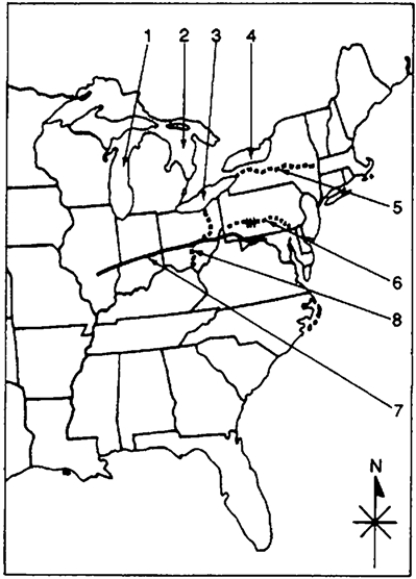
____ Lake Erie
Major Canals, Lakes, and Roads Linking the East and West, 1810-1860
____ Lake Erie

Question
Locate the following places by reference number on the map:
Major Canals, Lakes, and Roads Linking the East and West, 1810-1860
____ Erie Canal
Major Canals, Lakes, and Roads Linking the East and West, 1810-1860
____ Erie Canal
Question
Question
Question
Question
Locate the following places by reference number on the map:
Major Canals, Lakes, and Roads Linking the East and West, 1810-1860
____ Pennsylvania Canal
Major Canals, Lakes, and Roads Linking the East and West, 1810-1860
____ Pennsylvania Canal
Question
Question
Locate the following places by reference number on the map:
Major Canals, Lakes, and Roads Linking the East and West, 1810-1860
____ Cumberland Road
Major Canals, Lakes, and Roads Linking the East and West, 1810-1860
____ Cumberland Road
Question
Locate the following places by reference number on the map:
Major Canals, Lakes, and Roads Linking the East and West, 1810-1860
____ Lake Ontario
Major Canals, Lakes, and Roads Linking the East and West, 1810-1860
____ Lake Ontario
Question
Question
Question
Question
Question
Question
Question
Locate the following places by reference number on the map:
Major Canals, Lakes, and Roads Linking the East and West, 1810-1860
____ Lake Michigan
Major Canals, Lakes, and Roads Linking the East and West, 1810-1860
____ Lake Michigan
Question
Locate the following places by reference number on the map:
Major Canals, Lakes, and Roads Linking the East and West, 1810-1860
____ Lake Huron
Major Canals, Lakes, and Roads Linking the East and West, 1810-1860
____ Lake Huron
Question
Question
Locate the following places by reference number on the map:
Major Canals, Lakes, and Roads Linking the East and West, 1810-1860
____ Ohio and Erie Canal
Major Canals, Lakes, and Roads Linking the East and West, 1810-1860
____ Ohio and Erie Canal
Question
Question
Question
Question
Question
Question
Question
Question
Question
Question
Question
Question
Question
Question
Question
Question
Question
Question
Question
Question
Question
Question
Question
Question
Question
Question
Question
Question
Question
Question
Question
Question
Question
Question
Question
Question
Question
Question
Question
Question
Question
Question
Question
Question
Question
Question
Question
Question
Question
Question
Question
Question
Question
Question
Question
Question
Question
Question
Question
Question
Question

Unlock Deck
Sign up to unlock the cards in this deck!
Unlock Deck
Unlock Deck
1/92

Play

Full screen (f)
Deck 14: Forging the National Economy, 1790-1860
1
Locate the following places by reference number on the map:
Major Canals, Lakes, and Roads Linking the East and West, 1810-1860
____ Lake Erie
Major Canals, Lakes, and Roads Linking the East and West, 1810-1860
____ Lake Erie
3
2
Locate the following places by reference number on the map:
Major Canals, Lakes, and Roads Linking the East and West, 1810-1860
____ Erie Canal
Major Canals, Lakes, and Roads Linking the East and West, 1810-1860
____ Erie Canal
5
3
In early-nineteenth-century America, the
A) annual population growth rate was much higher than in colonial days.
B) urban population was growing at an unprecedented rate.
C) birthrate was rapidly declining.
D) death rate was increasing.
E) United States had become the most populous nation in the western world.
A) annual population growth rate was much higher than in colonial days.
B) urban population was growing at an unprecedented rate.
C) birthrate was rapidly declining.
D) death rate was increasing.
E) United States had become the most populous nation in the western world.
urban population was growing at an unprecedented rate.
4
Whether they were propertied or landless, immigrants were often enticed to leave their homelands by
A) letters from family or friends in the U.S., bragging about easy opportunities for wealth
B) advertisements from companies promising big salaries to those who emigrate.
C) greater prospects of finding a suitable wife in the West.
D) word that there was free land available in the West.
E) None of these choices are correct.
A) letters from family or friends in the U.S., bragging about easy opportunities for wealth
B) advertisements from companies promising big salaries to those who emigrate.
C) greater prospects of finding a suitable wife in the West.
D) word that there was free land available in the West.
E) None of these choices are correct.
Unlock Deck
Unlock for access to all 92 flashcards in this deck.
Unlock Deck
k this deck
5
All of the following gave rise to a more dynamic, market-oriented, national economy in early nineteenth-century America except
A) the push west in search of cheap land.
B) government regulation of all major economic activity.
C) a vast number of European immigrants settling in the cities.
D) newly invented machinery.
E) better roads, faster steamboats, further-reaching canals, and tentacle-stretching railroads.
A) the push west in search of cheap land.
B) government regulation of all major economic activity.
C) a vast number of European immigrants settling in the cities.
D) newly invented machinery.
E) better roads, faster steamboats, further-reaching canals, and tentacle-stretching railroads.
Unlock Deck
Unlock for access to all 92 flashcards in this deck.
Unlock Deck
k this deck
6
Locate the following places by reference number on the map:
Major Canals, Lakes, and Roads Linking the East and West, 1810-1860
____ Pennsylvania Canal
Major Canals, Lakes, and Roads Linking the East and West, 1810-1860
____ Pennsylvania Canal
Unlock Deck
Unlock for access to all 92 flashcards in this deck.
Unlock Deck
k this deck
7
Ireland's great export in the 1840s was
A) people.
B) potatoes.
C) wool.
D) whiskey.
E) music.
A) people.
B) potatoes.
C) wool.
D) whiskey.
E) music.
Unlock Deck
Unlock for access to all 92 flashcards in this deck.
Unlock Deck
k this deck
8
Locate the following places by reference number on the map:
Major Canals, Lakes, and Roads Linking the East and West, 1810-1860
____ Cumberland Road
Major Canals, Lakes, and Roads Linking the East and West, 1810-1860
____ Cumberland Road
Unlock Deck
Unlock for access to all 92 flashcards in this deck.
Unlock Deck
k this deck
9
Locate the following places by reference number on the map:
Major Canals, Lakes, and Roads Linking the East and West, 1810-1860
____ Lake Ontario
Major Canals, Lakes, and Roads Linking the East and West, 1810-1860
____ Lake Ontario
Unlock Deck
Unlock for access to all 92 flashcards in this deck.
Unlock Deck
k this deck
10
When the Irish flocked to the United States in the 1840s, they stayed in the larger seaboard cities because they
A) preferred urban life.
B) were offered high-paying jobs.
C) were welcomed by the people living there.
D) were too poor to move west and buy land.
E) had experience in urban politics.
A) preferred urban life.
B) were offered high-paying jobs.
C) were welcomed by the people living there.
D) were too poor to move west and buy land.
E) had experience in urban politics.
Unlock Deck
Unlock for access to all 92 flashcards in this deck.
Unlock Deck
k this deck
11
George Catlin advocated
A) placing Indians on reservations.
B) efforts to protect America's endangered species.
C) continuing the rendezvous system.
D) keeping white settlers out of the West.
E) the preservation of nature as a national policy.
A) placing Indians on reservations.
B) efforts to protect America's endangered species.
C) continuing the rendezvous system.
D) keeping white settlers out of the West.
E) the preservation of nature as a national policy.
Unlock Deck
Unlock for access to all 92 flashcards in this deck.
Unlock Deck
k this deck
12
Pioneering Americans marooned by geography
A) never took the time to explore the beauty of the natural landscape.
B) grew to depend on other people for most of their basic needs.
C) abandoned the rugged individualism of colonial Americans.
D) never looked for any help beyond their immediate family.
E) were often ill informed, superstitious, provincial, and fiercely individualistic.
A) never took the time to explore the beauty of the natural landscape.
B) grew to depend on other people for most of their basic needs.
C) abandoned the rugged individualism of colonial Americans.
D) never looked for any help beyond their immediate family.
E) were often ill informed, superstitious, provincial, and fiercely individualistic.
Unlock Deck
Unlock for access to all 92 flashcards in this deck.
Unlock Deck
k this deck
13
The overwhelming event for Ireland in the 1840s was
A) the rebellion against British rule and potato famine.
B) influx of immigrants from mostly Eastern European countries.
C) the granting of limited home rule to most of Ireland by Great Britain.
D) the migration from the countryside to the city.
E) the increasing use of English instead of Gaelic.
A) the rebellion against British rule and potato famine.
B) influx of immigrants from mostly Eastern European countries.
C) the granting of limited home rule to most of Ireland by Great Britain.
D) the migration from the countryside to the city.
E) the increasing use of English instead of Gaelic.
Unlock Deck
Unlock for access to all 92 flashcards in this deck.
Unlock Deck
k this deck
14
The dramatic growth of American cities between 1800 and 1860
A) led to a lower death rate.
B) contributed to a decline in the birthrate.
C) resulted in unsanitary conditions in many communities.
D) forced the federal government to slow immigration.
E) sparked federal, state, and local governments to develop urban public transportation networks and an array of social services to manage this growth during this period.
A) led to a lower death rate.
B) contributed to a decline in the birthrate.
C) resulted in unsanitary conditions in many communities.
D) forced the federal government to slow immigration.
E) sparked federal, state, and local governments to develop urban public transportation networks and an array of social services to manage this growth during this period.
Unlock Deck
Unlock for access to all 92 flashcards in this deck.
Unlock Deck
k this deck
15
Native-born Protestant Americans distrusted and resented the Irish immigrants for all of the following reasons except
A) the Irish immigrants werefinancially poor and initially struggled to make economic gains in American society.
B) the Irish immigrants were thought to love alcohol to excess.
C) the Irish immmigrants were proudly and openly Roman Catholic.
D) the Irish immigrants constructed a network of parish schools that promoted and advanced Roman Catholicism in America.
E) the Irish immigrants were very slow to learn American English and mostly spoke Gaelic in their urban neighborhoods.
A) the Irish immigrants werefinancially poor and initially struggled to make economic gains in American society.
B) the Irish immigrants were thought to love alcohol to excess.
C) the Irish immmigrants were proudly and openly Roman Catholic.
D) the Irish immigrants constructed a network of parish schools that promoted and advanced Roman Catholicism in America.
E) the Irish immigrants were very slow to learn American English and mostly spoke Gaelic in their urban neighborhoods.
Unlock Deck
Unlock for access to all 92 flashcards in this deck.
Unlock Deck
k this deck
16
Locate the following places by reference number on the map:
Major Canals, Lakes, and Roads Linking the East and West, 1810-1860
____ Lake Michigan
Major Canals, Lakes, and Roads Linking the East and West, 1810-1860
____ Lake Michigan
Unlock Deck
Unlock for access to all 92 flashcards in this deck.
Unlock Deck
k this deck
17
Locate the following places by reference number on the map:
Major Canals, Lakes, and Roads Linking the East and West, 1810-1860
____ Lake Huron
Major Canals, Lakes, and Roads Linking the East and West, 1810-1860
____ Lake Huron
Unlock Deck
Unlock for access to all 92 flashcards in this deck.
Unlock Deck
k this deck
18
The influx of immigrants to the United States tripled, then quadrupled, in the
A) 1810s and 1820s.
B) 1820s and 1830s.
C) 1830s and 1840s.
D) 1840s and 1850s.
E) 1850s and 1860s.
A) 1810s and 1820s.
B) 1820s and 1830s.
C) 1830s and 1840s.
D) 1840s and 1850s.
E) 1850s and 1860s.
Unlock Deck
Unlock for access to all 92 flashcards in this deck.
Unlock Deck
k this deck
19
Locate the following places by reference number on the map:
Major Canals, Lakes, and Roads Linking the East and West, 1810-1860
____ Ohio and Erie Canal
Major Canals, Lakes, and Roads Linking the East and West, 1810-1860
____ Ohio and Erie Canal
Unlock Deck
Unlock for access to all 92 flashcards in this deck.
Unlock Deck
k this deck
20
Life on the frontier was
A) fairly comfortable for women but not for men.
B) downright grim for most pioneer families.
C) free of disease and premature death.
D) rarely portrayed in popular literature.
E) based on tight-knit communities.
A) fairly comfortable for women but not for men.
B) downright grim for most pioneer families.
C) free of disease and premature death.
D) rarely portrayed in popular literature.
E) based on tight-knit communities.
Unlock Deck
Unlock for access to all 92 flashcards in this deck.
Unlock Deck
k this deck
21
Those nativists who were frightened by the rapid influx of Irish immigrants organized in 1849
A) the Order of the Star-Spangled Banner.
B) the "Molly Maguires."
C) the Anti-Masonic party.
D) the Ancient Order of Hibernians.
E) the Ku Klux Klan.
A) the Order of the Star-Spangled Banner.
B) the "Molly Maguires."
C) the Anti-Masonic party.
D) the Ancient Order of Hibernians.
E) the Ku Klux Klan.
Unlock Deck
Unlock for access to all 92 flashcards in this deck.
Unlock Deck
k this deck
22
A great deal of the cotton produced in the American South in the early nineteenth century was
A) produced by free labor.
B) sold to New England textile mills.
C) grown on the Atlantic tidewater plains.
D) consumed by the southern textile industry.
E) exported to the Caribbean and West Indies for textile production.
A) produced by free labor.
B) sold to New England textile mills.
C) grown on the Atlantic tidewater plains.
D) consumed by the southern textile industry.
E) exported to the Caribbean and West Indies for textile production.
Unlock Deck
Unlock for access to all 92 flashcards in this deck.
Unlock Deck
k this deck
23
The sentiment of fear and opposition to open immigration was called
A) the cult of domesticity.
B) nativism.
C) racism.
D) rugged individualism.
E) patriotism.
A) the cult of domesticity.
B) nativism.
C) racism.
D) rugged individualism.
E) patriotism.
Unlock Deck
Unlock for access to all 92 flashcards in this deck.
Unlock Deck
k this deck
24
When German immigrants came to the United States, they
A) often became Baptist or Methodists.
B) mixed well with other Americans.
C) remained mostly in the Northeast.
D) prospered with astonishing ease.
E) dropped most of their German customs.
A) often became Baptist or Methodists.
B) mixed well with other Americans.
C) remained mostly in the Northeast.
D) prospered with astonishing ease.
E) dropped most of their German customs.
Unlock Deck
Unlock for access to all 92 flashcards in this deck.
Unlock Deck
k this deck
25
Most of the cotton produced in the American South after the invention of the cotton gin was
A) produced by free labor.
B) sold to England for production of textiles in their mills.
C) grown on the tidewater plains.
D) consumed by the southern textile industry.
E) of the long-staple variety.
A) produced by free labor.
B) sold to England for production of textiles in their mills.
C) grown on the tidewater plains.
D) consumed by the southern textile industry.
E) of the long-staple variety.
Unlock Deck
Unlock for access to all 92 flashcards in this deck.
Unlock Deck
k this deck
26
German immigrants in the early nineteenth century tended to
A) settle in eastern industrial cities.
B) return to Germany when they experienced difficult economic times in the United States.
C) become slave-owners.
D) join the temperance movement.
E) preserve their own language and culture.
A) settle in eastern industrial cities.
B) return to Germany when they experienced difficult economic times in the United States.
C) become slave-owners.
D) join the temperance movement.
E) preserve their own language and culture.
Unlock Deck
Unlock for access to all 92 flashcards in this deck.
Unlock Deck
k this deck
27
The underlying basis for modern mass production was
A) unionized labor.
B) Supreme Court rulings that favored laissez-faire.
C) the use of interchangeable parts.
D) the principle of limited liability.
E) the passing of protective tariffs.
A) unionized labor.
B) Supreme Court rulings that favored laissez-faire.
C) the use of interchangeable parts.
D) the principle of limited liability.
E) the passing of protective tariffs.
Unlock Deck
Unlock for access to all 92 flashcards in this deck.
Unlock Deck
k this deck
28
Eli Whitney was instrumental in the invention of the
A) steamboat.
B) cotton gin.
C) railroad locomotive.
D) telegraph.
E) repeating revolver.
A) steamboat.
B) cotton gin.
C) railroad locomotive.
D) telegraph.
E) repeating revolver.
Unlock Deck
Unlock for access to all 92 flashcards in this deck.
Unlock Deck
k this deck
29
All of the following are true statements about German immigrants except
A) they typically settled in Northeast coastal cities.
B) they tended to be better educated than mainstream Americans.
C) they supported public schools, the arts, and music.
D) they championed freedom and fought to end slavery.
E) they settled in compact colonies to preserve their language and culture.
A) they typically settled in Northeast coastal cities.
B) they tended to be better educated than mainstream Americans.
C) they supported public schools, the arts, and music.
D) they championed freedom and fought to end slavery.
E) they settled in compact colonies to preserve their language and culture.
Unlock Deck
Unlock for access to all 92 flashcards in this deck.
Unlock Deck
k this deck
30
The American phase of the industrial revolution first blossomed
A) on southern plantations.
B) in the New England textile industry.
C) in rapidly growing Chicago.
D) in railroads and ship building.
E) in coal and iron mining regions.
A) on southern plantations.
B) in the New England textile industry.
C) in rapidly growing Chicago.
D) in railroads and ship building.
E) in coal and iron mining regions.
Unlock Deck
Unlock for access to all 92 flashcards in this deck.
Unlock Deck
k this deck
31
Identify the following statement that is false.
A) Land was cheap in America; this helped fuel the immigration flux in the 1840s and 1850s.
B) Money for capital investment was not plentiful in pioneering America and required an influx of foreign capital during the Industrial Revolution.
C) Foreign capital was dependent upon security in property rights, sufficient infrastructure, an adequate work force, and political stability.
D) Even though capital was lacking, raw materials were widely developed and discovered in America from colonial times through the 1840s.
E) The United States had a difficult time producing goods of high quality and cheap cost to compete with mass-produced European products from colonial times until the 1840s and 1850s.
A) Land was cheap in America; this helped fuel the immigration flux in the 1840s and 1850s.
B) Money for capital investment was not plentiful in pioneering America and required an influx of foreign capital during the Industrial Revolution.
C) Foreign capital was dependent upon security in property rights, sufficient infrastructure, an adequate work force, and political stability.
D) Even though capital was lacking, raw materials were widely developed and discovered in America from colonial times through the 1840s.
E) The United States had a difficult time producing goods of high quality and cheap cost to compete with mass-produced European products from colonial times until the 1840s and 1850s.
Unlock Deck
Unlock for access to all 92 flashcards in this deck.
Unlock Deck
k this deck
32
The initial waves of Irish immigrants typically worked in all of the following occupations except
A) domestic servants.
B) construction workers.
C) day laborers.
D) coopers.
E) saloon owners.
A) domestic servants.
B) construction workers.
C) day laborers.
D) coopers.
E) saloon owners.
Unlock Deck
Unlock for access to all 92 flashcards in this deck.
Unlock Deck
k this deck
33
Between 1830 and 1860, nearly ____ million Irish arrived in America.
A) 20
B) 2
C) 5
D) 8
E) 10
A) 20
B) 2
C) 5
D) 8
E) 10
Unlock Deck
Unlock for access to all 92 flashcards in this deck.
Unlock Deck
k this deck
34
German immigrants to the United States
A) quickly became a powerful political force.
B) came to escape economic hardships and autocratic government.
C) were as poor as the Irish.
D) contributed little to American life.
E) were almost all Roman Catholics.
A) quickly became a powerful political force.
B) came to escape economic hardships and autocratic government.
C) were as poor as the Irish.
D) contributed little to American life.
E) were almost all Roman Catholics.
Unlock Deck
Unlock for access to all 92 flashcards in this deck.
Unlock Deck
k this deck
35
Immigrants coming to the United States before 1860
A) depressed the economy due to their poverty.
B) found themselves involved in few cultural conflicts.
C) had little impact on society until after the Civil War.
D) settled mostly in the South.
E) helped to fuel economic expansion.
A) depressed the economy due to their poverty.
B) found themselves involved in few cultural conflicts.
C) had little impact on society until after the Civil War.
D) settled mostly in the South.
E) helped to fuel economic expansion.
Unlock Deck
Unlock for access to all 92 flashcards in this deck.
Unlock Deck
k this deck
36
Native-born Protestant Americans feared that Catholic immigrants to the United States would
A) want to attend public schools with Protestants.
B) wrest control of the American Catholic Church from native-born English and Welsh Catholics.
C) outbreed, outvote, and eventually overwhelm politically, socially, and culturally the Protestant native-born citizens and culture of America.
D) assume control of the Know-Nothing party.
E) ignite internecineCatholic armed conflict within the United States.
A) want to attend public schools with Protestants.
B) wrest control of the American Catholic Church from native-born English and Welsh Catholics.
C) outbreed, outvote, and eventually overwhelm politically, socially, and culturally the Protestant native-born citizens and culture of America.
D) assume control of the Know-Nothing party.
E) ignite internecineCatholic armed conflict within the United States.
Unlock Deck
Unlock for access to all 92 flashcards in this deck.
Unlock Deck
k this deck
37
The "Father of the Factory System" in the United States was
A) Robert Fulton.
B) Samuel F. B. Morse.
C) Eli Whitney.
D) Samuel Slater.
E) Francis Cabot Lowell.
A) Robert Fulton.
B) Samuel F. B. Morse.
C) Eli Whitney.
D) Samuel Slater.
E) Francis Cabot Lowell.
Unlock Deck
Unlock for access to all 92 flashcards in this deck.
Unlock Deck
k this deck
38
The early factory system distributed its economic benefits
A) mostly to the owners.
B) evenly among factory owners, factory managers, and factory workers.
C) primarily in the South and West.
D) to workers represented by unions.
E) to overseas investors.
A) mostly to the owners.
B) evenly among factory owners, factory managers, and factory workers.
C) primarily in the South and West.
D) to workers represented by unions.
E) to overseas investors.
Unlock Deck
Unlock for access to all 92 flashcards in this deck.
Unlock Deck
k this deck
39
All of the following are true statements about the relationship between Irish immigrants and U.S.citizens except
A) the Irish were seen as wage-depressing competitors for jobs by many Protestant American workers.
B) Nativist Americans from the middle and upper classes generally hated the Irish.
C) the Irish often saw signs on factory gates that said "No Irish Need Apply."
D) race riots between blacks and Irish were common.
E) Irish immigrants became fiercely supportive of the abolitionist cause.
A) the Irish were seen as wage-depressing competitors for jobs by many Protestant American workers.
B) Nativist Americans from the middle and upper classes generally hated the Irish.
C) the Irish often saw signs on factory gates that said "No Irish Need Apply."
D) race riots between blacks and Irish were common.
E) Irish immigrants became fiercely supportive of the abolitionist cause.
Unlock Deck
Unlock for access to all 92 flashcards in this deck.
Unlock Deck
k this deck
40
As a result of the development of the cotton gin
A) slavery revived and expanded.
B) American industry bought more southern cotton than did British manufacturers.
C) slavery declined in the importance of the development of the South's economy.
D) the South diversified its economy.
E) the textile industry moved to the South.
A) slavery revived and expanded.
B) American industry bought more southern cotton than did British manufacturers.
C) slavery declined in the importance of the development of the South's economy.
D) the South diversified its economy.
E) the textile industry moved to the South.
Unlock Deck
Unlock for access to all 92 flashcards in this deck.
Unlock Deck
k this deck
41
Construction of the Erie Canal
A) forced some New England farmers to move or change occupations.
B) showed how long-established local markets could survive a continental economy.
C) helped farmers so much that industrialization was slowed.
D) was completed without any financial support or expenditures from the state of New York.
E) created political tensions between the Northeast and the Midwest.
A) forced some New England farmers to move or change occupations.
B) showed how long-established local markets could survive a continental economy.
C) helped farmers so much that industrialization was slowed.
D) was completed without any financial support or expenditures from the state of New York.
E) created political tensions between the Northeast and the Midwest.
Unlock Deck
Unlock for access to all 92 flashcards in this deck.
Unlock Deck
k this deck
42
The major application for steamboats transporting freight and passengers in the United States was on
A) New England streams.
B) western and southern rivers.
C) the Great Lakes.
D) the Gulf of Mexico.
E) coastal waterways.
A) New England streams.
B) western and southern rivers.
C) the Great Lakes.
D) the Gulf of Mexico.
E) coastal waterways.
Unlock Deck
Unlock for access to all 92 flashcards in this deck.
Unlock Deck
k this deck
43
Match each individual below with the correct invention.
A.Samuel Morse
B.Cyrus McCormick
C.Elias Howe
D.Robert Fulton
1)telegraph
2)mower-reaper
3)steamboat
4)sewing machine
A) A-3, B-1, C-4, D-2
B) A-1, B-2, C-4, D-3
C) A-1, B-4, C-2, D-3
D) A-4, B-2, C-3, D-1
E) A-2, B-1, C-4, D-3
A.Samuel Morse
B.Cyrus McCormick
C.Elias Howe
D.Robert Fulton
1)telegraph
2)mower-reaper
3)steamboat
4)sewing machine
A) A-3, B-1, C-4, D-2
B) A-1, B-2, C-4, D-3
C) A-1, B-4, C-2, D-3
D) A-4, B-2, C-3, D-1
E) A-2, B-1, C-4, D-3
Unlock Deck
Unlock for access to all 92 flashcards in this deck.
Unlock Deck
k this deck
44
One reason that the condition of a significant segment of adult wage earners improved was
A) legalsupport gained by unions from the U.S. Supreme Court.
B) the passage of minimum wage laws.
C) the passage of laws restricting the use of strikebreakers.
D) the enactment of immigration restrictions.
E) the enfranchisement of the laboring man.
A) legalsupport gained by unions from the U.S. Supreme Court.
B) the passage of minimum wage laws.
C) the passage of laws restricting the use of strikebreakers.
D) the enactment of immigration restrictions.
E) the enfranchisement of the laboring man.
Unlock Deck
Unlock for access to all 92 flashcards in this deck.
Unlock Deck
k this deck
45
The canal era of American history began in 1817 with the construction of the
A) Ontario Canal connecting New York and Canada (British North America).
B) James River and Kanasha Canal from Virginia to Ohio.
C) Wabash Canal in Indiana.
D) Suez Canal in Illinois.
E) Erie Canal in New York.
A) Ontario Canal connecting New York and Canada (British North America).
B) James River and Kanasha Canal from Virginia to Ohio.
C) Wabash Canal in Indiana.
D) Suez Canal in Illinois.
E) Erie Canal in New York.
Unlock Deck
Unlock for access to all 92 flashcards in this deck.
Unlock Deck
k this deck
46
The first major transportation project in the United States, which ran sixty-two miles and was completed in the 1790s, that proved to be a stimulus for western economic developments was the
A) Baltimore and Ohio Railroad.
B) National (Cumberland) Road.
C) Erie Canal.
D) St. Lawrence Seaway.
E) Lancaster Turnpike.
A) Baltimore and Ohio Railroad.
B) National (Cumberland) Road.
C) Erie Canal.
D) St. Lawrence Seaway.
E) Lancaster Turnpike.
Unlock Deck
Unlock for access to all 92 flashcards in this deck.
Unlock Deck
k this deck
47
Early-nineteenth-century American families
A) were becoming more loosely knit and less affectionate.
B) usually included three generations in the same household.
C) taught their children to be unquestioningly obedient.
D) usually allowed parents to determine choice of marriage partners.
E) were getting smaller.
A) were becoming more loosely knit and less affectionate.
B) usually included three generations in the same household.
C) taught their children to be unquestioningly obedient.
D) usually allowed parents to determine choice of marriage partners.
E) were getting smaller.
Unlock Deck
Unlock for access to all 92 flashcards in this deck.
Unlock Deck
k this deck
48
In the case of Commonwealth v.Hunt (1842), the supreme court of Massachusetts ruled that
A) corporations were unconstitutional.
B) labor unions were not illegal conspiracies in Massachusetts provided that their strategies and tactics were honorable and peaceful.
C) labor strikes were illegal as violations ofthe federal Fair Labor Standards Act.
D) the Boston Associates' employment of young women in their factories was inhumane.
E) the state could regulate factory wages and working conditions.
A) corporations were unconstitutional.
B) labor unions were not illegal conspiracies in Massachusetts provided that their strategies and tactics were honorable and peaceful.
C) labor strikes were illegal as violations ofthe federal Fair Labor Standards Act.
D) the Boston Associates' employment of young women in their factories was inhumane.
E) the state could regulate factory wages and working conditions.
Unlock Deck
Unlock for access to all 92 flashcards in this deck.
Unlock Deck
k this deck
49
In general, ____ tended to bind the West and South together, while ____ and ____ connected West to East.
A) steamboats, canals, railroads
B) railroads, canals, steamboats
C) canals, steamboats, turnpikes
D) turnpikes, steamboats, canals
E) turnpikes, railroads, steamboats
A) steamboats, canals, railroads
B) railroads, canals, steamboats
C) canals, steamboats, turnpikes
D) turnpikes, steamboats, canals
E) turnpikes, railroads, steamboats
Unlock Deck
Unlock for access to all 92 flashcards in this deck.
Unlock Deck
k this deck
50
One of the primary goals of the child-centered family of the early-mid 1800s was to
A) raise children who were obedient to authority.
B) allow parents to spoil their children.
C) raise independent individuals who would become responsible citizens of the American republic.
D) increase the average number of children per family to five per household.
E) preserve childhood innocence.
A) raise children who were obedient to authority.
B) allow parents to spoil their children.
C) raise independent individuals who would become responsible citizens of the American republic.
D) increase the average number of children per family to five per household.
E) preserve childhood innocence.
Unlock Deck
Unlock for access to all 92 flashcards in this deck.
Unlock Deck
k this deck
51
The effect of early-nineteenth-century industrialization on the trans-Allegheny West was to encourage
A) specialized, cash-crop agriculture.
B) slavery in the trans-Allegheny West.
C) self-sufficient farming.
D) farmers to abandon agriculture and sell their land to move to cities for better economic opportunities.
E) higher tariffs.
A) specialized, cash-crop agriculture.
B) slavery in the trans-Allegheny West.
C) self-sufficient farming.
D) farmers to abandon agriculture and sell their land to move to cities for better economic opportunities.
E) higher tariffs.
Unlock Deck
Unlock for access to all 92 flashcards in this deck.
Unlock Deck
k this deck
52
By the time of the fabled London World's Fair in 1851, American products were prominent among the world's commercial wonders, which included all of the following except
A) Ford's automobile.
B) Goodyear's vulcanized rubber goods.
C) Colt's firearms.
D) Morse's telegraph.
E) McCormick's reaper.
A) Ford's automobile.
B) Goodyear's vulcanized rubber goods.
C) Colt's firearms.
D) Morse's telegraph.
E) McCormick's reaper.
Unlock Deck
Unlock for access to all 92 flashcards in this deck.
Unlock Deck
k this deck
53
With the development of cash-crop agriculture in the trans-Allegheny West
A) subsistence farming became common.
B) farmers began to support the idea of slave labor.
C) farmers quickly faced mounting indebtedness.
D) the South could harvest a larger crop.
E) the issue of farm surpluses came to the fore.
A) subsistence farming became common.
B) farmers began to support the idea of slave labor.
C) farmers quickly faced mounting indebtedness.
D) the South could harvest a larger crop.
E) the issue of farm surpluses came to the fore.
Unlock Deck
Unlock for access to all 92 flashcards in this deck.
Unlock Deck
k this deck
54
Western road building in the early 1800s faced all of the following problems except
A) the expense.
B) states' rights advocates' opposition.
C) eastern states' opposition.
D) rigorous economic competition from steamboat traffic, which undermined the argument for improved and more connecting western roads.
E) wartime interruptions.
A) the expense.
B) states' rights advocates' opposition.
C) eastern states' opposition.
D) rigorous economic competition from steamboat traffic, which undermined the argument for improved and more connecting western roads.
E) wartime interruptions.
Unlock Deck
Unlock for access to all 92 flashcards in this deck.
Unlock Deck
k this deck
55
The American workforce in the early nineteenth century was characterized by
A) substantial employment of women and children in factories.
B) strikes by workers that were few in number but usually effective.
C) a general lengthening of the workday from ten to fourteen hours.
D) extensive union activity among workers.
E) reliance on the system of apprentices and masters.
A) substantial employment of women and children in factories.
B) strikes by workers that were few in number but usually effective.
C) a general lengthening of the workday from ten to fourteen hours.
D) extensive union activity among workers.
E) reliance on the system of apprentices and masters.
Unlock Deck
Unlock for access to all 92 flashcards in this deck.
Unlock Deck
k this deck
56
Most early railroads in the United States were built in the
A) North.
B) Old South.
C) lower Mississippi Valley.
D) Far West.
E) Appalachian Mountains.
A) North.
B) Old South.
C) lower Mississippi Valley.
D) Far West.
E) Appalachian Mountains.
Unlock Deck
Unlock for access to all 92 flashcards in this deck.
Unlock Deck
k this deck
57
In the new continental economy, each region specialized in a particular economic activity: the South ____ for export; the West grew grains and livestock to feed ____; and the East ____ for the other two regions.
A) raised grain, southern slaves, processed meat
B) grew cotton, southern slaves, made machines and textiles
C) grew cotton, eastern factory workers, made machines and textiles
D) raised grain, eastern factory workers, made furniture and tools
E) processed meat, southern slaves, raised grain
A) raised grain, southern slaves, processed meat
B) grew cotton, southern slaves, made machines and textiles
C) grew cotton, eastern factory workers, made machines and textiles
D) raised grain, eastern factory workers, made furniture and tools
E) processed meat, southern slaves, raised grain
Unlock Deck
Unlock for access to all 92 flashcards in this deck.
Unlock Deck
k this deck
58
Compared with canals, railroads
A) were more expensive than canals to construct.
B) transported freight more slowly.
C) faced much less political opposition by vested economic interests.
D) required less technological obstacles to overcome to construct and operate them safely.
E) could be built almost anywhere with sufficient financial capital.
A) were more expensive than canals to construct.
B) transported freight more slowly.
C) faced much less political opposition by vested economic interests.
D) required less technological obstacles to overcome to construct and operate them safely.
E) could be built almost anywhere with sufficient financial capital.
Unlock Deck
Unlock for access to all 92 flashcards in this deck.
Unlock Deck
k this deck
59
The cult of domesticity
A) was especially strong among rural women.
B) resulted in more pregnancies for women.
C) restricted women's moral influence on the family.
D) glorified the traditional role of women as homemakers.
E) All of these choices are correct.
A) was especially strong among rural women.
B) resulted in more pregnancies for women.
C) restricted women's moral influence on the family.
D) glorified the traditional role of women as homemakers.
E) All of these choices are correct.
Unlock Deck
Unlock for access to all 92 flashcards in this deck.
Unlock Deck
k this deck
60
All of the following are true statements about the workers in the Lowell factory system except
A) they were virtually all New England farm girls.
B) they were carefully supervised on and off the job by watchful matrons.
C) they lived in company boardinghouses and were forbidden to form unions.
D) they worked a maximum five days a week for eight hours a day.
E) they labored under grueling working conditions.
A) they were virtually all New England farm girls.
B) they were carefully supervised on and off the job by watchful matrons.
C) they lived in company boardinghouses and were forbidden to form unions.
D) they worked a maximum five days a week for eight hours a day.
E) they labored under grueling working conditions.
Unlock Deck
Unlock for access to all 92 flashcards in this deck.
Unlock Deck
k this deck
61
The growth of early-nineteenth-century American manufacturing was stimulated by the
A) War of 1812.
B) Peace of Ghent.
C) Louisiana Purchase.
D) Embargo Act of 1807 and the related Non-Intercourse Act of 1809.
E) rise of the Know-Nothing Party.
A) War of 1812.
B) Peace of Ghent.
C) Louisiana Purchase.
D) Embargo Act of 1807 and the related Non-Intercourse Act of 1809.
E) rise of the Know-Nothing Party.
Unlock Deck
Unlock for access to all 92 flashcards in this deck.
Unlock Deck
k this deck
62
The growth of industry and the factory system in the United States was slowed by
A) the high price of land.
B) the scarcity of labor.
C) limited investment capital.
D) a small domestic market.
E) weak incentives for new technology.
A) the high price of land.
B) the scarcity of labor.
C) limited investment capital.
D) a small domestic market.
E) weak incentives for new technology.
Unlock Deck
Unlock for access to all 92 flashcards in this deck.
Unlock Deck
k this deck
63
Compare and contrast the social and economic development of the Northeast with that of the West.What were some of the reasons that caused those differences in development?
Unlock Deck
Unlock for access to all 92 flashcards in this deck.
Unlock Deck
k this deck
64
To what extent did the American government contribute to and promote industrial growth and economic expansion in the early nineteenth century?
Unlock Deck
Unlock for access to all 92 flashcards in this deck.
Unlock Deck
k this deck
65
The turnpikes, canals, and steamboats were new transportation links that generally encouraged
A) lowering of freight rates.
B) economic growth.
C) rising land values.
D) migration of peoples.
E) states' rights.
A) lowering of freight rates.
B) economic growth.
C) rising land values.
D) migration of peoples.
E) states' rights.
Unlock Deck
Unlock for access to all 92 flashcards in this deck.
Unlock Deck
k this deck
66
Compare and contrast the United States with Britain and Europe in the industrialization of its economy.
Unlock Deck
Unlock for access to all 92 flashcards in this deck.
Unlock Deck
k this deck
67
Analyze and evaluate the positive and negative impacts of the Industrial Revolution on American labor, on the rich and the poor, and on families and home life.
Unlock Deck
Unlock for access to all 92 flashcards in this deck.
Unlock Deck
k this deck
68
By 1850, America's factory system was mass producing for widespread sale within the country and for export of
A) textiles.
B) boots and shoes.
C) firearms.
D) steel.
E) sewing machines.
A) textiles.
B) boots and shoes.
C) firearms.
D) steel.
E) sewing machines.
Unlock Deck
Unlock for access to all 92 flashcards in this deck.
Unlock Deck
k this deck
69
The concentration of capital for investment in large-scale enterprises in the early nineteenth century was promoted by the
A) wider acceptance of the principle of limited liability.
B) introduction of state corporate tax laws.
C) legalization of labor unions.
D) passage of state free incorporation laws.
E) lowering of the capital gains tax.
A) wider acceptance of the principle of limited liability.
B) introduction of state corporate tax laws.
C) legalization of labor unions.
D) passage of state free incorporation laws.
E) lowering of the capital gains tax.
Unlock Deck
Unlock for access to all 92 flashcards in this deck.
Unlock Deck
k this deck
70
Clipper ships and the Pony Express had in common
A) the use of the most advanced technology available in the transportation and communication realms, respectively.
B) providing initially unparalleled speedy, efficient service to businesses that outpaced their respective competitors.
C) a brief existence as the preferred modes of transportation and communication, respectively, for businesses.
D) providing their respective services ata very low cost for those businesses and individuals.
E) support from the state governments and the federal government.
A) the use of the most advanced technology available in the transportation and communication realms, respectively.
B) providing initially unparalleled speedy, efficient service to businesses that outpaced their respective competitors.
C) a brief existence as the preferred modes of transportation and communication, respectively, for businesses.
D) providing their respective services ata very low cost for those businesses and individuals.
E) support from the state governments and the federal government.
Unlock Deck
Unlock for access to all 92 flashcards in this deck.
Unlock Deck
k this deck
71
Compare and contrast the economic development of the Northeast with that of the South.What were some of the reasons that caused those differences in development?
Unlock Deck
Unlock for access to all 92 flashcards in this deck.
Unlock Deck
k this deck
72
Write your definition of revolution.Then use this definition to argue that the industrial revolution was or was not a revolutionary event.
Unlock Deck
Unlock for access to all 92 flashcards in this deck.
Unlock Deck
k this deck
73
All of the following were legal questions raised as a result of the new market economy except
A) how tightly should patents protect inventions?
B) should the government regulate monopolies?
C) can a democratic government still support slavery?
D) who should own these new technologies?
E) who should own the new transportation network?
A) how tightly should patents protect inventions?
B) should the government regulate monopolies?
C) can a democratic government still support slavery?
D) who should own these new technologies?
E) who should own the new transportation network?
Unlock Deck
Unlock for access to all 92 flashcards in this deck.
Unlock Deck
k this deck
74
America's early-nineteenth-century population was notable for its
A) restlessness.
B) wastefulness.
C) youthfulness.
D) aggressiveness.
E) thoughtfulness.
A) restlessness.
B) wastefulness.
C) youthfulness.
D) aggressiveness.
E) thoughtfulness.
Unlock Deck
Unlock for access to all 92 flashcards in this deck.
Unlock Deck
k this deck
75
Rank the following in terms of their contribution to industrialization: cotton gin, principle of interchangeable parts, the Erie Canal, and the development of the railroads in the North and West.Justify your ranking.
Unlock Deck
Unlock for access to all 92 flashcards in this deck.
Unlock Deck
k this deck
76
Factors encouraging the growth of immigration rates in the first half of the nineteenth century included the
A) rapid growth rate of the European population.
B) perception of America as the land of freedom and opportunity.
C) introduction of transoceanic steamships.
D) economic and political turmoil in Europe.
E) religious oppression by European state churches.
A) rapid growth rate of the European population.
B) perception of America as the land of freedom and opportunity.
C) introduction of transoceanic steamships.
D) economic and political turmoil in Europe.
E) religious oppression by European state churches.
Unlock Deck
Unlock for access to all 92 flashcards in this deck.
Unlock Deck
k this deck
77
To what extent did the impact of immigration, industrialization, urbanization, and the transportation revolution have on the development of American agriculture?
Unlock Deck
Unlock for access to all 92 flashcards in this deck.
Unlock Deck
k this deck
78
To what extent did each of the following play in the development of industrialization of the American economy: technology, immigration, investment, a surplus of inexpensive and docile wage labor, government aid, and internal improvements.
Unlock Deck
Unlock for access to all 92 flashcards in this deck.
Unlock Deck
k this deck
79
The Northeast became the center of early-nineteenth-century American industry because it had
A) a superior transportation system.
B) abundant water power.
C) its narrow belt of stony soil made farming difficult and hence manufacturing attractive.
D) a local supply of raw materials used in manufacturing.
E) a relatively large labor supply.
A) a superior transportation system.
B) abundant water power.
C) its narrow belt of stony soil made farming difficult and hence manufacturing attractive.
D) a local supply of raw materials used in manufacturing.
E) a relatively large labor supply.
Unlock Deck
Unlock for access to all 92 flashcards in this deck.
Unlock Deck
k this deck
80
Advances in manufacturing and transportation brought
A) the slow death of cash-crop farming for food production for both domestic and foreign markets.
B) more prosperity and opportunity to most Americans.
C) innumerable cases of rags-to-riches economic mobility for ordinary Americans.
D) increased immigration from Europe to the United States.
E) economic reliance on the export of manufactured goods.
A) the slow death of cash-crop farming for food production for both domestic and foreign markets.
B) more prosperity and opportunity to most Americans.
C) innumerable cases of rags-to-riches economic mobility for ordinary Americans.
D) increased immigration from Europe to the United States.
E) economic reliance on the export of manufactured goods.
Unlock Deck
Unlock for access to all 92 flashcards in this deck.
Unlock Deck
k this deck
Unlock Deck
Unlock for access to all 92 flashcards in this deck.






