







 Chat with AI

Deck 9: Assessing the Head, Face, Mouth, and Neck
Full screen (f)

Question

Question
Question
Question
Question
Question
Question
Question
Question
Question
Question
Question
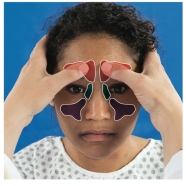 What are you assessing in the picture above?
A) Sphenoid sinuses
B) Frontal sinuses
C) Maxillary sinuses
D) Ethmoid sinuses
Question
Question
Question
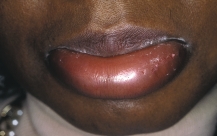 A patient comes to the emergency room stating that he woke up this morning with swollen lips. He reports that he has just started a new medication for his allergies. What is the name of this condition?
A) Anaphylaxis
B) Angioedema
C) Herpes simplex
D) Angular cheilitis
Question
Question
Question
Question
Question
Question
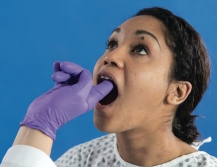 You are assessing the mouth of this patient. What technique are you performing?
A) Inspecting the upper dentition
B) Inspecting and palpating the dorsal surface of the tongue
C) Palpating the soft and hard palates
D) Inspecting and palpating the soft palate only
Question
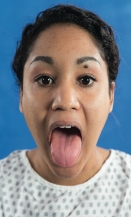 You are performing a mouth assessment. What are you assessing in this picture?
A) Mouth range of motion
B) Jaw range of motion
C) Dorsal surface of the tongue
D) Ventral surface of the tongue
Question
Question
Question
Question
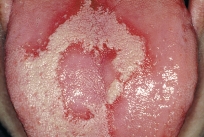 You are assessing this patient's tongue and note that patches on the tongue are missing papillae. What is the name of this condition?
A) Atrophic glossitis
B) Hairy tongue
C) Geographic tongue
D) Leukoplakia
Question
Question
Question
Question
Question
Question
Question
Question
Question
Question
Question
Question
Question
Question
Question
Question
Question
Question
Question
Question
Question
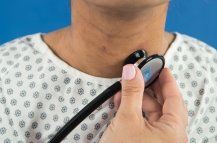 The nurse in the photo is auscultating the left lobe of the thyroid gland for a ________________.
 Question

Unlock Deck
Sign up to unlock the cards in this deck!
Unlock Deck
Unlock Deck
1/48

Play

Full screen (f)
Deck 9: Assessing the Head, Face, Mouth, and Neck
1
What is the purpose of assessing the patency of the nose?
A) To assess for nasal passageway occlusion
B) To assess for tenderness, inflammation, or deviation
C) To assess appearance and symmetry
D) To assess for normal size and shape
A) To assess for nasal passageway occlusion
B) To assess for tenderness, inflammation, or deviation
C) To assess appearance and symmetry
D) To assess for normal size and shape
To assess for nasal passageway occlusion
2
The patient is diagnosed with a neurological disorder. During the assessment of this patient's head, what abnormal assessment findings would the nurse expect to find?
A) Tenderness and swelling of the head
B) Tremors, tics, or jerking movements of the head
C) A mass or lesions on the skull
D) Depression of the skull
A) Tenderness and swelling of the head
B) Tremors, tics, or jerking movements of the head
C) A mass or lesions on the skull
D) Depression of the skull
Tremors, tics, or jerking movements of the head
3
The patient reports that she is feeling tired all the time and has been gaining weight. She thinks that her face is "puffy." You assess the thyroid gland and find it to be enlarged. The health-care provider suspects the patient has hypothyroidism. You expect that the health-care provider will order which of the following blood work to assess the thyroid gland?
A) Triiodothyronine (T3)
B) Thyroid-stimulating hormone (TSH) only
C) Thyroid-stimulating hormone (TSH) and free thyroxine (Free T4)
D) Thyroid-stimulating hormone (TSH), free thyroxine (Free T4), and triiodothyronine (T3)
A) Triiodothyronine (T3)
B) Thyroid-stimulating hormone (TSH) only
C) Thyroid-stimulating hormone (TSH) and free thyroxine (Free T4)
D) Thyroid-stimulating hormone (TSH), free thyroxine (Free T4), and triiodothyronine (T3)
Thyroid-stimulating hormone (TSH), free thyroxine (Free T4), and triiodothyronine (T3)
4
The nasal labial folds and the palpebral fissures of the face are measured to assess for:
A) Appearance of the face.
B) Symmetry of the face.
C) Edema of the face.
D) Involuntary movements of the face.
A) Appearance of the face.
B) Symmetry of the face.
C) Edema of the face.
D) Involuntary movements of the face.
Unlock Deck
Unlock for access to all 48 flashcards in this deck.
Unlock Deck
k this deck
5
A patient comes to the urgent care center with a nosebleed. During the focused health history, the patient states that this is the first time she has ever had a nosebleed and is scared. You assess her nose and observe blood coming from the right nostril. What should the nurse do to try to stop the bleeding?
A) Have the patient apply pressure with an ice pack and tilt her head back.
B) Hold pressure on the nares by pinching the nostrils tightly for 10 minutes.
C) Have the patient lean forward and press on the bridge of the nose for 5 minutes.
D) Instruct the patient to sit up, lean forward, and pinch the nostrils for 10 to 15 minutes.
A) Have the patient apply pressure with an ice pack and tilt her head back.
B) Hold pressure on the nares by pinching the nostrils tightly for 10 minutes.
C) Have the patient lean forward and press on the bridge of the nose for 5 minutes.
D) Instruct the patient to sit up, lean forward, and pinch the nostrils for 10 to 15 minutes.
Unlock Deck
Unlock for access to all 48 flashcards in this deck.
Unlock Deck
k this deck
6
The student nurse is explaining the technique of palpating the face to the instructor. The instructor identifies that further teaching is necessary when the student nurse makes which of the following statements?
A) Using the finger pads of both hands, gently palpate the face for tenderness and swelling.
B) Place your fingers in back of the earlobes and below the eyes and palpate the temporal arteries simultaneously by each ear.
C) Place your fingertips in front of each ear at the zygomatic arch and ask the patient to open and close his or her mouth.
D) Assess for any clicking sounds or decreased range of motion (ROM) of the jaw, including temporomandibular joint (TMJ) disorder .
A) Using the finger pads of both hands, gently palpate the face for tenderness and swelling.
B) Place your fingers in back of the earlobes and below the eyes and palpate the temporal arteries simultaneously by each ear.
C) Place your fingertips in front of each ear at the zygomatic arch and ask the patient to open and close his or her mouth.
D) Assess for any clicking sounds or decreased range of motion (ROM) of the jaw, including temporomandibular joint (TMJ) disorder .
Unlock Deck
Unlock for access to all 48 flashcards in this deck.
Unlock Deck
k this deck
7
The aide reports to the nurse that the patient coughs when he drinks liquids and appears to be having difficulty swallowing solid foods. The medical term for difficulty swallowing is:
A) Xerostomia.
B) Dysphasia.
C) Dysphagia.
D) Bruxism.
A) Xerostomia.
B) Dysphasia.
C) Dysphagia.
D) Bruxism.
Unlock Deck
Unlock for access to all 48 flashcards in this deck.
Unlock Deck
k this deck
8
The patient states that she has frequent headaches. The patient explains that the headaches are stabbing pain on one side of the face or sometimes occur behind one eye. The headaches occur most often in the early morning. What type of headache is this patient describing?
A) Migraine
B) Cluster
C) Sinus
D) Tension
A) Migraine
B) Cluster
C) Sinus
D) Tension
Unlock Deck
Unlock for access to all 48 flashcards in this deck.
Unlock Deck
k this deck
9
Cancers of the larynx and pharynx are most common in which racial or ethnic groups?
A) Latinos and Asians
B) Asians and Italians
C) Caucasians and African Americans
D) African Americans and Latinos
A) Latinos and Asians
B) Asians and Italians
C) Caucasians and African Americans
D) African Americans and Latinos
Unlock Deck
Unlock for access to all 48 flashcards in this deck.
Unlock Deck
k this deck
10
Which of the following statements is true concerning the anatomy and physiology of the mouth?
A) Stensen ducts are located in the lower oral cavity and drain saliva.
B) The hard palate is the largest and strongest bone of the face.
C) The soft palate is responsible for closing off the nasal passages during the act of swallowing.
D) Gingiva is the mucous membrane epithelium lining inside of the mouth.
A) Stensen ducts are located in the lower oral cavity and drain saliva.
B) The hard palate is the largest and strongest bone of the face.
C) The soft palate is responsible for closing off the nasal passages during the act of swallowing.
D) Gingiva is the mucous membrane epithelium lining inside of the mouth.
Unlock Deck
Unlock for access to all 48 flashcards in this deck.
Unlock Deck
k this deck
11
The nurse has inspected and palpated the nose during the patient's assessment. What documentation indicates normal findings?
A) Nose symmetrical without tenderness
B) Skin color red with nasal congestion
C) Nose tender and bruised
D) Nose symmetrical with deviated septum
A) Nose symmetrical without tenderness
B) Skin color red with nasal congestion
C) Nose tender and bruised
D) Nose symmetrical with deviated septum
Unlock Deck
Unlock for access to all 48 flashcards in this deck.
Unlock Deck
k this deck
12
What are you assessing in the picture above?A) Sphenoid sinuses
B) Frontal sinuses
C) Maxillary sinuses
D) Ethmoid sinuses
Unlock Deck
Unlock for access to all 48 flashcards in this deck.
Unlock Deck
k this deck
13
The patient has a history of chronic sinus infections for the past 2 years. What diagnostic test would you expect the health-care provider to order to provide detailed imaging of the sinuses?
A) X-ray of the face
B) X-ray of the sinuses
C) Nasal culture of sinus drainage
D) Computed tomography (CT) scan of the sinuses
A) X-ray of the face
B) X-ray of the sinuses
C) Nasal culture of sinus drainage
D) Computed tomography (CT) scan of the sinuses
Unlock Deck
Unlock for access to all 48 flashcards in this deck.
Unlock Deck
k this deck
14
When inspecting and palpating the nose, the nurse assesses for which of the following?
A) Symmetry, septum alignment, color, swelling, and tenderness
B) Symmetry, color, moisture, lesions, and pain
C) Symmetry, movable, pain, lesions, and septum alignment
D) Symmetry, pain, bleeding, moisture, lesions, and tenderness
A) Symmetry, septum alignment, color, swelling, and tenderness
B) Symmetry, color, moisture, lesions, and pain
C) Symmetry, movable, pain, lesions, and septum alignment
D) Symmetry, pain, bleeding, moisture, lesions, and tenderness
Unlock Deck
Unlock for access to all 48 flashcards in this deck.
Unlock Deck
k this deck
15
A patient comes to the emergency room stating that he woke up this morning with swollen lips. He reports that he has just started a new medication for his allergies. What is the name of this condition?A) Anaphylaxis
B) Angioedema
C) Herpes simplex
D) Angular cheilitis
Unlock Deck
Unlock for access to all 48 flashcards in this deck.
Unlock Deck
k this deck
16
What statement is true concerning the sinuses of the patient?
A) Frontal sinuses are between the eyes, deeper in the skull, and not visible for examination.
B) Ethmoid sinuses are behind the nasal cavity, deeper in the skull, and not visible for examination.
C) Sphenoid sinuses are above the eyes in the center of the forehead.
D) Maxillary sinuses are the largest and located in the cheekbones below the eyes.
A) Frontal sinuses are between the eyes, deeper in the skull, and not visible for examination.
B) Ethmoid sinuses are behind the nasal cavity, deeper in the skull, and not visible for examination.
C) Sphenoid sinuses are above the eyes in the center of the forehead.
D) Maxillary sinuses are the largest and located in the cheekbones below the eyes.
Unlock Deck
Unlock for access to all 48 flashcards in this deck.
Unlock Deck
k this deck
17
You are inspecting the buccal mucosa of a 70-year-old male patient. Which of the following instructions should you give to this patient?
A) "Hold your mouth open until I tell you that I am finished."
B) "Please remove your dentures so that I can assess the gums of your mouth."
C) "Let me know if you have xerostomia and I will give you a cup of water to drink."
D) "I will be using a penlight to look in your mouth."
A) "Hold your mouth open until I tell you that I am finished."
B) "Please remove your dentures so that I can assess the gums of your mouth."
C) "Let me know if you have xerostomia and I will give you a cup of water to drink."
D) "I will be using a penlight to look in your mouth."
Unlock Deck
Unlock for access to all 48 flashcards in this deck.
Unlock Deck
k this deck
18
Which statement best describes the function of the neck?
A) The neck is formed by seven cervical vertebrae, muscles, and ligaments to support the head.
B) The major muscles supporting the neck are the sternocleidomastoid and trapezius muscles.
C) The neck protects the nerves that carry sensory and motor impulses from the brain to the body.
D) The neck protects the thyroid gland in the anterior portion of the neck.
A) The neck is formed by seven cervical vertebrae, muscles, and ligaments to support the head.
B) The major muscles supporting the neck are the sternocleidomastoid and trapezius muscles.
C) The neck protects the nerves that carry sensory and motor impulses from the brain to the body.
D) The neck protects the thyroid gland in the anterior portion of the neck.
Unlock Deck
Unlock for access to all 48 flashcards in this deck.
Unlock Deck
k this deck
19
You are assessing a 32-year-old man's mouth. Using a penlight, you inspect the mouth and note that the he has red, bleeding gums. What is the name of this abnormal finding?
A) Aphthous stomatitis
B) Gingivitis
C) Gingival hyperplasia
D) Periodontal disease
A) Aphthous stomatitis
B) Gingivitis
C) Gingival hyperplasia
D) Periodontal disease
Unlock Deck
Unlock for access to all 48 flashcards in this deck.
Unlock Deck
k this deck
20
A patient comes to the outpatient clinic complaining of jaw pain and asks the nurse what might be some causes. The nurse explains to the patient that jaw pain is related to:
A) Temporomandibular joint (TMJ) disorder, teeth grinding, or temporal arteritis.
B) TMJ disorder, xerostomia, allergies, or goiter.
C) TMJ disorder, rhinorrhea, sinusitis, or epistaxis.
D) TMJ disorder, teeth grinding, or cardiac conditions.
A) Temporomandibular joint (TMJ) disorder, teeth grinding, or temporal arteritis.
B) TMJ disorder, xerostomia, allergies, or goiter.
C) TMJ disorder, rhinorrhea, sinusitis, or epistaxis.
D) TMJ disorder, teeth grinding, or cardiac conditions.
Unlock Deck
Unlock for access to all 48 flashcards in this deck.
Unlock Deck
k this deck
21
You are assessing the mouth of this patient. What technique are you performing?A) Inspecting the upper dentition
B) Inspecting and palpating the dorsal surface of the tongue
C) Palpating the soft and hard palates
D) Inspecting and palpating the soft palate only
Unlock Deck
Unlock for access to all 48 flashcards in this deck.
Unlock Deck
k this deck
22
You are performing a mouth assessment. What are you assessing in this picture?A) Mouth range of motion
B) Jaw range of motion
C) Dorsal surface of the tongue
D) Ventral surface of the tongue
Unlock Deck
Unlock for access to all 48 flashcards in this deck.
Unlock Deck
k this deck
23
What cranial nerve assesses the position of the tongue?
A) Cranial nerve I
B) Cranial nerve III
C) Cranial nerve X
D) Cranial nerve XII
A) Cranial nerve I
B) Cranial nerve III
C) Cranial nerve X
D) Cranial nerve XII
Unlock Deck
Unlock for access to all 48 flashcards in this deck.
Unlock Deck
k this deck
24
You are performing a mouth assessment and are going to inspect and palpate the tongue. What equipment will you need?
A) Gown and gloves
B) Gloves and sterile gauze
C) Goggles and penlight
D) Penlight and gloves
A) Gown and gloves
B) Gloves and sterile gauze
C) Goggles and penlight
D) Penlight and gloves
Unlock Deck
Unlock for access to all 48 flashcards in this deck.
Unlock Deck
k this deck
25
You are assessing a patient and note that he has an enlarged head and face, hands, and feet. This syndrome is called:
A) Acromegaly.
B) Macrocephaly.
C) Microcephaly.
D) Parkinson's syndrome.
A) Acromegaly.
B) Macrocephaly.
C) Microcephaly.
D) Parkinson's syndrome.
Unlock Deck
Unlock for access to all 48 flashcards in this deck.
Unlock Deck
k this deck
26
You are assessing this patient's tongue and note that patches on the tongue are missing papillae. What is the name of this condition?A) Atrophic glossitis
B) Hairy tongue
C) Geographic tongue
D) Leukoplakia
Unlock Deck
Unlock for access to all 48 flashcards in this deck.
Unlock Deck
k this deck
27
A 37-year-old female presents to the community health clinic complaining of a severe sore throat and swollen glands. You have already inspected the rising of the soft palate and uvula. Prior to using the tongue depressor to assess the oropharynx, which of the following should the nurse do first?
A) Ask the patient to open her mouth real wide.
B) Moisten the tongue blade with warm water.
C) Ask the patient to say "ahh."
D) Assess for swollen glands.
A) Ask the patient to open her mouth real wide.
B) Moisten the tongue blade with warm water.
C) Ask the patient to say "ahh."
D) Assess for swollen glands.
Unlock Deck
Unlock for access to all 48 flashcards in this deck.
Unlock Deck
k this deck
28
A college student goes to the on-campus health clinic complaining of a severe sore throat and difficulty swallowing. You put on gloves and with the aid of a penlight assess her pharynx. You see that her throat is very red, her tonsils have white purulent spots, and the tonsils are almost touching her uvula. What objective data would you document?
A) Throat is red, tonsils are enlarged
B) Throat is red, tonsils are 3+ with multiple white spots
C) Reports painful sore throat, swollen glands, and dysphagia
D) Painful sore throat, white spots on tonsils, enlarged tonsils 3+
A) Throat is red, tonsils are enlarged
B) Throat is red, tonsils are 3+ with multiple white spots
C) Reports painful sore throat, swollen glands, and dysphagia
D) Painful sore throat, white spots on tonsils, enlarged tonsils 3+
Unlock Deck
Unlock for access to all 48 flashcards in this deck.
Unlock Deck
k this deck
29
You are inspecting the trachea. Where will you place your right index finger to start the assessment for tracheal deviation?
A) Below the cricoid cartilage
B) Below the thyroid isthmus
C) In the sternal notch
D) To the right and left of the trachea
A) Below the cricoid cartilage
B) Below the thyroid isthmus
C) In the sternal notch
D) To the right and left of the trachea
Unlock Deck
Unlock for access to all 48 flashcards in this deck.
Unlock Deck
k this deck
30
You are using the posterior approach to palpate the thyroid gland. Where will you place your finger pads?
A) At the level of the thyroid isthmus
B) Below the thyroid isthmus
C) Above the cricoid cartilage
D) Below the cricoid cartilage
A) At the level of the thyroid isthmus
B) Below the thyroid isthmus
C) Above the cricoid cartilage
D) Below the cricoid cartilage
Unlock Deck
Unlock for access to all 48 flashcards in this deck.
Unlock Deck
k this deck
31
You are preparing to assess the head, face, mouth, and neck of a patient. Choose your equipment. Select all that apply.
A) Face shield
B) Goggles
C) Gloves
D) Gauze
E) Penlight
F) Stethoscope
G) Tongue blade
H) Cup of water
A) Face shield
B) Goggles
C) Gloves
D) Gauze
E) Penlight
F) Stethoscope
G) Tongue blade
H) Cup of water
Unlock Deck
Unlock for access to all 48 flashcards in this deck.
Unlock Deck
k this deck
32
The nurse is inspecting and palpating the patient's head. What is the nurse specifically assessing? Select all that apply.
A) Voluntary movement of the tongue
B) Size and shape of the head
C) Configuration
D) Range of motion
E) Movement
F) Palpating for masses or depressions
G) Palpating the head for moisture
A) Voluntary movement of the tongue
B) Size and shape of the head
C) Configuration
D) Range of motion
E) Movement
F) Palpating for masses or depressions
G) Palpating the head for moisture
Unlock Deck
Unlock for access to all 48 flashcards in this deck.
Unlock Deck
k this deck
33
You are inspecting and assessing a patient's teeth. What will you be assessing? Select all that apply.
A) Buccal mucosa
B) Color of teeth
C) Tooth decay
D) Malocclusion
E) Tongue
A) Buccal mucosa
B) Color of teeth
C) Tooth decay
D) Malocclusion
E) Tongue
Unlock Deck
Unlock for access to all 48 flashcards in this deck.
Unlock Deck
k this deck
34
The patient is complaining of a sinus headache and nasal congestion. What technique is used to assess the sinuses? Select all that apply.
A) Inspection
B) Palpation
C) Percussion
D) Auscultation
A) Inspection
B) Palpation
C) Percussion
D) Auscultation
Unlock Deck
Unlock for access to all 48 flashcards in this deck.
Unlock Deck
k this deck
35
The nurse assesses the patient's face. What documentation indicates normal findings of this assessment? Select all that apply.
A) Face square
B) Asymmetry of the face structures
C) Nasolabial folds and palpebral fissures equal
D) Flat affect
E) No involuntary muscle movement
F) Skin smooth and clear
G) No edema
H) Masklike facial appearance
A) Face square
B) Asymmetry of the face structures
C) Nasolabial folds and palpebral fissures equal
D) Flat affect
E) No involuntary muscle movement
F) Skin smooth and clear
G) No edema
H) Masklike facial appearance
Unlock Deck
Unlock for access to all 48 flashcards in this deck.
Unlock Deck
k this deck
36
You are assessing a patient who has swelling of the face. Which of the following are normal findings when palpating the face? Select all that apply.
A) No tenderness
B) Temporal artery nontender
C) Temporomandibular joint (TMJ) has limited range of motion (ROM)
D) TMJ has no clicking sounds
E) Mouth opens on the average of 1 to 2 cm
F) Mouth moves laterally 3 to 6 cm
A) No tenderness
B) Temporal artery nontender
C) Temporomandibular joint (TMJ) has limited range of motion (ROM)
D) TMJ has no clicking sounds
E) Mouth opens on the average of 1 to 2 cm
F) Mouth moves laterally 3 to 6 cm
Unlock Deck
Unlock for access to all 48 flashcards in this deck.
Unlock Deck
k this deck
37
The nose is located centrally on the face and is composed of bone and cartilage. What structures are considered part of the anatomy of the nose? Select all that apply.
A) Septum
B) Turbinates
C) Nares
D) Adenoids
E) Tonsils
F) Epiglottis
G) Hyoid bone
A) Septum
B) Turbinates
C) Nares
D) Adenoids
E) Tonsils
F) Epiglottis
G) Hyoid bone
Unlock Deck
Unlock for access to all 48 flashcards in this deck.
Unlock Deck
k this deck
38
The patient reports a chronic sore throat, chronic hoarseness, and dysphagia. What diagnostic tests would you expect the health-care provider to order for further evaluation? Select all that apply.
A) Computed tomography (CT) scan
B) Swallowing evaluation
C) Throat culture
D) Fiberoptic endoscopic evaluation of swallowing (FEES)
E) Magnetic resonance imaging (MRI)
F) Modified barium swallow (MBS) study
A) Computed tomography (CT) scan
B) Swallowing evaluation
C) Throat culture
D) Fiberoptic endoscopic evaluation of swallowing (FEES)
E) Magnetic resonance imaging (MRI)
F) Modified barium swallow (MBS) study
Unlock Deck
Unlock for access to all 48 flashcards in this deck.
Unlock Deck
k this deck
39
The patient is experiencing xerostomia. Identify the factors that may cause xerostomia. Select all that apply.
A) Medications
B) Pain
C) Systemic disease
D) Radiation therapy
E) Anxiety
F) Smoking
G) Gastroesophageal reflux
H) Dehydration
A) Medications
B) Pain
C) Systemic disease
D) Radiation therapy
E) Anxiety
F) Smoking
G) Gastroesophageal reflux
H) Dehydration
Unlock Deck
Unlock for access to all 48 flashcards in this deck.
Unlock Deck
k this deck
40
You are inspecting the neck of an older adult. What is the purpose of this assessment technique? Select all that apply.
A) To assess symmetry
B) To assess for tenderness
C) To assess for lumps
D) To assess range of motion
E) To assess for swelling
A) To assess symmetry
B) To assess for tenderness
C) To assess for lumps
D) To assess range of motion
E) To assess for swelling
Unlock Deck
Unlock for access to all 48 flashcards in this deck.
Unlock Deck
k this deck
41
You are using the anterior approach to palpate the thyroid gland. The purpose of palpating this gland is to assess which of the following? Select all that apply.
A) Smoothness
B) Swelling
C) Nodules
D) Tenderness
E) Size
A) Smoothness
B) Swelling
C) Nodules
D) Tenderness
E) Size
Unlock Deck
Unlock for access to all 48 flashcards in this deck.
Unlock Deck
k this deck
42
You are using the anterior approach to palpating the thyroid gland. What are normal findings? Select all that apply.
A) Variations of firmness
B) Palpable lobes
C) Nonpalpable lobes
D) Small nodules
E) Nontender
A) Variations of firmness
B) Palpable lobes
C) Nonpalpable lobes
D) Small nodules
E) Nontender
Unlock Deck
Unlock for access to all 48 flashcards in this deck.
Unlock Deck
k this deck
43
You are providing patient education on dental health. The patient states that he has been using the same toothbrush for the past year and has not seen a dentist in 2 years. The nurse should educate the patient with which of the following statements? Select all that apply.
A) Toothbrushes should be replaced every 6 months.
B) Have a dental examination twice per year.
C) Brush all tooth surfaces for at least 60 seconds.
D) Place your toothbrush at a 90-degree angle to the gums.
E) Floss at least once a day, preferably more often.
F) Brush your tongue to remove bacteria.
A) Toothbrushes should be replaced every 6 months.
B) Have a dental examination twice per year.
C) Brush all tooth surfaces for at least 60 seconds.
D) Place your toothbrush at a 90-degree angle to the gums.
E) Floss at least once a day, preferably more often.
F) Brush your tongue to remove bacteria.
Unlock Deck
Unlock for access to all 48 flashcards in this deck.
Unlock Deck
k this deck
44
The nurse is preparing to begin the physical assessment on a young adult starting with assessing the head, face, and neck. Order the following in the correct sequence (1-5). (Enter the number of each step in the proper sequence. Do not use punctuation or spaces. Example: 1234.)
____1. Auscultation
____2. Inspection
____3. Palpation
____4. Explain procedure
____5. Document findings
____1. Auscultation
____2. Inspection
____3. Palpation
____4. Explain procedure
____5. Document findings
Unlock Deck
Unlock for access to all 48 flashcards in this deck.
Unlock Deck
k this deck
45
The adult skull is made up of ________ bones and _________ cranial bones.
Unlock Deck
Unlock for access to all 48 flashcards in this deck.
Unlock Deck
k this deck
46
The major artery of the head that branches from within the external carotid artery and has a palpable pulse superior to the zygomatic arch is called the ____________________ artery.
Unlock Deck
Unlock for access to all 48 flashcards in this deck.
Unlock Deck
k this deck
47
The nurse in the photo is auscultating the left lobe of the thyroid gland for a ________________. Unlock Deck
Unlock for access to all 48 flashcards in this deck.
Unlock Deck
k this deck
48
The purpose of inspecting and palpating the head is to assess the ____________________ and ____________________ of the head.
Unlock Deck
Unlock for access to all 48 flashcards in this deck.
Unlock Deck
k this deck
Unlock Deck
Unlock for access to all 48 flashcards in this deck.






