







 Chat with AI

Deck 6: Consumer Choice and Behavioral Economics
Full screen (f)

Question

Question
Question
Question
Question
Question
Question
Question
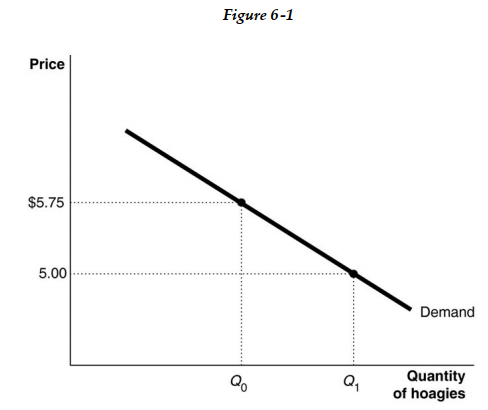
-Refer to Figure 6 -1. Which of the following statements is true?
A) Points a and b are derived independently of the utility -maximizing model.
B) Points a and b are the utility -maximizing quantities of ice cream cones at two different prices of ice cream.
C) Point a could be a utility -maximizing choice if the price is US$3 but point b may not be because we have no information on the marginal utility per dollar when price changes.
D) Points a and b may not necessarily be the utility -maximizing quantities of ice cream cones at two different prices because we have no information on the consumer's budget or the price of other goods.
Question
Question
Question
Question
Question
Question
Question
Question
Question
Question
Question
Question
Question
Question
Question
Question
Question
Question
Question
Question
Question
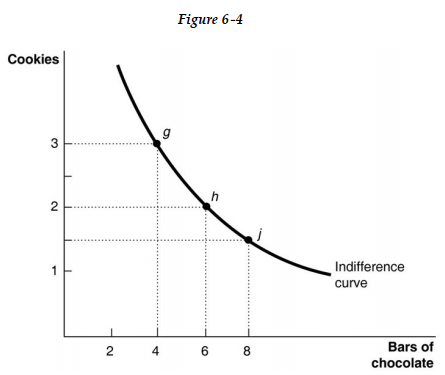
-Refer to Figure 6 -4. What is the marginal rate of substitution between g and h?
A) One third of a cookie
B) Three cookies
C) Half a cookie
D) Two cookies
Question
Question
Question
Question

Unlock Deck
Sign up to unlock the cards in this deck!
Unlock Deck
Unlock Deck
1/33

Play

Full screen (f)
Deck 6: Consumer Choice and Behavioral Economics
1
Utility is
A) the production of a quasi -public product like electricity or natural gas.
B) subjective and cannot be measured.
C) the consumption of a quasi -public product like electricity or natural gas.
D) easily measured in units called utils.
A) the production of a quasi -public product like electricity or natural gas.
B) subjective and cannot be measured.
C) the consumption of a quasi -public product like electricity or natural gas.
D) easily measured in units called utils.
subjective and cannot be measured.
2
The income effect of an increase in the price of salmon
A) is the change in the demand for other types of fish, for example trout, that result from a decrease in purchasing power.
B) is the change in the demand for salmon when income increases.
C) refers to relative price effect - salmon is more expensive compared to other types of fish - which causes the consumer to buy less salmon.
D) refers to the effect on a consumer's purchasing power which causes the consumer to buy less salmon, holding all other factors constant.
A) is the change in the demand for other types of fish, for example trout, that result from a decrease in purchasing power.
B) is the change in the demand for salmon when income increases.
C) refers to relative price effect - salmon is more expensive compared to other types of fish - which causes the consumer to buy less salmon.
D) refers to the effect on a consumer's purchasing power which causes the consumer to buy less salmon, holding all other factors constant.
refers to the effect on a consumer's purchasing power which causes the consumer to buy less salmon, holding all other factors constant.
3
If the price of lattes, a normal product you enjoy falls,
A) the income effect which causes you to increase your latte consumption outweighs the substitution effect which causes you to reduce your latte consumption, resulting in more latte purchased.
B) both the income and substitution effects lead you to buy more lattes.
C) the income and substitution effects offset each other but the price effect leads you to buy more lattes.
D) the substitution effect which causes you to increase your latte consumption outweighs the income effect which causes you to reduce your latte consumption, resulting in more latte purchased.
A) the income effect which causes you to increase your latte consumption outweighs the substitution effect which causes you to reduce your latte consumption, resulting in more latte purchased.
B) both the income and substitution effects lead you to buy more lattes.
C) the income and substitution effects offset each other but the price effect leads you to buy more lattes.
D) the substitution effect which causes you to increase your latte consumption outweighs the income effect which causes you to reduce your latte consumption, resulting in more latte purchased.
both the income and substitution effects lead you to buy more lattes.
4
If the price of muffins, a normal product you enjoy, rises,
A) the substitution effect which causes you to decrease your muffin consumption outweighs the income effect which causes you to increase your muffin consumption, resulting in fewer muffins purchased.
B) both the income and substitution effects lead you to buy fewer muffins.
C) the income and substitution effects offset each other but the price effect leads you to buy fewer muffins.
D) the income effect which causes you to decrease your muffin consumption outweighs the substitution effect which causes you to increase your muffin consumption, resulting in fewer muffins purchased.
A) the substitution effect which causes you to decrease your muffin consumption outweighs the income effect which causes you to increase your muffin consumption, resulting in fewer muffins purchased.
B) both the income and substitution effects lead you to buy fewer muffins.
C) the income and substitution effects offset each other but the price effect leads you to buy fewer muffins.
D) the income effect which causes you to decrease your muffin consumption outweighs the substitution effect which causes you to increase your muffin consumption, resulting in fewer muffins purchased.
Unlock Deck
Unlock for access to all 33 flashcards in this deck.
Unlock Deck
k this deck
5
The demand curve for corn is downward sloping. If the price of corn, an inferior food item, falls,
A) the income effect which causes you to reduce your corn purchases is smaller than the substitution effect which causes you to increase your corn purchases, resulting in a net increase in quantity demanded.
B) the income and substitution effects offset each other but the price effect of an inferior food item leads you to buy less corn.
C) the income effect which causes you to increase your corn purchases is larger than the substitution effect which causes you to reduce your corn purchases, resulting in a net increase in quantity demanded.
D) both the income and substitution effects reinforce each other to increase the quantity demanded.
A) the income effect which causes you to reduce your corn purchases is smaller than the substitution effect which causes you to increase your corn purchases, resulting in a net increase in quantity demanded.
B) the income and substitution effects offset each other but the price effect of an inferior food item leads you to buy less corn.
C) the income effect which causes you to increase your corn purchases is larger than the substitution effect which causes you to reduce your corn purchases, resulting in a net increase in quantity demanded.
D) both the income and substitution effects reinforce each other to increase the quantity demanded.
Unlock Deck
Unlock for access to all 33 flashcards in this deck.
Unlock Deck
k this deck
6
The demand curve for canned peas is downward sloping. If the price of canned peas, an inferior food item, rises,
A) the income effect which causes you to increase your canned peas purchases is smaller than the substitution effect which causes you to reduce your purchases, resulting in a net increase in quantity demanded.
B) the income and substitution effects offset each other but the price effect of an inferior food item leads you to buy more canned peas.
C) both the income and substitution effects reinforce each other to decrease the quantity demanded.
D) the income effect which causes you to reduce your canned peas purchases is smaller than the substitution effect which causes you to increase your purchases, resulting in a net increase in quantity demanded.
A) the income effect which causes you to increase your canned peas purchases is smaller than the substitution effect which causes you to reduce your purchases, resulting in a net increase in quantity demanded.
B) the income and substitution effects offset each other but the price effect of an inferior food item leads you to buy more canned peas.
C) both the income and substitution effects reinforce each other to decrease the quantity demanded.
D) the income effect which causes you to reduce your canned peas purchases is smaller than the substitution effect which causes you to increase your purchases, resulting in a net increase in quantity demanded.
Unlock Deck
Unlock for access to all 33 flashcards in this deck.
Unlock Deck
k this deck
7
Wafaa buys three bars of chocolates and four bags of almonds. The marginal utility of the third chocolate bar is 18 of marginal utility and the marginal utility from the fourth bag of almonds is also 18. Is Wafaa maximizing her utility?
A) No, she must cut back to three bags of almonds to equate her quantities of the two goods.
B) Yes, the marginal utility from the last unit of each food item is equal.
C) No, she must buy one more chocolate bar to equate her quantities of the two goods.
D) Without information on her income and the prices of the two goods, we cannot answer the question.
A) No, she must cut back to three bags of almonds to equate her quantities of the two goods.
B) Yes, the marginal utility from the last unit of each food item is equal.
C) No, she must buy one more chocolate bar to equate her quantities of the two goods.
D) Without information on her income and the prices of the two goods, we cannot answer the question.
Unlock Deck
Unlock for access to all 33 flashcards in this deck.
Unlock Deck
k this deck
8
-Refer to Figure 6 -1. Which of the following statements is true?
A) Points a and b are derived independently of the utility -maximizing model.
B) Points a and b are the utility -maximizing quantities of ice cream cones at two different prices of ice cream.
C) Point a could be a utility -maximizing choice if the price is US$3 but point b may not be because we have no information on the marginal utility per dollar when price changes.
D) Points a and b may not necessarily be the utility -maximizing quantities of ice cream cones at two different prices because we have no information on the consumer's budget or the price of other goods.
Unlock Deck
Unlock for access to all 33 flashcards in this deck.
Unlock Deck
k this deck
9
For a demand curve to be upward sloping, the product would have to be
A) a luxury product for which the income effect of a price change is larger than the substitution effect.
B) a luxury product for which the substitution effect of a price change is larger than the income effect.
C) an inferior product for which the substitution effect of a price change is larger than the income effect.
D) an inferior product for which the income effect of a price change is larger than the substitution effect.
A) a luxury product for which the income effect of a price change is larger than the substitution effect.
B) a luxury product for which the substitution effect of a price change is larger than the income effect.
C) an inferior product for which the substitution effect of a price change is larger than the income effect.
D) an inferior product for which the income effect of a price change is larger than the substitution effect.
Unlock Deck
Unlock for access to all 33 flashcards in this deck.
Unlock Deck
k this deck
10
Firms pay famous individuals to endorse their products because
A) famous people only consume high quality products.
B) apparently demand is affected not just by the number of people who use a product but also by the type of person that uses the product.
C) famous people obviously know what are the best goods and services.
D) the firms are irrational and are wasting advertising expenditures.
A) famous people only consume high quality products.
B) apparently demand is affected not just by the number of people who use a product but also by the type of person that uses the product.
C) famous people obviously know what are the best goods and services.
D) the firms are irrational and are wasting advertising expenditures.
Unlock Deck
Unlock for access to all 33 flashcards in this deck.
Unlock Deck
k this deck
11
Over the years, Pepsi has used celebrities to advertise its products. In 2005, it hired superstar Amr Diab to appear in television commercials as part of an innovative marketing campaign for Pepsi-Cola. What is the rationale for using "expensive" celebrities?
A) By linking the product to a famous person, Pepsi hopes to create a positive image of the product in the consumer's mind.
B) Celebrities provide useful information about the product.
C) By using celebrities, Pepsi conveys crucial information about the product's quality.
D) People learn more about their own preferences by watching celebrities.
A) By linking the product to a famous person, Pepsi hopes to create a positive image of the product in the consumer's mind.
B) Celebrities provide useful information about the product.
C) By using celebrities, Pepsi conveys crucial information about the product's quality.
D) People learn more about their own preferences by watching celebrities.
Unlock Deck
Unlock for access to all 33 flashcards in this deck.
Unlock Deck
k this deck
12
Why does Al -Baik restaurant charge less per meal than its competitors (which creates long queues)?
A) Because there is a price ceiling on Al -Baik meals.
B) Al -Baik meaks are subsidized by the Saudi government.
C) Because if Al -Baik decided to increase its prices to eliminate the long queues, it might also eliminate its popularity as well.
D) Because of the low quality of Al -Baik meals.
A) Because there is a price ceiling on Al -Baik meals.
B) Al -Baik meaks are subsidized by the Saudi government.
C) Because if Al -Baik decided to increase its prices to eliminate the long queues, it might also eliminate its popularity as well.
D) Because of the low quality of Al -Baik meals.
Unlock Deck
Unlock for access to all 33 flashcards in this deck.
Unlock Deck
k this deck
13
Which of the following statements is correct?
A) Firms will always take advantage of opportunities to raise prices to increase profit.
B) Short -run profits may be given up to increase long -run profits.
C) Firms raise prices whenever demand increases.
D) Potential buyers who see long queues at a theater will likely go somewhere else.
A) Firms will always take advantage of opportunities to raise prices to increase profit.
B) Short -run profits may be given up to increase long -run profits.
C) Firms raise prices whenever demand increases.
D) Potential buyers who see long queues at a theater will likely go somewhere else.
Unlock Deck
Unlock for access to all 33 flashcards in this deck.
Unlock Deck
k this deck
14
Jamal, Laila and Salwa have been standing in a queue for almost an hour waiting to be served at Hamada, a new Japanese restaurant. It is possible that some of the people in the queue won't be served at all before the restaurant closes. Which of the following could explain why the restaurant does not simply increase prices high enough to eliminate the queues?
A. In situations where consumption takes place publicly, demand for the product is also influenced by how many other people are buying the product. Consequently, a popular restaurant that increases its prices enough to eliminate queues might find that it has also eliminated its popularity.
B. Firms may sometimes not raise their prices for fear that it violates people's sense of fairness and might alienate customers.
C. The demand for restaurant meals is relatively elastic and if the firm increases prices it will lower its profits.
A) a only
B) a and c only
C) a, b, and c
D) a and b only
A. In situations where consumption takes place publicly, demand for the product is also influenced by how many other people are buying the product. Consequently, a popular restaurant that increases its prices enough to eliminate queues might find that it has also eliminated its popularity.
B. Firms may sometimes not raise their prices for fear that it violates people's sense of fairness and might alienate customers.
C. The demand for restaurant meals is relatively elastic and if the firm increases prices it will lower its profits.
A) a only
B) a and c only
C) a, b, and c
D) a and b only
Unlock Deck
Unlock for access to all 33 flashcards in this deck.
Unlock Deck
k this deck
15
In the ultimatum game, allocators usually offer recipients at least a 40 percent share of the money, and recipients almost always reject offers of less than a 10 percent share. Which of the following does not explain why allocators offer recipients a relatively generous share and why recipients reject meager offers?
A) Fear of arousing outrage and abhorrence could influence economic decisions.
B) Allocators can count on recipients to ignore all considerations except financial benefit.
C) People can and often do reject offers that offend their sense of fairness even if doing so means taking a monetary loss.
D) Some people are careful not to engage in economic behavior that might offend and alienate others.
A) Fear of arousing outrage and abhorrence could influence economic decisions.
B) Allocators can count on recipients to ignore all considerations except financial benefit.
C) People can and often do reject offers that offend their sense of fairness even if doing so means taking a monetary loss.
D) Some people are careful not to engage in economic behavior that might offend and alienate others.
Unlock Deck
Unlock for access to all 33 flashcards in this deck.
Unlock Deck
k this deck
16
Which of the following demonstrates the endowment effect?
A) If you received a product as a gift, you are less likely to attach a monetary value to it.
B) Youssra commands a premium in the movie industry because he is endowed with dashing looks.
C) Walid inherits a house in Doha city from his grandfather and is unwilling to sell it for sentimental reasons.
D) Isabella was not willing to part with her "Youssra" DVD although she was offered US$100 for it, a sum greater than the cost of another such DVD.
A) If you received a product as a gift, you are less likely to attach a monetary value to it.
B) Youssra commands a premium in the movie industry because he is endowed with dashing looks.
C) Walid inherits a house in Doha city from his grandfather and is unwilling to sell it for sentimental reasons.
D) Isabella was not willing to part with her "Youssra" DVD although she was offered US$100 for it, a sum greater than the cost of another such DVD.
Unlock Deck
Unlock for access to all 33 flashcards in this deck.
Unlock Deck
k this deck
17
The average price of gasoline in your neighborhood is US$3.53 per gallon. Your neighbor, Diana, tells you that you can "save a lot" by frequenting a gas station 20 miles outside your neighborhood where the price of gasoline is US$3.46 per gallon However, she cautions you that there are usually long queues at that station. Is her suggestion beneficial to you?
A) No, if I factor in the non -monetary opportunity costs (driving time and waiting in line), it could prove more costly to go to the lower -priced gasoline station.
B) Yes, since gasoline is a necessity for car owners, the total cost savings would be relatively substantial.
C) No, Diana is misled; clearly, the lower priced gasoline must be of inferior quality and could damage vehicles.
D) Yes, the lower price of gasoline at the rival station increases my purchasing power and enables me to consume more of other goods.
A) No, if I factor in the non -monetary opportunity costs (driving time and waiting in line), it could prove more costly to go to the lower -priced gasoline station.
B) Yes, since gasoline is a necessity for car owners, the total cost savings would be relatively substantial.
C) No, Diana is misled; clearly, the lower priced gasoline must be of inferior quality and could damage vehicles.
D) Yes, the lower price of gasoline at the rival station increases my purchasing power and enables me to consume more of other goods.
Unlock Deck
Unlock for access to all 33 flashcards in this deck.
Unlock Deck
k this deck
18
According to an article in the San Francisco Chronicle, some gas stations in San Francisco encourage customers to pay in cash rather than credit card by posting a lower "cash price" and a higher "credit price". They justify this dual pricing on the grounds that credit card companies levy transaction fees on gas stations for customers who pay using credit cards. Credit card companies, on the other hand, oppose the use of the terms "cash price" and "credit price". They want the price paid with credit cards to be a station's "base price", and for the cash price to represent a discount from that rate. In other words, they prefer the use of "base price" and "discounts for cash". In reality, in terms of opportunity cost, there is no difference between having to pay a higher "credit price" and not receiving a discount for using a credit card, so why are credit card companies pushing for a change in the usage of terms?
A) The credit card companies' argument is sound; California law prohibits surcharges from being tacked onto retail prices for use of plastic and therefore, the dual pricing system is price discrimination and is illegal.
B) Credit card companies want people to have a clear idea of the payment options: if using cash the price is lower but the opportunity cost is higher and if they use credit cards, the price is higher but the opportunity cost is lower because of the convenience of credit cards.
C) Credit card companies recognize that consumers are more sensitive to monetary opportunity costs than to non-monetary opportunity costs. The term "credit price" suggests that consumers pay a surcharge for using their credit card and will see this as an increase in the monetary opportunity cost, but not receiving a discount when using credit cards is a non-monetary opportunity cost and is therefore likely to be ignored by consumers.
D) Credit card companies recognize that consumers are sensitive to hidden costs. The opportunity cost of using cash is generally higher than using credit cards because credit cards allow people to consume goods and services that they cannot pay for at present. By posting a lower cash price, gas stations are not revealing the true opportunity cost of the item.
A) The credit card companies' argument is sound; California law prohibits surcharges from being tacked onto retail prices for use of plastic and therefore, the dual pricing system is price discrimination and is illegal.
B) Credit card companies want people to have a clear idea of the payment options: if using cash the price is lower but the opportunity cost is higher and if they use credit cards, the price is higher but the opportunity cost is lower because of the convenience of credit cards.
C) Credit card companies recognize that consumers are more sensitive to monetary opportunity costs than to non-monetary opportunity costs. The term "credit price" suggests that consumers pay a surcharge for using their credit card and will see this as an increase in the monetary opportunity cost, but not receiving a discount when using credit cards is a non-monetary opportunity cost and is therefore likely to be ignored by consumers.
D) Credit card companies recognize that consumers are sensitive to hidden costs. The opportunity cost of using cash is generally higher than using credit cards because credit cards allow people to consume goods and services that they cannot pay for at present. By posting a lower cash price, gas stations are not revealing the true opportunity cost of the item.
Unlock Deck
Unlock for access to all 33 flashcards in this deck.
Unlock Deck
k this deck
19
Consider the following hypothetical scenarios:
Scenario A: You are about to purchase a pair of 7 For All Mankind jeans for US$175 and a T -shirt for US$45. The sales attendant at the store tells you that the pair of jeans you wish to buy is on sale for US$160 at another store, located about a 20 -minute drive away.
Scenario B: You are about to purchase a pair of 7 For All Mankind jeans for US$175 and a T -shirt for US$45. The sales attendant at the store tells you that the T -shirt you wish to buy is on sale for US$30 at another store, located about a 20 -minute drive away.
Based on standard economic theory, under which scenario would you make the 20 -minute trip to the other store?
A) Scenario B because a US$15 saving amounts to a substantial discount (about 33 percent).
B) Scenario A because the pair of jeans is a very expensive item and US$15 saving is quite substantial.
C) I think a US$15 saving is worth the 20 -minute trip in both scenarios.
D) I think the US$15 saving is not worth the 20 -minute trip in either scenario.
E) C and D are both correct.
Scenario A: You are about to purchase a pair of 7 For All Mankind jeans for US$175 and a T -shirt for US$45. The sales attendant at the store tells you that the pair of jeans you wish to buy is on sale for US$160 at another store, located about a 20 -minute drive away.
Scenario B: You are about to purchase a pair of 7 For All Mankind jeans for US$175 and a T -shirt for US$45. The sales attendant at the store tells you that the T -shirt you wish to buy is on sale for US$30 at another store, located about a 20 -minute drive away.
Based on standard economic theory, under which scenario would you make the 20 -minute trip to the other store?
A) Scenario B because a US$15 saving amounts to a substantial discount (about 33 percent).
B) Scenario A because the pair of jeans is a very expensive item and US$15 saving is quite substantial.
C) I think a US$15 saving is worth the 20 -minute trip in both scenarios.
D) I think the US$15 saving is not worth the 20 -minute trip in either scenario.
E) C and D are both correct.
Unlock Deck
Unlock for access to all 33 flashcards in this deck.
Unlock Deck
k this deck
20
Psychologists Daniel Kahneman and Amos Tversky conducted the following experiments by asking a sample of people the following questions: Scenario A: "Imagine that you have decided to see a play and paid the admission price of US$10 per ticket. As you enter the theater you discover that you have lost the ticket. The seat was not marked and the ticket cannot be recovered. Would you pay US$10 for another ticket?"
Scenario B: "Imagine that you have decided to see a play where admission is US$10 per ticket. As you enter the theater you discover that you have lost a US$10 bill. Would you still pay US$10 for a ticket for the play?" As long as additional tickets are available, there is no meaningful difference between losing US$10 in cash before buying a ticket, and losing the US$10 ticket after buying it. In both cases, you are US$10 worse off. Yet, far more subjects (88 percent) in Scenario B say they would pay US$10 for another ticket and see the play while in Scenario A, only 46 percent of the subjects say they would be willing to spend another US$10 to see the play.
Which of the following is the best explanation for the results of the experiment?
A) In Scenario B, people had not anticipated spending an additional US$10 so in effect the price of the ticket is US$20 and not US$10 whereas in Scenario A, the price of the ticket is still US$10
B) In Scenario A, people make an immediate connection between the lost ticket and the play and feel poorer by incorrectly assigning a greater value to the value of the ticket whereas in Scenario B, they do not make the connection between the lost US$10 bill and the play.
C) The net benefit derived from watching the play is lower in Scenario A where the effective cost is US$20 compared to the net benefit in Scenario B.
D) The endowment effect applies in Scenario A since people already own the ticket and therefore it is more valuable but this is not so in Scenario B.
Scenario B: "Imagine that you have decided to see a play where admission is US$10 per ticket. As you enter the theater you discover that you have lost a US$10 bill. Would you still pay US$10 for a ticket for the play?" As long as additional tickets are available, there is no meaningful difference between losing US$10 in cash before buying a ticket, and losing the US$10 ticket after buying it. In both cases, you are US$10 worse off. Yet, far more subjects (88 percent) in Scenario B say they would pay US$10 for another ticket and see the play while in Scenario A, only 46 percent of the subjects say they would be willing to spend another US$10 to see the play.
Which of the following is the best explanation for the results of the experiment?
A) In Scenario B, people had not anticipated spending an additional US$10 so in effect the price of the ticket is US$20 and not US$10 whereas in Scenario A, the price of the ticket is still US$10
B) In Scenario A, people make an immediate connection between the lost ticket and the play and feel poorer by incorrectly assigning a greater value to the value of the ticket whereas in Scenario B, they do not make the connection between the lost US$10 bill and the play.
C) The net benefit derived from watching the play is lower in Scenario A where the effective cost is US$20 compared to the net benefit in Scenario B.
D) The endowment effect applies in Scenario A since people already own the ticket and therefore it is more valuable but this is not so in Scenario B.
Unlock Deck
Unlock for access to all 33 flashcards in this deck.
Unlock Deck
k this deck
21
Samia finally bought a pair of blue shoes that she had been wanting for a long time. In less than a week she discovered that the shoes were uncomfortable. She went back to wearing her old pair and stashed away the new pair. When asked by her boss, Mervat, why she doesn't simply give away the new pair, she said: "But I paid so much for them." Samia's behavior
A) is rational: she should not discard a valuable item.
B) ignores the fact that the purchase price is now a sunk cost and has no bearing on whether she should give them away or not.
C) supports the endowment effect which states that ownership of an item makes it more valuable.
D) is rational because the more you pay for an item the more valuable it is.
A) is rational: she should not discard a valuable item.
B) ignores the fact that the purchase price is now a sunk cost and has no bearing on whether she should give them away or not.
C) supports the endowment effect which states that ownership of an item makes it more valuable.
D) is rational because the more you pay for an item the more valuable it is.
Unlock Deck
Unlock for access to all 33 flashcards in this deck.
Unlock Deck
k this deck
22
Standard economic theory asserts that sunk costs are irrelevant in making economic decisions yet studies conducted by behavioral economists reveal that sunk costs often affect economic decisions. Which of the following could explain this observation?
A) Even though sunk costs cannot be recovered, the cost has been incurred and therefore should be treated as part of the product's value.
B) People measure the value of a product in terms of its purchase price.
C) Sunk costs have a higher opportunity cost than costs that can be recovered.
D) If consumers maximize their utility, it makes sense to consider the full purchase price of a product in their consumption decisions.
A) Even though sunk costs cannot be recovered, the cost has been incurred and therefore should be treated as part of the product's value.
B) People measure the value of a product in terms of its purchase price.
C) Sunk costs have a higher opportunity cost than costs that can be recovered.
D) If consumers maximize their utility, it makes sense to consider the full purchase price of a product in their consumption decisions.
Unlock Deck
Unlock for access to all 33 flashcards in this deck.
Unlock Deck
k this deck
23
In "An Inside Look: Was Nokia Right to Choose Mohamed Hamaki to Endorse its New Music Service?", Nokia hired Hamaki because of his popularity among young adults. When is this endorsement likely to increase Nokia's profit?
A) When the increase in demand on Nokia phones generates revenue that is more than the cost of hiring Hamaki.
B) When young Arab adults do not like to imitate celebrities.
C) If there are rumors about Hamaki participating in unacceptable behavior.
D) When Nokia's revenue from selling mobile phones increases by the same amount paid to Hamaki.
A) When the increase in demand on Nokia phones generates revenue that is more than the cost of hiring Hamaki.
B) When young Arab adults do not like to imitate celebrities.
C) If there are rumors about Hamaki participating in unacceptable behavior.
D) When Nokia's revenue from selling mobile phones increases by the same amount paid to Hamaki.
Unlock Deck
Unlock for access to all 33 flashcards in this deck.
Unlock Deck
k this deck
24
An article in The Boston Globe notes that many products come with a deceptive price structure. Examples include printers that come with a hefty add-on fee in the form of ink cartridges and razors that must be used with specific high-priced blades. All of the following statements could explain why it is rational for firms to use such a pricing scheme except
A) It reduces the need to resort to price competition in the marketplace since customers cannot easily discern the true price of the product.
B) Firms recognize that it's best not to overwhelm customers with too much pricing information.
C) Firms recognize that there are more myopic customers than sophisticated customers and this pricing strategy tends to draw the myopic (short -sighted) customers.
D) Using sneaky pricing schemes makes it more difficult for consumers to compare pricing.
A) It reduces the need to resort to price competition in the marketplace since customers cannot easily discern the true price of the product.
B) Firms recognize that it's best not to overwhelm customers with too much pricing information.
C) Firms recognize that there are more myopic customers than sophisticated customers and this pricing strategy tends to draw the myopic (short -sighted) customers.
D) Using sneaky pricing schemes makes it more difficult for consumers to compare pricing.
Unlock Deck
Unlock for access to all 33 flashcards in this deck.
Unlock Deck
k this deck
25
Consider the following scenario: There are two types of customers: the myopes (short sighted) and the sophisticates. Now, imagine two hotel chains. The first, Hidden Price Inn, has a very low room rate of US$80 a night, but makes liberal use of high "shrouded" fees: US$3 for a minibar Coca-Cola, US$25 for parking, US$2 for local calls. The second chain, Straightforward Suites, charges much more reasonably for the extra costs (US$1 for a minibar Coca-Cola, , US$10 for parking, and no charge for local calls ), but because it makes less on the extras, it has to charge slightly more for the room - US$95, instead of US$80. The myopes are lured by Hidden Price Inn's low room rate but end up spending far more because of the fees on the extras. The sophisticates, on the other hand, know all about hidden fees. They seek out low advertised rates and whenever possible avoid or find substitutes for the hidden fees such as using cell phones at hotels and avoiding the minibar.
In a competitive market, it would appear that Straightforward Suites has a strong incentive to launch an advertising campaign to expose Hidden Price Inn's liberal use of hidden fees. But, economists Xavier Gabaix and David Laibson argue to the contrary. Which of the following supports their argument?
A) Since it is difficult to distinguish between the myopes and the sophisticates, it is unclear whether the advertising campaign would affect the intended consumers.
B) Hidden Price Inn is likely to retaliate with an advertising campaign of its own pointing out the saving in the room rate more than offsets the higher price of the extras, thereby sparking an advertising war.
C) It is too complex to explain the deceptive pricing structure, and too costly to launch such an advertising campaign.
D) At best, the campaign would convert some myopes into sophisticates and these newly wised -up customers will spend less on any hotel they frequent, thus hurting the hotel industry in general.
In a competitive market, it would appear that Straightforward Suites has a strong incentive to launch an advertising campaign to expose Hidden Price Inn's liberal use of hidden fees. But, economists Xavier Gabaix and David Laibson argue to the contrary. Which of the following supports their argument?
A) Since it is difficult to distinguish between the myopes and the sophisticates, it is unclear whether the advertising campaign would affect the intended consumers.
B) Hidden Price Inn is likely to retaliate with an advertising campaign of its own pointing out the saving in the room rate more than offsets the higher price of the extras, thereby sparking an advertising war.
C) It is too complex to explain the deceptive pricing structure, and too costly to launch such an advertising campaign.
D) At best, the campaign would convert some myopes into sophisticates and these newly wised -up customers will spend less on any hotel they frequent, thus hurting the hotel industry in general.
Unlock Deck
Unlock for access to all 33 flashcards in this deck.
Unlock Deck
k this deck
26
Research conducted by Professors Cass Sunstein and Richard Thaler show that employees are much more likely to enroll in a savings plan under automatic enrollment than under a default term of non-enrollment because it turns out that very few employees drop out if automatically enrolled. What does this suggest about getting people to save for their retirement?
A) One way to get people to save more is to make mandatory contributions to a saving plan part and parcel of employment, and to make opting -out legally impossible.
B) Planning for one's retirement is complex and emotional and most people deliberately avoid confronting these financial decisions.
C) Many people need to be "tricked" into saving because they are unrealistic about their future behavior. They spend money today that they should be saving for retirement, partly because they overestimate their ability to save in the future.
D) People are overly pessimistic about their future financial prospects; many fear that the social security scheme may be non -existent by the time they retire.
A) One way to get people to save more is to make mandatory contributions to a saving plan part and parcel of employment, and to make opting -out legally impossible.
B) Planning for one's retirement is complex and emotional and most people deliberately avoid confronting these financial decisions.
C) Many people need to be "tricked" into saving because they are unrealistic about their future behavior. They spend money today that they should be saving for retirement, partly because they overestimate their ability to save in the future.
D) People are overly pessimistic about their future financial prospects; many fear that the social security scheme may be non -existent by the time they retire.
Unlock Deck
Unlock for access to all 33 flashcards in this deck.
Unlock Deck
k this deck
27
A fair number of people buy expensive gym memberships to commit themselves to exercising. Yet, data from health clubs show that many do not follow through with their intentions and end up losing money on their membership contracts. Which of the following could explain this behavior?
A) People fail to ignore the sunk cost of a gym membership when making the purchase.
B) People realize after the fact that they have made a mistake but unfortunately memberships are often not transferable and not refundable.
C) People have a tendency to pursue immediate gratification in a way that their 'long -run selves' do not appreciate (quoted from Ted O'Donoghue and Matthew Rabin, "Choice and Procrastination," Quarterly Journal of Economics, February 2001, pp. 125 -26.).
D) People tend to be overly optimistic about their future behavior, so much so that after making an expensive investment in the membership, they overrate the dividends they expect to reap.
A) People fail to ignore the sunk cost of a gym membership when making the purchase.
B) People realize after the fact that they have made a mistake but unfortunately memberships are often not transferable and not refundable.
C) People have a tendency to pursue immediate gratification in a way that their 'long -run selves' do not appreciate (quoted from Ted O'Donoghue and Matthew Rabin, "Choice and Procrastination," Quarterly Journal of Economics, February 2001, pp. 125 -26.).
D) People tend to be overly optimistic about their future behavior, so much so that after making an expensive investment in the membership, they overrate the dividends they expect to reap.
Unlock Deck
Unlock for access to all 33 flashcards in this deck.
Unlock Deck
k this deck
28
What is an indifference curve?
A) It is a curve that ranks a consumer's preference for various consumption bundles.
B) It is a curve that shows the total utility and the marginal utility derived from consuming a bundle of goods.
C) It is a curve that shows the combinations of consumption bundles that gives the consumer the same utility.
D) It is a curve that shows the trade -off a consumer faces among different combinations of consumption bundles.
A) It is a curve that ranks a consumer's preference for various consumption bundles.
B) It is a curve that shows the total utility and the marginal utility derived from consuming a bundle of goods.
C) It is a curve that shows the combinations of consumption bundles that gives the consumer the same utility.
D) It is a curve that shows the trade -off a consumer faces among different combinations of consumption bundles.
Unlock Deck
Unlock for access to all 33 flashcards in this deck.
Unlock Deck
k this deck
29
-Refer to Figure 6 -4. What is the marginal rate of substitution between g and h?
A) One third of a cookie
B) Three cookies
C) Half a cookie
D) Two cookies
Unlock Deck
Unlock for access to all 33 flashcards in this deck.
Unlock Deck
k this deck
30
Aisha and Asmaa both purchase milk and bread at the same Quik Mart. They have different preferences for milk and eggs and different incomes. They both buy some milk and some bread, but they buy considerably different quantities of the two goods. Which of the following statements is true, given that Aisha and Asmaa are utility -maximizers?
A) In equilibrium, their marginal rate of substitution between milk and bread is the same.
B) In equilibrium, the marginal rate of substitution between milk and bread is greater for the person who prefers milk more than bread.
C) No statement can be made about their respective marginal rate of substitution without their budget constraint/indifference curves diagrams.
D) In equilibrium, their marginal rate of substitution between milk and bread is higher for the person with the higher income.
A) In equilibrium, their marginal rate of substitution between milk and bread is the same.
B) In equilibrium, the marginal rate of substitution between milk and bread is greater for the person who prefers milk more than bread.
C) No statement can be made about their respective marginal rate of substitution without their budget constraint/indifference curves diagrams.
D) In equilibrium, their marginal rate of substitution between milk and bread is higher for the person with the higher income.
Unlock Deck
Unlock for access to all 33 flashcards in this deck.
Unlock Deck
k this deck
31
Gina has US$6 per day to purchase lunch. She spends all of her lunch money on pizza and iced tea. The price of pizza is US$2 per slice and iced tea costs US$1 per bottle.
a. Draw Gina's budget constraint. Put Pizza on the horizontal axis and Iced tea on the vertical axis. Be sure to identify the intercept values.
b. If the price of iced tea rises to US$1.20 per bottle, show what will happen to her budget constraint in your diagram. Be sure to indicate any new intercept values.
a. Draw Gina's budget constraint. Put Pizza on the horizontal axis and Iced tea on the vertical axis. Be sure to identify the intercept values.
b. If the price of iced tea rises to US$1.20 per bottle, show what will happen to her budget constraint in your diagram. Be sure to indicate any new intercept values.
Unlock Deck
Unlock for access to all 33 flashcards in this deck.
Unlock Deck
k this deck
32
Farah has US$100 to spend each month on bread and chicken. Suppose the price of bread is US$4 a loaf and the price of chicken is US$5 per kilo.
a. Draw her budget constraint and label it BC0. Put Loaves of bread on the horizontal axis and Chicken (kilos) on the vertical axis. Be sure to identify the intercept values.
b. Suppose Farah is a utility maximizer and she consumes 10 loaves of bread and 12 kilos of chicken. On the same graph you drew in part (a), draw an indifference curve to identify her optimal bundle. Label this bundle "E".
c. Is her budget exhausted? Explain your answer.
d. Suppose Farah's income falls so that she can now spend US$80 each month on the two goods. Prices however remain unchanged. In the same diagram, graph her new budget contraint and label it . Be sure to identify any new intercept values.
e. Following the change in income, can Farah consume the same bundle "E"? Explain your answer.
f. What must happen to her total utility following the decrease in her income?
a. Draw her budget constraint and label it BC0. Put Loaves of bread on the horizontal axis and Chicken (kilos) on the vertical axis. Be sure to identify the intercept values.
b. Suppose Farah is a utility maximizer and she consumes 10 loaves of bread and 12 kilos of chicken. On the same graph you drew in part (a), draw an indifference curve to identify her optimal bundle. Label this bundle "E".
c. Is her budget exhausted? Explain your answer.
d. Suppose Farah's income falls so that she can now spend US$80 each month on the two goods. Prices however remain unchanged. In the same diagram, graph her new budget contraint and label it . Be sure to identify any new intercept values.
e. Following the change in income, can Farah consume the same bundle "E"? Explain your answer.
f. What must happen to her total utility following the decrease in her income?
Unlock Deck
Unlock for access to all 33 flashcards in this deck.
Unlock Deck
k this deck
33
George has US$200 to spend each month on restaurant meals and jazz performances at his neighborhood jazz club. The price of a typical restaurant meal is US$20 and the price of a jazz performance ticket is US$10. George is maximizing his utility by consuming six restaurant meals and attending eight jazz performances. Suppose George still has US$200 to spend, but the price of a restaurant meal rises to US$25, while the price of a jazz performance ticket drops to US$8. Is George better or worse off than he was before the price change? Use a budget constraint/indifference curve graph to illustrate your answer.
Unlock Deck
Unlock for access to all 33 flashcards in this deck.
Unlock Deck
k this deck
Unlock Deck
Unlock for access to all 33 flashcards in this deck.






