Deck 25: Amino Acids, Peptides, and Proteins

Full screen (f)
exit full mode
Question
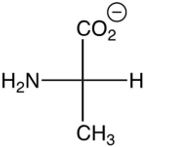
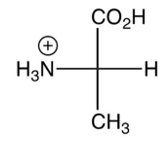
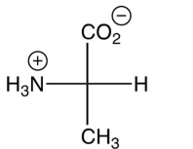
Which of the following is the zwitterion form of L-alanine?

A)
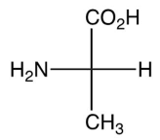
<strong>Which of the following is the zwitterion form of L-alanine? </strong> A)   B)   C)   D)   <div style=padding-top: 35px>
B)
<strong>Which of the following is the zwitterion form of L-alanine? </strong> A)   B)   C)   D)   <div style=padding-top: 35px>
C)
<strong>Which of the following is the zwitterion form of L-alanine? </strong> A)   B)   C)   D)   <div style=padding-top: 35px>
D)
<strong>Which of the following is the zwitterion form of L-alanine? </strong> A)   B)   C)   D)   <div style=padding-top: 35px>
Use Space or
up arrow
down arrow
to flip the card.
Question
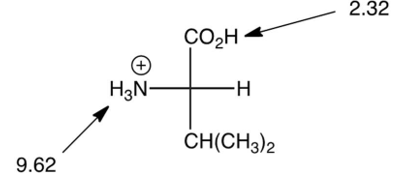
What is the pI of valine, shown below? (the pKa\mathrm{p} K_{\mathrm{a}} 's are shown)
 <strong>What is the pI of valine, shown below? (the  \mathrm{p} K_{\mathrm{a}}  's are shown)  </strong> A) 2.32 B) 4.81 C) 5.97 D) 9.62 <div style=padding-top: 35px>

A) 2.32
B) 4.81
C) 5.97
D) 9.62
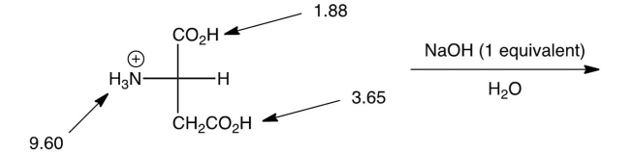
Question
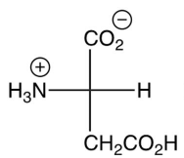
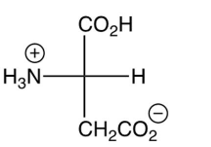
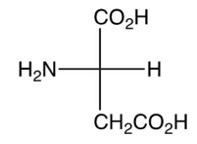
Which of the following is the major product of the reaction shown below? (the pKa’s \mathrm{p} K_{\mathrm{a}}{ }^{\text {'s }} are shown)
 <strong>Which of the following is the major product of the reaction shown below? (the  \mathrm{p} K_{\mathrm{a}}{ }^{\text {'s }}  are shown)  </strong> A)   B)   C)   D)   <div style=padding-top: 35px>

A)
 <strong>Which of the following is the major product of the reaction shown below? (the  \mathrm{p} K_{\mathrm{a}}{ }^{\text {'s }}  are shown)  </strong> A)   B)   C)   D)   <div style=padding-top: 35px>
B)
 <strong>Which of the following is the major product of the reaction shown below? (the  \mathrm{p} K_{\mathrm{a}}{ }^{\text {'s }}  are shown)  </strong> A)   B)   C)   D)   <div style=padding-top: 35px>
C)
 <strong>Which of the following is the major product of the reaction shown below? (the  \mathrm{p} K_{\mathrm{a}}{ }^{\text {'s }}  are shown)  </strong> A)   B)   C)   D)   <div style=padding-top: 35px>
D)
 <strong>Which of the following is the major product of the reaction shown below? (the  \mathrm{p} K_{\mathrm{a}}{ }^{\text {'s }}  are shown)  </strong> A)   B)   C)   D)   <div style=padding-top: 35px>
Question
The Fischer projection shown below denotes a amino acid which has the configuration.
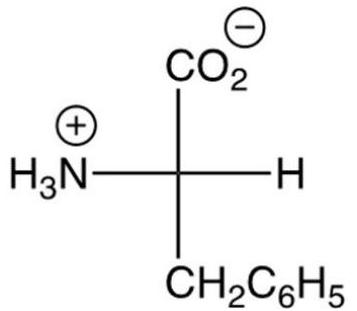
<strong>The Fischer projection shown below denotes a amino acid which has the configuration.  </strong> A) D, S B) D, R C) L, S D) L, R <div style=padding-top: 35px>

A) D, S
B) D, R
C) L, S
D) L, R
Question
What is the total number of different tripeptides which can result from three different L-amino acids?

A) three
B) four
C) six
D) nine
Question
What is the net charge on L-aspartic acid (R=CH2CO2H)\left(\mathrm{R}=-\mathrm{CH}_{2} \mathrm{CO}_{2} \mathrm{H}\right) at a pH of 11.0 ?

A) +1
B) +2
C) -1
D) -2
Question
In strongly acidic solution L-lysine is primarily a dication as shown below. As the pH\mathrm{pH} is raised, which proton is lost to form the monocation?
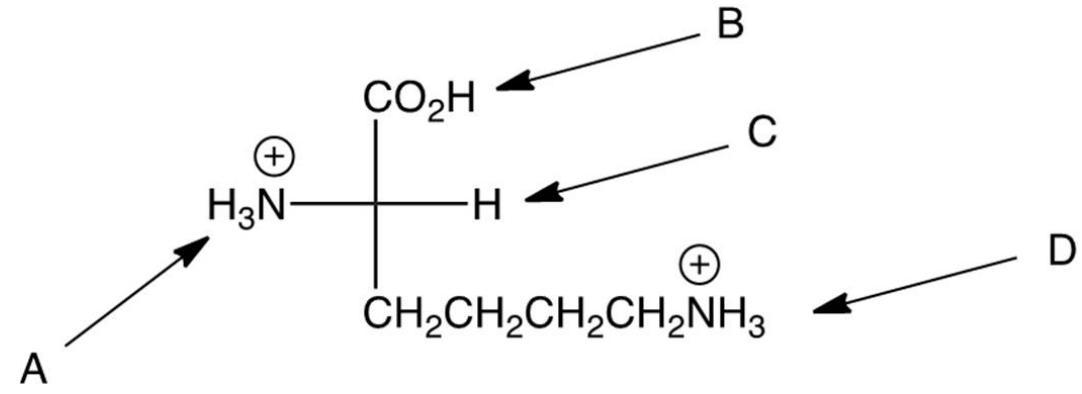
 <strong>In strongly acidic solution L-lysine is primarily a dication as shown below. As the  \mathrm{pH}  is raised, which proton is lost to form the monocation?  </strong> A) A B) B C) C D) D <div style=padding-top: 35px>

A) A
B) B
C) C
D) D
Question
Linus Pauling is credited with describing the α\alpha -helix structure of a polypeptide. The α\alpha -helix is an example of a polypeptide's

A) primary structure.
B) secondary structure.
C) tertiary structure.
D) quaternary structure.
Question
What is the net charge on the dipeptide lys-asp at a pH\mathrm{pH} of 1.0 ?
Aspartic acid (R=CH2CO2H)\left(\mathrm{R}=-\mathrm{CH}_{2} \mathrm{CO}_{2} \mathrm{H}\right)
Lysine ( R=CH2CH2CH2CH2NH2)\left.\mathrm{R}=\mathrm{CH}_{2} \mathrm{CH}_{2} \mathrm{CH}_{2} \mathrm{CH}_{2} \mathrm{NH}_{2}\right)

A) +1
B) +2
C) +3
D) +4
Question
A pentapeptide was found to contain the amino acids ala, gly, met, phe, and ser. Partial hydrolysis of the pentapeptide gave the dipeptides gly-ser, met-phe, ala-gly, and ser-met. What is the sequence of the pentapeptide?

A) gly-ser-met-phe-ala
B) gly-ser-met-ala-phe
C) ala-gly-ser-phe-met
D) ala-gly-ser-met-phe
Question
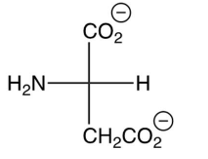
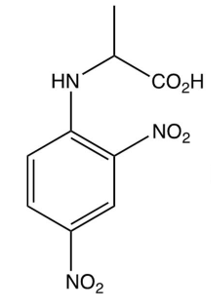
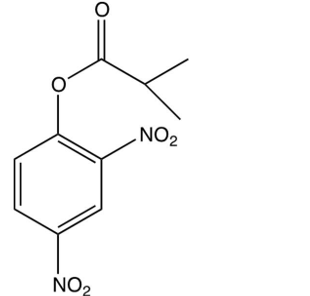
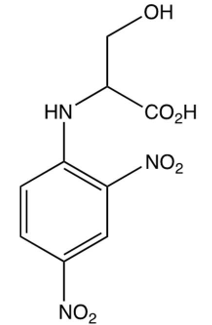
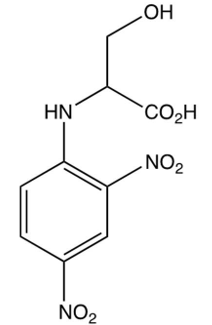
Which of the following is the DNP derivative obtained from the reaction sequence shown below?
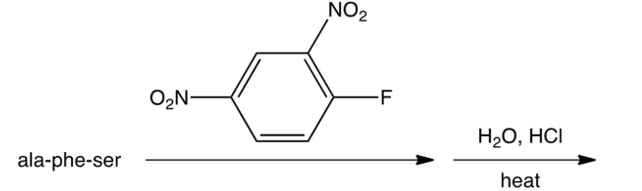
<strong>Which of the following is the DNP derivative obtained from the reaction sequence shown below?  </strong> A)   B)   C)   D)   <div style=padding-top: 35px>

A)
<strong>Which of the following is the DNP derivative obtained from the reaction sequence shown below?  </strong> A)   B)   C)   D)   <div style=padding-top: 35px>
B)
<strong>Which of the following is the DNP derivative obtained from the reaction sequence shown below?  </strong> A)   B)   C)   D)   <div style=padding-top: 35px>
C)
<strong>Which of the following is the DNP derivative obtained from the reaction sequence shown below?  </strong> A)   B)   C)   D)   <div style=padding-top: 35px>
D)
<strong>Which of the following is the DNP derivative obtained from the reaction sequence shown below?  </strong> A)   B)   C)   D)   <div style=padding-top: 35px>
Question
Which one of the following reagents is used for the visual detection of amino acids?

A) Sanger's reagent
B) dicyclohexylcarbodiimide (DCCI)
C) ninhydrin
D) phenyl isothiocyanate
Question
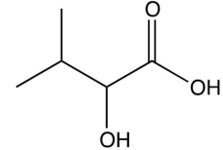
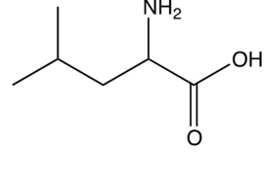
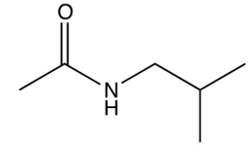
Which one of the following is the final product of the reaction sequence shown below? <strong>Which one of the following is the final product of the reaction sequence shown below?  </strong> A)   B)   C)   D)   <div style=padding-top: 35px>

A)
<strong>Which one of the following is the final product of the reaction sequence shown below?  </strong> A)   B)   C)   D)   <div style=padding-top: 35px>
B)
<strong>Which one of the following is the final product of the reaction sequence shown below?  </strong> A)   B)   C)   D)   <div style=padding-top: 35px>
C)
<strong>Which one of the following is the final product of the reaction sequence shown below?  </strong> A)   B)   C)   D)   <div style=padding-top: 35px>
D)
<strong>Which one of the following is the final product of the reaction sequence shown below?  </strong> A)   B)   C)   D)   <div style=padding-top: 35px>
Question
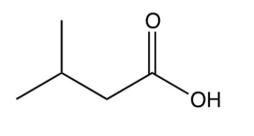
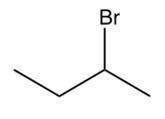
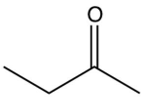
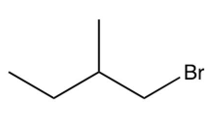
Identify the missing starting reagent needed in the Strecker synthesis of isoleucine. (Assume you will get all the stereoisomers of isoleucine.)
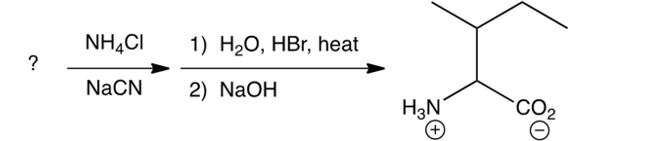
<strong>Identify the missing starting reagent needed in the Strecker synthesis of isoleucine. (Assume you will get all the stereoisomers of isoleucine.)  </strong> A)   B)   C)   D)   <div style=padding-top: 35px>

A)
<strong>Identify the missing starting reagent needed in the Strecker synthesis of isoleucine. (Assume you will get all the stereoisomers of isoleucine.)  </strong> A)   B)   C)   D)   <div style=padding-top: 35px>
B)
<strong>Identify the missing starting reagent needed in the Strecker synthesis of isoleucine. (Assume you will get all the stereoisomers of isoleucine.)  </strong> A)   B)   C)   D)   <div style=padding-top: 35px>
C)
<strong>Identify the missing starting reagent needed in the Strecker synthesis of isoleucine. (Assume you will get all the stereoisomers of isoleucine.)  </strong> A)   B)   C)   D)   <div style=padding-top: 35px>
D)
<strong>Identify the missing starting reagent needed in the Strecker synthesis of isoleucine. (Assume you will get all the stereoisomers of isoleucine.)  </strong> A)   B)   C)   D)   <div style=padding-top: 35px>
Question
In aqueous solution, the artificial sweetener aspartame slowly converts to the cyclic compound shown below. Which of the following best describes this reaction?  <strong>In aqueous solution, the artificial sweetener aspartame slowly converts to the cyclic compound shown below. Which of the following best describes this reaction?  </strong> A) nucleophilic acyl substitution B) Dieckmann condensation C) ester hydrolysis D)  \mathrm{S}_{\mathrm{N}} 2  reaction <div style=padding-top: 35px>
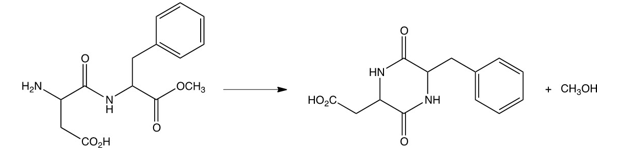
A) nucleophilic acyl substitution
B) Dieckmann condensation
C) ester hydrolysis
D) SN2\mathrm{S}_{\mathrm{N}} 2 reaction
Question
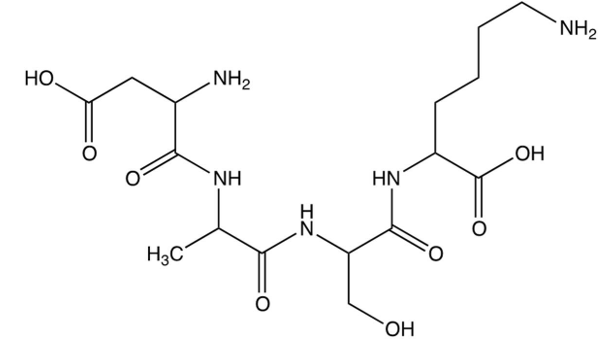
Which of the following is the abbreviated formula of the tetrapeptide shown below? (Hint: Remember to start at the N\mathrm{N} -terminal end.)
 <strong>Which of the following is the abbreviated formula of the tetrapeptide shown below? (Hint: Remember to start at the  \mathrm{N} -terminal end.)   </strong> A) lys-ser-asp-ala B) ser-lys-ala-asp C) asp-ala-ser-lys D) asp-ser-ala-lys <div style=padding-top: 35px>

A) lys-ser-asp-ala
B) ser-lys-ala-asp
C) asp-ala-ser-lys
D) asp-ser-ala-lys
Unlock Deck
Sign up to unlock the cards in this deck!
Unlock Deck
Unlock Deck
1/16
auto play flashcards
Play
simple tutorial
Full screen (f)
exit full mode
Deck 25: Amino Acids, Peptides, and Proteins
1
Which of the following is the zwitterion form of L-alanine?

A)
<strong>Which of the following is the zwitterion form of L-alanine? </strong> A)   B)   C)   D)
B)
<strong>Which of the following is the zwitterion form of L-alanine? </strong> A)   B)   C)   D)
C)
<strong>Which of the following is the zwitterion form of L-alanine? </strong> A)   B)   C)   D)
D)
<strong>Which of the following is the zwitterion form of L-alanine? </strong> A)   B)   C)   D)

2
What is the pI of valine, shown below? (the pKa\mathrm{p} K_{\mathrm{a}} 's are shown)
 <strong>What is the pI of valine, shown below? (the  \mathrm{p} K_{\mathrm{a}}  's are shown)  </strong> A) 2.32 B) 4.81 C) 5.97 D) 9.62

A) 2.32
B) 4.81
C) 5.97
D) 9.62
5.97
3
Which of the following is the major product of the reaction shown below? (the pKa’s \mathrm{p} K_{\mathrm{a}}{ }^{\text {'s }} are shown)
 <strong>Which of the following is the major product of the reaction shown below? (the  \mathrm{p} K_{\mathrm{a}}{ }^{\text {'s }}  are shown)  </strong> A)   B)   C)   D)

A)
 <strong>Which of the following is the major product of the reaction shown below? (the  \mathrm{p} K_{\mathrm{a}}{ }^{\text {'s }}  are shown)  </strong> A)   B)   C)   D)
B)
 <strong>Which of the following is the major product of the reaction shown below? (the  \mathrm{p} K_{\mathrm{a}}{ }^{\text {'s }}  are shown)  </strong> A)   B)   C)   D)
C)
 <strong>Which of the following is the major product of the reaction shown below? (the  \mathrm{p} K_{\mathrm{a}}{ }^{\text {'s }}  are shown)  </strong> A)   B)   C)   D)
D)
 <strong>Which of the following is the major product of the reaction shown below? (the  \mathrm{p} K_{\mathrm{a}}{ }^{\text {'s }}  are shown)  </strong> A)   B)   C)   D)

4
The Fischer projection shown below denotes a amino acid which has the configuration.
<strong>The Fischer projection shown below denotes a amino acid which has the configuration.  </strong> A) D, S B) D, R C) L, S D) L, R

A) D, S
B) D, R
C) L, S
D) L, R
Unlock Deck
Unlock for access to all 16 flashcards in this deck.
Unlock Deck
k this deck
5
What is the total number of different tripeptides which can result from three different L-amino acids?

A) three
B) four
C) six
D) nine
Unlock Deck
Unlock for access to all 16 flashcards in this deck.
Unlock Deck
k this deck
6
What is the net charge on L-aspartic acid (R=CH2CO2H)\left(\mathrm{R}=-\mathrm{CH}_{2} \mathrm{CO}_{2} \mathrm{H}\right) at a pH of 11.0 ?

A) +1
B) +2
C) -1
D) -2
Unlock Deck
Unlock for access to all 16 flashcards in this deck.
Unlock Deck
k this deck
7
In strongly acidic solution L-lysine is primarily a dication as shown below. As the pH\mathrm{pH} is raised, which proton is lost to form the monocation?
 <strong>In strongly acidic solution L-lysine is primarily a dication as shown below. As the  \mathrm{pH}  is raised, which proton is lost to form the monocation?  </strong> A) A B) B C) C D) D

A) A
B) B
C) C
D) D
Unlock Deck
Unlock for access to all 16 flashcards in this deck.
Unlock Deck
k this deck
8
Linus Pauling is credited with describing the α\alpha -helix structure of a polypeptide. The α\alpha -helix is an example of a polypeptide's

A) primary structure.
B) secondary structure.
C) tertiary structure.
D) quaternary structure.
Unlock Deck
Unlock for access to all 16 flashcards in this deck.
Unlock Deck
k this deck
9
What is the net charge on the dipeptide lys-asp at a pH\mathrm{pH} of 1.0 ?
Aspartic acid (R=CH2CO2H)\left(\mathrm{R}=-\mathrm{CH}_{2} \mathrm{CO}_{2} \mathrm{H}\right)
Lysine ( R=CH2CH2CH2CH2NH2)\left.\mathrm{R}=\mathrm{CH}_{2} \mathrm{CH}_{2} \mathrm{CH}_{2} \mathrm{CH}_{2} \mathrm{NH}_{2}\right)

A) +1
B) +2
C) +3
D) +4
Unlock Deck
Unlock for access to all 16 flashcards in this deck.
Unlock Deck
k this deck
10
A pentapeptide was found to contain the amino acids ala, gly, met, phe, and ser. Partial hydrolysis of the pentapeptide gave the dipeptides gly-ser, met-phe, ala-gly, and ser-met. What is the sequence of the pentapeptide?

A) gly-ser-met-phe-ala
B) gly-ser-met-ala-phe
C) ala-gly-ser-phe-met
D) ala-gly-ser-met-phe
Unlock Deck
Unlock for access to all 16 flashcards in this deck.
Unlock Deck
k this deck
11
Which of the following is the DNP derivative obtained from the reaction sequence shown below?
<strong>Which of the following is the DNP derivative obtained from the reaction sequence shown below?  </strong> A)   B)   C)   D)

A)
<strong>Which of the following is the DNP derivative obtained from the reaction sequence shown below?  </strong> A)   B)   C)   D)
B)
<strong>Which of the following is the DNP derivative obtained from the reaction sequence shown below?  </strong> A)   B)   C)   D)
C)
<strong>Which of the following is the DNP derivative obtained from the reaction sequence shown below?  </strong> A)   B)   C)   D)
D)
<strong>Which of the following is the DNP derivative obtained from the reaction sequence shown below?  </strong> A)   B)   C)   D)
Unlock Deck
Unlock for access to all 16 flashcards in this deck.
Unlock Deck
k this deck
12
Which one of the following reagents is used for the visual detection of amino acids?

A) Sanger's reagent
B) dicyclohexylcarbodiimide (DCCI)
C) ninhydrin
D) phenyl isothiocyanate
Unlock Deck
Unlock for access to all 16 flashcards in this deck.
Unlock Deck
k this deck
13
Which one of the following is the final product of the reaction sequence shown below? <strong>Which one of the following is the final product of the reaction sequence shown below?  </strong> A)   B)   C)   D)

A)
<strong>Which one of the following is the final product of the reaction sequence shown below?  </strong> A)   B)   C)   D)
B)
<strong>Which one of the following is the final product of the reaction sequence shown below?  </strong> A)   B)   C)   D)
C)
<strong>Which one of the following is the final product of the reaction sequence shown below?  </strong> A)   B)   C)   D)
D)
<strong>Which one of the following is the final product of the reaction sequence shown below?  </strong> A)   B)   C)   D)
Unlock Deck
Unlock for access to all 16 flashcards in this deck.
Unlock Deck
k this deck
14
Identify the missing starting reagent needed in the Strecker synthesis of isoleucine. (Assume you will get all the stereoisomers of isoleucine.)
<strong>Identify the missing starting reagent needed in the Strecker synthesis of isoleucine. (Assume you will get all the stereoisomers of isoleucine.)  </strong> A)   B)   C)   D)

A)
<strong>Identify the missing starting reagent needed in the Strecker synthesis of isoleucine. (Assume you will get all the stereoisomers of isoleucine.)  </strong> A)   B)   C)   D)
B)
<strong>Identify the missing starting reagent needed in the Strecker synthesis of isoleucine. (Assume you will get all the stereoisomers of isoleucine.)  </strong> A)   B)   C)   D)
C)
<strong>Identify the missing starting reagent needed in the Strecker synthesis of isoleucine. (Assume you will get all the stereoisomers of isoleucine.)  </strong> A)   B)   C)   D)
D)
<strong>Identify the missing starting reagent needed in the Strecker synthesis of isoleucine. (Assume you will get all the stereoisomers of isoleucine.)  </strong> A)   B)   C)   D)
Unlock Deck
Unlock for access to all 16 flashcards in this deck.
Unlock Deck
k this deck
15
In aqueous solution, the artificial sweetener aspartame slowly converts to the cyclic compound shown below. Which of the following best describes this reaction?  <strong>In aqueous solution, the artificial sweetener aspartame slowly converts to the cyclic compound shown below. Which of the following best describes this reaction?  </strong> A) nucleophilic acyl substitution B) Dieckmann condensation C) ester hydrolysis D)  \mathrm{S}_{\mathrm{N}} 2  reaction

A) nucleophilic acyl substitution
B) Dieckmann condensation
C) ester hydrolysis
D) SN2\mathrm{S}_{\mathrm{N}} 2 reaction
Unlock Deck
Unlock for access to all 16 flashcards in this deck.
Unlock Deck
k this deck
16
Which of the following is the abbreviated formula of the tetrapeptide shown below? (Hint: Remember to start at the N\mathrm{N} -terminal end.)
 <strong>Which of the following is the abbreviated formula of the tetrapeptide shown below? (Hint: Remember to start at the  \mathrm{N} -terminal end.)   </strong> A) lys-ser-asp-ala B) ser-lys-ala-asp C) asp-ala-ser-lys D) asp-ser-ala-lys

A) lys-ser-asp-ala
B) ser-lys-ala-asp
C) asp-ala-ser-lys
D) asp-ser-ala-lys
Unlock Deck
Unlock for access to all 16 flashcards in this deck.
Unlock Deck
k this deck
locked card icon
Unlock Deck
Unlock for access to all 16 flashcards in this deck.