







 Chat with AI

Deck 28: Pericyclic Reactions
Full screen (f)

Question
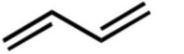
How many nodes are between the nuclei in the ground-state LUMO of 1,3-butadiene?
A) 0
B) 1
C) 2
D) 3
E) 4
A) 0
B) 1
C) 2
D) 3
E) 4

Question
Question
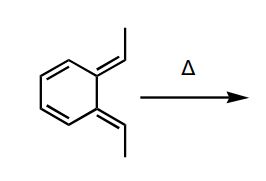
What is the product of the following thermal reaction?
A)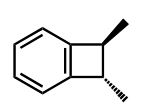
B)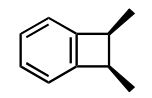
C)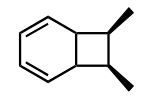
D)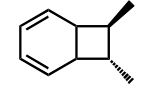
E)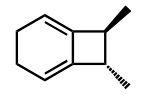
A)
B)
C)
D)
E)
Question
The following electrocyclic reaction must be ____________. 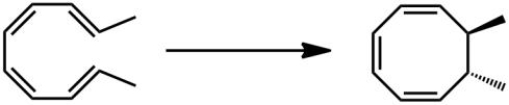
A) thermal, disrotatory
B) thermal, conrotatory
C) photochemical, disrotatory
D) photochemical, conrotatory
E) B and D
A) thermal, disrotatory
B) thermal, conrotatory
C) photochemical, disrotatory
D) photochemical, conrotatory
E) B and D
Question
Question
The following cycloaddition reaction can be described as ____________. 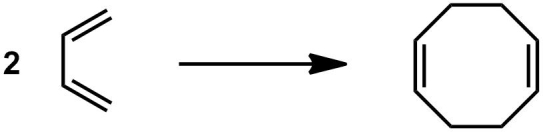
A) 4 + 4 thermal, antarafacial
B) 4 + 4 thermal, suprafacial
C) 4 + 4 photochemical, suprafacial
D) 4 + 4 photochemical, antarafacial
E) A and C
A) 4 + 4 thermal, antarafacial
B) 4 + 4 thermal, suprafacial
C) 4 + 4 photochemical, suprafacial
D) 4 + 4 photochemical, antarafacial
E) A and C
Question
The following cycloaddition reaction can be described as ____________. 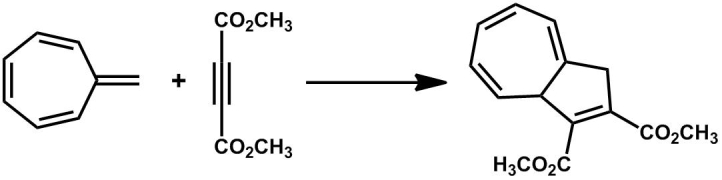
A) 2 + 2 thermal, antarafacial
B) 2 + 3 thermal, antarafacial
C) 2 + 3 photochemical, suprafacial
D) 2 + 8 thermal, suprafacial
E) 2 + 8 thermal, antarafacial
A) 2 + 2 thermal, antarafacial
B) 2 + 3 thermal, antarafacial
C) 2 + 3 photochemical, suprafacial
D) 2 + 8 thermal, suprafacial
E) 2 + 8 thermal, antarafacial
Question
Question
The following reaction is a(n) ____________.

A) cycloaddition reaction
B) electrocyclic reaction
C) Diels-Alder reaction
D) Claisen rearrangement
E) A or C
A) cycloaddition reaction
B) electrocyclic reaction
C) Diels-Alder reaction
D) Claisen rearrangement
E) A or C
Question
Which type of sigmatropic rearrangement would accomplish the transformation shown here? 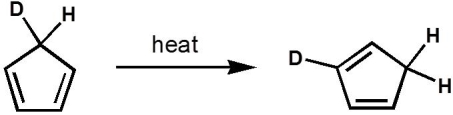
A) 1,2-
B) two 1,2-
C) 1,3-
D) 1,5-
E) two 1,5-
A) 1,2-
B) two 1,2-
C) 1,3-
D) 1,5-
E) two 1,5-
Question
Which type of sigmatropic rearrangement would accomplish the transformation shown here?
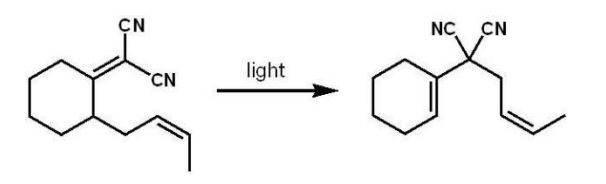
A) 1,3-
B) 3,3-
C) 2,3-
D) 1,5-
E) 1,7-
A) 1,3-
B) 3,3-
C) 2,3-
D) 1,5-
E) 1,7-

Unlock Deck
Sign up to unlock the cards in this deck!
Unlock Deck
Unlock Deck
1/11

Play

Full screen (f)
Deck 28: Pericyclic Reactions
1
How many nodes are between the nuclei in the ground-state LUMO of 1,3-butadiene?
A) 0
B) 1
C) 2
D) 3
E) 4
A) 0
B) 1
C) 2
D) 3
E) 4
2
2
Which of the following is an intramolecular reaction in which a new sigma bond is formed between the ends of a conjugated ? system?
A) an electrocyclic reaction
B) a cycloaddition reaction
C) a sigmatropic reaction
D) a pericyclic reaction
E) the conservation of orbital theory
A) an electrocyclic reaction
B) a cycloaddition reaction
C) a sigmatropic reaction
D) a pericyclic reaction
E) the conservation of orbital theory
an electrocyclic reaction
3
What is the product of the following thermal reaction?
A)
B)
C)
D)
E)
A)
B)
C)
D)
E)
4
The following electrocyclic reaction must be ____________.
A) thermal, disrotatory
B) thermal, conrotatory
C) photochemical, disrotatory
D) photochemical, conrotatory
E) B and D
A) thermal, disrotatory
B) thermal, conrotatory
C) photochemical, disrotatory
D) photochemical, conrotatory
E) B and D
Unlock Deck
Unlock for access to all 11 flashcards in this deck.
Unlock Deck
k this deck
5
A Diels-Alder reaction is a(n) ____________.
A) electrocyclic reaction
B) cycloaddition reaction
C) sigmatropic rearrangement
D) photochemical reaction
E) radical reaction
A) electrocyclic reaction
B) cycloaddition reaction
C) sigmatropic rearrangement
D) photochemical reaction
E) radical reaction
Unlock Deck
Unlock for access to all 11 flashcards in this deck.
Unlock Deck
k this deck
6
The following cycloaddition reaction can be described as ____________.
A) 4 + 4 thermal, antarafacial
B) 4 + 4 thermal, suprafacial
C) 4 + 4 photochemical, suprafacial
D) 4 + 4 photochemical, antarafacial
E) A and C
A) 4 + 4 thermal, antarafacial
B) 4 + 4 thermal, suprafacial
C) 4 + 4 photochemical, suprafacial
D) 4 + 4 photochemical, antarafacial
E) A and C
Unlock Deck
Unlock for access to all 11 flashcards in this deck.
Unlock Deck
k this deck
7
The following cycloaddition reaction can be described as ____________.
A) 2 + 2 thermal, antarafacial
B) 2 + 3 thermal, antarafacial
C) 2 + 3 photochemical, suprafacial
D) 2 + 8 thermal, suprafacial
E) 2 + 8 thermal, antarafacial
A) 2 + 2 thermal, antarafacial
B) 2 + 3 thermal, antarafacial
C) 2 + 3 photochemical, suprafacial
D) 2 + 8 thermal, suprafacial
E) 2 + 8 thermal, antarafacial
Unlock Deck
Unlock for access to all 11 flashcards in this deck.
Unlock Deck
k this deck
8
Under what conditions would a 1,3-hydrogen shift occur?
A) photochemical
B) thermal
C) suprafacial
D) A and C
E) B and C
A) photochemical
B) thermal
C) suprafacial
D) A and C
E) B and C
Unlock Deck
Unlock for access to all 11 flashcards in this deck.
Unlock Deck
k this deck
9
The following reaction is a(n) ____________.
A) cycloaddition reaction
B) electrocyclic reaction
C) Diels-Alder reaction
D) Claisen rearrangement
E) A or C
A) cycloaddition reaction
B) electrocyclic reaction
C) Diels-Alder reaction
D) Claisen rearrangement
E) A or C
Unlock Deck
Unlock for access to all 11 flashcards in this deck.
Unlock Deck
k this deck
10
Which type of sigmatropic rearrangement would accomplish the transformation shown here?
A) 1,2-
B) two 1,2-
C) 1,3-
D) 1,5-
E) two 1,5-
A) 1,2-
B) two 1,2-
C) 1,3-
D) 1,5-
E) two 1,5-
Unlock Deck
Unlock for access to all 11 flashcards in this deck.
Unlock Deck
k this deck
11
Which type of sigmatropic rearrangement would accomplish the transformation shown here?
A) 1,3-
B) 3,3-
C) 2,3-
D) 1,5-
E) 1,7-
A) 1,3-
B) 3,3-
C) 2,3-
D) 1,5-
E) 1,7-
Unlock Deck
Unlock for access to all 11 flashcards in this deck.
Unlock Deck
k this deck
Unlock Deck
Unlock for access to all 11 flashcards in this deck.






