







 Chat with AI

Deck 8: Relationships among Inflation,Interest Rates,and Exchange Rates
Full screen (f)

Question

Question
Question
Question
Question
Question
Question
Question
Question
Question
Question
Question
Question
Question
Question
Question
Question
Question
Question
Question
Question
Question
Question
The following regression analysis was conducted for the inflation rate information and exchange rate of the British pound:
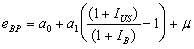
Regression results indicate that
= 0 and .Therefore:
A) purchasing power parity holds.
B) purchasing power parity overestimated the exchange rate change during the period under examination.
C) purchasing power parity underestimated the exchange rate change during the period under examination.
D) purchasing power parity will overestimate the exchange rate change of the British pound in the future.
Regression results indicate that
= 0 and
.Therefore:A) purchasing power parity holds.
B) purchasing power parity overestimated the exchange rate change during the period under examination.
C) purchasing power parity underestimated the exchange rate change during the period under examination.
D) purchasing power parity will overestimate the exchange rate change of the British pound in the future.
Question
Question
Question
Question
Question
Question
Question
Question
Question
Question
Question
Question
Question
Question

Unlock Deck
Sign up to unlock the cards in this deck!
Unlock Deck
Unlock Deck
1/37

Play

Full screen (f)
Deck 8: Relationships among Inflation,Interest Rates,and Exchange Rates
1
Because there are a variety of factors in addition to inflation that affect exchange rates,this will:
A) reduce the probability that PPP shall hold.
B) increase the probability that PPP shall hold.
C) increase the probability the IFE will hold.
D) B and C
A) reduce the probability that PPP shall hold.
B) increase the probability that PPP shall hold.
C) increase the probability the IFE will hold.
D) B and C
A
2
If the international Fisher effect (IFE)did not hold based on historical data,then this suggests that:
A) some corporations with excess cash can lock in a guar anteed higher return on future foreign short term invest ments.
B) some corporations with excess cash could have generated profits on average from covered interest arbitrage.
C) some corporations with excess cash could have generated higher profits on average from foreign short term invest ments than from domestic short term investments.
D) most corporations that consistently invest in foreign short term investments would have generated the same profits (on average) as from domestic short term invest ments.
A) some corporations with excess cash can lock in a guar anteed higher return on future foreign short term invest ments.
B) some corporations with excess cash could have generated profits on average from covered interest arbitrage.
C) some corporations with excess cash could have generated higher profits on average from foreign short term invest ments than from domestic short term investments.
D) most corporations that consistently invest in foreign short term investments would have generated the same profits (on average) as from domestic short term invest ments.
C
3
Assume that the U.S.and Chile nominal interest rates are equal.Then,the U.S.nominal interest rate decreases while the Chilean nominal interest rate remains stable. According to the international Fisher effect,this implies expectations of _______ than before,and that the Chilean peso should _______ against the dollar.
A) lower U.S. inflation;depreciate
B) lower U.S. inflation;appreciate
C) higher U.S. inflation;depreciate
D) higher U.S. inflation;appreciate
A) lower U.S. inflation;depreciate
B) lower U.S. inflation;appreciate
C) higher U.S. inflation;depreciate
D) higher U.S. inflation;appreciate
A
4
Assume that U.S.and British investors require a real return of 2%. If the nominal U.S.interest rate is 15%,and the nominal British rate is 13%,then according to the IFE,the British inflation rate is expected to be about _______ the U.S.inflation rate,and the British pound is expected to _______.
A) 2 percentage points above;depreciate by about 2%
B) 3 percentage points above;depreciate by about 3%
C) 3 percentage points below;appreciate by about 3%
D) 3 percentage points below;depreciate by about 3%
E) 2 percentage points below;appreciate by about 2%
A) 2 percentage points above;depreciate by about 2%
B) 3 percentage points above;depreciate by about 3%
C) 3 percentage points below;appreciate by about 3%
D) 3 percentage points below;depreciate by about 3%
E) 2 percentage points below;appreciate by about 2%
Unlock Deck
Unlock for access to all 37 flashcards in this deck.
Unlock Deck
k this deck
5
According to the international Fisher effect,if investors in all countries require the same real rate of return,the differential in nominal interest rates between any two countries:
A) follows their exchange rate movement.
B) is due to their inflation differentials.
C) is zero.
D) is constant over time.
E) C and D
A) follows their exchange rate movement.
B) is due to their inflation differentials.
C) is zero.
D) is constant over time.
E) C and D
Unlock Deck
Unlock for access to all 37 flashcards in this deck.
Unlock Deck
k this deck
6
Assume a twocountry world: Country A and Country B. Which of the following is correct about purchasing power parity (PPP)as related to these two countries
A) If Country A's inflation rate exceeds Country B's infla tion rate, Country A's currency will weaken.
B) If Country A's interest rate exceeds Country B's infla tion rate, Country A's currency will weaken.
C) If Country A's interest rate exceeds Country B's infla tion rate, Country A's currency will strengthen.
D) If Country B's inflation rate exceeds Country A's infla tion rate, Country A's currency will weaken.
A) If Country A's inflation rate exceeds Country B's infla tion rate, Country A's currency will weaken.
B) If Country A's interest rate exceeds Country B's infla tion rate, Country A's currency will weaken.
C) If Country A's interest rate exceeds Country B's infla tion rate, Country A's currency will strengthen.
D) If Country B's inflation rate exceeds Country A's infla tion rate, Country A's currency will weaken.
Unlock Deck
Unlock for access to all 37 flashcards in this deck.
Unlock Deck
k this deck
7
According to the international Fisher effect,if U.S.investors expect a 5% rate of domestic inflation over one year,and a 2% rate of inflation in European countries that use the euro,and require a 3% real return on investments over one year,the nominal interest rate on oneyear U.S.Treasury securities would be:
A) 2%.
B) 3%.
C) 2%.
D) 5%.
E) 8%.
A) 2%.
B) 3%.
C) 2%.
D) 5%.
E) 8%.
Unlock Deck
Unlock for access to all 37 flashcards in this deck.
Unlock Deck
k this deck
8
Given a home country and a foreign country,purchasing power parity (PPP)suggests that:
A) a home currency will depreciate if the current home inflation rate exceeds the current foreign interest rate.
B) a home currency will appreciate if the current home interest rate exceeds the current foreign interest rate.
C) a home currency will appreciate if the current home inflation rate exceeds the current foreign inflation rate.
D) a home currency will depreciate if the current home inflation rate exceeds the current foreign inflation rate.
A) a home currency will depreciate if the current home inflation rate exceeds the current foreign interest rate.
B) a home currency will appreciate if the current home interest rate exceeds the current foreign interest rate.
C) a home currency will appreciate if the current home inflation rate exceeds the current foreign inflation rate.
D) a home currency will depreciate if the current home inflation rate exceeds the current foreign inflation rate.
Unlock Deck
Unlock for access to all 37 flashcards in this deck.
Unlock Deck
k this deck
9
Because there are sometimes no substitutes for traded goods,this will:
A) reduce the probability that PPP shall hold.
B) increase the probability that PPP shall hold.
C) increase the probability the IFE will hold.
D) B and C
A) reduce the probability that PPP shall hold.
B) increase the probability that PPP shall hold.
C) increase the probability the IFE will hold.
D) B and C
Unlock Deck
Unlock for access to all 37 flashcards in this deck.
Unlock Deck
k this deck
10
According to the IFE,if British interest rates exceed U.S.interest rates:
A) the British pound's value will remain constant.
B) the British pound will depreciate against the dollar.
C) the British inflation rate will decrease.
D) the forward rate of the British pound will contain a premium.
E) today's forward rate of the British pound will equal today's spot rate.
A) the British pound's value will remain constant.
B) the British pound will depreciate against the dollar.
C) the British inflation rate will decrease.
D) the forward rate of the British pound will contain a premium.
E) today's forward rate of the British pound will equal today's spot rate.
Unlock Deck
Unlock for access to all 37 flashcards in this deck.
Unlock Deck
k this deck
11
Given a home country and a foreign country,the international Fisher effect (IFE)suggests that:
A) the nominal interest rates of both countries are the same.
B) the inflation rates of both countries are the same.
C) the exchange rates of both countries will move in a similar direction against other currencies.
D) none of the above
A) the nominal interest rates of both countries are the same.
B) the inflation rates of both countries are the same.
C) the exchange rates of both countries will move in a similar direction against other currencies.
D) none of the above
Unlock Deck
Unlock for access to all 37 flashcards in this deck.
Unlock Deck
k this deck
12
Under purchasing power parity,the future spot exchange rate is a function of the initial spot rate in equilibrium and:
A) the income differential.
B) the forward discount or premium.
C) the inflation differential.
D) none of the above
A) the income differential.
B) the forward discount or premium.
C) the inflation differential.
D) none of the above
Unlock Deck
Unlock for access to all 37 flashcards in this deck.
Unlock Deck
k this deck
13
If interest rate parity holds,then the one-year forward rate of a currency will ______ the predicted spot rate of the currency in one year according to the international Fisher effect.
A) greater than
B) less than
C) equal to
D) answer is dependent on whether the forward rate has a discount or premium
A) greater than
B) less than
C) equal to
D) answer is dependent on whether the forward rate has a discount or premium
Unlock Deck
Unlock for access to all 37 flashcards in this deck.
Unlock Deck
k this deck
14
According to the international Fisher effect,if Venezuela has a much higher nominal rate than other countries,its inflation rate will likely be _______ than other countries,and its currency will _______.
A) lower;strengthen
B) lower;weaken
C) higher;weaken
D) higher;strengthen
A) lower;strengthen
B) lower;weaken
C) higher;weaken
D) higher;strengthen
Unlock Deck
Unlock for access to all 37 flashcards in this deck.
Unlock Deck
k this deck
15
The international Fisher effect (IFE)suggests that:
A) a home currency will depreciate if the current home interest rate exceeds the current foreign interest rate.
B) a home currency will appreciate if the current home interest rate exceeds the current foreign interest rate.
C) a home currency will appreciate if the current home inflation rate exceeds the current foreign inflation rate.
D) a home currency will depreciate if the current home inflation rate exceeds the current foreign inflation rate.
A) a home currency will depreciate if the current home interest rate exceeds the current foreign interest rate.
B) a home currency will appreciate if the current home interest rate exceeds the current foreign interest rate.
C) a home currency will appreciate if the current home inflation rate exceeds the current foreign inflation rate.
D) a home currency will depreciate if the current home inflation rate exceeds the current foreign inflation rate.
Unlock Deck
Unlock for access to all 37 flashcards in this deck.
Unlock Deck
k this deck
16
Given a home country and a foreign country,purchasing power parity suggests that:
A) the inflation rates of both countries will be the same.
B) the nominal interest rates of both countries will be the same.
C) A and B
D) none of the above
A) the inflation rates of both countries will be the same.
B) the nominal interest rates of both countries will be the same.
C) A and B
D) none of the above
Unlock Deck
Unlock for access to all 37 flashcards in this deck.
Unlock Deck
k this deck
17
If interest rates on the euro are consistently below U.S.interest rates,then for the international Fisher effect (IFE)to hold:
A) the value of the euro would often appreciate against the dollar.
B) the value of the euro would often depreciate against the dollar.
C) the value of the euro would remain constant most of the time.
D) the value of the euro would appreciate in some periods and depreciate in other periods, but on average have a zero rate of appreciation.
A) the value of the euro would often appreciate against the dollar.
B) the value of the euro would often depreciate against the dollar.
C) the value of the euro would remain constant most of the time.
D) the value of the euro would appreciate in some periods and depreciate in other periods, but on average have a zero rate of appreciation.
Unlock Deck
Unlock for access to all 37 flashcards in this deck.
Unlock Deck
k this deck
18
The Fisher effect is used to determine the:
A) real inflation rate.
B) real interest rate.
C) real spot rate.
D) real forward rate.
A) real inflation rate.
B) real interest rate.
C) real spot rate.
D) real forward rate.
Unlock Deck
Unlock for access to all 37 flashcards in this deck.
Unlock Deck
k this deck
19
Assume U.S.and Swiss investors require a real rate of return of 3%. Assume the nominal U.S.interest rate is 6% and the nominal Swiss rate is 4%. According to the international Fisher effect,the franc will _______ by about _______.
A) appreciate;3%
B) appreciate;1%
C) depreciate;3%
D) depreciate;2%
E) appreciate;2%
A) appreciate;3%
B) appreciate;1%
C) depreciate;3%
D) depreciate;2%
E) appreciate;2%
Unlock Deck
Unlock for access to all 37 flashcards in this deck.
Unlock Deck
k this deck
20
Latin American countries have historically experienced relatively high inflation,and their currencies have weakened.This information is somewhat consistent with the concept of:
A) interest rate parity.
B) locational arbitrage.
C) purchasing power parity.
D) the exchange rate mechanism.
A) interest rate parity.
B) locational arbitrage.
C) purchasing power parity.
D) the exchange rate mechanism.
Unlock Deck
Unlock for access to all 37 flashcards in this deck.
Unlock Deck
k this deck
21
Research indicates that deviations from purchasing power parity (PPP)are reduced over the long run.
Unlock Deck
Unlock for access to all 37 flashcards in this deck.
Unlock Deck
k this deck
22
Which of the following is not true regarding IRP,PPP,and the IFE
A) IRP suggests that a currency's spot rate will change according to interest rate differentials.
B) PPP suggests that a currency's spot rate will change according to inflation differentials.
C) The IFE suggests that a currency's spot rate will change according to interest rate differentials.
D) All of the above are true.
A) IRP suggests that a currency's spot rate will change according to interest rate differentials.
B) PPP suggests that a currency's spot rate will change according to inflation differentials.
C) The IFE suggests that a currency's spot rate will change according to interest rate differentials.
D) All of the above are true.
Unlock Deck
Unlock for access to all 37 flashcards in this deck.
Unlock Deck
k this deck
23
The following regression analysis was conducted for the inflation rate information and exchange rate of the British pound:
Regression results indicate that
= 0 and .Therefore:
A) purchasing power parity holds.
B) purchasing power parity overestimated the exchange rate change during the period under examination.
C) purchasing power parity underestimated the exchange rate change during the period under examination.
D) purchasing power parity will overestimate the exchange rate change of the British pound in the future.
Regression results indicate that
= 0 and
.Therefore:A) purchasing power parity holds.
B) purchasing power parity overestimated the exchange rate change during the period under examination.
C) purchasing power parity underestimated the exchange rate change during the period under examination.
D) purchasing power parity will overestimate the exchange rate change of the British pound in the future.
Unlock Deck
Unlock for access to all 37 flashcards in this deck.
Unlock Deck
k this deck
24
Which of the following is indicated by research regarding purchasing power parity (PPP)
A) PPP clearly holds in the short run.
B) Deviations from PPP are reduced in the long run.
C) PPP clearly holds in the long run.
D) There is no relationship between inflation differentials and exchange rate movements in the short run or long run.
A) PPP clearly holds in the short run.
B) Deviations from PPP are reduced in the long run.
C) PPP clearly holds in the long run.
D) There is no relationship between inflation differentials and exchange rate movements in the short run or long run.
Unlock Deck
Unlock for access to all 37 flashcards in this deck.
Unlock Deck
k this deck
25
According to the international Fisher effect (IFE),the exchange rate percentage change should be approximately equal to the differential in income levels between two countries.
Unlock Deck
Unlock for access to all 37 flashcards in this deck.
Unlock Deck
k this deck
26
The relative form of purchasing power parity (PPP)accounts for the possibility of market imperfections such as transportation costs,tariffs,and quotas in establishing a relationship between inflation rates and exchange rate changes.
Unlock Deck
Unlock for access to all 37 flashcards in this deck.
Unlock Deck
k this deck
27
If interest rate parity holds,and the international Fisher effect (IFE)holds,foreign currencies with relatively high interest rates should have forward discounts and those currencies would be expected to depreciate.
Unlock Deck
Unlock for access to all 37 flashcards in this deck.
Unlock Deck
k this deck
28
Nominal interest rates in Cyprus are 7%,while nominal interest rates in the U.S.are 5%.The spot rate for the Cyprus pound (CYP)is $1.50.According to the international Fisher effect (IFE),the Cyprus pound should adjust to a new level of:
A) $1.47.
B) $1.53.
C) $1.43.
D) $1.57.
A) $1.47.
B) $1.53.
C) $1.43.
D) $1.57.
Unlock Deck
Unlock for access to all 37 flashcards in this deck.
Unlock Deck
k this deck
29
The interest rate parity theory offers a direct explanation regarding why exchange rates change over time.
Unlock Deck
Unlock for access to all 37 flashcards in this deck.
Unlock Deck
k this deck
30
The IFE theory suggests that foreign currencies with relatively high interest rates will appreciate because the high nominal interest rates reflect expected inflation.
Unlock Deck
Unlock for access to all 37 flashcards in this deck.
Unlock Deck
k this deck
31
If interest rate parity holds,then the international Fisher effect must hold.
Unlock Deck
Unlock for access to all 37 flashcards in this deck.
Unlock Deck
k this deck
32
Interest rate parity can only hold if purchasing power parity holds.
Unlock Deck
Unlock for access to all 37 flashcards in this deck.
Unlock Deck
k this deck
33
If nominal British interest rates are 3% and nominal U.S.interest rates are 6%,then the British pound (£)is expected to ____________ by about _________%,according to the international Fisher effect (IFE).
A) depreciate;2.9
B) appreciate;2.9
C) depreciate;1.0
D) appreciate;1.0
E) none of the above
A) depreciate;2.9
B) appreciate;2.9
C) depreciate;1.0
D) appreciate;1.0
E) none of the above
Unlock Deck
Unlock for access to all 37 flashcards in this deck.
Unlock Deck
k this deck
34
Assume that the inflation rate in Barbados is 3.20%,while the inflation rate in the U.S.is 3.00%.According to PPP,the Barbados dollar (BBD)should ___________ by _________%.
A) appreciate;0.1938%
B) depreciate;0.1938%
C) appreciate;0.1942%
D) depreciate;0.1942%
A) appreciate;0.1938%
B) depreciate;0.1938%
C) appreciate;0.1942%
D) depreciate;0.1942%
Unlock Deck
Unlock for access to all 37 flashcards in this deck.
Unlock Deck
k this deck
35
The inflation rate in the U.S.is 3%,while the inflation rate in Japan is 1.3%.The current exchange rate for the Japanese yen (¥)is $0.0075.After supply and demand for the Japanese yen has adjusted in the manner suggested by purchasing power parity,the new exchange rate for the yen will be:
A) $0.0076.
B) $0.0075.
C) $0.0074.
D) $0.0131.
E) none of the above
A) $0.0076.
B) $0.0075.
C) $0.0074.
D) $0.0131.
E) none of the above
Unlock Deck
Unlock for access to all 37 flashcards in this deck.
Unlock Deck
k this deck
36
Assume that the U.S.inflation rate rate is higher than the New Zealand inflation rate.This will cause U.S.consumers to ______________ their imports from New Zealand and New Zealand consumers to ______________ their imports from the U.S.According to purchasing power parity (PPP),this will results in a(n)___________ of the New Zealand dollar (NZ$).
A) reduce;increase;appreciation
B) increase;reduce;appreciation
C) reduce;increase;depreciation
D) reduce;increase;appreciation
A) reduce;increase;appreciation
B) increase;reduce;appreciation
C) reduce;increase;depreciation
D) reduce;increase;appreciation
Unlock Deck
Unlock for access to all 37 flashcards in this deck.
Unlock Deck
k this deck
37
You have an opportunity to invest in Australia at an interest rate of 8%.Moreover,you expect the Australian dollar (A$)to appreciate by 2%.Your effective return from this investment is:
A) 8.00%.
B) 6.00%.
C) 10.16%.
D) 5.88%.
A) 8.00%.
B) 6.00%.
C) 10.16%.
D) 5.88%.
Unlock Deck
Unlock for access to all 37 flashcards in this deck.
Unlock Deck
k this deck
Unlock Deck
Unlock for access to all 37 flashcards in this deck.






