







 Chat with AI

Deck 8: Wilsonian Progressivism in Peace and War, 1913-1920
Full screen (f)

Question

Question
Question
Question
Question
Question
Question
Question
Question
Question
Question
Question
Question
Question
Question
Question
Question
Question
Question
Question
Question
Question
Question
Question
Question
Question
Question
Question
Question
Question
Question
Question
Question
Question
Question
Question
Question
Question
Question
Question
Question
Locate the following places by reference number on the map:
Europe and the Ottoman Empire during World War I, 1914-1917
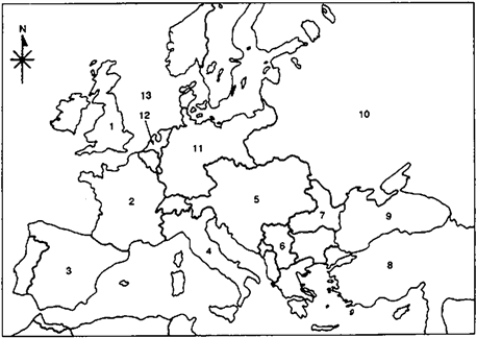
____ Three nations associated as the Allies at the outbreak of World War I.
Europe and the Ottoman Empire during World War I, 1914-1917
____ Three nations associated as the Allies at the outbreak of World War I.
Question
Question
Question
Locate the following places by reference number on the map:
Europe and the Ottoman Empire during World War I, 1914-1917
____ The nation where an assassination ignited World War I.
Europe and the Ottoman Empire during World War I, 1914-1917
____ The nation where an assassination ignited World War I.
Question
Locate the following places by reference number on the map:
Europe and the Ottoman Empire during World War I, 1914-1917
____ Locate the North Sea.
Europe and the Ottoman Empire during World War I, 1914-1917
____ Locate the North Sea.
Question
Question
Locate the following places by reference number on the map:
Europe and the Ottoman Empire during World War I, 1914-1917
____ Locate the Black Sea.
Europe and the Ottoman Empire during World War I, 1914-1917
____ Locate the Black Sea.
Question
Locate the following places by reference number on the map:
Europe and the Ottoman Empire during World War I, 1914-1917
____ Three of the nations who became associated as the Central Powers during World War I.
Europe and the Ottoman Empire during World War I, 1914-1917
____ Three of the nations who became associated as the Central Powers during World War I.
Question
Question
Question
Locate the following places by reference number on the map:
Europe and the Ottoman Empire during World War I, 1914-1917
____ Identify the area of the Low Countries through which invading German armies passed on their way toward France.
Europe and the Ottoman Empire during World War I, 1914-1917
____ Identify the area of the Low Countries through which invading German armies passed on their way toward France.
Question
Question
Locate the following places by reference number on the map:
Europe and the Ottoman Empire during World War I, 1914-1917
____ Locate the nation that joined the Allies later, after the outbreak of World War I.
Europe and the Ottoman Empire during World War I, 1914-1917
____ Locate the nation that joined the Allies later, after the outbreak of World War I.
Question
Question
Question
Question
Question
Question
Question
Locate the following places by reference number on the map:
Europe and the Ottoman Empire during World War I, 1914-1917
____ Locate the neutral nation of Spain.
Europe and the Ottoman Empire during World War I, 1914-1917
____ Locate the neutral nation of Spain.
Question
Question
Question
Question
Question
Question
Question
Question
Question
Question
Question
Question
Question
Question
Question
Question
Question
Question
Question
Question

Unlock Deck
Sign up to unlock the cards in this deck!
Unlock Deck
Unlock Deck
1/144

Play

Full screen (f)
Deck 8: Wilsonian Progressivism in Peace and War, 1913-1920
1
Identify and state the historical significance of the following:
Carrie Chapman Catt
Carrie Chapman Catt
Student answers will vary
2
Identify and state the historical significance of the following:
Henry Cabot Lodge
Henry Cabot Lodge
Answers will vary.
3
Identify and state the historical significance of the following:
Woodrow Wilson
Woodrow Wilson
Answers will vary.
4
Identify and state the historical significance of the following:
Kaiser Wilhelm II
Kaiser Wilhelm II
Unlock Deck
Unlock for access to all 144 flashcards in this deck.
Unlock Deck
k this deck
5
Identify and state the historical significance of the following:
Underwood Tariff Bill
Underwood Tariff Bill
Unlock Deck
Unlock for access to all 144 flashcards in this deck.
Unlock Deck
k this deck
6
Identify and state the historical significance of the following:
Progressive party
Progressive party
Unlock Deck
Unlock for access to all 144 flashcards in this deck.
Unlock Deck
k this deck
7
Identify and state the historical significance of the following:
Herbert Hoover
Herbert Hoover
Unlock Deck
Unlock for access to all 144 flashcards in this deck.
Unlock Deck
k this deck
8
Identify and state the historical significance of the following:
George Creel
George Creel
Unlock Deck
Unlock for access to all 144 flashcards in this deck.
Unlock Deck
k this deck
9
Identify and state the historical significance of the following:
Louis D. Brandeis
Louis D. Brandeis
Unlock Deck
Unlock for access to all 144 flashcards in this deck.
Unlock Deck
k this deck
10
Identify and state the historical significance of the following:
Bernard Baruch
Bernard Baruch
Unlock Deck
Unlock for access to all 144 flashcards in this deck.
Unlock Deck
k this deck
11
Identify and state the historical significance of the following:
John J. Pershing
John J. Pershing
Unlock Deck
Unlock for access to all 144 flashcards in this deck.
Unlock Deck
k this deck
12
Identify and state the historical significance of the following:
Eugene V. Debs
Eugene V. Debs
Unlock Deck
Unlock for access to all 144 flashcards in this deck.
Unlock Deck
k this deck
13
Identify and state the historical significance of the following:
Venustiano Carranza
Venustiano Carranza
Unlock Deck
Unlock for access to all 144 flashcards in this deck.
Unlock Deck
k this deck
14
Identify and state the historical significance of the following:
Alice Paul
Alice Paul
Unlock Deck
Unlock for access to all 144 flashcards in this deck.
Unlock Deck
k this deck
15
Identify and state the historical significance of the following:
Sixteenth Amendment
Sixteenth Amendment
Unlock Deck
Unlock for access to all 144 flashcards in this deck.
Unlock Deck
k this deck
16
Identify and state the historical significance of the following:
William Jennings Bryan
William Jennings Bryan
Unlock Deck
Unlock for access to all 144 flashcards in this deck.
Unlock Deck
k this deck
17
Identify and state the historical significance of the following:
Victoriano Huerta
Victoriano Huerta
Unlock Deck
Unlock for access to all 144 flashcards in this deck.
Unlock Deck
k this deck
18
Identify and state the historical significance of the following:
Francisco (Pancho) Villa
Francisco (Pancho) Villa
Unlock Deck
Unlock for access to all 144 flashcards in this deck.
Unlock Deck
k this deck
19
Identify and state the historical significance of the following:
Charles Evans Hughes
Charles Evans Hughes
Unlock Deck
Unlock for access to all 144 flashcards in this deck.
Unlock Deck
k this deck
20
Identify and state the historical significance of the following:
William D. ("Big Bill") Haywood
William D. ("Big Bill") Haywood
Unlock Deck
Unlock for access to all 144 flashcards in this deck.
Unlock Deck
k this deck
21
Identify and state the historical significance of the following:
ABC Powers
ABC Powers
Unlock Deck
Unlock for access to all 144 flashcards in this deck.
Unlock Deck
k this deck
22
Identify and state the historical significance of the following:
Tampico incident
Tampico incident
Unlock Deck
Unlock for access to all 144 flashcards in this deck.
Unlock Deck
k this deck
23
Identify and state the historical significance of the following:
Workingmen's Compensation Act
Workingmen's Compensation Act
Unlock Deck
Unlock for access to all 144 flashcards in this deck.
Unlock Deck
k this deck
24
Identify and state the historical significance of the following:
Federal Trade Commission Act
Federal Trade Commission Act
Unlock Deck
Unlock for access to all 144 flashcards in this deck.
Unlock Deck
k this deck
25
Identify and state the historical significance of the following:
Federal Reserve Act
Federal Reserve Act
Unlock Deck
Unlock for access to all 144 flashcards in this deck.
Unlock Deck
k this deck
26
Identify and state the historical significance of the following:
Central Powers
Central Powers
Unlock Deck
Unlock for access to all 144 flashcards in this deck.
Unlock Deck
k this deck
27
Identify and state the historical significance of the following:
Schenck v. United States (1919)
Schenck v. United States (1919)
Unlock Deck
Unlock for access to all 144 flashcards in this deck.
Unlock Deck
k this deck
28
Identify and state the historical significance of the following:
U-boats
U-boats
Unlock Deck
Unlock for access to all 144 flashcards in this deck.
Unlock Deck
k this deck
29
Identify and state the historical significance of the following:
Sussex pledge
Sussex pledge
Unlock Deck
Unlock for access to all 144 flashcards in this deck.
Unlock Deck
k this deck
30
Identify and state the historical significance of the following:
Allies
Allies
Unlock Deck
Unlock for access to all 144 flashcards in this deck.
Unlock Deck
k this deck
31
Identify and state the historical significance of the following:
Clayton Act
Clayton Act
Unlock Deck
Unlock for access to all 144 flashcards in this deck.
Unlock Deck
k this deck
32
Identify and state the historical significance of the following:
Sarajevo
Sarajevo
Unlock Deck
Unlock for access to all 144 flashcards in this deck.
Unlock Deck
k this deck
33
Identify and state the historical significance of the following:
Zimmermann note
Zimmermann note
Unlock Deck
Unlock for access to all 144 flashcards in this deck.
Unlock Deck
k this deck
34
Identify and state the historical significance of the following:
Federal Farm Loan Act
Federal Farm Loan Act
Unlock Deck
Unlock for access to all 144 flashcards in this deck.
Unlock Deck
k this deck
35
Identify and state the historical significance of the following:
La Follette Seaman's Act
La Follette Seaman's Act
Unlock Deck
Unlock for access to all 144 flashcards in this deck.
Unlock Deck
k this deck
36
Identify and state the historical significance of the following:
Jones Act
Jones Act
Unlock Deck
Unlock for access to all 144 flashcards in this deck.
Unlock Deck
k this deck
37
Identify and state the historical significance of the following:
Meuse-Argonne offensive
Meuse-Argonne offensive
Unlock Deck
Unlock for access to all 144 flashcards in this deck.
Unlock Deck
k this deck
38
Identify and state the historical significance of the following:
Committee on Public Information
Committee on Public Information
Unlock Deck
Unlock for access to all 144 flashcards in this deck.
Unlock Deck
k this deck
39
Identify and state the historical significance of the following:
Lusitania
Lusitania
Unlock Deck
Unlock for access to all 144 flashcards in this deck.
Unlock Deck
k this deck
40
Identify and state the historical significance of the following:
Fourteen Points
Fourteen Points
Unlock Deck
Unlock for access to all 144 flashcards in this deck.
Unlock Deck
k this deck
41
Locate the following places by reference number on the map:
Europe and the Ottoman Empire during World War I, 1914-1917
____ Three nations associated as the Allies at the outbreak of World War I.
Europe and the Ottoman Empire during World War I, 1914-1917
____ Three nations associated as the Allies at the outbreak of World War I.
Unlock Deck
Unlock for access to all 144 flashcards in this deck.
Unlock Deck
k this deck
42
Identify and state the historical significance of the following:
Sheppard-Towner Maternity Act
Sheppard-Towner Maternity Act
Unlock Deck
Unlock for access to all 144 flashcards in this deck.
Unlock Deck
k this deck
43
Identify and state the historical significance of the following:
Battle of Château-Thierry
Battle of Château-Thierry
Unlock Deck
Unlock for access to all 144 flashcards in this deck.
Unlock Deck
k this deck
44
Locate the following places by reference number on the map:
Europe and the Ottoman Empire during World War I, 1914-1917
____ The nation where an assassination ignited World War I.
Europe and the Ottoman Empire during World War I, 1914-1917
____ The nation where an assassination ignited World War I.
Unlock Deck
Unlock for access to all 144 flashcards in this deck.
Unlock Deck
k this deck
45
Locate the following places by reference number on the map:
Europe and the Ottoman Empire during World War I, 1914-1917
____ Locate the North Sea.
Europe and the Ottoman Empire during World War I, 1914-1917
____ Locate the North Sea.
Unlock Deck
Unlock for access to all 144 flashcards in this deck.
Unlock Deck
k this deck
46
Identify and state the historical significance of the following:
Nineteenth Amendment
Nineteenth Amendment
Unlock Deck
Unlock for access to all 144 flashcards in this deck.
Unlock Deck
k this deck
47
Locate the following places by reference number on the map:
Europe and the Ottoman Empire during World War I, 1914-1917
____ Locate the Black Sea.
Europe and the Ottoman Empire during World War I, 1914-1917
____ Locate the Black Sea.
Unlock Deck
Unlock for access to all 144 flashcards in this deck.
Unlock Deck
k this deck
48
Locate the following places by reference number on the map:
Europe and the Ottoman Empire during World War I, 1914-1917
____ Three of the nations who became associated as the Central Powers during World War I.
Europe and the Ottoman Empire during World War I, 1914-1917
____ Three of the nations who became associated as the Central Powers during World War I.
Unlock Deck
Unlock for access to all 144 flashcards in this deck.
Unlock Deck
k this deck
49
Identify and state the historical significance of the following:
irreconcilables
irreconcilables
Unlock Deck
Unlock for access to all 144 flashcards in this deck.
Unlock Deck
k this deck
50
Identify and state the historical significance of the following:
Industrial Workers of the World (IWW)
Industrial Workers of the World (IWW)
Unlock Deck
Unlock for access to all 144 flashcards in this deck.
Unlock Deck
k this deck
51
Locate the following places by reference number on the map:
Europe and the Ottoman Empire during World War I, 1914-1917
____ Identify the area of the Low Countries through which invading German armies passed on their way toward France.
Europe and the Ottoman Empire during World War I, 1914-1917
____ Identify the area of the Low Countries through which invading German armies passed on their way toward France.
Unlock Deck
Unlock for access to all 144 flashcards in this deck.
Unlock Deck
k this deck
52
Identify and state the historical significance of the following:
American Expeditionary Forces (AEF)
American Expeditionary Forces (AEF)
Unlock Deck
Unlock for access to all 144 flashcards in this deck.
Unlock Deck
k this deck
53
Locate the following places by reference number on the map:
Europe and the Ottoman Empire during World War I, 1914-1917
____ Locate the nation that joined the Allies later, after the outbreak of World War I.
Europe and the Ottoman Empire during World War I, 1914-1917
____ Locate the nation that joined the Allies later, after the outbreak of World War I.
Unlock Deck
Unlock for access to all 144 flashcards in this deck.
Unlock Deck
k this deck
54
Identify and state the historical significance of the following:
War Industries Board
War Industries Board
Unlock Deck
Unlock for access to all 144 flashcards in this deck.
Unlock Deck
k this deck
55
Woodrow Wilson's political philosophy included all of the following except
A) faith in the masses.
B) a belief that compromise was necessary to be an effective leader.
C) a belief that the president should provide leadership for Congress.
D) a belief that the president should appeal over the heads of legislators to the sovereign people.
E) a belief in the central importance of morality of politics.
A) faith in the masses.
B) a belief that compromise was necessary to be an effective leader.
C) a belief that the president should provide leadership for Congress.
D) a belief that the president should appeal over the heads of legislators to the sovereign people.
E) a belief in the central importance of morality of politics.
Unlock Deck
Unlock for access to all 144 flashcards in this deck.
Unlock Deck
k this deck
56
Identify and state the historical significance of the following:
League of Nations
League of Nations
Unlock Deck
Unlock for access to all 144 flashcards in this deck.
Unlock Deck
k this deck
57
In 1912, Woodrow Wilson became the first ____ elected to the presidency since the Civil War.
A) person born in the South
B) Democrat
C) lawyer
D) non-Civil War veteran
E) Methodist
A) person born in the South
B) Democrat
C) lawyer
D) non-Civil War veteran
E) Methodist
Unlock Deck
Unlock for access to all 144 flashcards in this deck.
Unlock Deck
k this deck
58
Woodrow Wilson was most comfortable when surrounded by
A) African Americans.
B) Catholics.
C) political professionals.
D) journalists.
E) academic scholars.
A) African Americans.
B) Catholics.
C) political professionals.
D) journalists.
E) academic scholars.
Unlock Deck
Unlock for access to all 144 flashcards in this deck.
Unlock Deck
k this deck
59
Identify and state the historical significance of the following:
Treaty of Versailles
Treaty of Versailles
Unlock Deck
Unlock for access to all 144 flashcards in this deck.
Unlock Deck
k this deck
60
Locate the following places by reference number on the map:
Europe and the Ottoman Empire during World War I, 1914-1917
____ Locate the neutral nation of Spain.
Europe and the Ottoman Empire during World War I, 1914-1917
____ Locate the neutral nation of Spain.
Unlock Deck
Unlock for access to all 144 flashcards in this deck.
Unlock Deck
k this deck
61
Woodrow Wilson showed the limits of his progressivism by
A) opposing workingmen's compensation.
B) opposing the entry of women into politics.
C) endorsing immigration limitations on Japanese and Chinese immigrants.
D) refusing to appoint the Jewish Louis D. Brandeis to the Federal Trade Commission.
E) accelerating the segregation of blacks in the federal bureaucracy.
A) opposing workingmen's compensation.
B) opposing the entry of women into politics.
C) endorsing immigration limitations on Japanese and Chinese immigrants.
D) refusing to appoint the Jewish Louis D. Brandeis to the Federal Trade Commission.
E) accelerating the segregation of blacks in the federal bureaucracy.
Unlock Deck
Unlock for access to all 144 flashcards in this deck.
Unlock Deck
k this deck
62
President Wilson's first direct use of American military forces in revolutionary Mexico occurred when he
A) sent armed forces to protect against Mexico's nationalization of American businesses.
B) sent the army to prevent Venustiano Carranza from becoming president of Mexico.
C) seized the Mexican port of Vera Cruz to prevent German delivery of arms to President Huerta.
D) sent General Pershing to capture Pancho Villa after Villa staged raids into New Mexico.
E) None of these choices are correct.
A) sent armed forces to protect against Mexico's nationalization of American businesses.
B) sent the army to prevent Venustiano Carranza from becoming president of Mexico.
C) seized the Mexican port of Vera Cruz to prevent German delivery of arms to President Huerta.
D) sent General Pershing to capture Pancho Villa after Villa staged raids into New Mexico.
E) None of these choices are correct.
Unlock Deck
Unlock for access to all 144 flashcards in this deck.
Unlock Deck
k this deck
63
The first Jewish member of the United States Supreme Court, appointed by Woodrow Wilson, was
A) Felix Frankfurter.
B) Benjamin Cardozo.
C) Abraham Cahan.
D) Louis D. Brandeis.
E) Bernard Baruch.
A) Felix Frankfurter.
B) Benjamin Cardozo.
C) Abraham Cahan.
D) Louis D. Brandeis.
E) Bernard Baruch.
Unlock Deck
Unlock for access to all 144 flashcards in this deck.
Unlock Deck
k this deck
64
Which term best characterizes Woodrow Wilson's fundamental approach to American foreign policy?
A) Imperialistic
B) Moralistic
C) Realistic
D) Balance-of-power
E) Isolationist
A) Imperialistic
B) Moralistic
C) Realistic
D) Balance-of-power
E) Isolationist
Unlock Deck
Unlock for access to all 144 flashcards in this deck.
Unlock Deck
k this deck
65
The central provisions of the Clayton Anti-Trust Act
A) included trade unions under the antimonopoly provisions of the Sherman Anti-Trust Act.
B) declared that no single corporation could control more than 75 percent of a given industry.
C) established minimum wage rates for goods produced in interstate commerce.
D) outlawed corporate interlocking directorates and price discrimination against different purchasers.
E) weakened regulations against interlocking directorates and private discrimination against different purchasers.
A) included trade unions under the antimonopoly provisions of the Sherman Anti-Trust Act.
B) declared that no single corporation could control more than 75 percent of a given industry.
C) established minimum wage rates for goods produced in interstate commerce.
D) outlawed corporate interlocking directorates and price discrimination against different purchasers.
E) weakened regulations against interlocking directorates and private discrimination against different purchasers.
Unlock Deck
Unlock for access to all 144 flashcards in this deck.
Unlock Deck
k this deck
66
The Federal Reserve Act of 1913 guaranteed a substantial measure of public control over the American banking and currency system through the great authority given to
A) the secretary of the treasury.
B) the House and the Senate.
C) banking shareholders.
D) regional Federal Reserve banks.
E) the presidentially appointed Federal Reserve Board.
A) the secretary of the treasury.
B) the House and the Senate.
C) banking shareholders.
D) regional Federal Reserve banks.
E) the presidentially appointed Federal Reserve Board.
Unlock Deck
Unlock for access to all 144 flashcards in this deck.
Unlock Deck
k this deck
67
The Federal Trade Commission was established in 1914 to address all of these practices except
A) eliminating unfair and discriminatory trade practices.
B) outlawing unfair business competition and bribery.
C) sale of stocks without full disclosure of a business's organization and profits.
D) prohibiting false and misleading advertising.
E) outlawing the mislabeling or adulterating of products.
A) eliminating unfair and discriminatory trade practices.
B) outlawing unfair business competition and bribery.
C) sale of stocks without full disclosure of a business's organization and profits.
D) prohibiting false and misleading advertising.
E) outlawing the mislabeling or adulterating of products.
Unlock Deck
Unlock for access to all 144 flashcards in this deck.
Unlock Deck
k this deck
68
To secure passage of the Underwood Tariff Bill, President Woodrow Wilson broke new ground by
A) enlisting organized business groups to lobby for its passage.
B) personally presenting his case to Congress and arousing public opinion.
C) writing a book showing that high tariffs were harming the American economy.
D) stirring up western and southern regional hostility against the high-tariff East.
E) All of these choices are correct.
A) enlisting organized business groups to lobby for its passage.
B) personally presenting his case to Congress and arousing public opinion.
C) writing a book showing that high tariffs were harming the American economy.
D) stirring up western and southern regional hostility against the high-tariff East.
E) All of these choices are correct.
Unlock Deck
Unlock for access to all 144 flashcards in this deck.
Unlock Deck
k this deck
69
Woodrow Wilson's administration refused to extend formal diplomatic recognition to the government in Mexico headed by
A) Porfirio Diaz.
B) Venustiano Carranza.
C) Pancho Villa.
D) Victoriano Huerta.
E) Santa Anna.
A) Porfirio Diaz.
B) Venustiano Carranza.
C) Pancho Villa.
D) Victoriano Huerta.
E) Santa Anna.
Unlock Deck
Unlock for access to all 144 flashcards in this deck.
Unlock Deck
k this deck
70
In 1913, Woodrow Wilson broke with a custom dating back to Jefferson's day when he
A) stopped having formal cabinet meetings.
B) appointed a black man to the Supreme Court.
C) endorsed woman suffrage.
D) personally delivered his presidential State of the Union address to Congress.
E) failed to write a presidential State of the Union address to be read by a clerk to Congress.
A) stopped having formal cabinet meetings.
B) appointed a black man to the Supreme Court.
C) endorsed woman suffrage.
D) personally delivered his presidential State of the Union address to Congress.
E) failed to write a presidential State of the Union address to be read by a clerk to Congress.
Unlock Deck
Unlock for access to all 144 flashcards in this deck.
Unlock Deck
k this deck
71
Besides prohibiting anticompetitive business practices, the Clayton Anti-Trust Act broke new ground by
A) exempting labor unions and agricultural cooperatives from antitrust prosecution.
B) exempting organized major-league baseball from antitrust prosecution.
C) prohibiting colleges and universities from cooperating to establish tuition and fees.
D) permitting American businesses to form monopolies when operating overseas.
E) creating a federal incorporation law for large businesses.
A) exempting labor unions and agricultural cooperatives from antitrust prosecution.
B) exempting organized major-league baseball from antitrust prosecution.
C) prohibiting colleges and universities from cooperating to establish tuition and fees.
D) permitting American businesses to form monopolies when operating overseas.
E) creating a federal incorporation law for large businesses.
Unlock Deck
Unlock for access to all 144 flashcards in this deck.
Unlock Deck
k this deck
72
Difficulties in Mexico in the early 20th century affected the U.S. by .
A) interfering with trade relations.
B) encouraging massive migration of Mexicans across the border.
C) providing an investment opportunity for U.S. corporations.
D) provoking a full-fledged shooting war between Mexico and the United States.
E) None of these choices are correct.
A) interfering with trade relations.
B) encouraging massive migration of Mexicans across the border.
C) providing an investment opportunity for U.S. corporations.
D) provoking a full-fledged shooting war between Mexico and the United States.
E) None of these choices are correct.
Unlock Deck
Unlock for access to all 144 flashcards in this deck.
Unlock Deck
k this deck
73
All of the following are true statements about Mexicans who settled in the area known as the borderlands except
A) they relocated mostly in Texas, New Mexico, California and Arizona.
B) they helped build highways and railroads.
C) most were wealthy farmers with significant landholdings.
D) many followed the harvest as fruit pickers.
E) they helped create a unique culture that blended Mexican and American folkways.
A) they relocated mostly in Texas, New Mexico, California and Arizona.
B) they helped build highways and railroads.
C) most were wealthy farmers with significant landholdings.
D) many followed the harvest as fruit pickers.
E) they helped create a unique culture that blended Mexican and American folkways.
Unlock Deck
Unlock for access to all 144 flashcards in this deck.
Unlock Deck
k this deck
74
Because of the benefits that it conferred on labor, Samuel Gompers called the ____ "labor's Magna Charta."
A) Federal Reserve Act
B) Underwood Tariff Act
C) Clayton Anti-Trust Act
D) Wagner National Labor Relations Act
E) Workmen's Compensation Act
A) Federal Reserve Act
B) Underwood Tariff Act
C) Clayton Anti-Trust Act
D) Wagner National Labor Relations Act
E) Workmen's Compensation Act
Unlock Deck
Unlock for access to all 144 flashcards in this deck.
Unlock Deck
k this deck
75
When Woodrow Wilson became president in 1912, the most serious shortcoming in the country's financial structure was that
A) federal paper money was not backed by sound gold or silver.
B) heavy state and federal regulation of big business and trusts that handicapped the development of business in America.
C) the banking system was too heavily regulated by the federal government.
D) the U.S. dollar was rigidly tied to gold.
E) money for lending was inelastic and heavily concentrated in New York City.
A) federal paper money was not backed by sound gold or silver.
B) heavy state and federal regulation of big business and trusts that handicapped the development of business in America.
C) the banking system was too heavily regulated by the federal government.
D) the U.S. dollar was rigidly tied to gold.
E) money for lending was inelastic and heavily concentrated in New York City.
Unlock Deck
Unlock for access to all 144 flashcards in this deck.
Unlock Deck
k this deck
76
The Underwood Tariff Act and the Sixteenth Amendment reflected Wilson's progressive goals by
A) establishing the first graduated federal income tax.
B) creating an optional retirement system for workers.
C) guaranteeing equal treatment for men and women in employment.
D) using tariffs only for revenue and not to protect American industry from competition.
E) providing protection for American farmers against subsidized foreign crop imports.
A) establishing the first graduated federal income tax.
B) creating an optional retirement system for workers.
C) guaranteeing equal treatment for men and women in employment.
D) using tariffs only for revenue and not to protect American industry from competition.
E) providing protection for American farmers against subsidized foreign crop imports.
Unlock Deck
Unlock for access to all 144 flashcards in this deck.
Unlock Deck
k this deck
77
The Federal Reserve Act gave the Federal Reserve Board the authority to
A) issue paper money and increase or decrease the amount of money in circulation by altering interest rates.
B) close weak banks.
C) take the U.S. dollar off the gold standard.
D) permit the free coinage of silver.
E) guarantee individual banking deposits against bank failures.
A) issue paper money and increase or decrease the amount of money in circulation by altering interest rates.
B) close weak banks.
C) take the U.S. dollar off the gold standard.
D) permit the free coinage of silver.
E) guarantee individual banking deposits against bank failures.
Unlock Deck
Unlock for access to all 144 flashcards in this deck.
Unlock Deck
k this deck
78
Wilson's progressive programs provided relief to
A) sailors.
B) farmers and agricultural colleges.
C) civil service workers.
D) train employees involved in interstate commerce.
E) All of these choices are correct.
A) sailors.
B) farmers and agricultural colleges.
C) civil service workers.
D) train employees involved in interstate commerce.
E) All of these choices are correct.
Unlock Deck
Unlock for access to all 144 flashcards in this deck.
Unlock Deck
k this deck
79
Woodrow Wilson's early efforts to conduct a strongly anti-imperialist U. S. foreign policy were first undermined when he
A) dispatched U.S. military forces to protect American interests in China.
B) told the Filipinos that they could not obtain their independence for at least forty years.
C) sent American marines to Haiti and the Dominican Republic.
D) sent the U.S. Navy to seize the Virgin Islands from Denmark.
E) began constructing a massive U.S. Navy base at Pearl Harbor, Hawaii.
A) dispatched U.S. military forces to protect American interests in China.
B) told the Filipinos that they could not obtain their independence for at least forty years.
C) sent American marines to Haiti and the Dominican Republic.
D) sent the U.S. Navy to seize the Virgin Islands from Denmark.
E) began constructing a massive U.S. Navy base at Pearl Harbor, Hawaii.
Unlock Deck
Unlock for access to all 144 flashcards in this deck.
Unlock Deck
k this deck
80
Before his first term ended, Woodrow Wilson had militarily intervened in or purchased all of the following countries except
A) Haiti.
B) the Dominican Republic.
C) the Virgin Islands.
D) Cuba.
E) Mexico.
A) Haiti.
B) the Dominican Republic.
C) the Virgin Islands.
D) Cuba.
E) Mexico.
Unlock Deck
Unlock for access to all 144 flashcards in this deck.
Unlock Deck
k this deck
Unlock Deck
Unlock for access to all 144 flashcards in this deck.






