







 Chat with AI

Deck 14: Politics and Power
Full screen (f)

Question

Question
Question
Question
Question
Question
Question
Question
Question
Question
Question
Question
Question
Question
Question
Question
Question
Question
Question
Question
Question
Question
Question
Question
Question
Question
When a civil society prepares for war, this preparation includes production of weapons and the glorification of war. What is this process called? 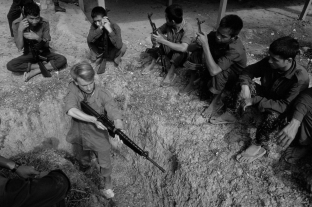
A) arming
B) fortification
C) mobilization
D) militarization
A) arming
B) fortification
C) mobilization
D) militarization
Question
Question
Question
Question
Question
Question
Question
Question
Question
Question
Question
Question
Question
Question
Question
Question
The Occupy Wall Street movement was able to gain support by focusing on inequality with the motto "We are the 99 percent" and combining physical and virtual elements of their protest. What is this is an example of? 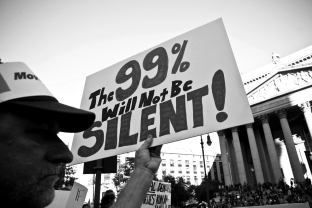
A) subversive action
B) civil society organization
C) social rationale
D) framing process
A) subversive action
B) civil society organization
C) social rationale
D) framing process
Question
Question
Sometimes a group of people within the domain of a state creates their own nongovernmental organizations (NGOs) in an effort to challenge inequities and assert their political rights to resources and recognition within their state. What do we call this type of formal organization? 
A) local service agency
B) international aid society
C) indigenous charity
D) civil society organization
A) local service agency
B) international aid society
C) indigenous charity
D) civil society organization
Question
Question
Question
Question
Question
Question
Question
Question
Question
Question
Question
Question
Question
Question
Question
Question
Question
Question
Question
Question
Question
Question
Question
Question
Question
Question

Unlock Deck
Sign up to unlock the cards in this deck!
Unlock Deck
Unlock Deck
1/70

Play

Full screen (f)
Deck 14: Politics and Power
1
In Bangladesh, over 1,000 youth marched over 100 miles to protest the construction of coal mines. What does this demonstrate?
A) people taking political action to resist climate change
B) electoral politics in action
C) the persistence of egalitarianism
D) the reign of hierarchy
A) people taking political action to resist climate change
B) electoral politics in action
C) the persistence of egalitarianism
D) the reign of hierarchy
people taking political action to resist climate change
2
Anthropologists have observed that the tribal leaders build and maintain power through which of the following?
A) victories in wartime
B) political institutions
C) strong enforcement of religious beliefs
D) learning to live within the control of a centralized state
A) victories in wartime
B) political institutions
C) strong enforcement of religious beliefs
D) learning to live within the control of a centralized state
victories in wartime
3
Why does the author say that the image of the state as fixed, cohesive, and coherent is an illusion?
A) Because states are constantly reshaped by new leaders and legislation and through their interactions.
B) Because members of a state do not have a shared history, identity, or a shared sense of destiny.
C) States are an illusion because the modern world is mainly composed of chiefdoms.
D) Because each state is temporary and will be replaced with a new one.
A) Because states are constantly reshaped by new leaders and legislation and through their interactions.
B) Because members of a state do not have a shared history, identity, or a shared sense of destiny.
C) States are an illusion because the modern world is mainly composed of chiefdoms.
D) Because each state is temporary and will be replaced with a new one.
Because states are constantly reshaped by new leaders and legislation and through their interactions.
4
Why did students at Swarthmore College occupy a university administration building during spring 2016?
A) to encourage need-blind admission
B) to protest recent hate crimes
C) to push for divestment of school endowment funds from fossil fuels
D) to participate in a hazing ritual
A) to encourage need-blind admission
B) to protest recent hate crimes
C) to push for divestment of school endowment funds from fossil fuels
D) to participate in a hazing ritual
Unlock Deck
Unlock for access to all 70 flashcards in this deck.
Unlock Deck
k this deck
5
What do anthropologists call a small, kinship-based group of foragers who move over a particular territory?
A) group
B) band
C) tribe
D) chiefdom
A) group
B) band
C) tribe
D) chiefdom
Unlock Deck
Unlock for access to all 70 flashcards in this deck.
Unlock Deck
k this deck
6
The political structure of modern countries includes a central government that exercises complete political, military, and economic control of its territory. Modern countries are considered what kind of organization?
A) tribe
B) state
C) band
D) chiefdom
A) tribe
B) state
C) band
D) chiefdom
Unlock Deck
Unlock for access to all 70 flashcards in this deck.
Unlock Deck
k this deck
7
In the modern world, the state is typically considered the ultimate authority in any particular territory. Despite this illusory ideal, what does the author note is true about the state?
A) It is weak and fragile.
B) It is fixed and cohesive.
C) It is coherent and contested.
D) It is fluid and fragile.
A) It is weak and fragile.
B) It is fixed and cohesive.
C) It is coherent and contested.
D) It is fluid and fragile.
Unlock Deck
Unlock for access to all 70 flashcards in this deck.
Unlock Deck
k this deck
8
What is considered a transitional form between the simpler political structures of tribes and the more complex political structures of states?
A) band
B) chiefdom
C) tribe
D) ethnic group
A) band
B) chiefdom
C) tribe
D) ethnic group
Unlock Deck
Unlock for access to all 70 flashcards in this deck.
Unlock Deck
k this deck
9
An autonomous regional political structure with a central government authorized to make laws and use political, economic, and military force to maintain order and defend its territory is referred to as what?
A) group
B) band
C) state
D) chiefdom
A) group
B) band
C) state
D) chiefdom
Unlock Deck
Unlock for access to all 70 flashcards in this deck.
Unlock Deck
k this deck
10
Micronesia's traditional political system of matrilineal clans headed by chiefs and dispersed across many islands allows them to readily recover from catastrophic storms and droughts. The complex and traditional political structure in Micronesia is made up of different:
A) tribes
B) states
C) ethnic groups
D) chiefdoms
A) tribes
B) states
C) ethnic groups
D) chiefdoms
Unlock Deck
Unlock for access to all 70 flashcards in this deck.
Unlock Deck
k this deck
11
The Hadza are a small hunter-gatherer group in Tanzania, where they live much as their ancestors have for thousands of years. They have no tribal or governing hierarchy. What best describes the Hadza?
A) The Hadza are a chiefdom.
B) The Hadza have established hegemony in Tanzania.
C) The Hadza are diverse.
D) The Hadza are egalitarian.
A) The Hadza are a chiefdom.
B) The Hadza have established hegemony in Tanzania.
C) The Hadza are diverse.
D) The Hadza are egalitarian.
Unlock Deck
Unlock for access to all 70 flashcards in this deck.
Unlock Deck
k this deck
12
What do we call an autonomous political unit composed of a number of villages or communities under the permanent control of a paramount chief?
A) group
B) band
C) tribe
D) chiefdom
A) group
B) band
C) tribe
D) chiefdom
Unlock Deck
Unlock for access to all 70 flashcards in this deck.
Unlock Deck
k this deck
13
Indigenous groups with their own set of loyalties and leaders, living to some extent outside the control of a centralized authoritative state, are known as what?
A) groups
B) bands
C) tribes
D) chiefdoms
A) groups
B) bands
C) tribes
D) chiefdoms
Unlock Deck
Unlock for access to all 70 flashcards in this deck.
Unlock Deck
k this deck
14
Earlier anthropological analysis considered small-scale human groups in comparative isolation. We now understand that in the modern world, all bands, tribes, and chiefdoms must function how?
A) as autonomous groups
B) solely with the permission of the state government
C) as distinctly homogenous societies
D) within the influence of the state
A) as autonomous groups
B) solely with the permission of the state government
C) as distinctly homogenous societies
D) within the influence of the state
Unlock Deck
Unlock for access to all 70 flashcards in this deck.
Unlock Deck
k this deck
15
What was one consequence of warriors emerging to defend surpluses of food from marauders?
A) time-space compression
B) indentured servitude
C) the onset of slavery
D) the rise of the state
A) time-space compression
B) indentured servitude
C) the onset of slavery
D) the rise of the state
Unlock Deck
Unlock for access to all 70 flashcards in this deck.
Unlock Deck
k this deck
16
Small, kin-based groups that hunt and gather over a particular territory and constantly break up and re-form in response to conflicts are referred to as what?
A) bands
B) chiefdoms
C) movements
D) tribes
A) bands
B) chiefdoms
C) movements
D) tribes
Unlock Deck
Unlock for access to all 70 flashcards in this deck.
Unlock Deck
k this deck
17
In 1871, hundreds of principalities were united to form Germany. After defeat in World War I, Germany's government was known as the Weimar Republic until the Nazis came to power in 1933. With the defeat of Nazi Germany, the country was divided into East and West during the cold war, and finally reunited when the Soviet Union collapsed. Germany has existed in many forms, demonstrating what characteristic of states?
A) Most were formed before World War I.
B) They are uniquely constructed and constantly reshaped.
C) They are only a collection of symbols.
D) They remain the same over time.
A) Most were formed before World War I.
B) They are uniquely constructed and constantly reshaped.
C) They are only a collection of symbols.
D) They remain the same over time.
Unlock Deck
Unlock for access to all 70 flashcards in this deck.
Unlock Deck
k this deck
18
What strategy did hunter-gatherer communities develop to enhance cooperation, generosity, and the sharing of resources?
A) compatibility
B) hegemony
C) egalitarianism
D) hierarchy
A) compatibility
B) hegemony
C) egalitarianism
D) hierarchy
Unlock Deck
Unlock for access to all 70 flashcards in this deck.
Unlock Deck
k this deck
19
Anthropologists link the origins of the state to the rise of what?
A) industry
B) agriculture
C) fossil fuels
D) democracy
A) industry
B) agriculture
C) fossil fuels
D) democracy
Unlock Deck
Unlock for access to all 70 flashcards in this deck.
Unlock Deck
k this deck
20
The Maasai, who live outside the direct control of the government of Tanzania, have had to form their own nongovernmental organizations (NGOs) to achieve goals that their state government neglected. Today they might be known as what kind of group?
A) ethnic group
B) autonomous state
C) band
D) chiefdom
A) ethnic group
B) autonomous state
C) band
D) chiefdom
Unlock Deck
Unlock for access to all 70 flashcards in this deck.
Unlock Deck
k this deck
21
In 1989, millions of Chinese stood up to their government in the Tiananmen Square protests. These protests, unfortunately, resulted in martial law and possibly the deaths of numerous Chinese citizens. What would an anthropologist suggest about what the Tiananmen Square protestors were doing?
A) exercising their agency
B) instigating militarization
C) expressing their individuality
D) exercising their power
A) exercising their agency
B) instigating militarization
C) expressing their individuality
D) exercising their power
Unlock Deck
Unlock for access to all 70 flashcards in this deck.
Unlock Deck
k this deck
22
Early states played an important role in the development of most areas of the world, so their origin, construction, and organization are frequently the focus of which branch of anthropology?
A) social historians
B) linguistic anthropologists
C) political anthropologists
D) cultural anthropologists
A) social historians
B) linguistic anthropologists
C) political anthropologists
D) cultural anthropologists
Unlock Deck
Unlock for access to all 70 flashcards in this deck.
Unlock Deck
k this deck
23
How did Margaret Mead explain the origins of human violence?
A) It is passed down genetically.
B) It is a cultural institution.
C) It is more common in men.
D) It is a consequence of the modern education system.
A) It is passed down genetically.
B) It is a cultural institution.
C) It is more common in men.
D) It is a consequence of the modern education system.
Unlock Deck
Unlock for access to all 70 flashcards in this deck.
Unlock Deck
k this deck
24
The dominant group in a state reinforces its ability to create consent and agreement about what is normal and appropriate through the promotion of what kinds of intense feelings?
A) social anxiety
B) religious fervor
C) agency
D) nationalism
A) social anxiety
B) religious fervor
C) agency
D) nationalism
Unlock Deck
Unlock for access to all 70 flashcards in this deck.
Unlock Deck
k this deck
25
In the United States, we often celebrate the Fourth of July with colorful fireworks, parades, and various festivities. Fourth of July celebrations in the United States help to reinforce feelings of ________.
A) animosity
B) nationalism
C) power
D) military fervor
A) animosity
B) nationalism
C) power
D) military fervor
Unlock Deck
Unlock for access to all 70 flashcards in this deck.
Unlock Deck
k this deck
26
When a civil society prepares for war, this preparation includes production of weapons and the glorification of war. What is this process called?
A) arming
B) fortification
C) mobilization
D) militarization
A) arming
B) fortification
C) mobilization
D) militarization
Unlock Deck
Unlock for access to all 70 flashcards in this deck.
Unlock Deck
k this deck
27
The ability or potential to bring about change through action or influence is referred to as power. In the study of human social organization, anthropologists examine power because:
A) it is found in some relationships.
B) it is exercised by the state alone.
C) it must be established through public, dramatic, and violent actions.
D) it is embedded in all human relationships.
A) it is found in some relationships.
B) it is exercised by the state alone.
C) it must be established through public, dramatic, and violent actions.
D) it is embedded in all human relationships.
Unlock Deck
Unlock for access to all 70 flashcards in this deck.
Unlock Deck
k this deck
28
Adolf Hitler glorified German domination while expanding the military and promoting paramilitary organizations such as the Hitler Youth. What is this is an example of?
A) rearming
B) mobilization
C) militarization
D) imperialism
A) rearming
B) mobilization
C) militarization
D) imperialism
Unlock Deck
Unlock for access to all 70 flashcards in this deck.
Unlock Deck
k this deck
29
Adolf Hitler was able to create a powerful unified state in Germany by blaming minorities for the country's problems and promoting the idea of certain German people as different and superior. This made the idea of persecuting minorities and expanding German dominance over Europe seem like a reasonable course of action. What do we call this feeling of belonging and superiority?
A) social cohesion
B) militarization
C) nationalism
D) racism
A) social cohesion
B) militarization
C) nationalism
D) racism
Unlock Deck
Unlock for access to all 70 flashcards in this deck.
Unlock Deck
k this deck
30
It has sometimes been suggested that violence is endemic to all primates and a consequence of social relations. What have recent studies of other nonhuman primates revealed?
A) Other primates undergo a cycle of violence and increasing distancing until they separate into smaller groups.
B) Other primates undergo a cycle of distancing and reconciliation after violence occurs.
C) Other primates undergo a cycle of performed violence that is not actually physically damaging.
D) Other primates undergo a cycle of behavior that does not involve any violence at all.
A) Other primates undergo a cycle of violence and increasing distancing until they separate into smaller groups.
B) Other primates undergo a cycle of distancing and reconciliation after violence occurs.
C) Other primates undergo a cycle of performed violence that is not actually physically damaging.
D) Other primates undergo a cycle of behavior that does not involve any violence at all.
Unlock Deck
Unlock for access to all 70 flashcards in this deck.
Unlock Deck
k this deck
31
What is one of the arguments given to support the idea that humans are naturally violent?
A) Violence and war are cultural institutions.
B) Violence is something we all learn as children.
C) Violence only appeared after the development of the state.
D) Violence is seen and deeply ingrained in all primates.
A) Violence and war are cultural institutions.
B) Violence is something we all learn as children.
C) Violence only appeared after the development of the state.
D) Violence is seen and deeply ingrained in all primates.
Unlock Deck
Unlock for access to all 70 flashcards in this deck.
Unlock Deck
k this deck
32
What is one of the possible reasons that women in the armed services of the United States are now permitted to be active combatants?
A) increased militarization worldwide
B) greater global threat levels
C) increased terrorist activity
D) a shortage of qualified male soldiers
A) increased militarization worldwide
B) greater global threat levels
C) increased terrorist activity
D) a shortage of qualified male soldiers
Unlock Deck
Unlock for access to all 70 flashcards in this deck.
Unlock Deck
k this deck
33
Although the Nazi regime did use violence, the regime was also able to gain the cooperation of much of the populace who saw Nazi actions and programs as necessary and even reasonable. What is this kind of consensus an example of?
A) mindset
B) hegemony
C) framing
D) coercion
A) mindset
B) hegemony
C) framing
D) coercion
Unlock Deck
Unlock for access to all 70 flashcards in this deck.
Unlock Deck
k this deck
34
Even very powerful institutions do not completely dominate people's lives and thinking. Individuals and groups with relatively little power can contest powerful institutions, such as the state, because:
A) individuals are not really affected by systems of power.
B) systems of power, like the state, change constantly and quickly.
C) established systems of power, like the state, are always weakening.
D) systems of power, including the state, are never absolute.
A) individuals are not really affected by systems of power.
B) systems of power, like the state, change constantly and quickly.
C) established systems of power, like the state, are always weakening.
D) systems of power, including the state, are never absolute.
Unlock Deck
Unlock for access to all 70 flashcards in this deck.
Unlock Deck
k this deck
35
The ability of a dominant group to create consent and agreement within a population without the use or threat of force is referred to as what?
A) agency
B) coercion
C) domination
D) hegemony
A) agency
B) coercion
C) domination
D) hegemony
Unlock Deck
Unlock for access to all 70 flashcards in this deck.
Unlock Deck
k this deck
36
Margaret Mead says people must first recognize militarism as a problem before attempting to change it. What else does she say is needed?
A) a belief that social invention is possible
B) participatory democracy
C) a redistributed budget
D) gender equality
A) a belief that social invention is possible
B) participatory democracy
C) a redistributed budget
D) gender equality
Unlock Deck
Unlock for access to all 70 flashcards in this deck.
Unlock Deck
k this deck
37
What can be accurately said about most states today?
A) They emerged during society's transition to an egalitarian lifeway.
B) Most states began as hunter-gatherer societies.
C) They all exist because of the tendency toward warfare.
D) They did not exist prior to World War II.
A) They emerged during society's transition to an egalitarian lifeway.
B) Most states began as hunter-gatherer societies.
C) They all exist because of the tendency toward warfare.
D) They did not exist prior to World War II.
Unlock Deck
Unlock for access to all 70 flashcards in this deck.
Unlock Deck
k this deck
38
In the United States, most Americans believe that it is wrong to hire family members who may not be qualified for a position. The idea of nepotism, or a family member over a more qualified candidate, seems unthinkable and undoable to many Americans. This is an example of what concept?
A) agency
B) dogma
C) coercion
D) hegemony
A) agency
B) dogma
C) coercion
D) hegemony
Unlock Deck
Unlock for access to all 70 flashcards in this deck.
Unlock Deck
k this deck
39
Michelle organizes a protest at her university, telling her peers that they have the power to challenge values and structures of power. What is Michelle referring to?
A) agency
B) authority
C) individuality
D) hegemony
A) agency
B) authority
C) individuality
D) hegemony
Unlock Deck
Unlock for access to all 70 flashcards in this deck.
Unlock Deck
k this deck
40
What do we call the potential of a person or a group to contest and change norms, values, institutions, and structures of power?
A) agency
B) authority
C) power
D) politics
A) agency
B) authority
C) power
D) politics
Unlock Deck
Unlock for access to all 70 flashcards in this deck.
Unlock Deck
k this deck
41
The debate continues over whether human beings are naturally peaceful or violent. Discuss the possible foundations of human violence and the evidence presented, and evaluate the author's conclusion.
Unlock Deck
Unlock for access to all 70 flashcards in this deck.
Unlock Deck
k this deck
42
The Occupy Wall Street movement was able to gain support by focusing on inequality with the motto "We are the 99 percent" and combining physical and virtual elements of their protest. What is this is an example of?
A) subversive action
B) civil society organization
C) social rationale
D) framing process
A) subversive action
B) civil society organization
C) social rationale
D) framing process
Unlock Deck
Unlock for access to all 70 flashcards in this deck.
Unlock Deck
k this deck
43
When the farmers in Costa Rica marched, blocked streets, and held demonstrations to protest inequality and injustice, what were they participating in?
A) a social movement
B) collective riots
C) cultural warfare
D) a cause célèbre
A) a social movement
B) collective riots
C) cultural warfare
D) a cause célèbre
Unlock Deck
Unlock for access to all 70 flashcards in this deck.
Unlock Deck
k this deck
44
Sometimes a group of people within the domain of a state creates their own nongovernmental organizations (NGOs) in an effort to challenge inequities and assert their political rights to resources and recognition within their state. What do we call this type of formal organization?
A) local service agency
B) international aid society
C) indigenous charity
D) civil society organization
A) local service agency
B) international aid society
C) indigenous charity
D) civil society organization
Unlock Deck
Unlock for access to all 70 flashcards in this deck.
Unlock Deck
k this deck
45
What do we call the method by which social movements create shared meanings and definitions that motivate and justify collective action?
A) cause célèbre
B) framing process
C) rationalization
D) social rationale
A) cause célèbre
B) framing process
C) rationalization
D) social rationale
Unlock Deck
Unlock for access to all 70 flashcards in this deck.
Unlock Deck
k this deck
46
In his examination of the Occupy movement, what was it that Jeffrey Juris discovered as a key part of the success of the movement?
A) the ability to increase participation through small donations
B) the willingness of voters to support the movement's goals in elections
C) the ability to defy police in protests
D) the interplay between the virtual and physical
A) the ability to increase participation through small donations
B) the willingness of voters to support the movement's goals in elections
C) the ability to defy police in protests
D) the interplay between the virtual and physical
Unlock Deck
Unlock for access to all 70 flashcards in this deck.
Unlock Deck
k this deck
47
The Fatwa Council in Egypt is a form of alternative legal structure used to deal with internal problems and avoid the interference and control of the state legal system. Despite the fact that these structures do not have coercive power that compels adherence to the outcome, individuals seeking redress here generally do observe the results carefully. What is one of the key differences between the fatwa and the court system?
A) Both the individual and the mufti share responsibility for the outcome.
B) Both the individual and the mufti recognize sharia law as the only valid source of legal wisdom.
C) Both the individual and the mufti have the means to reject any challenges by the state courts system.
D) Both the individual and the mufti are able to agree on everything.
A) Both the individual and the mufti share responsibility for the outcome.
B) Both the individual and the mufti recognize sharia law as the only valid source of legal wisdom.
C) Both the individual and the mufti have the means to reject any challenges by the state courts system.
D) Both the individual and the mufti are able to agree on everything.
Unlock Deck
Unlock for access to all 70 flashcards in this deck.
Unlock Deck
k this deck
48
What surprising discovery did Carolyn Nordstrom make in her study of war and violence in Mozambique?
A) War is not something that can be prevented through political will.
B) People want war in order to establish their autonomy.
C) The political violence of war can be resisted and defeated in the attending of daily matters.
D) The state does not actually start or condone war; people do.
A) War is not something that can be prevented through political will.
B) People want war in order to establish their autonomy.
C) The political violence of war can be resisted and defeated in the attending of daily matters.
D) The state does not actually start or condone war; people do.
Unlock Deck
Unlock for access to all 70 flashcards in this deck.
Unlock Deck
k this deck
49
To resist the power of state institutions, some societies make use of different systems to settle issues that might normally go to the state court system. What are these systems known as?
A) alternative legal structures
B) independent courts systems
C) common law structures
D) customary laws
A) alternative legal structures
B) independent courts systems
C) common law structures
D) customary laws
Unlock Deck
Unlock for access to all 70 flashcards in this deck.
Unlock Deck
k this deck
50
In Egypt, people view the decisions of the official Egyptian Personal Status courts with great suspicion, and they often turn to the traditional Al Azhar Fatwa Council for guidance on important matters of daily life, even though their decisions are not legally binding. The Fatwa Council is an example of what kind of social response to the state?
A) a religious institution
B) an independent court
C) a customary law structure
D) an alternative legal structure
A) a religious institution
B) an independent court
C) a customary law structure
D) an alternative legal structure
Unlock Deck
Unlock for access to all 70 flashcards in this deck.
Unlock Deck
k this deck
51
Foraging bands and egalitarianism have been the standards of social interaction for most of human history; however, many societies are highly hierarchical today. Discuss the role egalitarianism has played in human life and, quite possibly, human evolution.
Unlock Deck
Unlock for access to all 70 flashcards in this deck.
Unlock Deck
k this deck
52
Most of us never consider how our immediate families function in a larger social context in our lives. In reality, though, what aspect of social behavior is strongly present in our family relationships and echoed in our place in society as a whole?
A) power
B) hegemony
C) agency
D) financial success
A) power
B) hegemony
C) agency
D) financial success
Unlock Deck
Unlock for access to all 70 flashcards in this deck.
Unlock Deck
k this deck
53
Anthropologist Marc Edelman's study of rural peasants in Costa Rica as they responded to the economic and political upheavals brought about by civil war and increased debt demonstrate what aspect of human response to the state?
A) cooperation
B) agency
C) initiative
D) drive
A) cooperation
B) agency
C) initiative
D) drive
Unlock Deck
Unlock for access to all 70 flashcards in this deck.
Unlock Deck
k this deck
54
Collective group actions in response to uneven development, inequality, and injustice that seek to build institutional networks to transform cultural patterns and government policies are referred to as what kind of action?
A) crusades
B) social movements
C) social initiatives
D) public causes
A) crusades
B) social movements
C) social initiatives
D) public causes
Unlock Deck
Unlock for access to all 70 flashcards in this deck.
Unlock Deck
k this deck
55
Compare and contrast the concepts of the band, the tribe, and the chiefdom. What are the advantages of each?
Unlock Deck
Unlock for access to all 70 flashcards in this deck.
Unlock Deck
k this deck
56
A local nongovernmental organization (NGO) that challenges state policies and uneven development and advocates resources and opportunities for members of its local communities is known as what?
A) a civil society organization
B) an international aid society
C) a nonaligned charity
D) a local support agency
A) a civil society organization
B) an international aid society
C) a nonaligned charity
D) a local support agency
Unlock Deck
Unlock for access to all 70 flashcards in this deck.
Unlock Deck
k this deck
57
Modern states play a central role in shaping what happens in every part of the world today. Discuss the aspects of the state that make it the dominant form of political organization in the world today.
Unlock Deck
Unlock for access to all 70 flashcards in this deck.
Unlock Deck
k this deck
58
Many nongovernmental organizations (NGOs) have been powerful voices against the exercise of state power. These organizations can be seen as exercising what particular form of response to the state?
A) hegemony
B) agency
C) political will
D) local advocacy
A) hegemony
B) agency
C) political will
D) local advocacy
Unlock Deck
Unlock for access to all 70 flashcards in this deck.
Unlock Deck
k this deck
59
Members of the civil rights movement held protests, sit-ins, and marches to oppose inequality. Their actions eventually resulted in the Civil Rights Act, which eliminated much of the legal inequality in the country. What is this is an example of?
A) framing process
B) public enterprise
C) social movements
D) rights initiative
A) framing process
B) public enterprise
C) social movements
D) rights initiative
Unlock Deck
Unlock for access to all 70 flashcards in this deck.
Unlock Deck
k this deck
60
In 2014, police in Ferguson, MO, shot and killed 18-year-old Michael Brown in an incident that evoked nationwide protest. In the ensuing months, social media was employed to powerful effect using the hashtag #blacklivesmatter. The creation of the #blacklivesmatter hashtag helped galvanize support and is an example of what kind of action?
A) social movement
B) social rationale
C) social demonstration
D) framing process
A) social movement
B) social rationale
C) social demonstration
D) framing process
Unlock Deck
Unlock for access to all 70 flashcards in this deck.
Unlock Deck
k this deck
61
In a brief essay, describe three elements of a social movement. Provide examples to illustrate your description.
Unlock Deck
Unlock for access to all 70 flashcards in this deck.
Unlock Deck
k this deck
62
Discuss the framing process and how it works. Provide an example to support your explanation.
Unlock Deck
Unlock for access to all 70 flashcards in this deck.
Unlock Deck
k this deck
63
Discuss how alternative structures are used to circumvent state power, and provide an example to illustrate your points.
Unlock Deck
Unlock for access to all 70 flashcards in this deck.
Unlock Deck
k this deck
64
Describe militarization and its effects on a society. How does it relate to the construction of war and soldiers?
Unlock Deck
Unlock for access to all 70 flashcards in this deck.
Unlock Deck
k this deck
65
In a brief essay, compare and contrast the concept of power, in general, with state power, and give an example of each.
Unlock Deck
Unlock for access to all 70 flashcards in this deck.
Unlock Deck
k this deck
66
Describe the concept of agency and how it works, and give an example that illustrates this concept.
Unlock Deck
Unlock for access to all 70 flashcards in this deck.
Unlock Deck
k this deck
67
Anthropologist Carolyn Nordstrom works in war zones to describe the real and messy experiences of war. In her account, an individual health-care provider in Mozambique, targeted by the military forces that terrorized local villages, managed to hide and survive until they had moved through the area. The provider then worked to help others. Discuss how this contradicts common notions of war. How do survivors of war push back against military force? How does Nordstrom's work directly challenge the long legacy of Western philosophers who argue that human nature is innately violent?
Unlock Deck
Unlock for access to all 70 flashcards in this deck.
Unlock Deck
k this deck
68
In a brief essay, describe three ways power is wielded outside the control of the state.
Unlock Deck
Unlock for access to all 70 flashcards in this deck.
Unlock Deck
k this deck
69
Civil society organizations have become important actors on the world stage. Discuss what they are, where they came from, and how they work.
Unlock Deck
Unlock for access to all 70 flashcards in this deck.
Unlock Deck
k this deck
70
Describe the concept of hegemony, what it does, and how it works. Provide an example.
Unlock Deck
Unlock for access to all 70 flashcards in this deck.
Unlock Deck
k this deck
Unlock Deck
Unlock for access to all 70 flashcards in this deck.






