







 Chat with AI

Deck 1: Invitation to Biology
Full screen (f)

Question

Question
Figure 1.3
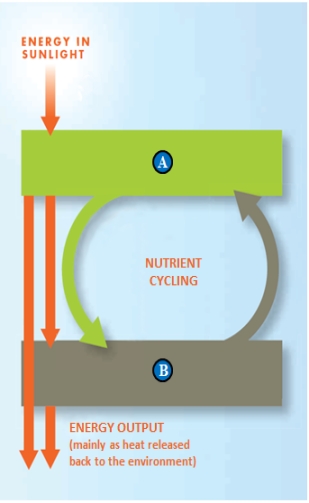
On the accompanying illustration, "A" and "B" should be labeled, respectively, ____ and _____.
A) consumers; producers
B) decomposers; producers
C) producers; redistributors
D) producers; consumers
E) consumers; decomposers
On the accompanying illustration, "A" and "B" should be labeled, respectively, ____ and _____.
A) consumers; producers
B) decomposers; producers
C) producers; redistributors
D) producers; consumers
E) consumers; decomposers
Question
Question
Figure 1.2
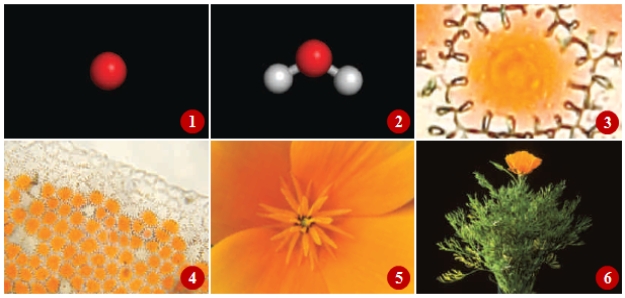
In the accompanying figure illustrating the levels of life's organization, what is represented in frame 2?
A) atom
B) tissue
C) molecule
D) organ
E) cell
In the accompanying figure illustrating the levels of life's organization, what is represented in frame 2?
A) atom
B) tissue
C) molecule
D) organ
E) cell
Question
Question
Question
Question
Question
Question
Question
Question
Question
Question
Question
Question
Question
Question
Question
Question
Question
Question
Question
Question
Question
Question
Question
Question
Question
Question
Question
Question
Question
Question
Question
Question
Question
Question
Question
Question
Question
Question
Question
Question
Question
Question
Question
Question
Question
Question
Question
Question
Question
Question
Question
Question
Question
Question
Question
Question
Question
Question
Question
Question
Question
Question
Question
Question
Question
Question
Question
Question
Question
Question
Question
Question
Question
Question
Question

Unlock Deck
Sign up to unlock the cards in this deck!
Unlock Deck
Unlock Deck
1/79

Play

Full screen (f)
Deck 1: Invitation to Biology
1
What is the correct ordering in the hierarchal levels of the organization of life, from the least inclusive to the most inclusive?
A) tissues, cells, population, organisms, and organs
B) molecules, cells, organs, tissues, and organisms
C) ecosystems, populations, tissues, cells, and organs
D) cells, tissues, organs, communities, and populations
E) cells, tissues, organs, organisms, and ecosystems
A) tissues, cells, population, organisms, and organs
B) molecules, cells, organs, tissues, and organisms
C) ecosystems, populations, tissues, cells, and organs
D) cells, tissues, organs, communities, and populations
E) cells, tissues, organs, organisms, and ecosystems
E
2
Figure 1.3
On the accompanying illustration, "A" and "B" should be labeled, respectively, ____ and _____.
A) consumers; producers
B) decomposers; producers
C) producers; redistributors
D) producers; consumers
E) consumers; decomposers
On the accompanying illustration, "A" and "B" should be labeled, respectively, ____ and _____.
A) consumers; producers
B) decomposers; producers
C) producers; redistributors
D) producers; consumers
E) consumers; decomposers
D
3
The most inclusive level of organization listed here is a(n)
A) heart.
B) carbon atom.
C) DNA.
D) zebra.
E) red blood cell.
A) heart.
B) carbon atom.
C) DNA.
D) zebra.
E) red blood cell.
D
4
Figure 1.2
In the accompanying figure illustrating the levels of life's organization, what is represented in frame 2?
A) atom
B) tissue
C) molecule
D) organ
E) cell
In the accompanying figure illustrating the levels of life's organization, what is represented in frame 2?
A) atom
B) tissue
C) molecule
D) organ
E) cell
Unlock Deck
Unlock for access to all 79 flashcards in this deck.
Unlock Deck
k this deck
5
The smallest unit of life that can exist as a separate entity is a(n)
A) cell.
B) molecule.
C) organ.
D) population.
E) ecosystem.
A) cell.
B) molecule.
C) organ.
D) population.
E) ecosystem.
Unlock Deck
Unlock for access to all 79 flashcards in this deck.
Unlock Deck
k this deck
6
Four of the following characteristics are required for the life of an individual organism to continue. Which is the exception?
A) to maintain chemical uniqueness and organization
B) to respond to stimuli
C) to possess a genetic program to control cell processes
D) to reproduce
E) to evolve
A) to maintain chemical uniqueness and organization
B) to respond to stimuli
C) to possess a genetic program to control cell processes
D) to reproduce
E) to evolve
Unlock Deck
Unlock for access to all 79 flashcards in this deck.
Unlock Deck
k this deck
7
In the accompanying figure illustrating the levels of life's organization, what is represented in frame 3?
A) atom
B) tissue
C) molecule
D) organ
E) cell
A) atom
B) tissue
C) molecule
D) organ
E) cell
Unlock Deck
Unlock for access to all 79 flashcards in this deck.
Unlock Deck
k this deck
8
At what level of organization does life begin?
A) digestive system
B) cell
C) molecule (water)
D) molecule (DNA)
E) population
A) digestive system
B) cell
C) molecule (water)
D) molecule (DNA)
E) population
Unlock Deck
Unlock for access to all 79 flashcards in this deck.
Unlock Deck
k this deck
9
A community
A) includes all populations of all species in a given area.
B) features the living organisms interacting with the physical and chemical environment.
C) is the sum of all places in Earth's atmosphere, crust, and waters where organisms live.
D) includes members of only one species.
E) is at a higher level of organization than an ecosystem.
A) includes all populations of all species in a given area.
B) features the living organisms interacting with the physical and chemical environment.
C) is the sum of all places in Earth's atmosphere, crust, and waters where organisms live.
D) includes members of only one species.
E) is at a higher level of organization than an ecosystem.
Unlock Deck
Unlock for access to all 79 flashcards in this deck.
Unlock Deck
k this deck
10
Which characteristic is NOT found in nonliving entities?
A) energetic interactions
B) DNA
C) atoms
D) heat energy
E) complexity
A) energetic interactions
B) DNA
C) atoms
D) heat energy
E) complexity
Unlock Deck
Unlock for access to all 79 flashcards in this deck.
Unlock Deck
k this deck
11
The conversion of solar energy to chemical energy is known as
A) metabolism.
B) photosynthesis.
C) chemosynthesis.
D) catabolism.
E) anabolism.
A) metabolism.
B) photosynthesis.
C) chemosynthesis.
D) catabolism.
E) anabolism.
Unlock Deck
Unlock for access to all 79 flashcards in this deck.
Unlock Deck
k this deck
12
Living organisms are members of all of the levels listed below. However, rocks are components of
A) the community.
B) the population.
C) the ecosystem only.
D) the biosphere only.
E) both the ecosystem and the biosphere.
A) the community.
B) the population.
C) the ecosystem only.
D) the biosphere only.
E) both the ecosystem and the biosphere.
Unlock Deck
Unlock for access to all 79 flashcards in this deck.
Unlock Deck
k this deck
13
The flow of nutrients through living organisms is best characterized as
A) circular.
B) a ladder.
C) a lattice.
D) one way.
E) a funnel.
A) circular.
B) a ladder.
C) a lattice.
D) one way.
E) a funnel.
Unlock Deck
Unlock for access to all 79 flashcards in this deck.
Unlock Deck
k this deck
14
Organisms sense and respond to changes both inside and outside the body by way of
A) metabolism.
B) photosynthesis.
C) receptors.
D) catabolism.
E) anabolism.
A) metabolism.
B) photosynthesis.
C) receptors.
D) catabolism.
E) anabolism.
Unlock Deck
Unlock for access to all 79 flashcards in this deck.
Unlock Deck
k this deck
15
Four of the following are key characteristics for the survival of a species. Which one is the exception?
A) ability to acquire energy and nutrients
B) response to environmental change
C) reproduction
D) inability to change
E) ability to grow and adapt through changes in DNA
A) ability to acquire energy and nutrients
B) response to environmental change
C) reproduction
D) inability to change
E) ability to grow and adapt through changes in DNA
Unlock Deck
Unlock for access to all 79 flashcards in this deck.
Unlock Deck
k this deck
16
A(n) ____ property is a characteristic of a system that does not appear in any of its component parts.
A) efferent
B) emergent
C) elective
D) energetic
E) living
A) efferent
B) emergent
C) elective
D) energetic
E) living
Unlock Deck
Unlock for access to all 79 flashcards in this deck.
Unlock Deck
k this deck
17
DNA codes for the production of
A) proteins.
B) minerals.
C) inorganic molecules.
D) vital gasses.
E) water.
A) proteins.
B) minerals.
C) inorganic molecules.
D) vital gasses.
E) water.
Unlock Deck
Unlock for access to all 79 flashcards in this deck.
Unlock Deck
k this deck
18
Approximately how many rainforest species become extinct every minute?
A) one
B) two
C) five
D) ten
E) twenty
A) one
B) two
C) five
D) ten
E) twenty
Unlock Deck
Unlock for access to all 79 flashcards in this deck.
Unlock Deck
k this deck
19
Which group of organisms does not depend directly on sunlight for energy?
I)terrestrial producers
II)animal consumers
III)decomposers
A) I only
B) II and III only
C) II only
D) III only
E) I and III
I)terrestrial producers
II)animal consumers
III)decomposers
A) I only
B) II and III only
C) II only
D) III only
E) I and III
Unlock Deck
Unlock for access to all 79 flashcards in this deck.
Unlock Deck
k this deck
20
Which feature is not characteristic of all living organisms?
A) All have requirements for energy.
B) All must participate in one or more nutrient cycles.
C) All have ultimate dependence upon the sun.
D) All interact with other forms of life.
E) All must reproduce inside of organisms of other species.
A) All have requirements for energy.
B) All must participate in one or more nutrient cycles.
C) All have ultimate dependence upon the sun.
D) All interact with other forms of life.
E) All must reproduce inside of organisms of other species.
Unlock Deck
Unlock for access to all 79 flashcards in this deck.
Unlock Deck
k this deck
21
What characteristic is common to all living things?
A) All living things eat.
B) All living things are producers.
C) All living things sense and respond to change.
D) All living things have a nucleus.
E) All living things are consumers.
A) All living things eat.
B) All living things are producers.
C) All living things sense and respond to change.
D) All living things have a nucleus.
E) All living things are consumers.
Unlock Deck
Unlock for access to all 79 flashcards in this deck.
Unlock Deck
k this deck
22
Which phrase would most likely be used in a discussion of homeostasis?
A) respond to environmental stimuli
B) limited range of variation
C) rapid energy turnover
D) cycle of elements
E) structural and functional units of life
A) respond to environmental stimuli
B) limited range of variation
C) rapid energy turnover
D) cycle of elements
E) structural and functional units of life
Unlock Deck
Unlock for access to all 79 flashcards in this deck.
Unlock Deck
k this deck
23
About twelve to twenty-four hours after the previous meal, a person's blood-sugar level normally varies from 60 to 90 milligrams per 100 milliliters of blood, though it may rise to 130 mg/100 ml after meals high in carbohydrates. That the blood-sugar level is maintained within a fairly narrow range despite uneven intake of sugar is due to the body's ability to carry out
A) adaptation.
B) inheritance.
C) metabolism.
D) homeostasis.
E) evolution.
A) adaptation.
B) inheritance.
C) metabolism.
D) homeostasis.
E) evolution.
Unlock Deck
Unlock for access to all 79 flashcards in this deck.
Unlock Deck
k this deck
24
Which term refers to the first explanation of a problem (sometimes referred to an "educated guess")?
A) principle
B) law
C) theory
D) fact
E) hypothesis
A) principle
B) law
C) theory
D) fact
E) hypothesis
Unlock Deck
Unlock for access to all 79 flashcards in this deck.
Unlock Deck
k this deck
25
Which term refers to judging information before accepting it as fact?
A) critical thinking
B) law
C) theory
D) fact
E) hypothesis
A) critical thinking
B) law
C) theory
D) fact
E) hypothesis
Unlock Deck
Unlock for access to all 79 flashcards in this deck.
Unlock Deck
k this deck
26
Energy sources are needed for which of the following processes?
I)reproduction
II)growth
III)development
A) I and II only
B) I and III only
C) II only
D) II and III only
E) I, II, and III
I)reproduction
II)growth
III)development
A) I and II only
B) I and III only
C) II only
D) II and III only
E) I, II, and III
Unlock Deck
Unlock for access to all 79 flashcards in this deck.
Unlock Deck
k this deck
27
Members of what group are multicellular producers?
A) animals
B) protists
C) fungi
D) plants
E) bacteria
A) animals
B) protists
C) fungi
D) plants
E) bacteria
Unlock Deck
Unlock for access to all 79 flashcards in this deck.
Unlock Deck
k this deck
28
Which organisms are NOT eukaryotes?
A) fungi
B) bacteria
C) plants
D) animals
E) protists
A) fungi
B) bacteria
C) plants
D) animals
E) protists
Unlock Deck
Unlock for access to all 79 flashcards in this deck.
Unlock Deck
k this deck
29
What is a hypothesis?
A) a report of the findings of scientific experiments
B) a specific conclusion of an experiment in an "if . . . then" format
C) a way of using isolated facts to reach a general idea that may explain a phenomenon
D) the summary of the outcomes of scientific findings
E) a testable explanation of a natural phenomenon
A) a report of the findings of scientific experiments
B) a specific conclusion of an experiment in an "if . . . then" format
C) a way of using isolated facts to reach a general idea that may explain a phenomenon
D) the summary of the outcomes of scientific findings
E) a testable explanation of a natural phenomenon
Unlock Deck
Unlock for access to all 79 flashcards in this deck.
Unlock Deck
k this deck
30
Which cell lacks a nucleus?
A) bacterial cell
B) fungus cell
C) animal cell
D) protist cell
E) plant cell
A) bacterial cell
B) fungus cell
C) animal cell
D) protist cell
E) plant cell
Unlock Deck
Unlock for access to all 79 flashcards in this deck.
Unlock Deck
k this deck
31
Which is the least inclusive of the taxonomic categories listed below?
A) family
B) phylum
C) class
D) order
E) genus
A) family
B) phylum
C) class
D) order
E) genus
Unlock Deck
Unlock for access to all 79 flashcards in this deck.
Unlock Deck
k this deck
32
Which of the following is a domain of life?
A) eukaryotes
B) plants
C) animals
D) protists
E) fungi
A) eukaryotes
B) plants
C) animals
D) protists
E) fungi
Unlock Deck
Unlock for access to all 79 flashcards in this deck.
Unlock Deck
k this deck
33
Homeostasis provides what kind of internal environment?
A) positive
B) tolerable
C) limiting
D) changing
E) chemical and physical
A) positive
B) tolerable
C) limiting
D) changing
E) chemical and physical
Unlock Deck
Unlock for access to all 79 flashcards in this deck.
Unlock Deck
k this deck
34
A scientific name consists of which of the following?
I)family name
II)genus name
III)species name
A) I only
B) II only
C) III only
D) I and II
E) II and III
I)family name
II)genus name
III)species name
A) I only
B) II only
C) III only
D) I and II
E) II and III
Unlock Deck
Unlock for access to all 79 flashcards in this deck.
Unlock Deck
k this deck
35
Members of which prokaryotic domain are most closely related to eukaryotes evolutionarily?
A) animals
B) protists
C) fungi
D) bacteria
E) archaea
A) animals
B) protists
C) fungi
D) bacteria
E) archaea
Unlock Deck
Unlock for access to all 79 flashcards in this deck.
Unlock Deck
k this deck
36
Which group includes all of the other groups?
A) domain
B) order
C) family
D) genus
E) species
A) domain
B) order
C) family
D) genus
E) species
Unlock Deck
Unlock for access to all 79 flashcards in this deck.
Unlock Deck
k this deck
37
Which renowned biologist defined species as a group of individuals that potentially can interbreed, produce fertile offspring, and do not interbreed with other groups?
A) Charles Darwin
B) E. O. Wilson
C) Carl Linnaeus
D) Jean-Baptiste Lamarck
E) Ernst Mayr
A) Charles Darwin
B) E. O. Wilson
C) Carl Linnaeus
D) Jean-Baptiste Lamarck
E) Ernst Mayr
Unlock Deck
Unlock for access to all 79 flashcards in this deck.
Unlock Deck
k this deck
38
The plural for genus is
A) genus.
B) geni.
C) genera.
D) gena.
E) genae.
A) genus.
B) geni.
C) genera.
D) gena.
E) genae.
Unlock Deck
Unlock for access to all 79 flashcards in this deck.
Unlock Deck
k this deck
39
Each cell is able to maintain an internal environment within a range that favors survival. This condition is called
A) metabolism.
B) homeostasis.
C) physiology.
D) adaptation.
E) evolution.
A) metabolism.
B) homeostasis.
C) physiology.
D) adaptation.
E) evolution.
Unlock Deck
Unlock for access to all 79 flashcards in this deck.
Unlock Deck
k this deck
40
Which group is made up of almost exclusively decomposers?
A) plants
B) fungi
C) animals
D) bacteria
E) protists
A) plants
B) fungi
C) animals
D) bacteria
E) protists
Unlock Deck
Unlock for access to all 79 flashcards in this deck.
Unlock Deck
k this deck
41
Which concept represents the highest degree of certainty?
A) hypothesis
B) deduction
C) assumption
D) theory
E) prediction
A) hypothesis
B) deduction
C) assumption
D) theory
E) prediction
Unlock Deck
Unlock for access to all 79 flashcards in this deck.
Unlock Deck
k this deck
42
Which group in the peacock butterfly experiment had the highest survival rates?
A) Those with more nocturnal habits
B) Those without spots and without hissing/clicking sounds
C) Those without spots but with hissing/clicking sounds
D) Those with spots and hissing/clicking sounds
E) Those with the same flower habitat as the birds
A) Those with more nocturnal habits
B) Those without spots and without hissing/clicking sounds
C) Those without spots but with hissing/clicking sounds
D) Those with spots and hissing/clicking sounds
E) Those with the same flower habitat as the birds
Unlock Deck
Unlock for access to all 79 flashcards in this deck.
Unlock Deck
k this deck
43
In an experiment, the control group is:
A) not subjected to experimental error.
B) exposed to experimental treatments.
C) maintained under strict laboratory conditions.
D) treated exactly the same as the experimental group, except for one variable.
E) statistically the most important part of the experiment.
A) not subjected to experimental error.
B) exposed to experimental treatments.
C) maintained under strict laboratory conditions.
D) treated exactly the same as the experimental group, except for one variable.
E) statistically the most important part of the experiment.
Unlock Deck
Unlock for access to all 79 flashcards in this deck.
Unlock Deck
k this deck
44
Which concept represents the lowest degree of certainty?
A) hypothesis
B) conclusion
C) fact
D) principle
E) theory
A) hypothesis
B) conclusion
C) fact
D) principle
E) theory
Unlock Deck
Unlock for access to all 79 flashcards in this deck.
Unlock Deck
k this deck
45
Which characteristic is least applicable to the development of science?
A) evaluation of data
B) personal conviction
C) prediction
D) systematic observation
E) sharing of ideas
A) evaluation of data
B) personal conviction
C) prediction
D) systematic observation
E) sharing of ideas
Unlock Deck
Unlock for access to all 79 flashcards in this deck.
Unlock Deck
k this deck
46
Scientists are always thinking about ways to improve experimental design. In the text's potato chip experiment, which of these changes would produce the most effective design?
A) Show a different movie.
B) Exclude teenagers as group members.
C) Collect uneaten chip remains and weigh them for both groups.
D) Provide free drinks before the experiment.
E) Use a smaller theater.
A) Show a different movie.
B) Exclude teenagers as group members.
C) Collect uneaten chip remains and weigh them for both groups.
D) Provide free drinks before the experiment.
E) Use a smaller theater.
Unlock Deck
Unlock for access to all 79 flashcards in this deck.
Unlock Deck
k this deck
47
Which of the following is NOT true about the peacock butterfly?
A) The dark underside of their wings provides camouflage.
B) The spots on the wings may resemble owl eyes, which help deter predation.
C) The butterflies remain still when a predator is near so as not to draw attention.
D) The rapid movement of their wings produces a hissing sound.
E) A resting butterfly's closed wing resembles a dead leaf.
A) The dark underside of their wings provides camouflage.
B) The spots on the wings may resemble owl eyes, which help deter predation.
C) The butterflies remain still when a predator is near so as not to draw attention.
D) The rapid movement of their wings produces a hissing sound.
E) A resting butterfly's closed wing resembles a dead leaf.
Unlock Deck
Unlock for access to all 79 flashcards in this deck.
Unlock Deck
k this deck
48
Science is based on
A) faith.
B) authority.
C) evidence.
D) force.
E) opinion.
A) faith.
B) authority.
C) evidence.
D) force.
E) opinion.
Unlock Deck
Unlock for access to all 79 flashcards in this deck.
Unlock Deck
k this deck
49
What is an acceptable probability of sampling error that may have skewed the results in most scientific studies?
A) 80%
B) 50%
C) 25%
D) 10%
E) 5%
A) 80%
B) 50%
C) 25%
D) 10%
E) 5%
Unlock Deck
Unlock for access to all 79 flashcards in this deck.
Unlock Deck
k this deck
50
What was the dependent variable in the peacock butterfly experiments?
A) changing predators
B) changing habitats
C) painting the wings
D) clipping the hindwings
E) getting eaten
A) changing predators
B) changing habitats
C) painting the wings
D) clipping the hindwings
E) getting eaten
Unlock Deck
Unlock for access to all 79 flashcards in this deck.
Unlock Deck
k this deck
51
In the experiment with peacock butterflies, the working hypothesis is that
A) silence confuses both predator and prey.
B) making sounds can provide a selective advantage to the prey.
C) birds are capable of learning.
D) birds are agents of evolution.
E) unpalatable species display distinctive wings.
A) silence confuses both predator and prey.
B) making sounds can provide a selective advantage to the prey.
C) birds are capable of learning.
D) birds are agents of evolution.
E) unpalatable species display distinctive wings.
Unlock Deck
Unlock for access to all 79 flashcards in this deck.
Unlock Deck
k this deck
52
Copernicus, Galileo, and Darwin found that ____ caused their science to be controversial.
A) prevailing belief
B) objective data
C) astronomical theories
D) supernatural influences
E) experimental design
A) prevailing belief
B) objective data
C) astronomical theories
D) supernatural influences
E) experimental design
Unlock Deck
Unlock for access to all 79 flashcards in this deck.
Unlock Deck
k this deck
53
Randomly selecting samples of experimental units from an environment can result in
A) sampling error.
B) blind testing.
C) evidence.
D) experimental design.
E) consensus.
A) sampling error.
B) blind testing.
C) evidence.
D) experimental design.
E) consensus.
Unlock Deck
Unlock for access to all 79 flashcards in this deck.
Unlock Deck
k this deck
54
What is one of the major variables in the peacock butterfly experiment?
A) pattern/color of the wings
B) range of migration
C) species of bird predator
D) experimental location
E) percentage of survivors
A) pattern/color of the wings
B) range of migration
C) species of bird predator
D) experimental location
E) percentage of survivors
Unlock Deck
Unlock for access to all 79 flashcards in this deck.
Unlock Deck
k this deck
55
Scientific work involves
A) thenatural and supernatural world.
B) retesting theories frequently for verification.
C) proving theories with absolute certainty.
D) testing hypotheses under every possible circumstance.
E) coming up with the best descriptions of reality.
A) thenatural and supernatural world.
B) retesting theories frequently for verification.
C) proving theories with absolute certainty.
D) testing hypotheses under every possible circumstance.
E) coming up with the best descriptions of reality.
Unlock Deck
Unlock for access to all 79 flashcards in this deck.
Unlock Deck
k this deck
56
The choice of whether a particular organism belongs to the experimental group or the control group should be based on
A) age.
B) size.
C) chance.
D) history.
E) gender.
A) age.
B) size.
C) chance.
D) history.
E) gender.
Unlock Deck
Unlock for access to all 79 flashcards in this deck.
Unlock Deck
k this deck
57
Which characteristic will NOT strengthen the validity of a theory?
A) repetitions of experiments
B) increased observations
C) time after the experiment
D) faith in the experiment
E) confirmation by many scientists
A) repetitions of experiments
B) increased observations
C) time after the experiment
D) faith in the experiment
E) confirmation by many scientists
Unlock Deck
Unlock for access to all 79 flashcards in this deck.
Unlock Deck
k this deck
58
The control in an experiment
A) makes the experiment valid.
B) is an additional replicate for statistical purposes.
C) reduces the experimental errors.
D) minimizes experimental inaccuracy.
E) allows for comparisons to the experimental group.
A) makes the experiment valid.
B) is an additional replicate for statistical purposes.
C) reduces the experimental errors.
D) minimizes experimental inaccuracy.
E) allows for comparisons to the experimental group.
Unlock Deck
Unlock for access to all 79 flashcards in this deck.
Unlock Deck
k this deck
59
Olestra chips did not cause cramps at a higher rate than normal chips. This is known as the ____ of this experiment.
A) hypothesis
B) prediction
C) control
D) conclusion
E) data
A) hypothesis
B) prediction
C) control
D) conclusion
E) data
Unlock Deck
Unlock for access to all 79 flashcards in this deck.
Unlock Deck
k this deck
60
Which experiment would be the least effective follow-up to the peacock butterfly studies?
A) Repeat in a forest area totally devoid of native butterflies.
B) Repeat in a wildlife sanctuary aviary after giving birds a chance to learn about peacock butterflies.
C) Repeat using young, inexperienced birds.
D) Repeat, and count survivors for three weeks.
E) Repeat using more butterflies and more blue tits in a larger area.
A) Repeat in a forest area totally devoid of native butterflies.
B) Repeat in a wildlife sanctuary aviary after giving birds a chance to learn about peacock butterflies.
C) Repeat using young, inexperienced birds.
D) Repeat, and count survivors for three weeks.
E) Repeat using more butterflies and more blue tits in a larger area.
Unlock Deck
Unlock for access to all 79 flashcards in this deck.
Unlock Deck
k this deck
61
Classification. Match the following descriptions with the most appropriate group listed below.
a.bacteria
b.protists
c.plants
d.fungi
e.animals
unicellular eukaryotic producers
a.bacteria
b.protists
c.plants
d.fungi
e.animals
unicellular eukaryotic producers
Unlock Deck
Unlock for access to all 79 flashcards in this deck.
Unlock Deck
k this deck
62
Classification. Match the following descriptions with the most appropriate group listed below.
a.bacteria
b.protists
c.plants
d.fungi
e.animals
unicellular organisms of considerable internal complexity
a.bacteria
b.protists
c.plants
d.fungi
e.animals
unicellular organisms of considerable internal complexity
Unlock Deck
Unlock for access to all 79 flashcards in this deck.
Unlock Deck
k this deck
63
Classification. Match the following descriptions to the most appropriate function, process, or trait listed below.a.inheritance
b.reproduction
c.photosynthesis
d.growth
e.homeostasis
process by which individuals produce offspring
b.reproduction
c.photosynthesis
d.growth
e.homeostasis
process by which individuals produce offspring
Unlock Deck
Unlock for access to all 79 flashcards in this deck.
Unlock Deck
k this deck
64
Classification. Match the following descriptions with the most appropriate group listed below.
a.bacteria
b.protists
c.plants
d.fungi
e.animals
multicelled mobile consumers
a.bacteria
b.protists
c.plants
d.fungi
e.animals
multicelled mobile consumers
Unlock Deck
Unlock for access to all 79 flashcards in this deck.
Unlock Deck
k this deck
65
Match the following letters to the number with which they best correspond.
a.Observation
b.Question
c.Hypothesis
d.Prediction
e.Law of nature
f.Scientific theory
g.Assessment
h.Report
People get cancer.
a.Observation
b.Question
c.Hypothesis
d.Prediction
e.Law of nature
f.Scientific theory
g.Assessment
h.Report
People get cancer.
Unlock Deck
Unlock for access to all 79 flashcards in this deck.
Unlock Deck
k this deck
66
If smoking causes cancer, then individuals who smoke will get cancer more often than those who do not.
Unlock Deck
Unlock for access to all 79 flashcards in this deck.
Unlock Deck
k this deck
67
Classification. Match the following descriptions with the most appropriate group listed below.
a.bacteria
b.protists
c.plants
d.fungi
e.animals
based on fossils, oldest, still living organisms
a.bacteria
b.protists
c.plants
d.fungi
e.animals
based on fossils, oldest, still living organisms
Unlock Deck
Unlock for access to all 79 flashcards in this deck.
Unlock Deck
k this deck
68
Match the following letters to the number with which they best correspond.
a.Observation
b.Question
c.Hypothesis
d.Prediction
e.Law of nature
f.Scientific theory
g.Assessment
h.Report
Smoking cigarettes causes cancer.
a.Observation
b.Question
c.Hypothesis
d.Prediction
e.Law of nature
f.Scientific theory
g.Assessment
h.Report
Smoking cigarettes causes cancer.
Unlock Deck
Unlock for access to all 79 flashcards in this deck.
Unlock Deck
k this deck
69
Classification. Match the following descriptions to the most appropriate function, process, or trait listed below.a.inheritance
b.reproduction
c.photosynthesis
d.growth
e.homeostasis
the transmission of DNA from parent to offspring
b.reproduction
c.photosynthesis
d.growth
e.homeostasis
the transmission of DNA from parent to offspring
Unlock Deck
Unlock for access to all 79 flashcards in this deck.
Unlock Deck
k this deck
70
Classification. Match the following descriptions with the most appropriate group listed below.
a.bacteria
b.protists
c.plants
d.fungi
e.animals
prokaryotic
a.bacteria
b.protists
c.plants
d.fungi
e.animals
prokaryotic
Unlock Deck
Unlock for access to all 79 flashcards in this deck.
Unlock Deck
k this deck
71
Match the following letters to the number with which they best correspond.
a.Observation
b.Question
c.Hypothesis
d.Prediction
e.Law of nature
f.Scientific theory
g.Assessment
h.Report
Compile test results and draw conclusions from them.
a.Observation
b.Question
c.Hypothesis
d.Prediction
e.Law of nature
f.Scientific theory
g.Assessment
h.Report
Compile test results and draw conclusions from them.
Unlock Deck
Unlock for access to all 79 flashcards in this deck.
Unlock Deck
k this deck
72
Match the following letters to the number with which they best correspond.
a.Observation
b.Question
c.Hypothesis
d.Prediction
e.Law of nature
f.Scientific theory
g.Assessment
h.Report
Why do people get cancer?
a.Observation
b.Question
c.Hypothesis
d.Prediction
e.Law of nature
f.Scientific theory
g.Assessment
h.Report
Why do people get cancer?
Unlock Deck
Unlock for access to all 79 flashcards in this deck.
Unlock Deck
k this deck
73
Classification. Match the following descriptions with the most appropriate group listed below.
a.bacteria
b.protists
c.plants
d.fungi
e.animals
multicellular producers
a.bacteria
b.protists
c.plants
d.fungi
e.animals
multicellular producers
Unlock Deck
Unlock for access to all 79 flashcards in this deck.
Unlock Deck
k this deck
74
Match the following letters to the number with which they best correspond.
a.Observation
b.Question
c.Hypothesis
d.Prediction
e.Law of nature
f.Scientific theory
g.Assessment
h.Report
Hypothesis that has not been disproven after many years of rigorous testing.
a.Observation
b.Question
c.Hypothesis
d.Prediction
e.Law of nature
f.Scientific theory
g.Assessment
h.Report
Hypothesis that has not been disproven after many years of rigorous testing.
Unlock Deck
Unlock for access to all 79 flashcards in this deck.
Unlock Deck
k this deck
75
Classification. Match the following descriptions to the most appropriate function, process, or trait listed below.a.inheritance
b.reproduction
c.photosynthesis
d.growth
e.homeostasis
a process found only in plants, some bacteria, and some protists
b.reproduction
c.photosynthesis
d.growth
e.homeostasis
a process found only in plants, some bacteria, and some protists
Unlock Deck
Unlock for access to all 79 flashcards in this deck.
Unlock Deck
k this deck
76
Classification. Match the following descriptions with the most appropriate group listed below.
a.bacteria
b.protists
c.plants
d.fungi
e.animals
most common multicellular decomposers
a.bacteria
b.protists
c.plants
d.fungi
e.animals
most common multicellular decomposers
Unlock Deck
Unlock for access to all 79 flashcards in this deck.
Unlock Deck
k this deck
77
Match the following letters to the number with which they best correspond.
a.Observation
b.Question
c.Hypothesis
d.Prediction
e.Law of nature
f.Scientific theory
g.Assessment
h.Report
Submit the results and the conclusions to the scientific community.
a.Observation
b.Question
c.Hypothesis
d.Prediction
e.Law of nature
f.Scientific theory
g.Assessment
h.Report
Submit the results and the conclusions to the scientific community.
Unlock Deck
Unlock for access to all 79 flashcards in this deck.
Unlock Deck
k this deck
78
This is a generalization that describes a consistent natural phenomenon for which there is incomplete scientific explanation.
Unlock Deck
Unlock for access to all 79 flashcards in this deck.
Unlock Deck
k this deck
79
Classification. Match the following descriptions to the most appropriate function, process, or trait listed below.a.inheritance
b.reproduction
c.photosynthesis
d.growth
e.homeostasis
a characteristic most organisms exhibit that tends to keep their internal environment within a range that favors survival
b.reproduction
c.photosynthesis
d.growth
e.homeostasis
a characteristic most organisms exhibit that tends to keep their internal environment within a range that favors survival
Unlock Deck
Unlock for access to all 79 flashcards in this deck.
Unlock Deck
k this deck
Unlock Deck
Unlock for access to all 79 flashcards in this deck.






