







 Chat with AI

Deck 2: Chemistry of Life
Full screen (f)

Question

Question
Question
Question
Question
Question
Question
Question
Question
Question
Question
If iodide ions (I⁻)were dissolved in water,they would be attracted to 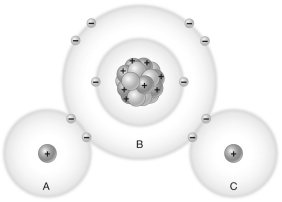
A)A only
B)B only
C)C only
D)A and C
A)A only
B)B only
C)C only
D)A and C
Question
Question
Question
Question
Question
Question
Question
Based on the water molecule pictured below,which of the labeled areas possesses a partial negative charge? 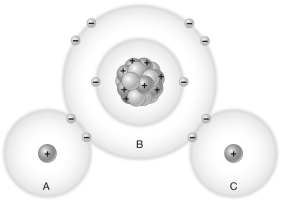
A)A only
B)B only
C)C only
D)A and C
A)A only
B)B only
C)C only
D)A and C
Question
Question
Question
Question
Question
Question
Question
Question
Question
Question
Question
Question
Question
Question
Question
Question
Question
Question
Question
Question
Question
Question
Question
Question
Question
Question
Question
Question
Question
Question
Question
Question
Question
Question
Question
Question
Question
Question
Question
Question
Question
Question
Question
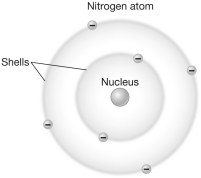
Nitrogen has an atomic number of 7 and an atomic mass number of 14.Using the image provided,diagram the location and number of protons,neutrons,and electrons in nitrogen.
Question
Question
Question
Question
Question
Question
Question
Question
Question
Question
Question
Question
Question
Question
Question
Question
Question

Unlock Deck
Sign up to unlock the cards in this deck!
Unlock Deck
Unlock Deck
1/78

Play

Full screen (f)
Deck 2: Chemistry of Life
1
Which of the following is likely to participate in ionic bonding?
A)Li⁺
B)H₂O
C)He
D)C₆H₁₂O₆
A)Li⁺
B)H₂O
C)He
D)C₆H₁₂O₆
A
2
Chemists often represent the structure of atoms using p,n,and e to indicate the number of protons,neutrons,and electrons.Which atom would have an atomic weight of 30?
A)15 p,15 n,15 e
B)10 p,10 n,10 e
C)15 p,0 n,15 e
D)0p,15n,15 e
A)15 p,15 n,15 e
B)10 p,10 n,10 e
C)15 p,0 n,15 e
D)0p,15n,15 e
A
3
Which of the following is a monomer that can be commonly made from components in Earth's atmosphere?
A)nucleotides
B)amino acids
C)triglycerides
D)monosaccharides
A)nucleotides
B)amino acids
C)triglycerides
D)monosaccharides
B
4
Nitrogen has seven protons,seven neutrons,and seven electrons.What is the atomic mass of nitrogen?
A)0
B)7
C)14
D)21
A)0
B)7
C)14
D)21
Unlock Deck
Unlock for access to all 78 flashcards in this deck.
Unlock Deck
k this deck
5
Which of the following is an organic compound?
A)water (H₂O)
B)methane (CH₄)
C)ammonia (NH₃)
D)carbon dioxide (CO₂)
A)water (H₂O)
B)methane (CH₄)
C)ammonia (NH₃)
D)carbon dioxide (CO₂)
Unlock Deck
Unlock for access to all 78 flashcards in this deck.
Unlock Deck
k this deck
6
Which of the following types of bonds hold hydrogen and oxygen atoms together within an individual water molecule?
A)hydrogen bond
B)peptide bond
C)polar covalent bond
D)ionic bond
A)hydrogen bond
B)peptide bond
C)polar covalent bond
D)ionic bond
Unlock Deck
Unlock for access to all 78 flashcards in this deck.
Unlock Deck
k this deck
7
The chemical reaction that represents photosynthesis is 6 H₂O + 6 CO₂ à C₆H₁₂O₆ + 6 O₂.What are the reactants?
A)H₂O and CO₂
B)C₆H₁₂O₆ and CO₂
C)H₂O and O₂
D)C₆H₁₂O₆ and CO₂
A)H₂O and CO₂
B)C₆H₁₂O₆ and CO₂
C)H₂O and O₂
D)C₆H₁₂O₆ and CO₂
Unlock Deck
Unlock for access to all 78 flashcards in this deck.
Unlock Deck
k this deck
8
Which of the following is correct about hydrogen bonds?
A)Individually,hydrogen bonds are very strong.
B)They form between neighboring oxygen atoms.
C)They do not involve binding with a hydrogen atom.
D)They form due to partial positive and partial negative charges on atoms.
A)Individually,hydrogen bonds are very strong.
B)They form between neighboring oxygen atoms.
C)They do not involve binding with a hydrogen atom.
D)They form due to partial positive and partial negative charges on atoms.
Unlock Deck
Unlock for access to all 78 flashcards in this deck.
Unlock Deck
k this deck
9
Carbon,hydrogen,and nitrogen are all examples of
A)compounds.
B)macromolecules.
C)elements.
D)amino acids.
A)compounds.
B)macromolecules.
C)elements.
D)amino acids.
Unlock Deck
Unlock for access to all 78 flashcards in this deck.
Unlock Deck
k this deck
10
How many atoms are present in a single molecule of C₈H₁₀N₄O₂?
A)4
B)8
C)12
D)24
A)4
B)8
C)12
D)24
Unlock Deck
Unlock for access to all 78 flashcards in this deck.
Unlock Deck
k this deck
11
If iodide ions (I⁻)were dissolved in water,they would be attracted to
A)A only
B)B only
C)C only
D)A and C
A)A only
B)B only
C)C only
D)A and C
Unlock Deck
Unlock for access to all 78 flashcards in this deck.
Unlock Deck
k this deck
12
Individual water molecules orient toward each other because of the ________ bonds that form between them.
A)covalent
B)peptide
C)hydrogen
D)ionic
A)covalent
B)peptide
C)hydrogen
D)ionic
Unlock Deck
Unlock for access to all 78 flashcards in this deck.
Unlock Deck
k this deck
13
Which of the following distinguishes ionic bonds from covalent bonds?
A)Ionic bonds form between the same two elements,whereas covalent bonds form between different elements.
B)Ionic bonds hold together compounds that do not dissolve in water,whereas covalent bonds hold together molecules that dissolve in water.
C)Ionic bonds hold together oppositely charged atoms,whereas covalent bonds hold together atoms that share electrons.
D)Ionic bonds consist of atoms with partial charges,whereas covalent bonds consist of atoms with full positive and negative charges.
A)Ionic bonds form between the same two elements,whereas covalent bonds form between different elements.
B)Ionic bonds hold together compounds that do not dissolve in water,whereas covalent bonds hold together molecules that dissolve in water.
C)Ionic bonds hold together oppositely charged atoms,whereas covalent bonds hold together atoms that share electrons.
D)Ionic bonds consist of atoms with partial charges,whereas covalent bonds consist of atoms with full positive and negative charges.
Unlock Deck
Unlock for access to all 78 flashcards in this deck.
Unlock Deck
k this deck
14
The central element found in organic molecules is
A)calcium.
B)carbon.
C)silicon.
D)sodium.
A)calcium.
B)carbon.
C)silicon.
D)sodium.
Unlock Deck
Unlock for access to all 78 flashcards in this deck.
Unlock Deck
k this deck
15
The subatomic particles that possess a single negative charge and surround the nucleus are the
A)isotopes.
B)protons.
C)neutrons.
D)electrons.
A)isotopes.
B)protons.
C)neutrons.
D)electrons.
Unlock Deck
Unlock for access to all 78 flashcards in this deck.
Unlock Deck
k this deck
16
In the chemical reaction that forms hydrogen peroxide (H₂O₂),hydrogen and oxygen share electrons creating ________ bonds between the two atoms.
A)covalent
B)peptide
C)hydrogen
D)ionic
A)covalent
B)peptide
C)hydrogen
D)ionic
Unlock Deck
Unlock for access to all 78 flashcards in this deck.
Unlock Deck
k this deck
17
A group of astronauts returning from outer space studied samples taken from their lunar landing.They found that one of their samples was coated with organic compounds.Which of the following statements must be correct about their samples?
A)The compounds must be covered with ammonia (NH₃)and water vapor.
B)The samples must lack water,but contain DNA.
C)The samples must contain carbon atoms.
D)The specimen must lack water,pesticides,and added hormones.
A)The compounds must be covered with ammonia (NH₃)and water vapor.
B)The samples must lack water,but contain DNA.
C)The samples must contain carbon atoms.
D)The specimen must lack water,pesticides,and added hormones.
Unlock Deck
Unlock for access to all 78 flashcards in this deck.
Unlock Deck
k this deck
18
Based on the water molecule pictured below,which of the labeled areas possesses a partial negative charge?
A)A only
B)B only
C)C only
D)A and C
A)A only
B)B only
C)C only
D)A and C
Unlock Deck
Unlock for access to all 78 flashcards in this deck.
Unlock Deck
k this deck
19
O₂,also termed atmospheric oxygen,is considered to be a molecule but not a compound.Why not?
A)It contains no covalent bonds.
B)It contains a double covalent bond but not a single covalent bond.
C)To be considered a compound there must be a minimum of three atoms;atmospheric oxygen is too small.
D)Compounds are defined as molecules constructed from two or more different elements.
A)It contains no covalent bonds.
B)It contains a double covalent bond but not a single covalent bond.
C)To be considered a compound there must be a minimum of three atoms;atmospheric oxygen is too small.
D)Compounds are defined as molecules constructed from two or more different elements.
Unlock Deck
Unlock for access to all 78 flashcards in this deck.
Unlock Deck
k this deck
20
When calcium (Ca++)and chloride (Cl⁻)interact with one another they bond using ________ bonds.
A)hydrogen
B)peptide
C)covalent
D)ionic
A)hydrogen
B)peptide
C)covalent
D)ionic
Unlock Deck
Unlock for access to all 78 flashcards in this deck.
Unlock Deck
k this deck
21
An acid is a polar substance that dissolves in water and
A)becomes nonpolar.
B)leaves behind an OH- ion.
C)accepts hydrogen ions from the solution.
D)donates hydrogen ions to the solution.
A)becomes nonpolar.
B)leaves behind an OH- ion.
C)accepts hydrogen ions from the solution.
D)donates hydrogen ions to the solution.
Unlock Deck
Unlock for access to all 78 flashcards in this deck.
Unlock Deck
k this deck
22
Oil and water do not mix together well because
A)water is polar and oil is nonpolar.
B)only identical molecules of the same chemical can easily mix together.
C)water has hydrogen bonds and oil is polar.
D)water and oil are covalently bonded together.
A)water is polar and oil is nonpolar.
B)only identical molecules of the same chemical can easily mix together.
C)water has hydrogen bonds and oil is polar.
D)water and oil are covalently bonded together.
Unlock Deck
Unlock for access to all 78 flashcards in this deck.
Unlock Deck
k this deck
23
Which of the following pieces of evidence would best demonstrate that a bacterium found on an asteroid originated in outer space?
A)the presence of volcanic ash on the outside of the bacterial cell
B)the absence of common gases found in Earth's atmosphere
C)the presence of right-handed amino acids in the bacterium's proteins
D)the absence of hydrogen bonds between water molecules in the bacterial cell
A)the presence of volcanic ash on the outside of the bacterial cell
B)the absence of common gases found in Earth's atmosphere
C)the presence of right-handed amino acids in the bacterium's proteins
D)the absence of hydrogen bonds between water molecules in the bacterial cell
Unlock Deck
Unlock for access to all 78 flashcards in this deck.
Unlock Deck
k this deck
24
In making your morning tea,you drop a sugar cube into the hot water.You stir the mixture but no longer see the sugar cube at the bottom of your mug.In this scenario,the sugar is
A)nonpolar.
B)the solvent.
C)an acid.
D)a solute.
A)nonpolar.
B)the solvent.
C)an acid.
D)a solute.
Unlock Deck
Unlock for access to all 78 flashcards in this deck.
Unlock Deck
k this deck
25
Which of the following amino acids begins the construction of all proteins in the human body?
A)methionine
B)leucine
C)proline
D)tryptophan
A)methionine
B)leucine
C)proline
D)tryptophan
Unlock Deck
Unlock for access to all 78 flashcards in this deck.
Unlock Deck
k this deck
26
Antibodies are an important class of human proteins that function in immune defense.If scientists fragmented antibodies under laboratory conditions,what chemical building blocks would they recover?
A)monosaccharides
B)phospholipids
C)amino acids
D)nitrogenous bases
A)monosaccharides
B)phospholipids
C)amino acids
D)nitrogenous bases
Unlock Deck
Unlock for access to all 78 flashcards in this deck.
Unlock Deck
k this deck
27
You are given an unknown substance and asked to determine whether it is polar or nonpolar.The easiest way to do this would be to
A)determine whether the compound is held together by hydrogen bonds.
B)determine the number of electrons in the compound's outer shell.
C)mix the compound with an ionic substance to see whether its bonds can withstand the pressure.
D)determine whether the compound dissolves in water.
A)determine whether the compound is held together by hydrogen bonds.
B)determine the number of electrons in the compound's outer shell.
C)mix the compound with an ionic substance to see whether its bonds can withstand the pressure.
D)determine whether the compound dissolves in water.
Unlock Deck
Unlock for access to all 78 flashcards in this deck.
Unlock Deck
k this deck
28
Of the following values,which indicates the most basic pH?
A)5
B)7
C)8
D)10
A)5
B)7
C)8
D)10
Unlock Deck
Unlock for access to all 78 flashcards in this deck.
Unlock Deck
k this deck
29
When sodium chloride (Na⁺Cl⁻)is dissolved in water,the sodium ion
A)is attracted to the hydrogen atoms of water molecules.
B)is repelled by the oxygen atoms of water molecules.
C)is attracted to other sodium ions that are being dissolved.
D)is attracted to the oxygen atoms of water molecules.
A)is attracted to the hydrogen atoms of water molecules.
B)is repelled by the oxygen atoms of water molecules.
C)is attracted to other sodium ions that are being dissolved.
D)is attracted to the oxygen atoms of water molecules.
Unlock Deck
Unlock for access to all 78 flashcards in this deck.
Unlock Deck
k this deck
30
The pH scale measures
A)the amount of water in a solution.
B)the likelihood that a solution will evaporate.
C)the concentration of hydrogen ions in a solution.
D)the number of atoms found within a molecule.
A)the amount of water in a solution.
B)the likelihood that a solution will evaporate.
C)the concentration of hydrogen ions in a solution.
D)the number of atoms found within a molecule.
Unlock Deck
Unlock for access to all 78 flashcards in this deck.
Unlock Deck
k this deck
31
How many different amino acids are used to build proteins?
A)90
B)20
C)19
D)4
A)90
B)20
C)19
D)4
Unlock Deck
Unlock for access to all 78 flashcards in this deck.
Unlock Deck
k this deck
32
Neighboring water molecules are held together with hydrogen bonds because
A)partially negatively charged oxygen atoms and partially positively charged hydrogen atoms on separate water molecules are attracted to one another.
B)the hydrogen and oxygen atoms within a single water molecule share electrons equally.
C)the oxygen and hydrogen atoms that participate in hydrogen bonding are sharing electons within a single valence shell.
D)ionic interactions repel water molecules from hydrophobic oils that may be present in a solution.
A)partially negatively charged oxygen atoms and partially positively charged hydrogen atoms on separate water molecules are attracted to one another.
B)the hydrogen and oxygen atoms within a single water molecule share electrons equally.
C)the oxygen and hydrogen atoms that participate in hydrogen bonding are sharing electons within a single valence shell.
D)ionic interactions repel water molecules from hydrophobic oils that may be present in a solution.
Unlock Deck
Unlock for access to all 78 flashcards in this deck.
Unlock Deck
k this deck
33
In living systems,a critical component of many reactions is
A)carbon dioxide.
B)calcium.
C)water.
D)hydrogen sulfide.
A)carbon dioxide.
B)calcium.
C)water.
D)hydrogen sulfide.
Unlock Deck
Unlock for access to all 78 flashcards in this deck.
Unlock Deck
k this deck
34
When ammonia (NH₃)is dissolved in a solution,it accepts hydrogen ions from its surroundings.Ammonia is therefore
A)a base.
B)an isotope.
C)a salt.
D)an acid.
A)a base.
B)an isotope.
C)a salt.
D)an acid.
Unlock Deck
Unlock for access to all 78 flashcards in this deck.
Unlock Deck
k this deck
35
A solution with a pH of 3 is
A)acidic.
B)basic.
C)nonpolar.
D)neutral.
A)acidic.
B)basic.
C)nonpolar.
D)neutral.
Unlock Deck
Unlock for access to all 78 flashcards in this deck.
Unlock Deck
k this deck
36
A carwash attendant offers to treat your windshield with a protective agent.This substance coats the glass,causing beads of water to easily roll off during a rain shower.Which of the following must be correct about the protective agent?
A)It resists temperature changes well.
B)It must be an acid.
C)It is a polar substance.
D)It must be hydrophobic.
A)It resists temperature changes well.
B)It must be an acid.
C)It is a polar substance.
D)It must be hydrophobic.
Unlock Deck
Unlock for access to all 78 flashcards in this deck.
Unlock Deck
k this deck
37
After adding a small amount of Solution A to Solution B,the pH of Solution B declines from 8 to 3.Solution A must contain
A)a salt.
B)a base.
C)water only.
D)an acid.
A)a salt.
B)a base.
C)water only.
D)an acid.
Unlock Deck
Unlock for access to all 78 flashcards in this deck.
Unlock Deck
k this deck
38
Which of the following solutions has the highest concentration of free H⁺ ions?
A)pH 1
B)pH 4
C)pH 7
D)pH 14
A)pH 1
B)pH 4
C)pH 7
D)pH 14
Unlock Deck
Unlock for access to all 78 flashcards in this deck.
Unlock Deck
k this deck
39
In making your morning tea,you drop a sugar cube into some hot water.You stir the mixture but no longer see the sugar cube at the bottom of your mug.Based on your observation of sugar dissolving in hot water,you properly conclude that the sugar is
A)hydrophobic.
B)nonpolar.
C)hydrophilic.
D)inert.
A)hydrophobic.
B)nonpolar.
C)hydrophilic.
D)inert.
Unlock Deck
Unlock for access to all 78 flashcards in this deck.
Unlock Deck
k this deck
40
Which of the following explains why ice floats on water?
A)The crystal structure of ice is more regular than that seen in liquid water.
B)The distance between water molecules in ice is greater than in liquid water.
C)The cool temperature of ice reduces the extent of molecular motion relative to liquid water.
D)When ice forms,the hydrogen bond in the water molecule becomes nonpolar;ice behaves like oil.
A)The crystal structure of ice is more regular than that seen in liquid water.
B)The distance between water molecules in ice is greater than in liquid water.
C)The cool temperature of ice reduces the extent of molecular motion relative to liquid water.
D)When ice forms,the hydrogen bond in the water molecule becomes nonpolar;ice behaves like oil.
Unlock Deck
Unlock for access to all 78 flashcards in this deck.
Unlock Deck
k this deck
41
A disaccharide consists of two
A)sugars.
B)hydrocarbons.
C)fatty acids.
D)amino acids.
A)sugars.
B)hydrocarbons.
C)fatty acids.
D)amino acids.
Unlock Deck
Unlock for access to all 78 flashcards in this deck.
Unlock Deck
k this deck
42
Macromolecules are typically formed by repetitively adding small monomers together.Which macromolecule is properly matched with the appropriate monomer?
A)polypeptide-amino acid
B)nucleic acid-amino acid
C)polysaccharide-nucleotide
D)triglyceride-cholesterol
A)polypeptide-amino acid
B)nucleic acid-amino acid
C)polysaccharide-nucleotide
D)triglyceride-cholesterol
Unlock Deck
Unlock for access to all 78 flashcards in this deck.
Unlock Deck
k this deck
43
Nucleotides
A)are the building blocks of proteins.
B)are involved in every chemical reaction in the cell.
C)form physical structures such as hair.
D)are the building blocks of nucleic acids.
A)are the building blocks of proteins.
B)are involved in every chemical reaction in the cell.
C)form physical structures such as hair.
D)are the building blocks of nucleic acids.
Unlock Deck
Unlock for access to all 78 flashcards in this deck.
Unlock Deck
k this deck
44
The positively charged subatomic particle is located in the ________.
Unlock Deck
Unlock for access to all 78 flashcards in this deck.
Unlock Deck
k this deck
45
Which of the following most commonly represents the shape associated with functional proteins?
A)a long linear chain of amino acids
B)individual amino acids that are not covalently joined together
C)coils and sheets of joined amino acids
D)three-dimensional folded chains of amino acids
A)a long linear chain of amino acids
B)individual amino acids that are not covalently joined together
C)coils and sheets of joined amino acids
D)three-dimensional folded chains of amino acids
Unlock Deck
Unlock for access to all 78 flashcards in this deck.
Unlock Deck
k this deck
46
We use soap to clean ourselves better than we could with water alone.Soaps contain phospholipids that are responsible for the cleansing action.Which of the following statements is the most likely explanation for how soaps work?
A)Phospholipids are ions and therefore mix with both the water and oily dirt.
B)Phospholipids are completely hydrophilic,and therefore oily dirt takes the place of the phospholipid molecules that would be dissolved in the rinse.
C)The phospholipid tail attaches to the oily dirt while the phospholipid head interacts with the rinse water and carriers the dirt (and soap)away with it.
D)The nonpolar fatty acid chains that make up the heads of the phospholipid are hydrophilic,and thus are repelled by the water.
A)Phospholipids are ions and therefore mix with both the water and oily dirt.
B)Phospholipids are completely hydrophilic,and therefore oily dirt takes the place of the phospholipid molecules that would be dissolved in the rinse.
C)The phospholipid tail attaches to the oily dirt while the phospholipid head interacts with the rinse water and carriers the dirt (and soap)away with it.
D)The nonpolar fatty acid chains that make up the heads of the phospholipid are hydrophilic,and thus are repelled by the water.
Unlock Deck
Unlock for access to all 78 flashcards in this deck.
Unlock Deck
k this deck
47
Which of the following is the largest in size?
A)glucose
B)protein
C)carbon atom
D)nucleotide
A)glucose
B)protein
C)carbon atom
D)nucleotide
Unlock Deck
Unlock for access to all 78 flashcards in this deck.
Unlock Deck
k this deck
48
Which of the following are composed of the same monomers?
A)proteins and DNA
B)RNA and cellulose
C)starch and cellulose
D)cholesterol and sucrose
A)proteins and DNA
B)RNA and cellulose
C)starch and cellulose
D)cholesterol and sucrose
Unlock Deck
Unlock for access to all 78 flashcards in this deck.
Unlock Deck
k this deck
49
Which of the following could be built solely from glucose molecules?
A)fatty acids
B)DNA
C)oils
D)starch
A)fatty acids
B)DNA
C)oils
D)starch
Unlock Deck
Unlock for access to all 78 flashcards in this deck.
Unlock Deck
k this deck
50
An atom that becomes charged due to the gain or loss of an electron is called a(n)________.
Unlock Deck
Unlock for access to all 78 flashcards in this deck.
Unlock Deck
k this deck
51
Your supervisor provides you with lipids,carbohydrates,proteins,and nucleic acids and asks you to determine their chemical components.Which of the following elements would you NOT expect to find in these items?
A)phosphorus
B)iron
C)hydrogen
D)nitrogen
A)phosphorus
B)iron
C)hydrogen
D)nitrogen
Unlock Deck
Unlock for access to all 78 flashcards in this deck.
Unlock Deck
k this deck
52
A scientist observed a chemical that changes to bright red in the presence of organic compounds containing nitrogen and phosphorus.To test this chemical,a set of test tubes each containing a purified sample of one of the following organic compounds is prepared.The chemical is then added to each tube.Which test tube will always turn bright red?
A)the tube containing nucleic acids
B)the tube containing proteins
C)the tube containing carbohydrates
D)the tube containing phospholipids
A)the tube containing nucleic acids
B)the tube containing proteins
C)the tube containing carbohydrates
D)the tube containing phospholipids
Unlock Deck
Unlock for access to all 78 flashcards in this deck.
Unlock Deck
k this deck
53
Carbon atoms are bound to each other by
A)ionic bonds.
B)polar bonds.
C)hydrogen bonds.
D)covalent bonds.
A)ionic bonds.
B)polar bonds.
C)hydrogen bonds.
D)covalent bonds.
Unlock Deck
Unlock for access to all 78 flashcards in this deck.
Unlock Deck
k this deck
54
An instrument that identifies chemicals based upon their weights is the ________.
Unlock Deck
Unlock for access to all 78 flashcards in this deck.
Unlock Deck
k this deck
55
Which of the following statements is true of proteins,carbohydrates,and nucleic acids?
A)All three are used to store genetic information.
B)None of these macromolecules mixes well with water.
C)Each of these molecules is built from a common set of monomers.
D)All of these molecules are primarily used as energy-storage molecules.
A)All three are used to store genetic information.
B)None of these macromolecules mixes well with water.
C)Each of these molecules is built from a common set of monomers.
D)All of these molecules are primarily used as energy-storage molecules.
Unlock Deck
Unlock for access to all 78 flashcards in this deck.
Unlock Deck
k this deck
56
Which of the following factors explains carbon's prominence in living systems?
A)Carbon forms weak reversible bonds.
B)Carbon bonds with up to three other atoms.
C)Carbon-based molecules can form long chains and rings.
D)Carbon does not form small molecules.
A)Carbon forms weak reversible bonds.
B)Carbon bonds with up to three other atoms.
C)Carbon-based molecules can form long chains and rings.
D)Carbon does not form small molecules.
Unlock Deck
Unlock for access to all 78 flashcards in this deck.
Unlock Deck
k this deck
57
In the laboratory you identify protein in a food item that you've tested.Which of the following must the food item also contain?
A)glucose
B)lipids
C)amino acids
D)nucleotides
A)glucose
B)lipids
C)amino acids
D)nucleotides
Unlock Deck
Unlock for access to all 78 flashcards in this deck.
Unlock Deck
k this deck
58
Molecules with an uneven distribution of charge are described as ________.
Unlock Deck
Unlock for access to all 78 flashcards in this deck.
Unlock Deck
k this deck
59
The genetic material found in all living things is made of building blocks called
A)nucleotides.
B)monosaccharides.
C)phospholipids.
D)steroids.
A)nucleotides.
B)monosaccharides.
C)phospholipids.
D)steroids.
Unlock Deck
Unlock for access to all 78 flashcards in this deck.
Unlock Deck
k this deck
60
One of the symptoms of kidney disease is the presence of proteins in a patient's urine.To quickly test for kidney disease using a urine sample,a doctor might add a chemical that causes a color change when
A)nitrogen,but not oxygen,is present.
B)nitrogen,but not phosphorus,is present.
C)only oxygen and hydrogen are present.
D)only carbon and hydrogen are present.
A)nitrogen,but not oxygen,is present.
B)nitrogen,but not phosphorus,is present.
C)only oxygen and hydrogen are present.
D)only carbon and hydrogen are present.
Unlock Deck
Unlock for access to all 78 flashcards in this deck.
Unlock Deck
k this deck
61
Nitrogen has an atomic number of 7 and an atomic mass number of 14.Using the image provided,diagram the location and number of protons,neutrons,and electrons in nitrogen.
Unlock Deck
Unlock for access to all 78 flashcards in this deck.
Unlock Deck
k this deck
62
The element ________ makes up the chemical backbone of most molecules on planet Earth.
Unlock Deck
Unlock for access to all 78 flashcards in this deck.
Unlock Deck
k this deck
63
MATCHING
Using the answer choices below (a through d), match the characteristic with its macromolecule class.
a.lipids
b.carbohydrates
c.nucleic acids
d.proteins
store and transmit genetic information
Using the answer choices below (a through d), match the characteristic with its macromolecule class.
a.lipids
b.carbohydrates
c.nucleic acids
d.proteins
store and transmit genetic information
Unlock Deck
Unlock for access to all 78 flashcards in this deck.
Unlock Deck
k this deck
64
The class of macromolecules that do NOT form true polymers are the ________.
Unlock Deck
Unlock for access to all 78 flashcards in this deck.
Unlock Deck
k this deck
65
MATCHING
Using the answer choices below (a through d), match the characteristic with its macromolecule class.
a.lipids
b.carbohydrates
c.nucleic acids
d.proteins
speed chemical reactions
Using the answer choices below (a through d), match the characteristic with its macromolecule class.
a.lipids
b.carbohydrates
c.nucleic acids
d.proteins
speed chemical reactions
Unlock Deck
Unlock for access to all 78 flashcards in this deck.
Unlock Deck
k this deck
66
MATCHING
Using the answer choices below (a through d), match the characteristic with its macromolecule class.
a.lipids
b.carbohydrates
c.nucleic acids
d.proteins
used to create steroid molecules like cholesterol
Using the answer choices below (a through d), match the characteristic with its macromolecule class.
a.lipids
b.carbohydrates
c.nucleic acids
d.proteins
used to create steroid molecules like cholesterol
Unlock Deck
Unlock for access to all 78 flashcards in this deck.
Unlock Deck
k this deck
67
During a study session,a Biology classmate holds up a bottle of water and mentions that there are both hydrogen bonds and covalent bonds found within the liquid.Explain your classmate's statement by describing the types of bonds that are found within your bottle of water.
Unlock Deck
Unlock for access to all 78 flashcards in this deck.
Unlock Deck
k this deck
68
________ molecules are nonpolar molecules that are repelled by water.
Unlock Deck
Unlock for access to all 78 flashcards in this deck.
Unlock Deck
k this deck
69
After giving a baby a bath,a new mom applies baby oil to her child's skin.How does the baby oil help the baby's skin to retain moisture throughout the day? Explain the chemical basis of water retention in this example.
Unlock Deck
Unlock for access to all 78 flashcards in this deck.
Unlock Deck
k this deck
70
MATCHING
Using the answer choices below (a through d), match the characteristic with its macromolecule class.
a.lipids
b.carbohydrates
c.nucleic acids
d.proteins
act as short-term energetic molecules
Using the answer choices below (a through d), match the characteristic with its macromolecule class.
a.lipids
b.carbohydrates
c.nucleic acids
d.proteins
act as short-term energetic molecules
Unlock Deck
Unlock for access to all 78 flashcards in this deck.
Unlock Deck
k this deck
71
For each of the major classes of macromolecules,indicate the basic subunits used to build it.
Unlock Deck
Unlock for access to all 78 flashcards in this deck.
Unlock Deck
k this deck
72
MATCHING
Using the answer choices below (a through d), match the characteristic with its macromolecule class.
a.lipids
b.carbohydrates
c.nucleic acids
d.proteins
function energy storage and structural support
Using the answer choices below (a through d), match the characteristic with its macromolecule class.
a.lipids
b.carbohydrates
c.nucleic acids
d.proteins
function energy storage and structural support
Unlock Deck
Unlock for access to all 78 flashcards in this deck.
Unlock Deck
k this deck
73
MATCHING
Using the answer choices below (a through d), match the characteristic with its macromolecule class.
a.lipids
b.carbohydrates
c.nucleic acids
d.proteins
form the major framework of biological membranes
Using the answer choices below (a through d), match the characteristic with its macromolecule class.
a.lipids
b.carbohydrates
c.nucleic acids
d.proteins
form the major framework of biological membranes
Unlock Deck
Unlock for access to all 78 flashcards in this deck.
Unlock Deck
k this deck
74
Lithium,with an atomic number of 3,has a tendency to lose electrons when it chemically bonds to another atom.What type of chemical bonds does lithium usually form with other atoms? Explain how you determined your answer.
Unlock Deck
Unlock for access to all 78 flashcards in this deck.
Unlock Deck
k this deck
75
There are four major classes of macromolecules that are found in living systems and each uses a carbon skeleton as its structural backbone.Why is carbon regularly assembled to make important biological molecules?
Unlock Deck
Unlock for access to all 78 flashcards in this deck.
Unlock Deck
k this deck
76
MATCHING
Using the answer choices below (a through d), match the characteristic with its macromolecule class.
a.lipids
b.carbohydrates
c.nucleic acids
d.proteins
participate in nearly every chemical reaction in living systems
Using the answer choices below (a through d), match the characteristic with its macromolecule class.
a.lipids
b.carbohydrates
c.nucleic acids
d.proteins
participate in nearly every chemical reaction in living systems
Unlock Deck
Unlock for access to all 78 flashcards in this deck.
Unlock Deck
k this deck
77
The number that represents neutrality on the pH scale is ________.
Unlock Deck
Unlock for access to all 78 flashcards in this deck.
Unlock Deck
k this deck
78
MATCHING
Using the answer choices below (a through d), match the characteristic with its macromolecule class.
a.lipids
b.carbohydrates
c.nucleic acids
d.proteins
exhibit various levels of structure
Using the answer choices below (a through d), match the characteristic with its macromolecule class.
a.lipids
b.carbohydrates
c.nucleic acids
d.proteins
exhibit various levels of structure
Unlock Deck
Unlock for access to all 78 flashcards in this deck.
Unlock Deck
k this deck
Unlock Deck
Unlock for access to all 78 flashcards in this deck.






