







 Chat with AI

Deck 7: Chromosomes and Human Genetics
Full screen (f)

Question

Question
Question
Question
Question
Question
Question
Question
Question
Question
Question
Question
Question
Question
Question
Question
Question
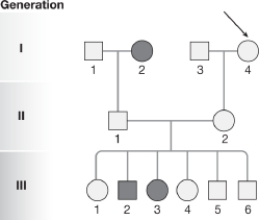
In the pedigree shown,the individual indicated represents a(n) 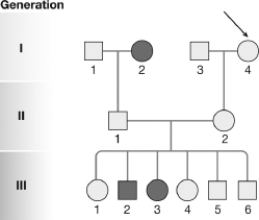
A)healthy male.
B)healthy female.
C)affected male.
D)affected female.
A)healthy male.
B)healthy female.
C)affected male.
D)affected female.
Question
Question
The karyotype shown is from a(n) 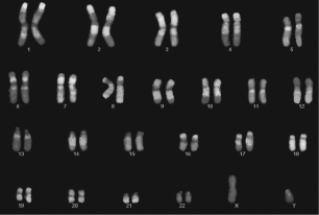
A)male.
B)female.
C)individual of undetermined sex.
D)individual with a genetic disorder.
A)male.
B)female.
C)individual of undetermined sex.
D)individual with a genetic disorder.
Question
Question
Question
Question
The pedigree shown diagrams an X-linked gene.The individual indicated is ________ for the gene. 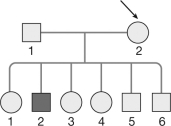
A)heterozygous
B)homozygous
C)autosomal
D)There is not enough information to determine the answer.
A)heterozygous
B)homozygous
C)autosomal
D)There is not enough information to determine the answer.
Question
Question
The genetic disorder followed through the pedigree shown is 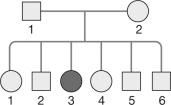
A)recessive and X-linked.
B)recessive and autosomal.
C)dominant and X-linked.
D)dominant and autosomal.
A)recessive and X-linked.
B)recessive and autosomal.
C)dominant and X-linked.
D)dominant and autosomal.
Question
Question
Question
Question
Question
Question
Question
Question
Question
Question
Question
Question
Question
Question
Which of the following is true of the genetic cross shown in the figure? 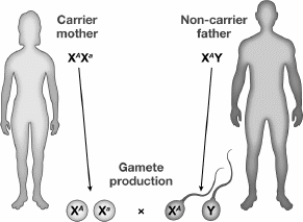
A)All of their daughters will be carriers.
B)Their sons have a 50 percent chance of being carriers.
C)Their sons have a 50 percent chance of having the disorder.
D)Their daughters have a 50 percent chance of having the disorder.
A)All of their daughters will be carriers.
B)Their sons have a 50 percent chance of being carriers.
C)Their sons have a 50 percent chance of having the disorder.
D)Their daughters have a 50 percent chance of having the disorder.
Question
Question
Question
Question
Question
Question
Question
The parents in the figure shown are carriers of a genetic disorder.Based on the Punnett square,the allele that causes the disorder must be 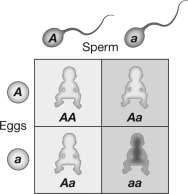
A)autosomal.
B)sex-linked.
C)dominant.
D)incompletely dominant.
A)autosomal.
B)sex-linked.
C)dominant.
D)incompletely dominant.
Question
Question
Question
If the male in generation II was affected,what would the pattern of inheritance most likely be? 
A)X-linked recessive
B)X-linked dominant
C)autosomal recessive
D)autosomal dominant
A)X-linked recessive
B)X-linked dominant
C)autosomal recessive
D)autosomal dominant
Question
Question
Question
Question
Question
Question
Question
Question
Question
Question
Question
Question
Question
Question
Question
Question
Does the pedigree shown most likely represent a condition that is autosomal recessive,dominant,or sex-linked? Explain your reasoning.
Question
Question
Question

Unlock Deck
Sign up to unlock the cards in this deck!
Unlock Deck
Unlock Deck
1/68

Play

Full screen (f)
Deck 7: Chromosomes and Human Genetics
1
Which of the following must be true for a woman who is heterozygous for a given gene?
A)She must be heterozygous for all genes.
B)All of her eggs will contain both of the alleles for that gene.
C)All of her eggs will contain one allele or the other,but not both alleles.
D)She carries a rare mutation.
A)She must be heterozygous for all genes.
B)All of her eggs will contain both of the alleles for that gene.
C)All of her eggs will contain one allele or the other,but not both alleles.
D)She carries a rare mutation.
C
2
A karyotype of an individual with mild mental retardation shows three copies of the X chromosome.If this individual decides to have children,how is her chromosomal abnormality likely to affect her offspring?
A)All of her children will inherit an extra copy of the X chromosome.
B)Any female children have a 75 percent chance of inheriting an extra copy of an X chromosome.
C)She will be unable to produce male children.
D)Half of her eggs will contain an extra copy of the X chromosome.
A)All of her children will inherit an extra copy of the X chromosome.
B)Any female children have a 75 percent chance of inheriting an extra copy of an X chromosome.
C)She will be unable to produce male children.
D)Half of her eggs will contain an extra copy of the X chromosome.
D
3
Two copies of the same gene on a single chromosome would indicate a(n)________ had occurred.
A)deletion
B)duplication
C)inversion
D)translocation
A)deletion
B)duplication
C)inversion
D)translocation
B
4
Chromosomes that are NOT involved in determining gender are known as
A)autosomes.
B)sex chromosomes.
C)homologues.
D)linked.
A)autosomes.
B)sex chromosomes.
C)homologues.
D)linked.
Unlock Deck
Unlock for access to all 68 flashcards in this deck.
Unlock Deck
k this deck
5
Humans have ________ pairs of homologous chromosomes.
A)46
B)23
C)22
D)44
A)46
B)23
C)22
D)44
Unlock Deck
Unlock for access to all 68 flashcards in this deck.
Unlock Deck
k this deck
6
The gender of a human child is determined by the
A)loci.
B)egg.
C)autosomes.
D)sperm.
A)loci.
B)egg.
C)autosomes.
D)sperm.
Unlock Deck
Unlock for access to all 68 flashcards in this deck.
Unlock Deck
k this deck
7
One chromosomal abnormality that is usually fatal is
A)a mutation in a gene.
B)an exchange of material between homologous chromosomes.
C)extra copies of sex chromosomes.
D)the addition of an extra autosomal chromosome.
A)a mutation in a gene.
B)an exchange of material between homologous chromosomes.
C)extra copies of sex chromosomes.
D)the addition of an extra autosomal chromosome.
Unlock Deck
Unlock for access to all 68 flashcards in this deck.
Unlock Deck
k this deck
8
Which of the following would explain two chromosomes in an individual cell that contain some,but not all,of the same genes at the same loci?
A)Both of the chromosomes are paternal.
B)Both of the chromosomes are maternal.
C)The chromosomes are from a common ancestor.
D)A chromosomal alteration has occurred.
A)Both of the chromosomes are paternal.
B)Both of the chromosomes are maternal.
C)The chromosomes are from a common ancestor.
D)A chromosomal alteration has occurred.
Unlock Deck
Unlock for access to all 68 flashcards in this deck.
Unlock Deck
k this deck
9
In humans,X-linked genetic diseases
A)are associated with autosomes.
B)tend to be expressed more in females than males.
C)only affect males.
D)tend to be expressed more in males than in females.
A)are associated with autosomes.
B)tend to be expressed more in females than males.
C)only affect males.
D)tend to be expressed more in males than in females.
Unlock Deck
Unlock for access to all 68 flashcards in this deck.
Unlock Deck
k this deck
10
What information is NOT visible in a karyotype?
A)the individual's sex
B)the number of autosomes
C)whether the individual carries genetic mutations
D)whether deletions have occurred
A)the individual's sex
B)the number of autosomes
C)whether the individual carries genetic mutations
D)whether deletions have occurred
Unlock Deck
Unlock for access to all 68 flashcards in this deck.
Unlock Deck
k this deck
11
Which of the following statements about homologous chromosomes is true?
A)There are 46 pairs in humans.
B)They contain the same genes in the same locations.
C)They contain identical alleles in the same location.
D)They are also known as sex chromosomes.
A)There are 46 pairs in humans.
B)They contain the same genes in the same locations.
C)They contain identical alleles in the same location.
D)They are also known as sex chromosomes.
Unlock Deck
Unlock for access to all 68 flashcards in this deck.
Unlock Deck
k this deck
12
During cell division a piece of a chromosome breaks off and reattaches to the same chromosome,but the piece is now in reverse order.How would this abnormality affect the chromosome?
A)An extra copy of the chromosome will be made to ensure normal function.
B)The inverted section will be deleted to prevent problems.
C)The chromosome will take on a circular configuration.
D)Genes in the section that was inverted could lose normal function.
A)An extra copy of the chromosome will be made to ensure normal function.
B)The inverted section will be deleted to prevent problems.
C)The chromosome will take on a circular configuration.
D)Genes in the section that was inverted could lose normal function.
Unlock Deck
Unlock for access to all 68 flashcards in this deck.
Unlock Deck
k this deck
13
In a karyotype of a male,which of the following would indicate an abnormality?
A)one X chromosome and one Y chromosome
B)three copies of chromosome 22
C)22 pairs of autosomes
D)a total of 46 chromosomes
A)one X chromosome and one Y chromosome
B)three copies of chromosome 22
C)22 pairs of autosomes
D)a total of 46 chromosomes
Unlock Deck
Unlock for access to all 68 flashcards in this deck.
Unlock Deck
k this deck
14
A karyotype from an adult male indicates a chromosomal abnormality,which does not affect his health.Which of the following abnormalities is most likely seen?
A)three copies of the X chromosome
B)no copies of chromosome 2
C)a translocation between chromosome 14 and chromosome 15
D)a deletion on chromosome 5
A)three copies of the X chromosome
B)no copies of chromosome 2
C)a translocation between chromosome 14 and chromosome 15
D)a deletion on chromosome 5
Unlock Deck
Unlock for access to all 68 flashcards in this deck.
Unlock Deck
k this deck
15
Which of the following genetic changes would NOT be passed from parent to child?
A)a mutation in a skin cell
B)the loss of a chromosome in a sperm cell
C)the addition of a chromosome in an egg cell
D)a translocation in a gamete
A)a mutation in a skin cell
B)the loss of a chromosome in a sperm cell
C)the addition of a chromosome in an egg cell
D)a translocation in a gamete
Unlock Deck
Unlock for access to all 68 flashcards in this deck.
Unlock Deck
k this deck
16
A karyotype shows a chromosomal abnormality that does not change the length of any of the chromosomes.Which abnormality is indicated?
A)inversion
B)deletion
C)translocation
D)duplication
A)inversion
B)deletion
C)translocation
D)duplication
Unlock Deck
Unlock for access to all 68 flashcards in this deck.
Unlock Deck
k this deck
17
In the pedigree shown,the individual indicated represents a(n)
A)healthy male.
B)healthy female.
C)affected male.
D)affected female.
A)healthy male.
B)healthy female.
C)affected male.
D)affected female.
Unlock Deck
Unlock for access to all 68 flashcards in this deck.
Unlock Deck
k this deck
18
A ________ is a chart that shows genetic relationships within a family over several generations.
A)karyotype
B)pedigree
C)Punnett square
D)single-gene disorder map
A)karyotype
B)pedigree
C)Punnett square
D)single-gene disorder map
Unlock Deck
Unlock for access to all 68 flashcards in this deck.
Unlock Deck
k this deck
19
The karyotype shown is from a(n)
A)male.
B)female.
C)individual of undetermined sex.
D)individual with a genetic disorder.
A)male.
B)female.
C)individual of undetermined sex.
D)individual with a genetic disorder.
Unlock Deck
Unlock for access to all 68 flashcards in this deck.
Unlock Deck
k this deck
20
On chromosomes within an individual,there are ________ alleles for a given gene found on ________ chromosomes.
A)two;homologous
B)four;maternal
C)four;paternal
D)two;Y
A)two;homologous
B)four;maternal
C)four;paternal
D)two;Y
Unlock Deck
Unlock for access to all 68 flashcards in this deck.
Unlock Deck
k this deck
21
Which of the following statements would indicate a pedigree that shows the inheritance pattern of a recessive X-linked disease?
A)Most affected individuals are females.
B)Most affected individuals are males.
C)Males and females are affected equally.
D)The disease is seen in every generation.
A)Most affected individuals are females.
B)Most affected individuals are males.
C)Males and females are affected equally.
D)The disease is seen in every generation.
Unlock Deck
Unlock for access to all 68 flashcards in this deck.
Unlock Deck
k this deck
22
The gene for a certain sex-linked trait is found only on the Y chromosome.If the male parent carries this gene,which of the following statements about the inheritance of that trait is true?
A)The trait will be expressed in 100 percent of the female offspring.
B)The trait will be expressed in 50 percent of the female offspring.
C)The trait will be expressed in 100 percent of the male offspring.
D)The trait will be expressed in 50 percent of the male offspring.
A)The trait will be expressed in 100 percent of the female offspring.
B)The trait will be expressed in 50 percent of the female offspring.
C)The trait will be expressed in 100 percent of the male offspring.
D)The trait will be expressed in 50 percent of the male offspring.
Unlock Deck
Unlock for access to all 68 flashcards in this deck.
Unlock Deck
k this deck
23
The pedigree shown diagrams an X-linked gene.The individual indicated is ________ for the gene.
A)heterozygous
B)homozygous
C)autosomal
D)There is not enough information to determine the answer.
A)heterozygous
B)homozygous
C)autosomal
D)There is not enough information to determine the answer.
Unlock Deck
Unlock for access to all 68 flashcards in this deck.
Unlock Deck
k this deck
24
Why are X-linked recessive genetic disorders more commonly seen in males?
A)For an X-linked disorder to occur,an individual must receive one allele only found on the X chromosome and a second allele found only on the Y chromosome,which females do not have.
B)Females must receive two copies of the recessive allele to exhibit the disorder,but males need only one copy.
C)The alleles of sex-linked genes are carried only on the Y chromosome,which females do not have.
D)Females only have X chromosomes and genes on the X chromosome are not expressed.
A)For an X-linked disorder to occur,an individual must receive one allele only found on the X chromosome and a second allele found only on the Y chromosome,which females do not have.
B)Females must receive two copies of the recessive allele to exhibit the disorder,but males need only one copy.
C)The alleles of sex-linked genes are carried only on the Y chromosome,which females do not have.
D)Females only have X chromosomes and genes on the X chromosome are not expressed.
Unlock Deck
Unlock for access to all 68 flashcards in this deck.
Unlock Deck
k this deck
25
The genetic disorder followed through the pedigree shown is
A)recessive and X-linked.
B)recessive and autosomal.
C)dominant and X-linked.
D)dominant and autosomal.
A)recessive and X-linked.
B)recessive and autosomal.
C)dominant and X-linked.
D)dominant and autosomal.
Unlock Deck
Unlock for access to all 68 flashcards in this deck.
Unlock Deck
k this deck
26
A carrier is an individual with a ________ genotype who does not express the recessive trait but can pass it along to offspring.
A)homozygous
B)heterozygous
C)recessive
D)dominant
A)homozygous
B)heterozygous
C)recessive
D)dominant
Unlock Deck
Unlock for access to all 68 flashcards in this deck.
Unlock Deck
k this deck
27
Most inherited human genetic disorders are inherited as ________ alleles.
A)dominant
B)recessive
C)homologous
D)sex-linked
A)dominant
B)recessive
C)homologous
D)sex-linked
Unlock Deck
Unlock for access to all 68 flashcards in this deck.
Unlock Deck
k this deck
28
Both members of a couple are carriers for a recessive disease allele.If the couple has four children,which of the following statements must be true?
A)One of the children has the disease.
B)Two of the children have the disease.
C)All of the male children have the disease.
D)Fifty percent of the children could be carriers of the disease.
A)One of the children has the disease.
B)Two of the children have the disease.
C)All of the male children have the disease.
D)Fifty percent of the children could be carriers of the disease.
Unlock Deck
Unlock for access to all 68 flashcards in this deck.
Unlock Deck
k this deck
29
Which of the following genotypes represents a human male?
A)XY
B)YY
C)XX
D)XO
A)XY
B)YY
C)XX
D)XO
Unlock Deck
Unlock for access to all 68 flashcards in this deck.
Unlock Deck
k this deck
30
In which of the following situations would looking at a pedigree be most useful?
A)An adopted boy is admitted to the hospital with recurrent vomiting.
B)A young girl is born with diminished hearing and a cleft palate.
C)Six unrelated individuals with similar symptoms are admitted to the hospital in a one-week period.
D)Three young boys who are first cousins show symptoms of a neurological disorder.
A)An adopted boy is admitted to the hospital with recurrent vomiting.
B)A young girl is born with diminished hearing and a cleft palate.
C)Six unrelated individuals with similar symptoms are admitted to the hospital in a one-week period.
D)Three young boys who are first cousins show symptoms of a neurological disorder.
Unlock Deck
Unlock for access to all 68 flashcards in this deck.
Unlock Deck
k this deck
31
A female who is a carrier of the sex-linked gene A has the genotype
A)Aa.
B)AA.
C)aa.
D)XAXa.
A)Aa.
B)AA.
C)aa.
D)XAXa.
Unlock Deck
Unlock for access to all 68 flashcards in this deck.
Unlock Deck
k this deck
32
Because an individual with an XX genotype is a female,is an individual with an XO (no second sex chromosome)a male?
A)No,because the X always overrides the Y and makes that embryo female.
B)No,because the Y chromosome contains the gene that makes an embryo male.
C)Yes,because if there is only one X,the embryo cannot become female.
D)Yes,because all embryos start off as males.
A)No,because the X always overrides the Y and makes that embryo female.
B)No,because the Y chromosome contains the gene that makes an embryo male.
C)Yes,because if there is only one X,the embryo cannot become female.
D)Yes,because all embryos start off as males.
Unlock Deck
Unlock for access to all 68 flashcards in this deck.
Unlock Deck
k this deck
33
Autosomal dominant diseases are exhibited by anyone who carries at least one dominant allele for that gene.How is it that dominant lethal genes,such as the one that causes Huntington disease,can persist in a population?
A)The disease-causing allele can "hide" in the heterozygous condition.
B)The disease develops only under the influence of other genes.
C)These diseases usually take effect later in life after people have had children.
D)The environment plays a large role in determining whether the gene is expressed.
A)The disease-causing allele can "hide" in the heterozygous condition.
B)The disease develops only under the influence of other genes.
C)These diseases usually take effect later in life after people have had children.
D)The environment plays a large role in determining whether the gene is expressed.
Unlock Deck
Unlock for access to all 68 flashcards in this deck.
Unlock Deck
k this deck
34
If a father is affected by an X-linked condition and the mother is a carrier,what is the probability of their children being affected?
A)All sons will be affected.
B)Half of the sons will be affected.
C)All daughters will be affected.
D)Half of the sons will be carriers.
A)All sons will be affected.
B)Half of the sons will be affected.
C)All daughters will be affected.
D)Half of the sons will be carriers.
Unlock Deck
Unlock for access to all 68 flashcards in this deck.
Unlock Deck
k this deck
35
A person is genetically XX and develops as a male.How can this be explained?
A)In humans,males are XX.
B)An error in karyotyping this individual must have occurred because XX individuals cannot develop into a male.
C)A piece of a Y chromosome has become attached to one of the X chromosomes.
D)The SRY gene was deleted in this individual.
A)In humans,males are XX.
B)An error in karyotyping this individual must have occurred because XX individuals cannot develop into a male.
C)A piece of a Y chromosome has become attached to one of the X chromosomes.
D)The SRY gene was deleted in this individual.
Unlock Deck
Unlock for access to all 68 flashcards in this deck.
Unlock Deck
k this deck
36
In humans,the "master sex switch" that determines whether an embryo will become a male is the
A)X chromosome.
B)locus.
C)SRY gene.
D)androgen switch.
A)X chromosome.
B)locus.
C)SRY gene.
D)androgen switch.
Unlock Deck
Unlock for access to all 68 flashcards in this deck.
Unlock Deck
k this deck
37
Most inherited human disorders are the result of
A)recessive mutations of genes located on autosomes.
B)dominant mutations of genes located on the X chromosome.
C)recessive mutations of genes located on the Y chromosome.
D)simultaneous mutations of the same gene on homologous chromosomes.
A)recessive mutations of genes located on autosomes.
B)dominant mutations of genes located on the X chromosome.
C)recessive mutations of genes located on the Y chromosome.
D)simultaneous mutations of the same gene on homologous chromosomes.
Unlock Deck
Unlock for access to all 68 flashcards in this deck.
Unlock Deck
k this deck
38
An allele that appears more frequently in males is most likely
A)dominant.
B)nonhomologous.
C)autosomal.
D)sex-linked.
A)dominant.
B)nonhomologous.
C)autosomal.
D)sex-linked.
Unlock Deck
Unlock for access to all 68 flashcards in this deck.
Unlock Deck
k this deck
39
Which of the following is true of the genetic cross shown in the figure?
A)All of their daughters will be carriers.
B)Their sons have a 50 percent chance of being carriers.
C)Their sons have a 50 percent chance of having the disorder.
D)Their daughters have a 50 percent chance of having the disorder.
A)All of their daughters will be carriers.
B)Their sons have a 50 percent chance of being carriers.
C)Their sons have a 50 percent chance of having the disorder.
D)Their daughters have a 50 percent chance of having the disorder.
Unlock Deck
Unlock for access to all 68 flashcards in this deck.
Unlock Deck
k this deck
40
The X chromosome in humans is
A)found as a pair in females.
B)the only human sex chromosome.
C)present only in females.
D)always found in single copy.
A)found as a pair in females.
B)the only human sex chromosome.
C)present only in females.
D)always found in single copy.
Unlock Deck
Unlock for access to all 68 flashcards in this deck.
Unlock Deck
k this deck
41
Which of the following information is available in a Punnett square showing the inheritance pattern for an autosomal recessive disorder?
A)percentage of males likely to be affected by the disorder
B)percentage of females likely to be affected by the disorder
C)percentage of all children likely to be affected by the disorder
D)number of children born to the two parents
A)percentage of males likely to be affected by the disorder
B)percentage of females likely to be affected by the disorder
C)percentage of all children likely to be affected by the disorder
D)number of children born to the two parents
Unlock Deck
Unlock for access to all 68 flashcards in this deck.
Unlock Deck
k this deck
42
If a genetic disorder is caused by a dominant allele,individuals with which of the following genotypes would be affected by the disorder?
A)AA and aa
B)aa and Aa
C)AA and Aa
D)AA,Aa,and aa
A)AA and aa
B)aa and Aa
C)AA and Aa
D)AA,Aa,and aa
Unlock Deck
Unlock for access to all 68 flashcards in this deck.
Unlock Deck
k this deck
43
What characteristics of inheritance would allow you to distinguish whether a disorder is recessive autosomal,dominant autosomal,or sex-linked?
Unlock Deck
Unlock for access to all 68 flashcards in this deck.
Unlock Deck
k this deck
44
Human males have one chromosome that females do not,known as the ________ chromosome.
Unlock Deck
Unlock for access to all 68 flashcards in this deck.
Unlock Deck
k this deck
45
Among children with parents who are both carriers of Tay-Sachs,an autosomal recessive disorder,chances are that
A)75 percent will be carriers.
B)50 percent will die in a few years.
C)75 percent will not carry the recessive Tay-Sachs's allele.
D)50 percent will be carriers.
A)75 percent will be carriers.
B)50 percent will die in a few years.
C)75 percent will not carry the recessive Tay-Sachs's allele.
D)50 percent will be carriers.
Unlock Deck
Unlock for access to all 68 flashcards in this deck.
Unlock Deck
k this deck
46
The parents in the figure shown are carriers of a genetic disorder.Based on the Punnett square,the allele that causes the disorder must be
A)autosomal.
B)sex-linked.
C)dominant.
D)incompletely dominant.
A)autosomal.
B)sex-linked.
C)dominant.
D)incompletely dominant.
Unlock Deck
Unlock for access to all 68 flashcards in this deck.
Unlock Deck
k this deck
47
An individual who carries one copy of a recessive mutated allele and one normal copy is referred to as a genetic ________.
Unlock Deck
Unlock for access to all 68 flashcards in this deck.
Unlock Deck
k this deck
48
Every gene in a human occupies a specific position or ________ in their chromosomes.
Unlock Deck
Unlock for access to all 68 flashcards in this deck.
Unlock Deck
k this deck
49
If the male in generation II was affected,what would the pattern of inheritance most likely be?
A)X-linked recessive
B)X-linked dominant
C)autosomal recessive
D)autosomal dominant
A)X-linked recessive
B)X-linked dominant
C)autosomal recessive
D)autosomal dominant
Unlock Deck
Unlock for access to all 68 flashcards in this deck.
Unlock Deck
k this deck
50
If two parents are heterozygous for an autosomal recessive disease,
A)they are both considered genetic carriers for the disease.
B)their children have no chance of inheriting the disease.
C)their children have a 50 percent chance of inheriting the disease.
D)all of their children will also be heterozygous.
A)they are both considered genetic carriers for the disease.
B)their children have no chance of inheriting the disease.
C)their children have a 50 percent chance of inheriting the disease.
D)all of their children will also be heterozygous.
Unlock Deck
Unlock for access to all 68 flashcards in this deck.
Unlock Deck
k this deck
51
Sickle-cell disease is an inherited chronic blood disease caused by an autosomal recessive allele.Suppose a man who is homozygous recessive for the sickle-cell gene fathers a child by a woman who is a carrier for sickle-cell.What are the chances their children will exhibit the disease?
A)0 percent
B)25 percent
C)50 percent
D)75 percent
A)0 percent
B)25 percent
C)50 percent
D)75 percent
Unlock Deck
Unlock for access to all 68 flashcards in this deck.
Unlock Deck
k this deck
52
Explain how two brothers might have different X chromosomes,but they must share identical Y chromosomes.
Unlock Deck
Unlock for access to all 68 flashcards in this deck.
Unlock Deck
k this deck
53
Except for the sex chromosomes,all the chromosomes shown in a karyotype are numbered and are called ________.
Unlock Deck
Unlock for access to all 68 flashcards in this deck.
Unlock Deck
k this deck
54
Would a karyotype for a human male be considered normal if it shows 45 autosomes and a single pair of sex chromosomes? Explain your reasoning.
Unlock Deck
Unlock for access to all 68 flashcards in this deck.
Unlock Deck
k this deck
55
A parent who is a carrier for the recessive autosomal disorder B has the genotype ________.
Unlock Deck
Unlock for access to all 68 flashcards in this deck.
Unlock Deck
k this deck
56
If a recessive allele causes a fatal disease that kills the affected individual before he or she can reproduce,why doesn't that allele quickly become extinct in the population?
A)Alleles are never lost from a population.
B)The homozygous dominant individuals protect the recessive allele in their genomes.
C)The recessive allele is carried in the genome of heterozygotes,who do not suffer from the disease.
D)The homozygous recessive individuals give their alleles to other individuals before they die from the disease.
A)Alleles are never lost from a population.
B)The homozygous dominant individuals protect the recessive allele in their genomes.
C)The recessive allele is carried in the genome of heterozygotes,who do not suffer from the disease.
D)The homozygous recessive individuals give their alleles to other individuals before they die from the disease.
Unlock Deck
Unlock for access to all 68 flashcards in this deck.
Unlock Deck
k this deck
57
What information in a pedigree would indicate a condition is likely dominant?
A)Twenty-five percent of the individuals in the pedigree have the condition.
B)Two-thirds of the affected individuals are females.
C)None of the affected individuals have unaffected parents.
D)Most of the affected individuals are males.
A)Twenty-five percent of the individuals in the pedigree have the condition.
B)Two-thirds of the affected individuals are females.
C)None of the affected individuals have unaffected parents.
D)Most of the affected individuals are males.
Unlock Deck
Unlock for access to all 68 flashcards in this deck.
Unlock Deck
k this deck
58
A man with a translocation in a chromosome that does not affect gene function may not realize he has a translocation until he attempts to have a child.Explain how a translocation that does not affect the individual may become problematic during reproduction.
Unlock Deck
Unlock for access to all 68 flashcards in this deck.
Unlock Deck
k this deck
59
If an individual has two alleles at a given locus that are different,the individual is said to be ________ for the gene.
Unlock Deck
Unlock for access to all 68 flashcards in this deck.
Unlock Deck
k this deck
60
An allele that "hides" in heterozygous carriers is called a ________ allele.
Unlock Deck
Unlock for access to all 68 flashcards in this deck.
Unlock Deck
k this deck
61
Match each correct statement to the set of alleles listed below.
a.Bb
b.XaY
c.XAXa
d.bb
e.XAXA
f.BB
g.XAY
female carrier of a sex-linked disease
a.Bb
b.XaY
c.XAXa
d.bb
e.XAXA
f.BB
g.XAY
female carrier of a sex-linked disease
Unlock Deck
Unlock for access to all 68 flashcards in this deck.
Unlock Deck
k this deck
62
If DNA testing reveals that you carry a single allele for a particular genetic disorder but you do not currently show symptoms of the disease,is it possible that you will develop the disease later in life? Explain.
Unlock Deck
Unlock for access to all 68 flashcards in this deck.
Unlock Deck
k this deck
63
Why are dominant genetic disorders more rare than recessive disorders?
Unlock Deck
Unlock for access to all 68 flashcards in this deck.
Unlock Deck
k this deck
64
Match each correct statement to the set of alleles listed below.
a.Bb
b.XaY
c.XAXa
d.bb
e.XAXA
f.BB
g.XAY
recessive homozygous for an autosomal gene
a.Bb
b.XaY
c.XAXa
d.bb
e.XAXA
f.BB
g.XAY
recessive homozygous for an autosomal gene
Unlock Deck
Unlock for access to all 68 flashcards in this deck.
Unlock Deck
k this deck
65
Does the pedigree shown most likely represent a condition that is autosomal recessive,dominant,or sex-linked? Explain your reasoning.
Unlock Deck
Unlock for access to all 68 flashcards in this deck.
Unlock Deck
k this deck
66
Match each correct statement to the set of alleles listed below.
a.Bb
b.XaY
c.XAXa
d.bb
e.XAXA
f.BB
g.XAY
heterozygous for an autosomal gene
a.Bb
b.XaY
c.XAXa
d.bb
e.XAXA
f.BB
g.XAY
heterozygous for an autosomal gene
Unlock Deck
Unlock for access to all 68 flashcards in this deck.
Unlock Deck
k this deck
67
Match each correct statement to the set of alleles listed below.
a.Bb
b.XaY
c.XAXa
d.bb
e.XAXA
f.BB
g.XAY
male affected by recessive sex-linked disease
a.Bb
b.XaY
c.XAXa
d.bb
e.XAXA
f.BB
g.XAY
male affected by recessive sex-linked disease
Unlock Deck
Unlock for access to all 68 flashcards in this deck.
Unlock Deck
k this deck
68
Match each correct statement to the set of alleles listed below.
a.Bb
b.XaY
c.XAXa
d.bb
e.XAXA
f.BB
g.XAY
dominant homozygous for an autosomal gene
a.Bb
b.XaY
c.XAXa
d.bb
e.XAXA
f.BB
g.XAY
dominant homozygous for an autosomal gene
Unlock Deck
Unlock for access to all 68 flashcards in this deck.
Unlock Deck
k this deck
Unlock Deck
Unlock for access to all 68 flashcards in this deck.






