







 Chat with AI

Deck 15: Epidemiology and Nosocomial Infections
Full screen (f)

Question

Question
Question
Question
Question
Question
Question
Question
Question
Question
Question
Question
Question
Question
Question
Question
Question
Question
Question
Question
Question
Question
Question
Question
Question
Question
Question
Question
Question
Question
Question
Question
Question
Question
Question
Question
Question
Question
Question
Question
Question
What type of transmission is involved with curve "B"? 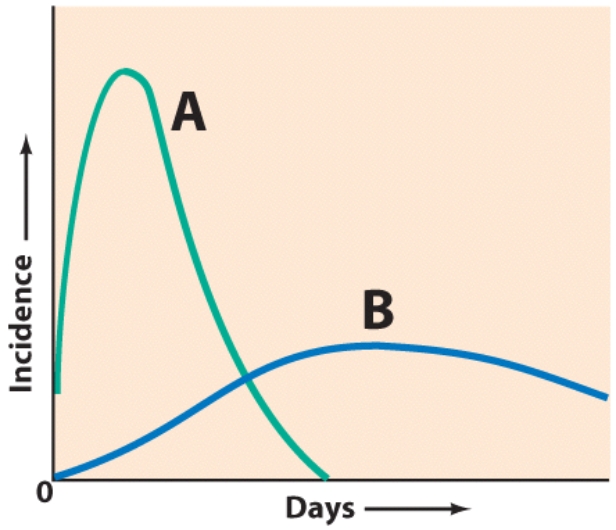
A)Vertical transmission
B)Horizontal transmission
C)Fecal-oral
D)Viral
A)Vertical transmission
B)Horizontal transmission
C)Fecal-oral
D)Viral
Question
Question
Question
Question
Question
Question
Which of the following curves represents ongoing spread of new cases of a disease? 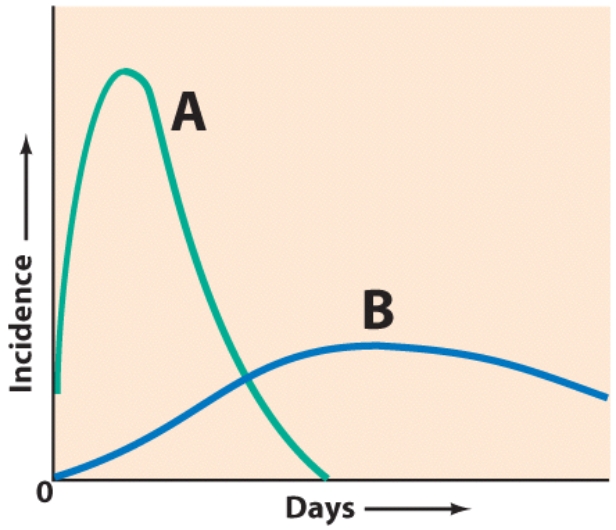
A)A
B)B
C)Both A and B are correct
D)Neither A nor B are correct
A)A
B)B
C)Both A and B are correct
D)Neither A nor B are correct
Question
Question
Question
Question
Question
Question
Question
Question

Unlock Deck
Sign up to unlock the cards in this deck!
Unlock Deck
Unlock Deck
1/55

Play

Full screen (f)
Deck 15: Epidemiology and Nosocomial Infections
1
An infectious disease that occurs in a random and unpredictable manner is called:
A)sporadic
B)pandemic
C)epidemic
D)propagated epidemic
A)sporadic
B)pandemic
C)epidemic
D)propagated epidemic
A
2
A site where microorganisms can persist and thus maintain the ability to cause infection:
A)Control group
B)Portal of exit
C)Reservoir
D)Portal of entry
A)Control group
B)Portal of exit
C)Reservoir
D)Portal of entry
C
3
All of the following pertain to analytical studies except:
A)control groups
B)retrospective studies
C)cause-and-effect relationships of disease occurrences
D)data on microbe pathogenicity
A)control groups
B)retrospective studies
C)cause-and-effect relationships of disease occurrences
D)data on microbe pathogenicity
D
4
The incidence rate of chicken pox in the United States:
A)includes both old and newly diagnosed cases of disease
B)shows a pattern of pandemics
C)has been increasing for the last ten years
D)is difficult to assess since the disease is no longer "notifiable"
A)includes both old and newly diagnosed cases of disease
B)shows a pattern of pandemics
C)has been increasing for the last ten years
D)is difficult to assess since the disease is no longer "notifiable"
Unlock Deck
Unlock for access to all 55 flashcards in this deck.
Unlock Deck
k this deck
5
The total number of people infected within a population at a given time is the:
A)incidence
B)mortality
C)prevalence
D)morbidity
A)incidence
B)mortality
C)prevalence
D)morbidity
Unlock Deck
Unlock for access to all 55 flashcards in this deck.
Unlock Deck
k this deck
6
An epidemic that arises from horizontal transmission and where the number of cases slowly rises and then falls is said to be of what type?
A)Common-source outbreak
B)Sporadic
C)Pandemic
D)Propagated epidemic
A)Common-source outbreak
B)Sporadic
C)Pandemic
D)Propagated epidemic
Unlock Deck
Unlock for access to all 55 flashcards in this deck.
Unlock Deck
k this deck
7
The worldwide spread of an infectious disease is called a/an:
A)epidemic
B)endemic
C)sporadic
D)pandemic
A)epidemic
B)endemic
C)sporadic
D)pandemic
Unlock Deck
Unlock for access to all 55 flashcards in this deck.
Unlock Deck
k this deck
8
An epidemiologist that studies the number of cases of a disease,those segments of the population affected by a disease and the locations and time periods of a disease while the outbreak occurs deals with what type of epidemiology?
A)Analytical
B)Descriptive
C)Experimental
D)None of these choices
A)Analytical
B)Descriptive
C)Experimental
D)None of these choices
Unlock Deck
Unlock for access to all 55 flashcards in this deck.
Unlock Deck
k this deck
9
Mortality rate is typically expressed as the _____.
A)number of illnesses from a disease per 100,000 people in the population per year
B)fraction of susceptible population that dies
C)speed at which a disease spreads through a population
D)number of deaths from a disease per 100,000 people in the population per year
A)number of illnesses from a disease per 100,000 people in the population per year
B)fraction of susceptible population that dies
C)speed at which a disease spreads through a population
D)number of deaths from a disease per 100,000 people in the population per year
Unlock Deck
Unlock for access to all 55 flashcards in this deck.
Unlock Deck
k this deck
10
Factors that increase the likelihood of an epidemic include all of the following except:
A)overcrowding
B)migration
C)lack of vaccination
D)access to medical care
A)overcrowding
B)migration
C)lack of vaccination
D)access to medical care
Unlock Deck
Unlock for access to all 55 flashcards in this deck.
Unlock Deck
k this deck
11
A non-medicinal substance that has no effect on an individual,but the individual believes is a real treatment is known as a/an:
A)index case
B)human reservoir
C)zoonosis
D)placebo
A)index case
B)human reservoir
C)zoonosis
D)placebo
Unlock Deck
Unlock for access to all 55 flashcards in this deck.
Unlock Deck
k this deck
12
Which of following is a true statement about outbreaks?
A)An outbreak is considered vastly more serious than an epidemic.
B)A propagated outbreak arises from contact with contaminated substances.
C)In common-source outbreaks new cases are continually seen during time.
D)Outbreaks can be classified by the rate of increase of new cases.
A)An outbreak is considered vastly more serious than an epidemic.
B)A propagated outbreak arises from contact with contaminated substances.
C)In common-source outbreaks new cases are continually seen during time.
D)Outbreaks can be classified by the rate of increase of new cases.
Unlock Deck
Unlock for access to all 55 flashcards in this deck.
Unlock Deck
k this deck
13
An epidemiological study that tests a hypothesis is referred to as what type of study?
A)Analytical
B)Experimental
C)Prospective
D)Descriptive
A)Analytical
B)Experimental
C)Prospective
D)Descriptive
Unlock Deck
Unlock for access to all 55 flashcards in this deck.
Unlock Deck
k this deck
14
An infectious disease in which transmission can occur during the incubation period of disease is considered to be:
A)chronic
B)acute
C)carrier
D)communicable
A)chronic
B)acute
C)carrier
D)communicable
Unlock Deck
Unlock for access to all 55 flashcards in this deck.
Unlock Deck
k this deck
15
A disease that breaks out in explosive proportions within a population is called:
A)systemic
B)endemic
C)epidemic
D)pandemic
A)systemic
B)endemic
C)epidemic
D)pandemic
Unlock Deck
Unlock for access to all 55 flashcards in this deck.
Unlock Deck
k this deck
16
The relative number of individuals affected adversely by a particular disease during a set period of time within a given population.
A)Epidemic
B)Mortality
C)Surveillance
D)Morbidity
A)Epidemic
B)Mortality
C)Surveillance
D)Morbidity
Unlock Deck
Unlock for access to all 55 flashcards in this deck.
Unlock Deck
k this deck
17
The study of factors and mechanisms of disease frequency and spread within a population is known as:
A)Immunology
B)Pathology
C)Epidemiology
D)Etiology
A)Immunology
B)Pathology
C)Epidemiology
D)Etiology
Unlock Deck
Unlock for access to all 55 flashcards in this deck.
Unlock Deck
k this deck
18
All of the following are important when considering a descriptive epidemiological study except the:
A)locations of disease cases
B)number of cases of a disease
C)time periods of disease development
D)cause-and-effect relationships of disease cases
A)locations of disease cases
B)number of cases of a disease
C)time periods of disease development
D)cause-and-effect relationships of disease cases
Unlock Deck
Unlock for access to all 55 flashcards in this deck.
Unlock Deck
k this deck
19
An infection in which the signs and symptoms are not recognized readily because they are too mild is called a/an:
A)carrier
B)chronic infection
C)acute disease
D)subclinical infection
A)carrier
B)chronic infection
C)acute disease
D)subclinical infection
Unlock Deck
Unlock for access to all 55 flashcards in this deck.
Unlock Deck
k this deck
20
An index case:
A)refers to the first case where an infectious disease kills a susceptible host
B)is necessary for a common source outbreak
C)defines a propagated epidemic
D)refers to the first case of an infectious disease outbreak to be identified
A)refers to the first case where an infectious disease kills a susceptible host
B)is necessary for a common source outbreak
C)defines a propagated epidemic
D)refers to the first case of an infectious disease outbreak to be identified
Unlock Deck
Unlock for access to all 55 flashcards in this deck.
Unlock Deck
k this deck
21
Waterborne transmission of pathogens involving water contaminated by raw sewage is an example of what mode of transmission?
A)Indirect fecal-oral
B)Direct fecal-oral
C)Vertical
D)Droplet nuclei
A)Indirect fecal-oral
B)Direct fecal-oral
C)Vertical
D)Droplet nuclei
Unlock Deck
Unlock for access to all 55 flashcards in this deck.
Unlock Deck
k this deck
22
Pathogenic microorganisms that enter the body via contaminated food or water typically infect:
A)the respiratory system
B)the skin
C)only vertebrate animals
D)the digestive system
A)the respiratory system
B)the skin
C)only vertebrate animals
D)the digestive system
Unlock Deck
Unlock for access to all 55 flashcards in this deck.
Unlock Deck
k this deck
23
Transmission of pathogens from person to person via sneezing,coughing or by the affected individual speaking near (less than 1 meter)a susceptible individual are examples of what mode of transmission?
A)Vertical transmission
B)Indirect contact transmission
C)Direct fecal-oral transmission
D)Contact transmission
A)Vertical transmission
B)Indirect contact transmission
C)Direct fecal-oral transmission
D)Contact transmission
Unlock Deck
Unlock for access to all 55 flashcards in this deck.
Unlock Deck
k this deck
24
Which of the following pertain to foodborne transmission of infectious agents?
A)Poorly treated drinking water
B)Microorganisms in dry air
C)Properly refrigerated foods
D)Unsanitary food preparation
A)Poorly treated drinking water
B)Microorganisms in dry air
C)Properly refrigerated foods
D)Unsanitary food preparation
Unlock Deck
Unlock for access to all 55 flashcards in this deck.
Unlock Deck
k this deck
25
Pathogenic microorganisms that are spread from person to person by unwashed hands contaminated by fecal matter,is an example of what mode of transmission?
A)Fomite transmission
B)Indirect contact
C)Droplet transmission
D)Direct transmission
A)Fomite transmission
B)Indirect contact
C)Droplet transmission
D)Direct transmission
Unlock Deck
Unlock for access to all 55 flashcards in this deck.
Unlock Deck
k this deck
26
All of the following are associated with Yersinia pestis except:
A)causes plague
B)has a 100% mortality when acquired through respiratory route
C)when acquired through the respiratory route causes bubonic plague
D)has a 50% mortality when acquired through a flea bite
A)causes plague
B)has a 100% mortality when acquired through respiratory route
C)when acquired through the respiratory route causes bubonic plague
D)has a 50% mortality when acquired through a flea bite
Unlock Deck
Unlock for access to all 55 flashcards in this deck.
Unlock Deck
k this deck
27
All of the following infectious diseases can occur in the fetus when the causative agents cross the placenta except:
A)AIDS
B)syphilis
C)rubella
D)pneumonia
A)AIDS
B)syphilis
C)rubella
D)pneumonia
Unlock Deck
Unlock for access to all 55 flashcards in this deck.
Unlock Deck
k this deck
28
Reservoirs of infections include:
A)humans
B)non-human vertebrate animals
C)water and soil
D)all of the above
A)humans
B)non-human vertebrate animals
C)water and soil
D)all of the above
Unlock Deck
Unlock for access to all 55 flashcards in this deck.
Unlock Deck
k this deck
29
Pathogens that are delivered by insects follow what mode of disease transmission?
A)Airborne
B)Foodborne
C)Vehicleborne
D)Vectorborne
A)Airborne
B)Foodborne
C)Vehicleborne
D)Vectorborne
Unlock Deck
Unlock for access to all 55 flashcards in this deck.
Unlock Deck
k this deck
30
Congenital diseases:
A)cause infection when present on poorly cooked meat
B)cross the placenta from infected mother to fetus
C)enter the body via contaminated water
D)affect only the mother and not the fetus
A)cause infection when present on poorly cooked meat
B)cross the placenta from infected mother to fetus
C)enter the body via contaminated water
D)affect only the mother and not the fetus
Unlock Deck
Unlock for access to all 55 flashcards in this deck.
Unlock Deck
k this deck
31
Fomites are:
A)involved in direct contact transmission
B)a cloud of tiny water droplets suspended in air
C)nonliving objects
D)living objects
A)involved in direct contact transmission
B)a cloud of tiny water droplets suspended in air
C)nonliving objects
D)living objects
Unlock Deck
Unlock for access to all 55 flashcards in this deck.
Unlock Deck
k this deck
32
A zoonosis refers to an infectious disease that is transmitted:
A)to a vertebrate animal from a human
B)from a water reservoir to a human
C)from a human to their pets
D)to a human from vertebrate animal
A)to a vertebrate animal from a human
B)from a water reservoir to a human
C)from a human to their pets
D)to a human from vertebrate animal
Unlock Deck
Unlock for access to all 55 flashcards in this deck.
Unlock Deck
k this deck
33
A retrospective analytical study:
A)enrolls study participants before an epidemic occurs
B)considers factors that occur as an epidemic spread
C)compares study participants that receive a drug with those that received an infection
D)may determine which factors are causal after the epidemic occurs
A)enrolls study participants before an epidemic occurs
B)considers factors that occur as an epidemic spread
C)compares study participants that receive a drug with those that received an infection
D)may determine which factors are causal after the epidemic occurs
Unlock Deck
Unlock for access to all 55 flashcards in this deck.
Unlock Deck
k this deck
34
Which of the following is not helpful in achieving control of disease transmission?
A)Isolation of patient from general population
B)Propagation of vectors
C)Quarantine
D)Immunization programs
A)Isolation of patient from general population
B)Propagation of vectors
C)Quarantine
D)Immunization programs
Unlock Deck
Unlock for access to all 55 flashcards in this deck.
Unlock Deck
k this deck
35
Which of the following are not examples of portals of exit?
A)Urine and semen in males
B)Droplets from sneezing or coughing
C)Pus in a liver abscess
D)Breast milk
A)Urine and semen in males
B)Droplets from sneezing or coughing
C)Pus in a liver abscess
D)Breast milk
Unlock Deck
Unlock for access to all 55 flashcards in this deck.
Unlock Deck
k this deck
36
In herd immunity,typically 90% of the population is while 10 % is to an infectious disease.
A)susceptible, immune
B)immune, infected
C)infected, susceptible
D)immune, susceptible
A)susceptible, immune
B)immune, infected
C)infected, susceptible
D)immune, susceptible
Unlock Deck
Unlock for access to all 55 flashcards in this deck.
Unlock Deck
k this deck
37
Sexually transmitted diseases are most often spread by what mode of transmission?
A)Direct contact
B)Indirect contact
C)Mechanical vectors
D)Waterborne
A)Direct contact
B)Indirect contact
C)Mechanical vectors
D)Waterborne
Unlock Deck
Unlock for access to all 55 flashcards in this deck.
Unlock Deck
k this deck
38
Which of the following microorganisms is found in soil,a nonliving reservoir,and in animal fecal matter used as a fertilizer?
A)Yersinia pestis
B)Pseudomonas aeruginosa
C)Klebsiella pneumoniae
D)Clostridium tetani
A)Yersinia pestis
B)Pseudomonas aeruginosa
C)Klebsiella pneumoniae
D)Clostridium tetani
Unlock Deck
Unlock for access to all 55 flashcards in this deck.
Unlock Deck
k this deck
39
A common portal of entry for microorganisms is/are:
A)milk
B)blood vessels
C)saliva ducts
D)mucous membranes
A)milk
B)blood vessels
C)saliva ducts
D)mucous membranes
Unlock Deck
Unlock for access to all 55 flashcards in this deck.
Unlock Deck
k this deck
40
Which of the following organizations sets the standards for international disease control?
A)NIH
B)CDC
C)WHO
D)PHS
A)NIH
B)CDC
C)WHO
D)PHS
Unlock Deck
Unlock for access to all 55 flashcards in this deck.
Unlock Deck
k this deck
41
What type of transmission is involved with curve "B"?
A)Vertical transmission
B)Horizontal transmission
C)Fecal-oral
D)Viral
A)Vertical transmission
B)Horizontal transmission
C)Fecal-oral
D)Viral
Unlock Deck
Unlock for access to all 55 flashcards in this deck.
Unlock Deck
k this deck
42
All of the following prevent and control nosocomial infections except:
A)infection control programs in hospitals
B)patient isolation procedures
C)proper education of staff
D)uncontrolled contamination in hemodialysis equipment
A)infection control programs in hospitals
B)patient isolation procedures
C)proper education of staff
D)uncontrolled contamination in hemodialysis equipment
Unlock Deck
Unlock for access to all 55 flashcards in this deck.
Unlock Deck
k this deck
43
Patients in a hospital setting are typically more susceptible to infections than individuals in the general population and are considered to be _____.
A)compromised
B)vertical
C)horizontal
D)nosocomial
A)compromised
B)vertical
C)horizontal
D)nosocomial
Unlock Deck
Unlock for access to all 55 flashcards in this deck.
Unlock Deck
k this deck
44
What makes a microbe a potential bioterrorism weapon? Do you believe that bioterroism that targets humans or agriculture is more worrisome? Explain your answer.
Unlock Deck
Unlock for access to all 55 flashcards in this deck.
Unlock Deck
k this deck
45
Suppose that you are the State Epidemiologist and you are notified about 10 cases of hemolytic uremic syndrome where the stool samples suggest the agent is either E.coli or Salmonella. Describe the epidemiology of these diseases (E.coli and Salmonella are associated with gastrointestinal diseases)including sources of the bacteria,mode of transmission,portals of entry and exit. If during your investigation the laboratory analyses find all of the isolates to be E.coli but only two of the isolates to be genetically identical,would you consider this an outbreak? Explain your reasoning.
Unlock Deck
Unlock for access to all 55 flashcards in this deck.
Unlock Deck
k this deck
46
Notifiable diseases:
A)are rare
B)include diseases that are potentially harmful
C)do not include animal infections
D)are all bacterial infections
A)are rare
B)include diseases that are potentially harmful
C)do not include animal infections
D)are all bacterial infections
Unlock Deck
Unlock for access to all 55 flashcards in this deck.
Unlock Deck
k this deck
47
Which of the following curves represents ongoing spread of new cases of a disease?
A)A
B)B
C)Both A and B are correct
D)Neither A nor B are correct
A)A
B)B
C)Both A and B are correct
D)Neither A nor B are correct
Unlock Deck
Unlock for access to all 55 flashcards in this deck.
Unlock Deck
k this deck
48
An opportunistic infection acquired from the individual's own microbiota is:
A)nosocomial
B)reservoir
C)exogenous
D)endogenous
A)nosocomial
B)reservoir
C)exogenous
D)endogenous
Unlock Deck
Unlock for access to all 55 flashcards in this deck.
Unlock Deck
k this deck
49
An infection acquired in the hospital or other medical facility is:
A)zoonotic
B)notifiable
C)exogenous
D)nosocomial
A)zoonotic
B)notifiable
C)exogenous
D)nosocomial
Unlock Deck
Unlock for access to all 55 flashcards in this deck.
Unlock Deck
k this deck
50
Droplet nuclei:
A)are non-living carriers that transmit infectious pathogens
B)define the first case in an outbreak
C)consists of dried endospores
D)are filtered out of hemodialysis equipment
A)are non-living carriers that transmit infectious pathogens
B)define the first case in an outbreak
C)consists of dried endospores
D)are filtered out of hemodialysis equipment
Unlock Deck
Unlock for access to all 55 flashcards in this deck.
Unlock Deck
k this deck
51
Bioterrorism:
A)is a new phenomenon
B)agents all transmit from one human to other humans
C)agents are all transmitted through mechanical vectors
D)none of the above
A)is a new phenomenon
B)agents all transmit from one human to other humans
C)agents are all transmitted through mechanical vectors
D)none of the above
Unlock Deck
Unlock for access to all 55 flashcards in this deck.
Unlock Deck
k this deck
52
These guidelines are published by the CDC in order to reduce the transmission of disease.
A)Morbidity and Mortality Weekly Report
B)Weekly Epidemiological Record
C)Notifiable Diseases List
D)Universal Precautions
A)Morbidity and Mortality Weekly Report
B)Weekly Epidemiological Record
C)Notifiable Diseases List
D)Universal Precautions
Unlock Deck
Unlock for access to all 55 flashcards in this deck.
Unlock Deck
k this deck
53
.Why might it be worse to get an infection from someone in the hospital than from someone on a bus? Can you think of a reason why sometimes it might be better to be exposed to a microbe from a hospitalized patient than from someone on the bus?
Unlock Deck
Unlock for access to all 55 flashcards in this deck.
Unlock Deck
k this deck
54
Herd immunity:
A)allows epidemiologist to predict when an epidemic will occur
B)should be low in order to achieve maximum protection
C)only applies to zoonoses that involve cattle
D)is greatly increased with large-scale immunization program
A)allows epidemiologist to predict when an epidemic will occur
B)should be low in order to achieve maximum protection
C)only applies to zoonoses that involve cattle
D)is greatly increased with large-scale immunization program
Unlock Deck
Unlock for access to all 55 flashcards in this deck.
Unlock Deck
k this deck
55
Which of the following does not contribute to the acquisition of nosocomial infections?
A)Catheters
B)Surgical procedures
C)Home hygiene
D)Improper sanitation
A)Catheters
B)Surgical procedures
C)Home hygiene
D)Improper sanitation
Unlock Deck
Unlock for access to all 55 flashcards in this deck.
Unlock Deck
k this deck
Unlock Deck
Unlock for access to all 55 flashcards in this deck.






