







 Chat with AI

Deck 41: Nursing Assessment: Urinary System
Full screen (f)

Question

Question
Question
Question
Question
Question
Question
Question
Question
Question
Question
Question
Question
Question
Question
Question
Question
Question
Question
Question
Question
Question
Question
Question
When assessing a patient with a urinary tract infection,indicate on the accompanying figure where the nurse will percuss to assess for possible pyelonephritis. 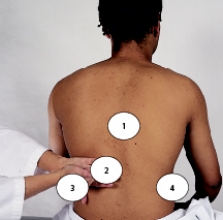
A) 1
B) 2
C) 3
D) 4
A) 1
B) 2
C) 3
D) 4

Unlock Deck
Sign up to unlock the cards in this deck!
Unlock Deck
Unlock Deck
1/24

Play

Full screen (f)
Deck 41: Nursing Assessment: Urinary System
1
A patient has elevated blood urea nitrogen (BUN)and serum creatinine levels.Which bowel preparation order would the nurse question for this patient who is scheduled for a renal arteriogram?
A) Fleet enema
B) Tap-water enema
C) Senna/docusate (Senokot-S)
D) Bisacodyl (Dulcolax) tablets
A) Fleet enema
B) Tap-water enema
C) Senna/docusate (Senokot-S)
D) Bisacodyl (Dulcolax) tablets
Fleet enema
2
The nurse caring for a patient after cystoscopy plans that the patient
A) learns to request narcotics for pain.
B) understands to expect blood-tinged urine.
C) restricts activity to bed rest for a 4 to 6 hours.
D) remains NPO for 8 hours to prevent vomiting.
A) learns to request narcotics for pain.
B) understands to expect blood-tinged urine.
C) restricts activity to bed rest for a 4 to 6 hours.
D) remains NPO for 8 hours to prevent vomiting.
understands to expect blood-tinged urine.
3
When a patient's urine dipstick test indicates a small amount of protein,the nurse's next action should be to
A) send a urine specimen to the laboratory to test for ketones.
B) obtain a clean-catch urine for culture and sensitivity testing.
C) inquire about which medications the patient is currently taking.
D) ask the patient about any family history of chronic renal failure.
A) send a urine specimen to the laboratory to test for ketones.
B) obtain a clean-catch urine for culture and sensitivity testing.
C) inquire about which medications the patient is currently taking.
D) ask the patient about any family history of chronic renal failure.
inquire about which medications the patient is currently taking.
4
A female patient being admitted with pneumonia has a history of neurogenic bladder as a result of a spinal cord injury.Which action will the nurse plan to take first?
A) Ask about the usual urinary pattern and any measures used for bladder control.
B) Assist the patient to the toilet at scheduled times to help ensure bladder emptying.
C) Check the patient for urinary incontinence every 2 hours to maintain skin integrity.
D) Use intermittent catheterization on a regular schedule to avoid the risk of infection.
A) Ask about the usual urinary pattern and any measures used for bladder control.
B) Assist the patient to the toilet at scheduled times to help ensure bladder emptying.
C) Check the patient for urinary incontinence every 2 hours to maintain skin integrity.
D) Use intermittent catheterization on a regular schedule to avoid the risk of infection.
Unlock Deck
Unlock for access to all 24 flashcards in this deck.
Unlock Deck
k this deck
5
The nurse assessing the urinary system of a 45-year-old female would use auscultation to
A) determine kidney position.
B) identify renal artery bruits.
C) check for ureteral peristalsis.
D) assess for bladder distention.
A) determine kidney position.
B) identify renal artery bruits.
C) check for ureteral peristalsis.
D) assess for bladder distention.
Unlock Deck
Unlock for access to all 24 flashcards in this deck.
Unlock Deck
k this deck
6
A patient gives the nurse health information before a scheduled intravenous pyelogram (IVP).Which item has the most immediate implications for the patient's care?
A) The patient has not had food or drink for 8 hours.
B) The patient lists allergies to shellfish and penicillin.
C) The patient complains of costovertebral angle (CVA) tenderness.
D) The patient used a bisacodyl (Dulcolax) tablet the previous night.
A) The patient has not had food or drink for 8 hours.
B) The patient lists allergies to shellfish and penicillin.
C) The patient complains of costovertebral angle (CVA) tenderness.
D) The patient used a bisacodyl (Dulcolax) tablet the previous night.
Unlock Deck
Unlock for access to all 24 flashcards in this deck.
Unlock Deck
k this deck
7
A 32-year-old patient who is employed as a hairdresser and has a 15 pack-year history of cigarette smoking is scheduled for an annual physical examination.The nurse will plan to teach the patient about the increased risk for
A) renal failure.
B) kidney stones.
C) pyelonephritis.
D) bladder cancer.
A) renal failure.
B) kidney stones.
C) pyelonephritis.
D) bladder cancer.
Unlock Deck
Unlock for access to all 24 flashcards in this deck.
Unlock Deck
k this deck
8
A female patient with a suspected urinary tract infection (UTI)is to provide a clean-catch urine specimen for culture and sensitivity testing.To obtain the specimen,the nurse will
A) have the patient empty the bladder completely, then obtain the next urine specimen that the patient is able to void.
B) teach the patient to clean the urethral area, void a small amount into the toilet, and then void into a sterile specimen cup.
C) insert a short sterile "mini" catheter attached to a collecting container into the urethra and bladder to obtain the specimen.
D) clean the area around the meatus with a povidone-iodine (Betadine) swab, and then have the patient void into a sterile container.
A) have the patient empty the bladder completely, then obtain the next urine specimen that the patient is able to void.
B) teach the patient to clean the urethral area, void a small amount into the toilet, and then void into a sterile specimen cup.
C) insert a short sterile "mini" catheter attached to a collecting container into the urethra and bladder to obtain the specimen.
D) clean the area around the meatus with a povidone-iodine (Betadine) swab, and then have the patient void into a sterile container.
Unlock Deck
Unlock for access to all 24 flashcards in this deck.
Unlock Deck
k this deck
9
What glomerular filtration rate (GFR)would the nurse estimate for a 30-year-old patient with a creatinine clearance result of 60 mL/min?
A) 60 mL/min
B) 90 mL/min
C) 120 mL/min
D) 180 mL/min
A) 60 mL/min
B) 90 mL/min
C) 120 mL/min
D) 180 mL/min
Unlock Deck
Unlock for access to all 24 flashcards in this deck.
Unlock Deck
k this deck
10
The nurse is caring for a 68-year-old hospitalized patient with a decreased glomerular filtration rate who is scheduled for an intravenous pyelogram (IVP).Which action will be included in the plan of care?
A) Monitor the urine output after the procedure.
B) Assist with monitored anesthesia care (MAC).
C) Give oral contrast solution before the procedure.
D) Insert a large size urinary catheter before the IVP.
A) Monitor the urine output after the procedure.
B) Assist with monitored anesthesia care (MAC).
C) Give oral contrast solution before the procedure.
D) Insert a large size urinary catheter before the IVP.
Unlock Deck
Unlock for access to all 24 flashcards in this deck.
Unlock Deck
k this deck
11
A male patient in the clinic provides a urine sample that is red-orange in color.Which action should the nurse take first?
A) Notify the patient's health care provider.
B) Teach correct midstream urine collection.
C) Ask the patient about current medications.
D) Question the patient about urinary tract infection (UTI) risk factors.
A) Notify the patient's health care provider.
B) Teach correct midstream urine collection.
C) Ask the patient about current medications.
D) Question the patient about urinary tract infection (UTI) risk factors.
Unlock Deck
Unlock for access to all 24 flashcards in this deck.
Unlock Deck
k this deck
12
How will the nurse assess for flank tenderness in a 30-year-old female patient with suspected pyelonephritis?
A) Palpate along both sides of the lumbar vertebral column.
B) Strike a flat hand covering the costovertebral angle (CVA).
C) Push fingers upward into the two lowest intercostal spaces.
D) Percuss between the iliac crest and ribs along the midaxillary line.
A) Palpate along both sides of the lumbar vertebral column.
B) Strike a flat hand covering the costovertebral angle (CVA).
C) Push fingers upward into the two lowest intercostal spaces.
D) Percuss between the iliac crest and ribs along the midaxillary line.
Unlock Deck
Unlock for access to all 24 flashcards in this deck.
Unlock Deck
k this deck
13
A hospitalized patient with possible renal insufficiency after coronary artery bypass surgery is scheduled for a creatinine clearance test.Which equipment will the nurse need to obtain?
A) Urinary catheter
B) Cleaning towelettes
C) Large container for urine
D) Sterile urine specimen cup
A) Urinary catheter
B) Cleaning towelettes
C) Large container for urine
D) Sterile urine specimen cup
Unlock Deck
Unlock for access to all 24 flashcards in this deck.
Unlock Deck
k this deck
14
Which information from a patient's urinalysis requires that the nurse notify the health care provider?
A) pH 6.2
B) Trace protein
C) WBC 20 to 26/hpf
D) Specific gravity 1.021
A) pH 6.2
B) Trace protein
C) WBC 20 to 26/hpf
D) Specific gravity 1.021
Unlock Deck
Unlock for access to all 24 flashcards in this deck.
Unlock Deck
k this deck
15
Which nursing action is essential for a patient immediately after a renal biopsy?
A) Check blood glucose to assess for hyperglycemia or hypoglycemia.
B) Insert a urinary catheter and test urine for gross or microscopic hematuria.
C) Monitor the blood urea nitrogen (BUN) and creatinine to assess renal function.
D) Apply a pressure dressing and keep the patient on the affected side for 30 minutes.
A) Check blood glucose to assess for hyperglycemia or hypoglycemia.
B) Insert a urinary catheter and test urine for gross or microscopic hematuria.
C) Monitor the blood urea nitrogen (BUN) and creatinine to assess renal function.
D) Apply a pressure dressing and keep the patient on the affected side for 30 minutes.
Unlock Deck
Unlock for access to all 24 flashcards in this deck.
Unlock Deck
k this deck
16
Which medication taken at home by a 47-year-old patient with decreased renal function will be of most concern to the nurse?
A) ibuprofen (Motrin)
B) warfarin (Coumadin)
C) folic acid (vitamin B?)
D) penicillin (Bicillin LA)
A) ibuprofen (Motrin)
B) warfarin (Coumadin)
C) folic acid (vitamin B?)
D) penicillin (Bicillin LA)
Unlock Deck
Unlock for access to all 24 flashcards in this deck.
Unlock Deck
k this deck
17
A patient passing bloody urine is scheduled for a cystoscopy with cystogram.Which description of the procedure by the nurse is accurate?
A) "Your doctor will place a catheter into an artery in your groin and inject a dye that will visualize the blood supply to the kidneys."
B) "Your doctor will insert a lighted tube into the bladder, and little catheters will be inserted through the tube into your kidney."
C) "Your doctor will insert a lighted tube into the bladder through your urethra, inspect the bladder, and instill a dye that will outline your bladder on x-ray."
D) "Your doctor will inject a radioactive solution into a vein in your arm and the distribution of the isotope in your kidneys and bladder will be checked."
A) "Your doctor will place a catheter into an artery in your groin and inject a dye that will visualize the blood supply to the kidneys."
B) "Your doctor will insert a lighted tube into the bladder, and little catheters will be inserted through the tube into your kidney."
C) "Your doctor will insert a lighted tube into the bladder through your urethra, inspect the bladder, and instill a dye that will outline your bladder on x-ray."
D) "Your doctor will inject a radioactive solution into a vein in your arm and the distribution of the isotope in your kidneys and bladder will be checked."
Unlock Deck
Unlock for access to all 24 flashcards in this deck.
Unlock Deck
k this deck
18
To assess whether there is any improvement in a patient's dysuria,which question will the nurse ask?
A) "Do you have to urinate at night?"
B) "Do you have blood in your urine?"
C) "Do you have to urinate frequently?"
D) "Do you have pain when you urinate?"
A) "Do you have to urinate at night?"
B) "Do you have blood in your urine?"
C) "Do you have to urinate frequently?"
D) "Do you have pain when you urinate?"
Unlock Deck
Unlock for access to all 24 flashcards in this deck.
Unlock Deck
k this deck
19
The nurse completing a physical assessment for a newly admitted male patient is unable to feel either kidney on palpation.Which action should the nurse take next?
A) Obtain a urine specimen to check for hematuria.
B) Document the information on the assessment form.
C) Ask the patient about any history of recent sore throat.
D) Ask the health care provider about scheduling a renal ultrasound.
A) Obtain a urine specimen to check for hematuria.
B) Document the information on the assessment form.
C) Ask the patient about any history of recent sore throat.
D) Ask the health care provider about scheduling a renal ultrasound.
Unlock Deck
Unlock for access to all 24 flashcards in this deck.
Unlock Deck
k this deck
20
A 79-year-old man has been admitted with benign prostatic hyperplasia.What is most appropriate to include in the nursing plan of care?
A) Limit fluid intake to no more than 1000 mL/day.
B) Leave a light on in the bathroom during the night.
C) Ask the patient to use a urinal so that urine can be measured.
D) Pad the patient's bed to accommodate overflow incontinence.
A) Limit fluid intake to no more than 1000 mL/day.
B) Leave a light on in the bathroom during the night.
C) Ask the patient to use a urinal so that urine can be measured.
D) Pad the patient's bed to accommodate overflow incontinence.
Unlock Deck
Unlock for access to all 24 flashcards in this deck.
Unlock Deck
k this deck
21
Which assessment of a 62-year-old patient who has just had an intravenous pyelogram (IVP)requires immediate action by the nurse?
A) The heart rate is 58 beats/minute.
B) The patient complains of a dry mouth.
C) The respiratory rate is 38 breaths/minute.
D) The urine output is 400 mL after 2 hours.
A) The heart rate is 58 beats/minute.
B) The patient complains of a dry mouth.
C) The respiratory rate is 38 breaths/minute.
D) The urine output is 400 mL after 2 hours.
Unlock Deck
Unlock for access to all 24 flashcards in this deck.
Unlock Deck
k this deck
22
When working in the urology/nephrology clinic,which patient could the nurse delegate to an experienced licensed practical/vocational nurse (LPN/LVN)?
A) Patient who is scheduled for a renal biopsy after a recent kidney transplant
B) Patient who will need monitoring for several hours after a renal arteriogram
C) Patient who requires teaching about possible post-cystoscopy complications
D) Patient who will have catheterization to check for residual urine after voiding
A) Patient who is scheduled for a renal biopsy after a recent kidney transplant
B) Patient who will need monitoring for several hours after a renal arteriogram
C) Patient who requires teaching about possible post-cystoscopy complications
D) Patient who will have catheterization to check for residual urine after voiding
Unlock Deck
Unlock for access to all 24 flashcards in this deck.
Unlock Deck
k this deck
23
Which statement by a patient who had a cystoscopy the previous day should be reported immediately to the health care provider?
A) "My urine looks pink."
B) "My IV site is bruised."
C) "My sleep was restless."
D) "My temperature is 101."
A) "My urine looks pink."
B) "My IV site is bruised."
C) "My sleep was restless."
D) "My temperature is 101."
Unlock Deck
Unlock for access to all 24 flashcards in this deck.
Unlock Deck
k this deck
24
When assessing a patient with a urinary tract infection,indicate on the accompanying figure where the nurse will percuss to assess for possible pyelonephritis.
A) 1
B) 2
C) 3
D) 4
A) 1
B) 2
C) 3
D) 4
Unlock Deck
Unlock for access to all 24 flashcards in this deck.
Unlock Deck
k this deck
Unlock Deck
Unlock for access to all 24 flashcards in this deck.






