







 Chat with AI

Deck 17: Biopsychology of Emotion, Stress, and Health
Full screen (f)

Question

Question
Question
Question
Question
Question
Question
Question
Question
Question
Question
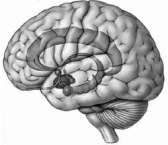
Illustrated here is the
A) limbic system.
B) Kluver-Bucy system.
C) sham rage circuit.
D) James-Lange circuit.
E) Cannon-Bard circuit.
Question
Question
Question
Question
Question
Question
Question
Question
Question
Question
Question
Question
Question
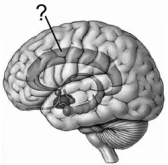
Illustrated here is the limbic system.The indicated structure is the
A) cingulate gyrus.
B) septum.
C) hypothalamus.
D) fornix.
E) mammillary body.
Question
Question
Question
Question
Question
The pattern of behavior that is observed in monkeys after their anterior temporal lobes have been removed is called
A) sham rage.
B) the Kluver-Bucy syndrome.
C) hippocampal rage.
D) septal rage.
E) temporal-lobe rage.
Question
Papez believed that emotional states were expressed through the action of other structures of the limbic system on the
A) amygdala.
B) autonomic nervous system.
C) hypothalamus.
D) hippocampus.
E) neocortex.
Question
Bilateral lesions to which of the following structures produces the Kluver-Bucy syndrome?
A) medial prefrontal lobe
B) hippocampus
C) anterior temporal lobe
D) lateral prefrontal lobe
E) medial temporal lobe
Question
Question
Question
Question
Question
Question
Question
Question
Question
Question
Question
Question
Question
Question
Question
Question
Question
Question
Question
Question
Question
Question
Question
Question
Question
Question
Question
Question
Question
Question
Question
Question
Question
Question
Question
Question
Question
Question
Question
Question
Question
Question
Question
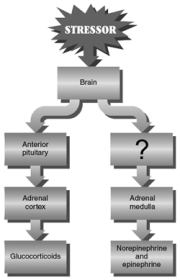
Here is a summary of the two-system view of the stress response.Which label is missing?
A) sympathetic nervous system
B) parasympathetic nervous system
C) limbic system
D) amygdala
E) medial prefrontal cortex
Question
Question
Question
Question
Question
Question

Unlock Deck
Sign up to unlock the cards in this deck!
Unlock Deck
Unlock Deck
1/154

Play

Full screen (f)
Deck 17: Biopsychology of Emotion, Stress, and Health
1
Which of the following structures is part of the limbic system?
A) amygdala
B) cingulate cortex
C) septum
D) mammillary body
E) all of the above
A) amygdala
B) cingulate cortex
C) septum
D) mammillary body
E) all of the above
all of the above
2
Sham rage is displayed by
A) decorticate cats.
B) cats whose entire cerebral hemispheres, including the hypothalamus, have been removed.
C) cats whose cerebral hemispheres, excluding the hypothalamus, have been removed.
D) both A and B
E) both A and C
A) decorticate cats.
B) cats whose entire cerebral hemispheres, including the hypothalamus, have been removed.
C) cats whose cerebral hemispheres, excluding the hypothalamus, have been removed.
D) both A and B
E) both A and C
both A and C
3
Bard's research on sham rage led him to conclude that the
A) Cannon-Bard theory is basically correct.
B) James-Lange theory is basically correct.
C) hypothalamus and adjoining structures play critical roles in the expression of aggression.
D) entire limbic system plays a critical role in the expression of emotion.
E) neocortex plays a critical role in the expression of emotion.
A) Cannon-Bard theory is basically correct.
B) James-Lange theory is basically correct.
C) hypothalamus and adjoining structures play critical roles in the expression of aggression.
D) entire limbic system plays a critical role in the expression of emotion.
E) neocortex plays a critical role in the expression of emotion.
hypothalamus and adjoining structures play critical roles in the expression of aggression.
4
Papez attributed emotion to activity in what became known as the
A) autonomic nervous system.
B) limbic system.
C) hypothalamus.
D) hippocampus.
E) basal ganglion.
A) autonomic nervous system.
B) limbic system.
C) hypothalamus.
D) hippocampus.
E) basal ganglion.
Unlock Deck
Unlock for access to all 154 flashcards in this deck.
Unlock Deck
k this deck
5
The James-Lange and Cannon-Bard theories make __________ predictions about the effects of feedback from somatic and autonomic activity on emotional experience.
A) different
B) the same
C) similar
D) no
E) five
A) different
B) the same
C) similar
D) no
E) five
Unlock Deck
Unlock for access to all 154 flashcards in this deck.
Unlock Deck
k this deck
6
Gulls signal aggression by pointing their beaks at one another and submission by
A) head bobbing.
B) head nodding.
C) wing flapping.
D) pointing their beaks away from one another.
E) none of the above
A) head bobbing.
B) head nodding.
C) wing flapping.
D) pointing their beaks away from one another.
E) none of the above
Unlock Deck
Unlock for access to all 154 flashcards in this deck.
Unlock Deck
k this deck
7
The idea that opposite messages are often signaled by opposite movements and postures is called the principle of
A) opposition.
B) antithesis.
C) conspecifics.
D) parsimony.
E) anti-expression.
A) opposition.
B) antithesis.
C) conspecifics.
D) parsimony.
E) anti-expression.
Unlock Deck
Unlock for access to all 154 flashcards in this deck.
Unlock Deck
k this deck
8
Phineas Gage had damage to the medial
A) diencephalon.
B) prefrontal lobes.
C) temporal lobes.
D) parietal lobes.
E) hippocampus.
A) diencephalon.
B) prefrontal lobes.
C) temporal lobes.
D) parietal lobes.
E) hippocampus.
Unlock Deck
Unlock for access to all 154 flashcards in this deck.
Unlock Deck
k this deck
9
The first major book on the biopsychology of emotions
A) was published in 1872.
B) was The Expression of Emotions in Man and Animals.
C) introduced Darwin's theory of the evolution of emotional expression.
D) all of the above
E) both A and C
A) was published in 1872.
B) was The Expression of Emotions in Man and Animals.
C) introduced Darwin's theory of the evolution of emotional expression.
D) all of the above
E) both A and C
Unlock Deck
Unlock for access to all 154 flashcards in this deck.
Unlock Deck
k this deck
10
According to the Cannon-Bard theory, the feeling of emotion by the cortex and the expression of emotion by the autonomic and somatic nervous systems are
A) causally related.
B) parallel processes.
C) dependent processes.
D) serial processes.
E) adaptive processes.
A) causally related.
B) parallel processes.
C) dependent processes.
D) serial processes.
E) adaptive processes.
Unlock Deck
Unlock for access to all 154 flashcards in this deck.
Unlock Deck
k this deck
11
Illustrated here is the
A) limbic system.
B) Kluver-Bucy system.
C) sham rage circuit.
D) James-Lange circuit.
E) Cannon-Bard circuit.
Unlock Deck
Unlock for access to all 154 flashcards in this deck.
Unlock Deck
k this deck
12
According to the Cannon-Bard theory, emotional experience and emotional expression
A) are parallel processes.
B) have no direct causal relation.
C) are independently triggered by the same emotional stimuli.
D) all of the above
E) none of the above
A) are parallel processes.
B) have no direct causal relation.
C) are independently triggered by the same emotional stimuli.
D) all of the above
E) none of the above
Unlock Deck
Unlock for access to all 154 flashcards in this deck.
Unlock Deck
k this deck
13
"Limbic" means
A) "border."
B) "thalamus."
C) "emotion."
D) "emotional structure."
E) "emotion circuit."
A) "border."
B) "thalamus."
C) "emotion."
D) "emotional structure."
E) "emotion circuit."
Unlock Deck
Unlock for access to all 154 flashcards in this deck.
Unlock Deck
k this deck
14
The limbic system rings the
A) hypothalamus.
B) cingulate.
C) cerebellum.
D) amygdala.
E) thalamus.
A) hypothalamus.
B) cingulate.
C) cerebellum.
D) amygdala.
E) thalamus.
Unlock Deck
Unlock for access to all 154 flashcards in this deck.
Unlock Deck
k this deck
15
The emotional experiences of patients with broken necks
A) indicate that somatic and autonomic feedback from the body is not necessary for the experience of emotion.
B) are inconsistent with the James-Lange theory.
C) are inconsistent with the Cannon-Bard theory.
D) both A and B
E) both B and C
A) indicate that somatic and autonomic feedback from the body is not necessary for the experience of emotion.
B) are inconsistent with the James-Lange theory.
C) are inconsistent with the Cannon-Bard theory.
D) both A and B
E) both B and C
Unlock Deck
Unlock for access to all 154 flashcards in this deck.
Unlock Deck
k this deck
16
Decorticate cats display
A) orchidectomy rage.
B) sham rage.
C) species-typical rage.
D) species-common rage.
E) defensive rage.
A) orchidectomy rage.
B) sham rage.
C) species-typical rage.
D) species-common rage.
E) defensive rage.
Unlock Deck
Unlock for access to all 154 flashcards in this deck.
Unlock Deck
k this deck
17
Darwin believed that
A) expressions of emotion evolve from behaviors that indicate what an animal is likely to do next.
B) expressions of emotion evolve in ways that enhance their communicative function and that their original function may be lost.
C) opposite messages are often signaled by opposite movements and postures.
D) all of the above
E) none of the above
A) expressions of emotion evolve from behaviors that indicate what an animal is likely to do next.
B) expressions of emotion evolve in ways that enhance their communicative function and that their original function may be lost.
C) opposite messages are often signaled by opposite movements and postures.
D) all of the above
E) none of the above
Unlock Deck
Unlock for access to all 154 flashcards in this deck.
Unlock Deck
k this deck
18
According to the James-Lange theory, the
A) experience of emotion is produced by the brain's perception of the body's reactions to emotional stimuli.
B) cortex is not involved in emotion.
C) autonomic nervous system is not involved in emotion.
D) experience of emotion triggers the autonomic response to emotional stimuli.
E) experience of emotion is not physiological.
A) experience of emotion is produced by the brain's perception of the body's reactions to emotional stimuli.
B) cortex is not involved in emotion.
C) autonomic nervous system is not involved in emotion.
D) experience of emotion triggers the autonomic response to emotional stimuli.
E) experience of emotion is not physiological.
Unlock Deck
Unlock for access to all 154 flashcards in this deck.
Unlock Deck
k this deck
19
The first major physiological theory of emotions was independently proposed in 1884 by James and
A) Lange.
B) Cannon.
C) Ax.
D) Bard.
E) Ekman.
A) Lange.
B) Cannon.
C) Ax.
D) Bard.
E) Ekman.
Unlock Deck
Unlock for access to all 154 flashcards in this deck.
Unlock Deck
k this deck
20
In the dog, ears back, back down, hair down, and tail down signals
A) submission.
B) hunger.
C) anger.
D) aggression.
E) threat.
A) submission.
B) hunger.
C) anger.
D) aggression.
E) threat.
Unlock Deck
Unlock for access to all 154 flashcards in this deck.
Unlock Deck
k this deck
21
The Kluver-Bucy syndrome appears to result, to a large degree, from bilateral damage to the
A) hippocampus.
B) hypothalamus.
C) amygdala.
D) septum.
E) cortex.
A) hippocampus.
B) hypothalamus.
C) amygdala.
D) septum.
E) cortex.
Unlock Deck
Unlock for access to all 154 flashcards in this deck.
Unlock Deck
k this deck
22
According to the Cannon-Bard theory, different emotional stimuli induce __________ patterns of autonomic nervous system activity.
A) the same
B) different
C) tangential
D) inhibitory
E) excitatory
A) the same
B) different
C) tangential
D) inhibitory
E) excitatory
Unlock Deck
Unlock for access to all 154 flashcards in this deck.
Unlock Deck
k this deck
23
The Kluver-Bucy syndrome
A) was first demonstrated by Kluver and Bucy.
B) was first demonstrated in monkeys.
C) has been observed in humans.
D) all of the above
E) none of the above
A) was first demonstrated by Kluver and Bucy.
B) was first demonstrated in monkeys.
C) has been observed in humans.
D) all of the above
E) none of the above
Unlock Deck
Unlock for access to all 154 flashcards in this deck.
Unlock Deck
k this deck
24
Illustrated here is the limbic system.The indicated structure is the
A) cingulate gyrus.
B) septum.
C) hypothalamus.
D) fornix.
E) mammillary body.
Unlock Deck
Unlock for access to all 154 flashcards in this deck.
Unlock Deck
k this deck
25
The theory that facial expressions can influence emotional experience is called the
A) emotion feedback hypothesis.
B) induced-emotion hypothesis.
C) facial feedback hypothesis.
D) Duchenne hypothesis.
E) Ekman hypothesis.
A) emotion feedback hypothesis.
B) induced-emotion hypothesis.
C) facial feedback hypothesis.
D) Duchenne hypothesis.
E) Ekman hypothesis.
Unlock Deck
Unlock for access to all 154 flashcards in this deck.
Unlock Deck
k this deck
26
In order to employ the guilty-knowledge technique, the polygrapher needs to
A) also question a control suspect.
B) ask pointed questions.
C) have a piece of information about the crime that is known by the guilty party but not by any of the other suspects.
D) have a piece of information that is known by all the suspects but nobody else.
E) record basal skin conductance levels.
A) also question a control suspect.
B) ask pointed questions.
C) have a piece of information about the crime that is known by the guilty party but not by any of the other suspects.
D) have a piece of information that is known by all the suspects but nobody else.
E) record basal skin conductance levels.
Unlock Deck
Unlock for access to all 154 flashcards in this deck.
Unlock Deck
k this deck
27
Polygraphy is commonly referred to as
A) EEG recording.
B) ANS recording.
C) lie detection.
D) polygraph interrogation.
E) many measurements.
A) EEG recording.
B) ANS recording.
C) lie detection.
D) polygraph interrogation.
E) many measurements.
Unlock Deck
Unlock for access to all 154 flashcards in this deck.
Unlock Deck
k this deck
28
Because even innocent people undergoing a lie-detector test are likely to be aroused by questions about their guilt or innocence, the
A) guilty-knowledge technique should be employed when possible.
B) mock-crime procedure is often employed.
C) control-question technique is often employed.
D) polygraph is often employed.
E) group-contingency threat procedure is often employed.
A) guilty-knowledge technique should be employed when possible.
B) mock-crime procedure is often employed.
C) control-question technique is often employed.
D) polygraph is often employed.
E) group-contingency threat procedure is often employed.
Unlock Deck
Unlock for access to all 154 flashcards in this deck.
Unlock Deck
k this deck
29
The pattern of behavior that is observed in monkeys after their anterior temporal lobes have been removed is called
A) sham rage.
B) the Kluver-Bucy syndrome.
C) hippocampal rage.
D) septal rage.
E) temporal-lobe rage.
Unlock Deck
Unlock for access to all 154 flashcards in this deck.
Unlock Deck
k this deck
30
Papez believed that emotional states were expressed through the action of other structures of the limbic system on the
A) amygdala.
B) autonomic nervous system.
C) hypothalamus.
D) hippocampus.
E) neocortex.
Unlock Deck
Unlock for access to all 154 flashcards in this deck.
Unlock Deck
k this deck
31
Bilateral lesions to which of the following structures produces the Kluver-Bucy syndrome?
A) medial prefrontal lobe
B) hippocampus
C) anterior temporal lobe
D) lateral prefrontal lobe
E) medial temporal lobe
Unlock Deck
Unlock for access to all 154 flashcards in this deck.
Unlock Deck
k this deck
32
Which of the following is not a symptom of the Kluver-Bucy syndrome?
A) aggression
B) sexual activity directed at inappropriate objects
C) lack of fear
D) consumption of almost anything that is edible
E) a tendency to investigate objects with the mouth
A) aggression
B) sexual activity directed at inappropriate objects
C) lack of fear
D) consumption of almost anything that is edible
E) a tendency to investigate objects with the mouth
Unlock Deck
Unlock for access to all 154 flashcards in this deck.
Unlock Deck
k this deck
33
On the basis of existing evidence, the following conclusion about ANS emotional selectivity is warranted:
A) The ANS does not respond in the same way to all emotional stimuli.
B) There is not enough evidence to conclude that there is a different pattern of ANS activity associated with each emotional state.
C) The ANS responds in approximately the same way to all emotional stimuli.
D) both A and B
E) both B and C
A) The ANS does not respond in the same way to all emotional stimuli.
B) There is not enough evidence to conclude that there is a different pattern of ANS activity associated with each emotional state.
C) The ANS responds in approximately the same way to all emotional stimuli.
D) both A and B
E) both B and C
Unlock Deck
Unlock for access to all 154 flashcards in this deck.
Unlock Deck
k this deck
34
The results of Ekman and Friesen's (1971)study of an isolated New Guinea tribe suggest that
A) there are six primary emotions.
B) facial expressions are learned.
C) the facial expressions that are associated with particular human emotions are the same in all cultures.
D) Darwin's assumption of the universality of emotional expression is wrong.
E) New Guinean's are happier than New Yorkers.
A) there are six primary emotions.
B) facial expressions are learned.
C) the facial expressions that are associated with particular human emotions are the same in all cultures.
D) Darwin's assumption of the universality of emotional expression is wrong.
E) New Guinean's are happier than New Yorkers.
Unlock Deck
Unlock for access to all 154 flashcards in this deck.
Unlock Deck
k this deck
35
According to the James-Lange theory, different emotional stimuli induce __________ patterns of autonomic nervous system activity.
A) the same
B) different
C) tangential
D) similar
E) inhibitory
A) the same
B) different
C) tangential
D) similar
E) inhibitory
Unlock Deck
Unlock for access to all 154 flashcards in this deck.
Unlock Deck
k this deck
36
Which of the following is not one of Ekman and Friesen's primary emotional expressions?
A) lust
B) fear
C) happiness
D) disgust
E) sadness
A) lust
B) fear
C) happiness
D) disgust
E) sadness
Unlock Deck
Unlock for access to all 154 flashcards in this deck.
Unlock Deck
k this deck
37
The polygraph does not detect lies, it detects
A) criminals.
B) arousal.
C) guilty knowledge.
D) guilt.
E) psychopathy.
A) criminals.
B) arousal.
C) guilty knowledge.
D) guilt.
E) psychopathy.
Unlock Deck
Unlock for access to all 154 flashcards in this deck.
Unlock Deck
k this deck
38
Because it is difficult to determine for certain whether a person who has been accused of breaking the law is innocent or guilty, most studies of lie detection use the
A) guilty-knowledge technique.
B) control-question technique.
C) mock-crime procedure.
D) all of the above
E) both A and B
A) guilty-knowledge technique.
B) control-question technique.
C) mock-crime procedure.
D) all of the above
E) both A and B
Unlock Deck
Unlock for access to all 154 flashcards in this deck.
Unlock Deck
k this deck
39
Ekman and Friesen (1975)analyzed hundreds of films and photographs of people experiencing various emotions.On the basis of this analysis, they concluded that
A) there are six primary facial expressions of emotion.
B) all facial expressions of emotion are mixtures of six primary expressions.
C) facial expressions of emotion are too numerous and varied to categorize.
D) shame, desire, and excitement are three of the primary emotions.
E) both A and B
A) there are six primary facial expressions of emotion.
B) all facial expressions of emotion are mixtures of six primary expressions.
C) facial expressions of emotion are too numerous and varied to categorize.
D) shame, desire, and excitement are three of the primary emotions.
E) both A and B
Unlock Deck
Unlock for access to all 154 flashcards in this deck.
Unlock Deck
k this deck
40
Which of the following psychologists is well known for his contemporary research on facial expression?
A) Darwin
B) Ekman
C) Ax
D) Cannon
E) Lykken
A) Darwin
B) Ekman
C) Ax
D) Cannon
E) Lykken
Unlock Deck
Unlock for access to all 154 flashcards in this deck.
Unlock Deck
k this deck
41
The muscle that pulls up the lip corners during a smile is the
A) orbicularis major.
B) orbicularis oculi.
C) zygomaticus major.
D) zygomaticus oculi.
E) gluteus maximus.
A) orbicularis major.
B) orbicularis oculi.
C) zygomaticus major.
D) zygomaticus oculi.
E) gluteus maximus.
Unlock Deck
Unlock for access to all 154 flashcards in this deck.
Unlock Deck
k this deck
42
Ronda was threatened by a robber so she kicked him.Her response is an example of
A) social aggression.
B) a lateral attack.
C) alpha aggression.
D) a defensive attack.
E) predatory aggression.
A) social aggression.
B) a lateral attack.
C) alpha aggression.
D) a defensive attack.
E) predatory aggression.
Unlock Deck
Unlock for access to all 154 flashcards in this deck.
Unlock Deck
k this deck
43
The true expressions that momentarily break through false expressions are called
A) flash expressions.
B) insidious expressions.
C) microexpressions.
D) give-away expressions.
E) pseudoexpressions.
A) flash expressions.
B) insidious expressions.
C) microexpressions.
D) give-away expressions.
E) pseudoexpressions.
Unlock Deck
Unlock for access to all 154 flashcards in this deck.
Unlock Deck
k this deck
44
In rats, lateral attack is a component of
A) social aggression.
B) predatory aggression.
C) predatory attack.
D) target site attack.
E) defensive attack.
A) social aggression.
B) predatory aggression.
C) predatory attack.
D) target site attack.
E) defensive attack.
Unlock Deck
Unlock for access to all 154 flashcards in this deck.
Unlock Deck
k this deck
45
In rats, boxing is
A) a form of lateral attack.
B) defensive.
C) predatory.
D) social aggression.
E) an alpha attack.
A) a form of lateral attack.
B) defensive.
C) predatory.
D) social aggression.
E) an alpha attack.
Unlock Deck
Unlock for access to all 154 flashcards in this deck.
Unlock Deck
k this deck
46
The results of a study by Pellis and his colleagues suggest that cats that appear to be playing with mice are, in fact,
A) on drugs.
B) playing with mice.
C) vacillating between attack and defense.
D) vacillating between predatory and social aggression.
E) vacillating between lateral attack and boxing.
A) on drugs.
B) playing with mice.
C) vacillating between attack and defense.
D) vacillating between predatory and social aggression.
E) vacillating between lateral attack and boxing.
Unlock Deck
Unlock for access to all 154 flashcards in this deck.
Unlock Deck
k this deck
47
In the rat, the target site for social aggression is the
A) back, near the base of the tail.
B) throat.
C) nose.
D) hind legs.
E) side.
A) back, near the base of the tail.
B) throat.
C) nose.
D) hind legs.
E) side.
Unlock Deck
Unlock for access to all 154 flashcards in this deck.
Unlock Deck
k this deck
48
In rats, boxing is
A) a defensive behavior.
B) directed at attacking conspecifics.
C) an aggressive behavior.
D) both A and B
E) none of the above
A) a defensive behavior.
B) directed at attacking conspecifics.
C) an aggressive behavior.
D) both A and B
E) none of the above
Unlock Deck
Unlock for access to all 154 flashcards in this deck.
Unlock Deck
k this deck
49
The dominant male rat of a colony
A) is the alpha male.
B) usually moves sideways toward a male intruder.
C) usually directs lateral attacks at male intruders.
D) usually directs bites at the back of a male intruder.
E) all of the above
A) is the alpha male.
B) usually moves sideways toward a male intruder.
C) usually directs lateral attacks at male intruders.
D) usually directs bites at the back of a male intruder.
E) all of the above
Unlock Deck
Unlock for access to all 154 flashcards in this deck.
Unlock Deck
k this deck
50
Fear is the motivating force for
A) defensive behaviors.
B) social aggression.
C) threat.
D) target sites.
E) aggressive behavior.
A) defensive behaviors.
B) social aggression.
C) threat.
D) target sites.
E) aggressive behavior.
Unlock Deck
Unlock for access to all 154 flashcards in this deck.
Unlock Deck
k this deck
51
During a sequence of predatory attacks on a frog or a mouse, a rat's target site is almost always the
A) back, near the base of the tail.
B) back of the neck.
C) throat.
D) nose.
E) hind legs.
A) back, near the base of the tail.
B) back of the neck.
C) throat.
D) nose.
E) hind legs.
Unlock Deck
Unlock for access to all 154 flashcards in this deck.
Unlock Deck
k this deck
52
The true smile, which involves the orbicularis oculi, has been termed the
A) orbicularis smile.
B) Ekman smile.
C) Duchenne smile.
D) legitimate smile.
E) Pinel smirk.
A) orbicularis smile.
B) Ekman smile.
C) Duchenne smile.
D) legitimate smile.
E) Pinel smirk.
Unlock Deck
Unlock for access to all 154 flashcards in this deck.
Unlock Deck
k this deck
53
The Duchenne smile
A) is a false smile.
B) involves the orbicularis oculi.
C) does not involve the orbicularis oculi.
D) both A and B
E) both A and C
A) is a false smile.
B) involves the orbicularis oculi.
C) does not involve the orbicularis oculi.
D) both A and B
E) both A and C
Unlock Deck
Unlock for access to all 154 flashcards in this deck.
Unlock Deck
k this deck
54
Fear is the emotional reaction to
A) threat.
B) target sites.
C) alpha males.
D) defensive behavior.
E) stress.
A) threat.
B) target sites.
C) alpha males.
D) defensive behavior.
E) stress.
Unlock Deck
Unlock for access to all 154 flashcards in this deck.
Unlock Deck
k this deck
55
Evidence suggests that the facial expression of __________ is a positive expression that should be added to Ekman's original six primaries.
A) pride
B) contempt
C) embarrassment
D) happiness
E) all of the above
A) pride
B) contempt
C) embarrassment
D) happiness
E) all of the above
Unlock Deck
Unlock for access to all 154 flashcards in this deck.
Unlock Deck
k this deck
56
Pellis and his colleagues found that giving cats an antianxiety drug tended to increase the efficiency of their
A) mouse killing.
B) play.
C) defensive attack.
D) risk assessment.
E) social aggression.
A) mouse killing.
B) play.
C) defensive attack.
D) risk assessment.
E) social aggression.
Unlock Deck
Unlock for access to all 154 flashcards in this deck.
Unlock Deck
k this deck
57
Blanchard and Blanchard derived rich descriptions of rat intraspecific aggression and defense by using
A) specially trained boxing rats.
B) the colony intruder model of aggression and defense.
C) the S-R approach.
D) all of the above
E) both A and B
A) specially trained boxing rats.
B) the colony intruder model of aggression and defense.
C) the S-R approach.
D) all of the above
E) both A and B
Unlock Deck
Unlock for access to all 154 flashcards in this deck.
Unlock Deck
k this deck
58
The belief that putting on a happy face makes one feel happier is an example of the
A) facial feedback hypothesis.
B) Duchenne hypothesis.
C) Ekman hypothesis.
D) prosody principle.
E) Pinel principle.
A) facial feedback hypothesis.
B) Duchenne hypothesis.
C) Ekman hypothesis.
D) prosody principle.
E) Pinel principle.
Unlock Deck
Unlock for access to all 154 flashcards in this deck.
Unlock Deck
k this deck
59
The defensive and aggressive behaviors of rats have been assigned to various categories on the basis of
A) their topography.
B) the situations in which they occur.
C) their apparent function.
D) all of the above
E) both B and C
A) their topography.
B) the situations in which they occur.
C) their apparent function.
D) all of the above
E) both B and C
Unlock Deck
Unlock for access to all 154 flashcards in this deck.
Unlock Deck
k this deck
60
In most mammalian species, social aggression usually occurs between
A) immature conspecifics.
B) male conspecifics.
C) female conspecifics.
D) pregnant females.
E) threatened conspecifics.
A) immature conspecifics.
B) male conspecifics.
C) female conspecifics.
D) pregnant females.
E) threatened conspecifics.
Unlock Deck
Unlock for access to all 154 flashcards in this deck.
Unlock Deck
k this deck
61
Lesions to which structure specifically block the conditioning of fear to a context?
A) lateral geniculate nucleus
B) auditory cortex
C) hippocampus
D) amygdala
E) PAG
A) lateral geniculate nucleus
B) auditory cortex
C) hippocampus
D) amygdala
E) PAG
Unlock Deck
Unlock for access to all 154 flashcards in this deck.
Unlock Deck
k this deck
62
Lesions to both the medial geniculate nucleus and the __________ block auditory fear conditioning.
A) amygdala
B) septum
C) auditory cortex
D) hippocampus
E) granule cells
A) amygdala
B) septum
C) auditory cortex
D) hippocampus
E) granule cells
Unlock Deck
Unlock for access to all 154 flashcards in this deck.
Unlock Deck
k this deck
63
The concept of a generalized stress response was developed by
A) Doreen Kimura.
B) D. O. Hebb.
C) Hans Selye.
D) Roger Clemens.
E) Greg Miller.
A) Doreen Kimura.
B) D. O. Hebb.
C) Hans Selye.
D) Roger Clemens.
E) Greg Miller.
Unlock Deck
Unlock for access to all 154 flashcards in this deck.
Unlock Deck
k this deck
64
The physiological response to harm or threat is generally referred to as
A) the stress response.
B) anxiety.
C) depression.
D) hypertension.
E) arousal.
A) the stress response.
B) anxiety.
C) depression.
D) hypertension.
E) arousal.
Unlock Deck
Unlock for access to all 154 flashcards in this deck.
Unlock Deck
k this deck
65
The fact that social aggression in many species occurs more frequently between males than between females is often attributed to the
A) organizational effects of testosterone.
B) activational effects of testosterone.
C) high levels of defensive attack by females.
D) both A and B
E) both A and C
A) organizational effects of testosterone.
B) activational effects of testosterone.
C) high levels of defensive attack by females.
D) both A and B
E) both A and C
Unlock Deck
Unlock for access to all 154 flashcards in this deck.
Unlock Deck
k this deck
66
Le Doux and his colleagues found that bilateral lesions to the __________ blocked auditory fear conditioning but that bilateral lesions to the __________ did not.
A) septum; lateral geniculate nucleus
B) frontal lobe; cingulate
C) medial geniculate nucleus; auditory cortex
D) hypothalamus; septum
E) hippocampus; medial geniculate nucleus
A) septum; lateral geniculate nucleus
B) frontal lobe; cingulate
C) medial geniculate nucleus; auditory cortex
D) hypothalamus; septum
E) hippocampus; medial geniculate nucleus
Unlock Deck
Unlock for access to all 154 flashcards in this deck.
Unlock Deck
k this deck
67
Each amygdala is
A) a single nucleus.
B) a cluster of many nuclei.
C) actually two distinct structures.
D) actually three distinct structures.
E) composed of a medulla and a cortex.
A) a single nucleus.
B) a cluster of many nuclei.
C) actually two distinct structures.
D) actually three distinct structures.
E) composed of a medulla and a cortex.
Unlock Deck
Unlock for access to all 154 flashcards in this deck.
Unlock Deck
k this deck
68
Studies of the septal aggression phenomenon in rats suggest that it would be more appropriate to refer to it as
A) hypothalamic aggression.
B) septal defensiveness.
C) hippocampal aggression.
D) septal predatory aggression.
E) septal social aggression.
A) hypothalamic aggression.
B) septal defensiveness.
C) hippocampal aggression.
D) septal predatory aggression.
E) septal social aggression.
Unlock Deck
Unlock for access to all 154 flashcards in this deck.
Unlock Deck
k this deck
69
The evidence that testosterone affects the aggressive behavior of humans is inconsistent.The text suggests that this inconsistency may be attributable to the fact that
A) hormones may have less effect on human aggression than they do on aggression in other species.
B) the tests that have been used to study testosterone and aggression in humans are markedly different from those used in other species.
C) testosterone can be synthesized and act locally in particular brain structures, but studies of testosterone and human aggression have been based on general blood levels of testosterone.
D) all of the above
E) both A and B
A) hormones may have less effect on human aggression than they do on aggression in other species.
B) the tests that have been used to study testosterone and aggression in humans are markedly different from those used in other species.
C) testosterone can be synthesized and act locally in particular brain structures, but studies of testosterone and human aggression have been based on general blood levels of testosterone.
D) all of the above
E) both A and B
Unlock Deck
Unlock for access to all 154 flashcards in this deck.
Unlock Deck
k this deck
70
The structure in which the emotional significance of sensory signals is learned and retained is believed to be the
A) amygdala.
B) hypothalamus.
C) septum.
D) hippocampus.
E) medial geniculate.
A) amygdala.
B) hypothalamus.
C) septum.
D) hippocampus.
E) medial geniculate.
Unlock Deck
Unlock for access to all 154 flashcards in this deck.
Unlock Deck
k this deck
71
In the short-term, stressors produce physiological changes that
A) are maladaptive.
B) disrupt the ability to deal effectively with the stressor.
C) increase the ability to deal effectively with the stressor.
D) both A and B
E) both A and C
A) are maladaptive.
B) disrupt the ability to deal effectively with the stressor.
C) increase the ability to deal effectively with the stressor.
D) both A and B
E) both A and C
Unlock Deck
Unlock for access to all 154 flashcards in this deck.
Unlock Deck
k this deck
72
A major difference in the physiological reaction to physical versus psychological stressors is that only physical stressors
A) activate the adrenal medulla.
B) activate the adrenal cortex.
C) increase blood pressure.
D) increase epinephrine levels.
E) none of the above
A) activate the adrenal medulla.
B) activate the adrenal cortex.
C) increase blood pressure.
D) increase epinephrine levels.
E) none of the above
Unlock Deck
Unlock for access to all 154 flashcards in this deck.
Unlock Deck
k this deck
73
Evidence suggests that only one part of the amygdala plays a major role in fear conditioning.This part is the
A) lateral nucleus.
B) preoptic nucleus.
C) paraventricular nucleus.
D) basolateral nucleus.
E) amygdala complex.
A) lateral nucleus.
B) preoptic nucleus.
C) paraventricular nucleus.
D) basolateral nucleus.
E) amygdala complex.
Unlock Deck
Unlock for access to all 154 flashcards in this deck.
Unlock Deck
k this deck
74
Here is a summary of the two-system view of the stress response.Which label is missing?
A) sympathetic nervous system
B) parasympathetic nervous system
C) limbic system
D) amygdala
E) medial prefrontal cortex
Unlock Deck
Unlock for access to all 154 flashcards in this deck.
Unlock Deck
k this deck
75
The amygdala is thought to activate the appropriate sympathetic and behavioral responses to threat via the __________, respectively.
A) auditory cortex and medial geniculate nucleus
B) PAG and hypothalamus
C) medial geniculate nucleus and auditory cortex
D) thalamus and cortex
E) hypothalamus and PAG
A) auditory cortex and medial geniculate nucleus
B) PAG and hypothalamus
C) medial geniculate nucleus and auditory cortex
D) thalamus and cortex
E) hypothalamus and PAG
Unlock Deck
Unlock for access to all 154 flashcards in this deck.
Unlock Deck
k this deck
76
An important distinguishing feature of rat social aggression is that it is
A) dependent on testosterone.
B) similar to defensive attack.
C) controlled by the amygdala.
D) directed at the tail.
E) directed at the head.
A) dependent on testosterone.
B) similar to defensive attack.
C) controlled by the amygdala.
D) directed at the tail.
E) directed at the head.
Unlock Deck
Unlock for access to all 154 flashcards in this deck.
Unlock Deck
k this deck
77
Lesions to which brain structure in rats disrupt auditory fear conditioning to complex sounds but not simple sounds?
A) auditory cortex
B) hypothalamus
C) periaqueductal gray
D) amygdala
E) medial geniculate nucleus
A) auditory cortex
B) hypothalamus
C) periaqueductal gray
D) amygdala
E) medial geniculate nucleus
Unlock Deck
Unlock for access to all 154 flashcards in this deck.
Unlock Deck
k this deck
78
Adrenocorticotropic hormone
A) is released by the anterior pituitary.
B) activates the adrenal cortex.
C) increases circulating levels of glucocorticoids.
D) all of the above
E) none of the above
A) is released by the anterior pituitary.
B) activates the adrenal cortex.
C) increases circulating levels of glucocorticoids.
D) all of the above
E) none of the above
Unlock Deck
Unlock for access to all 154 flashcards in this deck.
Unlock Deck
k this deck
79
Correlations between aggressive behavior and testosterone levels do not necessarily mean that high testosterone levels cause aggressive behavior because
A) social aggression occurs only in males.
B) the effects of estradial cannot be ruled out.
C) aggressive encounters often cause increases in testosterone levels.
D) humans and rats differ in their sex hormones.
E) aggressive behavior is controlled by the amygdala.
A) social aggression occurs only in males.
B) the effects of estradial cannot be ruled out.
C) aggressive encounters often cause increases in testosterone levels.
D) humans and rats differ in their sex hormones.
E) aggressive behavior is controlled by the amygdala.
Unlock Deck
Unlock for access to all 154 flashcards in this deck.
Unlock Deck
k this deck
80
Which of the following is testosterone dependent in rats?
A) defensive attack
B) predatory aggression
C) social aggression
D) freezing
E) flight
A) defensive attack
B) predatory aggression
C) social aggression
D) freezing
E) flight
Unlock Deck
Unlock for access to all 154 flashcards in this deck.
Unlock Deck
k this deck
Unlock Deck
Unlock for access to all 154 flashcards in this deck.






