







 Chat with AI

Deck 22: Care of Patients With Immune Function Excess: Hypersensitivity Allergyand Autoimmunity
Full screen (f)

Question

Question
Question
Question
Question
Question
Question
The nurse enters a client's room and observes the manifestations shown below.What action should the nurse take first? 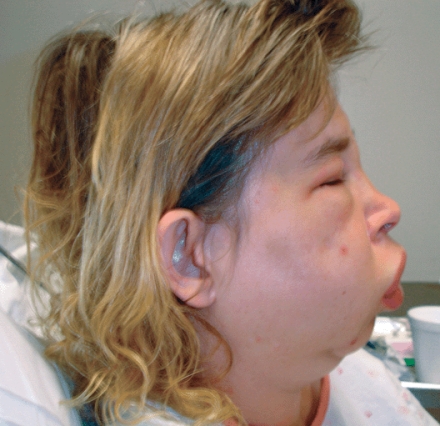
A) Prepare to administer diphenhydramine (Benadryl).
B) Prepare to administer epinephrine.
C) Assess the client's respiratory status.
D) Get a full set of vital signs.
A) Prepare to administer diphenhydramine (Benadryl).
B) Prepare to administer epinephrine.
C) Assess the client's respiratory status.
D) Get a full set of vital signs.
Question
Question
Question
Question
Question
Question
Question
Question
Question
Question
Question
Question
Question
Question
Question

Unlock Deck
Sign up to unlock the cards in this deck!
Unlock Deck
Unlock Deck
1/22

Play

Full screen (f)
Deck 22: Care of Patients With Immune Function Excess: Hypersensitivity Allergyand Autoimmunity
1
A client has received diphenhydramine (Benadryl)and is currently oriented but drowsy.What is the best action for the nurse to take?
A) Perform a neurologic assessment every 2 hours.
B) Document the response and continue to monitor.
C) Prepare to administer epinephrine subcutaneously.
D) Have the nursing assistant stimulate the client every hour.
A) Perform a neurologic assessment every 2 hours.
B) Document the response and continue to monitor.
C) Prepare to administer epinephrine subcutaneously.
D) Have the nursing assistant stimulate the client every hour.
Document the response and continue to monitor.
2
A nurse suspects that a client has serum sickness.For which manifestation does the nurse assess the client?
A) Joint pain
B) Allergic rhinitis
C) Stridor
D) Wheezing
A) Joint pain
B) Allergic rhinitis
C) Stridor
D) Wheezing
Joint pain
3
What intervention does the nurse implement to provide for client safety during intradermal allergy testing?
A) Stay with the client and ensure that emergency equipment is in the room.
B) Pretreat the skin area to be tested with a cortisone-based cream.
C) Apply oxygen by mask or nasal cannula before injecting the test agent.
D) Cover the examination table and pillow with plastic or an ultrafine mesh.
A) Stay with the client and ensure that emergency equipment is in the room.
B) Pretreat the skin area to be tested with a cortisone-based cream.
C) Apply oxygen by mask or nasal cannula before injecting the test agent.
D) Cover the examination table and pillow with plastic or an ultrafine mesh.
Stay with the client and ensure that emergency equipment is in the room.
4
Which intervention is most important for the nurse to teach the client who is recovering from an allergic reaction to a bee sting?
A) How to use an EpiPen
B) Wearing a medical alert bracelet
C) Avoiding contact with the allergen
D) Keeping diphenhydramine (Benadryl) available
A) How to use an EpiPen
B) Wearing a medical alert bracelet
C) Avoiding contact with the allergen
D) Keeping diphenhydramine (Benadryl) available
Unlock Deck
Unlock for access to all 22 flashcards in this deck.
Unlock Deck
k this deck
5
Which characteristic is common to all types of hypersensitivity reactions?
A) Decreased inflammatory responses
B) Presence of tissue-damaging reactions
C) Enhanced natural killer cell activity
D) Inability to recognize extraneous cells
A) Decreased inflammatory responses
B) Presence of tissue-damaging reactions
C) Enhanced natural killer cell activity
D) Inability to recognize extraneous cells
Unlock Deck
Unlock for access to all 22 flashcards in this deck.
Unlock Deck
k this deck
6
An unknown unconscious client with an elevated temperature is ordered intravenous penicillin.What is the best action for the nurse to take?
A) Administer the medication.
B) Check the chart for allergies.
C) Look for medical alert identification.
D) Notify the nursing supervisor.
A) Administer the medication.
B) Check the chart for allergies.
C) Look for medical alert identification.
D) Notify the nursing supervisor.
Unlock Deck
Unlock for access to all 22 flashcards in this deck.
Unlock Deck
k this deck
7
The nurse enters a client's room and observes the manifestations shown below.What action should the nurse take first?
A) Prepare to administer diphenhydramine (Benadryl).
B) Prepare to administer epinephrine.
C) Assess the client's respiratory status.
D) Get a full set of vital signs.
A) Prepare to administer diphenhydramine (Benadryl).
B) Prepare to administer epinephrine.
C) Assess the client's respiratory status.
D) Get a full set of vital signs.
Unlock Deck
Unlock for access to all 22 flashcards in this deck.
Unlock Deck
k this deck
8
A client is in the clinic having had rhinorrhea and headache for the last 2 weeks.Which laboratory value alerts the nurse to the possibility of a type I hypersensitivity reaction?
A) White blood cell count, 8900/mm3
B) Eosinophils, 10%
C) Neutrophils, 65%
D) Hemoglobin, 14 g/dL
A) White blood cell count, 8900/mm3
B) Eosinophils, 10%
C) Neutrophils, 65%
D) Hemoglobin, 14 g/dL
Unlock Deck
Unlock for access to all 22 flashcards in this deck.
Unlock Deck
k this deck
9
A mother brings her child to the clinic requesting "genetic testing" to determine whether her child suffers from the same multiple allergies as herself.What action by the nurse is most appropriate?
A) Provide a referral to an allergist so the child can be tested.
B) Refer the mother to a geneticist for genetic testing on the child.
C) Ask the mother about specific symptoms the child may have had.
D) Have the mother list her allergies and the symptoms they cause her.
A) Provide a referral to an allergist so the child can be tested.
B) Refer the mother to a geneticist for genetic testing on the child.
C) Ask the mother about specific symptoms the child may have had.
D) Have the mother list her allergies and the symptoms they cause her.
Unlock Deck
Unlock for access to all 22 flashcards in this deck.
Unlock Deck
k this deck
10
A client states that he is "allergic" to poison ivy.Which statement by the client indicates a good understanding of this type of sensitivity?
A) "Drinking 3 liters of water a day will prevent kidney damage."
B) "I will always wear a medical alert bracelet for this allergy."
C) "I need to try to avoid coming into contact with poison ivy."
D) "I should carry diphenhydramine (Benadryl) with me at all times."
A) "Drinking 3 liters of water a day will prevent kidney damage."
B) "I will always wear a medical alert bracelet for this allergy."
C) "I need to try to avoid coming into contact with poison ivy."
D) "I should carry diphenhydramine (Benadryl) with me at all times."
Unlock Deck
Unlock for access to all 22 flashcards in this deck.
Unlock Deck
k this deck
11
What is most important for the nurse to teach the client with allergic rhinitis and glaucoma?
A) "If your heartbeat increases, be sure to contact your health care provider."
B) "Avoid allergy drugs containing pseudoephedrine or phenylephrine."
C) "Be sure to drink plenty of water with antihistamines."
D) "You should use an eye-moistening agent such as Restasis."
A) "If your heartbeat increases, be sure to contact your health care provider."
B) "Avoid allergy drugs containing pseudoephedrine or phenylephrine."
C) "Be sure to drink plenty of water with antihistamines."
D) "You should use an eye-moistening agent such as Restasis."
Unlock Deck
Unlock for access to all 22 flashcards in this deck.
Unlock Deck
k this deck
12
A client is receiving an IV infusion of an antibiotic.The client calls the nurse about feeling uneasy and uncomfortable owing to congestion.Which action by the nurse is most appropriate?
A) Elevate the head of the client's bed to 45 degrees.
B) Have another nurse call the Rapid Response Team.
C) Prepare to administer diphenhydramine (Benadryl).
D) Slow the rate of the IV infusion.
A) Elevate the head of the client's bed to 45 degrees.
B) Have another nurse call the Rapid Response Team.
C) Prepare to administer diphenhydramine (Benadryl).
D) Slow the rate of the IV infusion.
Unlock Deck
Unlock for access to all 22 flashcards in this deck.
Unlock Deck
k this deck
13
A client is hospitalized with Goodpasture's syndrome.Which intervention by the nurse takes priority?
A) Monitor urine output and renal function tests.
B) Teach the client to manage peritoneal dialysis.
C) Administer antibiotics strictly on time.
D) Have separate IV access for immune globulin (IVIG) administration.
A) Monitor urine output and renal function tests.
B) Teach the client to manage peritoneal dialysis.
C) Administer antibiotics strictly on time.
D) Have separate IV access for immune globulin (IVIG) administration.
Unlock Deck
Unlock for access to all 22 flashcards in this deck.
Unlock Deck
k this deck
14
Which condition is a type II hypersensitivity reaction?
A) Allergic rhinitis
B) Positive purified protein derivative (PPD) test for tuberculosis
C) Transfusion reaction to improper blood type
D) Serum sickness after receiving immune globulin
A) Allergic rhinitis
B) Positive purified protein derivative (PPD) test for tuberculosis
C) Transfusion reaction to improper blood type
D) Serum sickness after receiving immune globulin
Unlock Deck
Unlock for access to all 22 flashcards in this deck.
Unlock Deck
k this deck
15
How does the type V hypersensitivity reaction differ from other reactions?
A) It is cell mediated rather than antibody mediated.
B) It is an immediate response rather than a delayed response.
C) It produces a stimulatory response to normal tissues.
D) It results in more severe tissue damage than is caused by other types of reactions.
A) It is cell mediated rather than antibody mediated.
B) It is an immediate response rather than a delayed response.
C) It produces a stimulatory response to normal tissues.
D) It results in more severe tissue damage than is caused by other types of reactions.
Unlock Deck
Unlock for access to all 22 flashcards in this deck.
Unlock Deck
k this deck
16
Which client characteristic places her or him at high risk for latex hypersensitivity?
A) Allergy to shellfish
B) History of spina bifida
C) Total hip replacement
D) Taking oral contraceptives
A) Allergy to shellfish
B) History of spina bifida
C) Total hip replacement
D) Taking oral contraceptives
Unlock Deck
Unlock for access to all 22 flashcards in this deck.
Unlock Deck
k this deck
17
A client is admitted for a cardiac catheterization.It is essential for the nurse to ask the client about which allergies?
A) Penicillin
B) Latex
C) Iodine
D) Shellfish
E) Keflex
F) Dilantin
G) Bananas
A) Penicillin
B) Latex
C) Iodine
D) Shellfish
E) Keflex
F) Dilantin
G) Bananas
Unlock Deck
Unlock for access to all 22 flashcards in this deck.
Unlock Deck
k this deck
18
A client has angioedema of the lower face.What will the nurse assess next?
A) Pulse oximetry
B) Airway patency
C) Breath sounds
D) Chest wall symmetry
A) Pulse oximetry
B) Airway patency
C) Breath sounds
D) Chest wall symmetry
Unlock Deck
Unlock for access to all 22 flashcards in this deck.
Unlock Deck
k this deck
19
A nurse is planning care for a client with Sjögren's syndrome.At what point does the nurse determine that priority outcomes have been met?
A) The client states that he or she is not as fatigued as previously.
B) The client dresses attractively despite gaining a large amount of weight.
C) The oral mucosa is intact and no systemic signs of infection are present.
D) The client is able to complete activities of daily living with minimal shortness of breath.
A) The client states that he or she is not as fatigued as previously.
B) The client dresses attractively despite gaining a large amount of weight.
C) The oral mucosa is intact and no systemic signs of infection are present.
D) The client is able to complete activities of daily living with minimal shortness of breath.
Unlock Deck
Unlock for access to all 22 flashcards in this deck.
Unlock Deck
k this deck
20
What dose of epinephrine does the nurse prepare for a client in anaphylaxis who is 6 feet 3 inches tall and weighs 250 lb?
A) 0.2 mL of a 1:1000 solution
B) 0.5 mL of a 1:1000 solution
C) 0.3 mL of a 1:10,000 solution
D) 0.5 mL of a 1:10,000 solution
A) 0.2 mL of a 1:1000 solution
B) 0.5 mL of a 1:1000 solution
C) 0.3 mL of a 1:10,000 solution
D) 0.5 mL of a 1:10,000 solution
Unlock Deck
Unlock for access to all 22 flashcards in this deck.
Unlock Deck
k this deck
21
The nurse is to give a client 80 mg of diphenhydramine (Benadryl)by IV push.The vial contains a solution with a concentration of 25 mg/mL.How many milliliters of diphenhydramine does the nurse administer? __________ mL
Unlock Deck
Unlock for access to all 22 flashcards in this deck.
Unlock Deck
k this deck
22
The nurse is preparing to administer a medication when the client states,"I'm allergic to that." How will the nurse proceed?
A) Check the chart for allergies.
B) Notify the health care provider.
C) Ask what reaction the client gets.
D) Continue to give the medication.
E) Perform a skin test first.
F) Notify the pharmacist.
G) Document the allergy on the chart.
A) Check the chart for allergies.
B) Notify the health care provider.
C) Ask what reaction the client gets.
D) Continue to give the medication.
E) Perform a skin test first.
F) Notify the pharmacist.
G) Document the allergy on the chart.
Unlock Deck
Unlock for access to all 22 flashcards in this deck.
Unlock Deck
k this deck
Unlock Deck
Unlock for access to all 22 flashcards in this deck.






