







 Chat with AI

Deck 7: Revolution and Counterrevolution, 1815-1848
Full screen (f)

Question

Question
Question
Question
Question
Question
Question
Question
Question
Question
Question
Question
Question
Question
Question
Question
Question
Question
Question
Question
Question
Question
Question
Question
Question
Question
Question
Question
Question
Question
Question
Question
Question
Question
Question
Question
Question
Question
Question
Question
Question
Question
Question
Question
Question
Question
Question
Question
Question
Question
Question
Question
Question
Question
Question
Question
Question
Question
Question
Question
Question
Instructions: Please use this outline map of Europe to answer the question(s).
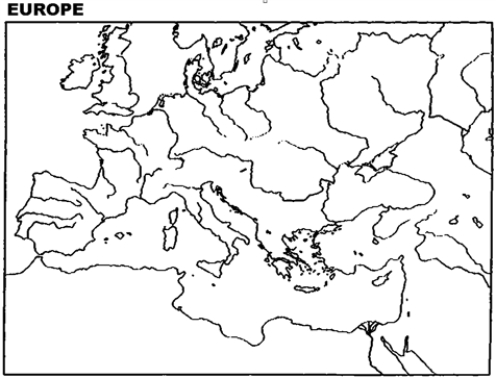
-Locate and label the following sites of revolutionary developments of 1848: Paris,Budapest,Vienna,Prague,Berlin,Posen,Frankfurt,Milan,Venice,Rome,and Dresden.
-Locate and label the following sites of revolutionary developments of 1848: Paris,Budapest,Vienna,Prague,Berlin,Posen,Frankfurt,Milan,Venice,Rome,and Dresden.
Question
Instructions: Please use this outline map of Europe to answer the question(s).
It has been said that the delegates to the Congress of Vienna produced long-lasting results because they acted according to rational principles rather than acting according to popular emotions.Do you agree? Support your conclusion.
It has been said that the delegates to the Congress of Vienna produced long-lasting results because they acted according to rational principles rather than acting according to popular emotions.Do you agree? Support your conclusion.
Question
Instructions: Please use this outline map of Europe to answer the question(s).
What were the legacies of the revolutions of 1848? Who gained,and who lost,and why?
What were the legacies of the revolutions of 1848? Who gained,and who lost,and why?
Question
Instructions: Please use this outline map of Europe to answer the question(s).
Why was Britain exempt from truly violent revolutionary turmoil in 1848?
Why was Britain exempt from truly violent revolutionary turmoil in 1848?
Question
Instructions: Please use this outline map of Europe to answer the question(s).
Identify and explain both the liberal and the nationalist aims which were present during the revolutions of 1848 in Italy.
Identify and explain both the liberal and the nationalist aims which were present during the revolutions of 1848 in Italy.
Question
Instructions: Please use this outline map of Europe to answer the question(s).
How realistic was Metternich's "dissolution complex"? Explain your position using at least two examples to support your conclusion.
How realistic was Metternich's "dissolution complex"? Explain your position using at least two examples to support your conclusion.
Question
Instructions: Please use this outline map of Europe to answer the question(s).
How does the Hungarian revolution of 1848 illustrate both the great-mindedness and the small-mindedness of the champions of nationalism?
How does the Hungarian revolution of 1848 illustrate both the great-mindedness and the small-mindedness of the champions of nationalism?
Question
Instructions: Please use this outline map of Europe to answer the question(s).
Why were the revolutions of 1848 unsuccessful?
Why were the revolutions of 1848 unsuccessful?
Question
Instructions: Please use this outline map of Europe to answer the question(s).
What were the main political problems that England faced in the first half of the nineteenth century? How didthe government respond to these tensions?
What were the main political problems that England faced in the first half of the nineteenth century? How didthe government respond to these tensions?
Question
Question
Instructions: Please use this outline map of Europe to answer the question(s).
Comment on the dissatisfaction of the working class of Europe in 1848.Were the problems confined to specific areas?
Comment on the dissatisfaction of the working class of Europe in 1848.Were the problems confined to specific areas?
Question
Instructions: Please use this outline map of Europe to answer the question(s).
What goals and principles shaped the Congress of Vienna,and how did it define Europe during the first half of the nineteenth century?
What goals and principles shaped the Congress of Vienna,and how did it define Europe during the first half of the nineteenth century?
Question
Question
Instructions: Please use this outline map of Europe to answer the question(s).
Mark the borders of each of the following as of 1815: the Kingdoms of Spain,France,Prussia,Sardinia,and the Two Sicilies; the empires of Russia and Austria; the German Confederation; and the Papal States.
Mark the borders of each of the following as of 1815: the Kingdoms of Spain,France,Prussia,Sardinia,and the Two Sicilies; the empires of Russia and Austria; the German Confederation; and the Papal States.
Question
Instructions: Please use this outline map of Europe to answer the question(s).
Compare and contrastthe reactions of Louis Philippe,Charles Albert of Piedmont-Sardinia,and Nicholas I to the revolutions of 1848.
Compare and contrastthe reactions of Louis Philippe,Charles Albert of Piedmont-Sardinia,and Nicholas I to the revolutions of 1848.
Question
Question
Instructions: Please use this outline map of Europe to answer the question(s).
The textbook states that "repression could not contain the liberal and nationalist ideals unleashed by the French Revolution".Is that a true assessment for the years between 1815 and 1848? Why or why not?
The textbook states that "repression could not contain the liberal and nationalist ideals unleashed by the French Revolution".Is that a true assessment for the years between 1815 and 1848? Why or why not?
Question
Question

Unlock Deck
Sign up to unlock the cards in this deck!
Unlock Deck
Unlock Deck
1/79

Play

Full screen (f)
Deck 7: Revolution and Counterrevolution, 1815-1848
1
Which of the following statements is correct?
A) In 1828, Parliament removed certain restrictions against Catholics and Nonconformists.
B) In 1832, the right to vote was extended to the working class.
C) In 1833, the slave trade was abolished in the British Empire.
D) In 1835, the Municipal Corporations Act tightened London's authority over other towns.
E) In 1848, revolution on the continent caused a delay in the passage of a Public Health Act in England.
A) In 1828, Parliament removed certain restrictions against Catholics and Nonconformists.
B) In 1832, the right to vote was extended to the working class.
C) In 1833, the slave trade was abolished in the British Empire.
D) In 1835, the Municipal Corporations Act tightened London's authority over other towns.
E) In 1848, revolution on the continent caused a delay in the passage of a Public Health Act in England.
A
2
Outside France after the French Revolution and defeat of Napoleon
A) local governments gained considerable autonomy.
B) methods of state censorship and repression collapsed.
C) much of the Old Regime managed to survive.
D) aristocrats lost their monopoly on the army and administration.
E) all tax exemptions were eradicated in favor of new economic policies.
A) local governments gained considerable autonomy.
B) methods of state censorship and repression collapsed.
C) much of the Old Regime managed to survive.
D) aristocrats lost their monopoly on the army and administration.
E) all tax exemptions were eradicated in favor of new economic policies.
C
3
All of the following experienced at least one revolution in the 1820s.The only revolution to succeed was in
A) Spain.
B) southern Italy.
C) Greece.
D) Russia.
E) northern Italy.
A) Spain.
B) southern Italy.
C) Greece.
D) Russia.
E) northern Italy.
C
4
Austria's objective and/or strategy at the Congress of Vienna was to
A) restore a balance of power in Europe after the defeat of Napoleon.
B) install new rulers responsive to the will of the people.
C) support liberalism and nationalism.
D) foster the political awareness of the middle classes.
E) all of the above
A) restore a balance of power in Europe after the defeat of Napoleon.
B) install new rulers responsive to the will of the people.
C) support liberalism and nationalism.
D) foster the political awareness of the middle classes.
E) all of the above
Unlock Deck
Unlock for access to all 79 flashcards in this deck.
Unlock Deck
k this deck
5
What sparked the Revolution of 1830in France?
A) Louis XVIII died.
B) Charles X invalidated an election, changed the election laws, and censored the press.
C) The revolutions in Belgium and Poland ignited revolutionary fervor in France.
D) Without warning, Charles X abdicated and retired to the south of France.
E) Industrialization drove the urban working class to revolt.
A) Louis XVIII died.
B) Charles X invalidated an election, changed the election laws, and censored the press.
C) The revolutions in Belgium and Poland ignited revolutionary fervor in France.
D) Without warning, Charles X abdicated and retired to the south of France.
E) Industrialization drove the urban working class to revolt.
Unlock Deck
Unlock for access to all 79 flashcards in this deck.
Unlock Deck
k this deck
6
The French government whose ouster in 1848 sparked revolutions throughout Europe was run by
A) the ultras who aimed to bring back the Old Regime.
B) moderate monarchists who supported Louis XVIII's Charter.
C) the wealthy bourgeoisie and some aristocrats.
D) neo-Jacobins who worked towards a restoration of the Republic.
E) socialists who tried to make worker cooperative the basis of a new economic order.
A) the ultras who aimed to bring back the Old Regime.
B) moderate monarchists who supported Louis XVIII's Charter.
C) the wealthy bourgeoisie and some aristocrats.
D) neo-Jacobins who worked towards a restoration of the Republic.
E) socialists who tried to make worker cooperative the basis of a new economic order.
Unlock Deck
Unlock for access to all 79 flashcards in this deck.
Unlock Deck
k this deck
7
The Chartists' demands for all of the following eventually succeeded EXCEPT
A) the secret ballot.
B) salaries for members of Parliament.
C) universal manhoodsuffrage.
D) annual parliamentary elections.
E) abolition of property qualifications for members of Parliament.
A) the secret ballot.
B) salaries for members of Parliament.
C) universal manhoodsuffrage.
D) annual parliamentary elections.
E) abolition of property qualifications for members of Parliament.
Unlock Deck
Unlock for access to all 79 flashcards in this deck.
Unlock Deck
k this deck
8
Which of the following sought to create a European community based on Christian teachings and aroused distrust among other diplomats at the Congress of Vienna?
A) Alexander I
B) Talleyrand
C) Castlereagh
D) Metternich
E) Hardenberg
A) Alexander I
B) Talleyrand
C) Castlereagh
D) Metternich
E) Hardenberg
Unlock Deck
Unlock for access to all 79 flashcards in this deck.
Unlock Deck
k this deck
9
Who was the dominating influence at the Congress of Vienna?
A) Castlereagh
B) Alexander I
C) Metternich
D) Talleyrand
E) von Hardenberg
A) Castlereagh
B) Alexander I
C) Metternich
D) Talleyrand
E) von Hardenberg
Unlock Deck
Unlock for access to all 79 flashcards in this deck.
Unlock Deck
k this deck
10
Which of the following is NOT an accurate statement about Britain before the revolutions of 1830?
A) Britain was the freest state in Europe.
B) Britain was a democracy.
C) Its social and political systems were dominated by aristocratic interests.
D) Many towns were governed by corrupt groups.
E) The new industrial towns had virtually no representation in Parliament.
A) Britain was the freest state in Europe.
B) Britain was a democracy.
C) Its social and political systems were dominated by aristocratic interests.
D) Many towns were governed by corrupt groups.
E) The new industrial towns had virtually no representation in Parliament.
Unlock Deck
Unlock for access to all 79 flashcards in this deck.
Unlock Deck
k this deck
11
One may correctly say of the Concert of Europe that
A) its members always agreed with the actions of the alliance.
B) it was another name for the Quadruple (or Quintuple) Alliance.
C) it was willing to threaten, but not to act.
D) it successfully prohibited all movements for national independence in the 1820s.
E) France was never accepted as a member.
A) its members always agreed with the actions of the alliance.
B) it was another name for the Quadruple (or Quintuple) Alliance.
C) it was willing to threaten, but not to act.
D) it successfully prohibited all movements for national independence in the 1820s.
E) France was never accepted as a member.
Unlock Deck
Unlock for access to all 79 flashcards in this deck.
Unlock Deck
k this deck
12
Revolutionary movements in Poland and Italy from 1830 to 1832
A) were both crushed by Russia.
B) were both crushed by Austria.
C) both succeeded in securing national independence.
D) possessed leaders who failed to rally the peasant masses to the cause of unity.
E) resulted in new liberal governments.
A) were both crushed by Russia.
B) were both crushed by Austria.
C) both succeeded in securing national independence.
D) possessed leaders who failed to rally the peasant masses to the cause of unity.
E) resulted in new liberal governments.
Unlock Deck
Unlock for access to all 79 flashcards in this deck.
Unlock Deck
k this deck
13
Who warned the French Chamber of Deputies that by not responding to the working class,they were "sleeping on a volcano"?
A) Blanc
B) Lamartine
C) de Tocqueville
D) Cavaignac
E) Blanqui
A) Blanc
B) Lamartine
C) de Tocqueville
D) Cavaignac
E) Blanqui
Unlock Deck
Unlock for access to all 79 flashcards in this deck.
Unlock Deck
k this deck
14
Sparsely populated regions that sent representatives to the House of Commons were known as
A) empty boroughs.
B) abandoned boroughs.
C) stale boroughs.
D) rotten boroughs.
E) field boroughs.
A) empty boroughs.
B) abandoned boroughs.
C) stale boroughs.
D) rotten boroughs.
E) field boroughs.
Unlock Deck
Unlock for access to all 79 flashcards in this deck.
Unlock Deck
k this deck
15
Which of the following is the best assessment of the Chartist movement?
A) It failed.
B) Although it did not accomplish its goals, the Chartist movement did pacify the restive working class.
C) Some of the Chartist demands were eventually met.
D) The movement died out just as most of Europe erupted in revolution.
E) All Chartist demands were met by 1848.
A) It failed.
B) Although it did not accomplish its goals, the Chartist movement did pacify the restive working class.
C) Some of the Chartist demands were eventually met.
D) The movement died out just as most of Europe erupted in revolution.
E) All Chartist demands were met by 1848.
Unlock Deck
Unlock for access to all 79 flashcards in this deck.
Unlock Deck
k this deck
16
During the Bourbon restoration,King Louis XVIII did all the following EXCEPT
A) resisting the demands of the ultras to completely erase the changes that had occurred since the beginning of the Revolution.
B) issuing a Charter that declared his power came from God.
C) issuing a Charter that recognized the freedom of thought and religion and also equality before the law.
D) creating a two-house parliament.
E) granting wide suffrage to the French people.
A) resisting the demands of the ultras to completely erase the changes that had occurred since the beginning of the Revolution.
B) issuing a Charter that declared his power came from God.
C) issuing a Charter that recognized the freedom of thought and religion and also equality before the law.
D) creating a two-house parliament.
E) granting wide suffrage to the French people.
Unlock Deck
Unlock for access to all 79 flashcards in this deck.
Unlock Deck
k this deck
17
Which of the following was NOT a consequence of the Congress of Vienna?
A) a balance of powers that lasted until the 1870s
B) the avoidance of a major European war for about a hundred years
C) growing pressure to satisfy the national aspirations of a number of European people denied statehood
D) the disarming and isolation of France
E) subordination of the interests of smaller states for the sake of peace among the Great Powers
A) a balance of powers that lasted until the 1870s
B) the avoidance of a major European war for about a hundred years
C) growing pressure to satisfy the national aspirations of a number of European people denied statehood
D) the disarming and isolation of France
E) subordination of the interests of smaller states for the sake of peace among the Great Powers
Unlock Deck
Unlock for access to all 79 flashcards in this deck.
Unlock Deck
k this deck
18
The Revolution of 1830in France resulted in
A) a constitutional monarchy with strong ties to the upper bourgeoisie.
B) the nearly twenty-year rule of Louis Philippe.
C) lingering resentment among Parisian workers who had fought the revolution but gained essentially nothing in return.
D) sparkingrevolutions in Belgium, Poland, and Italy.
E) all of the above
A) a constitutional monarchy with strong ties to the upper bourgeoisie.
B) the nearly twenty-year rule of Louis Philippe.
C) lingering resentment among Parisian workers who had fought the revolution but gained essentially nothing in return.
D) sparkingrevolutions in Belgium, Poland, and Italy.
E) all of the above
Unlock Deck
Unlock for access to all 79 flashcards in this deck.
Unlock Deck
k this deck
19
The Reform Bill of 1832
A) increased the number of voters in Britain to about two million.
B) was supported from its formulation by the House of Lords.
C) gave the vote for the first time to workers.
D) may have helped to avert revolution in Britain.
E) all of the above
A) increased the number of voters in Britain to about two million.
B) was supported from its formulation by the House of Lords.
C) gave the vote for the first time to workers.
D) may have helped to avert revolution in Britain.
E) all of the above
Unlock Deck
Unlock for access to all 79 flashcards in this deck.
Unlock Deck
k this deck
20
Who was the minister in Louis Philippe's government who declared "Get rich,then you can vote" when criticized about the narrow franchise?
A) Lamartine
B) Guizot
C) Ledru-Rollin
D) Michelet
E) Michelin
A) Lamartine
B) Guizot
C) Ledru-Rollin
D) Michelet
E) Michelin
Unlock Deck
Unlock for access to all 79 flashcards in this deck.
Unlock Deck
k this deck
21
What united the French peasantry,bourgeoisie,and aristocracy against the national workshops and the June Revolution?
A) a fear that the monarchy would be abolished
B) a revulsion against the pub-oriented working class culture
C) a fear that the sanctity of private property was being violated and thatall property was threatened
D) a suspicion that the workers identified more with the workers of the world than they did with the French nation
E) all of the above
A) a fear that the monarchy would be abolished
B) a revulsion against the pub-oriented working class culture
C) a fear that the sanctity of private property was being violated and thatall property was threatened
D) a suspicion that the workers identified more with the workers of the world than they did with the French nation
E) all of the above
Unlock Deck
Unlock for access to all 79 flashcards in this deck.
Unlock Deck
k this deck
22
How far did the efforts to unite Germany proceed in 1848-1849?
A) The process ended with elections to a national assembly.
B) A popularly elected assembly was unable to decide whether or not the Hapsburg lands should be included.
C) A popularly elected national assembly approved a federation with a Parliament and headed by the Prussian king.
D) The Prussian king refused to accept the invitation from the national assembly to be king of a unified Germany and the effort ended.
E) The national assembly continued to operate after the Prussian king's rebuff and successfully united Germany within a generation.
A) The process ended with elections to a national assembly.
B) A popularly elected assembly was unable to decide whether or not the Hapsburg lands should be included.
C) A popularly elected national assembly approved a federation with a Parliament and headed by the Prussian king.
D) The Prussian king refused to accept the invitation from the national assembly to be king of a unified Germany and the effort ended.
E) The national assembly continued to operate after the Prussian king's rebuff and successfully united Germany within a generation.
Unlock Deck
Unlock for access to all 79 flashcards in this deck.
Unlock Deck
k this deck
23
Although not solving the root problems of the working class,the new republican government in France
A) instituted universal manhood suffrage.
B) ended censorship.
C) limited the workday to ten hours.
D) legalized labor unions.
E) all of the above
A) instituted universal manhood suffrage.
B) ended censorship.
C) limited the workday to ten hours.
D) legalized labor unions.
E) all of the above
Unlock Deck
Unlock for access to all 79 flashcards in this deck.
Unlock Deck
k this deck
24
According to the text,the major impact of the 1848 revolutions in Germany was
A) the firm establishment of socialism as part of the German political scene.
B) recognition by the Prussian nobility that compromise with liberalism was necessary.
C) the thwarting of liberal ambitions and the ultimate adoption of nationalism by the German middle classes.
D) the permanent weakening of Prussia.
E) continued Austrian domination of Germany.
A) the firm establishment of socialism as part of the German political scene.
B) recognition by the Prussian nobility that compromise with liberalism was necessary.
C) the thwarting of liberal ambitions and the ultimate adoption of nationalism by the German middle classes.
D) the permanent weakening of Prussia.
E) continued Austrian domination of Germany.
Unlock Deck
Unlock for access to all 79 flashcards in this deck.
Unlock Deck
k this deck
25
Which veteran of the Congress of Vienna was still trying to contain the forces of liberalism and nationalism at the beginning of the revolutions of 1848?
A) von Hardenberg
B) Talleyrand
C) Metternich
D) Alexander I
E) Castlereagh
A) von Hardenberg
B) Talleyrand
C) Metternich
D) Alexander I
E) Castlereagh
Unlock Deck
Unlock for access to all 79 flashcards in this deck.
Unlock Deck
k this deck
26
Which of the following did NOT fit into the pattern of the revolution of 1848in Germany?
A) Widespread popular disturbances frightened the ruling princes.
B) The ruling princes made liberal concession such as establishing parliaments and granting constitutions.
C) Liberal or democratic forces created effective armies to preserve their gains.
D) After some time, the princes recovered from the initial shock.
E) The original ruling princes used their armed forces to reverse all the revolutions.
A) Widespread popular disturbances frightened the ruling princes.
B) The ruling princes made liberal concession such as establishing parliaments and granting constitutions.
C) Liberal or democratic forces created effective armies to preserve their gains.
D) After some time, the princes recovered from the initial shock.
E) The original ruling princes used their armed forces to reverse all the revolutions.
Unlock Deck
Unlock for access to all 79 flashcards in this deck.
Unlock Deck
k this deck
27
The provisional government established after the abdication of Louis Philippe consisted almost exclusively of
A) rural peasants.
B) bourgeois leaders.
C) urban laborers.
D) aristocrats.
E) none of the above
A) rural peasants.
B) bourgeois leaders.
C) urban laborers.
D) aristocrats.
E) none of the above
Unlock Deck
Unlock for access to all 79 flashcards in this deck.
Unlock Deck
k this deck
28
Which of the followingsocial groups participated in the February Revolution?
A) the laboring poor hurt by poor harvests and unemployment
B) artisans who had manned the barricades in 1830 and favored a democratic republic
C) professionals and small tradesmen not wealthy enough to vote
D) intellectuals and nationalists
E) all of the above
A) the laboring poor hurt by poor harvests and unemployment
B) artisans who had manned the barricades in 1830 and favored a democratic republic
C) professionals and small tradesmen not wealthy enough to vote
D) intellectuals and nationalists
E) all of the above
Unlock Deck
Unlock for access to all 79 flashcards in this deck.
Unlock Deck
k this deck
29
All of the following is true of Viennese revolutionaries in 1848 EXCEPT
A) they included students and workers who demonstrated against Hapsburg absolutism.
B) they won from the government the promise of a constitution.
C) they secured the resignation of Metternich.
D) they were quickly subdued by the force of government authorities.
E) they were able to win freedom of the press.
A) they included students and workers who demonstrated against Hapsburg absolutism.
B) they won from the government the promise of a constitution.
C) they secured the resignation of Metternich.
D) they were quickly subdued by the force of government authorities.
E) they were able to win freedom of the press.
Unlock Deck
Unlock for access to all 79 flashcards in this deck.
Unlock Deck
k this deck
30
In the debate at the Frankfurt Assembly (National Assembly)in1848,Wilhelm Jordan described Poles as a people
A) who did not possess the same measure of "human content" as the Germans.
B) worthy and capable of self government.
C) who historically have embodied the spirit of revolution.
D) who were the equals of the Germans and endowed with the right to unity.
E) unfairly partitioned by Prussia, Austria, and Russia.
A) who did not possess the same measure of "human content" as the Germans.
B) worthy and capable of self government.
C) who historically have embodied the spirit of revolution.
D) who were the equals of the Germans and endowed with the right to unity.
E) unfairly partitioned by Prussia, Austria, and Russia.
Unlock Deck
Unlock for access to all 79 flashcards in this deck.
Unlock Deck
k this deck
31
How did the June Revolution differ from previous revolts and prefigure some twentieth century revolutions?
A) It was a working class revolt led by a conspiracy of professional revolutionaries.
B) The June Revolution was a respectable revolution of the middle class to defend its interests against the lower classes.
C) It was a peaceful realignment of political parties in the parliament that made possible the passage of radical legislation.
D) The June Revolution was a working class revolt intended to redistribute the country's wealth and eliminate poverty.
E) It was a working class revolt that required foreign intervention to preserve the status quo.
A) It was a working class revolt led by a conspiracy of professional revolutionaries.
B) The June Revolution was a respectable revolution of the middle class to defend its interests against the lower classes.
C) It was a peaceful realignment of political parties in the parliament that made possible the passage of radical legislation.
D) The June Revolution was a working class revolt intended to redistribute the country's wealth and eliminate poverty.
E) It was a working class revolt that required foreign intervention to preserve the status quo.
Unlock Deck
Unlock for access to all 79 flashcards in this deck.
Unlock Deck
k this deck
32
Historian and statesman Frantisek Palacky
A) wrote his major works in German.
B) declined to participate in the revolution of 1848.
C) rejected the reforms of the French Revolution.
D) put Czech nationalism above the ideals of the Enlightenment.
E) was a leader in the cultural revival known as the "Czech renaissance."
A) wrote his major works in German.
B) declined to participate in the revolution of 1848.
C) rejected the reforms of the French Revolution.
D) put Czech nationalism above the ideals of the Enlightenment.
E) was a leader in the cultural revival known as the "Czech renaissance."
Unlock Deck
Unlock for access to all 79 flashcards in this deck.
Unlock Deck
k this deck
33
The goals of German liberal-nationalists in 1848 according to Carl Schurz included all of the following EXCEPT
A) a powerful national German Empire.
B) equality before the law.
C) civil rights and liberties.
D) representative government.
E) the elimination of autonomy for the communes.
A) a powerful national German Empire.
B) equality before the law.
C) civil rights and liberties.
D) representative government.
E) the elimination of autonomy for the communes.
Unlock Deck
Unlock for access to all 79 flashcards in this deck.
Unlock Deck
k this deck
34
Who demanded that the French government establish cooperative workshops in 1848?
A) François Guizot
B) Alexis de Tocqueville
C) Louis Blanc
D) Louis Philippe
E) Louis Napoleon
A) François Guizot
B) Alexis de Tocqueville
C) Louis Blanc
D) Louis Philippe
E) Louis Napoleon
Unlock Deck
Unlock for access to all 79 flashcards in this deck.
Unlock Deck
k this deck
35
Factors that relate to the German revolutions of 1848 include each of the following EXCEPT
A) discontent of artisans.
B) the impact of hunger and discontent.
C) strong Marxian influence among German workers.
D) reform-minded middle-class liberals.
E) peasants hard-pressed by crop failure, demands by the aristocracy, and debt.
A) discontent of artisans.
B) the impact of hunger and discontent.
C) strong Marxian influence among German workers.
D) reform-minded middle-class liberals.
E) peasants hard-pressed by crop failure, demands by the aristocracy, and debt.
Unlock Deck
Unlock for access to all 79 flashcards in this deck.
Unlock Deck
k this deck
36
The Czech renaissance refers to the
A) founding of the university in Prague in 1348.
B) Hussite revolt in the fifteenth century.
C) defenestration of Prague in 1618.
D) Czech cultural revival in the first half of the nineteenth century.
E) Pan-Slavic Congress in Prague.
A) founding of the university in Prague in 1348.
B) Hussite revolt in the fifteenth century.
C) defenestration of Prague in 1618.
D) Czech cultural revival in the first half of the nineteenth century.
E) Pan-Slavic Congress in Prague.
Unlock Deck
Unlock for access to all 79 flashcards in this deck.
Unlock Deck
k this deck
37
After initial victories by revolutionaries,the tide turned in favor of the Hapsburg authorities as the result of
A) conflicting national interests among the revolutionaries.
B) disillusionment with the Constitutional Assembly.
C) a lack of agreement on further revolutionary actions.
D) the government's victory over the Czechs in Bohemia.
E) assistance from Russia.
A) conflicting national interests among the revolutionaries.
B) disillusionment with the Constitutional Assembly.
C) a lack of agreement on further revolutionary actions.
D) the government's victory over the Czechs in Bohemia.
E) assistance from Russia.
Unlock Deck
Unlock for access to all 79 flashcards in this deck.
Unlock Deck
k this deck
38
In 1848,the Hapsburg Empire was held together by
A) the emperor and a common parliament.
B) nationality and religion.
C) the emperor, his army, and bureaucracy.
D) the traditional Three Estate system.
E) none of the above
A) the emperor and a common parliament.
B) nationality and religion.
C) the emperor, his army, and bureaucracy.
D) the traditional Three Estate system.
E) none of the above
Unlock Deck
Unlock for access to all 79 flashcards in this deck.
Unlock Deck
k this deck
39
The bulk of the population in the Hapsburg Empire was
A) of mixed ethnic background.
B) Slavic.
C) Hungarian.
D) German.
E) Romance.
A) of mixed ethnic background.
B) Slavic.
C) Hungarian.
D) German.
E) Romance.
Unlock Deck
Unlock for access to all 79 flashcards in this deck.
Unlock Deck
k this deck
40
The "shock troops" of the revolutions in Germany were
A) the factory workers.
B) the bourgeoisie.
C) artisans hard-pressed by industrialization.
D) unemployed college graduates.
E) Freemasons.
A) the factory workers.
B) the bourgeoisie.
C) artisans hard-pressed by industrialization.
D) unemployed college graduates.
E) Freemasons.
Unlock Deck
Unlock for access to all 79 flashcards in this deck.
Unlock Deck
k this deck
41
Please define the following key terms. Show Who? What? Where? When? Why Important?
national workshops
national workshops
Unlock Deck
Unlock for access to all 79 flashcards in this deck.
Unlock Deck
k this deck
42
Please define the following key terms. Show Who? What? Where? When? Why Important?
Congress of Vienna
Congress of Vienna
Unlock Deck
Unlock for access to all 79 flashcards in this deck.
Unlock Deck
k this deck
43
Please define the following key terms. Show Who? What? Where? When? Why Important?
universal manhood suffrage
universal manhood suffrage
Unlock Deck
Unlock for access to all 79 flashcards in this deck.
Unlock Deck
k this deck
44
Liberal gains due to the revolutions of 1848include
A) universal manhood suffrage in France.
B) abolition of serfdom in Austria.
C) establishment of parliaments in Prussia and other German states.
D) adoption of elements of the liberal agenda by conservatives who held on to power.
E) all of the above
A) universal manhood suffrage in France.
B) abolition of serfdom in Austria.
C) establishment of parliaments in Prussia and other German states.
D) adoption of elements of the liberal agenda by conservatives who held on to power.
E) all of the above
Unlock Deck
Unlock for access to all 79 flashcards in this deck.
Unlock Deck
k this deck
45
At mid-century,where did revolutionary discontent erupt even before the Parisians rebelledin the February Revolution?
A) Baden Baden
B) Sicily
C) Hungary
D) Piedmont
E) Papal States
A) Baden Baden
B) Sicily
C) Hungary
D) Piedmont
E) Papal States
Unlock Deck
Unlock for access to all 79 flashcards in this deck.
Unlock Deck
k this deck
46
The "Five Glorious Days" occurred when
A) the people of Milan successfully expelled the Austrians in March 1848.
B) revolutionaries established "a pure democracy with the glorious name of the Roman Republic."
C) Louis Napoleon and the French regained the city of Rome for the Pope.
D) Charles Albert of Piedmont-Sardinia expelled the Austrians from Lombardy and Venetia.
E) revolutionaries in Naples forced the king to grant the country a liberal constitution.
A) the people of Milan successfully expelled the Austrians in March 1848.
B) revolutionaries established "a pure democracy with the glorious name of the Roman Republic."
C) Louis Napoleon and the French regained the city of Rome for the Pope.
D) Charles Albert of Piedmont-Sardinia expelled the Austrians from Lombardy and Venetia.
E) revolutionaries in Naples forced the king to grant the country a liberal constitution.
Unlock Deck
Unlock for access to all 79 flashcards in this deck.
Unlock Deck
k this deck
47
Revolutionary movements against absolutism in Central Europe were destroyed by
A) agricultural collapse.
B) obstinate nationalist animosities.
C) the failure to industrialize.
D) the tight organization of the Hapsburg Empire.
E) an unshakable loyalty for tradition.
A) agricultural collapse.
B) obstinate nationalist animosities.
C) the failure to industrialize.
D) the tight organization of the Hapsburg Empire.
E) an unshakable loyalty for tradition.
Unlock Deck
Unlock for access to all 79 flashcards in this deck.
Unlock Deck
k this deck
48
Louis Kossuth is associated with
A) working-class leadership in Vienna in 1848.
B) directing the bombardment of Prague by conservative forces.
C) leading the Magyars of Hungary as they sought liberal reforms.
D) military leadership of a pro-Hapsburg Croat army.
E) the great landlords' opposition to liberalization in Hungary.
A) working-class leadership in Vienna in 1848.
B) directing the bombardment of Prague by conservative forces.
C) leading the Magyars of Hungary as they sought liberal reforms.
D) military leadership of a pro-Hapsburg Croat army.
E) the great landlords' opposition to liberalization in Hungary.
Unlock Deck
Unlock for access to all 79 flashcards in this deck.
Unlock Deck
k this deck
49
Long-term consequences of the 1848 revolutions include all the following EXCEPT
A) the end of the revolutionary alliance between the bourgeoisie and the working class.
B) the willingness of Germans nationalists to sacrifice liberalism for national unity.
C) the end of liberalism throughout the continent.
D) the beginning of "the Great European War of every nation against its neighbors."
E) a general acceptance that popular uprisings were ineffective tools for changing society.
A) the end of the revolutionary alliance between the bourgeoisie and the working class.
B) the willingness of Germans nationalists to sacrifice liberalism for national unity.
C) the end of liberalism throughout the continent.
D) the beginning of "the Great European War of every nation against its neighbors."
E) a general acceptance that popular uprisings were ineffective tools for changing society.
Unlock Deck
Unlock for access to all 79 flashcards in this deck.
Unlock Deck
k this deck
50
Please define the following key terms. Show Who? What? Where? When? Why Important?
Reform Bill of 1832
Reform Bill of 1832
Unlock Deck
Unlock for access to all 79 flashcards in this deck.
Unlock Deck
k this deck
51
Please define the following key terms. Show Who? What? Where? When? Why Important?
Concert of Europe
Concert of Europe
Unlock Deck
Unlock for access to all 79 flashcards in this deck.
Unlock Deck
k this deck
52
Before seceding from the Hapsburg Empire,the Hungarians
A) abolished serfdom.
B) instituted freedom of religion and the press.
C) terminated the privileges of the nobility and the Church.
D) extended the right to vote to all men who could speak some Magyar and owned some land.
E) all of the above
A) abolished serfdom.
B) instituted freedom of religion and the press.
C) terminated the privileges of the nobility and the Church.
D) extended the right to vote to all men who could speak some Magyar and owned some land.
E) all of the above
Unlock Deck
Unlock for access to all 79 flashcards in this deck.
Unlock Deck
k this deck
53
Please define the following key terms. Show Who? What? Where? When? Why Important?
February Revolution
February Revolution
Unlock Deck
Unlock for access to all 79 flashcards in this deck.
Unlock Deck
k this deck
54
Russian intervention was the primary reason for the failure of revolution in which of the following?
A) Hungary
B) Bohemia
C) Germany
D) Italy
E) all of the above
A) Hungary
B) Bohemia
C) Germany
D) Italy
E) all of the above
Unlock Deck
Unlock for access to all 79 flashcards in this deck.
Unlock Deck
k this deck
55
During the revolutions of 1848-1849,Hungarian liberalism was accompanied by
A) economic interests.
B) an intense sense of superiority over non-Hungarians in Hungary.
C) religious interests.
D) loyalty to the Hapsburg dynasty.
E) none of the above
A) economic interests.
B) an intense sense of superiority over non-Hungarians in Hungary.
C) religious interests.
D) loyalty to the Hapsburg dynasty.
E) none of the above
Unlock Deck
Unlock for access to all 79 flashcards in this deck.
Unlock Deck
k this deck
56
Please define the following key terms. Show Who? What? Where? When? Why Important?
ultras
ultras
Unlock Deck
Unlock for access to all 79 flashcards in this deck.
Unlock Deck
k this deck
57
Please define the following key terms. Show Who? What? Where? When? Why Important?
Louis Philippe
Louis Philippe
Unlock Deck
Unlock for access to all 79 flashcards in this deck.
Unlock Deck
k this deck
58
The most serious threat to Hapsburg power was the disposition of the
A) Czechs.
B) Viennese.
C) Croats.
D) Magyars.
E) Rumanians.
A) Czechs.
B) Viennese.
C) Croats.
D) Magyars.
E) Rumanians.
Unlock Deck
Unlock for access to all 79 flashcards in this deck.
Unlock Deck
k this deck
59
Please define the following key terms. Show Who? What? Where? When? Why Important?
Old Order
Old Order
Unlock Deck
Unlock for access to all 79 flashcards in this deck.
Unlock Deck
k this deck
60
Please define the following key terms. Show Who? What? Where? When? Why Important?
Chartists
Chartists
Unlock Deck
Unlock for access to all 79 flashcards in this deck.
Unlock Deck
k this deck
61
Instructions: Please use this outline map of Europe to answer the question(s).
-Locate and label the following sites of revolutionary developments of 1848: Paris,Budapest,Vienna,Prague,Berlin,Posen,Frankfurt,Milan,Venice,Rome,and Dresden.
-Locate and label the following sites of revolutionary developments of 1848: Paris,Budapest,Vienna,Prague,Berlin,Posen,Frankfurt,Milan,Venice,Rome,and Dresden.
Unlock Deck
Unlock for access to all 79 flashcards in this deck.
Unlock Deck
k this deck
62
Instructions: Please use this outline map of Europe to answer the question(s).
It has been said that the delegates to the Congress of Vienna produced long-lasting results because they acted according to rational principles rather than acting according to popular emotions.Do you agree? Support your conclusion.
It has been said that the delegates to the Congress of Vienna produced long-lasting results because they acted according to rational principles rather than acting according to popular emotions.Do you agree? Support your conclusion.
Unlock Deck
Unlock for access to all 79 flashcards in this deck.
Unlock Deck
k this deck
63
Instructions: Please use this outline map of Europe to answer the question(s).
What were the legacies of the revolutions of 1848? Who gained,and who lost,and why?
What were the legacies of the revolutions of 1848? Who gained,and who lost,and why?
Unlock Deck
Unlock for access to all 79 flashcards in this deck.
Unlock Deck
k this deck
64
Instructions: Please use this outline map of Europe to answer the question(s).
Why was Britain exempt from truly violent revolutionary turmoil in 1848?
Why was Britain exempt from truly violent revolutionary turmoil in 1848?
Unlock Deck
Unlock for access to all 79 flashcards in this deck.
Unlock Deck
k this deck
65
Instructions: Please use this outline map of Europe to answer the question(s).
Identify and explain both the liberal and the nationalist aims which were present during the revolutions of 1848 in Italy.
Identify and explain both the liberal and the nationalist aims which were present during the revolutions of 1848 in Italy.
Unlock Deck
Unlock for access to all 79 flashcards in this deck.
Unlock Deck
k this deck
66
Instructions: Please use this outline map of Europe to answer the question(s).
How realistic was Metternich's "dissolution complex"? Explain your position using at least two examples to support your conclusion.
How realistic was Metternich's "dissolution complex"? Explain your position using at least two examples to support your conclusion.
Unlock Deck
Unlock for access to all 79 flashcards in this deck.
Unlock Deck
k this deck
67
Instructions: Please use this outline map of Europe to answer the question(s).
How does the Hungarian revolution of 1848 illustrate both the great-mindedness and the small-mindedness of the champions of nationalism?
How does the Hungarian revolution of 1848 illustrate both the great-mindedness and the small-mindedness of the champions of nationalism?
Unlock Deck
Unlock for access to all 79 flashcards in this deck.
Unlock Deck
k this deck
68
Instructions: Please use this outline map of Europe to answer the question(s).
Why were the revolutions of 1848 unsuccessful?
Why were the revolutions of 1848 unsuccessful?
Unlock Deck
Unlock for access to all 79 flashcards in this deck.
Unlock Deck
k this deck
69
Instructions: Please use this outline map of Europe to answer the question(s).
What were the main political problems that England faced in the first half of the nineteenth century? How didthe government respond to these tensions?
What were the main political problems that England faced in the first half of the nineteenth century? How didthe government respond to these tensions?
Unlock Deck
Unlock for access to all 79 flashcards in this deck.
Unlock Deck
k this deck
70
Please define the following key terms. Show Who? What? Where? When? Why Important?
dissolution complex
dissolution complex
Unlock Deck
Unlock for access to all 79 flashcards in this deck.
Unlock Deck
k this deck
71
Instructions: Please use this outline map of Europe to answer the question(s).
Comment on the dissatisfaction of the working class of Europe in 1848.Were the problems confined to specific areas?
Comment on the dissatisfaction of the working class of Europe in 1848.Were the problems confined to specific areas?
Unlock Deck
Unlock for access to all 79 flashcards in this deck.
Unlock Deck
k this deck
72
Instructions: Please use this outline map of Europe to answer the question(s).
What goals and principles shaped the Congress of Vienna,and how did it define Europe during the first half of the nineteenth century?
What goals and principles shaped the Congress of Vienna,and how did it define Europe during the first half of the nineteenth century?
Unlock Deck
Unlock for access to all 79 flashcards in this deck.
Unlock Deck
k this deck
73
Please define the following key terms. Show Who? What? Where? When? Why Important?
Five Glorious Days
Five Glorious Days
Unlock Deck
Unlock for access to all 79 flashcards in this deck.
Unlock Deck
k this deck
74
Instructions: Please use this outline map of Europe to answer the question(s).
Mark the borders of each of the following as of 1815: the Kingdoms of Spain,France,Prussia,Sardinia,and the Two Sicilies; the empires of Russia and Austria; the German Confederation; and the Papal States.
Mark the borders of each of the following as of 1815: the Kingdoms of Spain,France,Prussia,Sardinia,and the Two Sicilies; the empires of Russia and Austria; the German Confederation; and the Papal States.
Unlock Deck
Unlock for access to all 79 flashcards in this deck.
Unlock Deck
k this deck
75
Instructions: Please use this outline map of Europe to answer the question(s).
Compare and contrastthe reactions of Louis Philippe,Charles Albert of Piedmont-Sardinia,and Nicholas I to the revolutions of 1848.
Compare and contrastthe reactions of Louis Philippe,Charles Albert of Piedmont-Sardinia,and Nicholas I to the revolutions of 1848.
Unlock Deck
Unlock for access to all 79 flashcards in this deck.
Unlock Deck
k this deck
76
Please define the following key terms. Show Who? What? Where? When? Why Important?
June Revolution
June Revolution
Unlock Deck
Unlock for access to all 79 flashcards in this deck.
Unlock Deck
k this deck
77
Instructions: Please use this outline map of Europe to answer the question(s).
The textbook states that "repression could not contain the liberal and nationalist ideals unleashed by the French Revolution".Is that a true assessment for the years between 1815 and 1848? Why or why not?
The textbook states that "repression could not contain the liberal and nationalist ideals unleashed by the French Revolution".Is that a true assessment for the years between 1815 and 1848? Why or why not?
Unlock Deck
Unlock for access to all 79 flashcards in this deck.
Unlock Deck
k this deck
78
Please define the following key terms. Show Who? What? Where? When? Why Important?
Czech renaissance
Czech renaissance
Unlock Deck
Unlock for access to all 79 flashcards in this deck.
Unlock Deck
k this deck
79
Please define the following key terms. Show Who? What? Where? When? Why Important?
democratic idealists
democratic idealists
Unlock Deck
Unlock for access to all 79 flashcards in this deck.
Unlock Deck
k this deck
Unlock Deck
Unlock for access to all 79 flashcards in this deck.






