







 Chat with AI

Deck 4: The Energy of Life
Full screen (f)

Question

Question
Question
Question
Question
Question
Question
Question
Question
Question
Question
Question
Question
Question
Question
Question
Question
Question
Question
Question
Question
Question
Question
Question
Question
Question
Question
Question
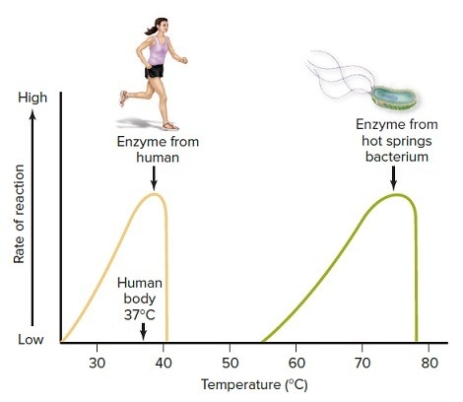
The vertical drop slightly after the peak of each curve on the figure illustrates
A) that enzymes will not work if temperatures are too hot (or too cold).
B) an increased rate of reaction.
C) a decreased temperature.
D) that temperatures only affect enzymes up to a specific temperature.
E) that enzymes are most efficient at cold temperatures.
Question
The two data curves on the figure illustrate that
A) temperature ranges are not the same for all enzyme activity.
B) temperature is not related to enzyme efficiency.
C) optimal temperature ranges are the same for all enzymes.
D) pH is not related to enzyme efficiency.
E) All answers are correct.
Question
Question
Question
Question
Question
Question
Question
Question
Question
Question
Question
Question
Question
Question
Question
Question
Question
Question
Question
Question
Question
Question
Question
Question
Question
Question
Question
Question
Question
Question
Question
Question
Question

Unlock Deck
Sign up to unlock the cards in this deck!
Unlock Deck
Unlock Deck
1/62

Play

Full screen (f)
Deck 4: The Energy of Life
1
The reactants of photosynthesis are
A) water and carbon dioxide.
B) organic compounds.
C) glucose and water.
D) glucose and carbon dioxide.
E) glucose and sunlight.
A) water and carbon dioxide.
B) organic compounds.
C) glucose and water.
D) glucose and carbon dioxide.
E) glucose and sunlight.
A
Explanation: In photosynthesis, water and carbon dioxide are converted into oxygen gas and glucose.
Explanation: In photosynthesis, water and carbon dioxide are converted into oxygen gas and glucose.
2
If you were looking for a card describing the breakdown of glucose to carbon dioxide and water,you would look in a drawer labelled with what information?
A) takes up energy, photosynthesis
B) takes up energy, cellular respiration
C) releases energy, photosynthesis
D) releases energy, cellular respiration
E) No answer is correct
A) takes up energy, photosynthesis
B) takes up energy, cellular respiration
C) releases energy, photosynthesis
D) releases energy, cellular respiration
E) No answer is correct
D
Explanation: Glucose contains a large amount of energy in its chemical bonds, energy which is released by cellular respiration.
Explanation: Glucose contains a large amount of energy in its chemical bonds, energy which is released by cellular respiration.
3
If you had to grade an exam question about oxidation-reduction reactions,you would give the most points if a student said that they
A) never occur at the same time.
B) remove electrons from both molecules involved.
C) remove protons from one molecule and join them to another molecule.
D) occur simultaneously.
E) remove oxygen from the cell.
A) never occur at the same time.
B) remove electrons from both molecules involved.
C) remove protons from one molecule and join them to another molecule.
D) occur simultaneously.
E) remove oxygen from the cell.
D
Explanation: Reduction and oxidation occur in the same reaction, thus the term "redox."
Explanation: Reduction and oxidation occur in the same reaction, thus the term "redox."
4
A ball at the top of a hill is an example of ________ and a ball rolling down the hill is an example of ________.
A) potential energy; kinetic energy
B) kinetic energy; potential energy
C) exergonic reaction; endergonic reaction
D) noncompetitive inhibition; competitive inhibition
E) competitive inhibition; noncompetitive inhibition
A) potential energy; kinetic energy
B) kinetic energy; potential energy
C) exergonic reaction; endergonic reaction
D) noncompetitive inhibition; competitive inhibition
E) competitive inhibition; noncompetitive inhibition
Unlock Deck
Unlock for access to all 62 flashcards in this deck.
Unlock Deck
k this deck
5
Cells use energy for which of the following?
A) to do work
B) to synthesize proteins
C) to expel waste
D) to move substances across membranes
E) All of the answer choices are correct.
A) to do work
B) to synthesize proteins
C) to expel waste
D) to move substances across membranes
E) All of the answer choices are correct.
Unlock Deck
Unlock for access to all 62 flashcards in this deck.
Unlock Deck
k this deck
6
In which case is the energy involved farthest from being kinetic energy?
A) heat
B) light
C) sound
D) the energy in chemical bonds
E) random molecular movement
A) heat
B) light
C) sound
D) the energy in chemical bonds
E) random molecular movement
Unlock Deck
Unlock for access to all 62 flashcards in this deck.
Unlock Deck
k this deck
7
In most cases,the chemical structure of enzymes represents a(an)
A) carbohydrate.
B) lipid.
C) ion.
D) protein.
E) inorganic molecule.
A) carbohydrate.
B) lipid.
C) ion.
D) protein.
E) inorganic molecule.
Unlock Deck
Unlock for access to all 62 flashcards in this deck.
Unlock Deck
k this deck
8
Enzymes speed chemical reactions by
A) lowering the amount of reactants that are needed.
B) maintaining temperature.
C) lowering the energy required to start a chemical reaction.
D) raising the temperature of the surroundings.
E) supplying energy to the reaction process.
A) lowering the amount of reactants that are needed.
B) maintaining temperature.
C) lowering the energy required to start a chemical reaction.
D) raising the temperature of the surroundings.
E) supplying energy to the reaction process.
Unlock Deck
Unlock for access to all 62 flashcards in this deck.
Unlock Deck
k this deck
9
When NaCl (table salt)forms,sodium (Na)loses energy by ________ and chlorine (Cl)gains energy by ________.
A) giving up an electron in oxidation; gaining an electron in reduction
B) going with its concentration gradient; going against its concentration gradient
C) going against its concentration gradient; going with its concentration gradient
D) gaining an electron in oxidation; by giving up an electron in reduction
E) gaining an electron in reduction; giving up an electron in oxidation
A) giving up an electron in oxidation; gaining an electron in reduction
B) going with its concentration gradient; going against its concentration gradient
C) going against its concentration gradient; going with its concentration gradient
D) gaining an electron in oxidation; by giving up an electron in reduction
E) gaining an electron in reduction; giving up an electron in oxidation
Unlock Deck
Unlock for access to all 62 flashcards in this deck.
Unlock Deck
k this deck
10
Oxidation is
A) the gain of oxygen by a cell.
B) the loss of electrons from an atom or molecule.
C) the loss of oxygen from a cell.
D) the gain of electrons by an atom or molecule.
E) the loss of protons by an atom or molecule.
A) the gain of oxygen by a cell.
B) the loss of electrons from an atom or molecule.
C) the loss of oxygen from a cell.
D) the gain of electrons by an atom or molecule.
E) the loss of protons by an atom or molecule.
Unlock Deck
Unlock for access to all 62 flashcards in this deck.
Unlock Deck
k this deck
11
The chemical formula for glucose is
A) C₆H₆O₆.
B) C₁₂H₆O₁₂.
C) C₁₂H₂₂O₁₁.
D) C₆H₆O₁₂.
E) C₆H₁₂O₆.
A) C₆H₆O₆.
B) C₁₂H₆O₁₂.
C) C₁₂H₂₂O₁₁.
D) C₆H₆O₁₂.
E) C₆H₁₂O₆.
Unlock Deck
Unlock for access to all 62 flashcards in this deck.
Unlock Deck
k this deck
12
Enzymes speed up reactions by lowering the activation energy of a reaction.This is analogous with
A) reducing the force a ball needs to start rolling down a hill.
B) increasing the height an apple will fall from a tree.
C) blocking a flowing river with a dam to stop the flow.
D) causing a snow storm in the middle of summer when temperatures are hot.
E) All answers are correct.
A) reducing the force a ball needs to start rolling down a hill.
B) increasing the height an apple will fall from a tree.
C) blocking a flowing river with a dam to stop the flow.
D) causing a snow storm in the middle of summer when temperatures are hot.
E) All answers are correct.
Unlock Deck
Unlock for access to all 62 flashcards in this deck.
Unlock Deck
k this deck
13
Oxidation-reduction reactions
A) transfer electrons from one molecule to another.
B) are not used by living cells.
C) transfer protons from one molecule to another.
D) reduce the amount of oxygen in the cell.
E) increase the amount of oxygen in the cell.
A) transfer electrons from one molecule to another.
B) are not used by living cells.
C) transfer protons from one molecule to another.
D) reduce the amount of oxygen in the cell.
E) increase the amount of oxygen in the cell.
Unlock Deck
Unlock for access to all 62 flashcards in this deck.
Unlock Deck
k this deck
14
The energy source that powers photosynthesis is
A) water.
B) glucose.
C) carbon dioxide.
D) sunlight.
E) oxygen.
A) water.
B) glucose.
C) carbon dioxide.
D) sunlight.
E) oxygen.
Unlock Deck
Unlock for access to all 62 flashcards in this deck.
Unlock Deck
k this deck
15
Examples of potential energy include
A) chemical bonds and concentration gradients.
B) light and chemical bonds.
C) quartz crystals vibrating in a wristwatch.
D) soil heated by sunlight.
E) light and the motion of a muscle.
A) chemical bonds and concentration gradients.
B) light and chemical bonds.
C) quartz crystals vibrating in a wristwatch.
D) soil heated by sunlight.
E) light and the motion of a muscle.
Unlock Deck
Unlock for access to all 62 flashcards in this deck.
Unlock Deck
k this deck
16
The amount of energy required to raise the temperature of one gram of water by one degree Celsius is a
A) calorie.
B) joule.
C) kilocalorie.
D) measure of density.
E) measure of light.
A) calorie.
B) joule.
C) kilocalorie.
D) measure of density.
E) measure of light.
Unlock Deck
Unlock for access to all 62 flashcards in this deck.
Unlock Deck
k this deck
17
Which statement is not directly connected with the law about energy being conserved?
A) The amount of energy in the universe is constant.
B) Energy cannot be created or destroyed.
C) Energy can be converted to other forms of energy.
D) Any energy transformation loses some energy to its surroundings as heat.
E) None of the answers are correct.
A) The amount of energy in the universe is constant.
B) Energy cannot be created or destroyed.
C) Energy can be converted to other forms of energy.
D) Any energy transformation loses some energy to its surroundings as heat.
E) None of the answers are correct.
Unlock Deck
Unlock for access to all 62 flashcards in this deck.
Unlock Deck
k this deck
18
Reduction is
A) the gain of oxygen by a cell.
B) the loss of oxygen from a cell.
C) the gain of electrons by an atom or molecule.
D) the loss of electrons by an atom or molecule.
E) the loss of protons by an atom or molecule.
A) the gain of oxygen by a cell.
B) the loss of oxygen from a cell.
C) the gain of electrons by an atom or molecule.
D) the loss of electrons by an atom or molecule.
E) the loss of protons by an atom or molecule.
Unlock Deck
Unlock for access to all 62 flashcards in this deck.
Unlock Deck
k this deck
19
Entropy is a measurement of
A) order.
B) complexity.
C) disorder.
D) organizing potential.
E) None of the answer choices are correct.
A) order.
B) complexity.
C) disorder.
D) organizing potential.
E) None of the answer choices are correct.
Unlock Deck
Unlock for access to all 62 flashcards in this deck.
Unlock Deck
k this deck
20
Redox reactions involve the loss of an electron by an electron donor,and a gain of an electron by an electron acceptor.
Unlock Deck
Unlock for access to all 62 flashcards in this deck.
Unlock Deck
k this deck
21
The diffusion of water across a selectively permeable membrane is
A) facilitated diffusion.
B) active transport.
C) a rare occurrence.
D) osmosis.
E) always beneficial to a cell.
A) facilitated diffusion.
B) active transport.
C) a rare occurrence.
D) osmosis.
E) always beneficial to a cell.
Unlock Deck
Unlock for access to all 62 flashcards in this deck.
Unlock Deck
k this deck
22
The wood in a match is made of cellulose,a polymer of glucose molecules.When you light the match heat and light are given off,indicating that a(n)________ reaction is occurring.
A) endergonic
B) kinetic energy
C) exergonic
D) potential energy
E) equilibrium
A) endergonic
B) kinetic energy
C) exergonic
D) potential energy
E) equilibrium
Unlock Deck
Unlock for access to all 62 flashcards in this deck.
Unlock Deck
k this deck
23
Plants require energy from light to perform photosynthesis in which glucose is formed from carbon dioxide and water.This is an example of
A) a reaction that releases energy.
B) kinetic energy.
C) a reaction that takes up energy.
D) potential energy.
E) equilibrium.
A) a reaction that releases energy.
B) kinetic energy.
C) a reaction that takes up energy.
D) potential energy.
E) equilibrium.
Unlock Deck
Unlock for access to all 62 flashcards in this deck.
Unlock Deck
k this deck
24
After ATP donates a phosphate group to a coupled reaction,then it becomes ADP.The ADP
A) can be recharged with the release of energy to form ATP.
B) is a waste product that will be broken down.
C) can be recharged in an equilibrium reaction to form ATP.
D) can be recharged in an oxidation reaction to form ATP.
E) can be recharged with the uptake of energy to form ATP.
A) can be recharged with the release of energy to form ATP.
B) is a waste product that will be broken down.
C) can be recharged in an equilibrium reaction to form ATP.
D) can be recharged in an oxidation reaction to form ATP.
E) can be recharged with the uptake of energy to form ATP.
Unlock Deck
Unlock for access to all 62 flashcards in this deck.
Unlock Deck
k this deck
25
Competitive inhibition of enzymes occurs
A) when a substance other than the correct substrate binds at the active site of an enzyme.
B) when a substance binds to an enzyme at a site away from the active site.
C) by denaturation of an enzyme.
D) by blocking the production of an enzyme.
E) when two enzymes bind together.
A) when a substance other than the correct substrate binds at the active site of an enzyme.
B) when a substance binds to an enzyme at a site away from the active site.
C) by denaturation of an enzyme.
D) by blocking the production of an enzyme.
E) when two enzymes bind together.
Unlock Deck
Unlock for access to all 62 flashcards in this deck.
Unlock Deck
k this deck
26
The area on the enzyme where the substrate binds is called
A) an active site.
B) a binding pocket.
C) a reaction site.
D) a catalyst site.
E) an analog.
A) an active site.
B) a binding pocket.
C) a reaction site.
D) a catalyst site.
E) an analog.
Unlock Deck
Unlock for access to all 62 flashcards in this deck.
Unlock Deck
k this deck
27
If you drop a rubber ball and it does not bounce back to the height you dropped it from.This is consistent with
A) conversion of entropy into potential energy.
B) energy being neither created nor destroyed.
C) conversion of kinetic energy into potential energy.
D) conversion of kinetic energy into entropy.
E) the tendency to increase disorder.
A) conversion of entropy into potential energy.
B) energy being neither created nor destroyed.
C) conversion of kinetic energy into potential energy.
D) conversion of kinetic energy into entropy.
E) the tendency to increase disorder.
Unlock Deck
Unlock for access to all 62 flashcards in this deck.
Unlock Deck
k this deck
28
The vertical drop slightly after the peak of each curve on the figure illustrates
A) that enzymes will not work if temperatures are too hot (or too cold).
B) an increased rate of reaction.
C) a decreased temperature.
D) that temperatures only affect enzymes up to a specific temperature.
E) that enzymes are most efficient at cold temperatures.
Unlock Deck
Unlock for access to all 62 flashcards in this deck.
Unlock Deck
k this deck
29
The two data curves on the figure illustrate that
A) temperature ranges are not the same for all enzyme activity.
B) temperature is not related to enzyme efficiency.
C) optimal temperature ranges are the same for all enzymes.
D) pH is not related to enzyme efficiency.
E) All answers are correct.
Unlock Deck
Unlock for access to all 62 flashcards in this deck.
Unlock Deck
k this deck
30
Which of the following are examples of potential energy?
A) electrons moving through the electron transport chain, proton gradient
B) electrons in chemical bonds, proton gradient, ATP
C) protons moving through ATP synthase, ATP
D) electrons moving through the electron transport chain, and protons moving through ATP synthase
E) All answer choices are correct.
A) electrons moving through the electron transport chain, proton gradient
B) electrons in chemical bonds, proton gradient, ATP
C) protons moving through ATP synthase, ATP
D) electrons moving through the electron transport chain, and protons moving through ATP synthase
E) All answer choices are correct.
Unlock Deck
Unlock for access to all 62 flashcards in this deck.
Unlock Deck
k this deck
31
Phagocytosis is an example of
A) exocytosis.
B) passive transport.
C) simple diffusion.
D) endocytosis.
E) facilitated diffusion.
A) exocytosis.
B) passive transport.
C) simple diffusion.
D) endocytosis.
E) facilitated diffusion.
Unlock Deck
Unlock for access to all 62 flashcards in this deck.
Unlock Deck
k this deck
32
If a cell contains 95% water in its cytoplasm and the environment surrounding the cell contains 90% water will flow
A) into the cell by osmosis.
B) out of the cell by active transport.
C) out of the cell by osmosis.
D) into the cell by active transport.
E) into the cell by facilitated diffusion.
A) into the cell by osmosis.
B) out of the cell by active transport.
C) out of the cell by osmosis.
D) into the cell by active transport.
E) into the cell by facilitated diffusion.
Unlock Deck
Unlock for access to all 62 flashcards in this deck.
Unlock Deck
k this deck
33
Noncompetitive inhibition of enzymes occurs
A) when a substance other than the correct substrate binds at the active site of an enzyme.
B) when a substance binds to an enzyme at a site away from the active site.
C) by denaturation of an enzyme.
D) by blocking the production of an enzyme.
E) when two enzymes bind together.
A) when a substance other than the correct substrate binds at the active site of an enzyme.
B) when a substance binds to an enzyme at a site away from the active site.
C) by denaturation of an enzyme.
D) by blocking the production of an enzyme.
E) when two enzymes bind together.
Unlock Deck
Unlock for access to all 62 flashcards in this deck.
Unlock Deck
k this deck
34
Active transport is different from simple diffusion because active transport
A) requires energy.
B) moves molecules against a concentration gradient.
C) requires the use of proteins embedded within the cell membrane.
D) moves molecules from an area of lower concentration to an area of higher concentration.
E) All answers are correct.
A) requires energy.
B) moves molecules against a concentration gradient.
C) requires the use of proteins embedded within the cell membrane.
D) moves molecules from an area of lower concentration to an area of higher concentration.
E) All answers are correct.
Unlock Deck
Unlock for access to all 62 flashcards in this deck.
Unlock Deck
k this deck
35
Which of the following are examples of kinetic energy?
A) electrons moving through the electron transport chain, protons moving through ATP synthase
B) electrons in chemical bonds, proton gradient, ATP
C) electrons moving through the electron transport chain, proton gradient
D) protons moving through ATP synthase, ATP
E) All answer choices are correct.
A) electrons moving through the electron transport chain, protons moving through ATP synthase
B) electrons in chemical bonds, proton gradient, ATP
C) electrons moving through the electron transport chain, proton gradient
D) protons moving through ATP synthase, ATP
E) All answer choices are correct.
Unlock Deck
Unlock for access to all 62 flashcards in this deck.
Unlock Deck
k this deck
36
Simple diffusion
A) requires energy.
B) utilizes proteins to move molecules across a membrane.
C) moves molecules against a concentration gradient.
D) cannot occur without a membrane present.
E) does not require energy.
A) requires energy.
B) utilizes proteins to move molecules across a membrane.
C) moves molecules against a concentration gradient.
D) cannot occur without a membrane present.
E) does not require energy.
Unlock Deck
Unlock for access to all 62 flashcards in this deck.
Unlock Deck
k this deck
37
Which of the following statements is incorrect about turgor pressure?
A) It occurs in organisms with cell walls when placed into a hypertonic environment.
B) It is necessary to keep plants from wilting.
C) It is the force of water against the inside of the cell wall.
D) It is maintained by osmosis.
E) It occurs organisms with cell walls when placed into a hypotonic environment.
A) It occurs in organisms with cell walls when placed into a hypertonic environment.
B) It is necessary to keep plants from wilting.
C) It is the force of water against the inside of the cell wall.
D) It is maintained by osmosis.
E) It occurs organisms with cell walls when placed into a hypotonic environment.
Unlock Deck
Unlock for access to all 62 flashcards in this deck.
Unlock Deck
k this deck
38
When electrons are removed from a food molecule,the molecule is
A) reduced.
B) in equilibrium.
C) oxidized.
D) polymerized.
E) conducting an endergonic reaction.
A) reduced.
B) in equilibrium.
C) oxidized.
D) polymerized.
E) conducting an endergonic reaction.
Unlock Deck
Unlock for access to all 62 flashcards in this deck.
Unlock Deck
k this deck
39
The CFTR receptor moves chloride ions out of a cell by active transport.This is an example of
A) a reaction coupled with the production of ATP.
B) an oxidation reaction.
C) a reduction reaction.
D) a reaction requiring the input of ATP.
E) equilibrium.
A) a reaction coupled with the production of ATP.
B) an oxidation reaction.
C) a reduction reaction.
D) a reaction requiring the input of ATP.
E) equilibrium.
Unlock Deck
Unlock for access to all 62 flashcards in this deck.
Unlock Deck
k this deck
40
Enzymes speed up chemical reactions.
Unlock Deck
Unlock for access to all 62 flashcards in this deck.
Unlock Deck
k this deck
41
In the section "Investigating Life: Does Natural Selection Maintain Cystic Fibrosis?," why does water leave the cell by osmosis after the active transport of chloride ions out of the cell by CFTR?
A) The cell is now in a hypertonic solution.
B) The cell is now in a hypotonic solution.
C) The cell is now in an isotonic solution.
D) The cell needs to regenerate the ATP used in active transport.
E) The cell must pump out water to avoid bursting.
A) The cell is now in a hypertonic solution.
B) The cell is now in a hypotonic solution.
C) The cell is now in an isotonic solution.
D) The cell needs to regenerate the ATP used in active transport.
E) The cell must pump out water to avoid bursting.
Unlock Deck
Unlock for access to all 62 flashcards in this deck.
Unlock Deck
k this deck
42
Energy sometimes appears spontaneously in living systems.
Unlock Deck
Unlock for access to all 62 flashcards in this deck.
Unlock Deck
k this deck
43
The chloroplasts in plant cells create energy.
Unlock Deck
Unlock for access to all 62 flashcards in this deck.
Unlock Deck
k this deck
44
In the section "Investigating Life: Does Natural Selection Maintain Cystic Fibrosis?," which infection did researchers hypothesize that the CFTR protected cystic fibrosis patients against?
A) pneumonia
B) malaria
C) staph
D) strep throat
E) cholera
A) pneumonia
B) malaria
C) staph
D) strep throat
E) cholera
Unlock Deck
Unlock for access to all 62 flashcards in this deck.
Unlock Deck
k this deck
45
If a lion eats a gazelle,before the molecules have been broken down by its cells,the lion has gained
A) potential energy.
B) kinetic energy.
C) entropy.
D) respiratory capacity.
E) enzymes for digesting grass.
A) potential energy.
B) kinetic energy.
C) entropy.
D) respiratory capacity.
E) enzymes for digesting grass.
Unlock Deck
Unlock for access to all 62 flashcards in this deck.
Unlock Deck
k this deck
46
Reduction is the gain of electrons.
Unlock Deck
Unlock for access to all 62 flashcards in this deck.
Unlock Deck
k this deck
47
Reactions that take up energy proceed spontaneously.
Unlock Deck
Unlock for access to all 62 flashcards in this deck.
Unlock Deck
k this deck
48
In the section "Investigating Life: Does Natural Selection Maintain Cystic Fibrosis?," those with the genetic mutation in the protein are resistant to cholera infections.What did the scientists hypothesize about the relationship between cystic fibrosis and cholera resistance?
A) Carriers with one copy of the defective CFTR gene have decreased resistance to cholera compared to those with no defective copies.
B) These individuals were exposed to cholera, causing mutations in their CFTR gene that can then be passed on to their children.
C) Carriers will be more likely to have children who develop cystic fibrosis.
D) Carriers with one copy of the defective CFTR gene have increased resistance to cholera compared to those with no defective copies.
E) Only carriers would be able to survive exposure to cholera.
A) Carriers with one copy of the defective CFTR gene have decreased resistance to cholera compared to those with no defective copies.
B) These individuals were exposed to cholera, causing mutations in their CFTR gene that can then be passed on to their children.
C) Carriers will be more likely to have children who develop cystic fibrosis.
D) Carriers with one copy of the defective CFTR gene have increased resistance to cholera compared to those with no defective copies.
E) Only carriers would be able to survive exposure to cholera.
Unlock Deck
Unlock for access to all 62 flashcards in this deck.
Unlock Deck
k this deck
49
Changes in the tide level can cover plants and animals that would usually not be covered by seawater.The exposure to seawater would result in the cells
A) bursting by osmosis of water.
B) dehydrating by facilitated diffusion of salts.
C) dehydrating by osmosis of water.
D) bursting by active transport of salts.
E) dehydrating by active transport of salts.
A) bursting by osmosis of water.
B) dehydrating by facilitated diffusion of salts.
C) dehydrating by osmosis of water.
D) bursting by active transport of salts.
E) dehydrating by active transport of salts.
Unlock Deck
Unlock for access to all 62 flashcards in this deck.
Unlock Deck
k this deck
50
Dye placed at one end of a beaker of otherwise pure water will
A) diffuse towards the other side.
B) remain in place.
C) slowly bleach.
D) form crystals.
E) No answer is correct.
A) diffuse towards the other side.
B) remain in place.
C) slowly bleach.
D) form crystals.
E) No answer is correct.
Unlock Deck
Unlock for access to all 62 flashcards in this deck.
Unlock Deck
k this deck
51
A bowl of sugar water is very stable.If you feed it to cells it is rapidly broken down into carbon dioxide,water,and ATP.What is the best explanation for this reaction?
A) Enzymes in the cells catalyze the breakdown of the glucose.
B) Cells use energy to break down the glucose.
C) Glucose becomes more chemically reactive inside of cells.
D) Glucose cannot be broken down outside of cells.
E) Glucose is removed from the cells by active transport.
A) Enzymes in the cells catalyze the breakdown of the glucose.
B) Cells use energy to break down the glucose.
C) Glucose becomes more chemically reactive inside of cells.
D) Glucose cannot be broken down outside of cells.
E) Glucose is removed from the cells by active transport.
Unlock Deck
Unlock for access to all 62 flashcards in this deck.
Unlock Deck
k this deck
52
Studies of fireflies show that as they produce light,they constantly recycle ATP.Why might this be?
A) ATP breakdown releases light.
B) ATP is light-sensitive.
C) ATP powers light production in fireflies.
D) Fireflies need ATP for other processes.
E) No answer is correct.
A) ATP breakdown releases light.
B) ATP is light-sensitive.
C) ATP powers light production in fireflies.
D) Fireflies need ATP for other processes.
E) No answer is correct.
Unlock Deck
Unlock for access to all 62 flashcards in this deck.
Unlock Deck
k this deck
53
Whenever ATP is produced by a chemical reaction some energy is lost into the surroundings as heat.
Unlock Deck
Unlock for access to all 62 flashcards in this deck.
Unlock Deck
k this deck
54
When the concentration gradient driving osmosis becomes larger,osmosis occurs at a faster rate.
Unlock Deck
Unlock for access to all 62 flashcards in this deck.
Unlock Deck
k this deck
55
Diffusion occurs against concentration gradients.
Unlock Deck
Unlock for access to all 62 flashcards in this deck.
Unlock Deck
k this deck
56
Potential energy is the energy of motion.
Unlock Deck
Unlock for access to all 62 flashcards in this deck.
Unlock Deck
k this deck
57
The most common way for energy-absorbing reactions to be powered in cells is for them to be coupled with the breakdown of ATP.
Unlock Deck
Unlock for access to all 62 flashcards in this deck.
Unlock Deck
k this deck
58
Reactions that break down substrates do not release any energy because enzymes are used.
Unlock Deck
Unlock for access to all 62 flashcards in this deck.
Unlock Deck
k this deck
59
Oxidation is the loss of electrons.
Unlock Deck
Unlock for access to all 62 flashcards in this deck.
Unlock Deck
k this deck
60
If a drug is designed to denature enzymes involved in digesting phenylalanine,why would patients treated with this drug develop phenylketonuria?
A) They lack an enzyme to break down phenylalanine.
B) They lack an enzyme to produce phenylalanine.
C) They produce too much phenylalanine.
D) They lack an inhibitor of an enzyme to break down phenylalanine.
E) They eat more phenylalanine than most people.
A) They lack an enzyme to break down phenylalanine.
B) They lack an enzyme to produce phenylalanine.
C) They produce too much phenylalanine.
D) They lack an inhibitor of an enzyme to break down phenylalanine.
E) They eat more phenylalanine than most people.
Unlock Deck
Unlock for access to all 62 flashcards in this deck.
Unlock Deck
k this deck
61
Some antibiotics target enzymes specific to bacteria. Some work by binding to the active site and; therefore,act as noncompetitive inhibitors.
Unlock Deck
Unlock for access to all 62 flashcards in this deck.
Unlock Deck
k this deck
62
Phagocytosis is the process used by cells to bring in small amounts of fluid.
Unlock Deck
Unlock for access to all 62 flashcards in this deck.
Unlock Deck
k this deck
Unlock Deck
Unlock for access to all 62 flashcards in this deck.






