







 Chat with AI

Deck 41: Immunology: Animal Defense Systems
Full screen (f)

Question

Question
Question
Question
Question
Question
Question
Question
Question
Question
Question
Question
Question
Question
Question
Question
Question
Question
Question
Question
Question
Question
Question
Question
Refer to the figure showing an immune response to an antigen. 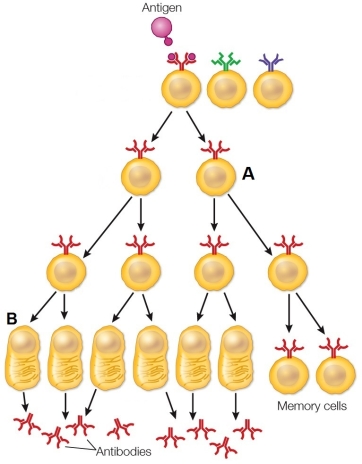 The cell labeled "A" is a _______ cell involved in a(n) _______ immune response.
A) mast; innate
B) B lymphocyte; humoral
C) T lymphocyte; cellular
D) T-helper; adaptive
E) plasma; humoral
The cell labeled "A" is a _______ cell involved in a(n) _______ immune response.A) mast; innate
B) B lymphocyte; humoral
C) T lymphocyte; cellular
D) T-helper; adaptive
E) plasma; humoral
Question
Question
Question
Question
Question
Question
Question
Question
Question
Question
Question
Refer to the figure showing an immune response to an antigen. 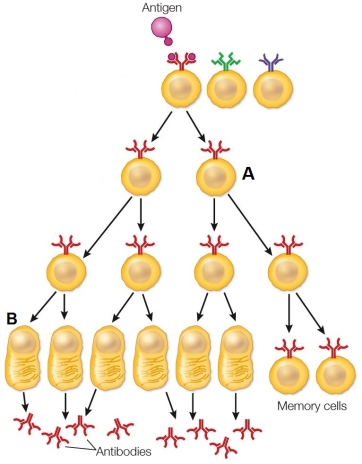 The cell labeled "B" is a(n) _______ cell, which _______.
A) plasma cell; contributes to a primary immune response
B) T-helper cell; binds to antigen‒MHC complexes in a primary immune response
C) B lymphocyte; binds to antigen‒MHC complexes presented by macrophages
D) effector B cell; provides cells in a secondary immune response
E) memory cell; secretes antibodies in a primary immune response
The cell labeled "B" is a(n) _______ cell, which _______.A) plasma cell; contributes to a primary immune response
B) T-helper cell; binds to antigen‒MHC complexes in a primary immune response
C) B lymphocyte; binds to antigen‒MHC complexes presented by macrophages
D) effector B cell; provides cells in a secondary immune response
E) memory cell; secretes antibodies in a primary immune response
Question
Question
Refer to the figure. 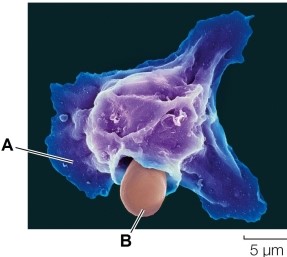 The figure is most likely illustrating
A) a normal cell (A) and an attached class I MHC protein (B).
B) part of an adaptive immune response in which a B lymphocyte (A) is presenting a portion of a virus (B) on its cell surface.
C) part of an adaptive immune system in which a cytotoxic T cell (A) is shown with an attached CD8 protein (B).
D) part of an innate immune response in which a macrophage (A) is presenting an antigen to a T-helper cell (B).
E) part of an innate immune response in which a phagocyte (A) is phagocytosing a foreign cell such as a bacterial or yeast cell (B).
The figure is most likely illustratingA) a normal cell (A) and an attached class I MHC protein (B).
B) part of an adaptive immune response in which a B lymphocyte (A) is presenting a portion of a virus (B) on its cell surface.
C) part of an adaptive immune system in which a cytotoxic T cell (A) is shown with an attached CD8 protein (B).
D) part of an innate immune response in which a macrophage (A) is presenting an antigen to a T-helper cell (B).
E) part of an innate immune response in which a phagocyte (A) is phagocytosing a foreign cell such as a bacterial or yeast cell (B).
Question
Question
Question
Question
Question
Question
Question
Question
Question
Question
Question
Question
Question
Question
Question
Question
Question
Question
Question
Question
Question
Question
Question
Question
Question
Question
Question
Refer to the figure showing a receptor on a cell. 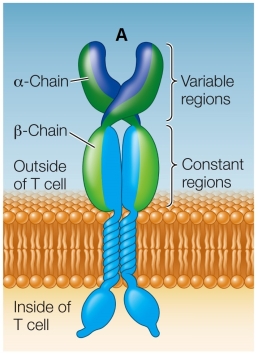 What type of cell is shown in the diagram?
A) B lymphocyte
B) T lymphocyte
C) Plasma cell
D) Mast cell
E) Macrophage
What type of cell is shown in the diagram?A) B lymphocyte
B) T lymphocyte
C) Plasma cell
D) Mast cell
E) Macrophage
Question
Question
Question
Question
Question
Question
Refer to the figure showing a receptor on a cell. 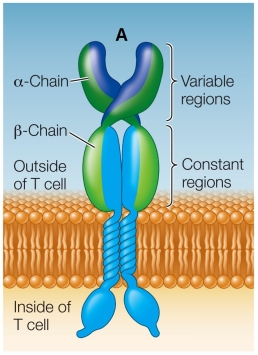 Which binds to the region of the receptor indicated by the letter "A"?
A) Antigen only
B) MHC protein only
C) Antigen‒MHC complex
D) Allergen
E) Antibody
Which binds to the region of the receptor indicated by the letter "A"?A) Antigen only
B) MHC protein only
C) Antigen‒MHC complex
D) Allergen
E) Antibody
Question
Question
Question
Refer to the figure showing two different types of hammer. 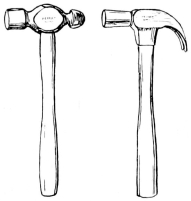 If you compare the hammers to T cell receptors, the handles of the hammers are most analogous to the
A) variable regions.
B) constant regions.
C) α chains.
D) γ chains.
E) antigen‒MHC binding region.
If you compare the hammers to T cell receptors, the handles of the hammers are most analogous to theA) variable regions.
B) constant regions.
C) α chains.
D) γ chains.
E) antigen‒MHC binding region.
Question
Question
Question
Question
Question
Question
Refer to the figure showing different types of hammer. 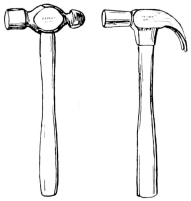 If you compare the hammers to T cell receptors, the heads of the hammers are most analogous to the
A) variable regions.
B) constant regions.
C) α chains.
D) γ chains.
E) hydrophobic region.
If you compare the hammers to T cell receptors, the heads of the hammers are most analogous to theA) variable regions.
B) constant regions.
C) α chains.
D) γ chains.
E) hydrophobic region.
Question

Unlock Deck
Sign up to unlock the cards in this deck!
Unlock Deck
Unlock Deck
1/265

Play

Full screen (f)
Deck 41: Immunology: Animal Defense Systems
1
Cruise ship passengers find themselves with flu-like symptoms for the first 4-5 days of their trip, but eventually recover and enjoy their trip.Which defense listed is last to be involved in their recovery?
A) Antibodies
B) Lysozymes
C) Mucus
D) Their skin, as an example of an innate defense
E) Phagocytosis
A) Antibodies
B) Lysozymes
C) Mucus
D) Their skin, as an example of an innate defense
E) Phagocytosis
A
2
A college student taking a 24-hour bus trip to her summer internship is surrounded by people sniffling and sneezing.She cannot escape the pathogen involved, but she does not share the others' symptoms during her trip.Which of the following is not involved in her resistance to the illness?
A) Mucus
B) Lysozymes
C) T cells
D) Skin
E) Phagocytosis
A) Mucus
B) Lysozymes
C) T cells
D) Skin
E) Phagocytosis
C
3
Which blood components are generally restricted to the vessels and heart in a closed circulatory system?
A) Platelets
B) White blood cells
C) Red blood cells
D) Neutrophils
E) Macrophages
A) Platelets
B) White blood cells
C) Red blood cells
D) Neutrophils
E) Macrophages
C
4
Which are white blood cells that release histamine?
A) Dendritic cells
B) T cells
C) Basophils
D) Macrophages
E) Eosinophils
A) Dendritic cells
B) T cells
C) Basophils
D) Macrophages
E) Eosinophils
Unlock Deck
Unlock for access to all 265 flashcards in this deck.
Unlock Deck
k this deck
5
Which substance is most likely responsible for fever during inflammation?
A) Fibrinogen
B) Complement proteins
C) Cytokines
D) Class I MHC proteins
E) Class II MHC proteins
A) Fibrinogen
B) Complement proteins
C) Cytokines
D) Class I MHC proteins
E) Class II MHC proteins
Unlock Deck
Unlock for access to all 265 flashcards in this deck.
Unlock Deck
k this deck
6
Which cell is a leukocyte?
A) Platelet
B) Red blood cell
C) Dendritic cell
D) Neuron
E) Bone cell
A) Platelet
B) Red blood cell
C) Dendritic cell
D) Neuron
E) Bone cell
Unlock Deck
Unlock for access to all 265 flashcards in this deck.
Unlock Deck
k this deck
7
The American lobster is susceptible to a bacterial infection that eats holes in its shell.It is likely that an environmental factor, such as warmer ocean temperatures, is compromising the animal's immune response.Which immune defense is most likely to be the first that is compromised, allowing the pathogenic bacteria to get a foothold?
A) Innate: pathogen-associated molecular patterns (PAMPs)
B) Innate: phagocytes in the blood
C) Innate: physical barrier
D) Adaptive: B lymphocytes
E) Adaptive: T-helper cells
A) Innate: pathogen-associated molecular patterns (PAMPs)
B) Innate: phagocytes in the blood
C) Innate: physical barrier
D) Adaptive: B lymphocytes
E) Adaptive: T-helper cells
Unlock Deck
Unlock for access to all 265 flashcards in this deck.
Unlock Deck
k this deck
8
Which statement about innate and adaptive defenses is true?
A) Defense systems involve recognition of self from nonself.
B) Innate defenses typically act more slowly than adaptive defenses.
C) Adaptive defense mechanisms are typically the body's first line of defense.
D) Antibody proteins are an example of an innate defense.
E) Innate defenses are called specific defenses.
A) Defense systems involve recognition of self from nonself.
B) Innate defenses typically act more slowly than adaptive defenses.
C) Adaptive defense mechanisms are typically the body's first line of defense.
D) Antibody proteins are an example of an innate defense.
E) Innate defenses are called specific defenses.
Unlock Deck
Unlock for access to all 265 flashcards in this deck.
Unlock Deck
k this deck
9
Which reaction is involved in an immune adaptive response after exposure to a pathogen?
A) An increase in lysozyme production
B) Inflammation at the site of exposure
C) Increased flow of mucus
D) Recognition of infected cells by T cells
E) Phagocytosis of the pathogen is observed
A) An increase in lysozyme production
B) Inflammation at the site of exposure
C) Increased flow of mucus
D) Recognition of infected cells by T cells
E) Phagocytosis of the pathogen is observed
Unlock Deck
Unlock for access to all 265 flashcards in this deck.
Unlock Deck
k this deck
10
Which is a key trait of the adaptive immunity response?
A) The ability to respond in a nonspecific way to a wide diversity of foreign molecules and organisms
B) Typically a more rapid response time than an innate immunity response
C) Relies on physical barriers such as skin
D) Immunological memory that often is long-lasting
E) Secretes defensins against pathogenic bacteria and viruses
A) The ability to respond in a nonspecific way to a wide diversity of foreign molecules and organisms
B) Typically a more rapid response time than an innate immunity response
C) Relies on physical barriers such as skin
D) Immunological memory that often is long-lasting
E) Secretes defensins against pathogenic bacteria and viruses
Unlock Deck
Unlock for access to all 265 flashcards in this deck.
Unlock Deck
k this deck
11
Which consists primarily of lymphoid tissue?
A) Pancreas
B) Thymus
C) Lung
D) Liver
E) Red blood cells
A) Pancreas
B) Thymus
C) Lung
D) Liver
E) Red blood cells
Unlock Deck
Unlock for access to all 265 flashcards in this deck.
Unlock Deck
k this deck
12
Binding of a molecule from a pathogen to a receptor initiates a signal transduction pathway.Which represents the correct order of events in this pathway?
A) Change in shape of NF-κB binding of NF-κB to the promoter activation of toll-like receptor transcription of defense genes
B) Binding of NF-κB to the promoter change in shape of NF-κB activation of toll-like receptor transcription of defense genes
C) Activation of toll-like receptor change in shape of NF-κB binding of NF-κB to the promoter ranscription of defense genes
D) Activation of toll-like receptor binding of NF-κB to the promoter change in shape of NF-κB transcription of defense genes
E) Binding of NF-κB to the promoter activation of toll-like receptor transcription of defense genes change in shape of NF-κB
A) Change in shape of NF-κB binding of NF-κB to the promoter activation of toll-like receptor transcription of defense genes
B) Binding of NF-κB to the promoter change in shape of NF-κB activation of toll-like receptor transcription of defense genes
C) Activation of toll-like receptor change in shape of NF-κB binding of NF-κB to the promoter ranscription of defense genes
D) Activation of toll-like receptor binding of NF-κB to the promoter change in shape of NF-κB transcription of defense genes
E) Binding of NF-κB to the promoter activation of toll-like receptor transcription of defense genes change in shape of NF-κB
Unlock Deck
Unlock for access to all 265 flashcards in this deck.
Unlock Deck
k this deck
13
Which statement is true?
A) MHC proteins can act as nonself antigens in tissue transplants between one individual and another.
B) MHC proteins are displayed only on specialized antigen-presenting cells such as macrophages.
C) Developing T cells that recognize the body's own MHC proteins undergo apoptosis in a normally functioning body.
D) In transplants of tissues from one individual to another, the material is usually recognized as self and is not rejected.
E) Rejection of transplanted tissue can be avoided if the patient is treated with a drug that suppresses the humoral immune response.
A) MHC proteins can act as nonself antigens in tissue transplants between one individual and another.
B) MHC proteins are displayed only on specialized antigen-presenting cells such as macrophages.
C) Developing T cells that recognize the body's own MHC proteins undergo apoptosis in a normally functioning body.
D) In transplants of tissues from one individual to another, the material is usually recognized as self and is not rejected.
E) Rejection of transplanted tissue can be avoided if the patient is treated with a drug that suppresses the humoral immune response.
Unlock Deck
Unlock for access to all 265 flashcards in this deck.
Unlock Deck
k this deck
14
Many bacteria and fungi typically live and reproduce on the skin without causing disease.Therefore, they can be considered
A) microcytes.
B) ectocytes.
C) pathogens.
D) normal flora.
E) normal fauna.
A) microcytes.
B) ectocytes.
C) pathogens.
D) normal flora.
E) normal fauna.
Unlock Deck
Unlock for access to all 265 flashcards in this deck.
Unlock Deck
k this deck
15
Which is found in blood but not in lymph?
A) Macrophage
B) T lymphocyte
C) Basophil
D) Neutrophil
E) Red blood cell
A) Macrophage
B) T lymphocyte
C) Basophil
D) Neutrophil
E) Red blood cell
Unlock Deck
Unlock for access to all 265 flashcards in this deck.
Unlock Deck
k this deck
16
For every white blood cell in a given volume of human blood, there are about _______ red blood cells.
A) 2
B) 10
C) 50
D) 100
E) 1,000
A) 2
B) 10
C) 50
D) 100
E) 1,000
Unlock Deck
Unlock for access to all 265 flashcards in this deck.
Unlock Deck
k this deck
17
B cells mature from undifferentiated stem cells in
A) the thymus.
B) lymph nodes.
C) bone marrow.
D) the spleen.
E) circulating blood.
A) the thymus.
B) lymph nodes.
C) bone marrow.
D) the spleen.
E) circulating blood.
Unlock Deck
Unlock for access to all 265 flashcards in this deck.
Unlock Deck
k this deck
18
Which statement about the toll-like receptors is true?
A) They are found in vertebrates, but have yet to been found in invertebrates.
B) They are part of an innate defense response against pathogens.
C) They bind to antibodies.
D) Binding initiates a cytoplasmic response without a nuclear response.
E) The signal transduction pathway triggered by binding changes the shape of NF-κB, preventing it from entering the nucleus.
A) They are found in vertebrates, but have yet to been found in invertebrates.
B) They are part of an innate defense response against pathogens.
C) They bind to antibodies.
D) Binding initiates a cytoplasmic response without a nuclear response.
E) The signal transduction pathway triggered by binding changes the shape of NF-κB, preventing it from entering the nucleus.
Unlock Deck
Unlock for access to all 265 flashcards in this deck.
Unlock Deck
k this deck
19
Which statement about lymph is true?
A) It is filtered in the lymph nodes.
B) It contains fluid derived from blood, but no blood cells.
C) It is retained within lymph vessels without traveling in arteries or veins.
D) It contains red blood cells.
E) It travels primarily in arterioles and venuoles.
A) It is filtered in the lymph nodes.
B) It contains fluid derived from blood, but no blood cells.
C) It is retained within lymph vessels without traveling in arteries or veins.
D) It contains red blood cells.
E) It travels primarily in arterioles and venuoles.
Unlock Deck
Unlock for access to all 265 flashcards in this deck.
Unlock Deck
k this deck
20
Many passengers on a cruise ship at sea are exposed to a norovirus, which causes flu-like symptoms.Among the first components that a passenger's immune system produces in fighting the virus, is/are
A) antibodies.
B) mucus.
C) natural killer cells.
D) T lymphocytes.
E) B lymphocytes.
A) antibodies.
B) mucus.
C) natural killer cells.
D) T lymphocytes.
E) B lymphocytes.
Unlock Deck
Unlock for access to all 265 flashcards in this deck.
Unlock Deck
k this deck
21
Compared to the secondary immune response of the adaptive immune system, the primary immune response is _______ powerful and lasts _______ amount of time.
A) more; a longer
B) more; a shorter
C) more; the same
D) less; a shorter
E) less; a longer
A) more; a longer
B) more; a shorter
C) more; the same
D) less; a shorter
E) less; a longer
Unlock Deck
Unlock for access to all 265 flashcards in this deck.
Unlock Deck
k this deck
22
T cells mature in
A) the thymus.
B) lymph nodes.
C) bone marrow.
D) the spleen.
E) the thoracic duct.
A) the thymus.
B) lymph nodes.
C) bone marrow.
D) the spleen.
E) the thoracic duct.
Unlock Deck
Unlock for access to all 265 flashcards in this deck.
Unlock Deck
k this deck
23
Which reaction supports the hypothesis that a person is undergoing an innate immune response after exposure to a pathogen?
A) A decrease in defensin production
B) An increase in lysozyme production
C) Decreased flow of mucus
D) Increased antibody production
E) Dry skin
A) A decrease in defensin production
B) An increase in lysozyme production
C) Decreased flow of mucus
D) Increased antibody production
E) Dry skin
Unlock Deck
Unlock for access to all 265 flashcards in this deck.
Unlock Deck
k this deck
24
Refer to the figure showing an immune response to an antigen. The cell labeled "A" is a _______ cell involved in a(n) _______ immune response.
A) mast; innate
B) B lymphocyte; humoral
C) T lymphocyte; cellular
D) T-helper; adaptive
E) plasma; humoral
The cell labeled "A" is a _______ cell involved in a(n) _______ immune response.A) mast; innate
B) B lymphocyte; humoral
C) T lymphocyte; cellular
D) T-helper; adaptive
E) plasma; humoral
Unlock Deck
Unlock for access to all 265 flashcards in this deck.
Unlock Deck
k this deck
25
Which statement about natural killer cells is true?
A) They are a class of phagocytes.
B) They can distinguish between normal cells and cells that have been infected by viruses.
C) They release antibodies.
D) They inject defensins into targeted cells.
E) They are unable to recognize cells that form tumors.
A) They are a class of phagocytes.
B) They can distinguish between normal cells and cells that have been infected by viruses.
C) They release antibodies.
D) They inject defensins into targeted cells.
E) They are unable to recognize cells that form tumors.
Unlock Deck
Unlock for access to all 265 flashcards in this deck.
Unlock Deck
k this deck
26
Defensins, which are toxic to a wide range of pathogens, are produced by
A) lymph nodes.
B) mast cells.
C) bone marrow.
D) mucous membranes.
E) the thymus.
A) lymph nodes.
B) mast cells.
C) bone marrow.
D) mucous membranes.
E) the thymus.
Unlock Deck
Unlock for access to all 265 flashcards in this deck.
Unlock Deck
k this deck
27
If you get a splinter in your hand, your body responds with a number of inflammation and wound-healing responses.Which is one of those responses?
A) Histamines cause capillaries to constrict.
B) Lymphocytes engulf bacteria and other dead cells.
C) Complement proteins dissolve the clot that forms.
D) Some complement proteins elevate body temperature.
E) Growth factors from white blood cells and platelets stimulate cell division in the skin.
A) Histamines cause capillaries to constrict.
B) Lymphocytes engulf bacteria and other dead cells.
C) Complement proteins dissolve the clot that forms.
D) Some complement proteins elevate body temperature.
E) Growth factors from white blood cells and platelets stimulate cell division in the skin.
Unlock Deck
Unlock for access to all 265 flashcards in this deck.
Unlock Deck
k this deck
28
Which defense is most likely to be provided by complement proteins?
A) Lysing of invading cells
B) Deactivation of the inflammation response
C) Insertion of nitric oxide into microbes
D) Production of interferons
E) Promotion of genetic recombination
A) Lysing of invading cells
B) Deactivation of the inflammation response
C) Insertion of nitric oxide into microbes
D) Production of interferons
E) Promotion of genetic recombination
Unlock Deck
Unlock for access to all 265 flashcards in this deck.
Unlock Deck
k this deck
29
Which statement about interferons is true?
A) They signal neighboring cells to secrete antibodies.
B) They increase resistance of neighboring cells to infection.
C) They are a cyclic compound similar to cyclic AMP.
D) They are produced by bacteria during bacterial infections.
E) They are not considered part of an immune response.
A) They signal neighboring cells to secrete antibodies.
B) They increase resistance of neighboring cells to infection.
C) They are a cyclic compound similar to cyclic AMP.
D) They are produced by bacteria during bacterial infections.
E) They are not considered part of an immune response.
Unlock Deck
Unlock for access to all 265 flashcards in this deck.
Unlock Deck
k this deck
30
If you come down with a streptococcal bacterial infection that results in your getting strep throat, you are likely to suffer from a fever, sore throat, headache, nausea, and even vomiting.At least one of these symptoms may be useful to your recovery because
A) the high temperature of a fever is an adaptive immune response that can bring phagocytes to the area.
B) the high temperature of a fever is an innate immune response that can inhibit bacterial growth.
C) the pain of the sore throat causes prostaglandins to be secreted as part of the innate immune response, decreasing the sensitivity to pain.
D) the pain of the sore throat causes prostaglandins to be secreted as part of the adaptive immune response, mobilizing phagocytes to the area.
E) vomiting is part of an adaptive immune response, reducing the bacterial load of your stomach and upper digestive tract.
A) the high temperature of a fever is an adaptive immune response that can bring phagocytes to the area.
B) the high temperature of a fever is an innate immune response that can inhibit bacterial growth.
C) the pain of the sore throat causes prostaglandins to be secreted as part of the innate immune response, decreasing the sensitivity to pain.
D) the pain of the sore throat causes prostaglandins to be secreted as part of the adaptive immune response, mobilizing phagocytes to the area.
E) vomiting is part of an adaptive immune response, reducing the bacterial load of your stomach and upper digestive tract.
Unlock Deck
Unlock for access to all 265 flashcards in this deck.
Unlock Deck
k this deck
31
The _______ acid in gastric juice is lethal to many pathogens.
A) sulfuric
B) carbolic
C) formic
D) hydrochloric
E) protease
A) sulfuric
B) carbolic
C) formic
D) hydrochloric
E) protease
Unlock Deck
Unlock for access to all 265 flashcards in this deck.
Unlock Deck
k this deck
32
Which cells release histamines when tissues are damaged?
A) Macrophages
B) B lymphocytes
C) Mast cells
D) Monocytes
E) Phagocytes
A) Macrophages
B) B lymphocytes
C) Mast cells
D) Monocytes
E) Phagocytes
Unlock Deck
Unlock for access to all 265 flashcards in this deck.
Unlock Deck
k this deck
33
Inflammation occurs when _______ release _______.
A) mast cells; histamine
B) neutrophils; toxins
C) B cells; histamine
D) mast cells; toxins
E) neutrophils; antihistamine
A) mast cells; histamine
B) neutrophils; toxins
C) B cells; histamine
D) mast cells; toxins
E) neutrophils; antihistamine
Unlock Deck
Unlock for access to all 265 flashcards in this deck.
Unlock Deck
k this deck
34
Which statement about the complement system is true?
A) It consists of fewer than 10 different proteins.
B) It is found in all organisms with an immune system.
C) It lyses invading cells.
D) It consists of highly folded membranes that capture pathogens.
E) It functions within blood vessels rather than tissues to attract phagocytes.
A) It consists of fewer than 10 different proteins.
B) It is found in all organisms with an immune system.
C) It lyses invading cells.
D) It consists of highly folded membranes that capture pathogens.
E) It functions within blood vessels rather than tissues to attract phagocytes.
Unlock Deck
Unlock for access to all 265 flashcards in this deck.
Unlock Deck
k this deck
35
Refer to the figure showing an immune response to an antigen. The cell labeled "B" is a(n) _______ cell, which _______.
A) plasma cell; contributes to a primary immune response
B) T-helper cell; binds to antigen‒MHC complexes in a primary immune response
C) B lymphocyte; binds to antigen‒MHC complexes presented by macrophages
D) effector B cell; provides cells in a secondary immune response
E) memory cell; secretes antibodies in a primary immune response
The cell labeled "B" is a(n) _______ cell, which _______.A) plasma cell; contributes to a primary immune response
B) T-helper cell; binds to antigen‒MHC complexes in a primary immune response
C) B lymphocyte; binds to antigen‒MHC complexes presented by macrophages
D) effector B cell; provides cells in a secondary immune response
E) memory cell; secretes antibodies in a primary immune response
Unlock Deck
Unlock for access to all 265 flashcards in this deck.
Unlock Deck
k this deck
36
Lymphocytes specific for certain antigens proliferate by a process known as
A) effector selection.
B) clonal anergy.
C) class switching.
D) clonal selection.
E) monoclonal formation.
A) effector selection.
B) clonal anergy.
C) class switching.
D) clonal selection.
E) monoclonal formation.
Unlock Deck
Unlock for access to all 265 flashcards in this deck.
Unlock Deck
k this deck
37
Refer to the figure. The figure is most likely illustrating
A) a normal cell (A) and an attached class I MHC protein (B).
B) part of an adaptive immune response in which a B lymphocyte (A) is presenting a portion of a virus (B) on its cell surface.
C) part of an adaptive immune system in which a cytotoxic T cell (A) is shown with an attached CD8 protein (B).
D) part of an innate immune response in which a macrophage (A) is presenting an antigen to a T-helper cell (B).
E) part of an innate immune response in which a phagocyte (A) is phagocytosing a foreign cell such as a bacterial or yeast cell (B).
The figure is most likely illustratingA) a normal cell (A) and an attached class I MHC protein (B).
B) part of an adaptive immune response in which a B lymphocyte (A) is presenting a portion of a virus (B) on its cell surface.
C) part of an adaptive immune system in which a cytotoxic T cell (A) is shown with an attached CD8 protein (B).
D) part of an innate immune response in which a macrophage (A) is presenting an antigen to a T-helper cell (B).
E) part of an innate immune response in which a phagocyte (A) is phagocytosing a foreign cell such as a bacterial or yeast cell (B).
Unlock Deck
Unlock for access to all 265 flashcards in this deck.
Unlock Deck
k this deck
38
Epitopes are
A) molecules produced by mast cells.
B) produced by clonal selection.
C) specific sites on antigens that are recognized by the immune system.
D) responsible for immunological tolerance.
E) antibodies that were first discovered by Jenner.
A) molecules produced by mast cells.
B) produced by clonal selection.
C) specific sites on antigens that are recognized by the immune system.
D) responsible for immunological tolerance.
E) antibodies that were first discovered by Jenner.
Unlock Deck
Unlock for access to all 265 flashcards in this deck.
Unlock Deck
k this deck
39
Each B cell can produce _______ specific antibody(ies) with a particular amino acid sequence.
A) 1
B) 2 to 4
C) an average of 6
D) 20-100
E) over a million
A) 1
B) 2 to 4
C) an average of 6
D) 20-100
E) over a million
Unlock Deck
Unlock for access to all 265 flashcards in this deck.
Unlock Deck
k this deck
40
If you come down with the flu, your body will launch an adaptive immune attack against the flu virus.During the recognition phase,
A) an antigen of the virus will be presented to T cells by an antigen-presenting cell.
B) a T-helper cell will recognize the viral antigen and stimulate B cells and cytotoxic T cells to divide.
C) cytotoxic T cells will recognize the virus-infected cells and kill them.
D) B cells will recognize the viral particles and produce antibodies against them.
E) antibodies will recognize the viral antigens, bind to them, and attract phagocytes.
A) an antigen of the virus will be presented to T cells by an antigen-presenting cell.
B) a T-helper cell will recognize the viral antigen and stimulate B cells and cytotoxic T cells to divide.
C) cytotoxic T cells will recognize the virus-infected cells and kill them.
D) B cells will recognize the viral particles and produce antibodies against them.
E) antibodies will recognize the viral antigens, bind to them, and attract phagocytes.
Unlock Deck
Unlock for access to all 265 flashcards in this deck.
Unlock Deck
k this deck
41
Which antibody class is most likely to trigger a large release of histamines?
A) IgE
B) IgG
C) IgM
D) IgL
E) Monoclonal
A) IgE
B) IgG
C) IgM
D) IgL
E) Monoclonal
Unlock Deck
Unlock for access to all 265 flashcards in this deck.
Unlock Deck
k this deck
42
In human blood, the most abundant antibody class is
A) IgE.
B) IgM.
C) IgG.
D) cytokine.
E) monoclonal.
A) IgE.
B) IgM.
C) IgG.
D) cytokine.
E) monoclonal.
Unlock Deck
Unlock for access to all 265 flashcards in this deck.
Unlock Deck
k this deck
43
Antigens can bind to an antibody at _______ site(s); binding occurs at the _______ regions of the antibody.
A) one; constant
B) one; variable
C) one; specific
D) two; variable
E) two; constant
A) one; constant
B) one; variable
C) one; specific
D) two; variable
E) two; constant
Unlock Deck
Unlock for access to all 265 flashcards in this deck.
Unlock Deck
k this deck
44
The extraordinary diversity of antibodies results in part from
A) the action of monoclonal antibodies.
B) the splicing of protein molecules.
C) the action of cytotoxic T cells.
D) the rearrangement of genes.
E) their remarkable nonspecificity.
A) the action of monoclonal antibodies.
B) the splicing of protein molecules.
C) the action of cytotoxic T cells.
D) the rearrangement of genes.
E) their remarkable nonspecificity.
Unlock Deck
Unlock for access to all 265 flashcards in this deck.
Unlock Deck
k this deck
45
The removal of immature B and T cells is called clonal
A) anergy.
B) deletion.
C) selection.
D) attenuation.
E) inactivation.
A) anergy.
B) deletion.
C) selection.
D) attenuation.
E) inactivation.
Unlock Deck
Unlock for access to all 265 flashcards in this deck.
Unlock Deck
k this deck
46
Which statement about memory cells is true?
A) Division produces memory cells but not effector cells.
B) They live for shorter periods of time than effector cells.
C) They are responsible for the rapidity and efficiency of secondary immune responses.
D) They are produced during clonal deletion.
E) They divide at a rapid rate when not responding to an immunological challenge.
A) Division produces memory cells but not effector cells.
B) They live for shorter periods of time than effector cells.
C) They are responsible for the rapidity and efficiency of secondary immune responses.
D) They are produced during clonal deletion.
E) They divide at a rapid rate when not responding to an immunological challenge.
Unlock Deck
Unlock for access to all 265 flashcards in this deck.
Unlock Deck
k this deck
47
Which event must take place for a B cell to become an antibody-secreting plasma cell?
A) Monoclonal antibody production of two distinct epitopes per antibody
B) Binding to an antigen by the B cell and a T-helper cell with the same specificity as the B cell
C) The production of IgE, followed by production of IgG
D) The production of IgG, followed by production of IgE
E) The activation of class I MHC proteins
A) Monoclonal antibody production of two distinct epitopes per antibody
B) Binding to an antigen by the B cell and a T-helper cell with the same specificity as the B cell
C) The production of IgE, followed by production of IgG
D) The production of IgG, followed by production of IgE
E) The activation of class I MHC proteins
Unlock Deck
Unlock for access to all 265 flashcards in this deck.
Unlock Deck
k this deck
48
Which immunoglobulin is involved with the inflammatory response and is found bound to mast cells?
A) IgA
B) IgD
C) IgE
D) IgG
E) IgM
A) IgA
B) IgD
C) IgE
D) IgG
E) IgM
Unlock Deck
Unlock for access to all 265 flashcards in this deck.
Unlock Deck
k this deck
49
If the vaccination rate for hepatitis B virus in a given country is at 60 percent of the population, it is reasonable to conclude that
A) "herd immunity" is in place.
B) another 10‒20 percent of the population would have to be immunized before the disease is controlled or eradicated.
C) transmission to infants will cease.
D) older people are extremely unlikely to contract the disease.
E) further immunizations will not be cost effective.
A) "herd immunity" is in place.
B) another 10‒20 percent of the population would have to be immunized before the disease is controlled or eradicated.
C) transmission to infants will cease.
D) older people are extremely unlikely to contract the disease.
E) further immunizations will not be cost effective.
Unlock Deck
Unlock for access to all 265 flashcards in this deck.
Unlock Deck
k this deck
50
Smallpox last occurred as a human pathogen
A) in 432 BCE.
B) during the U.S. Civil War.
C) during the French Revolution.
D) in 1938.
E) in 1978.
A) in 432 BCE.
B) during the U.S. Civil War.
C) during the French Revolution.
D) in 1938.
E) in 1978.
Unlock Deck
Unlock for access to all 265 flashcards in this deck.
Unlock Deck
k this deck
51
A body's tolerance to its own molecules involves
A) suppression of the cellular immune response.
B) the presence of class II MHC molecules on all cells.
C) the presence of CD4 on most cells.
D) apoptosis of all cells with class I MHC self antigens.
E) the removal of immature B or T cells that show the potential to mount a response against self antigens.
A) suppression of the cellular immune response.
B) the presence of class II MHC molecules on all cells.
C) the presence of CD4 on most cells.
D) apoptosis of all cells with class I MHC self antigens.
E) the removal of immature B or T cells that show the potential to mount a response against self antigens.
Unlock Deck
Unlock for access to all 265 flashcards in this deck.
Unlock Deck
k this deck
52
Which is not considered one of the mechanisms that generates diversity in the human immune response?
A) DNA rearrangements within B cells during their differentiation
B) Insertion of RNA sequences into the DNA coding for antibody production
C) Combinations of different alleles at each of several loci within immunoglobulin supergenes
D) Spontaneous mutations in immunoglobulin genes
E) DNA recombination events during B cell development
A) DNA rearrangements within B cells during their differentiation
B) Insertion of RNA sequences into the DNA coding for antibody production
C) Combinations of different alleles at each of several loci within immunoglobulin supergenes
D) Spontaneous mutations in immunoglobulin genes
E) DNA recombination events during B cell development
Unlock Deck
Unlock for access to all 265 flashcards in this deck.
Unlock Deck
k this deck
53
If you were vaccinated against measles as a child, you still have immunity to the disease decades later because
A) plasma cells secrete cytokines.
B) effector T cells secrete antibodies.
C) vaccinations initiate a secondary immune response.
D) memory B cells can persist in the body for several decades.
E) antigenic determinants from the measles virus remain in your system for decades.
A) plasma cells secrete cytokines.
B) effector T cells secrete antibodies.
C) vaccinations initiate a secondary immune response.
D) memory B cells can persist in the body for several decades.
E) antigenic determinants from the measles virus remain in your system for decades.
Unlock Deck
Unlock for access to all 265 flashcards in this deck.
Unlock Deck
k this deck
54
Which statement about the humoral immune response is true?
A) It is directed against antigens that have become established within a cell.
B) It is carried out by T cells.
C) It involves soluble antibodies.
D) It uses defensins to defend against pathogenic bacteria
E) It is part of the innate immune system
A) It is directed against antigens that have become established within a cell.
B) It is carried out by T cells.
C) It involves soluble antibodies.
D) It uses defensins to defend against pathogenic bacteria
E) It is part of the innate immune system
Unlock Deck
Unlock for access to all 265 flashcards in this deck.
Unlock Deck
k this deck
55
Which reaction is the most likely to be a delayed hypersensitivity reaction to an allergen?
A) Sneezing from ragweed exposure
B) Production of IgE by mast cells
C) Rash after exposure to poison oak
D) Production of IgG by T-helper cells
E) Difficulty breathing after being stung by a bee
A) Sneezing from ragweed exposure
B) Production of IgE by mast cells
C) Rash after exposure to poison oak
D) Production of IgG by T-helper cells
E) Difficulty breathing after being stung by a bee
Unlock Deck
Unlock for access to all 265 flashcards in this deck.
Unlock Deck
k this deck
56
When an individual is first exposed to an infective virus, several days pass before significant numbers of specific antibody molecules and T cells are produced.However, a second exposure to the virus causes a large and rapid production of antibodies and T cells.This response is an example of
A) antigenic determinants.
B) phytoalexins.
C) phagocytosis.
D) interferon production.
E) immunological memory.
A) antigenic determinants.
B) phytoalexins.
C) phagocytosis.
D) interferon production.
E) immunological memory.
Unlock Deck
Unlock for access to all 265 flashcards in this deck.
Unlock Deck
k this deck
57
According to the clonal selection theory,
A) an antibody changes its shape to match the antigen it meets.
B) an individual vertebrate contains only one type of B cell.
C) an individual vertebrate contains many types of B cells, each producing one kind of antibody.
D) each B cell produces many types of antibodies.
E) many clones of nonself lymphocytes appear in the bloodstream.
A) an antibody changes its shape to match the antigen it meets.
B) an individual vertebrate contains only one type of B cell.
C) an individual vertebrate contains many types of B cells, each producing one kind of antibody.
D) each B cell produces many types of antibodies.
E) many clones of nonself lymphocytes appear in the bloodstream.
Unlock Deck
Unlock for access to all 265 flashcards in this deck.
Unlock Deck
k this deck
58
The desensitization treatment for allergies involves injections of small amounts of the allergen: enough to trigger the production of _______, but not enough to trigger the production of _______.
A) IgE; IgG
B) histamines; IgM
C) histamines; IgG
D) IgG; IgE
E) IgG; IgM
A) IgE; IgG
B) histamines; IgM
C) histamines; IgG
D) IgG; IgE
E) IgG; IgM
Unlock Deck
Unlock for access to all 265 flashcards in this deck.
Unlock Deck
k this deck
59
An immunoglobulin has _______ polypeptide chain(s).
A) one
B) two
C) three
D) four
E) eight
A) one
B) two
C) three
D) four
E) eight
Unlock Deck
Unlock for access to all 265 flashcards in this deck.
Unlock Deck
k this deck
60
Among different immunoglobulin G molecules, the amino acid sequences of the _______ regions are similar, and the amino acid sequences of the _______ regions are different.
A) constant; specific
B) constant; variable
C) specific; constant
D) specific; variable
E) variable; constant
A) constant; specific
B) constant; variable
C) specific; constant
D) specific; variable
E) variable; constant
Unlock Deck
Unlock for access to all 265 flashcards in this deck.
Unlock Deck
k this deck
61
One V gene, one D gene, and one J gene encode for the _______ region of the _______ chain of a specific antibody.
A) constant; light
B) constant; heavy
C) specific; light
D) specific; heavy
E) variable; heavy
A) constant; light
B) constant; heavy
C) specific; light
D) specific; heavy
E) variable; heavy
Unlock Deck
Unlock for access to all 265 flashcards in this deck.
Unlock Deck
k this deck
62
When a patient is given a heart transplant, the patient may be treated with cyclosporine A, which suppresses T-helper cells.What do you predict the effects of this drug might be?
A) The drug will cause an autoimmune reaction, allowing the patient's immune system to accept the transplanted heart, but will make the patient more susceptible to an autoimmune disease.
B) The drug will prevent T-helper cells from secreting interleukins, allowing a more successful acceptance of the foreign heart, but could result in an overproduction of B cells that ultimately phagocytize the transplanted heart.
C) The drug will cause the transplanted heart to be recognized as self by altering the class I MHC molecules on the heart cells, but this could ultimately result in an autoimmune disease.
D) The drug will suppress the rejection of the heart transplant, and the patient will be more susceptible to infections and cancer.
E) The drug will reduce the effectiveness of the humoral immune response but not the cellular immune response, making the patient less likely to reject the transplanted heart.
A) The drug will cause an autoimmune reaction, allowing the patient's immune system to accept the transplanted heart, but will make the patient more susceptible to an autoimmune disease.
B) The drug will prevent T-helper cells from secreting interleukins, allowing a more successful acceptance of the foreign heart, but could result in an overproduction of B cells that ultimately phagocytize the transplanted heart.
C) The drug will cause the transplanted heart to be recognized as self by altering the class I MHC molecules on the heart cells, but this could ultimately result in an autoimmune disease.
D) The drug will suppress the rejection of the heart transplant, and the patient will be more susceptible to infections and cancer.
E) The drug will reduce the effectiveness of the humoral immune response but not the cellular immune response, making the patient less likely to reject the transplanted heart.
Unlock Deck
Unlock for access to all 265 flashcards in this deck.
Unlock Deck
k this deck
63
Class I MHC proteins
A) are found primarily on immune system cells.
B) protect a developing fetus from its mother's immune system.
C) are found only on cells derived from bone marrow.
D) are important self-identifying labels.
E) are identical among individuals of the same species.
A) are found primarily on immune system cells.
B) protect a developing fetus from its mother's immune system.
C) are found only on cells derived from bone marrow.
D) are important self-identifying labels.
E) are identical among individuals of the same species.
Unlock Deck
Unlock for access to all 265 flashcards in this deck.
Unlock Deck
k this deck
64
Refer to the figure showing a receptor on a cell. What type of cell is shown in the diagram?
A) B lymphocyte
B) T lymphocyte
C) Plasma cell
D) Mast cell
E) Macrophage
What type of cell is shown in the diagram?A) B lymphocyte
B) T lymphocyte
C) Plasma cell
D) Mast cell
E) Macrophage
Unlock Deck
Unlock for access to all 265 flashcards in this deck.
Unlock Deck
k this deck
65
Which statement about the adaptive immune system is true?
A) In mammals every nucleated cell contains thousands of antibody genes.
B) B cells have genomes identical to every other cell in the body.
C) The random pairing of heavy and light chains helps reduce antibody diversity.
D) Each mature B cell can produce several specific antibodies targeted to a several epitopes.
E) B cells can change the class of immunoglobulin that they synthesize.
A) In mammals every nucleated cell contains thousands of antibody genes.
B) B cells have genomes identical to every other cell in the body.
C) The random pairing of heavy and light chains helps reduce antibody diversity.
D) Each mature B cell can produce several specific antibodies targeted to a several epitopes.
E) B cells can change the class of immunoglobulin that they synthesize.
Unlock Deck
Unlock for access to all 265 flashcards in this deck.
Unlock Deck
k this deck
66
Class switching occurs as a result of
A) genetic deletions in the immunoglobulin genes.
B) clonal anergy.
C) clonal deletion.
D) imprecise recombination between the immunoglobulin genes.
E) changes in the variable region.
A) genetic deletions in the immunoglobulin genes.
B) clonal anergy.
C) clonal deletion.
D) imprecise recombination between the immunoglobulin genes.
E) changes in the variable region.
Unlock Deck
Unlock for access to all 265 flashcards in this deck.
Unlock Deck
k this deck
67
Which component play(s) a role in the activation phase of the cellular immune response that is analogous to the role played by class II MHC proteins in the activation phase of the humoral immune response?
A) Cytotoxic T cells
B) T-helper cells
C) CD28
D) Memory cells
E) Class I MHC protein
A) Cytotoxic T cells
B) T-helper cells
C) CD28
D) Memory cells
E) Class I MHC protein
Unlock Deck
Unlock for access to all 265 flashcards in this deck.
Unlock Deck
k this deck
68
A B cell produces IgM molecules that recognize an antigenic determinant on an influenza virus.After several days, the cell begins to produce IgG molecules that recognize the same antigenic determinant.This process is called
A) activation.
B) RNA splicing.
C) gene mutation.
D) class switching.
E) autoimmunity.
A) activation.
B) RNA splicing.
C) gene mutation.
D) class switching.
E) autoimmunity.
Unlock Deck
Unlock for access to all 265 flashcards in this deck.
Unlock Deck
k this deck
69
Which statement is true?
A) There is little polymorphism at MHC loci in humans.
B) Cytotoxic T cell receptors recognize antigenic fragments only when they are bound to class II MHC molecule.
C) T-helper cells have a surface protein that binds to antigen‒class I MHC complexes.
D) Cytotoxic T cells use a protein called CD8 to ensure binding to an MHC-antigen complex.
E) T-helper cells bind to pathogens that display cell surface antigens.
A) There is little polymorphism at MHC loci in humans.
B) Cytotoxic T cell receptors recognize antigenic fragments only when they are bound to class II MHC molecule.
C) T-helper cells have a surface protein that binds to antigen‒class I MHC complexes.
D) Cytotoxic T cells use a protein called CD8 to ensure binding to an MHC-antigen complex.
E) T-helper cells bind to pathogens that display cell surface antigens.
Unlock Deck
Unlock for access to all 265 flashcards in this deck.
Unlock Deck
k this deck
70
Refer to the figure showing a receptor on a cell. Which binds to the region of the receptor indicated by the letter "A"?
A) Antigen only
B) MHC protein only
C) Antigen‒MHC complex
D) Allergen
E) Antibody
Which binds to the region of the receptor indicated by the letter "A"?A) Antigen only
B) MHC protein only
C) Antigen‒MHC complex
D) Allergen
E) Antibody
Unlock Deck
Unlock for access to all 265 flashcards in this deck.
Unlock Deck
k this deck
71
The mechanisms of joining and random deletion account for only a part of antibody diversity.Vast numbers of unique immunoglobulins are also produced by
A) mutations.
B) translocations.
C) cell fusion.
D) cell surface proteins.
E) clonal selection.
A) mutations.
B) translocations.
C) cell fusion.
D) cell surface proteins.
E) clonal selection.
Unlock Deck
Unlock for access to all 265 flashcards in this deck.
Unlock Deck
k this deck
72
Which statement is true?
A) The T cell receptor is an immunoglobulin.
B) The receptors on T lymphocytes are different from those on B lymphocytes.
C) T cell receptors bind to intact antigens.
D) T cell activation is part of the innate immune response.
E) Activated T cells release antibodies.
A) The T cell receptor is an immunoglobulin.
B) The receptors on T lymphocytes are different from those on B lymphocytes.
C) T cell receptors bind to intact antigens.
D) T cell activation is part of the innate immune response.
E) Activated T cells release antibodies.
Unlock Deck
Unlock for access to all 265 flashcards in this deck.
Unlock Deck
k this deck
73
Refer to the figure showing two different types of hammer. If you compare the hammers to T cell receptors, the handles of the hammers are most analogous to the
A) variable regions.
B) constant regions.
C) α chains.
D) γ chains.
E) antigen‒MHC binding region.
If you compare the hammers to T cell receptors, the handles of the hammers are most analogous to theA) variable regions.
B) constant regions.
C) α chains.
D) γ chains.
E) antigen‒MHC binding region.
Unlock Deck
Unlock for access to all 265 flashcards in this deck.
Unlock Deck
k this deck
74
Doctors trying to identify the nature of the immune response to a newly identified pathogen note that every time they isolate the antigen that the immune system is responding to, it is bound to the surface of a cell.This means that the component(s) of the immune system involved could be
A) T cell receptors, only.
B) T cell receptors and antibodies, only.
C) T cell receptors and immunoglobulins, only.
D) antibodies and MHC proteins, only.
E) T cell receptors, immunoglobulins, and MHC proteins.
A) T cell receptors, only.
B) T cell receptors and antibodies, only.
C) T cell receptors and immunoglobulins, only.
D) antibodies and MHC proteins, only.
E) T cell receptors, immunoglobulins, and MHC proteins.
Unlock Deck
Unlock for access to all 265 flashcards in this deck.
Unlock Deck
k this deck
75
If there were only two versions each for the V, D, and J variable region antibody genes, how many different unique VDJ combinations could be made?
A) 2
B) 3
C) 6
D) 8
E) 16
A) 2
B) 3
C) 6
D) 8
E) 16
Unlock Deck
Unlock for access to all 265 flashcards in this deck.
Unlock Deck
k this deck
76
T cells are stimulated by the binding of antigen‒MHC complex to the T cells' receptors.The outcome of this interaction (i.e., whether it leads to formation of antibodies or to the death of the cell with the antigen‒MHC complex) depends on
A) which class of MHC protein is involved, only.
B) which type of T cell is involved, only.
C) whether perforin is produced, only.
D) which class of MHC protein and type of T cell are involved, only.
E) which class of MHC protein and type of T cell are involved, and whether perforin is produced.
A) which class of MHC protein is involved, only.
B) which type of T cell is involved, only.
C) whether perforin is produced, only.
D) which class of MHC protein and type of T cell are involved, only.
E) which class of MHC protein and type of T cell are involved, and whether perforin is produced.
Unlock Deck
Unlock for access to all 265 flashcards in this deck.
Unlock Deck
k this deck
77
Which statement about MHC molecules is true?
A) MHC proteins are cell membrane lipoproteins.
B) The major role of MHC proteins is to present antigens to B cell receptors.
C) Class I MHC proteins are found on the surface of every nucleated cell.
D) Class II MHC molecules are found on the surface of T cells.
E) Macrophages use MHC proteins complexed with CD4 or CD8 proteins to display antigens.
A) MHC proteins are cell membrane lipoproteins.
B) The major role of MHC proteins is to present antigens to B cell receptors.
C) Class I MHC proteins are found on the surface of every nucleated cell.
D) Class II MHC molecules are found on the surface of T cells.
E) Macrophages use MHC proteins complexed with CD4 or CD8 proteins to display antigens.
Unlock Deck
Unlock for access to all 265 flashcards in this deck.
Unlock Deck
k this deck
78
When a T cell is activated by an antigen, it will most likely
A) secrete antibodies.
B) proliferate.
C) die.
D) display the antigen on its cell surface using its class II MHC molecules.
E) become a plasma cell.
A) secrete antibodies.
B) proliferate.
C) die.
D) display the antigen on its cell surface using its class II MHC molecules.
E) become a plasma cell.
Unlock Deck
Unlock for access to all 265 flashcards in this deck.
Unlock Deck
k this deck
79
Refer to the figure showing different types of hammer. If you compare the hammers to T cell receptors, the heads of the hammers are most analogous to the
A) variable regions.
B) constant regions.
C) α chains.
D) γ chains.
E) hydrophobic region.
If you compare the hammers to T cell receptors, the heads of the hammers are most analogous to theA) variable regions.
B) constant regions.
C) α chains.
D) γ chains.
E) hydrophobic region.
Unlock Deck
Unlock for access to all 265 flashcards in this deck.
Unlock Deck
k this deck
80
When would a B cell present an antigen on an MHC I protein?
A) After the B cell is infected with a virus
B) As part of the effector phase of any immune response
C) After activation by a TH cell
D) After ingesting a pathogen in a phagosome
E) After stimulation by cytokines
A) After the B cell is infected with a virus
B) As part of the effector phase of any immune response
C) After activation by a TH cell
D) After ingesting a pathogen in a phagosome
E) After stimulation by cytokines
Unlock Deck
Unlock for access to all 265 flashcards in this deck.
Unlock Deck
k this deck
Unlock Deck
Unlock for access to all 265 flashcards in this deck.






