







 Chat with AI

Deck 19: Infections of the Skin and Eye
Full screen (f)

Question

Question
Question
Question
Question
Question
Question
Question
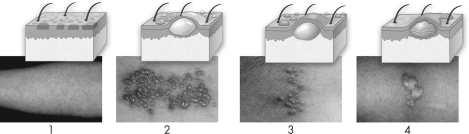
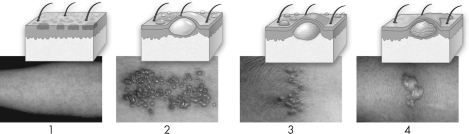
Chickenpox is caused by a very contagious herpes virus that infects epidermal cells.Which of the following is characteristic of a chickenpox infection?
A) 1
B) 2
C) 3
D) 4
A) 1
B) 2
C) 3
D) 4
Question
Question
Question
Question
Question
Question
Question
Which of the following displays a pus-filled raised lesion?
A) 1
B) 2
C) 3
D) 4
A) 1
B) 2
C) 3
D) 4
Question
Question
Question
Question
Question
Question
Question
Question
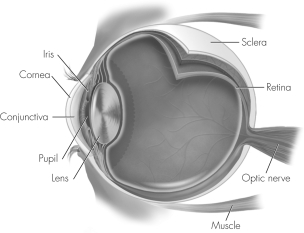
Applying your knowledge to the figure below,if a herpes zoster infection is left untreated in an immunocompromised patient,which part of the eye can be damaged?
A) cornea
B) retina
C) optic nerve
D) lens
A) cornea
B) retina
C) optic nerve
D) lens
Question
Question
Question
Question
Question
Question
Question
Question
Question
Question
Question
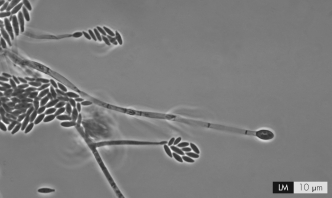
The figure below shows the fungi Fusarium.When accidentally introduced into the eye,what type of infection does this organism cause?
A) fungal keratitis
B) parasitic keratitis
C) allergic conjunctivitis
D) trachoma
A) fungal keratitis
B) parasitic keratitis
C) allergic conjunctivitis
D) trachoma
Question
Question
Question
Question
Question
Question
Question
Using the figure below,label the following cellular components of the skin and describe their function.
A.Keratinocytes
B.Dermis
C.Epidermis
D.Langerhans cells
E.Hair follicle
F.Sweat gland
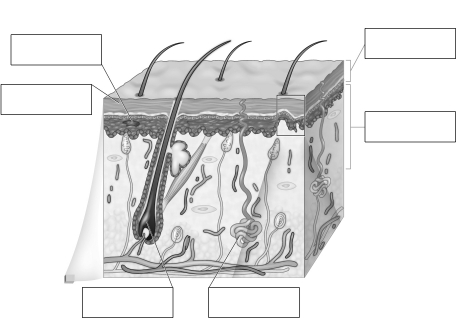
A.Keratinocytes
B.Dermis
C.Epidermis
D.Langerhans cells
E.Hair follicle
F.Sweat gland
Question
Question
Question
Question
Question
Question
Question
Question
Question
Question
Question
Question

Unlock Deck
Sign up to unlock the cards in this deck!
Unlock Deck
Unlock Deck
1/53

Play

Full screen (f)
Deck 19: Infections of the Skin and Eye
1
Measles is similar to German measles (rubella)in the fact that
A) they have a similar type of rash.
B) they are caused by the same virus.
C) encephalitis is a possible complication.
D) they can be controlled by vaccination.
A) they have a similar type of rash.
B) they are caused by the same virus.
C) encephalitis is a possible complication.
D) they can be controlled by vaccination.
D
2
Which of the following is used to treat shingles?
A) penicillin
B) sulfonamide
C) acyclovir
D) fungicide
A) penicillin
B) sulfonamide
C) acyclovir
D) fungicide
C
3
All of the following are used to treat chickenpox EXCEPT
A) aspirin.
B) calamine lotion.
C) antihistamines.
D) oatmeal baths.
A) aspirin.
B) calamine lotion.
C) antihistamines.
D) oatmeal baths.
A
4
All of the following are virulence factors associated with S.pyogenes EXCEPT
A) lipopolysaccharide.
B) capsule.
C) M protein.
D) lipoteichoic acid.
A) lipopolysaccharide.
B) capsule.
C) M protein.
D) lipoteichoic acid.
Unlock Deck
Unlock for access to all 53 flashcards in this deck.
Unlock Deck
k this deck
5
Staphylococcus aureus is responsible for all of the following EXCEPT
A) boils.
B) carbuncles.
C) acne.
D) pimples.
A) boils.
B) carbuncles.
C) acne.
D) pimples.
Unlock Deck
Unlock for access to all 53 flashcards in this deck.
Unlock Deck
k this deck
6
Which of the following are INCORRECTLY matched?
A) varicella zosters-chicken pox
B) HHV6-roseola
C) poxvirus-fever blisters
D) parvovirus-fifth disease
A) varicella zosters-chicken pox
B) HHV6-roseola
C) poxvirus-fever blisters
D) parvovirus-fifth disease
Unlock Deck
Unlock for access to all 53 flashcards in this deck.
Unlock Deck
k this deck
7
Which of the following is used to treat opthalmia neonatorum?
A) penicillin
B) acyclovir
C) sulfonamide
D) erythromycin
A) penicillin
B) acyclovir
C) sulfonamide
D) erythromycin
Unlock Deck
Unlock for access to all 53 flashcards in this deck.
Unlock Deck
k this deck
8
Chickenpox is caused by a very contagious herpes virus that infects epidermal cells.Which of the following is characteristic of a chickenpox infection?
A) 1
B) 2
C) 3
D) 4
A) 1
B) 2
C) 3
D) 4
Unlock Deck
Unlock for access to all 53 flashcards in this deck.
Unlock Deck
k this deck
9
Koplik spots are a diagnostic indicator of
A) chickenpox.
B) smallpox.
C) measles.
D) rubella.
A) chickenpox.
B) smallpox.
C) measles.
D) rubella.
Unlock Deck
Unlock for access to all 53 flashcards in this deck.
Unlock Deck
k this deck
10
Topical retinoids and antibiotics are commonly used to treat
A) cellulitis.
B) acne.
C) erysipelas.
D) impetigo.
A) cellulitis.
B) acne.
C) erysipelas.
D) impetigo.
Unlock Deck
Unlock for access to all 53 flashcards in this deck.
Unlock Deck
k this deck
11
All of the following cause conjunctivitis EXCEPT
A) Chlamydia trachomatis.
B) Streptococcus pyogenes.
C) Neisseria gonorrhoeae.
D) Haemophilus influenza.
A) Chlamydia trachomatis.
B) Streptococcus pyogenes.
C) Neisseria gonorrhoeae.
D) Haemophilus influenza.
Unlock Deck
Unlock for access to all 53 flashcards in this deck.
Unlock Deck
k this deck
12
All of the following are transmitted via the respiratory route EXCEPT
A) smallpox.
B) chickenpox.
C) measles.
D) warts.
A) smallpox.
B) chickenpox.
C) measles.
D) warts.
Unlock Deck
Unlock for access to all 53 flashcards in this deck.
Unlock Deck
k this deck
13
The etiological agent of acne is
A) Staphylococcus aureus.
B) Streptococcus pyogenes.
C) Bacillus anthrasis.
D) Propionibacterium acnes.
A) Staphylococcus aureus.
B) Streptococcus pyogenes.
C) Bacillus anthrasis.
D) Propionibacterium acnes.
Unlock Deck
Unlock for access to all 53 flashcards in this deck.
Unlock Deck
k this deck
14
All of the following are protective features of the skin EXCEPT
A) Langerhans cells in the epidermis.
B) that it is the largest organ and forms a chemical barrier.
C) keratinocytes secreting keratin.
D) melanocytes producing melanin.
A) Langerhans cells in the epidermis.
B) that it is the largest organ and forms a chemical barrier.
C) keratinocytes secreting keratin.
D) melanocytes producing melanin.
Unlock Deck
Unlock for access to all 53 flashcards in this deck.
Unlock Deck
k this deck
15
Which of the following displays a pus-filled raised lesion?
A) 1
B) 2
C) 3
D) 4
A) 1
B) 2
C) 3
D) 4
Unlock Deck
Unlock for access to all 53 flashcards in this deck.
Unlock Deck
k this deck
16
Which of the follow is NOT caused by HSV-1?
A) cold sores
B) canker sores
C) herpes whitlow
D) herpes encephalitis
A) cold sores
B) canker sores
C) herpes whitlow
D) herpes encephalitis
Unlock Deck
Unlock for access to all 53 flashcards in this deck.
Unlock Deck
k this deck
17
An eight-year-old girl has scabs and pus-filled vesicles on her face and throat.Three weeks earlier she had visited her grandmother,who had shingles.What infection does the eight-year-old have?
A) chickenpox
B) measles
C) rubella
D) fever blisters
A) chickenpox
B) measles
C) rubella
D) fever blisters
Unlock Deck
Unlock for access to all 53 flashcards in this deck.
Unlock Deck
k this deck
18
Inflammation of the thin clear membrane lining the eyelid and eye is properly termed
A) keratitis.
B) trachoma.
C) conjunctivitis.
D) opthalmia neonatorum.
A) keratitis.
B) trachoma.
C) conjunctivitis.
D) opthalmia neonatorum.
Unlock Deck
Unlock for access to all 53 flashcards in this deck.
Unlock Deck
k this deck
19
Which of the following is NOT true about gas gangrene?
A) The organism produces considerable amounts of gas.
B) The causative agent is Clostridium perfringens.
C) The organism only grows on live tissue.
D) The organism is found in the environment and in the intestines.
A) The organism produces considerable amounts of gas.
B) The causative agent is Clostridium perfringens.
C) The organism only grows on live tissue.
D) The organism is found in the environment and in the intestines.
Unlock Deck
Unlock for access to all 53 flashcards in this deck.
Unlock Deck
k this deck
20
Which of the following lists the layers of the skin in the correct order from deepest to superficial?
A) stratum basale, stratum spinosum, stratum granulosum, stratum corneum
B) stratum corneum, stratum granulosum, stratum spinosum, stratum basale
C) stratum granulosum, stratum corneum, stratum basale, stratum spinosum
D) stratum spinosum, stratum basale, stratum corneum, stratum granulosum
A) stratum basale, stratum spinosum, stratum granulosum, stratum corneum
B) stratum corneum, stratum granulosum, stratum spinosum, stratum basale
C) stratum granulosum, stratum corneum, stratum basale, stratum spinosum
D) stratum spinosum, stratum basale, stratum corneum, stratum granulosum
Unlock Deck
Unlock for access to all 53 flashcards in this deck.
Unlock Deck
k this deck
21
Which of the following statements about fungi is true?
A) Fungi include yeasts and bacteria.
B) Fungi are eukaryotic microbes.
C) Dermatophytes do not grow on skin.
D) Fungi can be named after the location of the infection.
A) Fungi include yeasts and bacteria.
B) Fungi are eukaryotic microbes.
C) Dermatophytes do not grow on skin.
D) Fungi can be named after the location of the infection.
Unlock Deck
Unlock for access to all 53 flashcards in this deck.
Unlock Deck
k this deck
22
Sterile maggot therapy is often used to treat which condition?
A) diabetic wounds
B) acne
C) conjunctivitis
D) keratitis
A) diabetic wounds
B) acne
C) conjunctivitis
D) keratitis
Unlock Deck
Unlock for access to all 53 flashcards in this deck.
Unlock Deck
k this deck
23
Applying your knowledge to the figure below,if a herpes zoster infection is left untreated in an immunocompromised patient,which part of the eye can be damaged?
A) cornea
B) retina
C) optic nerve
D) lens
A) cornea
B) retina
C) optic nerve
D) lens
Unlock Deck
Unlock for access to all 53 flashcards in this deck.
Unlock Deck
k this deck
24
Why is vaccination for rubella recommended?
A) It has a high mortality rate in school-age children.
B) Death from secondary infections is common.
C) There is a high incidence of congenital infections.
D) It is no longer recommended; rubella has been eradicated.
A) It has a high mortality rate in school-age children.
B) Death from secondary infections is common.
C) There is a high incidence of congenital infections.
D) It is no longer recommended; rubella has been eradicated.
Unlock Deck
Unlock for access to all 53 flashcards in this deck.
Unlock Deck
k this deck
25
All of the following are classified as dermatophytic fungi EXCEPT
A) Malassezia.
B) Epidermophyton.
C) Trichophyton.
D) Microsporum.
A) Malassezia.
B) Epidermophyton.
C) Trichophyton.
D) Microsporum.
Unlock Deck
Unlock for access to all 53 flashcards in this deck.
Unlock Deck
k this deck
26
Which of the following statements about congenital rubella syndrome is FALSE?
A) It can be prevented by vaccinating women prior to pregnancy.
B) It may result in deafness, blindness, and mental retardation.
C) It may be fatal to the unborn child.
D) It does not occur with subclinical infection.
A) It can be prevented by vaccinating women prior to pregnancy.
B) It may result in deafness, blindness, and mental retardation.
C) It may be fatal to the unborn child.
D) It does not occur with subclinical infection.
Unlock Deck
Unlock for access to all 53 flashcards in this deck.
Unlock Deck
k this deck
27
Which of the following is INCORRECTLY matched?
A) Haemophilus influenzae-pinkeye
B) Pseudomonas-conjunctivitis
C) Chlamydia gonorrhoeae-trachoma
D) Neisseria gonorrhoeae-respiratory infection
A) Haemophilus influenzae-pinkeye
B) Pseudomonas-conjunctivitis
C) Chlamydia gonorrhoeae-trachoma
D) Neisseria gonorrhoeae-respiratory infection
Unlock Deck
Unlock for access to all 53 flashcards in this deck.
Unlock Deck
k this deck
28
A patient is brought to the hospital suffering with a MRSA infection.Which of the following is the best treatment option?
A) acyclovir
B) penicillin
C) methicillin
D) vancomycin
A) acyclovir
B) penicillin
C) methicillin
D) vancomycin
Unlock Deck
Unlock for access to all 53 flashcards in this deck.
Unlock Deck
k this deck
29
All of the following are characteristic of Pseudomonas aeruginosa EXCEPT
A) Gram-positive cell wall.
B) resistance to many types of antibiotics.
C) production of pyocyanin.
D) exotoxin production.
A) Gram-positive cell wall.
B) resistance to many types of antibiotics.
C) production of pyocyanin.
D) exotoxin production.
Unlock Deck
Unlock for access to all 53 flashcards in this deck.
Unlock Deck
k this deck
30
Which of the following is used to treat candidiasis of the skin or mucous membranes?
A) penicillin
B) sulfonamide
C) acyclovir
D) imidazole
A) penicillin
B) sulfonamide
C) acyclovir
D) imidazole
Unlock Deck
Unlock for access to all 53 flashcards in this deck.
Unlock Deck
k this deck
31
Fungal skin diseases are diagnosed based on
A) PCR.
B) KOH preparation of skin scrapes.
C) Gram-positive stain.
D) Gram-negative stain.
A) PCR.
B) KOH preparation of skin scrapes.
C) Gram-positive stain.
D) Gram-negative stain.
Unlock Deck
Unlock for access to all 53 flashcards in this deck.
Unlock Deck
k this deck
32
All of the following are methods used to treat C.perfringens infection EXCEPT
A) amputation.
B) a hyperbaric chamber.
C) antibiotic therapy alone.
D) debridement.
A) amputation.
B) a hyperbaric chamber.
C) antibiotic therapy alone.
D) debridement.
Unlock Deck
Unlock for access to all 53 flashcards in this deck.
Unlock Deck
k this deck
33
A 40-year-old woman has vesicles and scabs over her forehead.Microscopic examination of skin scrapings shows Gram-positive cocci in clusters.The etiology is
A) Staphylococcus aureus.
B) Streptococcus pyogenes.
C) Candida.
D) herpes.
A) Staphylococcus aureus.
B) Streptococcus pyogenes.
C) Candida.
D) herpes.
Unlock Deck
Unlock for access to all 53 flashcards in this deck.
Unlock Deck
k this deck
34
The figure below shows the fungi Fusarium.When accidentally introduced into the eye,what type of infection does this organism cause?
A) fungal keratitis
B) parasitic keratitis
C) allergic conjunctivitis
D) trachoma
A) fungal keratitis
B) parasitic keratitis
C) allergic conjunctivitis
D) trachoma
Unlock Deck
Unlock for access to all 53 flashcards in this deck.
Unlock Deck
k this deck
35
A 35-year-old woman has a red,raised rash on the inside of her thighs.Gram-stained scrapings show large budding cells with pseudohyphae.The infection is caused by
A) Candida albicans.
B) herpes simplex virus.
C) varicella-zoster virus.
D) Staphylococcus aureus.
A) Candida albicans.
B) herpes simplex virus.
C) varicella-zoster virus.
D) Staphylococcus aureus.
Unlock Deck
Unlock for access to all 53 flashcards in this deck.
Unlock Deck
k this deck
36
A 17-year-old boy has pus-filled cysts on his face and upper back.Microscopic examination reveals Gram-positive rods.This infection is caused by
A) herpes simplex virus.
B) Propionibacterium acnes.
C) Staphylococcus aureus.
D) Streptococcus pyogenes.
A) herpes simplex virus.
B) Propionibacterium acnes.
C) Staphylococcus aureus.
D) Streptococcus pyogenes.
Unlock Deck
Unlock for access to all 53 flashcards in this deck.
Unlock Deck
k this deck
37
Which of the following is the cause of a fungal infection on the scalp?
A) tinea capitis
B) tinea corporis
C) tinea pedis
D) tenia cruris
A) tinea capitis
B) tinea corporis
C) tinea pedis
D) tenia cruris
Unlock Deck
Unlock for access to all 53 flashcards in this deck.
Unlock Deck
k this deck
38
The greatest single cause of infectious blindness is
A) neonatal gonorrheal ophthalmia.
B) keratoconjunctivitis.
C) trachoma.
D) pinkeye.
A) neonatal gonorrheal ophthalmia.
B) keratoconjunctivitis.
C) trachoma.
D) pinkeye.
Unlock Deck
Unlock for access to all 53 flashcards in this deck.
Unlock Deck
k this deck
39
Keratitis is inflammation of the
A) lens.
B) retina.
C) cornea.
D) sclera.
A) lens.
B) retina.
C) cornea.
D) sclera.
Unlock Deck
Unlock for access to all 53 flashcards in this deck.
Unlock Deck
k this deck
40
A 45-year-old man has pus-filled vesicles distributed over his back in the upper right quadrant,his right shoulder,and the upper right quadrant of his chest.His symptoms are most likely due to
A) Candida albicans.
B) herpes simplex virus.
C) varicella-zoster virus.
D) Staphylococcus aureus.
A) Candida albicans.
B) herpes simplex virus.
C) varicella-zoster virus.
D) Staphylococcus aureus.
Unlock Deck
Unlock for access to all 53 flashcards in this deck.
Unlock Deck
k this deck
41
Using the figure below,label the following cellular components of the skin and describe their function.
A.Keratinocytes
B.Dermis
C.Epidermis
D.Langerhans cells
E.Hair follicle
F.Sweat gland
A.Keratinocytes
B.Dermis
C.Epidermis
D.Langerhans cells
E.Hair follicle
F.Sweat gland
Unlock Deck
Unlock for access to all 53 flashcards in this deck.
Unlock Deck
k this deck
42
CASE HISTORY
Jennifer remembered the day she was shot,but not the day they had to remove her leg.She was camping in the middle of the Black Hills of South Dakota when an unseen hunter tried to shoot a deer.He missed his prey,but the errant bullet traveled a great distance and tore through Jennifer's thigh.In tremendous pain,Jennifer fashioned a tourniquet to stop the bleeding and then struggled two days to hike the ten miles back to civilization.By the time she arrived at a hospital,the wound and underlying muscle were clearly infected.The area around the wound was reddened and contained fluid-filled blisters,and parts were starting to turn black.The drainage coming from the wound contained pus and was foul smelling,all signs of gas gangrene.The surgical team worked to debride the dead tissue and placed her on intravenous antibiotic therapy (clindamycin).The microbiology laboratory reported finding Clostridium perfringens in the samples sent.Despite treatment,including hyperbaric oxygen,the infection continued spreading further up her leg.The surgeons finally decided that amputation was the only way to save her life.
Why might hyperbaric oxygen have been suggested as a treatment for Jennifer following the return of her lab results?
Jennifer remembered the day she was shot,but not the day they had to remove her leg.She was camping in the middle of the Black Hills of South Dakota when an unseen hunter tried to shoot a deer.He missed his prey,but the errant bullet traveled a great distance and tore through Jennifer's thigh.In tremendous pain,Jennifer fashioned a tourniquet to stop the bleeding and then struggled two days to hike the ten miles back to civilization.By the time she arrived at a hospital,the wound and underlying muscle were clearly infected.The area around the wound was reddened and contained fluid-filled blisters,and parts were starting to turn black.The drainage coming from the wound contained pus and was foul smelling,all signs of gas gangrene.The surgical team worked to debride the dead tissue and placed her on intravenous antibiotic therapy (clindamycin).The microbiology laboratory reported finding Clostridium perfringens in the samples sent.Despite treatment,including hyperbaric oxygen,the infection continued spreading further up her leg.The surgeons finally decided that amputation was the only way to save her life.
Why might hyperbaric oxygen have been suggested as a treatment for Jennifer following the return of her lab results?
Unlock Deck
Unlock for access to all 53 flashcards in this deck.
Unlock Deck
k this deck
43
Explain the cycle of acne.What is the causative agent and why are some individuals more prone to acne than others?
Unlock Deck
Unlock for access to all 53 flashcards in this deck.
Unlock Deck
k this deck
44
A skin rash accompanied by systemic symptoms such as fever,malaise,and headache is referred to as ________,while skin rashes on the mucous membranes are called ________.
Unlock Deck
Unlock for access to all 53 flashcards in this deck.
Unlock Deck
k this deck
45
CASE HISTORY
Leili,a three-year-old girl,was brought to the pediatrician by her mother,who was worried about the rash on Leili's lip.It started four days earlier as a little bump above her lip that spread to the corner of her mouth.The base of the rash was red and covered by pustules.The little girl said that her rash hurt,and the clinician noticed a honey-colored crust on the ruptured pustules.Leili's mother said that her daughter had not been trying to scratch the rash,nor was the area around it hot to the touch.Leili's mother was told that her little girl had impetigo,a skin infection often caused by bacteria called staphylococci,although streptococci can also cause it.The doctor gently swabbed a sample from one of Leili's sores and sent it to the lab,where the causative agent would be identified and its antibiotic susceptibility determined.She explained that impetigo is a very contagious disease,and she gave Leili's mother a topical antibiotic to use.Treating topically rather than orally would accomplish two goals.Topical application would reduce the chance that the bacteria would develop drug resistance,and because Leili had a very mild case of impetigo,the antibiotic in the gel should easily penetrate the pustules and kill the organism.Leili and her mother left but returned in a week for a follow-up exam.The "rash" was gone,replaced by Leili's smile.The pediatrician explained that the cause was in fact methicillin-sensitive Staphylococcus aureus (MSSA),not MRSA.Leili's mother in turn reported that another child at Leili's day care had impetigo before Leili,and that is where Leili probably acquired the infection.
Leili was suffering from nonbullous impetigo;however,a bullous form also exists.How would you distinguish the two and how would you approach the creation of a treatment plan for this disease?
Leili,a three-year-old girl,was brought to the pediatrician by her mother,who was worried about the rash on Leili's lip.It started four days earlier as a little bump above her lip that spread to the corner of her mouth.The base of the rash was red and covered by pustules.The little girl said that her rash hurt,and the clinician noticed a honey-colored crust on the ruptured pustules.Leili's mother said that her daughter had not been trying to scratch the rash,nor was the area around it hot to the touch.Leili's mother was told that her little girl had impetigo,a skin infection often caused by bacteria called staphylococci,although streptococci can also cause it.The doctor gently swabbed a sample from one of Leili's sores and sent it to the lab,where the causative agent would be identified and its antibiotic susceptibility determined.She explained that impetigo is a very contagious disease,and she gave Leili's mother a topical antibiotic to use.Treating topically rather than orally would accomplish two goals.Topical application would reduce the chance that the bacteria would develop drug resistance,and because Leili had a very mild case of impetigo,the antibiotic in the gel should easily penetrate the pustules and kill the organism.Leili and her mother left but returned in a week for a follow-up exam.The "rash" was gone,replaced by Leili's smile.The pediatrician explained that the cause was in fact methicillin-sensitive Staphylococcus aureus (MSSA),not MRSA.Leili's mother in turn reported that another child at Leili's day care had impetigo before Leili,and that is where Leili probably acquired the infection.
Leili was suffering from nonbullous impetigo;however,a bullous form also exists.How would you distinguish the two and how would you approach the creation of a treatment plan for this disease?
Unlock Deck
Unlock for access to all 53 flashcards in this deck.
Unlock Deck
k this deck
46
Necrotizing fasciitis is often caused by ________.
Unlock Deck
Unlock for access to all 53 flashcards in this deck.
Unlock Deck
k this deck
47
A sight-threatening inflammation of the cornea is referred to as ________.
Unlock Deck
Unlock for access to all 53 flashcards in this deck.
Unlock Deck
k this deck
48
Compare and contrast the virulence factors associated with Staphylococcus and Streptococcus.Which of these agents is the most difficult to treat? Explain your answer.
Unlock Deck
Unlock for access to all 53 flashcards in this deck.
Unlock Deck
k this deck
49
Fungi that love human skin are called ________.
Unlock Deck
Unlock for access to all 53 flashcards in this deck.
Unlock Deck
k this deck
50
CASE HISTORY
One weekend in June,Cassi was camping with her three children.She suffered a minor cut on her finger,which she bandaged properly.She also injured the left side of her body while playing sports with her kids.Not thinking much of either of her minor injuries,she went to bed.Two days later,Cassi was extremely ill.Her symptoms included vomiting,diarrhea,and a fever.She was also in severe pain where she had injured her side,and the area had begun to bruise (the skin did not look broken).By the next day,she could barely get out of bed,and by the end of the night,she was breathing with difficulty and could not see.Her side began to leak fluid and blood.Cassi was admitted to the hospital in septic shock,with no detectable blood pressure.She was given vasopressors (medications that constrict the blood vessels)to raise her blood pressure to the normal level.An infectious disease specialist diagnosed the problem as necrotizing fasciitis,and Cassi was rushed into surgery.In an effort to save her life,about 7% of her body surface was removed.Because the large wound infection in her side would need to resolve before a skin graft could be performed to repair it,the hole in Cassi's body was left wide open.Meanwhile,the continued use of vasopressors caused gangrene in her fingers and lower extremities.After nearly three months and several operations,including amputation,Cassi recovered.
Which organism would be the most likely to be identified in a laboratory culture of Cassi's wound?
A) Staphylococcus epidermidis
B) Streptococcus pyogenes
C) Clostridium perfringens
D) Salmonella enterica
One weekend in June,Cassi was camping with her three children.She suffered a minor cut on her finger,which she bandaged properly.She also injured the left side of her body while playing sports with her kids.Not thinking much of either of her minor injuries,she went to bed.Two days later,Cassi was extremely ill.Her symptoms included vomiting,diarrhea,and a fever.She was also in severe pain where she had injured her side,and the area had begun to bruise (the skin did not look broken).By the next day,she could barely get out of bed,and by the end of the night,she was breathing with difficulty and could not see.Her side began to leak fluid and blood.Cassi was admitted to the hospital in septic shock,with no detectable blood pressure.She was given vasopressors (medications that constrict the blood vessels)to raise her blood pressure to the normal level.An infectious disease specialist diagnosed the problem as necrotizing fasciitis,and Cassi was rushed into surgery.In an effort to save her life,about 7% of her body surface was removed.Because the large wound infection in her side would need to resolve before a skin graft could be performed to repair it,the hole in Cassi's body was left wide open.Meanwhile,the continued use of vasopressors caused gangrene in her fingers and lower extremities.After nearly three months and several operations,including amputation,Cassi recovered.
Which organism would be the most likely to be identified in a laboratory culture of Cassi's wound?
A) Staphylococcus epidermidis
B) Streptococcus pyogenes
C) Clostridium perfringens
D) Salmonella enterica
Unlock Deck
Unlock for access to all 53 flashcards in this deck.
Unlock Deck
k this deck
51
Smallpox is a deadly disease caused by the variola virus.Currently,the only stocks of smallpox are located in strategic centers across the United States.Discuss the pros and cons of destroying these remaining smallpox stocks.Explain your answer.
Unlock Deck
Unlock for access to all 53 flashcards in this deck.
Unlock Deck
k this deck
52
Opthalmia neonatorum is a serious eye disease of infants caused by ________.
Unlock Deck
Unlock for access to all 53 flashcards in this deck.
Unlock Deck
k this deck
53
List the disease symptoms and virulence factors associated with Pseudomonas infections.Why can Pseudomonas be difficult to control in a hospital environment?
Unlock Deck
Unlock for access to all 53 flashcards in this deck.
Unlock Deck
k this deck
Unlock Deck
Unlock for access to all 53 flashcards in this deck.






