Deck 22: Organic Chemistry

Full screen (f)
exit full mode
Question
Nonsuperimposable mirror images are called

A) structural isomers.
B) achiral.
C) diastereomers.
D) enantiomers.
E) racemic mixture.
Use Space or
up arrow
down arrow
to flip the card.
Question
Name the following compound. <strong>Name the following compound.  </strong> A) 4-propyl-5-hexyne B) 3-isopropyl-1-hexyne C) 1-nonyne D) 4-methyl-3-propyl-1-pentyne E) 2-methyl-4-pentyne <div style=padding-top: 35px>
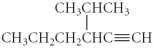
A) 4-propyl-5-hexyne
B) 3-isopropyl-1-hexyne
C) 1-nonyne
D) 4-methyl-3-propyl-1-pentyne
E) 2-methyl-4-pentyne
Question
Name the following compound. <strong>Name the following compound.  </strong> A) 4-methyl-4-propylpentane B) 4,4-dimethylheptane C) nonane D) 4-propyl-4-methylpentane E) 2-methyl-2-propylpentane <div style=padding-top: 35px>

A) 4-methyl-4-propylpentane
B) 4,4-dimethylheptane
C) nonane
D) 4-propyl-4-methylpentane
E) 2-methyl-2-propylpentane
Question
Name the following compound. <strong>Name the following compound.  </strong> A) 3-ethyl-3-methylhexane B) 3-methyl-3-propylpentane C) 3-ethyl-3-propylbutane D) nonane E) 2-ethylheptane <div style=padding-top: 35px>
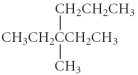
A) 3-ethyl-3-methylhexane
B) 3-methyl-3-propylpentane
C) 3-ethyl-3-propylbutane
D) nonane
E) 2-ethylheptane
Question
An equimolar mixture of two optical isomers is called a

A) structural isomer.
B) achiral.
C) diastereomer.
D) enantiomer.
E) racemic mixture.
Question
Molecules with the same formula but different structures are called

A) structural isomers.
B) achiral.
C) diastereomers.
D) enantiomers.
E) racemic mixture.
Question
Identify the formula for an alkane.

A) CnH2n+2
B) CnH2n-2
C) CnH2n
D) CnH2n-4
E) CnH2n+4
Question
Which of the following names is correct?

A) 3-methyl-5-heptyne
B) 2-ethyl-4-hexyne
C) 5-ethyl-2-hexyne
D) 4-butyl-1-pentyne
E) 5-methyl-2-heptyne
Question
Identify the formula for an alkene.

A) CnH2n+2
B) CnH2n-2
C) CnH2n
D) CnH2n-4
E) CnH2n+4
Question
How many of the carbons in the following compound are chiral center(s)? <strong>How many of the carbons in the following compound are chiral center(s)?  </strong> A) 0 B) 1 C) 2 D) 3 E) 4 or more <div style=padding-top: 35px>
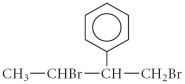
A) 0
B) 1
C) 2
D) 3
E) 4 or more
Question
Give the number of covalent bonds that a carbon atom can form.

A) 1
B) 2
C) 3
D) 4
E) 5
Question
Which of the following compounds exhibit geometric isomerism?

A) CH2=CH-CH3
B) CCl2=CBr2
C) CH3-CH=CH-CH3
D) CCl2=CHBr
E) All of the above exhibit geometric isomerism.
Question
Identify the formula for an alkyne.

A) CnH2n+2
B) CnH2n-2
C) CnH2n
D) CnH2n-4
E) CnH2n+4
Question
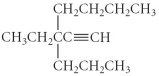
Name the following compound. <strong>Name the following compound.  </strong> A) 3-butyl-3-propyl-1-pentyne B) 3-butyl-3-propyl-4-pentyne C) 3-ethyl-3-propyl-1-heptyne D) 5-ethyl-5-propyl-6-heptyne E) 3-ethyl-3-butyl-1-hexyne <div style=padding-top: 35px>

A) 3-butyl-3-propyl-1-pentyne
B) 3-butyl-3-propyl-4-pentyne
C) 3-ethyl-3-propyl-1-heptyne
D) 5-ethyl-5-propyl-6-heptyne
E) 3-ethyl-3-butyl-1-hexyne
Question
How many of the carbons in the following compound are chiral center(s)? <strong>How many of the carbons in the following compound are chiral center(s)?  </strong> A) 0 B) 1 C) 2 D) 3 E) 4 or more <div style=padding-top: 35px>
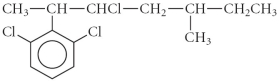
A) 0
B) 1
C) 2
D) 3
E) 4 or more
Question
Which of the following names is correct?

A) 3-butyl-4-pentene
B) 3-ethyl-1-heptene
C) 3-etheneheptane
D) 5-ethyl-6-heptene
E) All of the above are correct.
Question
Name the following compound. <strong>Name the following compound.  </strong> A) 2-methyl-3-methylhexane B) heptane C) 2,3-dimethylpentane D) 3,4-dimethylpentane E) 2,4-dimethylpropane <div style=padding-top: 35px>

A) 2-methyl-3-methylhexane
B) heptane
C) 2,3-dimethylpentane
D) 3,4-dimethylpentane
E) 2,4-dimethylpropane
Question
Which of the following names is correct?

A) 2-methyl-4-pentyne
B) 3-ethyl-1-butyne
C) 3-butyl-3-propyl-1-pentyne
D) 3-methyl-1-butyne
E) 3-ethyl-3-butyl-1-hexyne
Question
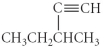
Name the following compound. <strong>Name the following compound.  </strong> A) 3-methyl-1-pentyne B) 3-methyl-4-pentyne C) 2-ethynebutane D) 1-hexyne E) 3-ethyl-1-butyne <div style=padding-top: 35px>

A) 3-methyl-1-pentyne
B) 3-methyl-4-pentyne
C) 2-ethynebutane
D) 1-hexyne
E) 3-ethyl-1-butyne
Question
Any molecule that exhibits optical isomerism is said to be

A) a stereoisomer.
B) a hydrocarbon.
C) chiral.
D) an alkyne.
E) biologically active.
Question
Write the balanced chemical equation for the addition of 2 Br2 to CH3C≡CH.

A) CH3C≡CH + 2 Br2 → CH3CBr2CHBr2
B) CH3C≡CH + 2 Br2 → CH3CBr=CHBr
C) CH3C≡CH + 2 Br2 → CH3CH2CHBr2
D) CH3C≡CH + 2 Br2 → CH3CBr2CH3
E) CH3C≡CH + 2 Br2 → CH3CHBrCH2Br
Question
Which of the following compounds is ethanol?

A) C2H6
B) C2H5OH
C) CH3CO2H
D) CH3CO2CH3
E) CH3-O-CH3
Question
Write the balanced chemical equation for the catalytic hydrogenation (addition of H2)to CH3CH=CHCH3.

A) CH3CH=CHCH3 + 2 H2 → 2 CH3CH3
B) CH3CH=CHCH3 + 3 H2 → CH3CH3 + 2 CH4
C) CH3CH=CHCH3 + 2 H2 → CH3CH2CH3 + CH4
D) CH3CH=CHCH3 + H2 → CH3CH2CH2CH3
E) CH3CH=CHCH3 + 4 H2 → 4 CH4
Question
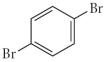
Name the following compound. <strong>Name the following compound.  </strong> A) 2,5-dibromobenzene B) 2,5-dibromocyclohexene C) 1,4-dibromobenzene D) 1,4-bromocyclohexene E) 3,6-dibromobenzene <div style=padding-top: 35px>

A) 2,5-dibromobenzene
B) 2,5-dibromocyclohexene
C) 1,4-dibromobenzene
D) 1,4-bromocyclohexene
E) 3,6-dibromobenzene
Question
Write a balanced chemical reaction to represent the combustion of 2,2-dimethylpropane.

A) C5H12 + 8 O2 → 5 CO2 + 6 H2O
B) C3H8 + 5 O2 → 3 CO2 + 4 H2O
C) C5H12 + H2 → CH4 + 2 C2H6
D) C3H8 + H2 → CH4 + C2H6
E) 2 C3H8 + O2 → 3 CH4 + 2 H2O
Question
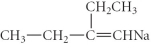
Which of the following compounds is an ether?

A) <strong>Which of the following compounds is an ether?</strong> A)   B)   C)   D)   E)   <div style=padding-top: 35px>
B) <strong>Which of the following compounds is an ether?</strong> A)   B)   C)   D)   E)   <div style=padding-top: 35px>
C) <strong>Which of the following compounds is an ether?</strong> A)   B)   C)   D)   E)   <div style=padding-top: 35px>
D) <strong>Which of the following compounds is an ether?</strong> A)   B)   C)   D)   E)   <div style=padding-top: 35px>
E) <strong>Which of the following compounds is an ether?</strong> A)   B)   C)   D)   E)   <div style=padding-top: 35px>
Question
Which of the following compounds is an alcohol?

A) CH3CH2CH2CO2H
B) CH3-O-CH3
C) CH3CO2CH3
D) CH3CH2CH=O
E) CH2OH-CH2OH
Question
Write the balanced chemical equation that represents the addition of Cl2 to CH3CH=CH2.

A) CH3CH=CH2 + Cl2 → CH3CHClCH3 + HCl
B) CH3CH=CH2 + Cl2 → CH3CCl=CHCl + H2
C) CH3CH=CH2 + Cl2 → CH3CHClCH2Cl
D) CH3CH=CH2 + 2 Cl2 → CH3CHCl2 + CH2Cl2
E) CH3CH=CH2 + 2 Cl2 → CH3CCl2CHCl2 + H2
Question
Which of the following compounds is an aldehyde?

A) CH3CH2CH=O
B) CH3CH2CH2CO2H
C) CH3CO2CH3
D) CH3-O-CH3
E) CH2OH-CH2OH
Question
Complete and balance the following addition reaction. CH3C <strong>Complete and balance the following addition reaction. CH<sub>3</sub>C   CCH<sub>3</sub> + 2 Cl<sub>2</sub> → ?</strong> A) CH<sub>3</sub>C   CCH<sub>3</sub> + 2 Cl<sub>2</sub> → CH<sub>3</sub>CCl<sub>2</sub>CCl<sub>2</sub>CH<sub>3</sub> B) CH<sub>3</sub>C   CCH<sub>3</sub> + 3 Cl<sub>2</sub> → 2 CH<sub>3</sub>CCl<sub>3</sub> C) CH<sub>3</sub>C   CCH<sub>3</sub> + 2 Cl<sub>2</sub> → 4 CH<sub>3</sub>Cl D) CH<sub>3</sub>C   CCH<sub>3</sub> + 4 Cl<sub>2</sub> → 4 CH<sub>2</sub>Cl<sub>2</sub> E) CH<sub>3</sub>C   CCH<sub>3</sub> + Cl<sub>2</sub> → CH<sub>3</sub>CHClCHClCH<sub>3</sub> <div style=padding-top: 35px> CCH3 + 2 Cl2 → ?

A) CH3C <strong>Complete and balance the following addition reaction. CH<sub>3</sub>C   CCH<sub>3</sub> + 2 Cl<sub>2</sub> → ?</strong> A) CH<sub>3</sub>C   CCH<sub>3</sub> + 2 Cl<sub>2</sub> → CH<sub>3</sub>CCl<sub>2</sub>CCl<sub>2</sub>CH<sub>3</sub> B) CH<sub>3</sub>C   CCH<sub>3</sub> + 3 Cl<sub>2</sub> → 2 CH<sub>3</sub>CCl<sub>3</sub> C) CH<sub>3</sub>C   CCH<sub>3</sub> + 2 Cl<sub>2</sub> → 4 CH<sub>3</sub>Cl D) CH<sub>3</sub>C   CCH<sub>3</sub> + 4 Cl<sub>2</sub> → 4 CH<sub>2</sub>Cl<sub>2</sub> E) CH<sub>3</sub>C   CCH<sub>3</sub> + Cl<sub>2</sub> → CH<sub>3</sub>CHClCHClCH<sub>3</sub> <div style=padding-top: 35px> CCH3 + 2 Cl2 → CH3CCl2CCl2CH3
B) CH3C <strong>Complete and balance the following addition reaction. CH<sub>3</sub>C   CCH<sub>3</sub> + 2 Cl<sub>2</sub> → ?</strong> A) CH<sub>3</sub>C   CCH<sub>3</sub> + 2 Cl<sub>2</sub> → CH<sub>3</sub>CCl<sub>2</sub>CCl<sub>2</sub>CH<sub>3</sub> B) CH<sub>3</sub>C   CCH<sub>3</sub> + 3 Cl<sub>2</sub> → 2 CH<sub>3</sub>CCl<sub>3</sub> C) CH<sub>3</sub>C   CCH<sub>3</sub> + 2 Cl<sub>2</sub> → 4 CH<sub>3</sub>Cl D) CH<sub>3</sub>C   CCH<sub>3</sub> + 4 Cl<sub>2</sub> → 4 CH<sub>2</sub>Cl<sub>2</sub> E) CH<sub>3</sub>C   CCH<sub>3</sub> + Cl<sub>2</sub> → CH<sub>3</sub>CHClCHClCH<sub>3</sub> <div style=padding-top: 35px> CCH3 + 3 Cl2 → 2 CH3CCl3
C) CH3C <strong>Complete and balance the following addition reaction. CH<sub>3</sub>C   CCH<sub>3</sub> + 2 Cl<sub>2</sub> → ?</strong> A) CH<sub>3</sub>C   CCH<sub>3</sub> + 2 Cl<sub>2</sub> → CH<sub>3</sub>CCl<sub>2</sub>CCl<sub>2</sub>CH<sub>3</sub> B) CH<sub>3</sub>C   CCH<sub>3</sub> + 3 Cl<sub>2</sub> → 2 CH<sub>3</sub>CCl<sub>3</sub> C) CH<sub>3</sub>C   CCH<sub>3</sub> + 2 Cl<sub>2</sub> → 4 CH<sub>3</sub>Cl D) CH<sub>3</sub>C   CCH<sub>3</sub> + 4 Cl<sub>2</sub> → 4 CH<sub>2</sub>Cl<sub>2</sub> E) CH<sub>3</sub>C   CCH<sub>3</sub> + Cl<sub>2</sub> → CH<sub>3</sub>CHClCHClCH<sub>3</sub> <div style=padding-top: 35px> CCH3 + 2 Cl2 → 4 CH3Cl
D) CH3C <strong>Complete and balance the following addition reaction. CH<sub>3</sub>C   CCH<sub>3</sub> + 2 Cl<sub>2</sub> → ?</strong> A) CH<sub>3</sub>C   CCH<sub>3</sub> + 2 Cl<sub>2</sub> → CH<sub>3</sub>CCl<sub>2</sub>CCl<sub>2</sub>CH<sub>3</sub> B) CH<sub>3</sub>C   CCH<sub>3</sub> + 3 Cl<sub>2</sub> → 2 CH<sub>3</sub>CCl<sub>3</sub> C) CH<sub>3</sub>C   CCH<sub>3</sub> + 2 Cl<sub>2</sub> → 4 CH<sub>3</sub>Cl D) CH<sub>3</sub>C   CCH<sub>3</sub> + 4 Cl<sub>2</sub> → 4 CH<sub>2</sub>Cl<sub>2</sub> E) CH<sub>3</sub>C   CCH<sub>3</sub> + Cl<sub>2</sub> → CH<sub>3</sub>CHClCHClCH<sub>3</sub> <div style=padding-top: 35px> CCH3 + 4 Cl2 → 4 CH2Cl2
E) CH3C <strong>Complete and balance the following addition reaction. CH<sub>3</sub>C   CCH<sub>3</sub> + 2 Cl<sub>2</sub> → ?</strong> A) CH<sub>3</sub>C   CCH<sub>3</sub> + 2 Cl<sub>2</sub> → CH<sub>3</sub>CCl<sub>2</sub>CCl<sub>2</sub>CH<sub>3</sub> B) CH<sub>3</sub>C   CCH<sub>3</sub> + 3 Cl<sub>2</sub> → 2 CH<sub>3</sub>CCl<sub>3</sub> C) CH<sub>3</sub>C   CCH<sub>3</sub> + 2 Cl<sub>2</sub> → 4 CH<sub>3</sub>Cl D) CH<sub>3</sub>C   CCH<sub>3</sub> + 4 Cl<sub>2</sub> → 4 CH<sub>2</sub>Cl<sub>2</sub> E) CH<sub>3</sub>C   CCH<sub>3</sub> + Cl<sub>2</sub> → CH<sub>3</sub>CHClCHClCH<sub>3</sub> <div style=padding-top: 35px> CCH3 + Cl2 → CH3CHClCHClCH3
Question
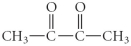
Which of the following compounds is a ketone?

A) CH3CH2CH2CO2H
B) <strong>Which of the following compounds is a ketone?</strong> A) CH<sub>3</sub>CH<sub>2</sub>CH<sub>2</sub>CO<sub>2</sub>H B)   C) CH<sub>3</sub>CH<sub>2</sub>NH<sub>2</sub> D)   E)   <div style=padding-top: 35px>
C) CH3CH2NH2
D) <strong>Which of the following compounds is a ketone?</strong> A) CH<sub>3</sub>CH<sub>2</sub>CH<sub>2</sub>CO<sub>2</sub>H B)   C) CH<sub>3</sub>CH<sub>2</sub>NH<sub>2</sub> D)   E)   <div style=padding-top: 35px>
E) <strong>Which of the following compounds is a ketone?</strong> A) CH<sub>3</sub>CH<sub>2</sub>CH<sub>2</sub>CO<sub>2</sub>H B)   C) CH<sub>3</sub>CH<sub>2</sub>NH<sub>2</sub> D)   E)   <div style=padding-top: 35px>
Question
Write the balanced chemical equation for the catalytic hydrogenation (addition of H2)to CH3C≡CH.

A) CH3C≡CH + H2 → CH3CH=CH2
B) CH3C≡CH + 2 H2 → CH3CH=CH2
C) CH3C≡CH + H2 → CH3CH2CH3
D) CH3C≡CH + 2 H2 → CH3CH2CH3
E) CH3C≡CH + H2 → CH2=C=CH2
Question
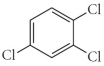
Name the following compound. <strong>Name the following compound.  </strong> A) 2,3,5-trichlorobenzene B) 1,3,4-trichlorobenzene C) trichlorostyrene D) 1,2,4-trichlorobenzene E) 1,3,4-trichlorohexene <div style=padding-top: 35px>

A) 2,3,5-trichlorobenzene
B) 1,3,4-trichlorobenzene
C) trichlorostyrene
D) 1,2,4-trichlorobenzene
E) 1,3,4-trichlorohexene
Question
Write the balanced chemical equation for the addition of HBr to CH2=CHCH2CH3.

A) CH2=CHCH2CH3 + HBr → CH3BrCH2CH2CH3
B) CH2=CHCH2CH3 + 2 HBr → 2 CH2BrCH3
C) CH2=CHCH2CH3 + 2 HBr → CH3Br + CH2BrCH2CH3
D) CH2=CHCH2CH3 + 4 HBr → 4 CH3Br
E) CH2=CHCH2CH3 + HBr → CH3CHBrCH2CH3
Question
Which of the following compounds exhibits geometric isomerism?

A) CH2=CH2
B) CH2=CCl2
C) CBr2=CHBr
D) CHCl=CHCl
E) (CH3)2C=CH-CH3
Question
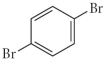
Name the following compound. <strong>Name the following compound.  </strong> A) o-dibromobenzene B) m-dibromobenzene C) p-dibromobenzene D) p-bromobenzene E) none of the above <div style=padding-top: 35px>

A) o-dibromobenzene
B) m-dibromobenzene
C) p-dibromobenzene
D) p-bromobenzene
E) none of the above
Question
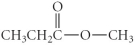
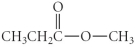
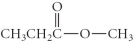
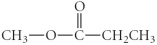
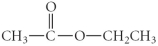
Which of the following compounds is an ester?

A) <strong>Which of the following compounds is an ester?</strong> A)   B)   C)   D)   E)   <div style=padding-top: 35px>
B) <strong>Which of the following compounds is an ester?</strong> A)   B)   C)   D)   E)   <div style=padding-top: 35px>
C) <strong>Which of the following compounds is an ester?</strong> A)   B)   C)   D)   E)   <div style=padding-top: 35px>
D) <strong>Which of the following compounds is an ester?</strong> A)   B)   C)   D)   E)   <div style=padding-top: 35px>
E) <strong>Which of the following compounds is an ester?</strong> A)   B)   C)   D)   E)   <div style=padding-top: 35px>
Question
Which of the following compounds is a carboxylic acid?

A) <strong>Which of the following compounds is a carboxylic acid?</strong> A)   B)   C)   D)   E)   <div style=padding-top: 35px>
B) <strong>Which of the following compounds is a carboxylic acid?</strong> A)   B)   C)   D)   E)   <div style=padding-top: 35px>
C) <strong>Which of the following compounds is a carboxylic acid?</strong> A)   B)   C)   D)   E)   <div style=padding-top: 35px>
D) <strong>Which of the following compounds is a carboxylic acid?</strong> A)   B)   C)   D)   E)   <div style=padding-top: 35px>
E) <strong>Which of the following compounds is a carboxylic acid?</strong> A)   B)   C)   D)   E)   <div style=padding-top: 35px>
Question
Write a balanced chemical equation to represent the reaction of 3-ethyl-2-methylhexane with Br2.

A) C7H14 + Br2 → C7H12Br + HBr
B) C9H20 + Br2 → C9H19Br + HBr
C) C6H12 + Br2 → C6H10Br2 + H2
D) C9H18 + Br2 → C9H16Br2 + H2
E) C6H12 + Br2 → C6H11Br + HBr
Question
Complete and balance the following complete hydrogenation reaction. CH3CH2C <strong>Complete and balance the following complete hydrogenation reaction. CH<sub>3</sub>CH<sub>2</sub>C   CCH<sub>3</sub> + 2 H<sub>2</sub> → ?</strong> A) CH<sub>3</sub>CH<sub>2</sub>C   CCH<sub>3</sub> + 3 H<sub>2</sub> → CH<sub>3</sub>CH<sub>2</sub>CH<sub>3</sub> + CH<sub>3</sub>CH<sub>3</sub> B) CH<sub>3</sub>CH<sub>2</sub>C   CCH<sub>3</sub> + 2 H<sub>2</sub> → CH<sub>3</sub>CH<sub>2</sub>CH<sub>2</sub>CH<sub>2</sub>CH<sub>3</sub> C) CH<sub>3</sub>CH<sub>2</sub>C   CCH<sub>3</sub> + 6 H<sub>2</sub> → 5 CH<sub>4</sub> D) 2 CH<sub>3</sub>CH<sub>2</sub>C   CCH<sub>3</sub> + 2 H<sub>2</sub> → CH<sub>3</sub>CH<sub>2</sub>CH<sub>2</sub>CH<sub>2</sub>CH<sub>2</sub>CH<sub>2</sub>CH<sub>2</sub>CH<sub>2</sub>CH<sub>2</sub>CH<sub>3</sub> E) CH<sub>3</sub>CH<sub>2</sub>C   CCH<sub>3</sub> + 2 H<sub>2</sub> → CH<sub>3</sub>CH<sub>2</sub>CH<sub>2</sub> <sub> </sub>   CH<sub>2</sub>CH<sub>3</sub> <div style=padding-top: 35px> CCH3 + 2 H2 → ?

A) CH3CH2C <strong>Complete and balance the following complete hydrogenation reaction. CH<sub>3</sub>CH<sub>2</sub>C   CCH<sub>3</sub> + 2 H<sub>2</sub> → ?</strong> A) CH<sub>3</sub>CH<sub>2</sub>C   CCH<sub>3</sub> + 3 H<sub>2</sub> → CH<sub>3</sub>CH<sub>2</sub>CH<sub>3</sub> + CH<sub>3</sub>CH<sub>3</sub> B) CH<sub>3</sub>CH<sub>2</sub>C   CCH<sub>3</sub> + 2 H<sub>2</sub> → CH<sub>3</sub>CH<sub>2</sub>CH<sub>2</sub>CH<sub>2</sub>CH<sub>3</sub> C) CH<sub>3</sub>CH<sub>2</sub>C   CCH<sub>3</sub> + 6 H<sub>2</sub> → 5 CH<sub>4</sub> D) 2 CH<sub>3</sub>CH<sub>2</sub>C   CCH<sub>3</sub> + 2 H<sub>2</sub> → CH<sub>3</sub>CH<sub>2</sub>CH<sub>2</sub>CH<sub>2</sub>CH<sub>2</sub>CH<sub>2</sub>CH<sub>2</sub>CH<sub>2</sub>CH<sub>2</sub>CH<sub>3</sub> E) CH<sub>3</sub>CH<sub>2</sub>C   CCH<sub>3</sub> + 2 H<sub>2</sub> → CH<sub>3</sub>CH<sub>2</sub>CH<sub>2</sub> <sub> </sub>   CH<sub>2</sub>CH<sub>3</sub> <div style=padding-top: 35px> CCH3 + 3 H2 → CH3CH2CH3 + CH3CH3
B) CH3CH2C <strong>Complete and balance the following complete hydrogenation reaction. CH<sub>3</sub>CH<sub>2</sub>C   CCH<sub>3</sub> + 2 H<sub>2</sub> → ?</strong> A) CH<sub>3</sub>CH<sub>2</sub>C   CCH<sub>3</sub> + 3 H<sub>2</sub> → CH<sub>3</sub>CH<sub>2</sub>CH<sub>3</sub> + CH<sub>3</sub>CH<sub>3</sub> B) CH<sub>3</sub>CH<sub>2</sub>C   CCH<sub>3</sub> + 2 H<sub>2</sub> → CH<sub>3</sub>CH<sub>2</sub>CH<sub>2</sub>CH<sub>2</sub>CH<sub>3</sub> C) CH<sub>3</sub>CH<sub>2</sub>C   CCH<sub>3</sub> + 6 H<sub>2</sub> → 5 CH<sub>4</sub> D) 2 CH<sub>3</sub>CH<sub>2</sub>C   CCH<sub>3</sub> + 2 H<sub>2</sub> → CH<sub>3</sub>CH<sub>2</sub>CH<sub>2</sub>CH<sub>2</sub>CH<sub>2</sub>CH<sub>2</sub>CH<sub>2</sub>CH<sub>2</sub>CH<sub>2</sub>CH<sub>3</sub> E) CH<sub>3</sub>CH<sub>2</sub>C   CCH<sub>3</sub> + 2 H<sub>2</sub> → CH<sub>3</sub>CH<sub>2</sub>CH<sub>2</sub> <sub> </sub>   CH<sub>2</sub>CH<sub>3</sub> <div style=padding-top: 35px> CCH3 + 2 H2 → CH3CH2CH2CH2CH3
C) CH3CH2C <strong>Complete and balance the following complete hydrogenation reaction. CH<sub>3</sub>CH<sub>2</sub>C   CCH<sub>3</sub> + 2 H<sub>2</sub> → ?</strong> A) CH<sub>3</sub>CH<sub>2</sub>C   CCH<sub>3</sub> + 3 H<sub>2</sub> → CH<sub>3</sub>CH<sub>2</sub>CH<sub>3</sub> + CH<sub>3</sub>CH<sub>3</sub> B) CH<sub>3</sub>CH<sub>2</sub>C   CCH<sub>3</sub> + 2 H<sub>2</sub> → CH<sub>3</sub>CH<sub>2</sub>CH<sub>2</sub>CH<sub>2</sub>CH<sub>3</sub> C) CH<sub>3</sub>CH<sub>2</sub>C   CCH<sub>3</sub> + 6 H<sub>2</sub> → 5 CH<sub>4</sub> D) 2 CH<sub>3</sub>CH<sub>2</sub>C   CCH<sub>3</sub> + 2 H<sub>2</sub> → CH<sub>3</sub>CH<sub>2</sub>CH<sub>2</sub>CH<sub>2</sub>CH<sub>2</sub>CH<sub>2</sub>CH<sub>2</sub>CH<sub>2</sub>CH<sub>2</sub>CH<sub>3</sub> E) CH<sub>3</sub>CH<sub>2</sub>C   CCH<sub>3</sub> + 2 H<sub>2</sub> → CH<sub>3</sub>CH<sub>2</sub>CH<sub>2</sub> <sub> </sub>   CH<sub>2</sub>CH<sub>3</sub> <div style=padding-top: 35px> CCH3 + 6 H2 → 5 CH4
D) 2 CH3CH2C <strong>Complete and balance the following complete hydrogenation reaction. CH<sub>3</sub>CH<sub>2</sub>C   CCH<sub>3</sub> + 2 H<sub>2</sub> → ?</strong> A) CH<sub>3</sub>CH<sub>2</sub>C   CCH<sub>3</sub> + 3 H<sub>2</sub> → CH<sub>3</sub>CH<sub>2</sub>CH<sub>3</sub> + CH<sub>3</sub>CH<sub>3</sub> B) CH<sub>3</sub>CH<sub>2</sub>C   CCH<sub>3</sub> + 2 H<sub>2</sub> → CH<sub>3</sub>CH<sub>2</sub>CH<sub>2</sub>CH<sub>2</sub>CH<sub>3</sub> C) CH<sub>3</sub>CH<sub>2</sub>C   CCH<sub>3</sub> + 6 H<sub>2</sub> → 5 CH<sub>4</sub> D) 2 CH<sub>3</sub>CH<sub>2</sub>C   CCH<sub>3</sub> + 2 H<sub>2</sub> → CH<sub>3</sub>CH<sub>2</sub>CH<sub>2</sub>CH<sub>2</sub>CH<sub>2</sub>CH<sub>2</sub>CH<sub>2</sub>CH<sub>2</sub>CH<sub>2</sub>CH<sub>3</sub> E) CH<sub>3</sub>CH<sub>2</sub>C   CCH<sub>3</sub> + 2 H<sub>2</sub> → CH<sub>3</sub>CH<sub>2</sub>CH<sub>2</sub> <sub> </sub>   CH<sub>2</sub>CH<sub>3</sub> <div style=padding-top: 35px> CCH3 + 2 H2 → CH3CH2CH2CH2CH2CH2CH2CH2CH2CH3
E) CH3CH2C <strong>Complete and balance the following complete hydrogenation reaction. CH<sub>3</sub>CH<sub>2</sub>C   CCH<sub>3</sub> + 2 H<sub>2</sub> → ?</strong> A) CH<sub>3</sub>CH<sub>2</sub>C   CCH<sub>3</sub> + 3 H<sub>2</sub> → CH<sub>3</sub>CH<sub>2</sub>CH<sub>3</sub> + CH<sub>3</sub>CH<sub>3</sub> B) CH<sub>3</sub>CH<sub>2</sub>C   CCH<sub>3</sub> + 2 H<sub>2</sub> → CH<sub>3</sub>CH<sub>2</sub>CH<sub>2</sub>CH<sub>2</sub>CH<sub>3</sub> C) CH<sub>3</sub>CH<sub>2</sub>C   CCH<sub>3</sub> + 6 H<sub>2</sub> → 5 CH<sub>4</sub> D) 2 CH<sub>3</sub>CH<sub>2</sub>C   CCH<sub>3</sub> + 2 H<sub>2</sub> → CH<sub>3</sub>CH<sub>2</sub>CH<sub>2</sub>CH<sub>2</sub>CH<sub>2</sub>CH<sub>2</sub>CH<sub>2</sub>CH<sub>2</sub>CH<sub>2</sub>CH<sub>3</sub> E) CH<sub>3</sub>CH<sub>2</sub>C   CCH<sub>3</sub> + 2 H<sub>2</sub> → CH<sub>3</sub>CH<sub>2</sub>CH<sub>2</sub> <sub> </sub>   CH<sub>2</sub>CH<sub>3</sub> <div style=padding-top: 35px> CCH3 + 2 H2 → CH3CH2CH2 <strong>Complete and balance the following complete hydrogenation reaction. CH<sub>3</sub>CH<sub>2</sub>C   CCH<sub>3</sub> + 2 H<sub>2</sub> → ?</strong> A) CH<sub>3</sub>CH<sub>2</sub>C   CCH<sub>3</sub> + 3 H<sub>2</sub> → CH<sub>3</sub>CH<sub>2</sub>CH<sub>3</sub> + CH<sub>3</sub>CH<sub>3</sub> B) CH<sub>3</sub>CH<sub>2</sub>C   CCH<sub>3</sub> + 2 H<sub>2</sub> → CH<sub>3</sub>CH<sub>2</sub>CH<sub>2</sub>CH<sub>2</sub>CH<sub>3</sub> C) CH<sub>3</sub>CH<sub>2</sub>C   CCH<sub>3</sub> + 6 H<sub>2</sub> → 5 CH<sub>4</sub> D) 2 CH<sub>3</sub>CH<sub>2</sub>C   CCH<sub>3</sub> + 2 H<sub>2</sub> → CH<sub>3</sub>CH<sub>2</sub>CH<sub>2</sub>CH<sub>2</sub>CH<sub>2</sub>CH<sub>2</sub>CH<sub>2</sub>CH<sub>2</sub>CH<sub>2</sub>CH<sub>3</sub> E) CH<sub>3</sub>CH<sub>2</sub>C   CCH<sub>3</sub> + 2 H<sub>2</sub> → CH<sub>3</sub>CH<sub>2</sub>CH<sub>2</sub> <sub> </sub>   CH<sub>2</sub>CH<sub>3</sub> <div style=padding-top: 35px> CH2CH3
Question
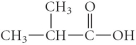
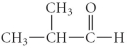
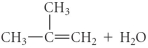
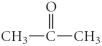
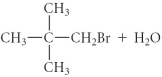
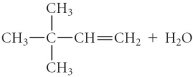
Determine the products of the following reaction: <strong>Determine the products of the following reaction:  </strong> A)   B)   C)   D)   E)   <div style=padding-top: 35px>
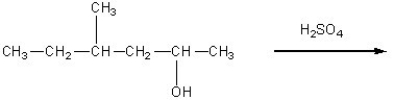
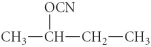
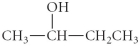
A) <strong>Determine the products of the following reaction:  </strong> A)   B)   C)   D)   E)   <div style=padding-top: 35px>
B) <strong>Determine the products of the following reaction:  </strong> A)   B)   C)   D)   E)   <div style=padding-top: 35px>
C) <strong>Determine the products of the following reaction:  </strong> A)   B)   C)   D)   E)   <div style=padding-top: 35px>
D) <strong>Determine the products of the following reaction:  </strong> A)   B)   C)   D)   E)   <div style=padding-top: 35px>
E) <strong>Determine the products of the following reaction:  </strong> A)   B)   C)   D)   E)   <div style=padding-top: 35px>
Question
Arrange the following in order from most oxidized to least oxidized. <strong>Arrange the following in order from most oxidized to least oxidized.  </strong> A) II > I > III B) III > II > I C) III > I > III D) I > II > III E) II > III > I <div style=padding-top: 35px>
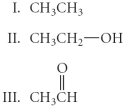
A) II > I > III
B) III > II > I
C) III > I > III
D) I > II > III
E) II > III > I
Question
Arrange the following in order from least oxidized to most oxidized. <strong>Arrange the following in order from least oxidized to most oxidized.  </strong> A) II < I < III B) III < I = II C) III < I < II D) I < II < III E) I < III < II <div style=padding-top: 35px>
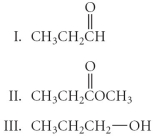
A) II < I < III
B) III < I = II
C) III < I < II
D) I < II < III
E) I < III < II
Question
Name the following compound. <strong>Name the following compound.  </strong> A) propyl butanoate B) butanoic acid C) 1-butanal D) 1-butanoate E) propyl methanoate <div style=padding-top: 35px>
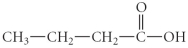
A) propyl butanoate
B) butanoic acid
C) 1-butanal
D) 1-butanoate
E) propyl methanoate
Question
Give the organic product for the following reaction in the presence of sulfuric acid. CH3CH2COOH + CH3CH2CH2OH →

A) CH3CH2COOCH2CH3
B) CH3CH2COOCH2CH2CH3
C) CH3CH2CH2COOCH2CH3
D) CH3CH2COCH2CH2CH3
E) CH3CH2OCH2CH2CH3
Question
Determine the products of the following reaction: <strong>Determine the products of the following reaction:  </strong> A)   B)   C)   D)   E)   <div style=padding-top: 35px>
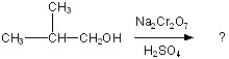
A) <strong>Determine the products of the following reaction:  </strong> A)   B)   C)   D)   E)   <div style=padding-top: 35px>
B) <strong>Determine the products of the following reaction:  </strong> A)   B)   C)   D)   E)   <div style=padding-top: 35px>
C) <strong>Determine the products of the following reaction:  </strong> A)   B)   C)   D)   E)   <div style=padding-top: 35px>
D) <strong>Determine the products of the following reaction:  </strong> A)   B)   C)   D)   E)   <div style=padding-top: 35px>
E) <strong>Determine the products of the following reaction:  </strong> A)   B)   C)   D)   E)   <div style=padding-top: 35px>
Question
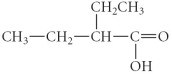
Give the product of the oxidation of the following compound. <strong>Give the product of the oxidation of the following compound.  </strong> A) CH<sub>3</sub>CH<sub>2</sub>CHO B) CH<sub>3</sub>CH<sub>2</sub>CH<sub>2</sub>OH C) CH<sub>3</sub>CH<sub>2</sub>CH<sub>3</sub> D) CH<sub>3</sub>CH<sub>2</sub>COOH E) CH<sub>3</sub>CH<sub>2</sub>OCH<sub>3</sub> <div style=padding-top: 35px>
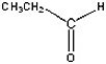
A) CH3CH2CHO
B) CH3CH2CH2OH
C) CH3CH2CH3
D) CH3CH2COOH
E) CH3CH2OCH3
Question
Give the product for the dehydration of CH3CH2CH2OH.

A) CH3CH2CH2OCH2CH2CH3
B) CH3CH=CH2
C) CH3CH=CHCH3
D) CH3CH2CH=CH2
E) CH2=C=CH2
Question
Determine the products of the following reaction: <strong>Determine the products of the following reaction:  </strong> A)   B)   C)   D)   E)   <div style=padding-top: 35px>

A) <strong>Determine the products of the following reaction:  </strong> A)   B)   C)   D)   E)   <div style=padding-top: 35px>
B) <strong>Determine the products of the following reaction:  </strong> A)   B)   C)   D)   E)   <div style=padding-top: 35px>
C) <strong>Determine the products of the following reaction:  </strong> A)   B)   C)   D)   E)   <div style=padding-top: 35px>
D) <strong>Determine the products of the following reaction:  </strong> A)   B)   C)   D)   E)   <div style=padding-top: 35px>
E) <strong>Determine the products of the following reaction:  </strong> A)   B)   C)   D)   E)   <div style=padding-top: 35px>
Question
A carboxylic acid reacts with itself to form

A) an ether
B) an amine
C) an amide
D) an ester
E) an anhydride
Question
Determine the product(s)of the reduction of the following compound: <strong>Determine the product(s)of the reduction of the following compound:  </strong> A)   B)   C)   D)   E)   <div style=padding-top: 35px>
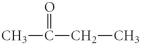
A) <strong>Determine the product(s)of the reduction of the following compound:  </strong> A)   B)   C)   D)   E)   <div style=padding-top: 35px>
B) <strong>Determine the product(s)of the reduction of the following compound:  </strong> A)   B)   C)   D)   E)   <div style=padding-top: 35px>
C) <strong>Determine the product(s)of the reduction of the following compound:  </strong> A)   B)   C)   D)   E)   <div style=padding-top: 35px>
D) <strong>Determine the product(s)of the reduction of the following compound:  </strong> A)   B)   C)   D)   E)   <div style=padding-top: 35px>
E) <strong>Determine the product(s)of the reduction of the following compound:  </strong> A)   B)   C)   D)   E)   <div style=padding-top: 35px>
Question
Which is an example of a ketone?

A) vanillin
B) propanal
C) cinnamaldehyde
D) ionone
E) formaldehyde
Question
Give the product of the reduction of the following compound. <strong>Give the product of the reduction of the following compound.  </strong> A) CH<sub>3</sub>CH<sub>2</sub>CHO B) CH<sub>3</sub>CH<sub>2</sub>CH<sub>2</sub>OH C) CH<sub>3</sub>CH<sub>2</sub>CH<sub>3</sub> D) CH<sub>3</sub>CH<sub>2</sub>COOH E) CH<sub>3</sub>CH<sub>2</sub>OCH<sub>3</sub> <div style=padding-top: 35px>
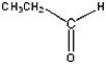
A) CH3CH2CHO
B) CH3CH2CH2OH
C) CH3CH2CH3
D) CH3CH2COOH
E) CH3CH2OCH3
Question
What compound is combined with yeast to form ethanol?

A) glucose
B) methanol
C) propanone
D) naphthalene
E) ethane
Question
What was commonly used as an anesthetic?

A) triethylamine
B) diethyl ether
C) ethyl butanoate
D) methanol
E) acetic acid
Question
Determine the products of the following reaction: <strong>Determine the products of the following reaction:  </strong> A)   B)   C)   D)   E)   <div style=padding-top: 35px>
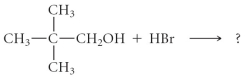
A) <strong>Determine the products of the following reaction:  </strong> A)   B)   C)   D)   E)   <div style=padding-top: 35px>
B) <strong>Determine the products of the following reaction:  </strong> A)   B)   C)   D)   E)   <div style=padding-top: 35px>
C) <strong>Determine the products of the following reaction:  </strong> A)   B)   C)   D)   E)   <div style=padding-top: 35px>
D) <strong>Determine the products of the following reaction:  </strong> A)   B)   C)   D)   E)   <div style=padding-top: 35px>
E) <strong>Determine the products of the following reaction:  </strong> A)   B)   C)   D)   E)   <div style=padding-top: 35px>
Question
The difference between ethane and ethylamine is the presence of which element?

A) carbon
B) oxygen
C) hydrogen
D) nitrogen
E) sulfur
Question
Determine the product(s)of the following reaction: <strong>Determine the product(s)of the following reaction:  </strong> A)   B)   C)   D)   E)   <div style=padding-top: 35px>

A) <strong>Determine the product(s)of the following reaction:  </strong> A)   B)   C)   D)   E)   <div style=padding-top: 35px>
B) <strong>Determine the product(s)of the following reaction:  </strong> A)   B)   C)   D)   E)   <div style=padding-top: 35px>
C) <strong>Determine the product(s)of the following reaction:  </strong> A)   B)   C)   D)   E)   <div style=padding-top: 35px>
D) <strong>Determine the product(s)of the following reaction:  </strong> A)   B)   C)   D)   E)   <div style=padding-top: 35px>
E) <strong>Determine the product(s)of the following reaction:  </strong> A)   B)   C)   D)   E)   <div style=padding-top: 35px>
Question
Identify the most oxidized compound.

A) CH3CH2COOH
B) CH3CH2CHO
C) CH3CH2CH3
D) CH3CH2OCH3
E) CH3CH2CH2OH
Question
A carboxylic acid reacts with an alcohol to form

A) an ether
B) an amine
C) an amide
D) an ester
E) an anhydride
Question
Give the organic product for the following reaction. CH3CH2COOH + CH3CH2CH2NH2

A) CH3CH2NHCH2CH2CH3
B) CH3CH2CON(CH2CH2CH3)2
C) CH3CH2CH2CONHCH2CH3
D) CH3CH2CONHCH2CH2CH3
E) CH3CH2N(CH2CH2CH3)2
Question
cadaverine and putrescine are categorized as:

A) esters
B) ketones
C) aldehydes
D) carboxylic acids
E) amines
Question
Name the following compound. <strong>Name the following compound.  </strong> A) 2-ethyl-4- hexene B) 4-isobutyl-2- butene C) 3-methyl-5- heptane D) 4-isopropyl-2- butene E) 5-methyl-2-heptene <div style=padding-top: 35px>

A) 2-ethyl-4- hexene
B) 4-isobutyl-2- butene
C) 3-methyl-5- heptane
D) 4-isopropyl-2- butene
E) 5-methyl-2-heptene
Question
Give the organic product for the following reaction. CH3CH2CH2NH2 + HCl →

A) ClCH2CH2CH2NH2
B) CH3CHClCH2NH2
C) CH3CH2CHClNH2
D) CH3CH2CH2NHCl
E) CH3CH2CH2NH3+ Cl-
Question
How many isomers are there for C8H18 ?

A) 18
B) 19
C) 20
D) 21
Question
Vanallin and cinnamaldehyde are categorized as:

A) esters
B) ketones
C) aldehydes
D) carboxylic acids
E) amines
Question
Which of the following compounds exhibit optical isomerism?

A) sec-butylbenzene
B) CH2I2
C) CF2ClI
D) CHF2I
E) tert-butylbenzene
Question
Which of the following names is correct?

A) 2-methyl-1-butene
B) 3,3- dipropyl-4- propene
C) 2-ethyl-3- butene
D) 1- ethyl-2-pentene
E) None of the above are correct.
Question
Which of the following compounds exhibits optical isomerism?

A) CH3-CH2-CH3
B) CH3-CH2-CHI-CH3
C) CH3-CHI-CH3
D) CH3-CH2-CH2I
E) CH3-CH2-CBr2-CH3
Question
Which of the following alkane names is correct?

A) 2,3-dibutylpropane
B) 3-ethyl-4- methylbutane
C) 4-ethyl-5- butyl heptene
D) 3,3-dibutylpentane
E) None of the above names are correct.
Question
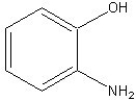
Name the following compound. <strong>Name the following compound.  </strong> A) 2-aminophenol B) 2-aminobenzaldehyde C) 2-aminoaniline D) 1-methylphenol E) 2-hydroxybenzaldehyde <div style=padding-top: 35px>

A) 2-aminophenol
B) 2-aminobenzaldehyde
C) 2-aminoaniline
D) 1-methylphenol
E) 2-hydroxybenzaldehyde
Question
Name the following compound. <strong>Name the following compound.  </strong> A) 2,2-diethylpentane B) 2,2-diethyl1-hexene C) 4-ethyl-4-methyl-5- hexane D) 3-ethyl-3-methyl-1-hexene E) 4-ethyl-4-methylhexane <div style=padding-top: 35px>
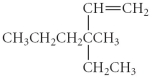
A) 2,2-diethylpentane
B) 2,2-diethyl1-hexene
C) 4-ethyl-4-methyl-5- hexane
D) 3-ethyl-3-methyl-1-hexene
E) 4-ethyl-4-methylhexane
Question
Name the following compound. <strong>Name the following compound.  </strong> A) 2- methyl-4- pentane B) 1,1-dimethyl-3- butene C) 4-methyl-1-pentene D) hexane E) 2-methylpentane <div style=padding-top: 35px>
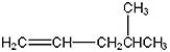
A) 2- methyl-4- pentane
B) 1,1-dimethyl-3- butene
C) 4-methyl-1-pentene
D) hexane
E) 2-methylpentane
Question
Which of the following alkane names is correct?

A) 1,2-dimethylhexane
B) 1- propylnonane
C) 4,5-diethylpentane
D) 2-methyl-3- ethylhexane
E) All of the above names are correct.
Question
Methyl butanoate and ethyl butanoate are categorized as:

A) esters
B) ketones
C) aldehydes
D) carboxylic acids
E) amines
Question
Which compound is a saturated hydrocarbon?

A) bromobenzene
B) cyclohexene
C) 2, 4- dimethylpentane
D) 2-octene
Question
Name the following compound. <strong>Name the following compound.  </strong> A) 2-bromophenol B) 2-bromoaniline C) 2-bromonaphthalene D) 2-bromotoluene E) 2-bromoanisole <div style=padding-top: 35px>

A) 2-bromophenol
B) 2-bromoaniline
C) 2-bromonaphthalene
D) 2-bromotoluene
E) 2-bromoanisole
Question
Name the following compound. <strong>Name the following compound.  </strong> A) 1-methyl-3-isopropylhexene B) 4-propyl-6-methylcyclohexene C) 4-isopropyl-6-methylbenzene D) 1-butylbenzene E) 1-isopropyl-3-methylbenzene <div style=padding-top: 35px>
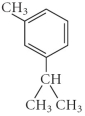
A) 1-methyl-3-isopropylhexene
B) 4-propyl-6-methylcyclohexene
C) 4-isopropyl-6-methylbenzene
D) 1-butylbenzene
E) 1-isopropyl-3-methylbenzene
Question
All of the following compounds exhibit geometric isomerism EXCEPT

A) CFCl=CHBr
B) CH3ClC=CBrCH3
C) CHBr=CHCl
D) CH2=CH-CH3
E) All of the above exhibit geometric isomerism.
Question
Name the following compound. <strong>Name the following compound.  </strong> A) trans-2- butene B) cis-2- butene C) cis-2-pentene D) trans- 2- pentane E) 2- butane <div style=padding-top: 35px>

A) trans-2- butene
B) cis-2- butene
C) cis-2-pentene
D) trans- 2- pentane
E) 2- butane
Unlock Deck
Sign up to unlock the cards in this deck!
Unlock Deck
Unlock Deck
1/105
auto play flashcards
Play
simple tutorial
Full screen (f)
exit full mode
Deck 22: Organic Chemistry
1
Nonsuperimposable mirror images are called

A) structural isomers.
B) achiral.
C) diastereomers.
D) enantiomers.
E) racemic mixture.
enantiomers.
2
Name the following compound. <strong>Name the following compound.  </strong> A) 4-propyl-5-hexyne B) 3-isopropyl-1-hexyne C) 1-nonyne D) 4-methyl-3-propyl-1-pentyne E) 2-methyl-4-pentyne

A) 4-propyl-5-hexyne
B) 3-isopropyl-1-hexyne
C) 1-nonyne
D) 4-methyl-3-propyl-1-pentyne
E) 2-methyl-4-pentyne
3-isopropyl-1-hexyne
3
Name the following compound. <strong>Name the following compound.  </strong> A) 4-methyl-4-propylpentane B) 4,4-dimethylheptane C) nonane D) 4-propyl-4-methylpentane E) 2-methyl-2-propylpentane

A) 4-methyl-4-propylpentane
B) 4,4-dimethylheptane
C) nonane
D) 4-propyl-4-methylpentane
E) 2-methyl-2-propylpentane
4,4-dimethylheptane
4
Name the following compound. <strong>Name the following compound.  </strong> A) 3-ethyl-3-methylhexane B) 3-methyl-3-propylpentane C) 3-ethyl-3-propylbutane D) nonane E) 2-ethylheptane

A) 3-ethyl-3-methylhexane
B) 3-methyl-3-propylpentane
C) 3-ethyl-3-propylbutane
D) nonane
E) 2-ethylheptane
Unlock Deck
Unlock for access to all 105 flashcards in this deck.
Unlock Deck
k this deck
5
An equimolar mixture of two optical isomers is called a

A) structural isomer.
B) achiral.
C) diastereomer.
D) enantiomer.
E) racemic mixture.
Unlock Deck
Unlock for access to all 105 flashcards in this deck.
Unlock Deck
k this deck
6
Molecules with the same formula but different structures are called

A) structural isomers.
B) achiral.
C) diastereomers.
D) enantiomers.
E) racemic mixture.
Unlock Deck
Unlock for access to all 105 flashcards in this deck.
Unlock Deck
k this deck
7
Identify the formula for an alkane.

A) CnH2n+2
B) CnH2n-2
C) CnH2n
D) CnH2n-4
E) CnH2n+4
Unlock Deck
Unlock for access to all 105 flashcards in this deck.
Unlock Deck
k this deck
8
Which of the following names is correct?

A) 3-methyl-5-heptyne
B) 2-ethyl-4-hexyne
C) 5-ethyl-2-hexyne
D) 4-butyl-1-pentyne
E) 5-methyl-2-heptyne
Unlock Deck
Unlock for access to all 105 flashcards in this deck.
Unlock Deck
k this deck
9
Identify the formula for an alkene.

A) CnH2n+2
B) CnH2n-2
C) CnH2n
D) CnH2n-4
E) CnH2n+4
Unlock Deck
Unlock for access to all 105 flashcards in this deck.
Unlock Deck
k this deck
10
How many of the carbons in the following compound are chiral center(s)? <strong>How many of the carbons in the following compound are chiral center(s)?  </strong> A) 0 B) 1 C) 2 D) 3 E) 4 or more

A) 0
B) 1
C) 2
D) 3
E) 4 or more
Unlock Deck
Unlock for access to all 105 flashcards in this deck.
Unlock Deck
k this deck
11
Give the number of covalent bonds that a carbon atom can form.

A) 1
B) 2
C) 3
D) 4
E) 5
Unlock Deck
Unlock for access to all 105 flashcards in this deck.
Unlock Deck
k this deck
12
Which of the following compounds exhibit geometric isomerism?

A) CH2=CH-CH3
B) CCl2=CBr2
C) CH3-CH=CH-CH3
D) CCl2=CHBr
E) All of the above exhibit geometric isomerism.
Unlock Deck
Unlock for access to all 105 flashcards in this deck.
Unlock Deck
k this deck
13
Identify the formula for an alkyne.

A) CnH2n+2
B) CnH2n-2
C) CnH2n
D) CnH2n-4
E) CnH2n+4
Unlock Deck
Unlock for access to all 105 flashcards in this deck.
Unlock Deck
k this deck
14
Name the following compound. <strong>Name the following compound.  </strong> A) 3-butyl-3-propyl-1-pentyne B) 3-butyl-3-propyl-4-pentyne C) 3-ethyl-3-propyl-1-heptyne D) 5-ethyl-5-propyl-6-heptyne E) 3-ethyl-3-butyl-1-hexyne

A) 3-butyl-3-propyl-1-pentyne
B) 3-butyl-3-propyl-4-pentyne
C) 3-ethyl-3-propyl-1-heptyne
D) 5-ethyl-5-propyl-6-heptyne
E) 3-ethyl-3-butyl-1-hexyne
Unlock Deck
Unlock for access to all 105 flashcards in this deck.
Unlock Deck
k this deck
15
How many of the carbons in the following compound are chiral center(s)? <strong>How many of the carbons in the following compound are chiral center(s)?  </strong> A) 0 B) 1 C) 2 D) 3 E) 4 or more

A) 0
B) 1
C) 2
D) 3
E) 4 or more
Unlock Deck
Unlock for access to all 105 flashcards in this deck.
Unlock Deck
k this deck
16
Which of the following names is correct?

A) 3-butyl-4-pentene
B) 3-ethyl-1-heptene
C) 3-etheneheptane
D) 5-ethyl-6-heptene
E) All of the above are correct.
Unlock Deck
Unlock for access to all 105 flashcards in this deck.
Unlock Deck
k this deck
17
Name the following compound. <strong>Name the following compound.  </strong> A) 2-methyl-3-methylhexane B) heptane C) 2,3-dimethylpentane D) 3,4-dimethylpentane E) 2,4-dimethylpropane

A) 2-methyl-3-methylhexane
B) heptane
C) 2,3-dimethylpentane
D) 3,4-dimethylpentane
E) 2,4-dimethylpropane
Unlock Deck
Unlock for access to all 105 flashcards in this deck.
Unlock Deck
k this deck
18
Which of the following names is correct?

A) 2-methyl-4-pentyne
B) 3-ethyl-1-butyne
C) 3-butyl-3-propyl-1-pentyne
D) 3-methyl-1-butyne
E) 3-ethyl-3-butyl-1-hexyne
Unlock Deck
Unlock for access to all 105 flashcards in this deck.
Unlock Deck
k this deck
19
Name the following compound. <strong>Name the following compound.  </strong> A) 3-methyl-1-pentyne B) 3-methyl-4-pentyne C) 2-ethynebutane D) 1-hexyne E) 3-ethyl-1-butyne

A) 3-methyl-1-pentyne
B) 3-methyl-4-pentyne
C) 2-ethynebutane
D) 1-hexyne
E) 3-ethyl-1-butyne
Unlock Deck
Unlock for access to all 105 flashcards in this deck.
Unlock Deck
k this deck
20
Any molecule that exhibits optical isomerism is said to be

A) a stereoisomer.
B) a hydrocarbon.
C) chiral.
D) an alkyne.
E) biologically active.
Unlock Deck
Unlock for access to all 105 flashcards in this deck.
Unlock Deck
k this deck
21
Write the balanced chemical equation for the addition of 2 Br2 to CH3C≡CH.

A) CH3C≡CH + 2 Br2 → CH3CBr2CHBr2
B) CH3C≡CH + 2 Br2 → CH3CBr=CHBr
C) CH3C≡CH + 2 Br2 → CH3CH2CHBr2
D) CH3C≡CH + 2 Br2 → CH3CBr2CH3
E) CH3C≡CH + 2 Br2 → CH3CHBrCH2Br
Unlock Deck
Unlock for access to all 105 flashcards in this deck.
Unlock Deck
k this deck
22
Which of the following compounds is ethanol?

A) C2H6
B) C2H5OH
C) CH3CO2H
D) CH3CO2CH3
E) CH3-O-CH3
Unlock Deck
Unlock for access to all 105 flashcards in this deck.
Unlock Deck
k this deck
23
Write the balanced chemical equation for the catalytic hydrogenation (addition of H2)to CH3CH=CHCH3.

A) CH3CH=CHCH3 + 2 H2 → 2 CH3CH3
B) CH3CH=CHCH3 + 3 H2 → CH3CH3 + 2 CH4
C) CH3CH=CHCH3 + 2 H2 → CH3CH2CH3 + CH4
D) CH3CH=CHCH3 + H2 → CH3CH2CH2CH3
E) CH3CH=CHCH3 + 4 H2 → 4 CH4
Unlock Deck
Unlock for access to all 105 flashcards in this deck.
Unlock Deck
k this deck
24
Name the following compound. <strong>Name the following compound.  </strong> A) 2,5-dibromobenzene B) 2,5-dibromocyclohexene C) 1,4-dibromobenzene D) 1,4-bromocyclohexene E) 3,6-dibromobenzene

A) 2,5-dibromobenzene
B) 2,5-dibromocyclohexene
C) 1,4-dibromobenzene
D) 1,4-bromocyclohexene
E) 3,6-dibromobenzene
Unlock Deck
Unlock for access to all 105 flashcards in this deck.
Unlock Deck
k this deck
25
Write a balanced chemical reaction to represent the combustion of 2,2-dimethylpropane.

A) C5H12 + 8 O2 → 5 CO2 + 6 H2O
B) C3H8 + 5 O2 → 3 CO2 + 4 H2O
C) C5H12 + H2 → CH4 + 2 C2H6
D) C3H8 + H2 → CH4 + C2H6
E) 2 C3H8 + O2 → 3 CH4 + 2 H2O
Unlock Deck
Unlock for access to all 105 flashcards in this deck.
Unlock Deck
k this deck
26
Which of the following compounds is an ether?

A) <strong>Which of the following compounds is an ether?</strong> A)   B)   C)   D)   E)
B) <strong>Which of the following compounds is an ether?</strong> A)   B)   C)   D)   E)
C) <strong>Which of the following compounds is an ether?</strong> A)   B)   C)   D)   E)
D) <strong>Which of the following compounds is an ether?</strong> A)   B)   C)   D)   E)
E) <strong>Which of the following compounds is an ether?</strong> A)   B)   C)   D)   E)
Unlock Deck
Unlock for access to all 105 flashcards in this deck.
Unlock Deck
k this deck
27
Which of the following compounds is an alcohol?

A) CH3CH2CH2CO2H
B) CH3-O-CH3
C) CH3CO2CH3
D) CH3CH2CH=O
E) CH2OH-CH2OH
Unlock Deck
Unlock for access to all 105 flashcards in this deck.
Unlock Deck
k this deck
28
Write the balanced chemical equation that represents the addition of Cl2 to CH3CH=CH2.

A) CH3CH=CH2 + Cl2 → CH3CHClCH3 + HCl
B) CH3CH=CH2 + Cl2 → CH3CCl=CHCl + H2
C) CH3CH=CH2 + Cl2 → CH3CHClCH2Cl
D) CH3CH=CH2 + 2 Cl2 → CH3CHCl2 + CH2Cl2
E) CH3CH=CH2 + 2 Cl2 → CH3CCl2CHCl2 + H2
Unlock Deck
Unlock for access to all 105 flashcards in this deck.
Unlock Deck
k this deck
29
Which of the following compounds is an aldehyde?

A) CH3CH2CH=O
B) CH3CH2CH2CO2H
C) CH3CO2CH3
D) CH3-O-CH3
E) CH2OH-CH2OH
Unlock Deck
Unlock for access to all 105 flashcards in this deck.
Unlock Deck
k this deck
30
Complete and balance the following addition reaction. CH3C <strong>Complete and balance the following addition reaction. CH<sub>3</sub>C   CCH<sub>3</sub> + 2 Cl<sub>2</sub> → ?</strong> A) CH<sub>3</sub>C   CCH<sub>3</sub> + 2 Cl<sub>2</sub> → CH<sub>3</sub>CCl<sub>2</sub>CCl<sub>2</sub>CH<sub>3</sub> B) CH<sub>3</sub>C   CCH<sub>3</sub> + 3 Cl<sub>2</sub> → 2 CH<sub>3</sub>CCl<sub>3</sub> C) CH<sub>3</sub>C   CCH<sub>3</sub> + 2 Cl<sub>2</sub> → 4 CH<sub>3</sub>Cl D) CH<sub>3</sub>C   CCH<sub>3</sub> + 4 Cl<sub>2</sub> → 4 CH<sub>2</sub>Cl<sub>2</sub> E) CH<sub>3</sub>C   CCH<sub>3</sub> + Cl<sub>2</sub> → CH<sub>3</sub>CHClCHClCH<sub>3</sub> CCH3 + 2 Cl2 → ?

A) CH3C <strong>Complete and balance the following addition reaction. CH<sub>3</sub>C   CCH<sub>3</sub> + 2 Cl<sub>2</sub> → ?</strong> A) CH<sub>3</sub>C   CCH<sub>3</sub> + 2 Cl<sub>2</sub> → CH<sub>3</sub>CCl<sub>2</sub>CCl<sub>2</sub>CH<sub>3</sub> B) CH<sub>3</sub>C   CCH<sub>3</sub> + 3 Cl<sub>2</sub> → 2 CH<sub>3</sub>CCl<sub>3</sub> C) CH<sub>3</sub>C   CCH<sub>3</sub> + 2 Cl<sub>2</sub> → 4 CH<sub>3</sub>Cl D) CH<sub>3</sub>C   CCH<sub>3</sub> + 4 Cl<sub>2</sub> → 4 CH<sub>2</sub>Cl<sub>2</sub> E) CH<sub>3</sub>C   CCH<sub>3</sub> + Cl<sub>2</sub> → CH<sub>3</sub>CHClCHClCH<sub>3</sub> CCH3 + 2 Cl2 → CH3CCl2CCl2CH3
B) CH3C <strong>Complete and balance the following addition reaction. CH<sub>3</sub>C   CCH<sub>3</sub> + 2 Cl<sub>2</sub> → ?</strong> A) CH<sub>3</sub>C   CCH<sub>3</sub> + 2 Cl<sub>2</sub> → CH<sub>3</sub>CCl<sub>2</sub>CCl<sub>2</sub>CH<sub>3</sub> B) CH<sub>3</sub>C   CCH<sub>3</sub> + 3 Cl<sub>2</sub> → 2 CH<sub>3</sub>CCl<sub>3</sub> C) CH<sub>3</sub>C   CCH<sub>3</sub> + 2 Cl<sub>2</sub> → 4 CH<sub>3</sub>Cl D) CH<sub>3</sub>C   CCH<sub>3</sub> + 4 Cl<sub>2</sub> → 4 CH<sub>2</sub>Cl<sub>2</sub> E) CH<sub>3</sub>C   CCH<sub>3</sub> + Cl<sub>2</sub> → CH<sub>3</sub>CHClCHClCH<sub>3</sub> CCH3 + 3 Cl2 → 2 CH3CCl3
C) CH3C <strong>Complete and balance the following addition reaction. CH<sub>3</sub>C   CCH<sub>3</sub> + 2 Cl<sub>2</sub> → ?</strong> A) CH<sub>3</sub>C   CCH<sub>3</sub> + 2 Cl<sub>2</sub> → CH<sub>3</sub>CCl<sub>2</sub>CCl<sub>2</sub>CH<sub>3</sub> B) CH<sub>3</sub>C   CCH<sub>3</sub> + 3 Cl<sub>2</sub> → 2 CH<sub>3</sub>CCl<sub>3</sub> C) CH<sub>3</sub>C   CCH<sub>3</sub> + 2 Cl<sub>2</sub> → 4 CH<sub>3</sub>Cl D) CH<sub>3</sub>C   CCH<sub>3</sub> + 4 Cl<sub>2</sub> → 4 CH<sub>2</sub>Cl<sub>2</sub> E) CH<sub>3</sub>C   CCH<sub>3</sub> + Cl<sub>2</sub> → CH<sub>3</sub>CHClCHClCH<sub>3</sub> CCH3 + 2 Cl2 → 4 CH3Cl
D) CH3C <strong>Complete and balance the following addition reaction. CH<sub>3</sub>C   CCH<sub>3</sub> + 2 Cl<sub>2</sub> → ?</strong> A) CH<sub>3</sub>C   CCH<sub>3</sub> + 2 Cl<sub>2</sub> → CH<sub>3</sub>CCl<sub>2</sub>CCl<sub>2</sub>CH<sub>3</sub> B) CH<sub>3</sub>C   CCH<sub>3</sub> + 3 Cl<sub>2</sub> → 2 CH<sub>3</sub>CCl<sub>3</sub> C) CH<sub>3</sub>C   CCH<sub>3</sub> + 2 Cl<sub>2</sub> → 4 CH<sub>3</sub>Cl D) CH<sub>3</sub>C   CCH<sub>3</sub> + 4 Cl<sub>2</sub> → 4 CH<sub>2</sub>Cl<sub>2</sub> E) CH<sub>3</sub>C   CCH<sub>3</sub> + Cl<sub>2</sub> → CH<sub>3</sub>CHClCHClCH<sub>3</sub> CCH3 + 4 Cl2 → 4 CH2Cl2
E) CH3C <strong>Complete and balance the following addition reaction. CH<sub>3</sub>C   CCH<sub>3</sub> + 2 Cl<sub>2</sub> → ?</strong> A) CH<sub>3</sub>C   CCH<sub>3</sub> + 2 Cl<sub>2</sub> → CH<sub>3</sub>CCl<sub>2</sub>CCl<sub>2</sub>CH<sub>3</sub> B) CH<sub>3</sub>C   CCH<sub>3</sub> + 3 Cl<sub>2</sub> → 2 CH<sub>3</sub>CCl<sub>3</sub> C) CH<sub>3</sub>C   CCH<sub>3</sub> + 2 Cl<sub>2</sub> → 4 CH<sub>3</sub>Cl D) CH<sub>3</sub>C   CCH<sub>3</sub> + 4 Cl<sub>2</sub> → 4 CH<sub>2</sub>Cl<sub>2</sub> E) CH<sub>3</sub>C   CCH<sub>3</sub> + Cl<sub>2</sub> → CH<sub>3</sub>CHClCHClCH<sub>3</sub> CCH3 + Cl2 → CH3CHClCHClCH3
Unlock Deck
Unlock for access to all 105 flashcards in this deck.
Unlock Deck
k this deck
31
Which of the following compounds is a ketone?

A) CH3CH2CH2CO2H
B) <strong>Which of the following compounds is a ketone?</strong> A) CH<sub>3</sub>CH<sub>2</sub>CH<sub>2</sub>CO<sub>2</sub>H B)   C) CH<sub>3</sub>CH<sub>2</sub>NH<sub>2</sub> D)   E)
C) CH3CH2NH2
D) <strong>Which of the following compounds is a ketone?</strong> A) CH<sub>3</sub>CH<sub>2</sub>CH<sub>2</sub>CO<sub>2</sub>H B)   C) CH<sub>3</sub>CH<sub>2</sub>NH<sub>2</sub> D)   E)
E) <strong>Which of the following compounds is a ketone?</strong> A) CH<sub>3</sub>CH<sub>2</sub>CH<sub>2</sub>CO<sub>2</sub>H B)   C) CH<sub>3</sub>CH<sub>2</sub>NH<sub>2</sub> D)   E)
Unlock Deck
Unlock for access to all 105 flashcards in this deck.
Unlock Deck
k this deck
32
Write the balanced chemical equation for the catalytic hydrogenation (addition of H2)to CH3C≡CH.

A) CH3C≡CH + H2 → CH3CH=CH2
B) CH3C≡CH + 2 H2 → CH3CH=CH2
C) CH3C≡CH + H2 → CH3CH2CH3
D) CH3C≡CH + 2 H2 → CH3CH2CH3
E) CH3C≡CH + H2 → CH2=C=CH2
Unlock Deck
Unlock for access to all 105 flashcards in this deck.
Unlock Deck
k this deck
33
Name the following compound. <strong>Name the following compound.  </strong> A) 2,3,5-trichlorobenzene B) 1,3,4-trichlorobenzene C) trichlorostyrene D) 1,2,4-trichlorobenzene E) 1,3,4-trichlorohexene

A) 2,3,5-trichlorobenzene
B) 1,3,4-trichlorobenzene
C) trichlorostyrene
D) 1,2,4-trichlorobenzene
E) 1,3,4-trichlorohexene
Unlock Deck
Unlock for access to all 105 flashcards in this deck.
Unlock Deck
k this deck
34
Write the balanced chemical equation for the addition of HBr to CH2=CHCH2CH3.

A) CH2=CHCH2CH3 + HBr → CH3BrCH2CH2CH3
B) CH2=CHCH2CH3 + 2 HBr → 2 CH2BrCH3
C) CH2=CHCH2CH3 + 2 HBr → CH3Br + CH2BrCH2CH3
D) CH2=CHCH2CH3 + 4 HBr → 4 CH3Br
E) CH2=CHCH2CH3 + HBr → CH3CHBrCH2CH3
Unlock Deck
Unlock for access to all 105 flashcards in this deck.
Unlock Deck
k this deck
35
Which of the following compounds exhibits geometric isomerism?

A) CH2=CH2
B) CH2=CCl2
C) CBr2=CHBr
D) CHCl=CHCl
E) (CH3)2C=CH-CH3
Unlock Deck
Unlock for access to all 105 flashcards in this deck.
Unlock Deck
k this deck
36
Name the following compound. <strong>Name the following compound.  </strong> A) o-dibromobenzene B) m-dibromobenzene C) p-dibromobenzene D) p-bromobenzene E) none of the above

A) o-dibromobenzene
B) m-dibromobenzene
C) p-dibromobenzene
D) p-bromobenzene
E) none of the above
Unlock Deck
Unlock for access to all 105 flashcards in this deck.
Unlock Deck
k this deck
37
Which of the following compounds is an ester?

A) <strong>Which of the following compounds is an ester?</strong> A)   B)   C)   D)   E)
B) <strong>Which of the following compounds is an ester?</strong> A)   B)   C)   D)   E)
C) <strong>Which of the following compounds is an ester?</strong> A)   B)   C)   D)   E)
D) <strong>Which of the following compounds is an ester?</strong> A)   B)   C)   D)   E)
E) <strong>Which of the following compounds is an ester?</strong> A)   B)   C)   D)   E)
Unlock Deck
Unlock for access to all 105 flashcards in this deck.
Unlock Deck
k this deck
38
Which of the following compounds is a carboxylic acid?

A) <strong>Which of the following compounds is a carboxylic acid?</strong> A)   B)   C)   D)   E)
B) <strong>Which of the following compounds is a carboxylic acid?</strong> A)   B)   C)   D)   E)
C) <strong>Which of the following compounds is a carboxylic acid?</strong> A)   B)   C)   D)   E)
D) <strong>Which of the following compounds is a carboxylic acid?</strong> A)   B)   C)   D)   E)
E) <strong>Which of the following compounds is a carboxylic acid?</strong> A)   B)   C)   D)   E)
Unlock Deck
Unlock for access to all 105 flashcards in this deck.
Unlock Deck
k this deck
39
Write a balanced chemical equation to represent the reaction of 3-ethyl-2-methylhexane with Br2.

A) C7H14 + Br2 → C7H12Br + HBr
B) C9H20 + Br2 → C9H19Br + HBr
C) C6H12 + Br2 → C6H10Br2 + H2
D) C9H18 + Br2 → C9H16Br2 + H2
E) C6H12 + Br2 → C6H11Br + HBr
Unlock Deck
Unlock for access to all 105 flashcards in this deck.
Unlock Deck
k this deck
40
Complete and balance the following complete hydrogenation reaction. CH3CH2C <strong>Complete and balance the following complete hydrogenation reaction. CH<sub>3</sub>CH<sub>2</sub>C   CCH<sub>3</sub> + 2 H<sub>2</sub> → ?</strong> A) CH<sub>3</sub>CH<sub>2</sub>C   CCH<sub>3</sub> + 3 H<sub>2</sub> → CH<sub>3</sub>CH<sub>2</sub>CH<sub>3</sub> + CH<sub>3</sub>CH<sub>3</sub> B) CH<sub>3</sub>CH<sub>2</sub>C   CCH<sub>3</sub> + 2 H<sub>2</sub> → CH<sub>3</sub>CH<sub>2</sub>CH<sub>2</sub>CH<sub>2</sub>CH<sub>3</sub> C) CH<sub>3</sub>CH<sub>2</sub>C   CCH<sub>3</sub> + 6 H<sub>2</sub> → 5 CH<sub>4</sub> D) 2 CH<sub>3</sub>CH<sub>2</sub>C   CCH<sub>3</sub> + 2 H<sub>2</sub> → CH<sub>3</sub>CH<sub>2</sub>CH<sub>2</sub>CH<sub>2</sub>CH<sub>2</sub>CH<sub>2</sub>CH<sub>2</sub>CH<sub>2</sub>CH<sub>2</sub>CH<sub>3</sub> E) CH<sub>3</sub>CH<sub>2</sub>C   CCH<sub>3</sub> + 2 H<sub>2</sub> → CH<sub>3</sub>CH<sub>2</sub>CH<sub>2</sub> <sub> </sub>   CH<sub>2</sub>CH<sub>3</sub> CCH3 + 2 H2 → ?

A) CH3CH2C <strong>Complete and balance the following complete hydrogenation reaction. CH<sub>3</sub>CH<sub>2</sub>C   CCH<sub>3</sub> + 2 H<sub>2</sub> → ?</strong> A) CH<sub>3</sub>CH<sub>2</sub>C   CCH<sub>3</sub> + 3 H<sub>2</sub> → CH<sub>3</sub>CH<sub>2</sub>CH<sub>3</sub> + CH<sub>3</sub>CH<sub>3</sub> B) CH<sub>3</sub>CH<sub>2</sub>C   CCH<sub>3</sub> + 2 H<sub>2</sub> → CH<sub>3</sub>CH<sub>2</sub>CH<sub>2</sub>CH<sub>2</sub>CH<sub>3</sub> C) CH<sub>3</sub>CH<sub>2</sub>C   CCH<sub>3</sub> + 6 H<sub>2</sub> → 5 CH<sub>4</sub> D) 2 CH<sub>3</sub>CH<sub>2</sub>C   CCH<sub>3</sub> + 2 H<sub>2</sub> → CH<sub>3</sub>CH<sub>2</sub>CH<sub>2</sub>CH<sub>2</sub>CH<sub>2</sub>CH<sub>2</sub>CH<sub>2</sub>CH<sub>2</sub>CH<sub>2</sub>CH<sub>3</sub> E) CH<sub>3</sub>CH<sub>2</sub>C   CCH<sub>3</sub> + 2 H<sub>2</sub> → CH<sub>3</sub>CH<sub>2</sub>CH<sub>2</sub> <sub> </sub>   CH<sub>2</sub>CH<sub>3</sub> CCH3 + 3 H2 → CH3CH2CH3 + CH3CH3
B) CH3CH2C <strong>Complete and balance the following complete hydrogenation reaction. CH<sub>3</sub>CH<sub>2</sub>C   CCH<sub>3</sub> + 2 H<sub>2</sub> → ?</strong> A) CH<sub>3</sub>CH<sub>2</sub>C   CCH<sub>3</sub> + 3 H<sub>2</sub> → CH<sub>3</sub>CH<sub>2</sub>CH<sub>3</sub> + CH<sub>3</sub>CH<sub>3</sub> B) CH<sub>3</sub>CH<sub>2</sub>C   CCH<sub>3</sub> + 2 H<sub>2</sub> → CH<sub>3</sub>CH<sub>2</sub>CH<sub>2</sub>CH<sub>2</sub>CH<sub>3</sub> C) CH<sub>3</sub>CH<sub>2</sub>C   CCH<sub>3</sub> + 6 H<sub>2</sub> → 5 CH<sub>4</sub> D) 2 CH<sub>3</sub>CH<sub>2</sub>C   CCH<sub>3</sub> + 2 H<sub>2</sub> → CH<sub>3</sub>CH<sub>2</sub>CH<sub>2</sub>CH<sub>2</sub>CH<sub>2</sub>CH<sub>2</sub>CH<sub>2</sub>CH<sub>2</sub>CH<sub>2</sub>CH<sub>3</sub> E) CH<sub>3</sub>CH<sub>2</sub>C   CCH<sub>3</sub> + 2 H<sub>2</sub> → CH<sub>3</sub>CH<sub>2</sub>CH<sub>2</sub> <sub> </sub>   CH<sub>2</sub>CH<sub>3</sub> CCH3 + 2 H2 → CH3CH2CH2CH2CH3
C) CH3CH2C <strong>Complete and balance the following complete hydrogenation reaction. CH<sub>3</sub>CH<sub>2</sub>C   CCH<sub>3</sub> + 2 H<sub>2</sub> → ?</strong> A) CH<sub>3</sub>CH<sub>2</sub>C   CCH<sub>3</sub> + 3 H<sub>2</sub> → CH<sub>3</sub>CH<sub>2</sub>CH<sub>3</sub> + CH<sub>3</sub>CH<sub>3</sub> B) CH<sub>3</sub>CH<sub>2</sub>C   CCH<sub>3</sub> + 2 H<sub>2</sub> → CH<sub>3</sub>CH<sub>2</sub>CH<sub>2</sub>CH<sub>2</sub>CH<sub>3</sub> C) CH<sub>3</sub>CH<sub>2</sub>C   CCH<sub>3</sub> + 6 H<sub>2</sub> → 5 CH<sub>4</sub> D) 2 CH<sub>3</sub>CH<sub>2</sub>C   CCH<sub>3</sub> + 2 H<sub>2</sub> → CH<sub>3</sub>CH<sub>2</sub>CH<sub>2</sub>CH<sub>2</sub>CH<sub>2</sub>CH<sub>2</sub>CH<sub>2</sub>CH<sub>2</sub>CH<sub>2</sub>CH<sub>3</sub> E) CH<sub>3</sub>CH<sub>2</sub>C   CCH<sub>3</sub> + 2 H<sub>2</sub> → CH<sub>3</sub>CH<sub>2</sub>CH<sub>2</sub> <sub> </sub>   CH<sub>2</sub>CH<sub>3</sub> CCH3 + 6 H2 → 5 CH4
D) 2 CH3CH2C <strong>Complete and balance the following complete hydrogenation reaction. CH<sub>3</sub>CH<sub>2</sub>C   CCH<sub>3</sub> + 2 H<sub>2</sub> → ?</strong> A) CH<sub>3</sub>CH<sub>2</sub>C   CCH<sub>3</sub> + 3 H<sub>2</sub> → CH<sub>3</sub>CH<sub>2</sub>CH<sub>3</sub> + CH<sub>3</sub>CH<sub>3</sub> B) CH<sub>3</sub>CH<sub>2</sub>C   CCH<sub>3</sub> + 2 H<sub>2</sub> → CH<sub>3</sub>CH<sub>2</sub>CH<sub>2</sub>CH<sub>2</sub>CH<sub>3</sub> C) CH<sub>3</sub>CH<sub>2</sub>C   CCH<sub>3</sub> + 6 H<sub>2</sub> → 5 CH<sub>4</sub> D) 2 CH<sub>3</sub>CH<sub>2</sub>C   CCH<sub>3</sub> + 2 H<sub>2</sub> → CH<sub>3</sub>CH<sub>2</sub>CH<sub>2</sub>CH<sub>2</sub>CH<sub>2</sub>CH<sub>2</sub>CH<sub>2</sub>CH<sub>2</sub>CH<sub>2</sub>CH<sub>3</sub> E) CH<sub>3</sub>CH<sub>2</sub>C   CCH<sub>3</sub> + 2 H<sub>2</sub> → CH<sub>3</sub>CH<sub>2</sub>CH<sub>2</sub> <sub> </sub>   CH<sub>2</sub>CH<sub>3</sub> CCH3 + 2 H2 → CH3CH2CH2CH2CH2CH2CH2CH2CH2CH3
E) CH3CH2C <strong>Complete and balance the following complete hydrogenation reaction. CH<sub>3</sub>CH<sub>2</sub>C   CCH<sub>3</sub> + 2 H<sub>2</sub> → ?</strong> A) CH<sub>3</sub>CH<sub>2</sub>C   CCH<sub>3</sub> + 3 H<sub>2</sub> → CH<sub>3</sub>CH<sub>2</sub>CH<sub>3</sub> + CH<sub>3</sub>CH<sub>3</sub> B) CH<sub>3</sub>CH<sub>2</sub>C   CCH<sub>3</sub> + 2 H<sub>2</sub> → CH<sub>3</sub>CH<sub>2</sub>CH<sub>2</sub>CH<sub>2</sub>CH<sub>3</sub> C) CH<sub>3</sub>CH<sub>2</sub>C   CCH<sub>3</sub> + 6 H<sub>2</sub> → 5 CH<sub>4</sub> D) 2 CH<sub>3</sub>CH<sub>2</sub>C   CCH<sub>3</sub> + 2 H<sub>2</sub> → CH<sub>3</sub>CH<sub>2</sub>CH<sub>2</sub>CH<sub>2</sub>CH<sub>2</sub>CH<sub>2</sub>CH<sub>2</sub>CH<sub>2</sub>CH<sub>2</sub>CH<sub>3</sub> E) CH<sub>3</sub>CH<sub>2</sub>C   CCH<sub>3</sub> + 2 H<sub>2</sub> → CH<sub>3</sub>CH<sub>2</sub>CH<sub>2</sub> <sub> </sub>   CH<sub>2</sub>CH<sub>3</sub> CCH3 + 2 H2 → CH3CH2CH2 <strong>Complete and balance the following complete hydrogenation reaction. CH<sub>3</sub>CH<sub>2</sub>C   CCH<sub>3</sub> + 2 H<sub>2</sub> → ?</strong> A) CH<sub>3</sub>CH<sub>2</sub>C   CCH<sub>3</sub> + 3 H<sub>2</sub> → CH<sub>3</sub>CH<sub>2</sub>CH<sub>3</sub> + CH<sub>3</sub>CH<sub>3</sub> B) CH<sub>3</sub>CH<sub>2</sub>C   CCH<sub>3</sub> + 2 H<sub>2</sub> → CH<sub>3</sub>CH<sub>2</sub>CH<sub>2</sub>CH<sub>2</sub>CH<sub>3</sub> C) CH<sub>3</sub>CH<sub>2</sub>C   CCH<sub>3</sub> + 6 H<sub>2</sub> → 5 CH<sub>4</sub> D) 2 CH<sub>3</sub>CH<sub>2</sub>C   CCH<sub>3</sub> + 2 H<sub>2</sub> → CH<sub>3</sub>CH<sub>2</sub>CH<sub>2</sub>CH<sub>2</sub>CH<sub>2</sub>CH<sub>2</sub>CH<sub>2</sub>CH<sub>2</sub>CH<sub>2</sub>CH<sub>3</sub> E) CH<sub>3</sub>CH<sub>2</sub>C   CCH<sub>3</sub> + 2 H<sub>2</sub> → CH<sub>3</sub>CH<sub>2</sub>CH<sub>2</sub> <sub> </sub>   CH<sub>2</sub>CH<sub>3</sub> CH2CH3
Unlock Deck
Unlock for access to all 105 flashcards in this deck.
Unlock Deck
k this deck
41
Determine the products of the following reaction: <strong>Determine the products of the following reaction:  </strong> A)   B)   C)   D)   E)

A) <strong>Determine the products of the following reaction:  </strong> A)   B)   C)   D)   E)
B) <strong>Determine the products of the following reaction:  </strong> A)   B)   C)   D)   E)
C) <strong>Determine the products of the following reaction:  </strong> A)   B)   C)   D)   E)
D) <strong>Determine the products of the following reaction:  </strong> A)   B)   C)   D)   E)
E) <strong>Determine the products of the following reaction:  </strong> A)   B)   C)   D)   E)
Unlock Deck
Unlock for access to all 105 flashcards in this deck.
Unlock Deck
k this deck
42
Arrange the following in order from most oxidized to least oxidized. <strong>Arrange the following in order from most oxidized to least oxidized.  </strong> A) II > I > III B) III > II > I C) III > I > III D) I > II > III E) II > III > I

A) II > I > III
B) III > II > I
C) III > I > III
D) I > II > III
E) II > III > I
Unlock Deck
Unlock for access to all 105 flashcards in this deck.
Unlock Deck
k this deck
43
Arrange the following in order from least oxidized to most oxidized. <strong>Arrange the following in order from least oxidized to most oxidized.  </strong> A) II < I < III B) III < I = II C) III < I < II D) I < II < III E) I < III < II

A) II < I < III
B) III < I = II
C) III < I < II
D) I < II < III
E) I < III < II
Unlock Deck
Unlock for access to all 105 flashcards in this deck.
Unlock Deck
k this deck
44
Name the following compound. <strong>Name the following compound.  </strong> A) propyl butanoate B) butanoic acid C) 1-butanal D) 1-butanoate E) propyl methanoate

A) propyl butanoate
B) butanoic acid
C) 1-butanal
D) 1-butanoate
E) propyl methanoate
Unlock Deck
Unlock for access to all 105 flashcards in this deck.
Unlock Deck
k this deck
45
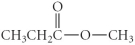
Give the organic product for the following reaction in the presence of sulfuric acid. CH3CH2COOH + CH3CH2CH2OH →

A) CH3CH2COOCH2CH3
B) CH3CH2COOCH2CH2CH3
C) CH3CH2CH2COOCH2CH3
D) CH3CH2COCH2CH2CH3
E) CH3CH2OCH2CH2CH3
Unlock Deck
Unlock for access to all 105 flashcards in this deck.
Unlock Deck
k this deck
46
Determine the products of the following reaction: <strong>Determine the products of the following reaction:  </strong> A)   B)   C)   D)   E)

A) <strong>Determine the products of the following reaction:  </strong> A)   B)   C)   D)   E)
B) <strong>Determine the products of the following reaction:  </strong> A)   B)   C)   D)   E)
C) <strong>Determine the products of the following reaction:  </strong> A)   B)   C)   D)   E)
D) <strong>Determine the products of the following reaction:  </strong> A)   B)   C)   D)   E)
E) <strong>Determine the products of the following reaction:  </strong> A)   B)   C)   D)   E)
Unlock Deck
Unlock for access to all 105 flashcards in this deck.
Unlock Deck
k this deck
47
Give the product of the oxidation of the following compound. <strong>Give the product of the oxidation of the following compound.  </strong> A) CH<sub>3</sub>CH<sub>2</sub>CHO B) CH<sub>3</sub>CH<sub>2</sub>CH<sub>2</sub>OH C) CH<sub>3</sub>CH<sub>2</sub>CH<sub>3</sub> D) CH<sub>3</sub>CH<sub>2</sub>COOH E) CH<sub>3</sub>CH<sub>2</sub>OCH<sub>3</sub>

A) CH3CH2CHO
B) CH3CH2CH2OH
C) CH3CH2CH3
D) CH3CH2COOH
E) CH3CH2OCH3
Unlock Deck
Unlock for access to all 105 flashcards in this deck.
Unlock Deck
k this deck
48
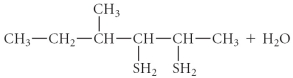
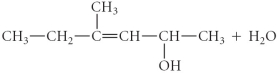
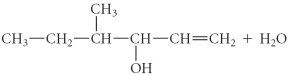
Give the product for the dehydration of CH3CH2CH2OH.

A) CH3CH2CH2OCH2CH2CH3
B) CH3CH=CH2
C) CH3CH=CHCH3
D) CH3CH2CH=CH2
E) CH2=C=CH2
Unlock Deck
Unlock for access to all 105 flashcards in this deck.
Unlock Deck
k this deck
49
Determine the products of the following reaction: <strong>Determine the products of the following reaction:  </strong> A)   B)   C)   D)   E)

A) <strong>Determine the products of the following reaction:  </strong> A)   B)   C)   D)   E)
B) <strong>Determine the products of the following reaction:  </strong> A)   B)   C)   D)   E)
C) <strong>Determine the products of the following reaction:  </strong> A)   B)   C)   D)   E)
D) <strong>Determine the products of the following reaction:  </strong> A)   B)   C)   D)   E)
E) <strong>Determine the products of the following reaction:  </strong> A)   B)   C)   D)   E)
Unlock Deck
Unlock for access to all 105 flashcards in this deck.
Unlock Deck
k this deck
50
A carboxylic acid reacts with itself to form

A) an ether
B) an amine
C) an amide
D) an ester
E) an anhydride
Unlock Deck
Unlock for access to all 105 flashcards in this deck.
Unlock Deck
k this deck
51
Determine the product(s)of the reduction of the following compound: <strong>Determine the product(s)of the reduction of the following compound:  </strong> A)   B)   C)   D)   E)

A) <strong>Determine the product(s)of the reduction of the following compound:  </strong> A)   B)   C)   D)   E)
B) <strong>Determine the product(s)of the reduction of the following compound:  </strong> A)   B)   C)   D)   E)
C) <strong>Determine the product(s)of the reduction of the following compound:  </strong> A)   B)   C)   D)   E)
D) <strong>Determine the product(s)of the reduction of the following compound:  </strong> A)   B)   C)   D)   E)
E) <strong>Determine the product(s)of the reduction of the following compound:  </strong> A)   B)   C)   D)   E)
Unlock Deck
Unlock for access to all 105 flashcards in this deck.
Unlock Deck
k this deck
52
Which is an example of a ketone?

A) vanillin
B) propanal
C) cinnamaldehyde
D) ionone
E) formaldehyde
Unlock Deck
Unlock for access to all 105 flashcards in this deck.
Unlock Deck
k this deck
53
Give the product of the reduction of the following compound. <strong>Give the product of the reduction of the following compound.  </strong> A) CH<sub>3</sub>CH<sub>2</sub>CHO B) CH<sub>3</sub>CH<sub>2</sub>CH<sub>2</sub>OH C) CH<sub>3</sub>CH<sub>2</sub>CH<sub>3</sub> D) CH<sub>3</sub>CH<sub>2</sub>COOH E) CH<sub>3</sub>CH<sub>2</sub>OCH<sub>3</sub>

A) CH3CH2CHO
B) CH3CH2CH2OH
C) CH3CH2CH3
D) CH3CH2COOH
E) CH3CH2OCH3
Unlock Deck
Unlock for access to all 105 flashcards in this deck.
Unlock Deck
k this deck
54
What compound is combined with yeast to form ethanol?

A) glucose
B) methanol
C) propanone
D) naphthalene
E) ethane
Unlock Deck
Unlock for access to all 105 flashcards in this deck.
Unlock Deck
k this deck
55
What was commonly used as an anesthetic?

A) triethylamine
B) diethyl ether
C) ethyl butanoate
D) methanol
E) acetic acid
Unlock Deck
Unlock for access to all 105 flashcards in this deck.
Unlock Deck
k this deck
56
Determine the products of the following reaction: <strong>Determine the products of the following reaction:  </strong> A)   B)   C)   D)   E)

A) <strong>Determine the products of the following reaction:  </strong> A)   B)   C)   D)   E)
B) <strong>Determine the products of the following reaction:  </strong> A)   B)   C)   D)   E)
C) <strong>Determine the products of the following reaction:  </strong> A)   B)   C)   D)   E)
D) <strong>Determine the products of the following reaction:  </strong> A)   B)   C)   D)   E)
E) <strong>Determine the products of the following reaction:  </strong> A)   B)   C)   D)   E)
Unlock Deck
Unlock for access to all 105 flashcards in this deck.
Unlock Deck
k this deck
57
The difference between ethane and ethylamine is the presence of which element?

A) carbon
B) oxygen
C) hydrogen
D) nitrogen
E) sulfur
Unlock Deck
Unlock for access to all 105 flashcards in this deck.
Unlock Deck
k this deck
58
Determine the product(s)of the following reaction: <strong>Determine the product(s)of the following reaction:  </strong> A)   B)   C)   D)   E)

A) <strong>Determine the product(s)of the following reaction:  </strong> A)   B)   C)   D)   E)
B) <strong>Determine the product(s)of the following reaction:  </strong> A)   B)   C)   D)   E)
C) <strong>Determine the product(s)of the following reaction:  </strong> A)   B)   C)   D)   E)
D) <strong>Determine the product(s)of the following reaction:  </strong> A)   B)   C)   D)   E)
E) <strong>Determine the product(s)of the following reaction:  </strong> A)   B)   C)   D)   E)
Unlock Deck
Unlock for access to all 105 flashcards in this deck.
Unlock Deck
k this deck
59
Identify the most oxidized compound.

A) CH3CH2COOH
B) CH3CH2CHO
C) CH3CH2CH3
D) CH3CH2OCH3
E) CH3CH2CH2OH
Unlock Deck
Unlock for access to all 105 flashcards in this deck.
Unlock Deck
k this deck
60
A carboxylic acid reacts with an alcohol to form

A) an ether
B) an amine
C) an amide
D) an ester
E) an anhydride
Unlock Deck
Unlock for access to all 105 flashcards in this deck.
Unlock Deck
k this deck
61
Give the organic product for the following reaction. CH3CH2COOH + CH3CH2CH2NH2

A) CH3CH2NHCH2CH2CH3
B) CH3CH2CON(CH2CH2CH3)2
C) CH3CH2CH2CONHCH2CH3
D) CH3CH2CONHCH2CH2CH3
E) CH3CH2N(CH2CH2CH3)2
Unlock Deck
Unlock for access to all 105 flashcards in this deck.
Unlock Deck
k this deck
62
cadaverine and putrescine are categorized as:

A) esters
B) ketones
C) aldehydes
D) carboxylic acids
E) amines
Unlock Deck
Unlock for access to all 105 flashcards in this deck.
Unlock Deck
k this deck
63
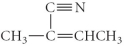
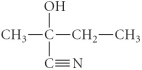
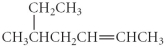
Name the following compound. <strong>Name the following compound.  </strong> A) 2-ethyl-4- hexene B) 4-isobutyl-2- butene C) 3-methyl-5- heptane D) 4-isopropyl-2- butene E) 5-methyl-2-heptene

A) 2-ethyl-4- hexene
B) 4-isobutyl-2- butene
C) 3-methyl-5- heptane
D) 4-isopropyl-2- butene
E) 5-methyl-2-heptene
Unlock Deck
Unlock for access to all 105 flashcards in this deck.
Unlock Deck
k this deck
64
Give the organic product for the following reaction. CH3CH2CH2NH2 + HCl →

A) ClCH2CH2CH2NH2
B) CH3CHClCH2NH2
C) CH3CH2CHClNH2
D) CH3CH2CH2NHCl
E) CH3CH2CH2NH3+ Cl-
Unlock Deck
Unlock for access to all 105 flashcards in this deck.
Unlock Deck
k this deck
65
How many isomers are there for C8H18 ?

A) 18
B) 19
C) 20
D) 21
Unlock Deck
Unlock for access to all 105 flashcards in this deck.
Unlock Deck
k this deck
66
Vanallin and cinnamaldehyde are categorized as:

A) esters
B) ketones
C) aldehydes
D) carboxylic acids
E) amines
Unlock Deck
Unlock for access to all 105 flashcards in this deck.
Unlock Deck
k this deck
67
Which of the following compounds exhibit optical isomerism?

A) sec-butylbenzene
B) CH2I2
C) CF2ClI
D) CHF2I
E) tert-butylbenzene
Unlock Deck
Unlock for access to all 105 flashcards in this deck.
Unlock Deck
k this deck
68
Which of the following names is correct?

A) 2-methyl-1-butene
B) 3,3- dipropyl-4- propene
C) 2-ethyl-3- butene
D) 1- ethyl-2-pentene
E) None of the above are correct.
Unlock Deck
Unlock for access to all 105 flashcards in this deck.
Unlock Deck
k this deck
69
Which of the following compounds exhibits optical isomerism?

A) CH3-CH2-CH3
B) CH3-CH2-CHI-CH3
C) CH3-CHI-CH3
D) CH3-CH2-CH2I
E) CH3-CH2-CBr2-CH3
Unlock Deck
Unlock for access to all 105 flashcards in this deck.
Unlock Deck
k this deck
70
Which of the following alkane names is correct?

A) 2,3-dibutylpropane
B) 3-ethyl-4- methylbutane
C) 4-ethyl-5- butyl heptene
D) 3,3-dibutylpentane
E) None of the above names are correct.
Unlock Deck
Unlock for access to all 105 flashcards in this deck.
Unlock Deck
k this deck
71
Name the following compound. <strong>Name the following compound.  </strong> A) 2-aminophenol B) 2-aminobenzaldehyde C) 2-aminoaniline D) 1-methylphenol E) 2-hydroxybenzaldehyde

A) 2-aminophenol
B) 2-aminobenzaldehyde
C) 2-aminoaniline
D) 1-methylphenol
E) 2-hydroxybenzaldehyde
Unlock Deck
Unlock for access to all 105 flashcards in this deck.
Unlock Deck
k this deck
72
Name the following compound. <strong>Name the following compound.  </strong> A) 2,2-diethylpentane B) 2,2-diethyl1-hexene C) 4-ethyl-4-methyl-5- hexane D) 3-ethyl-3-methyl-1-hexene E) 4-ethyl-4-methylhexane

A) 2,2-diethylpentane
B) 2,2-diethyl1-hexene
C) 4-ethyl-4-methyl-5- hexane
D) 3-ethyl-3-methyl-1-hexene
E) 4-ethyl-4-methylhexane
Unlock Deck
Unlock for access to all 105 flashcards in this deck.
Unlock Deck
k this deck
73
Name the following compound. <strong>Name the following compound.  </strong> A) 2- methyl-4- pentane B) 1,1-dimethyl-3- butene C) 4-methyl-1-pentene D) hexane E) 2-methylpentane

A) 2- methyl-4- pentane
B) 1,1-dimethyl-3- butene
C) 4-methyl-1-pentene
D) hexane
E) 2-methylpentane
Unlock Deck
Unlock for access to all 105 flashcards in this deck.
Unlock Deck
k this deck
74
Which of the following alkane names is correct?

A) 1,2-dimethylhexane
B) 1- propylnonane
C) 4,5-diethylpentane
D) 2-methyl-3- ethylhexane
E) All of the above names are correct.
Unlock Deck
Unlock for access to all 105 flashcards in this deck.
Unlock Deck
k this deck
75
Methyl butanoate and ethyl butanoate are categorized as:

A) esters
B) ketones
C) aldehydes
D) carboxylic acids
E) amines
Unlock Deck
Unlock for access to all 105 flashcards in this deck.
Unlock Deck
k this deck
76
Which compound is a saturated hydrocarbon?

A) bromobenzene
B) cyclohexene
C) 2, 4- dimethylpentane
D) 2-octene
Unlock Deck
Unlock for access to all 105 flashcards in this deck.
Unlock Deck
k this deck
77
Name the following compound. <strong>Name the following compound.  </strong> A) 2-bromophenol B) 2-bromoaniline C) 2-bromonaphthalene D) 2-bromotoluene E) 2-bromoanisole

A) 2-bromophenol
B) 2-bromoaniline
C) 2-bromonaphthalene
D) 2-bromotoluene
E) 2-bromoanisole
Unlock Deck
Unlock for access to all 105 flashcards in this deck.
Unlock Deck
k this deck
78
Name the following compound. <strong>Name the following compound.  </strong> A) 1-methyl-3-isopropylhexene B) 4-propyl-6-methylcyclohexene C) 4-isopropyl-6-methylbenzene D) 1-butylbenzene E) 1-isopropyl-3-methylbenzene

A) 1-methyl-3-isopropylhexene
B) 4-propyl-6-methylcyclohexene
C) 4-isopropyl-6-methylbenzene
D) 1-butylbenzene
E) 1-isopropyl-3-methylbenzene
Unlock Deck
Unlock for access to all 105 flashcards in this deck.
Unlock Deck
k this deck
79
All of the following compounds exhibit geometric isomerism EXCEPT

A) CFCl=CHBr
B) CH3ClC=CBrCH3
C) CHBr=CHCl
D) CH2=CH-CH3
E) All of the above exhibit geometric isomerism.
Unlock Deck
Unlock for access to all 105 flashcards in this deck.
Unlock Deck
k this deck
80
Name the following compound. <strong>Name the following compound.  </strong> A) trans-2- butene B) cis-2- butene C) cis-2-pentene D) trans- 2- pentane E) 2- butane

A) trans-2- butene
B) cis-2- butene
C) cis-2-pentene
D) trans- 2- pentane
E) 2- butane
Unlock Deck
Unlock for access to all 105 flashcards in this deck.
Unlock Deck
k this deck
locked card icon
Unlock Deck
Unlock for access to all 105 flashcards in this deck.