







 Chat with AI

Deck 19: Radioactivity and Nuclear Chemistry
Full screen (f)

Question
Write the nuclear equation for the alpha decay of  Ra.
Ra.
A)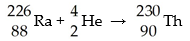
B)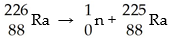
C)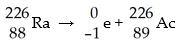
D)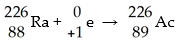
E)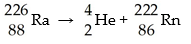
Ra.A)
B)
C)
D)
E)

Question
Question
Determine the identity of the daughter nuclide from the alpha decay of  Po.
Po.
A) Rn
Rn
B) Pb
Pb
C) Ra
Ra
D) Hg
Hg
E) At
At
Po.A)
RnB)
PbC)
RaD)
HgE)
At Question
Question
Write the nuclear equation for the alpha decay of  Th.
Th.
A)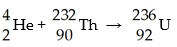
B)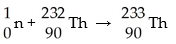
C)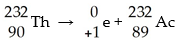
D)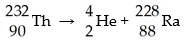
E)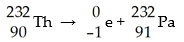
Th.A)
B)
C)
D)
E)
Question
Question
Write a nuclear equation for the alpha decay of 
Am.
A)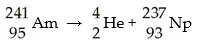
B)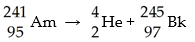
C)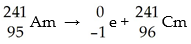
D)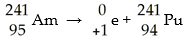
E)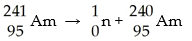
Am.
A)
B)
C)
D)
E)
Question
Determine the identity of the daughter nuclide from the alpha decay of  Rn.
Rn.
A) Po
Po
B) Ra
Ra
C) Th
Th
D) Rn
Rn
E) At
At
Rn.A)
PoB)
RaC)
ThD)
RnE)
At Question
Question
Question
Question
Question
Determine the identity of the daughter nuclide from the alpha decay of  Po.
Po.
A) Po
Po
B) Hg
Hg
C) At
At
D) Pb
Pb
E) Rn
Rn
Po.A)
PoB)
HgC)
AtD)
PbE)
Rn Question
Question
Question
Write a nuclear equation for the alpha decay of  Pu.
Pu.
A)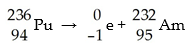
B)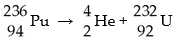
C)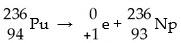
D)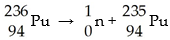
E)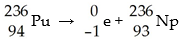
Pu.A)
B)
C)
D)
E)
Question
Determine the identity of the daughter nuclide from the alpha decay of  Ra.
Ra.
A) Fr
Fr
B) Ac
Ac
C) Po
Po
D) Th
Th
E) Rn
Rn
Ra.A)
FrB)
AcC)
PoD)
ThE)
Rn Question
Write a nuclear equation for the alpha decay of  U.
U.
A)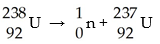
B)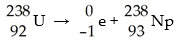
C)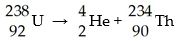
D)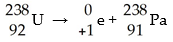
E)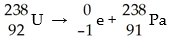
U.A)
B)
C)
D)
E)
Question
Question
Determine the identity of the daughter nuclide from the alpha decay of  Th.
Th.
A) U
U
B) Pa
Pa
C) Ra
Ra
D) Ac
Ac
E) Th
Th
Th.A)
UB)
PaC)
RaD)
AcE)
Th Question
Determine the identity of the daughter nuclide from the positron emission of  O.
O.
A) C
C
B) F
F
C) N
N
D) N
N
E) C
C
O.A)
CB)
FC)
ND)
NE)
C Question
Determine the identity of the daughter nuclide from the positron emission of  C.
C.
A) B
B
B) N
N
C) C
C
D) B
B
E) N
N
C.A)
BB)
NC)
CD)
BE)
N Question
Determine the identity of the daughter nuclide from the beta decay of  Tc.
Tc.
A) Ru
Ru
B) Rh
Rh
C) Nb
Nb
D) Mo
Mo
E) Ru
Ru
Tc.A)
RuB)
RhC)
NbD)
MoE)
Ru Question
The following reaction represents what nuclear process?
 Am →
Am → He +
He + Np
Np
A)beta emission
B)neutron bombardment
C)alpha emission
D)electron capture
E)positron emission
Am →He +NpA)beta emission
B)neutron bombardment
C)alpha emission
D)electron capture
E)positron emission
Question
Identify the missing particle in the following nuclear equation:
 Pb →
Pb → E + ?
E + ?
A) Bi
Bi
B) Tl
Tl
C) Pb
Pb
D) Pb
Pb
E) Tl
Tl
Pb →E + ?A)
BiB)
TlC)
PbD)
PbE)
Tl Question
Determine the identity of the daughter nuclide from the electron capture by  Fe.
Fe.
A) Co
Co
B) Mn
Mn
C) Co
Co
D) Mn
Mn
E) Cr
Cr
Fe.A)
CoB)
MnC)
CoD)
MnE)
Cr Question
Determine the identity of the daughter nuclide from the positron emission of  N.
N.
A) O
O
B) C
C
C) O
O
D) B
B
E) F
F
N.A)
OB)
CC)
OD)
BE)
F Question
Determine the identity of the daughter nuclide from the positron emission of  F.
F.
A) Na
Na
B) F
F
C) N
N
D) O
O
E) Ne
Ne
F.A)
NaB)
FC)
ND)
OE)
Ne Question
Determine the identity of the daughter nuclide from the beta decay of  Pb.
Pb.
A) Pt
Pt
B) Tl
Tl
C) Hg
Hg
D) Bi
Bi
E) Pb
Pb
Pb.A)
PtB)
TlC)
HgD)
BiE)
Pb Question
Determine the identity of the daughter nuclide from the electron capture by  Cl.
Cl.
A) Ar
Ar
B) K
K
C) S
S
D) P
P
E) Ar
Ar
Cl.A)
ArB)
KC)
SD)
PE)
Ar Question
The following reaction represents what nuclear process?
 Pb →
Pb → E +
E + Bi
Bi
A)alpha emission
B)gamma emission
C)electron capture
D)neutron bombardment
E)beta emission
Pb →E +BiA)alpha emission
B)gamma emission
C)electron capture
D)neutron bombardment
E)beta emission
Question
Determine the identity of the daughter nuclide from the beta decay of  Sr.
Sr.
A) Sr
Sr
B) Y
Y
C) Y
Y
D) Kr
Kr
E) Se
Se
Sr.A)
SrB)
YC)
YD)
KrE)
Se Question
Determine the identity of the daughter nuclide from the positron emission of  Ge.
Ge.
A) Ga
Ga
B) As
As
C) Zn
Zn
D) As
As
E) Ga
Ga
Ge.A)
GaB)
AsC)
ZnD)
AsE)
Ga Question
Determine the identity of the daughter nuclide from the beta decay of  C.
C.
A) N
N
B) Be
Be
C) N
N
D) C
C
E) B
B
C.A)
NB)
BeC)
ND)
CE)
B Question
Identify the missing particle in the following nuclear equation:
 Th →
Th → He + ?
A) U
U
B) Ac
Ac
C) Ac
Ac
D) Ra
Ra
E) Ra
Ra
Th →He + ?A)
UB)
AcC)
AcD)
RaE)
Ra Question
Determine the identity of the daughter nuclide from the beta decay of  P.
P.
A) P
P
B) S
S
C) S
S
D) Si
Si
E) Al
Al
P.A)
PB)
SC)
SD)
SiE)
Al Question
Determine the identity of the daughter nuclide from the electron capture by  Rb.
Rb.
A) Kr
Kr
B) Sr
Sr
C) Br
Br
D) Y
Y
E) Kr
Kr
Rb.A)
KrB)
SrC)
BrD)
YE)
Kr Question
Determine the identity of the daughter nuclide from the electron capture by  Be.
Be.
A) C
C
B) He
He
C) B
B
D) Li
Li
E) B
B
Be.A)
CB)
HeC)
BD)
LiE)
B Question
The following reaction represents what nuclear process?
 Cs +
Cs + E →
E → Xe
Xe
A)beta emission
B)positron emission
C)gamma emission
D)electron capture
E)alpha capture
Cs +E → XeA)beta emission
B)positron emission
C)gamma emission
D)electron capture
E)alpha capture
Question
Determine the identity of the daughter nuclide from the electron capture by  Pa.
Pa.
A) Th
Th
B) Np
Np
C) Ac
Ac
D) U
U
E) Th
Th
Pa.A)
ThB)
NpC)
AcD)
UE)
Th Question
Question
Question
Question
Question
Question
Question
Question
Question
Question
The following reaction represents what nuclear process?
 U +
U + N →
N → Ba +
Ba + Kr + 3
 N
N
A)nuclear fission
B)nuclear fusion
C)electron capture
D)alpha decay
E)beta emission
U +N →Ba +Kr + 3NA)nuclear fission
B)nuclear fusion
C)electron capture
D)alpha decay
E)beta emission
Question
Question
Question
Question
Identify the missing particle in the following nuclear equation:
 U → ? +
 He + 2
 Γ
Γ
A) Th
Th
B) Ra
Ra
C) Pu
Pu
D) Th
Th
E) Ra
Ra
U → ? +He + 2ΓA)
ThB)
RaC)
PuD)
ThE)
Ra Question
Identify the missing particle in the following nuclear equation:
 H +
H + H →
H → He + ?+
 Γ
Γ
A) E
E
B) N
N
C) E
E
D) H
H
E) Γ
Γ
H +H →He + ?+ΓA)
EB)
NC)
ED)
HE)
Γ Question
Question
Question
Question
Write a nuclear equation to describe the spontaneous fission of
 Am to form I-134 and Mo-107.Determine how many neutrons are produced in the reaction.
A)0
B)1
C)2
D)3
E)4
Am to form I-134 and Mo-107.Determine how many neutrons are produced in the reaction.A)0
B)1
C)2
D)3
E)4
Question
Identify the missing particle in the following nuclear equation:
 U →
U → Sr + ? +2
 N + 4
N + 4 Γ
Γ
A) Te
Te
B) Xe
Xe
C) Xe
Xe
D) Te
Te
E) Sr
Sr
U →Sr + ? +2N + 4ΓA)
TeB)
XeC)
XeD)
TeE)
Sr Question
Question
Match the following.
electron
A) γ
γ
B) p
p
C) n
n
D) e
e
E) He
He
F) e
e
electron
A)
γB)
pC)
nD)
eE)
HeF)
e Question
Match the following.
neutron
A) γ
B) p
C) n
D) e
E) He
F) e
neutron
A)
γB)
pC)
nD)
eE)
HeF)
e Question
Question
Question
Question
Match the following.
positron
A) γ
B) p
C) n
D) e
E) He
F) e
positron
A)
γB)
pC)
nD)
eE)
HeF)
e Question
Question
Match the following.
proton
A) γ
B) p
C) n
D) e
E) He
F) e
proton
A)
γB)
pC)
nD)
eE)
HeF)
e Question
Question
The following reaction represents what nuclear process?
 H +
H + H →
H → He +
He + N
N
A)nuclear fusion
B)alpha emission
C)beta emission
D)nuclear fission
E)neutron capture
H +H →He +NA)nuclear fusion
B)alpha emission
C)beta emission
D)nuclear fission
E)neutron capture
Question
Question
Question
Question
Question
Match the following.
gamma ray
A) γ
B) p
C) n
D) e
E) He
F) e
gamma ray
A)
γB)
pC)
nD)
eE)
HeF)
e Question
Question
Match the following.
beta particle
A) γ
B) p
C) n
D) e
E) He
F) e
beta particle
A)
γB)
pC)
nD)
eE)
HeF)
e Question
Match the following.
alpha particle
A) γ
B) p
C) n
D) e
E) He
F) e
alpha particle
A)
γB)
pC)
nD)
eE)
HeF)
e Question
Write a nuclear equation to describe the neutron induced fission of  Pu to form
 Kr and
  Ce.Determine how many neutrons are produced in the reaction.
A)2
B)0
C)3
D)1
E)4
Pu to form Kr and Ce.Determine how many neutrons are produced in the reaction.A)2
B)0
C)3
D)1
E)4

Unlock Deck
Sign up to unlock the cards in this deck!
Unlock Deck
Unlock Deck
1/105

Play

Full screen (f)
Deck 19: Radioactivity and Nuclear Chemistry
1
Write the nuclear equation for the alpha decay of Ra.
A)
B)
C)
D)
E)
Ra.A)
B)
C)
D)
E)
2
Describe what changes occur during gamma ray emission.
A)The mass number and atomic number decrease.
B)The mass number and atomic number increase.
C)The mass number is unchanged and the atomic number decreases.
D)The mass number is unchanged and the atomic number increases.
E)The mass number and atomic number do not change.
A)The mass number and atomic number decrease.
B)The mass number and atomic number increase.
C)The mass number is unchanged and the atomic number decreases.
D)The mass number is unchanged and the atomic number increases.
E)The mass number and atomic number do not change.
The mass number and atomic number do not change.
3
Determine the identity of the daughter nuclide from the alpha decay of Po.
A)Rn
B)Pb
C)Ra
D)Hg
E)At
Po.A)
RnB)
PbC)
RaD)
HgE)
AtPb 4
Describe an alpha particle.
A)electromagnetic radiation
B)two neutrons and two protons
C)an electron
D)two neutrons and two electrons
E)a proton
A)electromagnetic radiation
B)two neutrons and two protons
C)an electron
D)two neutrons and two electrons
E)a proton
Unlock Deck
Unlock for access to all 105 flashcards in this deck.
Unlock Deck
k this deck
5
Write the nuclear equation for the alpha decay of Th.
A)
B)
C)
D)
E)
Th.A)
B)
C)
D)
E)
Unlock Deck
Unlock for access to all 105 flashcards in this deck.
Unlock Deck
k this deck
6
Describe what changes occur during beta decay.
A)The mass number and atomic number decrease.
B)The mass number and atomic number increase.
C)The mass number is unchanged and the atomic number decreases.
D)The mass number is unchanged and the atomic number increases.
E)The mass number and atomic number do not change.
A)The mass number and atomic number decrease.
B)The mass number and atomic number increase.
C)The mass number is unchanged and the atomic number decreases.
D)The mass number is unchanged and the atomic number increases.
E)The mass number and atomic number do not change.
Unlock Deck
Unlock for access to all 105 flashcards in this deck.
Unlock Deck
k this deck
7
Write a nuclear equation for the alpha decay of
Am.
A)
B)
C)
D)
E)
Am.
A)
B)
C)
D)
E)
Unlock Deck
Unlock for access to all 105 flashcards in this deck.
Unlock Deck
k this deck
8
Determine the identity of the daughter nuclide from the alpha decay of Rn.
A)Po
B)Ra
C)Th
D)Rn
E)At
Rn.A)
PoB)
RaC)
ThD)
RnE)
At Unlock Deck
Unlock for access to all 105 flashcards in this deck.
Unlock Deck
k this deck
9
Which particle has the highest penetrating power?
A)alpha particle
B)beta particle
C)gamma particle
D)positron emission
E)electron capture
A)alpha particle
B)beta particle
C)gamma particle
D)positron emission
E)electron capture
Unlock Deck
Unlock for access to all 105 flashcards in this deck.
Unlock Deck
k this deck
10
Describe what changes occur during alpha decay.
A)The mass number and atomic number decrease.
B)The mass number and atomic number increase.
C)The mass number is unchanged and the atomic number decreases.
D)The mass number is unchanged and the atomic number increases.
E)The mass number and atomic number do not change.
A)The mass number and atomic number decrease.
B)The mass number and atomic number increase.
C)The mass number is unchanged and the atomic number decreases.
D)The mass number is unchanged and the atomic number increases.
E)The mass number and atomic number do not change.
Unlock Deck
Unlock for access to all 105 flashcards in this deck.
Unlock Deck
k this deck
11
Describe what changes occur during positron emission.
A)The mass number and atomic number decrease.
B)The mass number and atomic number increase.
C)The mass number is unchanged and the atomic number decreases.
D)The mass number is unchanged and the atomic number increases.
E)The mass number and atomic number do not change.
A)The mass number and atomic number decrease.
B)The mass number and atomic number increase.
C)The mass number is unchanged and the atomic number decreases.
D)The mass number is unchanged and the atomic number increases.
E)The mass number and atomic number do not change.
Unlock Deck
Unlock for access to all 105 flashcards in this deck.
Unlock Deck
k this deck
12
Which particle has the highest ionizing power?
A)alpha particle
B)beta particle
C)gamma particle
D)positron emission
E)electron capture
A)alpha particle
B)beta particle
C)gamma particle
D)positron emission
E)electron capture
Unlock Deck
Unlock for access to all 105 flashcards in this deck.
Unlock Deck
k this deck
13
Determine the identity of the daughter nuclide from the alpha decay of Po.
A)Po
B)Hg
C)At
D)Pb
E)Rn
Po.A)
PoB)
HgC)
AtD)
PbE)
Rn Unlock Deck
Unlock for access to all 105 flashcards in this deck.
Unlock Deck
k this deck
14
Describe what changes occur during electron capture.
A)The mass number and atomic number decrease.
B)The mass number and atomic number increase.
C)The mass number is unchanged and the atomic number decreases.
D)The mass number is unchanged and the atomic number increases.
E)The mass number and atomic number do not change.
A)The mass number and atomic number decrease.
B)The mass number and atomic number increase.
C)The mass number is unchanged and the atomic number decreases.
D)The mass number is unchanged and the atomic number increases.
E)The mass number and atomic number do not change.
Unlock Deck
Unlock for access to all 105 flashcards in this deck.
Unlock Deck
k this deck
15
Which of the following statements are true?
A)Gamma rays have the lowest ionizing power of any radioactivity.
B)Alpha radiation has the highest penetrating power of any radioactivity.
C)Beta emitters will do more damage than alpha emitters within the body.
D)Beta radiation has the highest ionizing power of any radioactivity.
E)None of the above are true.
A)Gamma rays have the lowest ionizing power of any radioactivity.
B)Alpha radiation has the highest penetrating power of any radioactivity.
C)Beta emitters will do more damage than alpha emitters within the body.
D)Beta radiation has the highest ionizing power of any radioactivity.
E)None of the above are true.
Unlock Deck
Unlock for access to all 105 flashcards in this deck.
Unlock Deck
k this deck
16
Write a nuclear equation for the alpha decay of Pu.
A)
B)
C)
D)
E)
Pu.A)
B)
C)
D)
E)
Unlock Deck
Unlock for access to all 105 flashcards in this deck.
Unlock Deck
k this deck
17
Determine the identity of the daughter nuclide from the alpha decay of Ra.
A)Fr
B)Ac
C)Po
D)Th
E)Rn
Ra.A)
FrB)
AcC)
PoD)
ThE)
Rn Unlock Deck
Unlock for access to all 105 flashcards in this deck.
Unlock Deck
k this deck
18
Write a nuclear equation for the alpha decay of U.
A)
B)
C)
D)
E)
U.A)
B)
C)
D)
E)
Unlock Deck
Unlock for access to all 105 flashcards in this deck.
Unlock Deck
k this deck
19
Which of the following statements is/are true?
A)Positrons are similar in ionizing power and penetrating power to beta particles.
B)A positron is the antiparticle of the electron.
C)Beta decay occurs when a neutron changes into a proton while emitting an electron.
D)An alpha particle is a helium 2+ ion.
E)All of the above are true.
A)Positrons are similar in ionizing power and penetrating power to beta particles.
B)A positron is the antiparticle of the electron.
C)Beta decay occurs when a neutron changes into a proton while emitting an electron.
D)An alpha particle is a helium 2+ ion.
E)All of the above are true.
Unlock Deck
Unlock for access to all 105 flashcards in this deck.
Unlock Deck
k this deck
20
Determine the identity of the daughter nuclide from the alpha decay of Th.
A)U
B)Pa
C)Ra
D)Ac
E)Th
Th.A)
UB)
PaC)
RaD)
AcE)
Th Unlock Deck
Unlock for access to all 105 flashcards in this deck.
Unlock Deck
k this deck
21
Determine the identity of the daughter nuclide from the positron emission of O.
A)C
B)F
C)N
D)N
E)C
O.A)
CB)
FC)
ND)
NE)
C Unlock Deck
Unlock for access to all 105 flashcards in this deck.
Unlock Deck
k this deck
22
Determine the identity of the daughter nuclide from the positron emission of C.
A)B
B)N
C)C
D)B
E)N
C.A)
BB)
NC)
CD)
BE)
N Unlock Deck
Unlock for access to all 105 flashcards in this deck.
Unlock Deck
k this deck
23
Determine the identity of the daughter nuclide from the beta decay of Tc.
A)Ru
B)Rh
C)Nb
D)Mo
E)Ru
Tc.A)
RuB)
RhC)
NbD)
MoE)
Ru Unlock Deck
Unlock for access to all 105 flashcards in this deck.
Unlock Deck
k this deck
24
The following reaction represents what nuclear process?
Am →He +Np
A)beta emission
B)neutron bombardment
C)alpha emission
D)electron capture
E)positron emission
Am →He +NpA)beta emission
B)neutron bombardment
C)alpha emission
D)electron capture
E)positron emission
Unlock Deck
Unlock for access to all 105 flashcards in this deck.
Unlock Deck
k this deck
25
Identify the missing particle in the following nuclear equation:
Pb →E + ?
A)Bi
B)Tl
C)Pb
D)Pb
E)Tl
Pb →E + ?A)
BiB)
TlC)
PbD)
PbE)
Tl Unlock Deck
Unlock for access to all 105 flashcards in this deck.
Unlock Deck
k this deck
26
Determine the identity of the daughter nuclide from the electron capture by Fe.
A)Co
B)Mn
C)Co
D)Mn
E)Cr
Fe.A)
CoB)
MnC)
CoD)
MnE)
Cr Unlock Deck
Unlock for access to all 105 flashcards in this deck.
Unlock Deck
k this deck
27
Determine the identity of the daughter nuclide from the positron emission of N.
A)O
B)C
C)O
D)B
E)F
N.A)
OB)
CC)
OD)
BE)
F Unlock Deck
Unlock for access to all 105 flashcards in this deck.
Unlock Deck
k this deck
28
Determine the identity of the daughter nuclide from the positron emission of F.
A)Na
B)F
C)N
D)O
E)Ne
F.A)
NaB)
FC)
ND)
OE)
Ne Unlock Deck
Unlock for access to all 105 flashcards in this deck.
Unlock Deck
k this deck
29
Determine the identity of the daughter nuclide from the beta decay of Pb.
A)Pt
B)Tl
C)Hg
D)Bi
E)Pb
Pb.A)
PtB)
TlC)
HgD)
BiE)
Pb Unlock Deck
Unlock for access to all 105 flashcards in this deck.
Unlock Deck
k this deck
30
Determine the identity of the daughter nuclide from the electron capture by Cl.
A)Ar
B)K
C)S
D)P
E)Ar
Cl.A)
ArB)
KC)
SD)
PE)
Ar Unlock Deck
Unlock for access to all 105 flashcards in this deck.
Unlock Deck
k this deck
31
The following reaction represents what nuclear process?
Pb →E +Bi
A)alpha emission
B)gamma emission
C)electron capture
D)neutron bombardment
E)beta emission
Pb →E +BiA)alpha emission
B)gamma emission
C)electron capture
D)neutron bombardment
E)beta emission
Unlock Deck
Unlock for access to all 105 flashcards in this deck.
Unlock Deck
k this deck
32
Determine the identity of the daughter nuclide from the beta decay of Sr.
A)Sr
B)Y
C)Y
D)Kr
E)Se
Sr.A)
SrB)
YC)
YD)
KrE)
Se Unlock Deck
Unlock for access to all 105 flashcards in this deck.
Unlock Deck
k this deck
33
Determine the identity of the daughter nuclide from the positron emission of Ge.
A)Ga
B)As
C)Zn
D)As
E)Ga
Ge.A)
GaB)
AsC)
ZnD)
AsE)
Ga Unlock Deck
Unlock for access to all 105 flashcards in this deck.
Unlock Deck
k this deck
34
Determine the identity of the daughter nuclide from the beta decay of C.
A)N
B)Be
C)N
D)C
E)B
C.A)
NB)
BeC)
ND)
CE)
B Unlock Deck
Unlock for access to all 105 flashcards in this deck.
Unlock Deck
k this deck
35
Identify the missing particle in the following nuclear equation:
Th →He + ?
A)U
B)Ac
C)Ac
D)Ra
E)Ra
Th →He + ?A)
UB)
AcC)
AcD)
RaE)
Ra Unlock Deck
Unlock for access to all 105 flashcards in this deck.
Unlock Deck
k this deck
36
Determine the identity of the daughter nuclide from the beta decay of P.
A)P
B)S
C)S
D)Si
E)Al
P.A)
PB)
SC)
SD)
SiE)
Al Unlock Deck
Unlock for access to all 105 flashcards in this deck.
Unlock Deck
k this deck
37
Determine the identity of the daughter nuclide from the electron capture by Rb.
A)Kr
B)Sr
C)Br
D)Y
E)Kr
Rb.A)
KrB)
SrC)
BrD)
YE)
Kr Unlock Deck
Unlock for access to all 105 flashcards in this deck.
Unlock Deck
k this deck
38
Determine the identity of the daughter nuclide from the electron capture by Be.
A)C
B)He
C)B
D)Li
E)B
Be.A)
CB)
HeC)
BD)
LiE)
B Unlock Deck
Unlock for access to all 105 flashcards in this deck.
Unlock Deck
k this deck
39
The following reaction represents what nuclear process?
Cs +E → Xe
A)beta emission
B)positron emission
C)gamma emission
D)electron capture
E)alpha capture
Cs +E → XeA)beta emission
B)positron emission
C)gamma emission
D)electron capture
E)alpha capture
Unlock Deck
Unlock for access to all 105 flashcards in this deck.
Unlock Deck
k this deck
40
Determine the identity of the daughter nuclide from the electron capture by Pa.
A)Th
B)Np
C)Ac
D)U
E)Th
Pa.A)
ThB)
NpC)
AcD)
UE)
Th Unlock Deck
Unlock for access to all 105 flashcards in this deck.
Unlock Deck
k this deck
41
Nuclides below the valley of stability can become more stable through which of the following processes?
A)gamma emission
B)beta emission
C)positron emission
D)neutron emission
E)neutron bombardment
A)gamma emission
B)beta emission
C)positron emission
D)neutron emission
E)neutron bombardment
Unlock Deck
Unlock for access to all 105 flashcards in this deck.
Unlock Deck
k this deck
42
Fluorine-18 undergoes positron emission with a half-life of 1.10 × 10² minutes.If a patient is given a 248 mg dose for a PET scan,how long will it take for the amount of fluorine-18 to drop to 83 mg? (Assume that none of the fluorine is excreted from the body. )
A)99 minutes
B)1.74 × 10² minutes
C)1.32 × 10² minutes
D)3.00 × 10² minutes
E)2.11 × 10² minutes
A)99 minutes
B)1.74 × 10² minutes
C)1.32 × 10² minutes
D)3.00 × 10² minutes
E)2.11 × 10² minutes
Unlock Deck
Unlock for access to all 105 flashcards in this deck.
Unlock Deck
k this deck
43
Identify the elements used in radiometric dating.
A)Carbon-14 to nitrogen-14.
B)Uranium-238 to lead-206.
C)Potassium-40 to argon-40.
D)None of the above.
E)All of the above.
A)Carbon-14 to nitrogen-14.
B)Uranium-238 to lead-206.
C)Potassium-40 to argon-40.
D)None of the above.
E)All of the above.
Unlock Deck
Unlock for access to all 105 flashcards in this deck.
Unlock Deck
k this deck
44
Determine the half-life of a nuclide that loses 38.0% of its mass in 387 hours.
A)277 hours
B)455 hour
C)561 hours
D)639 hours
E)748 hours
A)277 hours
B)455 hour
C)561 hours
D)639 hours
E)748 hours
Unlock Deck
Unlock for access to all 105 flashcards in this deck.
Unlock Deck
k this deck
45
Which of the following nuclides are most likely to decay via beta decay?
A)I-126
B)Al-24
C)N-13
D)Cs-137
E)Na-20
A)I-126
B)Al-24
C)N-13
D)Cs-137
E)Na-20
Unlock Deck
Unlock for access to all 105 flashcards in this deck.
Unlock Deck
k this deck
46
Which of the following nuclides are most likely to decay via positron emission?
A)Na-26
B)I-121
C)Ca-42
D)S-30
E)Sb-122
A)Na-26
B)I-121
C)Ca-42
D)S-30
E)Sb-122
Unlock Deck
Unlock for access to all 105 flashcards in this deck.
Unlock Deck
k this deck
47
Which of the following nuclides are most likely to decay via beta decay?
A)I-131
B)Ar-40
C)F-18
D)Zr-90
E)Pb-206
A)I-131
B)Ar-40
C)F-18
D)Zr-90
E)Pb-206
Unlock Deck
Unlock for access to all 105 flashcards in this deck.
Unlock Deck
k this deck
48
A geological sample is found to have a Pb-206/U-238 mass ratio of 0.337/1.00.Assuming there was no Pb-206 present when the sample was formed,how old is it? The half-life of U-238 is 4.5 × 10⁹ years.
A)7.3 × 10¹¹ years
B)1.4 × 10¹⁰ years
C)2.4 × 10¹⁰ years
D)2.1 × 10⁹ years
E)7.1 × 10⁹ years
A)7.3 × 10¹¹ years
B)1.4 × 10¹⁰ years
C)2.4 × 10¹⁰ years
D)2.1 × 10⁹ years
E)7.1 × 10⁹ years
Unlock Deck
Unlock for access to all 105 flashcards in this deck.
Unlock Deck
k this deck
49
Which of the following nuclides are most likely to decay via positron emission?
A)Cs-137
B)I-131
C)Al-24
D)K-42
E)N-14
A)Cs-137
B)I-131
C)Al-24
D)K-42
E)N-14
Unlock Deck
Unlock for access to all 105 flashcards in this deck.
Unlock Deck
k this deck
50
The following reaction represents what nuclear process?
U +N →Ba +Kr + 3N
A)nuclear fission
B)nuclear fusion
C)electron capture
D)alpha decay
E)beta emission
U +N →Ba +Kr + 3NA)nuclear fission
B)nuclear fusion
C)electron capture
D)alpha decay
E)beta emission
Unlock Deck
Unlock for access to all 105 flashcards in this deck.
Unlock Deck
k this deck
51
The age of an ancient tree trunk is estimated using radiocarbon dating.If the trunk has a C-14 decay rate that is 34% of what it is in living plants,how old is the trunk? The half-life of C-14 is 5730 years.
A)2.92 × 10⁴ years
B)1.94 × 10⁴ years
C)8.92 × 10³ years
D)5.31 × 10³ years
E)1.74 × 10² years
A)2.92 × 10⁴ years
B)1.94 × 10⁴ years
C)8.92 × 10³ years
D)5.31 × 10³ years
E)1.74 × 10² years
Unlock Deck
Unlock for access to all 105 flashcards in this deck.
Unlock Deck
k this deck
52
Nuclides above the valley of stability can become more stable through which of the following processes?
A)beta emission
B)positron emission
C)alpha emission
D)electron capture
E)neutron bombardment
A)beta emission
B)positron emission
C)alpha emission
D)electron capture
E)neutron bombardment
Unlock Deck
Unlock for access to all 105 flashcards in this deck.
Unlock Deck
k this deck
53
Stable isotopes,with low atomic numbers,have a N/Z ratio of 1.What does that imply?
A)The number of neutrons equals the number of protons.
B)The number of neutrons equals the number of electrons plus protons.
C)The number of protons equals the number of electrons.
D)The atomic number equals the atomic mass.
E)The number of protons equals the number of electrons plus neutrons.
A)The number of neutrons equals the number of protons.
B)The number of neutrons equals the number of electrons plus protons.
C)The number of protons equals the number of electrons.
D)The atomic number equals the atomic mass.
E)The number of protons equals the number of electrons plus neutrons.
Unlock Deck
Unlock for access to all 105 flashcards in this deck.
Unlock Deck
k this deck
54
Identify the missing particle in the following nuclear equation:
U → ? +He + 2Γ
A)Th
B)Ra
C)Pu
D)Th
E)Ra
U → ? +He + 2ΓA)
ThB)
RaC)
PuD)
ThE)
Ra Unlock Deck
Unlock for access to all 105 flashcards in this deck.
Unlock Deck
k this deck
55
Identify the missing particle in the following nuclear equation:
H +H →He + ?+Γ
A)E
B)N
C)E
D)H
E)Γ
H +H →He + ?+ΓA)
EB)
NC)
ED)
HE)
Γ Unlock Deck
Unlock for access to all 105 flashcards in this deck.
Unlock Deck
k this deck
56
Above what atomic number are there no stable isotopes of any element?
A)20
B)92
C)83
D)40
E)89
A)20
B)92
C)83
D)40
E)89
Unlock Deck
Unlock for access to all 105 flashcards in this deck.
Unlock Deck
k this deck
57
The nuclide As-76 has a half-life of 26.0 hours.If a sample of As-76 weighs 344 g,what mass of As-76 remains after 538 minutes?
A)67.8 g
B)271 g
C)144 g
D)437 g
E)251 g
A)67.8 g
B)271 g
C)144 g
D)437 g
E)251 g
Unlock Deck
Unlock for access to all 105 flashcards in this deck.
Unlock Deck
k this deck
58
Which of the following statements are true?
A)If N/Z ratio is too high,there are too many protons and the nuclide will undergo positron emission or electron capture.
B)If N/Z ratio lies somewhere below 1,the nuclide is stable.
C)If N/Z ratio is too low,there are too many neutrons and the nuclide will undergo beta decay.
D)The valley of stability is the geographic location where many of the known nuclides were first discovered.
E)None of the above are true.
A)If N/Z ratio is too high,there are too many protons and the nuclide will undergo positron emission or electron capture.
B)If N/Z ratio lies somewhere below 1,the nuclide is stable.
C)If N/Z ratio is too low,there are too many neutrons and the nuclide will undergo beta decay.
D)The valley of stability is the geographic location where many of the known nuclides were first discovered.
E)None of the above are true.
Unlock Deck
Unlock for access to all 105 flashcards in this deck.
Unlock Deck
k this deck
59
Write a nuclear equation to describe the spontaneous fission of
Am to form I-134 and Mo-107.Determine how many neutrons are produced in the reaction.
A)0
B)1
C)2
D)3
E)4
Am to form I-134 and Mo-107.Determine how many neutrons are produced in the reaction.A)0
B)1
C)2
D)3
E)4
Unlock Deck
Unlock for access to all 105 flashcards in this deck.
Unlock Deck
k this deck
60
Identify the missing particle in the following nuclear equation:
U →Sr + ? +2N + 4Γ
A)Te
B) Xe
C) Xe
D)Te
E)Sr
U →Sr + ? +2N + 4ΓA)
TeB)
XeC)
XeD)
TeE)
Sr Unlock Deck
Unlock for access to all 105 flashcards in this deck.
Unlock Deck
k this deck
61
Identify the symptom that is not from radiation exposure.
A)increased white cell count
B)increased cancer risk
C)death
D)genetic effects
E)weaker immune systems
A)increased white cell count
B)increased cancer risk
C)death
D)genetic effects
E)weaker immune systems
Unlock Deck
Unlock for access to all 105 flashcards in this deck.
Unlock Deck
k this deck
62
Match the following.
electron
A) γ
B) p
C) n
D) e
E) He
F) e
electron
A)
γB)
pC)
nD)
eE)
HeF)
e Unlock Deck
Unlock for access to all 105 flashcards in this deck.
Unlock Deck
k this deck
63
Match the following.
neutron
A) γ
B) p
C) n
D) e
E) He
F) e
neutron
A)
γB)
pC)
nD)
eE)
HeF)
e Unlock Deck
Unlock for access to all 105 flashcards in this deck.
Unlock Deck
k this deck
64
Describe what is meant by the "valley of stability."
Unlock Deck
Unlock for access to all 105 flashcards in this deck.
Unlock Deck
k this deck
65
Write a nuclear equation to describe the neutron induced fission of U-235 to form Xe-134 and Sr-100.Determine how many neutrons are produced in the reaction.
A)4
B)3
C)1
D)0
E)2
A)4
B)3
C)1
D)0
E)2
Unlock Deck
Unlock for access to all 105 flashcards in this deck.
Unlock Deck
k this deck
66
Why is an alpha emitter much more harmful if ingested?
Unlock Deck
Unlock for access to all 105 flashcards in this deck.
Unlock Deck
k this deck
67
Match the following.
positron
A) γ
B) p
C) n
D) e
E) He
F) e
positron
A)
γB)
pC)
nD)
eE)
HeF)
e Unlock Deck
Unlock for access to all 105 flashcards in this deck.
Unlock Deck
k this deck
68
Identify the element that is not used as a radioactive tracer.
A)iron-59
B)phosphorus-32
C)thallium-201
D)iodine-131
E)carbon-13
A)iron-59
B)phosphorus-32
C)thallium-201
D)iodine-131
E)carbon-13
Unlock Deck
Unlock for access to all 105 flashcards in this deck.
Unlock Deck
k this deck
69
Match the following.
proton
A) γ
B) p
C) n
D) e
E) He
F) e
proton
A)
γB)
pC)
nD)
eE)
HeF)
e Unlock Deck
Unlock for access to all 105 flashcards in this deck.
Unlock Deck
k this deck
70
Explain how radiation increases cancer risk.
Unlock Deck
Unlock for access to all 105 flashcards in this deck.
Unlock Deck
k this deck
71
The following reaction represents what nuclear process?
H +H →He +N
A)nuclear fusion
B)alpha emission
C)beta emission
D)nuclear fission
E)neutron capture
H +H →He +NA)nuclear fusion
B)alpha emission
C)beta emission
D)nuclear fission
E)neutron capture
Unlock Deck
Unlock for access to all 105 flashcards in this deck.
Unlock Deck
k this deck
72
Determine the binding energy of an O-16 nucleus.The O-16 nucleus has a mass of 15.9905 amu.A proton has a mass of 1.00728 amu,a neutron has a mass of 1.008665 amu,and 1 amu is equivalent to 931 MeV of energy.
A)8.84 MeV
B)128 MeV
C)138 MeV
D)78.1 MeV
E)38.2 MeV
A)8.84 MeV
B)128 MeV
C)138 MeV
D)78.1 MeV
E)38.2 MeV
Unlock Deck
Unlock for access to all 105 flashcards in this deck.
Unlock Deck
k this deck
73
What is the "mass defect"?
Unlock Deck
Unlock for access to all 105 flashcards in this deck.
Unlock Deck
k this deck
74
Explain the concept of "magic numbers."
Unlock Deck
Unlock for access to all 105 flashcards in this deck.
Unlock Deck
k this deck
75
Calculate the mass defect in Fe-56 if the mass of an Fe-56 nucleus is 55.921 amu.The mass of a proton is 1.00728 amu and the mass of a neutron is 1.008665 amu.
A)0.528 amu
B)3.507 amu
C)0.564 amu
D)1.056 amu
E)0.079 amu
A)0.528 amu
B)3.507 amu
C)0.564 amu
D)1.056 amu
E)0.079 amu
Unlock Deck
Unlock for access to all 105 flashcards in this deck.
Unlock Deck
k this deck
76
Match the following.
gamma ray
A) γ
B) p
C) n
D) e
E) He
F) e
gamma ray
A)
γB)
pC)
nD)
eE)
HeF)
e Unlock Deck
Unlock for access to all 105 flashcards in this deck.
Unlock Deck
k this deck
77
Identify the energy source of the stars.
A)nuclear fusion
B)alpha emission
C)beta emission
D)nuclear fission
E)neutron capture
A)nuclear fusion
B)alpha emission
C)beta emission
D)nuclear fission
E)neutron capture
Unlock Deck
Unlock for access to all 105 flashcards in this deck.
Unlock Deck
k this deck
78
Match the following.
beta particle
A) γ
B) p
C) n
D) e
E) He
F) e
beta particle
A)
γB)
pC)
nD)
eE)
HeF)
e Unlock Deck
Unlock for access to all 105 flashcards in this deck.
Unlock Deck
k this deck
79
Match the following.
alpha particle
A) γ
B) p
C) n
D) e
E) He
F) e
alpha particle
A)
γB)
pC)
nD)
eE)
HeF)
e Unlock Deck
Unlock for access to all 105 flashcards in this deck.
Unlock Deck
k this deck
80
Write a nuclear equation to describe the neutron induced fission of Pu to form
Kr and Ce.Determine how many neutrons are produced in the reaction.
A)2
B)0
C)3
D)1
E)4
Pu to form Kr and Ce.Determine how many neutrons are produced in the reaction.A)2
B)0
C)3
D)1
E)4
Unlock Deck
Unlock for access to all 105 flashcards in this deck.
Unlock Deck
k this deck
Unlock Deck
Unlock for access to all 105 flashcards in this deck.






