







 Chat with AI

Deck 4: Nutrition,metabolism,enzymes the Peanut Butter Project
Full screen (f)

Question

Question
Question
Question
Question
Question
Question
Question
Question
Question
Question
Question
Question
Question
Question
Question
Question
Question
Question
Question
Question
Question
Question
Question
Question
Question
Question
Question
Question
Question
Question
Question
Question
Question
Question
Question
Question
Question
Question
Question
Question
Question
Question
Question
Question
Question
Question
Question
Question
Question
Question
A healthful,well-balanced meal would contain approximately what percentage of each category of food? 



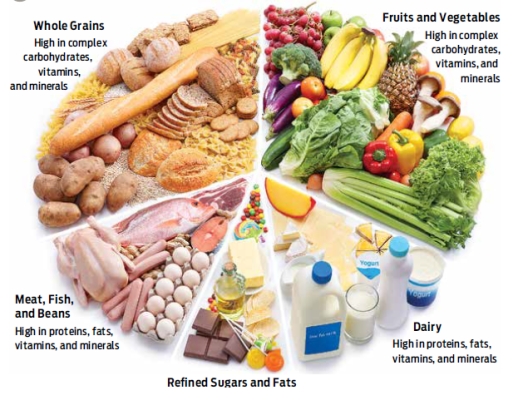
A) 50% whole grains; 20% fruits and vegetables; 20% meat, fish, and beans; 10% dairy; and 10% refined sugars and fats
B) 25% whole grains; 25% fruits and vegetables; 10% meat, fish, and beans; 15% dairy; and 10% refined sugars and fats
C) 40% whole grains; 20% fruits and vegetables; 15% meat, fish, and beans; 15% dairy; and 10% refined sugars and fats
D) 30% whole grains; 30% fruits and vegetables; 15% meat, fish, and beans; 15% dairy; and 10% refined sugars and fats
E) 20% whole grains; 50% fruits and vegetables; 15% meat, fish, and beans; 15% dairy; and 10% refined sugars and fats
A) 50% whole grains; 20% fruits and vegetables; 20% meat, fish, and beans; 10% dairy; and 10% refined sugars and fats
B) 25% whole grains; 25% fruits and vegetables; 10% meat, fish, and beans; 15% dairy; and 10% refined sugars and fats
C) 40% whole grains; 20% fruits and vegetables; 15% meat, fish, and beans; 15% dairy; and 10% refined sugars and fats
D) 30% whole grains; 30% fruits and vegetables; 15% meat, fish, and beans; 15% dairy; and 10% refined sugars and fats
E) 20% whole grains; 50% fruits and vegetables; 15% meat, fish, and beans; 15% dairy; and 10% refined sugars and fats
Question
Question
Question
Question
Question
Question
Question
Question
Question
Question
Question
Question
Question
Question
Question
Question
Question
Question
Question
Question
Question
Question
Question
Question
Question
Question
Question
Question
Question

Unlock Deck
Sign up to unlock the cards in this deck!
Unlock Deck
Unlock Deck
1/103

Play

Full screen (f)
Deck 4: Nutrition,metabolism,enzymes the Peanut Butter Project
1
Which of the following is an organic molecule that is NOT considered a macronutrient?
A) nucleic acids
B) proteins
C) lipids
D) fats
E) sugars
A) nucleic acids
B) proteins
C) lipids
D) fats
E) sugars
nucleic acids
2
Which of the following is a good source of fat?
A) apple
B) turkey
C) milk
D) corn
E) beans
A) apple
B) turkey
C) milk
D) corn
E) beans
milk
3
Legumes are a good source of these macronutrients.
A) proteins
B) carbohydrates
C) fats
D) nucleic acids
E) All of the above.
A) proteins
B) carbohydrates
C) fats
D) nucleic acids
E) All of the above.
proteins
4
Explain what is meant by a balanced diet in the context of the macromolecules discussed in this chapter.
Unlock Deck
Unlock for access to all 103 flashcards in this deck.
Unlock Deck
k this deck
5
Complex carbohydrates are made up of smaller
A) nucleotides.
B) amino acids.
C) fatty acids.
D) sugar molecules.
E) All of the above.
A) nucleotides.
B) amino acids.
C) fatty acids.
D) sugar molecules.
E) All of the above.
Unlock Deck
Unlock for access to all 103 flashcards in this deck.
Unlock Deck
k this deck
6
In the process of digestion,proteins are broken down into_______,while carbohydrates are broken down into ________.
A) nucleotides; amino acids
B) sugars; amino acids
C) glycerol; sugars
D) nucleic acids; sugars
E) amino acids; sugars
A) nucleotides; amino acids
B) sugars; amino acids
C) glycerol; sugars
D) nucleic acids; sugars
E) amino acids; sugars
Unlock Deck
Unlock for access to all 103 flashcards in this deck.
Unlock Deck
k this deck
7
What important macronutrient(s)would you be missing if you ate a diet that contained only meat? What would be the consequences to your cells if you were missing this/these component(s)?
Unlock Deck
Unlock for access to all 103 flashcards in this deck.
Unlock Deck
k this deck
8
Dairy products are a good source of these macronutrients.
A) proteins and carbohydrates
B) proteins and fats
C) carbohydrates and nucleic acids
D) carbohydrates and protein
E) nucleic acids, proteins, fats, and carbohydrates
A) proteins and carbohydrates
B) proteins and fats
C) carbohydrates and nucleic acids
D) carbohydrates and protein
E) nucleic acids, proteins, fats, and carbohydrates
Unlock Deck
Unlock for access to all 103 flashcards in this deck.
Unlock Deck
k this deck
9
A turkey sandwich with cheese,mayonnaise,lettuce,and tomato on whole-grain bread has which of the following macronutrients?
A) protein
B) fat
C) carbohydrates
D) A and B
E) A, B, and C
A) protein
B) fat
C) carbohydrates
D) A and B
E) A, B, and C
Unlock Deck
Unlock for access to all 103 flashcards in this deck.
Unlock Deck
k this deck
10
What is a macronutrient? What are the three primary macronutrients we obtain from our diet?
Unlock Deck
Unlock for access to all 103 flashcards in this deck.
Unlock Deck
k this deck
11
Which of the following is a good source of protein?
A) apple
B) turkey
C) milk
D) steak
E) corn
A) apple
B) turkey
C) milk
D) steak
E) corn
Unlock Deck
Unlock for access to all 103 flashcards in this deck.
Unlock Deck
k this deck
12
When macromolecules are ingested,into what smaller building blocks are they broken down for cell use?
A) fats, carbohydrates, nucleic acids, and proteins
B) amino acids, carbohydrates, nucleotides, and proteins
C) amino acids, sugars, nucleotides, fatty acids, and glycerol
D) sugar molecules, nucleotides, fats, and nucleic acids
E) fats, carbohydrates, DNA, sugar, and protein
A) fats, carbohydrates, nucleic acids, and proteins
B) amino acids, carbohydrates, nucleotides, and proteins
C) amino acids, sugars, nucleotides, fatty acids, and glycerol
D) sugar molecules, nucleotides, fats, and nucleic acids
E) fats, carbohydrates, DNA, sugar, and protein
Unlock Deck
Unlock for access to all 103 flashcards in this deck.
Unlock Deck
k this deck
13
In the process of digestion,nucleic acids are broken down into_______,while fats are broken down into ________.
A) nucleotides; fatty acids and glycerol
B) amino acids; fatty acids
C) sugars; fatty acids and glycerol
D) nucleotides; fatty acids
E) fatty acids and glycerol; nucleotides
A) nucleotides; fatty acids and glycerol
B) amino acids; fatty acids
C) sugars; fatty acids and glycerol
D) nucleotides; fatty acids
E) fatty acids and glycerol; nucleotides
Unlock Deck
Unlock for access to all 103 flashcards in this deck.
Unlock Deck
k this deck
14
If you were told you needed to consume a large dose of carbohydrates quickly,which of the following would you consume?
A) a steak
B) a glass of milk
C) a glass of buttermilk
D) a glass of orange juice
E) chicken wings
A) a steak
B) a glass of milk
C) a glass of buttermilk
D) a glass of orange juice
E) chicken wings
Unlock Deck
Unlock for access to all 103 flashcards in this deck.
Unlock Deck
k this deck
15
Macronutrients provided by food include
A) proteins, fats, sugars, and minerals.
B) proteins, carbohydrates, and sugars.
C) proteins, fats, and nucleic acids.
D) proteins, carbohydrates, and fats.
E) proteins, carbohydrates, and nucleic acids.
A) proteins, fats, sugars, and minerals.
B) proteins, carbohydrates, and sugars.
C) proteins, fats, and nucleic acids.
D) proteins, carbohydrates, and fats.
E) proteins, carbohydrates, and nucleic acids.
Unlock Deck
Unlock for access to all 103 flashcards in this deck.
Unlock Deck
k this deck
16
Why are vegetarians often advised to consume legumes?
Unlock Deck
Unlock for access to all 103 flashcards in this deck.
Unlock Deck
k this deck
17
Which of the following is a good source of carbohydrates?
A) apple
B) turkey
C) milk
D) steak
E) beans
A) apple
B) turkey
C) milk
D) steak
E) beans
Unlock Deck
Unlock for access to all 103 flashcards in this deck.
Unlock Deck
k this deck
18
Grains,including bread,rice,and pasta,are a rich source of
A) proteins.
B) fats.
C) carbohydrates.
D) nucleic acids.
E) All of the above.
A) proteins.
B) fats.
C) carbohydrates.
D) nucleic acids.
E) All of the above.
Unlock Deck
Unlock for access to all 103 flashcards in this deck.
Unlock Deck
k this deck
19
You eat a spinach salad with croutons and Italian dressing.Which of the following additions to your salad would ensure you obtain all the macronutrients your body needs?
A) avocado
B) raisins
C) carrots
D) tomato
E) beans
A) avocado
B) raisins
C) carrots
D) tomato
E) beans
Unlock Deck
Unlock for access to all 103 flashcards in this deck.
Unlock Deck
k this deck
20
Macronutrients are
A) nutrients that are large in terms of molecular structure.
B) nutrients that our body can't make.
C) nutrients our body needs in large amounts.
D) molecules that include proteins, carbohydrates, and nucleic acids.
E) A and B
A) nutrients that are large in terms of molecular structure.
B) nutrients that our body can't make.
C) nutrients our body needs in large amounts.
D) molecules that include proteins, carbohydrates, and nucleic acids.
E) A and B
Unlock Deck
Unlock for access to all 103 flashcards in this deck.
Unlock Deck
k this deck
21
What is the complex carbohydrate used for energy storage in plant cells?
A) glucose
B) starch
C) fiber
D) glycogen
E) fat
A) glucose
B) starch
C) fiber
D) glycogen
E) fat
Unlock Deck
Unlock for access to all 103 flashcards in this deck.
Unlock Deck
k this deck
22
Cell-surface markers are made using these building blocks.
A) nucleotides
B) sugars
C) amino acids
D) nucleic acids
E) amino acids and sugars
A) nucleotides
B) sugars
C) amino acids
D) nucleic acids
E) amino acids and sugars
Unlock Deck
Unlock for access to all 103 flashcards in this deck.
Unlock Deck
k this deck
23
Describe the metabolic route of a protein molecule that is consumed by a human.
Unlock Deck
Unlock for access to all 103 flashcards in this deck.
Unlock Deck
k this deck
24
Much of biological chemistry is the building of polymers from monomers,such as a protein made from amino acids.Many macromolecules are basically polymers made of monomers of the same chemical composition and structure.Which of the following does NOT necessarily follow this pattern?
A) fats
B) proteins
C) nucleic acids
D) carbohydrates
E) All of the above follow that pattern.
A) fats
B) proteins
C) nucleic acids
D) carbohydrates
E) All of the above follow that pattern.
Unlock Deck
Unlock for access to all 103 flashcards in this deck.
Unlock Deck
k this deck
25
Essential nutrients needed in only small amounts are called
A) vitamins.
B) micromolecules.
C) minerals.
D) bases.
E) micronutrients.
A) vitamins.
B) micromolecules.
C) minerals.
D) bases.
E) micronutrients.
Unlock Deck
Unlock for access to all 103 flashcards in this deck.
Unlock Deck
k this deck
26
Can a cheeseburger be used to make all of the macromolecules needed for a cell?
A) No, a cheeseburger does not have all the different types of subunits required to make a cell.
B) Yes, a cheeseburger has protein, carbohydrates, and fats, which can be broken down into their subunits and reassembled into cellular structures.
C) No, a cheeseburger is missing carbohydrates, which are needed to make a cell.
D) No, a cheeseburger is missing the fats needed to make a cell membrane.
E) Not enough information is given to answer the question.
A) No, a cheeseburger does not have all the different types of subunits required to make a cell.
B) Yes, a cheeseburger has protein, carbohydrates, and fats, which can be broken down into their subunits and reassembled into cellular structures.
C) No, a cheeseburger is missing carbohydrates, which are needed to make a cell.
D) No, a cheeseburger is missing the fats needed to make a cell membrane.
E) Not enough information is given to answer the question.
Unlock Deck
Unlock for access to all 103 flashcards in this deck.
Unlock Deck
k this deck
27
You have just been served a grilled piece of chicken with the skin intact.Which of the following macromolecules is NOT present in that chicken?
A) proteins
B) fats
C) DNA
D) glycogen
E) starch
A) proteins
B) fats
C) DNA
D) glycogen
E) starch
Unlock Deck
Unlock for access to all 103 flashcards in this deck.
Unlock Deck
k this deck
28
Which of the following is the best source of carbohydrates?
A) fish
B) meat
C) grains
D) cheese
E) beans
A) fish
B) meat
C) grains
D) cheese
E) beans
Unlock Deck
Unlock for access to all 103 flashcards in this deck.
Unlock Deck
k this deck
29
_________ are metabolized and used for energy storage and for cell-surface molecules.
A) Fats
B) Phospholipids
C) Carbohydrates
D) Proteins
E) Nucleic acids
A) Fats
B) Phospholipids
C) Carbohydrates
D) Proteins
E) Nucleic acids
Unlock Deck
Unlock for access to all 103 flashcards in this deck.
Unlock Deck
k this deck
30
What is the complex carbohydrate used for energy storage in animal cells?
A) fat
B) glucose
C) glycogen
D) starch
E) sucrose
A) fat
B) glucose
C) glycogen
D) starch
E) sucrose
Unlock Deck
Unlock for access to all 103 flashcards in this deck.
Unlock Deck
k this deck
31
Which macromolecules can be made from fatty acids and glycerol?
A) enzymes
B) phospholipids
C) DNA
D) glycogen
E) starch
A) enzymes
B) phospholipids
C) DNA
D) glycogen
E) starch
Unlock Deck
Unlock for access to all 103 flashcards in this deck.
Unlock Deck
k this deck
32
Sugar monomers can be used to make
A) proteins.
B) starch.
C) membranes.
D) DNA.
E) lipids.
A) proteins.
B) starch.
C) membranes.
D) DNA.
E) lipids.
Unlock Deck
Unlock for access to all 103 flashcards in this deck.
Unlock Deck
k this deck
33
Cells utilize these macromolecules for energy requirements.
A) nucleotides
B) sugars
C) proteins
D) nucleic acids
E) carbohydrates
A) nucleotides
B) sugars
C) proteins
D) nucleic acids
E) carbohydrates
Unlock Deck
Unlock for access to all 103 flashcards in this deck.
Unlock Deck
k this deck
34
The primary material for our cell membranes comes from
A) proteins.
B) sugars.
C) starches.
D) essential amino acids.
E) fats.
A) proteins.
B) sugars.
C) starches.
D) essential amino acids.
E) fats.
Unlock Deck
Unlock for access to all 103 flashcards in this deck.
Unlock Deck
k this deck
35
Describe the metabolic route of a fat molecule that is consumed by a human.
Unlock Deck
Unlock for access to all 103 flashcards in this deck.
Unlock Deck
k this deck
36
Which of the following will be broken down into amino acids by the digestive system?
A) carbohydrates
B) proteins
C) fats
D) nucleic acids
E) sugars
A) carbohydrates
B) proteins
C) fats
D) nucleic acids
E) sugars
Unlock Deck
Unlock for access to all 103 flashcards in this deck.
Unlock Deck
k this deck
37
When humans exercise,they burn up energy that was stored in their muscles as complex carbohydrates in the form of
A) simple sugars.
B) fats.
C) glycogen.
D) starch.
E) fiber.
A) simple sugars.
B) fats.
C) glycogen.
D) starch.
E) fiber.
Unlock Deck
Unlock for access to all 103 flashcards in this deck.
Unlock Deck
k this deck
38
Glycerol is a component of which of the following?
A) carbohydrates
B) proteins
C) fats
D) nucleic acids
E) sugars
A) carbohydrates
B) proteins
C) fats
D) nucleic acids
E) sugars
Unlock Deck
Unlock for access to all 103 flashcards in this deck.
Unlock Deck
k this deck
39
When a fat is digested,what is released?
A) fatty acids and glycerol
B) fatty acids and glycogen
C) nucleotides
D) amino acids
E) simple sugars
A) fatty acids and glycerol
B) fatty acids and glycogen
C) nucleotides
D) amino acids
E) simple sugars
Unlock Deck
Unlock for access to all 103 flashcards in this deck.
Unlock Deck
k this deck
40
Another term for vitamins and minerals is "micronutrients" because they are
A) very small compared to other molecules in the body.
B) only needed in small amounts by our body.
C) used by very few reactions in the body.
D) not very nutritionally dense.
E) used by smaller cells more than by larger cells.
A) very small compared to other molecules in the body.
B) only needed in small amounts by our body.
C) used by very few reactions in the body.
D) not very nutritionally dense.
E) used by smaller cells more than by larger cells.
Unlock Deck
Unlock for access to all 103 flashcards in this deck.
Unlock Deck
k this deck
41
In the process of anabolism,the substrate
A) is broken down into smaller products.
B) binds to the enzyme and is released.
C) is assembled into more complex products.
D) lowers the activation energy of a reaction.
E) is completely degraded.
A) is broken down into smaller products.
B) binds to the enzyme and is released.
C) is assembled into more complex products.
D) lowers the activation energy of a reaction.
E) is completely degraded.
Unlock Deck
Unlock for access to all 103 flashcards in this deck.
Unlock Deck
k this deck
42
Jesse visits the doctor because of weight loss due to undernourishment.The doctor determines that Jesse has adequate protein and carbohydrate intake.What is the doctor likely to recommend to Jesse?
A) a diet higher in meat
B) more exercise
C) a diet lower in fat
D) to drink more water
E) a vitamin and mineral supplement
A) a diet higher in meat
B) more exercise
C) a diet lower in fat
D) to drink more water
E) a vitamin and mineral supplement
Unlock Deck
Unlock for access to all 103 flashcards in this deck.
Unlock Deck
k this deck
43
Enzymes are proteins that are made up of
A) nucleotides.
B) sugars.
C) amino acids.
D) nucleic acids.
E) amino acids and sugars.
A) nucleotides.
B) sugars.
C) amino acids.
D) nucleic acids.
E) amino acids and sugars.
Unlock Deck
Unlock for access to all 103 flashcards in this deck.
Unlock Deck
k this deck
44
Enzymes work by
A) raising cell temperature.
B) lowering cell energy.
C) modifying carbohydrates.
D) lowering activation energy.
E) anabolizing simple sugars.
A) raising cell temperature.
B) lowering cell energy.
C) modifying carbohydrates.
D) lowering activation energy.
E) anabolizing simple sugars.
Unlock Deck
Unlock for access to all 103 flashcards in this deck.
Unlock Deck
k this deck
45
In the process of catabolism,a substrate
A) is broken into smaller products.
B) binds to the enzyme and is released.
C) holds the enzyme in its active site.
D) lowers the activation energy of a reaction.
E) is assembled into a dimer.
A) is broken into smaller products.
B) binds to the enzyme and is released.
C) holds the enzyme in its active site.
D) lowers the activation energy of a reaction.
E) is assembled into a dimer.
Unlock Deck
Unlock for access to all 103 flashcards in this deck.
Unlock Deck
k this deck
46
All the biochemical reactions in a cell are described as its
A) catabolism.
B) anabolism.
C) activation energy.
D) metabolism.
E) homeostasis.
A) catabolism.
B) anabolism.
C) activation energy.
D) metabolism.
E) homeostasis.
Unlock Deck
Unlock for access to all 103 flashcards in this deck.
Unlock Deck
k this deck
47
Essential amino acids are monomers required to make
A) lipids.
B) proteins.
C) glycogen.
D) carbohydrates.
E) DNA.
A) lipids.
B) proteins.
C) glycogen.
D) carbohydrates.
E) DNA.
Unlock Deck
Unlock for access to all 103 flashcards in this deck.
Unlock Deck
k this deck
48
Anabolic reactions_______ bonds,whereas catabolic reactions __________ bonds.
A) break; make
B) make; break
C) loosen; tighten.
D) decrease; increase.
E) weaken; strengthen
A) break; make
B) make; break
C) loosen; tighten.
D) decrease; increase.
E) weaken; strengthen
Unlock Deck
Unlock for access to all 103 flashcards in this deck.
Unlock Deck
k this deck
49
Many traditional diets are based on a combination of a grain and a legume (e.g.,corn and beans,rice and lentils).Eaten together,the grain and legume provide complete protein for the human diet.This means that they have all the ______________ needed by humans.
A) essential amino acids
B) vitamins and minerals
C) essential enzymes
D) full-length proteins
E) essential nutrients
A) essential amino acids
B) vitamins and minerals
C) essential enzymes
D) full-length proteins
E) essential nutrients
Unlock Deck
Unlock for access to all 103 flashcards in this deck.
Unlock Deck
k this deck
50
When food is being digested and broken down into its constituent molecules,which macromolecular subunits are re-used to make enzymes?
A) sugars from carbohydrates
B) amino acids from proteins
C) fatty acids from fats
D) nucleotides from nucleic acids
E) All of the above.
A) sugars from carbohydrates
B) amino acids from proteins
C) fatty acids from fats
D) nucleotides from nucleic acids
E) All of the above.
Unlock Deck
Unlock for access to all 103 flashcards in this deck.
Unlock Deck
k this deck
51
A healthful,well-balanced meal would contain approximately what percentage of each category of food?
A) 50% whole grains; 20% fruits and vegetables; 20% meat, fish, and beans; 10% dairy; and 10% refined sugars and fats
B) 25% whole grains; 25% fruits and vegetables; 10% meat, fish, and beans; 15% dairy; and 10% refined sugars and fats
C) 40% whole grains; 20% fruits and vegetables; 15% meat, fish, and beans; 15% dairy; and 10% refined sugars and fats
D) 30% whole grains; 30% fruits and vegetables; 15% meat, fish, and beans; 15% dairy; and 10% refined sugars and fats
E) 20% whole grains; 50% fruits and vegetables; 15% meat, fish, and beans; 15% dairy; and 10% refined sugars and fats
A) 50% whole grains; 20% fruits and vegetables; 20% meat, fish, and beans; 10% dairy; and 10% refined sugars and fats
B) 25% whole grains; 25% fruits and vegetables; 10% meat, fish, and beans; 15% dairy; and 10% refined sugars and fats
C) 40% whole grains; 20% fruits and vegetables; 15% meat, fish, and beans; 15% dairy; and 10% refined sugars and fats
D) 30% whole grains; 30% fruits and vegetables; 15% meat, fish, and beans; 15% dairy; and 10% refined sugars and fats
E) 20% whole grains; 50% fruits and vegetables; 15% meat, fish, and beans; 15% dairy; and 10% refined sugars and fats
Unlock Deck
Unlock for access to all 103 flashcards in this deck.
Unlock Deck
k this deck
52
There are ____ amino acids of which ____ are essential amino acids.
A) 20; 20
B) 11; 9
C) 20; 12
D) 20; 9
E) 24; 9
A) 20; 20
B) 11; 9
C) 20; 12
D) 20; 9
E) 24; 9
Unlock Deck
Unlock for access to all 103 flashcards in this deck.
Unlock Deck
k this deck
53
_____ reactions break down food and release subunits that can be used in ______ reactions to make larger macromolecules.
A) Anabolic; catabolic
B) Catabolic; anabolic
C) Oxidizing; reducing
D) Metabolic; reductive
E) Substrate; enzyme
A) Anabolic; catabolic
B) Catabolic; anabolic
C) Oxidizing; reducing
D) Metabolic; reductive
E) Substrate; enzyme
Unlock Deck
Unlock for access to all 103 flashcards in this deck.
Unlock Deck
k this deck
54
What is the definition of "essential nutrient"?
Unlock Deck
Unlock for access to all 103 flashcards in this deck.
Unlock Deck
k this deck
55
Specialized proteins called ____ help break your food down into smaller chemical units.
A) amino acids
B) nitrogenous bases
C) enzymes
D) corticosteroids
E) digestizymes
A) amino acids
B) nitrogenous bases
C) enzymes
D) corticosteroids
E) digestizymes
Unlock Deck
Unlock for access to all 103 flashcards in this deck.
Unlock Deck
k this deck
56
What is the definition of "essential nutrients"?
A) nutrients that are essential for making part of the cell
B) the set of nutrients that are the minimum necessary for making the body
C) nutrients your body cannot make on its own, so they must be ingested
D) nutrients that are the basis from which more complex nutrients are made
E) nutrients that are not soluble in water and that are stored in fat cells
A) nutrients that are essential for making part of the cell
B) the set of nutrients that are the minimum necessary for making the body
C) nutrients your body cannot make on its own, so they must be ingested
D) nutrients that are the basis from which more complex nutrients are made
E) nutrients that are not soluble in water and that are stored in fat cells
Unlock Deck
Unlock for access to all 103 flashcards in this deck.
Unlock Deck
k this deck
57
Enzymes are
A) carbohydrates.
B) proteins.
C) fats.
D) nucleic acids.
E) polysaccharides.
A) carbohydrates.
B) proteins.
C) fats.
D) nucleic acids.
E) polysaccharides.
Unlock Deck
Unlock for access to all 103 flashcards in this deck.
Unlock Deck
k this deck
58
Explain the difference between essential and non-essential amino acids in the human diet.
Unlock Deck
Unlock for access to all 103 flashcards in this deck.
Unlock Deck
k this deck
59
Explain why each kind of enzyme only works with specific substrate molecules.
Unlock Deck
Unlock for access to all 103 flashcards in this deck.
Unlock Deck
k this deck
60
Enzymes speed up chemical reactions by
A) breaking the bonds between molecules.
B) lowering the activation energy of the reaction.
C) assembling chemical bonds.
D) increasing the cell's metabolism.
E) increasing the activation energy of the reaction.
A) breaking the bonds between molecules.
B) lowering the activation energy of the reaction.
C) assembling chemical bonds.
D) increasing the cell's metabolism.
E) increasing the activation energy of the reaction.
Unlock Deck
Unlock for access to all 103 flashcards in this deck.
Unlock Deck
k this deck
61
What is a cofactor?
Unlock Deck
Unlock for access to all 103 flashcards in this deck.
Unlock Deck
k this deck
62
A coenzyme is another name for
A) an organic cofactor.
B) an inorganic cofactor.
C) a mineral.
D) an enzyme.
E) a pair of enzymes.
A) an organic cofactor.
B) an inorganic cofactor.
C) a mineral.
D) an enzyme.
E) a pair of enzymes.
Unlock Deck
Unlock for access to all 103 flashcards in this deck.
Unlock Deck
k this deck
63
All the chemical reactions that occur in your body are collectively called
A) anabolism.
B) catabolism.
C) metabolism.
D) nutrients.
E) enzymes.
A) anabolism.
B) catabolism.
C) metabolism.
D) nutrients.
E) enzymes.
Unlock Deck
Unlock for access to all 103 flashcards in this deck.
Unlock Deck
k this deck
64
What is the difference between a catabolic reaction and an anabolic reaction?
Unlock Deck
Unlock for access to all 103 flashcards in this deck.
Unlock Deck
k this deck
65
Bones are primarily made up of the minerals
A) cartilage and muscle.
B) calcium and phosphorus.
C) carbohydrates and protein.
D) calcium and potassium.
E) calcium, potassium, and phosphorus,
A) cartilage and muscle.
B) calcium and phosphorus.
C) carbohydrates and protein.
D) calcium and potassium.
E) calcium, potassium, and phosphorus,
Unlock Deck
Unlock for access to all 103 flashcards in this deck.
Unlock Deck
k this deck
66
Cellular respiration takes glucose and breaks it down into carbon dioxide.What type of metabolic reaction is this?
Unlock Deck
Unlock for access to all 103 flashcards in this deck.
Unlock Deck
k this deck
67
One way a vitamin can act as a coenzyme is to
A) bind to a substrate to help it find its enzyme.
B) bind to the enzyme so the enzyme can change its shape and bind to its substrate.
C) bind to the outside of a cell, so an enzyme can enter and carry out reactions.
D) bind to another vitamin, signaling a cell to activate its enzymes.
E) replace the activation-energy-lowering activity of a missing enzyme.
A) bind to a substrate to help it find its enzyme.
B) bind to the enzyme so the enzyme can change its shape and bind to its substrate.
C) bind to the outside of a cell, so an enzyme can enter and carry out reactions.
D) bind to another vitamin, signaling a cell to activate its enzymes.
E) replace the activation-energy-lowering activity of a missing enzyme.
Unlock Deck
Unlock for access to all 103 flashcards in this deck.
Unlock Deck
k this deck
68
All of the following are true of most vitamins EXCEPT
A) they are essential for good health.
B) they can act as cofactors.
C) they enhance enzymatic activity.
D) they are inorganic molecules.
E) they are micronutrients.
A) they are essential for good health.
B) they can act as cofactors.
C) they enhance enzymatic activity.
D) they are inorganic molecules.
E) they are micronutrients.
Unlock Deck
Unlock for access to all 103 flashcards in this deck.
Unlock Deck
k this deck
69
All of the following are true about enzymes EXCEPT
A) each enzyme is specific to one type of reaction.
B) they are proteins.
C) they speed up chemical reactions.
D) they can be used over and over again.
E) they increase activation energy.
A) each enzyme is specific to one type of reaction.
B) they are proteins.
C) they speed up chemical reactions.
D) they can be used over and over again.
E) they increase activation energy.
Unlock Deck
Unlock for access to all 103 flashcards in this deck.
Unlock Deck
k this deck
70
What would happen to enzyme function if you ate a diet that was missing one or more essential vitamins or minerals?
Unlock Deck
Unlock for access to all 103 flashcards in this deck.
Unlock Deck
k this deck
71
Bone loss can result from
A) dietary deficiencies.
B) calcium deficiency.
C) vitamin cofactor deficiencies.
D) lifestyle choices.
E) All of the above.
A) dietary deficiencies.
B) calcium deficiency.
C) vitamin cofactor deficiencies.
D) lifestyle choices.
E) All of the above.
Unlock Deck
Unlock for access to all 103 flashcards in this deck.
Unlock Deck
k this deck
72
Photosynthesis builds glucose molecules from carbon dioxide.What type of metabolic reaction is this?
Unlock Deck
Unlock for access to all 103 flashcards in this deck.
Unlock Deck
k this deck
73
Lactose is a sugar found in milk that is made of two simple sugars bonded together.If someone is lactose intolerant,they cannot digest lactose into its two parts.What,specifically,do you imagine is the cause for this problem?
Unlock Deck
Unlock for access to all 103 flashcards in this deck.
Unlock Deck
k this deck
74
Cofactors affect
A) the rate of the reaction.
B) the active site.
C) enzyme substrate binding.
D) the products produced.
E) All of the above.
A) the rate of the reaction.
B) the active site.
C) enzyme substrate binding.
D) the products produced.
E) All of the above.
Unlock Deck
Unlock for access to all 103 flashcards in this deck.
Unlock Deck
k this deck
75
Cofactors are important because
A) they enable enzymes to bind to their substrates.
B) they serve to inactivate an enzyme, so as to better regulate chemical reactions.
C) they are the building blocks of proteins.
D) they prevent spikes in blood sugar.
E) they signal cells to release enzymes.
A) they enable enzymes to bind to their substrates.
B) they serve to inactivate an enzyme, so as to better regulate chemical reactions.
C) they are the building blocks of proteins.
D) they prevent spikes in blood sugar.
E) they signal cells to release enzymes.
Unlock Deck
Unlock for access to all 103 flashcards in this deck.
Unlock Deck
k this deck
76
Would a mutation in an enzyme that changes the shape of its active site change the function of the enzyme?
A) No, because the enzyme would probably bind to the substrate anyway.
B) No, because another enzyme would make up for it.
C) No, because the shape of the active site has no effect on its activity.
D) Yes, because the active sites of all the enzymes have to match in order to work.
E) Yes, because the substrate has to fit specifically into the active site to undergo the reaction.
A) No, because the enzyme would probably bind to the substrate anyway.
B) No, because another enzyme would make up for it.
C) No, because the shape of the active site has no effect on its activity.
D) Yes, because the active sites of all the enzymes have to match in order to work.
E) Yes, because the substrate has to fit specifically into the active site to undergo the reaction.
Unlock Deck
Unlock for access to all 103 flashcards in this deck.
Unlock Deck
k this deck
77
When an enzyme is involved in a catabolic reaction
A) its active site binds the substrates and changes shape, stressing the bond, lowering the activation energy, and breaking the bond.
B) its active site binds the substrates and changes shape, bringing them close together, lowering the activation energy, and creating a bond.
C) its active site binds the substrates and changes shape, stressing the bond, increasing the activation energy, and breaking the bond.
D) its active site binds the substrates and changes shape, creating a bond by increasing the activation energy.
E) None of the above.
A) its active site binds the substrates and changes shape, stressing the bond, lowering the activation energy, and breaking the bond.
B) its active site binds the substrates and changes shape, bringing them close together, lowering the activation energy, and creating a bond.
C) its active site binds the substrates and changes shape, stressing the bond, increasing the activation energy, and breaking the bond.
D) its active site binds the substrates and changes shape, creating a bond by increasing the activation energy.
E) None of the above.
Unlock Deck
Unlock for access to all 103 flashcards in this deck.
Unlock Deck
k this deck
78
If you hold a piece of food in your mouth that is made exclusively of carbohydrates,such as a cracker or cookie,that food will eventually be transformed in your mouth into simple sugars.If you hold a piece of meat in your mouth,however,that piece of meat will not dissolve.What does this tell you about what is present in saliva?
Unlock Deck
Unlock for access to all 103 flashcards in this deck.
Unlock Deck
k this deck
79
Doctors recommend at least 15 minutes of sunlight per day.Why? What health benefit does sunlight provide?
Unlock Deck
Unlock for access to all 103 flashcards in this deck.
Unlock Deck
k this deck
80
What are the two primary minerals that are needed to make healthy bone?
Unlock Deck
Unlock for access to all 103 flashcards in this deck.
Unlock Deck
k this deck
Unlock Deck
Unlock for access to all 103 flashcards in this deck.






