







 Chat with AI

Deck 23: Ecological Economics
Full screen (f)

Question

Question
Question
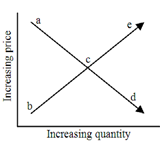
On the classical supply-demand graph, ________ is highest when prices are low.
A)Demand
B)Supply
C)Market equilibrium
D)Cost
E)Quantity
Question
Question
Question
Using the supply-demand graph, what happens as the price of goods or services increases?
A)The quantity of the goods or services decreases
B)The quantity of the goods or services increases
C)Demand increases and supply falls
D)Demand falls and supply increases
E)Market equilibrium is finally reached and the demand increases
Question
Question
Question
Question
Question
Question
Question
On the supply-demand graph, market equilibrium is marked
A)A
B)B
C)C
D)D
E)E
Question
Question
Question
Question
Question
Question
Question
Question
Question
Question
Question
Question
Question
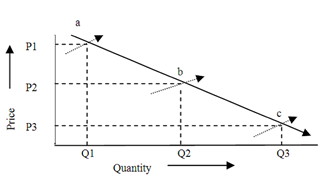
The price/quantity intersection marked "a" in the graph represents a(an) ________ economy.
A)Developing
B)Modern
C)Elastic
D)Frontier
E)Developed
Question
Question
Question
Question
Question
Question
Question
Question
Question
Question
Question
Question
Question
Question
The graph shows how __________ when economies develop.
A)Quantity increases as prices rise
B)Prices fall as quantities increase
C)Prices and quantities fall simultaneously
D)Quantities and prices increase simultaneously
E)Quantities and prices naturally change through time
Question
Question
Question
Question
Question
Question
Question
Question
Question
Question
Question
Question
Question
Question
Question

Unlock Deck
Sign up to unlock the cards in this deck!
Unlock Deck
Unlock Deck
1/55

Play

Full screen (f)
Deck 23: Ecological Economics
1
In economic terms, "supply" is how much of something
A)People want
B)People need
C)People will buy at current prices
D)Is available on the market
E)People will buy regardless of price
A)People want
B)People need
C)People will buy at current prices
D)Is available on the market
E)People will buy regardless of price
Is available on the market
2
A(n) ________ relationship exists between supply and demand.Therefore, when supply is high, demand is _____.
A)Correlational; high
B)Inverse; high
C)Inverse; low
D)Correlational; low
E)Strong; high
A)Correlational; high
B)Inverse; high
C)Inverse; low
D)Correlational; low
E)Strong; high
Inverse; low
3
On the classical supply-demand graph, ________ is highest when prices are low.
A)Demand
B)Supply
C)Market equilibrium
D)Cost
E)Quantity
Demand
4
The economic theory that was originally focused on how the interests and values of individuals relate to larger societal goals is the ______ economic theory.
A)Political
B)Neoclassical
C)Classical
D)Social
E)Ecological
A)Political
B)Neoclassical
C)Classical
D)Social
E)Ecological
Unlock Deck
Unlock for access to all 55 flashcards in this deck.
Unlock Deck
k this deck
5
Which of the following is considered social capital?
A)Community organization
B)Human experiences within a community
C)Technology such as a water treatment plant in a community
D)Buildings in a community
E)Knowledge of a community's history
A)Community organization
B)Human experiences within a community
C)Technology such as a water treatment plant in a community
D)Buildings in a community
E)Knowledge of a community's history
Unlock Deck
Unlock for access to all 55 flashcards in this deck.
Unlock Deck
k this deck
6
Using the supply-demand graph, what happens as the price of goods or services increases?
A)The quantity of the goods or services decreases
B)The quantity of the goods or services increases
C)Demand increases and supply falls
D)Demand falls and supply increases
E)Market equilibrium is finally reached and the demand increases
Unlock Deck
Unlock for access to all 55 flashcards in this deck.
Unlock Deck
k this deck
7
When we purchase a product, the price we pay directly reflects the _____ cost of producing it.If the manufacture of the product degrades the quality of air or water, then the costs of this pollution are termed _____ costs.
A)Incidental; external
B)Incidental; indirect
C)Indirect; incidental
D)External; internal
E)Internal; external
A)Incidental; external
B)Incidental; indirect
C)Indirect; incidental
D)External; internal
E)Internal; external
Unlock Deck
Unlock for access to all 55 flashcards in this deck.
Unlock Deck
k this deck
8
In economic terms, "demand" is how much of something
A)People want
B)People need
C)People will buy at current prices
D)Is available on the market
E)People will buy regardless of price
A)People want
B)People need
C)People will buy at current prices
D)Is available on the market
E)People will buy regardless of price
Unlock Deck
Unlock for access to all 55 flashcards in this deck.
Unlock Deck
k this deck
9
_______ is a nonrenewable resource.
A)Scientific technology
B)Hydroelectric power
C)Coal
D)Biomass
E)Solar energy
A)Scientific technology
B)Hydroelectric power
C)Coal
D)Biomass
E)Solar energy
Unlock Deck
Unlock for access to all 55 flashcards in this deck.
Unlock Deck
k this deck
10
Ecological economics is different from the other economic theories because it recognizes the
A)Scarcity of natural capital
B)Recycling of ecological processes and the scarcity of manufactured capital
C)Abundance of natural capital
D)Fragility of the human economy and the power of ecological systems
E)Human economy as one part of a dynamic world system
A)Scarcity of natural capital
B)Recycling of ecological processes and the scarcity of manufactured capital
C)Abundance of natural capital
D)Fragility of the human economy and the power of ecological systems
E)Human economy as one part of a dynamic world system
Unlock Deck
Unlock for access to all 55 flashcards in this deck.
Unlock Deck
k this deck
11
Ecology and economy are both derived from the Greek word "Oikos" meaning
A)The study of something
B)How things work
C)Relationships
D)Environment
E)Household
A)The study of something
B)How things work
C)Relationships
D)Environment
E)Household
Unlock Deck
Unlock for access to all 55 flashcards in this deck.
Unlock Deck
k this deck
12
Natural capital is that which is created by
A)Industrial processes
B)Human labor
C)Natural Earth processes
D)Animal labor
E)All of these are ways natural capital is created
A)Industrial processes
B)Human labor
C)Natural Earth processes
D)Animal labor
E)All of these are ways natural capital is created
Unlock Deck
Unlock for access to all 55 flashcards in this deck.
Unlock Deck
k this deck
13
On the supply-demand graph, market equilibrium is marked
A)A
B)B
C)C
D)D
E)E
Unlock Deck
Unlock for access to all 55 flashcards in this deck.
Unlock Deck
k this deck
14
Political economy theory incorporates ______ while neoclassical economic theory incorporates _________.
A)The issues of social structures and value systems; objectivity and scientific analysis
B)Objectivity and scientific analysis; the issues of social structures and value systems
C)The value of social systems; the value of natural resources
D)Birth and death rates; natural resources and social structures
E)Objectivity and scientific analysis; supply and demand
A)The issues of social structures and value systems; objectivity and scientific analysis
B)Objectivity and scientific analysis; the issues of social structures and value systems
C)The value of social systems; the value of natural resources
D)Birth and death rates; natural resources and social structures
E)Objectivity and scientific analysis; supply and demand
Unlock Deck
Unlock for access to all 55 flashcards in this deck.
Unlock Deck
k this deck
15
An example of an intangible resource is
A)Solar energy
B)Satisfaction
C)Human labor
D)Capital
E)Extinct species
A)Solar energy
B)Satisfaction
C)Human labor
D)Capital
E)Extinct species
Unlock Deck
Unlock for access to all 55 flashcards in this deck.
Unlock Deck
k this deck
16
Which of the following is considered human capital?
A)Timber
B)Solar energy
C)Technology such as hydroelectric power
D)Buildings in a community
E)Knowledge of history
A)Timber
B)Solar energy
C)Technology such as hydroelectric power
D)Buildings in a community
E)Knowledge of history
Unlock Deck
Unlock for access to all 55 flashcards in this deck.
Unlock Deck
k this deck
17
When a factory pollutes a river, the costs and losses that affect people downstream would be called ______ costs.
A)Indirect
B)External
C)Incidental
D)Internal
E)Social
A)Indirect
B)External
C)Incidental
D)Internal
E)Social
Unlock Deck
Unlock for access to all 55 flashcards in this deck.
Unlock Deck
k this deck
18
Price inelasticity is when _________ while price elasticity is when __________.
A)Prices cannot be negotiated; consumers can negotiate a price
B)Consumers can negotiate a price; prices cannot be negotiated
C)The supply/demand curve is followed; consumers buy a product regardless of cost
D)Consumers buy a product regardless of cost; the supply/demand curve is followed
E)Prices change frequently; prices are relatively stable
A)Prices cannot be negotiated; consumers can negotiate a price
B)Consumers can negotiate a price; prices cannot be negotiated
C)The supply/demand curve is followed; consumers buy a product regardless of cost
D)Consumers buy a product regardless of cost; the supply/demand curve is followed
E)Prices change frequently; prices are relatively stable
Unlock Deck
Unlock for access to all 55 flashcards in this deck.
Unlock Deck
k this deck
19
Which of the following is NOT true with respect to natural resource economics?
A)Natural resource economics views ecological processes as factors outside the economic system.
B)The principles of thermodynamics and coevolution are incorporated into natural resource economics.
C)Natural resources are seen as abundant in natural resource economics.
D)Neoclassical economic theory is similar to natural resource economics.
E)Natural resource economics assigns a monetary value to some natural resources.
A)Natural resource economics views ecological processes as factors outside the economic system.
B)The principles of thermodynamics and coevolution are incorporated into natural resource economics.
C)Natural resources are seen as abundant in natural resource economics.
D)Neoclassical economic theory is similar to natural resource economics.
E)Natural resource economics assigns a monetary value to some natural resources.
Unlock Deck
Unlock for access to all 55 flashcards in this deck.
Unlock Deck
k this deck
20
Renewable resources are those that
A)Will not be exhausted
B)Will always renew themselves unless we destroy them
C)Can be renewed through intensive investments of capital and labor
D)Are intangible and renewable
E)Are intangible and nonrenewable
A)Will not be exhausted
B)Will always renew themselves unless we destroy them
C)Can be renewed through intensive investments of capital and labor
D)Are intangible and renewable
E)Are intangible and nonrenewable
Unlock Deck
Unlock for access to all 55 flashcards in this deck.
Unlock Deck
k this deck
21
Which author criticized the idea of commonly held resources in "The Tragedy of the Commons"?
A)Garret Hardin
B)Paul Ehrlich
C)Karl Marx
D)Gifford Pinchot
E)Thomas Malthus
A)Garret Hardin
B)Paul Ehrlich
C)Karl Marx
D)Gifford Pinchot
E)Thomas Malthus
Unlock Deck
Unlock for access to all 55 flashcards in this deck.
Unlock Deck
k this deck
22
In response to criticisms of Limits to Growth, a computer model was published in Beyond the Limits that
A)Predicted growth in both population and resources in the next century
B)Predicted an increase in resources in the next century
C)Includes technological progress and pollution abatement
D)Includes a lower rate of world population growth
E)Predicted a decrease in both population and resources in the next century
A)Predicted growth in both population and resources in the next century
B)Predicted an increase in resources in the next century
C)Includes technological progress and pollution abatement
D)Includes a lower rate of world population growth
E)Predicted a decrease in both population and resources in the next century
Unlock Deck
Unlock for access to all 55 flashcards in this deck.
Unlock Deck
k this deck
23
In Limits to Growth, the Club of Rome predicted that
A)Steady-state economic systems were not viable
B)Sustained economic growth of most countries was likely for the near future
C)Predicting the future was impossible
D)Technology would help mitigate the effects of increased populations
E)Economic collapse is likely if we do not reduce population growth
A)Steady-state economic systems were not viable
B)Sustained economic growth of most countries was likely for the near future
C)Predicting the future was impossible
D)Technology would help mitigate the effects of increased populations
E)Economic collapse is likely if we do not reduce population growth
Unlock Deck
Unlock for access to all 55 flashcards in this deck.
Unlock Deck
k this deck
24
Which of the following is an example of a communal property system?
A)Cattle grazing on common woodlands and pastures in colonial New England
B)Maine lobster fishing
C)Privatization of Native American reservations in the United States
D)Offshore fisheries in many parts of the world
E)None of these are examples of a communal property system
A)Cattle grazing on common woodlands and pastures in colonial New England
B)Maine lobster fishing
C)Privatization of Native American reservations in the United States
D)Offshore fisheries in many parts of the world
E)None of these are examples of a communal property system
Unlock Deck
Unlock for access to all 55 flashcards in this deck.
Unlock Deck
k this deck
25
Things like open space or clean air can be considered a resource because they are
A)Valued by people
B)Essential for efficient production
C)Exhaustible
D)Expensive
E)Hard to find
A)Valued by people
B)Essential for efficient production
C)Exhaustible
D)Expensive
E)Hard to find
Unlock Deck
Unlock for access to all 55 flashcards in this deck.
Unlock Deck
k this deck
26
The price/quantity intersection marked "a" in the graph represents a(an) ________ economy.
A)Developing
B)Modern
C)Elastic
D)Frontier
E)Developed
Unlock Deck
Unlock for access to all 55 flashcards in this deck.
Unlock Deck
k this deck
27
Use the following scenario to answer the question.
A large lending institution is evaluating the long-term pros and cons of building a hydroelectric dam in the Amazon rainforest. First, the lending institution is identifying the appropriate factors and then quantifying them. The factors include—but are not limited to—the direct expenses of building the dam, the lost opportunities from placing a dam on the river, and the profit from the dam. Also included is an analysis of who will be affected by the dam.
What is the name of the process the lending institution is going through in this scenario?
A)Long-term analysis
B)Supply-demand analysis
C)Tangible-intangible cost analysis
D)Benefit-need ratio analysis
E)Cost-benefit analysis
A large lending institution is evaluating the long-term pros and cons of building a hydroelectric dam in the Amazon rainforest. First, the lending institution is identifying the appropriate factors and then quantifying them. The factors include—but are not limited to—the direct expenses of building the dam, the lost opportunities from placing a dam on the river, and the profit from the dam. Also included is an analysis of who will be affected by the dam.
What is the name of the process the lending institution is going through in this scenario?
A)Long-term analysis
B)Supply-demand analysis
C)Tangible-intangible cost analysis
D)Benefit-need ratio analysis
E)Cost-benefit analysis
Unlock Deck
Unlock for access to all 55 flashcards in this deck.
Unlock Deck
k this deck
28
The price of natural gas doubles.What would happen to the quantity of the natural gas in a market system?
A)The quantity decreases because it is too expensive to produce.
B)The quantity increases because it is worthwhile to drill into lower quality fields.
C)The quantity increases because new natural gas is being created.
D)The quantity decreases because it is too expensive and people do not buy it.
E)The quantity stays the same because the price of a resource does not change the availability of that resource.
A)The quantity decreases because it is too expensive to produce.
B)The quantity increases because it is worthwhile to drill into lower quality fields.
C)The quantity increases because new natural gas is being created.
D)The quantity decreases because it is too expensive and people do not buy it.
E)The quantity stays the same because the price of a resource does not change the availability of that resource.
Unlock Deck
Unlock for access to all 55 flashcards in this deck.
Unlock Deck
k this deck
29
A steady-state economy would be marked by _____ resource consumption, _____ volume, and _____ output.
A)High; low; low
B)High; high; high-quality
C)Low; high; high-quality
D)Low; low; high-quality
E)Low; low; low-quality
A)High; low; low
B)High; high; high-quality
C)Low; high; high-quality
D)Low; low; high-quality
E)Low; low; low-quality
Unlock Deck
Unlock for access to all 55 flashcards in this deck.
Unlock Deck
k this deck
30
"The Tragedy of the Commons" is based on the view that
A)Communal systems can be sustained and promoted.
B)Community members will attempt, without success, to sustain a resource for future generations.
C)Only privatization or strict laws can overcome people's selfish and greedy nature.
D)Individuals will try to maximize gain for the group at a loss for the individual.
E)Open access systems can be sustained and promoted.
A)Communal systems can be sustained and promoted.
B)Community members will attempt, without success, to sustain a resource for future generations.
C)Only privatization or strict laws can overcome people's selfish and greedy nature.
D)Individuals will try to maximize gain for the group at a loss for the individual.
E)Open access systems can be sustained and promoted.
Unlock Deck
Unlock for access to all 55 flashcards in this deck.
Unlock Deck
k this deck
31
In 1997, ecological economists put a price on the goods and services provided by natural systems.This estimated annual value ranged from
A)$16-54 trillion
B)$16-54 billion
C)$16-54 million
D)$16-54 thousand
E)$1600-$5400
A)$16-54 trillion
B)$16-54 billion
C)$16-54 million
D)$16-54 thousand
E)$1600-$5400
Unlock Deck
Unlock for access to all 55 flashcards in this deck.
Unlock Deck
k this deck
32
The use of Gross National Product as an indicator of economic well-being
A)Is criticized as an inaccurate measure of the quality of life
B)Reflects social welfare
C)Predicts ecological bankruptcy through recognition of decreased natural capital
D)Takes into account life expectancy
E)Does not take into account economic activity overseas
A)Is criticized as an inaccurate measure of the quality of life
B)Reflects social welfare
C)Predicts ecological bankruptcy through recognition of decreased natural capital
D)Takes into account life expectancy
E)Does not take into account economic activity overseas
Unlock Deck
Unlock for access to all 55 flashcards in this deck.
Unlock Deck
k this deck
33
The management of a wild area by a group of indigenous people, such as the management of wild rice beds, is an example of
A)Tragedy of the commons
B)A communal open access system
C)The "free-rider" system
D)A communal resource management system
E)Privatization
A)Tragedy of the commons
B)A communal open access system
C)The "free-rider" system
D)A communal resource management system
E)Privatization
Unlock Deck
Unlock for access to all 55 flashcards in this deck.
Unlock Deck
k this deck
34
Which of the following would not be counted as part of the Gross National Product?
A)A new car purchase by a corporation
B)Installation of cable television by a company
C)Home health care by a family member
D)Government purchases
E)Dental services for an individual
A)A new car purchase by a corporation
B)Installation of cable television by a company
C)Home health care by a family member
D)Government purchases
E)Dental services for an individual
Unlock Deck
Unlock for access to all 55 flashcards in this deck.
Unlock Deck
k this deck
35
Which of the following is not an effective response to resource scarcity?
A)Substituting different materials for scarce ones
B)Increasing efficiency
C)Diverting capital (money) to conventional industries
D)Increasing trade with other regions
E)Recycling
A)Substituting different materials for scarce ones
B)Increasing efficiency
C)Diverting capital (money) to conventional industries
D)Increasing trade with other regions
E)Recycling
Unlock Deck
Unlock for access to all 55 flashcards in this deck.
Unlock Deck
k this deck
36
Which of the following is an example of an open access system?
A)Cattle grazing on common woodlands and pastures in colonial New England.
B)Maine lobster fisheries.
C)Nearshore fisheries in many parts of the world.
D)Native American management of wild rice beds and hunting grounds.
E)None of these are examples of an open access system.
A)Cattle grazing on common woodlands and pastures in colonial New England.
B)Maine lobster fisheries.
C)Nearshore fisheries in many parts of the world.
D)Native American management of wild rice beds and hunting grounds.
E)None of these are examples of an open access system.
Unlock Deck
Unlock for access to all 55 flashcards in this deck.
Unlock Deck
k this deck
37
In a frontier economy, there is usually a relative abundance of __________ because of the inefficiency ______________.
A)Social resources; of transportation
B)Labor; and lack of experience of workers
C)Capital (money); of the market economy at this first stage
D)Technology; of the processes to research and develop new technology
E)Natural resources; of the procedures for gaining access to resources
A)Social resources; of transportation
B)Labor; and lack of experience of workers
C)Capital (money); of the market economy at this first stage
D)Technology; of the processes to research and develop new technology
E)Natural resources; of the procedures for gaining access to resources
Unlock Deck
Unlock for access to all 55 flashcards in this deck.
Unlock Deck
k this deck
38
The computer models published in the 1972 Limits to Growth predicted _____ in the next century.
A)Population stability
B)Population and resource crashes
C)Growth in both population and resources
D)An immediate decrease in pollution levels
E)An increase in industrial output
A)Population stability
B)Population and resource crashes
C)Growth in both population and resources
D)An immediate decrease in pollution levels
E)An increase in industrial output
Unlock Deck
Unlock for access to all 55 flashcards in this deck.
Unlock Deck
k this deck
39
Which of the following indicators is incorrectly matched with the factors it takes into account?
A)Gross National Product - goods and services purchased
B)Genuine Progress Indicator - the value of unpaid labor and natural resource depletion
C)Human Development Index - life expectancy and educational attainment
D)Gross Domestic Product - economic activities within a nation's borders
E)Gender Development Index - gender and natural resource depletion
A)Gross National Product - goods and services purchased
B)Genuine Progress Indicator - the value of unpaid labor and natural resource depletion
C)Human Development Index - life expectancy and educational attainment
D)Gross Domestic Product - economic activities within a nation's borders
E)Gender Development Index - gender and natural resource depletion
Unlock Deck
Unlock for access to all 55 flashcards in this deck.
Unlock Deck
k this deck
40
The graph shows how __________ when economies develop.
A)Quantity increases as prices rise
B)Prices fall as quantities increase
C)Prices and quantities fall simultaneously
D)Quantities and prices increase simultaneously
E)Quantities and prices naturally change through time
Unlock Deck
Unlock for access to all 55 flashcards in this deck.
Unlock Deck
k this deck
41
Many businesses are exploring and adopting the "design for the environment." Which of the following is not associated with this approach?
A)Improving public relations about the business's environmental policies
B)The products of a process are resources for other processes
C)Work within the limits of the current incoming amounts of solar energy
D)Including an emphasis on the maintenance of cultural and biological diversity
E)All of these are associated with adopting the "design for the environment."
A)Improving public relations about the business's environmental policies
B)The products of a process are resources for other processes
C)Work within the limits of the current incoming amounts of solar energy
D)Including an emphasis on the maintenance of cultural and biological diversity
E)All of these are associated with adopting the "design for the environment."
Unlock Deck
Unlock for access to all 55 flashcards in this deck.
Unlock Deck
k this deck
42
What you choose to buy as a consumer does not really influence businesses to produce eco-friendly goods and services.
Unlock Deck
Unlock for access to all 55 flashcards in this deck.
Unlock Deck
k this deck
43
Businesses are now willing to become "green" because
A)It improves their public image
B)It immediately saves them money
C)Doing so is expensive but makes good advertising
D)Doing so improves their image and saves money in the end
E)They need to obey laws and comply with government regulations
A)It improves their public image
B)It immediately saves them money
C)Doing so is expensive but makes good advertising
D)Doing so improves their image and saves money in the end
E)They need to obey laws and comply with government regulations
Unlock Deck
Unlock for access to all 55 flashcards in this deck.
Unlock Deck
k this deck
44
Environmental protection has been proven to __________ the number of available jobs because __________.
A)Decrease; it limits the use of nonrenewable resources (as in the case of the logging industry)
B)Increase; labor is usually substituted for natural resources (as in the case of recycling)
C)Stabilize; the use of nonrenewable resources is stabilized, and jobs are scarce anyway
D)Decrease; it negatively affects economic growth
E)Stabilize; it limits the use of nonrenewable resources (as in the case of the logging industry)
A)Decrease; it limits the use of nonrenewable resources (as in the case of the logging industry)
B)Increase; labor is usually substituted for natural resources (as in the case of recycling)
C)Stabilize; the use of nonrenewable resources is stabilized, and jobs are scarce anyway
D)Decrease; it negatively affects economic growth
E)Stabilize; it limits the use of nonrenewable resources (as in the case of the logging industry)
Unlock Deck
Unlock for access to all 55 flashcards in this deck.
Unlock Deck
k this deck
45
Most job layoffs occur as a result of
A)Seasonal work
B)Material shortages
C)Contract cancellation
D)Bankruptcy
E)Import competition
A)Seasonal work
B)Material shortages
C)Contract cancellation
D)Bankruptcy
E)Import competition
Unlock Deck
Unlock for access to all 55 flashcards in this deck.
Unlock Deck
k this deck
46
The General Agreement on Tariffs and Trade (GATT) and the World Trade Organization (WTO) agreements are primarily negotiated among the largest industrial nations.This tends to keep less-developed countries in the role of resource supplier to more developed countries.
Unlock Deck
Unlock for access to all 55 flashcards in this deck.
Unlock Deck
k this deck
47
In response to criticisms of World Bank policies, the U.S.Congress now insists that all loans for international development be allocated to large projects rather than small ones.
Unlock Deck
Unlock for access to all 55 flashcards in this deck.
Unlock Deck
k this deck
48
Draw a classic supply/demand curve.Label the x axis, y axis, and market equilibrium.
Unlock Deck
Unlock for access to all 55 flashcards in this deck.
Unlock Deck
k this deck
49
The function of the World Bank is to administer
A)Small local development grants
B)Small international grants
C)Savings for major global corporations
D)Small local aid
E)Major international development aid
A)Small local development grants
B)Small international grants
C)Savings for major global corporations
D)Small local aid
E)Major international development aid
Unlock Deck
Unlock for access to all 55 flashcards in this deck.
Unlock Deck
k this deck
50
The Grameen Bank is a microlender whose business loans assist mainly low-status women.
Unlock Deck
Unlock for access to all 55 flashcards in this deck.
Unlock Deck
k this deck
51
Use the following scenario to answer the question.
A large lending institution is evaluating the long-term pros and cons of building a hydroelectric dam in the Amazon rainforest. First, the lending institution is identifying the appropriate factors and then quantifying them. The factors include—but are not limited to—the direct expenses of building the dam, the lost opportunities from placing a dam on the river, and the profit from the dam. Also included is an analysis of who will be affected by the dam.
Which of the following is not a major criticism of the type of analysis in the scenario?
A)People are willing to answer questions about how much they would spend to save the Amazon rainforest.
B)The quantification process compares the value of the lives of indigenous people's lives with the lives of people in the city who would be receiving the electricity.
C)The focus of this type of analysis would be mainly on the hydroelectric project rather than alternatives.
D)Monetary values are placed on intangible things like the river running freely.
E)These are all criticisms of this type of analysis.
A large lending institution is evaluating the long-term pros and cons of building a hydroelectric dam in the Amazon rainforest. First, the lending institution is identifying the appropriate factors and then quantifying them. The factors include—but are not limited to—the direct expenses of building the dam, the lost opportunities from placing a dam on the river, and the profit from the dam. Also included is an analysis of who will be affected by the dam.
Which of the following is not a major criticism of the type of analysis in the scenario?
A)People are willing to answer questions about how much they would spend to save the Amazon rainforest.
B)The quantification process compares the value of the lives of indigenous people's lives with the lives of people in the city who would be receiving the electricity.
C)The focus of this type of analysis would be mainly on the hydroelectric project rather than alternatives.
D)Monetary values are placed on intangible things like the river running freely.
E)These are all criticisms of this type of analysis.
Unlock Deck
Unlock for access to all 55 flashcards in this deck.
Unlock Deck
k this deck
52
Use the following scenario to answer the question.
A large lending institution is evaluating the long-term pros and cons of building a hydroelectric dam in the Amazon rainforest. First, the lending institution is identifying the appropriate factors and then quantifying them. The factors include—but are not limited to—the direct expenses of building the dam, the lost opportunities from placing a dam on the river, and the profit from the dam. Also included is an analysis of who will be affected by the dam.
The analysis
A)Includes many subjective judgments
B)Is strictly an objective economic activity
C)Is straightforward because the factors are easily quantified
D)Is an excellent process to use when dealing with uncertainties like the effects on indigenous people
E)Ensures fairness to all people who are involved in the projects
A large lending institution is evaluating the long-term pros and cons of building a hydroelectric dam in the Amazon rainforest. First, the lending institution is identifying the appropriate factors and then quantifying them. The factors include—but are not limited to—the direct expenses of building the dam, the lost opportunities from placing a dam on the river, and the profit from the dam. Also included is an analysis of who will be affected by the dam.
The analysis
A)Includes many subjective judgments
B)Is strictly an objective economic activity
C)Is straightforward because the factors are easily quantified
D)Is an excellent process to use when dealing with uncertainties like the effects on indigenous people
E)Ensures fairness to all people who are involved in the projects
Unlock Deck
Unlock for access to all 55 flashcards in this deck.
Unlock Deck
k this deck
53
An example of a market-based incentive for environmental protection would be
A)Rigid laws outlawing pollution production
B)Fees placed on certain types or volumes of a pollutant
C)Fees charged to inventors of new control technologies
D)Setting prices for pollution according to consumer demand
E)All of these are examples of market-based incentives for environmental protection
A)Rigid laws outlawing pollution production
B)Fees placed on certain types or volumes of a pollutant
C)Fees charged to inventors of new control technologies
D)Setting prices for pollution according to consumer demand
E)All of these are examples of market-based incentives for environmental protection
Unlock Deck
Unlock for access to all 55 flashcards in this deck.
Unlock Deck
k this deck
54
Contrast the views and philosophies of the economist who believes that substitutes can be found for resources with the ecologist who warns of limits to the amount of resources available.
Unlock Deck
Unlock for access to all 55 flashcards in this deck.
Unlock Deck
k this deck
55
Pollution charges and emissions trading are examples of market-based mechanisms for environmental protection.
Unlock Deck
Unlock for access to all 55 flashcards in this deck.
Unlock Deck
k this deck
Unlock Deck
Unlock for access to all 55 flashcards in this deck.






