







 Chat with AI

Deck 10: Plant Geography
Full screen (f)

Question

Question
Question
Question
Question
Question
Question
Question
Question
Question
Question
Question
Question
Question
Question
Question
Question
Question
Question
Question
Question
Question
Question
Question
Question
The biome shaded in pink on the map is 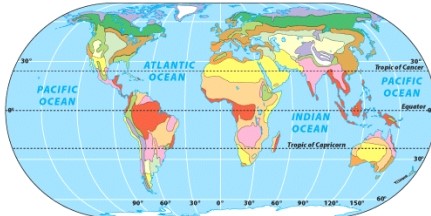
A) tropical savanna.
B) boreal forest.
C) hot and dry desert.
D) tropical rainforest.
E) tropical deciduous forest and scrub.
A) tropical savanna.
B) boreal forest.
C) hot and dry desert.
D) tropical rainforest.
E) tropical deciduous forest and scrub.
Question
Question
Question
Question
Question
Question
The biome shaded in red on the map is: 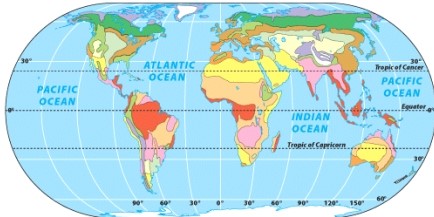
A) tropical savanna
B) tropical deciduous forest and scrub
C) tundra
D) hot and dry desert
E) tropical rainforest
A) tropical savanna
B) tropical deciduous forest and scrub
C) tundra
D) hot and dry desert
E) tropical rainforest
Question
Question
Question
Question
The biome shaded in burnt orange on the map is 
A) midlatitude deciduous forest.
B) midlatitude coniferous forest.
C) boreal forest.
D) midlatitude grassland.
E) tropical deciduous forest and scrub.
A) midlatitude deciduous forest.
B) midlatitude coniferous forest.
C) boreal forest.
D) midlatitude grassland.
E) tropical deciduous forest and scrub.
Question
Question
Question
Question
Question
Question
Question
Question
Question
Question
Question
Question
Question
Question
Question
Question
Question
Question
Question
Question
Question
Question
The biome shaded in yellow on the map is 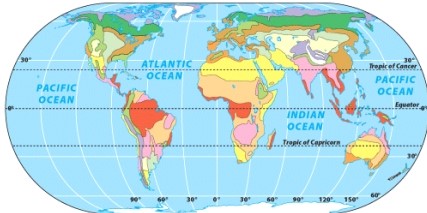
A) midlatitude deciduous forest.
B) midlatitude coniferous forest.
C) boreal forest.
D) midlatitude grassland.
E) hot and dry desert.
A) midlatitude deciduous forest.
B) midlatitude coniferous forest.
C) boreal forest.
D) midlatitude grassland.
E) hot and dry desert.
Question
Question
Question
Question
The biome shaded in white on the map is 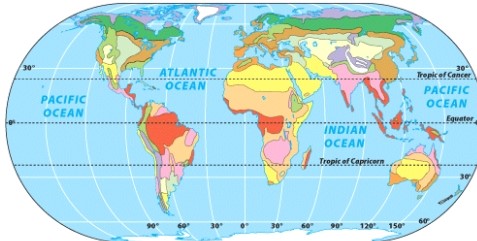
A) tundra.
B) tropical rainforest.
C) arctic and alpine ice.
D) semi-arid and cold desert.
E) boreal forest.
A) tundra.
B) tropical rainforest.
C) arctic and alpine ice.
D) semi-arid and cold desert.
E) boreal forest.
Question
Question
Question
Question
Question
Question
Question
Question
Question
Question
Question
Question
Question
The biome shaded in purple on the map is 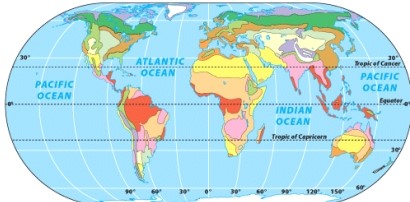
A) semi-arid and cold desert.
B) midlatitude grassland.
C) boreal forest.
D) tundra.
E) arctic and alpine ice.
A) semi-arid and cold desert.
B) midlatitude grassland.
C) boreal forest.
D) tundra.
E) arctic and alpine ice.
Question
Question
Question
Question
The biome shaded in off-white on the map is 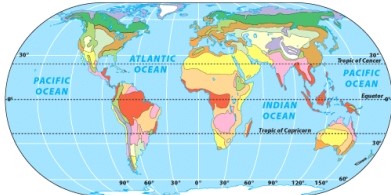
A) midlatitude coniferous forest.
B) semi-arid and cold desert.
C) Mediterranean woodland and shrub.
D) midlatitude grassland.
E) hot and dry desert.
A) midlatitude coniferous forest.
B) semi-arid and cold desert.
C) Mediterranean woodland and shrub.
D) midlatitude grassland.
E) hot and dry desert.
Question
Question

Unlock Deck
Sign up to unlock the cards in this deck!
Unlock Deck
Unlock Deck
1/153

Play

Full screen (f)
Deck 10: Plant Geography
1
Which of the following SECONDARY factors influence the geographic distribution of vegetation?
A) climate
B) geology
C) soils
D) landscape position
E) human behavior
A) climate
B) geology
C) soils
D) landscape position
E) human behavior
B,C,D,E
2
The biomes of the tropical monsoon climate are
A) tropical rainforest and hot desert.
B) tropical deciduous forest and scrub and tropical rainforest.
C) boreal forest and midlatitude coniferous forest.
D) Mediterranean woodland and shrub and midlatitude coniferous forest.
E) tundra and tropical savanna.
A) tropical rainforest and hot desert.
B) tropical deciduous forest and scrub and tropical rainforest.
C) boreal forest and midlatitude coniferous forest.
D) Mediterranean woodland and shrub and midlatitude coniferous forest.
E) tundra and tropical savanna.
B
3
From the ground up,the layers of a tropical rainforest are
A) ground layer, emergents, understory, canopy.
B) ground layer, canopy, understory, emergents.
C) understory, ground layer, emergent, canopy.
D) understory, ground layer, canopy, emergents.
E) ground layer, understory, canopy, emergents.
A) ground layer, emergents, understory, canopy.
B) ground layer, canopy, understory, emergents.
C) understory, ground layer, emergent, canopy.
D) understory, ground layer, canopy, emergents.
E) ground layer, understory, canopy, emergents.
E
4
Select all of the following reasons that plants are important to humans.
A) Plants convert carbon dioxide to oxygen.
B) Plants store carbon dioxide.
C) Plants produce carbohydrates.
D) Plants act as a food source.
E) Plants store carbohydrates.
A) Plants convert carbon dioxide to oxygen.
B) Plants store carbon dioxide.
C) Plants produce carbohydrates.
D) Plants act as a food source.
E) Plants store carbohydrates.
Unlock Deck
Unlock for access to all 153 flashcards in this deck.
Unlock Deck
k this deck
5
Scientists who study plant production are
A) pedologists.
B) meteorologists.
C) botanists.
D) geologists.
E) climatologists.
A) pedologists.
B) meteorologists.
C) botanists.
D) geologists.
E) climatologists.
Unlock Deck
Unlock for access to all 153 flashcards in this deck.
Unlock Deck
k this deck
6
The transition area where two or more ecosystems merge is the
A) adret slope
B) biomass
C) ulac slope
D) humus
E) ecotone
A) adret slope
B) biomass
C) ulac slope
D) humus
E) ecotone
Unlock Deck
Unlock for access to all 153 flashcards in this deck.
Unlock Deck
k this deck
7
The conversion of solar radiation into chemical energy by plants that releases oxygen is called
A) plant succession.
B) photosynthesis.
C) dendrochronology.
D) deforestation.
E) podzolization.
A) plant succession.
B) photosynthesis.
C) dendrochronology.
D) deforestation.
E) podzolization.
Unlock Deck
Unlock for access to all 153 flashcards in this deck.
Unlock Deck
k this deck
8
The complex of living communities maintained by the climate of a region and characterized by a distinctive type of vegetation is a(n)
A) biomass.
B) biome.
C) humus.
D) phytoplankton.
E) ecotone.
A) biomass.
B) biome.
C) humus.
D) phytoplankton.
E) ecotone.
Unlock Deck
Unlock for access to all 153 flashcards in this deck.
Unlock Deck
k this deck
9
The vegetation that would occur naturally within a specific area if no human influence occurred is the
A) potential evapotranspiration.
B) actual evapotranspiration.
C) potentiometric surface.
D) potential natural vegetation.
E) ecotone.
A) potential evapotranspiration.
B) actual evapotranspiration.
C) potentiometric surface.
D) potential natural vegetation.
E) ecotone.
Unlock Deck
Unlock for access to all 153 flashcards in this deck.
Unlock Deck
k this deck
10
Microscopic plants that grow in the upper part of the ocean where sunlight penetrates are
A) phytoplankton.
B) xerophytes.
C) epiphytes.
D) detritus.
E) ecotones.
A) phytoplankton.
B) xerophytes.
C) epiphytes.
D) detritus.
E) ecotones.
Unlock Deck
Unlock for access to all 153 flashcards in this deck.
Unlock Deck
k this deck
11
Woody vines that are rooted in the ground and climb trees are
A) lianas
B) taiga
C) chaparral
D) epiphytes
E) pampas
A) lianas
B) taiga
C) chaparral
D) epiphytes
E) pampas
Unlock Deck
Unlock for access to all 153 flashcards in this deck.
Unlock Deck
k this deck
12
Dense biomass and tremendous species diversity characterize the
A) midlatitude forests
B) boreal forests
C) tropical forests
D) deserts
E) grasslands
A) midlatitude forests
B) boreal forests
C) tropical forests
D) deserts
E) grasslands
Unlock Deck
Unlock for access to all 153 flashcards in this deck.
Unlock Deck
k this deck
13
Which of the follow are types of forest biomes?
A) boreal forest
B) tropical savanna
C) Mediterranean woodland and shrub
D) tropical rainforest
E) midlatitude deciduous forest
A) boreal forest
B) tropical savanna
C) Mediterranean woodland and shrub
D) tropical rainforest
E) midlatitude deciduous forest
Unlock Deck
Unlock for access to all 153 flashcards in this deck.
Unlock Deck
k this deck
14
Plants that are rooted in a host plant that they use for support are
A) lianas
B) taiga
C) chaparral
D) pampas
E) epiphytes
A) lianas
B) taiga
C) chaparral
D) pampas
E) epiphytes
Unlock Deck
Unlock for access to all 153 flashcards in this deck.
Unlock Deck
k this deck
15
The most important factor influencing the geographic distribution of vegetation is
A) geology.
B) human behavior.
C) climate.
D) pollution.
E) elevation.
A) geology.
B) human behavior.
C) climate.
D) pollution.
E) elevation.
Unlock Deck
Unlock for access to all 153 flashcards in this deck.
Unlock Deck
k this deck
16
Which of the following are broad biome types?
A) forest
B) tundra
C) desert
D) wetlands
E) grassland
A) forest
B) tundra
C) desert
D) wetlands
E) grassland
Unlock Deck
Unlock for access to all 153 flashcards in this deck.
Unlock Deck
k this deck
17
Select all of the trees that experience a seasonal leaf fall.
A) lianas
B) broadleaf
C) needleleaf
D) deciduous
E) evergreen
A) lianas
B) broadleaf
C) needleleaf
D) deciduous
E) evergreen
Unlock Deck
Unlock for access to all 153 flashcards in this deck.
Unlock Deck
k this deck
18
A community of plants,animals,and microorganisms that are linked by energy and nutrient flows is BEST called a(n)
A) biomass
B) riparian zone
C) xerophyte
D) ecotone
E) ecosystem
A) biomass
B) riparian zone
C) xerophyte
D) ecotone
E) ecosystem
Unlock Deck
Unlock for access to all 153 flashcards in this deck.
Unlock Deck
k this deck
19
The climate zone that BEST matches the tropical rainforest biome is
A) tropical rainforest
B) tropical monsoon
C) marine west coast
D) tropical savanna
E) hot low-latitude desert
A) tropical rainforest
B) tropical monsoon
C) marine west coast
D) tropical savanna
E) hot low-latitude desert
Unlock Deck
Unlock for access to all 153 flashcards in this deck.
Unlock Deck
k this deck
20
The dry weight of all living organisms in an area is the
A) treeline
B) biome
C) biomass
D) ecotone
E) ecosystem
A) treeline
B) biome
C) biomass
D) ecotone
E) ecosystem
Unlock Deck
Unlock for access to all 153 flashcards in this deck.
Unlock Deck
k this deck
21
The biome found in the Amazon basin,Indonesia,Cameroon,Vietnam,and the western coast of India is
A) tropical deciduous forest and scrub
B) tundra
C) tropical savanna
D) tropical rainforest
E) hot and dry desert
A) tropical deciduous forest and scrub
B) tundra
C) tropical savanna
D) tropical rainforest
E) hot and dry desert
Unlock Deck
Unlock for access to all 153 flashcards in this deck.
Unlock Deck
k this deck
22
The biome associated with southernmost Brazil,Zambia,northernmost Australia,and central India is
A) tropical deciduous forest and scrub.
B) tropical savanna.
C) tropical rainforest.
D) midlatitude grassland.
E) midlatitude deciduous forest.
A) tropical deciduous forest and scrub.
B) tropical savanna.
C) tropical rainforest.
D) midlatitude grassland.
E) midlatitude deciduous forest.
Unlock Deck
Unlock for access to all 153 flashcards in this deck.
Unlock Deck
k this deck
23
Which of the following are benefits of wildfires?
A) adding nutrients to the soil
B) controlling alien plants and insect pests
C) promoting new plant growth
D) removing undergrowth and germinating seeds
E) reducing ground cover and speeding storm runoff
A) adding nutrients to the soil
B) controlling alien plants and insect pests
C) promoting new plant growth
D) removing undergrowth and germinating seeds
E) reducing ground cover and speeding storm runoff
Unlock Deck
Unlock for access to all 153 flashcards in this deck.
Unlock Deck
k this deck
24
The climates BEST associated with midlatitude deciduous forests are
A) humid subtropical hot-summer, and humid continental hot-summers.
B) tropical savanna and Mediterranean dry-summer.
C) Mediterranean dry-summer and cold midlatitude steppe.
D) Mediterranean dry-summer and marine west-coast.
E) subarctic and humid continental mild-summer.
A) humid subtropical hot-summer, and humid continental hot-summers.
B) tropical savanna and Mediterranean dry-summer.
C) Mediterranean dry-summer and cold midlatitude steppe.
D) Mediterranean dry-summer and marine west-coast.
E) subarctic and humid continental mild-summer.
Unlock Deck
Unlock for access to all 153 flashcards in this deck.
Unlock Deck
k this deck
25
The biome shaded in pink on the map is
A) tropical savanna.
B) boreal forest.
C) hot and dry desert.
D) tropical rainforest.
E) tropical deciduous forest and scrub.
A) tropical savanna.
B) boreal forest.
C) hot and dry desert.
D) tropical rainforest.
E) tropical deciduous forest and scrub.
Unlock Deck
Unlock for access to all 153 flashcards in this deck.
Unlock Deck
k this deck
26
The climate that BEST matches with the Mediterranean woodland and shrub biome is
A) marine west-coast.
B) humid subtropical hot-summer.
C) hot low-latitude steppe.
D) tropical savanna.
E) Mediterranean dry-summer.
A) marine west-coast.
B) humid subtropical hot-summer.
C) hot low-latitude steppe.
D) tropical savanna.
E) Mediterranean dry-summer.
Unlock Deck
Unlock for access to all 153 flashcards in this deck.
Unlock Deck
k this deck
27
Needleleaf evergreen trees dominate in the
A) midlatitude deciduous forest.
B) midlatitude coniferous forest.
C) tropical savanna.
D) midlatitude grassland.
E) Mediterranean woodland and shrub.
A) midlatitude deciduous forest.
B) midlatitude coniferous forest.
C) tropical savanna.
D) midlatitude grassland.
E) Mediterranean woodland and shrub.
Unlock Deck
Unlock for access to all 153 flashcards in this deck.
Unlock Deck
k this deck
28
Midlatitude forests include
A) midlatitude deciduous forest and midlatitude coniferous forest.
B) Mediterranean woodland and shrub.
C) boreal forest.
D) BOTH a and b.
E) ALL of these.
A) midlatitude deciduous forest and midlatitude coniferous forest.
B) Mediterranean woodland and shrub.
C) boreal forest.
D) BOTH a and b.
E) ALL of these.
Unlock Deck
Unlock for access to all 153 flashcards in this deck.
Unlock Deck
k this deck
29
The dense broadleaf trees such as oak,elm,and maple that seasonally shed their foliage and are noted for the fall colors are the
A) boreal forest.
B) tropical rainforest.
C) tropical deciduous forest and scrub.
D) Mediterranean woodland and shrub.
E) midlatitude deciduous forest.
A) boreal forest.
B) tropical rainforest.
C) tropical deciduous forest and scrub.
D) Mediterranean woodland and shrub.
E) midlatitude deciduous forest.
Unlock Deck
Unlock for access to all 153 flashcards in this deck.
Unlock Deck
k this deck
30
The biome BEST associated with Southern California,Spain,Italy,and the southwest tip of Australia is
A) midlatitude deciduous forest.
B) midlatitude coniferous forest.
C) boreal forest.
D) midlatitude grassland.
E) Mediterranean woodland and shrub.
A) midlatitude deciduous forest.
B) midlatitude coniferous forest.
C) boreal forest.
D) midlatitude grassland.
E) Mediterranean woodland and shrub.
Unlock Deck
Unlock for access to all 153 flashcards in this deck.
Unlock Deck
k this deck
31
The biome shaded in red on the map is:
A) tropical savanna
B) tropical deciduous forest and scrub
C) tundra
D) hot and dry desert
E) tropical rainforest
A) tropical savanna
B) tropical deciduous forest and scrub
C) tundra
D) hot and dry desert
E) tropical rainforest
Unlock Deck
Unlock for access to all 153 flashcards in this deck.
Unlock Deck
k this deck
32
A common natural hazard in the area of Mediterranean woodland and shrub biome is
A) hurricanes.
B) blizzards.
C) tornadoes.
D) wildfires.
E) tsunamis.
A) hurricanes.
B) blizzards.
C) tornadoes.
D) wildfires.
E) tsunamis.
Unlock Deck
Unlock for access to all 153 flashcards in this deck.
Unlock Deck
k this deck
33
The vegetation that is a dense cover of woody shrubs and adapted to the dry season of its climate is BEST called
A) taiga.
B) pampas.
C) chaparral.
D) lianas.
E) xerophytes.
A) taiga.
B) pampas.
C) chaparral.
D) lianas.
E) xerophytes.
Unlock Deck
Unlock for access to all 153 flashcards in this deck.
Unlock Deck
k this deck
34
The greatest biomass and species diversity is in the
A) tropical deciduous forest and scrub.
B) tropical savanna.
C) tropical rainforest.
D) midlatitude deciduous forest.
E) boreal forest.
A) tropical deciduous forest and scrub.
B) tropical savanna.
C) tropical rainforest.
D) midlatitude deciduous forest.
E) boreal forest.
Unlock Deck
Unlock for access to all 153 flashcards in this deck.
Unlock Deck
k this deck
35
The biome shaded in burnt orange on the map is
A) midlatitude deciduous forest.
B) midlatitude coniferous forest.
C) boreal forest.
D) midlatitude grassland.
E) tropical deciduous forest and scrub.
A) midlatitude deciduous forest.
B) midlatitude coniferous forest.
C) boreal forest.
D) midlatitude grassland.
E) tropical deciduous forest and scrub.
Unlock Deck
Unlock for access to all 153 flashcards in this deck.
Unlock Deck
k this deck
36
The BEST climate association for tropical deciduous forest and scrub is
A) tropical rainforest
B) tropical monsoon and tropical savanna
C) hot low-latitude steppe
D) hot low-latitude desert
E) the hot low-latitude steppe and tropical savanna
A) tropical rainforest
B) tropical monsoon and tropical savanna
C) hot low-latitude steppe
D) hot low-latitude desert
E) the hot low-latitude steppe and tropical savanna
Unlock Deck
Unlock for access to all 153 flashcards in this deck.
Unlock Deck
k this deck
37
The biome BEST associated with Ohio and Indiana,France,United Kingdom,eastern China,and southeast Australia is
A) midlatitude deciduous forest.
B) midlatitude coniferous forest.
C) boreal forest.
D) midlatitude grassland.
E) Mediterranean woodland and shrub.
A) midlatitude deciduous forest.
B) midlatitude coniferous forest.
C) boreal forest.
D) midlatitude grassland.
E) Mediterranean woodland and shrub.
Unlock Deck
Unlock for access to all 153 flashcards in this deck.
Unlock Deck
k this deck
38
Midlatitude coniferous forests include
A) Douglas fir.
B) Ponderosa pine.
C) spruce.
D) mahogany.
E) redwoods.
A) Douglas fir.
B) Ponderosa pine.
C) spruce.
D) mahogany.
E) redwoods.
Unlock Deck
Unlock for access to all 153 flashcards in this deck.
Unlock Deck
k this deck
39
The climate BEST associated with midlatitude coniferous forest is
A) marine west-coast, humid continental mild-summer, and highland.
B) humid continental hot-summer and Mediterranean dry-summer.
C) humid continental hot-summer and highland.
D) cold midlatitude steppe and humid continental hot-summer.
E) subarctic and humid continental mild-summer.
A) marine west-coast, humid continental mild-summer, and highland.
B) humid continental hot-summer and Mediterranean dry-summer.
C) humid continental hot-summer and highland.
D) cold midlatitude steppe and humid continental hot-summer.
E) subarctic and humid continental mild-summer.
Unlock Deck
Unlock for access to all 153 flashcards in this deck.
Unlock Deck
k this deck
40
Tropical deciduous forest and scrub differ from tropical rainforest because
A) the colder temperatures cause leaf fall
B) the rainforest has more surface vegetation
C) leaf fall occurs during the dry season
D) the species diversity is much higher in the deciduous forest
E) ALL of these
A) the colder temperatures cause leaf fall
B) the rainforest has more surface vegetation
C) leaf fall occurs during the dry season
D) the species diversity is much higher in the deciduous forest
E) ALL of these
Unlock Deck
Unlock for access to all 153 flashcards in this deck.
Unlock Deck
k this deck
41
The biome of the Sahara,the Kalahari,the Mojave,and the Outback is
A) tundra.
B) tropical deciduous forest.
C) tropical rainforest.
D) tropical savanna.
E) hot and dry desert.
A) tundra.
B) tropical deciduous forest.
C) tropical rainforest.
D) tropical savanna.
E) hot and dry desert.
Unlock Deck
Unlock for access to all 153 flashcards in this deck.
Unlock Deck
k this deck
42
The biome BEST associated with Florida,coastal Washington and Oregon,and Lithuania is
A) midlatitude deciduous forest.
B) midlatitude coniferous forest.
C) boreal forest.
D) midlatitude grassland.
E) Mediterranean woodland and shrub.
A) midlatitude deciduous forest.
B) midlatitude coniferous forest.
C) boreal forest.
D) midlatitude grassland.
E) Mediterranean woodland and shrub.
Unlock Deck
Unlock for access to all 153 flashcards in this deck.
Unlock Deck
k this deck
43
Very small,waxy leaves that store moisture are called
A) lianas.
B) pioneer species.
C) hydrophytes.
D) succulents.
E) epiphytes.
A) lianas.
B) pioneer species.
C) hydrophytes.
D) succulents.
E) epiphytes.
Unlock Deck
Unlock for access to all 153 flashcards in this deck.
Unlock Deck
k this deck
44
The biome BEST associated with Kansas,northeastern Argentina,eastern Turkey,and central Kazakhstan is
A) semi-arid and cold desert.
B) tundra.
C) boreal forest.
D) midlatitude grassland.
E) Mediterranean woodland and shrub.
A) semi-arid and cold desert.
B) tundra.
C) boreal forest.
D) midlatitude grassland.
E) Mediterranean woodland and shrub.
Unlock Deck
Unlock for access to all 153 flashcards in this deck.
Unlock Deck
k this deck
45
Which of the following are associated with boreal forests?
A) spruce
B) pine
C) poplar
D) redwoods
E) fir
A) spruce
B) pine
C) poplar
D) redwoods
E) fir
Unlock Deck
Unlock for access to all 153 flashcards in this deck.
Unlock Deck
k this deck
46
The climate BEST associated with the hot and dry desert biome is
A) hot low-latitude desert.
B) tropical savanna.
C) cold midlatitude desert.
D) hot low-latitude steppe.
E) cold midlatitude steppe.
A) hot low-latitude desert.
B) tropical savanna.
C) cold midlatitude desert.
D) hot low-latitude steppe.
E) cold midlatitude steppe.
Unlock Deck
Unlock for access to all 153 flashcards in this deck.
Unlock Deck
k this deck
47
Desert vegetation includes
A) saguaro cacti.
B) creosote bushes.
C) tamarack.
D) mesquite.
E) sagebrush.
A) saguaro cacti.
B) creosote bushes.
C) tamarack.
D) mesquite.
E) sagebrush.
Unlock Deck
Unlock for access to all 153 flashcards in this deck.
Unlock Deck
k this deck
48
The biome with the LEAST diverse assemblage of plants is
A) tundra.
B) tropical savanna.
C) boreal forest.
D) hot and dry desert.
E) semi-arid and cold desert.
A) tundra.
B) tropical savanna.
C) boreal forest.
D) hot and dry desert.
E) semi-arid and cold desert.
Unlock Deck
Unlock for access to all 153 flashcards in this deck.
Unlock Deck
k this deck
49
The climate BEST associated with the midlatitude grassland biome is
A) subarctic.
B) cold midlatitude desert.
C) cold midlatitude steppe.
D) humid subtropical hot-summer.
E) marine west-coast.
A) subarctic.
B) cold midlatitude desert.
C) cold midlatitude steppe.
D) humid subtropical hot-summer.
E) marine west-coast.
Unlock Deck
Unlock for access to all 153 flashcards in this deck.
Unlock Deck
k this deck
50
Arguably,the biggest enemy to the redwood trees is
A) tornadoes.
B) flooding and tsunamis.
C) wildfire.
D) humans.
E) insect pests.
A) tornadoes.
B) flooding and tsunamis.
C) wildfire.
D) humans.
E) insect pests.
Unlock Deck
Unlock for access to all 153 flashcards in this deck.
Unlock Deck
k this deck
51
Wildfires are MOST beneficial to the tropical savanna biomes because they
A) reduce the number of herbivores.
B) reduce the shade because only the trees burn.
C) reduce the number of carnivores.
D) kill the harmful decomposers.
E) reduce dead vegetation and add soil nutrients.
A) reduce the number of herbivores.
B) reduce the shade because only the trees burn.
C) reduce the number of carnivores.
D) kill the harmful decomposers.
E) reduce dead vegetation and add soil nutrients.
Unlock Deck
Unlock for access to all 153 flashcards in this deck.
Unlock Deck
k this deck
52
The biome of Egypt,Saudi Arabia,Iran,northern Mexico,central Australia,and Namibia is
A) tundra.
B) tropical deciduous forest.
C) tropical rainforest.
D) tropical savanna.
E) hot and dry desert.
A) tundra.
B) tropical deciduous forest.
C) tropical rainforest.
D) tropical savanna.
E) hot and dry desert.
Unlock Deck
Unlock for access to all 153 flashcards in this deck.
Unlock Deck
k this deck
53
The climate most closely associated with the boreal forest is
A) humid continental hot-summer.
B) tundra.
C) marine west-coast.
D) subarctic.
E) Mediterranean dry-summer.
A) humid continental hot-summer.
B) tundra.
C) marine west-coast.
D) subarctic.
E) Mediterranean dry-summer.
Unlock Deck
Unlock for access to all 153 flashcards in this deck.
Unlock Deck
k this deck
54
The vegetation associated with the hot and dry desert biome is called
A) lianas.
B) pampas.
C) hydrophytes.
D) xerophytes.
E) epiphytes.
A) lianas.
B) pampas.
C) hydrophytes.
D) xerophytes.
E) epiphytes.
Unlock Deck
Unlock for access to all 153 flashcards in this deck.
Unlock Deck
k this deck
55
The climate that BEST matches with the tropical savanna biome is
A) hot low-latitude desert.
B) tropical savanna.
C) tropical rainforest.
D) tropical monsoon.
E) hot low-latitude steppe.
A) hot low-latitude desert.
B) tropical savanna.
C) tropical rainforest.
D) tropical monsoon.
E) hot low-latitude steppe.
Unlock Deck
Unlock for access to all 153 flashcards in this deck.
Unlock Deck
k this deck
56
Regional areas of midlatitude grasslands include
A) the Great Plains of the United States.
B) tiaga of Canada.
C) pampas of Argentina.
D) steppe of Russia.
E) steppe of Mongolia.
A) the Great Plains of the United States.
B) tiaga of Canada.
C) pampas of Argentina.
D) steppe of Russia.
E) steppe of Mongolia.
Unlock Deck
Unlock for access to all 153 flashcards in this deck.
Unlock Deck
k this deck
57
The biome shaded in yellow on the map is
A) midlatitude deciduous forest.
B) midlatitude coniferous forest.
C) boreal forest.
D) midlatitude grassland.
E) hot and dry desert.
A) midlatitude deciduous forest.
B) midlatitude coniferous forest.
C) boreal forest.
D) midlatitude grassland.
E) hot and dry desert.
Unlock Deck
Unlock for access to all 153 flashcards in this deck.
Unlock Deck
k this deck
58
The biome of south central Brazil,Mali,Niger,Mozambique,and western Queensland of Australia is
A) tundra.
B) tropical savanna.
C) boreal forest.
D) semi-arid and cold desert.
E) tropical rainforest.
A) tundra.
B) tropical savanna.
C) boreal forest.
D) semi-arid and cold desert.
E) tropical rainforest.
Unlock Deck
Unlock for access to all 153 flashcards in this deck.
Unlock Deck
k this deck
59
The climate BEST associated with the semi-arid and cold desert biome is
A) cold midlatitude desert.
B) Mediterranean dry-summer.
C) subarctic.
D) hot low-latitude steppe.
E) hot low-latitude desert.
A) cold midlatitude desert.
B) Mediterranean dry-summer.
C) subarctic.
D) hot low-latitude steppe.
E) hot low-latitude desert.
Unlock Deck
Unlock for access to all 153 flashcards in this deck.
Unlock Deck
k this deck
60
The approximate percent of the Earth's land area covered by desert biome is
A) 10.
B) 20.
C) 30.
D) 38.
E) 48.
A) 10.
B) 20.
C) 30.
D) 38.
E) 48.
Unlock Deck
Unlock for access to all 153 flashcards in this deck.
Unlock Deck
k this deck
61
The biome shaded in white on the map is
A) tundra.
B) tropical rainforest.
C) arctic and alpine ice.
D) semi-arid and cold desert.
E) boreal forest.
A) tundra.
B) tropical rainforest.
C) arctic and alpine ice.
D) semi-arid and cold desert.
E) boreal forest.
Unlock Deck
Unlock for access to all 153 flashcards in this deck.
Unlock Deck
k this deck
62
The impact of increased slope includes
A) faster runoff.
B) less water absorption.
C) thinner soils.
D) fewer soil nutrients.
E) ALL of these
A) faster runoff.
B) less water absorption.
C) thinner soils.
D) fewer soil nutrients.
E) ALL of these
Unlock Deck
Unlock for access to all 153 flashcards in this deck.
Unlock Deck
k this deck
63
The change in environmental characteristics that occur with respect to altitude is
A) gradient.
B) riparian zonation.
C) vertical zonation.
D) plant succession.
E) deforestation.
A) gradient.
B) riparian zonation.
C) vertical zonation.
D) plant succession.
E) deforestation.
Unlock Deck
Unlock for access to all 153 flashcards in this deck.
Unlock Deck
k this deck
64
The natural change in a biome that occurs within a landscape over a period of time is
A) riparian growth.
B) vertical zonation.
C) the treeline.
D) desertification.
E) plant succession.
A) riparian growth.
B) vertical zonation.
C) the treeline.
D) desertification.
E) plant succession.
Unlock Deck
Unlock for access to all 153 flashcards in this deck.
Unlock Deck
k this deck
65
The climate BEST associated with the tundra biome is
A) tundra.
B) subarctic.
C) ice cap.
D) humid continental mild-summer.
E) cold midlatitude desert.
A) tundra.
B) subarctic.
C) ice cap.
D) humid continental mild-summer.
E) cold midlatitude desert.
Unlock Deck
Unlock for access to all 153 flashcards in this deck.
Unlock Deck
k this deck
66
The biome BEST associated with northern Arizona,Uzbekistan,and Mongolia is
A) hot and dry desert.
B) midlatitude grassland.
C) Mediterranean woodland and shrub.
D) midlatitude coniferous forest.
E) semi-arid and cold desert.
A) hot and dry desert.
B) midlatitude grassland.
C) Mediterranean woodland and shrub.
D) midlatitude coniferous forest.
E) semi-arid and cold desert.
Unlock Deck
Unlock for access to all 153 flashcards in this deck.
Unlock Deck
k this deck
67
The biome along the north coast of North America and Eurasia and coastal Greenland is
A) semi-arid and cold desert.
B) midlatitude grassland.
C) boreal forest.
D) tundra.
E) arctic and alpine ice.
A) semi-arid and cold desert.
B) midlatitude grassland.
C) boreal forest.
D) tundra.
E) arctic and alpine ice.
Unlock Deck
Unlock for access to all 153 flashcards in this deck.
Unlock Deck
k this deck
68
The orientation of a slope is called its
A) aspect.
B) gradient.
C) rise.
D) run.
E) microclimate.
A) aspect.
B) gradient.
C) rise.
D) run.
E) microclimate.
Unlock Deck
Unlock for access to all 153 flashcards in this deck.
Unlock Deck
k this deck
69
The temperature associated with the limit of tree growth is
A) 0°C (32°F).
B) 2.8°C (37°F).
C) 6.5°C (43.7°F).
D) 12.5°C (54.5°F).
E) 14.5°C (58.1°F).
A) 0°C (32°F).
B) 2.8°C (37°F).
C) 6.5°C (43.7°F).
D) 12.5°C (54.5°F).
E) 14.5°C (58.1°F).
Unlock Deck
Unlock for access to all 153 flashcards in this deck.
Unlock Deck
k this deck
70
The boundary that limits the growth of trees by altitude is
A) plant succession.
B) the riparian zone.
C) Wallace's Line.
D) Weber's Line.
E) the treeline.
A) plant succession.
B) the riparian zone.
C) Wallace's Line.
D) Weber's Line.
E) the treeline.
Unlock Deck
Unlock for access to all 153 flashcards in this deck.
Unlock Deck
k this deck
71
The climate BEST associated with the arctic and alpine ice is
A) subarctic and humid continental mild-summer.
B) ice cap and highland.
C) tundra and subarctic.
D) subarctic and marine west-coast.
E) tropical rainforest and highland.
A) subarctic and humid continental mild-summer.
B) ice cap and highland.
C) tundra and subarctic.
D) subarctic and marine west-coast.
E) tropical rainforest and highland.
Unlock Deck
Unlock for access to all 153 flashcards in this deck.
Unlock Deck
k this deck
72
The slope that faces the sun most directly is called the
A) adret slope.
B) ubac slope.
C) gradient.
D) rise.
E) run.
A) adret slope.
B) ubac slope.
C) gradient.
D) rise.
E) run.
Unlock Deck
Unlock for access to all 153 flashcards in this deck.
Unlock Deck
k this deck
73
The climate BEST associated with tundra vegetation is
A) subarctic and humid continental mild-summer.
B) subarctic and cold midlatitude steppe.
C) subarctic and ice cap.
D) tundra and marine west-coast.
E) tundra and highland.
A) subarctic and humid continental mild-summer.
B) subarctic and cold midlatitude steppe.
C) subarctic and ice cap.
D) tundra and marine west-coast.
E) tundra and highland.
Unlock Deck
Unlock for access to all 153 flashcards in this deck.
Unlock Deck
k this deck
74
The biome shaded in purple on the map is
A) semi-arid and cold desert.
B) midlatitude grassland.
C) boreal forest.
D) tundra.
E) arctic and alpine ice.
A) semi-arid and cold desert.
B) midlatitude grassland.
C) boreal forest.
D) tundra.
E) arctic and alpine ice.
Unlock Deck
Unlock for access to all 153 flashcards in this deck.
Unlock Deck
k this deck
75
The biome associated with parts of the Himalayas,central Greenland,and Antarctica is
A) semi-arid and cold desert.
B) midlatitude coniferous forest.
C) boreal forest.
D) arctic and alpine ice.
E) tundra.
A) semi-arid and cold desert.
B) midlatitude coniferous forest.
C) boreal forest.
D) arctic and alpine ice.
E) tundra.
Unlock Deck
Unlock for access to all 153 flashcards in this deck.
Unlock Deck
k this deck
76
The climate over a small region is the
A) mesoclimate.
B) macroclimate.
C) microclimate.
D) paleoclimate.
E) climax community.
A) mesoclimate.
B) macroclimate.
C) microclimate.
D) paleoclimate.
E) climax community.
Unlock Deck
Unlock for access to all 153 flashcards in this deck.
Unlock Deck
k this deck
77
A definable assemblage of plants that occupy a large region of geographic space is BEST called a(n)
A) biomass.
B) biome.
C) pampas.
D) liana.
E) ecotone.
A) biomass.
B) biome.
C) pampas.
D) liana.
E) ecotone.
Unlock Deck
Unlock for access to all 153 flashcards in this deck.
Unlock Deck
k this deck
78
The biome shaded in off-white on the map is
A) midlatitude coniferous forest.
B) semi-arid and cold desert.
C) Mediterranean woodland and shrub.
D) midlatitude grassland.
E) hot and dry desert.
A) midlatitude coniferous forest.
B) semi-arid and cold desert.
C) Mediterranean woodland and shrub.
D) midlatitude grassland.
E) hot and dry desert.
Unlock Deck
Unlock for access to all 153 flashcards in this deck.
Unlock Deck
k this deck
79
Tundra vegetation includes
A) trees.
B) grasses.
C) shrubs.
D) mosses and lichen.
E) sedges.
A) trees.
B) grasses.
C) shrubs.
D) mosses and lichen.
E) sedges.
Unlock Deck
Unlock for access to all 153 flashcards in this deck.
Unlock Deck
k this deck
80
If new land forms or an area is so disturbed that soils are removed or destroyed,new growth begins as
A) pioneer succession.
B) primary succession.
C) secondary succession.
D) climax succession.
E) riparian growth.
A) pioneer succession.
B) primary succession.
C) secondary succession.
D) climax succession.
E) riparian growth.
Unlock Deck
Unlock for access to all 153 flashcards in this deck.
Unlock Deck
k this deck
Unlock Deck
Unlock for access to all 153 flashcards in this deck.






