







 Chat with AI

Deck 20: From Business Culture to Great Depression: the Twenties, 1920-1932
Full screen (f)

Question

Question
Flappers (1926)
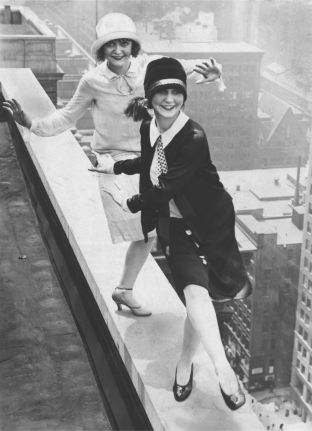
The image best depicts conflicts over which of the following that emerged in the 1920s?
A) immigration
B) gender roles
C) religion
D) science
The image best depicts conflicts over which of the following that emerged in the 1920s?
A) immigration
B) gender roles
C) religion
D) science
Question
Question
Question
Question
Question
Question
Question
Question
Flappers (1926)
Women like those in the image were likely to experience frustration over the limitations posed by
A) a feminist backlash.
B) a glass ceiling in the workplace.
C) the cult of domesticity.
D) a double standard for men's and women's social behavior.
Women like those in the image were likely to experience frustration over the limitations posed by
A) a feminist backlash.
B) a glass ceiling in the workplace.
C) the cult of domesticity.
D) a double standard for men's and women's social behavior.
Question
Question
Question
Question
Question
Flappers (1926)
What newly granted right were women like the pair in this image likely to have taken advantage of?
A) access to birth control
B) suffrage rights
C) abortion rights
D) equal pay in jobs
What newly granted right were women like the pair in this image likely to have taken advantage of?
A) access to birth control
B) suffrage rights
C) abortion rights
D) equal pay in jobs
Question
Question
Question
Question
Question
Question
Question
Question
Question
Question
Question
Question
Question
Question
Question
Question
Question
Question
Question
Question
Question
Question
Question
Question
Question
Question
Question
Question
Question
Question
Question
Question
Question
Question
Question
Question
Question
Question
Question
Question
Question
Question
Question
Question
Question
Question
Question
Question
Question
Question
Question
Question
Question
Question
Question

Unlock Deck
Sign up to unlock the cards in this deck!
Unlock Deck
Unlock Deck
1/70

Play

Full screen (f)
Deck 20: From Business Culture to Great Depression: the Twenties, 1920-1932
1
In the 1920s, movies, radios, and phonographs:
A) were all out of reach of most consumers.
B) helped create and spread a new celebrity culture.
C) were not yet available.
D) appealed only to women.
A) were all out of reach of most consumers.
B) helped create and spread a new celebrity culture.
C) were not yet available.
D) appealed only to women.
helped create and spread a new celebrity culture.
2
Flappers (1926)
The image best depicts conflicts over which of the following that emerged in the 1920s?
A) immigration
B) gender roles
C) religion
D) science
The image best depicts conflicts over which of the following that emerged in the 1920s?
A) immigration
B) gender roles
C) religion
D) science
gender roles
3
The Case against the Reds (1920)
A. Mitchell Palmer
One of the chief incentives for the present activity of the Department of Justice against the "Reds" has been the hope that American citizens will, themselves, become voluntary agents for us, in a vast organization for mutual defense against the sinister agitation of men and women aliens, who appear to be either in the pay or under the spell of Trotzky and Lenine [sic]. . . .
The Department of Justice will pursue the attack of the "Reds" upon the Government of the United States with vigilance, and no alien, advocating the overthrow of existing law and order in this country, shall escape arrest and prompt deportation.
It is my belief that while they have stirred discontent in our midst, while they have caused irritating strikes, and while they have infected our social idea with disease of their own minds and their unclean morals, we can get rid of them! And not until we have done so shall we have removed the menace of Bolshevism for good.
Which of the following most directly responded to the threats described and identified by Palmer?
A) immigration laws that reduced southern and eastern European immigration
B) clashes between fundamentalism and modernism during the 1920s
C) the rise of the Ku Klux Klan
D) the presidential administration's goals to "return to normalcy"
A. Mitchell Palmer
One of the chief incentives for the present activity of the Department of Justice against the "Reds" has been the hope that American citizens will, themselves, become voluntary agents for us, in a vast organization for mutual defense against the sinister agitation of men and women aliens, who appear to be either in the pay or under the spell of Trotzky and Lenine [sic]. . . .
The Department of Justice will pursue the attack of the "Reds" upon the Government of the United States with vigilance, and no alien, advocating the overthrow of existing law and order in this country, shall escape arrest and prompt deportation.
It is my belief that while they have stirred discontent in our midst, while they have caused irritating strikes, and while they have infected our social idea with disease of their own minds and their unclean morals, we can get rid of them! And not until we have done so shall we have removed the menace of Bolshevism for good.
Which of the following most directly responded to the threats described and identified by Palmer?
A) immigration laws that reduced southern and eastern European immigration
B) clashes between fundamentalism and modernism during the 1920s
C) the rise of the Ku Klux Klan
D) the presidential administration's goals to "return to normalcy"
immigration laws that reduced southern and eastern European immigration
4
Labor unions lost members in the 1920s for all of the following reasons EXCEPT:
A) companies supported propaganda campaigns that linked unions with socialism.
B) companies began to adopt a program of "welfare capitalism."
C) labor unions were tarnished by the 1919 labor upsurge.
D) through collective bargaining, labor unions had secured a national eight-hour day.
A) companies supported propaganda campaigns that linked unions with socialism.
B) companies began to adopt a program of "welfare capitalism."
C) labor unions were tarnished by the 1919 labor upsurge.
D) through collective bargaining, labor unions had secured a national eight-hour day.
Unlock Deck
Unlock for access to all 70 flashcards in this deck.
Unlock Deck
k this deck
5
How was American life different in the 1920s than in the years prior?
A) In this new era of consumerism, Americans drank more heavily.
B) Women's suffrage led to a new wave of political activism among both women and men.
C) The strict standards of morality imposed by the fundamentalist revival meant that Americans had less sex.
D) Although Americans worked hard in an increasingly industrial world, they also enjoyed more vacations.
A) In this new era of consumerism, Americans drank more heavily.
B) Women's suffrage led to a new wave of political activism among both women and men.
C) The strict standards of morality imposed by the fundamentalist revival meant that Americans had less sex.
D) Although Americans worked hard in an increasingly industrial world, they also enjoyed more vacations.
Unlock Deck
Unlock for access to all 70 flashcards in this deck.
Unlock Deck
k this deck
6
During the 1920s:
A) an estimated 40 percent of the population remained in poverty.
B) real wages rose faster than corporate profits.
C) wealth became more evenly distributed.
D) small auto companies flourished.
A) an estimated 40 percent of the population remained in poverty.
B) real wages rose faster than corporate profits.
C) wealth became more evenly distributed.
D) small auto companies flourished.
Unlock Deck
Unlock for access to all 70 flashcards in this deck.
Unlock Deck
k this deck
7
How did World War I's Committee on Public Information (CPI) inspire business in the 1920s?
A) The wartime experience proved that the best way to prevent overspeculation on the stock market was to inform the public of its dangers.
B) Business leaders hired private data collectors to measure the effects of propaganda on consumers.
C) The CPI's success suggested government intervention could have a positive impact on business growth.
D) Public relations departments were established in many firms to counteract bad publicity.
A) The wartime experience proved that the best way to prevent overspeculation on the stock market was to inform the public of its dangers.
B) Business leaders hired private data collectors to measure the effects of propaganda on consumers.
C) The CPI's success suggested government intervention could have a positive impact on business growth.
D) Public relations departments were established in many firms to counteract bad publicity.
Unlock Deck
Unlock for access to all 70 flashcards in this deck.
Unlock Deck
k this deck
8
Which of the following statements about consumer goods in the 1920s is NOT accurate?
A) Home products, such as washing machines and vacuum cleaners, failed to decrease the demand for domestic labor.
B) Advertising created a desire for buyers to purchase new goods.
C) Going into debt for purchases became widely accepted in American society.
D) The mass-produced radio inspired a new mass culture celebrating sports figures such as Jack Dempsey.
A) Home products, such as washing machines and vacuum cleaners, failed to decrease the demand for domestic labor.
B) Advertising created a desire for buyers to purchase new goods.
C) Going into debt for purchases became widely accepted in American society.
D) The mass-produced radio inspired a new mass culture celebrating sports figures such as Jack Dempsey.
Unlock Deck
Unlock for access to all 70 flashcards in this deck.
Unlock Deck
k this deck
9
Which of the following statements about farm mechanization is FALSE?
A) It encouraged an increase in the use of migrant labor on factory farms.
B) It transformed the scale of agricultural production, which led to huge irrigation projects in the West.
C) It helped delay the onset of the "Dust Bowl" on the Great Plains thanks to use of the new steam tractor, which mitigated the effects of soil aridity.
D) It included innovations such as the disk plow, which made planting easier.
A) It encouraged an increase in the use of migrant labor on factory farms.
B) It transformed the scale of agricultural production, which led to huge irrigation projects in the West.
C) It helped delay the onset of the "Dust Bowl" on the Great Plains thanks to use of the new steam tractor, which mitigated the effects of soil aridity.
D) It included innovations such as the disk plow, which made planting easier.
Unlock Deck
Unlock for access to all 70 flashcards in this deck.
Unlock Deck
k this deck
10
Flappers (1926)
Women like those in the image were likely to experience frustration over the limitations posed by
A) a feminist backlash.
B) a glass ceiling in the workplace.
C) the cult of domesticity.
D) a double standard for men's and women's social behavior.
Women like those in the image were likely to experience frustration over the limitations posed by
A) a feminist backlash.
B) a glass ceiling in the workplace.
C) the cult of domesticity.
D) a double standard for men's and women's social behavior.
Unlock Deck
Unlock for access to all 70 flashcards in this deck.
Unlock Deck
k this deck
11
The automobile:
A) spurred growth in other industries such as tourism and steel production.
B) was actually not affordable to the vast majority of Americans until the 1930s.
C) limited the expansion of most other sectors of the American economy in the 1920s, due to U.S. manufacturers' focus on outpacing the rest of the world in its production.
D) exacerbated the divide between rural and urban America in the 1920s.
A) spurred growth in other industries such as tourism and steel production.
B) was actually not affordable to the vast majority of Americans until the 1930s.
C) limited the expansion of most other sectors of the American economy in the 1920s, due to U.S. manufacturers' focus on outpacing the rest of the world in its production.
D) exacerbated the divide between rural and urban America in the 1920s.
Unlock Deck
Unlock for access to all 70 flashcards in this deck.
Unlock Deck
k this deck
12
The Sacco-Vanzetti case:
A) revealed the power of the Massachusetts governor to intervene in controversial criminal cases.
B) for Italian-Americans, symbolized the strength of nativist prejudices in America.
C) played out in an atmosphere of fierce anti-radicalism in the United States.
D) B and C
A) revealed the power of the Massachusetts governor to intervene in controversial criminal cases.
B) for Italian-Americans, symbolized the strength of nativist prejudices in America.
C) played out in an atmosphere of fierce anti-radicalism in the United States.
D) B and C
Unlock Deck
Unlock for access to all 70 flashcards in this deck.
Unlock Deck
k this deck
13
The Case against the Reds (1920)
A. Mitchell Palmer
One of the chief incentives for the present activity of the Department of Justice against the "Reds" has been the hope that American citizens will, themselves, become voluntary agents for us, in a vast organization for mutual defense against the sinister agitation of men and women aliens, who appear to be either in the pay or under the spell of Trotzky and Lenine [sic]. . . .
The Department of Justice will pursue the attack of the "Reds" upon the Government of the United States with vigilance, and no alien, advocating the overthrow of existing law and order in this country, shall escape arrest and prompt deportation.
It is my belief that while they have stirred discontent in our midst, while they have caused irritating strikes, and while they have infected our social idea with disease of their own minds and their unclean morals, we can get rid of them! And not until we have done so shall we have removed the menace of Bolshevism for good.
Which later event was most reminiscent of the United States' government's disposition toward communism that is described in this passage?
A) the effort to reconstruct Japan
B) curtailment of labor union rights after World War II
C) McCarthyism
D) escalation of conflict with Cuba in the 1960s
A. Mitchell Palmer
One of the chief incentives for the present activity of the Department of Justice against the "Reds" has been the hope that American citizens will, themselves, become voluntary agents for us, in a vast organization for mutual defense against the sinister agitation of men and women aliens, who appear to be either in the pay or under the spell of Trotzky and Lenine [sic]. . . .
The Department of Justice will pursue the attack of the "Reds" upon the Government of the United States with vigilance, and no alien, advocating the overthrow of existing law and order in this country, shall escape arrest and prompt deportation.
It is my belief that while they have stirred discontent in our midst, while they have caused irritating strikes, and while they have infected our social idea with disease of their own minds and their unclean morals, we can get rid of them! And not until we have done so shall we have removed the menace of Bolshevism for good.
Which later event was most reminiscent of the United States' government's disposition toward communism that is described in this passage?
A) the effort to reconstruct Japan
B) curtailment of labor union rights after World War II
C) McCarthyism
D) escalation of conflict with Cuba in the 1960s
Unlock Deck
Unlock for access to all 70 flashcards in this deck.
Unlock Deck
k this deck
14
American farmers in the 1920s:
A) managed to remain in business due to time-saving mechanization.
B) understood that prices for produce would remain high, despite the end of World War I.
C) decreased their output of crops, due to declining demand on the American and overseas markets.
D) increasingly migrated out of rural areas.
A) managed to remain in business due to time-saving mechanization.
B) understood that prices for produce would remain high, despite the end of World War I.
C) decreased their output of crops, due to declining demand on the American and overseas markets.
D) increasingly migrated out of rural areas.
Unlock Deck
Unlock for access to all 70 flashcards in this deck.
Unlock Deck
k this deck
15
Flappers (1926)
What newly granted right were women like the pair in this image likely to have taken advantage of?
A) access to birth control
B) suffrage rights
C) abortion rights
D) equal pay in jobs
What newly granted right were women like the pair in this image likely to have taken advantage of?
A) access to birth control
B) suffrage rights
C) abortion rights
D) equal pay in jobs
Unlock Deck
Unlock for access to all 70 flashcards in this deck.
Unlock Deck
k this deck
16
All of the statements about Henry Ford's "Fordlandia" are true EXCEPT:
A) Fordlandia was a success.
B) Fordlandia was a town created by Henry Ford in the Amazon.
C) Ford built Fordlandia to create a supply of rubber for tires.
D) Fordlandia is an example of how American corporations spread across the globe in the 1920s.
A) Fordlandia was a success.
B) Fordlandia was a town created by Henry Ford in the Amazon.
C) Ford built Fordlandia to create a supply of rubber for tires.
D) Fordlandia is an example of how American corporations spread across the globe in the 1920s.
Unlock Deck
Unlock for access to all 70 flashcards in this deck.
Unlock Deck
k this deck
17
The Case against the Reds (1920)
A. Mitchell Palmer
One of the chief incentives for the present activity of the Department of Justice against the "Reds" has been the hope that American citizens will, themselves, become voluntary agents for us, in a vast organization for mutual defense against the sinister agitation of men and women aliens, who appear to be either in the pay or under the spell of Trotzky and Lenine [sic]. . . .
The Department of Justice will pursue the attack of the "Reds" upon the Government of the United States with vigilance, and no alien, advocating the overthrow of existing law and order in this country, shall escape arrest and prompt deportation.
It is my belief that while they have stirred discontent in our midst, while they have caused irritating strikes, and while they have infected our social idea with disease of their own minds and their unclean morals, we can get rid of them! And not until we have done so shall we have removed the menace of Bolshevism for good.
Palmer fulfilled his pledge to fight communism by
A) prohibiting speech that criticized capitalism.
B) deporting large numbers of aliens and undesirables.
C) rounding up strikers and the unemployed.
D) advocating war against Russia.
A. Mitchell Palmer
One of the chief incentives for the present activity of the Department of Justice against the "Reds" has been the hope that American citizens will, themselves, become voluntary agents for us, in a vast organization for mutual defense against the sinister agitation of men and women aliens, who appear to be either in the pay or under the spell of Trotzky and Lenine [sic]. . . .
The Department of Justice will pursue the attack of the "Reds" upon the Government of the United States with vigilance, and no alien, advocating the overthrow of existing law and order in this country, shall escape arrest and prompt deportation.
It is my belief that while they have stirred discontent in our midst, while they have caused irritating strikes, and while they have infected our social idea with disease of their own minds and their unclean morals, we can get rid of them! And not until we have done so shall we have removed the menace of Bolshevism for good.
Palmer fulfilled his pledge to fight communism by
A) prohibiting speech that criticized capitalism.
B) deporting large numbers of aliens and undesirables.
C) rounding up strikers and the unemployed.
D) advocating war against Russia.
Unlock Deck
Unlock for access to all 70 flashcards in this deck.
Unlock Deck
k this deck
18
Why did General Motors (GM) surpass Ford in sales of automobiles in the 1920s?
A) GM models were cheaper than the Ford Model T.
B) GM applied mass production techniques with which Ford was unfamiliar.
C) GM models were bare-bones compared to the much fancier Ford cars.
D) GM successfully marketed different styles and designs.
A) GM models were cheaper than the Ford Model T.
B) GM applied mass production techniques with which Ford was unfamiliar.
C) GM models were bare-bones compared to the much fancier Ford cars.
D) GM successfully marketed different styles and designs.
Unlock Deck
Unlock for access to all 70 flashcards in this deck.
Unlock Deck
k this deck
19
During the 1920s, American multinational corporations:
A) resisted new ventures abroad in the aftermath of World War I.
B) demonstrated limited interest in controlling raw materials in other countries.
C) produced few automobiles for international markets.
D) extended their reach throughout the world.
A) resisted new ventures abroad in the aftermath of World War I.
B) demonstrated limited interest in controlling raw materials in other countries.
C) produced few automobiles for international markets.
D) extended their reach throughout the world.
Unlock Deck
Unlock for access to all 70 flashcards in this deck.
Unlock Deck
k this deck
20
Assess the state of individual American financial savings by the end of the 1920s.
A) Rising wages had allowed Americans to build significant savings accounts in the 1920s.
B) While the rich spent most of their earnings lavishly, poor and middle-class Americans saved conscientiously.
C) Savings rates among the middle-class were as high as 40 percent, causing significant challenges for the mass consumer economy.
D) By the end of the 1920s, the majority of American families had no savings whatsoever.
A) Rising wages had allowed Americans to build significant savings accounts in the 1920s.
B) While the rich spent most of their earnings lavishly, poor and middle-class Americans saved conscientiously.
C) Savings rates among the middle-class were as high as 40 percent, causing significant challenges for the mass consumer economy.
D) By the end of the 1920s, the majority of American families had no savings whatsoever.
Unlock Deck
Unlock for access to all 70 flashcards in this deck.
Unlock Deck
k this deck
21
The prevailing jurisprudence of the United States Supreme Court in the 1920s can best be described as:
A) laissez-faire.
B) progressive.
C) paternalistic.
D) authoritarian.
A) laissez-faire.
B) progressive.
C) paternalistic.
D) authoritarian.
Unlock Deck
Unlock for access to all 70 flashcards in this deck.
Unlock Deck
k this deck
22
For the feminist woman in the 1920s, freedom meant:
A) voting.
B) owning her own property.
C) the ERA.
D) the right to choose her lifestyle.
A) voting.
B) owning her own property.
C) the ERA.
D) the right to choose her lifestyle.
Unlock Deck
Unlock for access to all 70 flashcards in this deck.
Unlock Deck
k this deck
23
During the 1920s:
A) the Federal Trade Commission aggressively regulated business.
B) government polices reflected the pro-business ethos of the decade.
C) Nebraska senator George W. Norris represented big business.
D) the Harding administration distanced itself from the business community.
A) the Federal Trade Commission aggressively regulated business.
B) government polices reflected the pro-business ethos of the decade.
C) Nebraska senator George W. Norris represented big business.
D) the Harding administration distanced itself from the business community.
Unlock Deck
Unlock for access to all 70 flashcards in this deck.
Unlock Deck
k this deck
24
The Equal Rights Amendment:
A) was proposed by the Women's Trade Union League.
B) proposed to eliminate all legal distinctions based on sex.
C) protected mothers' pensions.
D) had widespread support from all major female organizations.
A) was proposed by the Women's Trade Union League.
B) proposed to eliminate all legal distinctions based on sex.
C) protected mothers' pensions.
D) had widespread support from all major female organizations.
Unlock Deck
Unlock for access to all 70 flashcards in this deck.
Unlock Deck
k this deck
25
In the 1920s, employers embraced the American Plan, which:
A) advocated the "open shop."
B) was another term for Americanization.
C) was applauded by the American Federation of Labor.
D) advocated government regulation of business.
A) advocated the "open shop."
B) was another term for Americanization.
C) was applauded by the American Federation of Labor.
D) advocated government regulation of business.
Unlock Deck
Unlock for access to all 70 flashcards in this deck.
Unlock Deck
k this deck
26
The Teapot Dome scandal involved:
A) President Harding's illicit affair with a young woman.
B) the Veterans' Bureau, which took bribes from the sale of government supplies.
C) the attorney general, who took bribes not to prosecute accused criminals.
D) the secretary of the interior, who received money in exchange for leasing government oil reserves to private companies.
A) President Harding's illicit affair with a young woman.
B) the Veterans' Bureau, which took bribes from the sale of government supplies.
C) the attorney general, who took bribes not to prosecute accused criminals.
D) the secretary of the interior, who received money in exchange for leasing government oil reserves to private companies.
Unlock Deck
Unlock for access to all 70 flashcards in this deck.
Unlock Deck
k this deck
27
Assess the state of the Democratic Party in 1924.
A) Under a young and energetic leadership, the party was ready to capitalize on Warren G. Harding's low approval ratings.
B) Rejecting its southern base and embracing northern immigrants and African-Americans, the party was poised for victory under a new "big tent."
C) Although popular for its deep progressive tradition, the Democratic Party alienated voters with its overtly rigid hierarchical organization.
D) Although the incumbent Calvin Coolidge was an uninspiring choice, the hopeless divisions within the Democratic Party caused its bitter defeat in 1924.
A) Under a young and energetic leadership, the party was ready to capitalize on Warren G. Harding's low approval ratings.
B) Rejecting its southern base and embracing northern immigrants and African-Americans, the party was poised for victory under a new "big tent."
C) Although popular for its deep progressive tradition, the Democratic Party alienated voters with its overtly rigid hierarchical organization.
D) Although the incumbent Calvin Coolidge was an uninspiring choice, the hopeless divisions within the Democratic Party caused its bitter defeat in 1924.
Unlock Deck
Unlock for access to all 70 flashcards in this deck.
Unlock Deck
k this deck
28
The Hays Code:
A) banned certain works of literature in Boston.
B) banned Socialists from speaking at public universities.
C) prohibited movies from depicting nudity, long kisses, and adultery.
D) prohibited movies from showing business in a negative way.
A) banned certain works of literature in Boston.
B) banned Socialists from speaking at public universities.
C) prohibited movies from depicting nudity, long kisses, and adultery.
D) prohibited movies from showing business in a negative way.
Unlock Deck
Unlock for access to all 70 flashcards in this deck.
Unlock Deck
k this deck
29
American foreign policy during the 1920s:
A) reflected the close relationship between government and business.
B) expanded on Woodrow Wilson's goal of internationalism.
C) included the lowering of tariffs.
D) discouraged American business investment abroad.
A) reflected the close relationship between government and business.
B) expanded on Woodrow Wilson's goal of internationalism.
C) included the lowering of tariffs.
D) discouraged American business investment abroad.
Unlock Deck
Unlock for access to all 70 flashcards in this deck.
Unlock Deck
k this deck
30
In Schenck v. United States, the Supreme Court:
A) overturned the lower court conviction of a Socialist.
B) ruled that bans on dangerous speech were constitutional.
C) expanded the protection of free speech.
D) found certain fire-safety regulations unconstitutional.
A) overturned the lower court conviction of a Socialist.
B) ruled that bans on dangerous speech were constitutional.
C) expanded the protection of free speech.
D) found certain fire-safety regulations unconstitutional.
Unlock Deck
Unlock for access to all 70 flashcards in this deck.
Unlock Deck
k this deck
31
Which of the following best describes the significance of the Fordney-McCumber Tariff of 1922?
A) It demonstrated a repudiation of Wilson's free-trade ideas.
B) It was meant as retaliation against European protectionism.
C) It was universally embraced as a means of protecting American workers.
D) It created the first pension system for veterans' widows in the nation's history.
A) It demonstrated a repudiation of Wilson's free-trade ideas.
B) It was meant as retaliation against European protectionism.
C) It was universally embraced as a means of protecting American workers.
D) It created the first pension system for veterans' widows in the nation's history.
Unlock Deck
Unlock for access to all 70 flashcards in this deck.
Unlock Deck
k this deck
32
Why did cigarettes become known as "torches of freedom" during the 1920s?
A) Women began to smoke cigarettes as an expression of personal freedom.
B) Soldiers returning from the war identified the modest comfort of a cigarette with American freedom.
C) For African-Americans in northern cities, cigarette smoking was an expression of a new and freer urban lifestyle.
D) By smoking American brand cigarettes, immigrants could embrace American culture and leave behind the stigma of their ethnicities.
A) Women began to smoke cigarettes as an expression of personal freedom.
B) Soldiers returning from the war identified the modest comfort of a cigarette with American freedom.
C) For African-Americans in northern cities, cigarette smoking was an expression of a new and freer urban lifestyle.
D) By smoking American brand cigarettes, immigrants could embrace American culture and leave behind the stigma of their ethnicities.
Unlock Deck
Unlock for access to all 70 flashcards in this deck.
Unlock Deck
k this deck
33
President Harding's call for a return to normalcy meant:
A) bringing back the Progressive spirit of reform.
B) demobilizing from World War I.
C) getting women back into the home from their wartime jobs.
D) a call for the regular order of things, without Progressive reform.
A) bringing back the Progressive spirit of reform.
B) demobilizing from World War I.
C) getting women back into the home from their wartime jobs.
D) a call for the regular order of things, without Progressive reform.
Unlock Deck
Unlock for access to all 70 flashcards in this deck.
Unlock Deck
k this deck
34
Warren G. Harding:
A) appointed a cabinet comprised solely of government experts not connected to him personally.
B) spearheaded a movement for political reform at the federal level.
C) oversaw a presidential administration plagued by scandal.
D) was reelected to a second term on the Republican ticket.
A) appointed a cabinet comprised solely of government experts not connected to him personally.
B) spearheaded a movement for political reform at the federal level.
C) oversaw a presidential administration plagued by scandal.
D) was reelected to a second term on the Republican ticket.
Unlock Deck
Unlock for access to all 70 flashcards in this deck.
Unlock Deck
k this deck
35
What united the authors Ernest Hemingway and F. Scott Fitzgerald in the 1920s?
A) They practiced very similar styles of narrative prose.
B) Both were obsessed with writing about the mediocrity of American consumerism.
C) Both had fled the discriminatory censorship of the Hays Code.
D) Both were deeply disillusioned with conservative American politics and materialism.
A) They practiced very similar styles of narrative prose.
B) Both were obsessed with writing about the mediocrity of American consumerism.
C) Both had fled the discriminatory censorship of the Hays Code.
D) Both were deeply disillusioned with conservative American politics and materialism.
Unlock Deck
Unlock for access to all 70 flashcards in this deck.
Unlock Deck
k this deck
36
In their 1929 study, Middletown, Robert and Helen Lynd:
A) found that Americans were increasingly involved in local politics.
B) argued that leisure and consumption had replaced political involvement.
C) based their findings on a study of Los Angeles and New York City.
D) based their findings on a study of Chicago.
A) found that Americans were increasingly involved in local politics.
B) argued that leisure and consumption had replaced political involvement.
C) based their findings on a study of Los Angeles and New York City.
D) based their findings on a study of Chicago.
Unlock Deck
Unlock for access to all 70 flashcards in this deck.
Unlock Deck
k this deck
37
Which statement about politics in the 1920s is FALSE?
A) Voter turnout had fallen dramatically since the turn of the century.
B) Women took an active role in national politics, mostly with the Republican Party.
C) Republicans controlled the White House and supported pro-business policies.
D) The South was dominated by the Democratic Party.
A) Voter turnout had fallen dramatically since the turn of the century.
B) Women took an active role in national politics, mostly with the Republican Party.
C) Republicans controlled the White House and supported pro-business policies.
D) The South was dominated by the Democratic Party.
Unlock Deck
Unlock for access to all 70 flashcards in this deck.
Unlock Deck
k this deck
38
"Banned in Boston" referred to:
A) a book ban in the city, including books by Ernest Hemingway.
B) Prohibition coming to the city and the elimination of all liquor.
C) the crackdown on prostitution and gambling, both perceived to be run by the Irish.
D) the condemnation of Americanization programs, meaning diversity was celebrated in the city.
A) a book ban in the city, including books by Ernest Hemingway.
B) Prohibition coming to the city and the elimination of all liquor.
C) the crackdown on prostitution and gambling, both perceived to be run by the Irish.
D) the condemnation of Americanization programs, meaning diversity was celebrated in the city.
Unlock Deck
Unlock for access to all 70 flashcards in this deck.
Unlock Deck
k this deck
39
Assess the record of the U.S. Supreme Court on civil liberties during World War I.
A) The Court's failed efforts at restoring constitutional protections for free speech during the war propelled Americans into activism during the 1920s.
B) A majority of the justices agreed that the Espionage Act under the Wilson administration constituted a "clear and present danger" to American freedom.
C) The Supreme Court had largely upheld government restrictions on First Amendment rights during the war.
D) The majority of Supreme Court justices were ready to strike down federal infringements of free speech, but the slow appeals process prevented that opportunity.
A) The Court's failed efforts at restoring constitutional protections for free speech during the war propelled Americans into activism during the 1920s.
B) A majority of the justices agreed that the Espionage Act under the Wilson administration constituted a "clear and present danger" to American freedom.
C) The Supreme Court had largely upheld government restrictions on First Amendment rights during the war.
D) The majority of Supreme Court justices were ready to strike down federal infringements of free speech, but the slow appeals process prevented that opportunity.
Unlock Deck
Unlock for access to all 70 flashcards in this deck.
Unlock Deck
k this deck
40
The flapper:
A) epitomized the change in standards of sexual behavior.
B) represented a new political movement.
C) represented a new economic radicalism.
D) disapproved of smoking.
A) epitomized the change in standards of sexual behavior.
B) represented a new political movement.
C) represented a new economic radicalism.
D) disapproved of smoking.
Unlock Deck
Unlock for access to all 70 flashcards in this deck.
Unlock Deck
k this deck
41
All of the statements about Prohibition during the 1920s are true EXCEPT:
A) religious fundamentalists opposed Prohibition on the grounds that it violated freedom.
B) Prohibition was violated by many Americans.
C) Prohibition led to widespread corruption among law officials.
D) Prohibition led to large profits for the owners of speakeasies and for the bootleggers who supplied them.
A) religious fundamentalists opposed Prohibition on the grounds that it violated freedom.
B) Prohibition was violated by many Americans.
C) Prohibition led to widespread corruption among law officials.
D) Prohibition led to large profits for the owners of speakeasies and for the bootleggers who supplied them.
Unlock Deck
Unlock for access to all 70 flashcards in this deck.
Unlock Deck
k this deck
42
How did fundamentalist Christians define freedom in the 1920s?
A) As the freedom of religion.
B) As a freedom of speech.
C) As the freedom of congregation.
D) As voluntary adherence to moral liberty.
A) As the freedom of religion.
B) As a freedom of speech.
C) As the freedom of congregation.
D) As voluntary adherence to moral liberty.
Unlock Deck
Unlock for access to all 70 flashcards in this deck.
Unlock Deck
k this deck
43
Meyer v. Nebraska:
A) overturned the ban on child labor.
B) ruled that the maximum number of hours a woman could work could not be legislated.
C) overturned a law that stated public schools would instruct classes in English.
D) upheld the Espionage Act as constitutional.
A) overturned the ban on child labor.
B) ruled that the maximum number of hours a woman could work could not be legislated.
C) overturned a law that stated public schools would instruct classes in English.
D) upheld the Espionage Act as constitutional.
Unlock Deck
Unlock for access to all 70 flashcards in this deck.
Unlock Deck
k this deck
44
Many forces predisposed Ku Klux Klan members to accept the group's exclusionary message without much analysis. These forces included all of the following EXCEPT:
A) Coolidge's economic policies.
B) the 1915 film release of Birth of a Nation.
C) "100 percent Americanism," which developed during World War I.
D) the 1921 and 1924 Immigration acts.
A) Coolidge's economic policies.
B) the 1915 film release of Birth of a Nation.
C) "100 percent Americanism," which developed during World War I.
D) the 1921 and 1924 Immigration acts.
Unlock Deck
Unlock for access to all 70 flashcards in this deck.
Unlock Deck
k this deck
45
Which of the following legal bans no longer passed constitutional scrutiny by the end of the 1920s?
A) Prohibiting movies from depicting nudity.
B) Barring scripts that portrayed clergyman in a negative light.
C) Prohibiting wealthy African-Americans in all-white public facilities.
D) Criminalizing the advocacy of unlawful acts for the sake of political change.
A) Prohibiting movies from depicting nudity.
B) Barring scripts that portrayed clergyman in a negative light.
C) Prohibiting wealthy African-Americans in all-white public facilities.
D) Criminalizing the advocacy of unlawful acts for the sake of political change.
Unlock Deck
Unlock for access to all 70 flashcards in this deck.
Unlock Deck
k this deck
46
What were the National Catholic Welfare Council and the Anti-Defamation League of B'nai B'rith lobbying for in the 1920s?
A) More Catholic and Jewish schools funded by federal monies.
B) Laws prohibiting discrimination against immigrants by employers, colleges, and government agencies.
C) Benevolent societies for religious groups to be supported by the federal government in the major East Coast cities.
D) A stronger effort by the federal government to dismantle the Ku Klux Klan.
A) More Catholic and Jewish schools funded by federal monies.
B) Laws prohibiting discrimination against immigrants by employers, colleges, and government agencies.
C) Benevolent societies for religious groups to be supported by the federal government in the major East Coast cities.
D) A stronger effort by the federal government to dismantle the Ku Klux Klan.
Unlock Deck
Unlock for access to all 70 flashcards in this deck.
Unlock Deck
k this deck
47
How did 1920s immigration policy reflect the concept of "race" in the United States?
A) Native Americans were denied citizenship based on a biological definition of "inferiority in race."
B) Non-whites were excluded in the calculation of immigration quotas.
C) The Supreme Court ruled in 1923 that Indian national Bhagat Singh was black, not "pure Aryan" as he claimed.
D) Southern and eastern Europeans were granted citizenship if they could prove their "whiteness."
A) Native Americans were denied citizenship based on a biological definition of "inferiority in race."
B) Non-whites were excluded in the calculation of immigration quotas.
C) The Supreme Court ruled in 1923 that Indian national Bhagat Singh was black, not "pure Aryan" as he claimed.
D) Southern and eastern Europeans were granted citizenship if they could prove their "whiteness."
Unlock Deck
Unlock for access to all 70 flashcards in this deck.
Unlock Deck
k this deck
48
The Great Depression shaped the lives of Americans in all of the following ways EXCEPT:
A) many Americans took to the road in search of work.
B) many Americans left cities for the countryside.
C) there was massive unemployment.
D) the American suicide rate declined.
A) many Americans took to the road in search of work.
B) many Americans left cities for the countryside.
C) there was massive unemployment.
D) the American suicide rate declined.
Unlock Deck
Unlock for access to all 70 flashcards in this deck.
Unlock Deck
k this deck
49
Cultural pluralism:
A) was the adopted philosophy of the Ku Klux Klan.
B) described a society that gloried in ethnic diversity.
C) was denounced by Randolph Bourne.
D) described the mood in Congress when it passed the Immigration Act.
A) was the adopted philosophy of the Ku Klux Klan.
B) described a society that gloried in ethnic diversity.
C) was denounced by Randolph Bourne.
D) described the mood in Congress when it passed the Immigration Act.
Unlock Deck
Unlock for access to all 70 flashcards in this deck.
Unlock Deck
k this deck
50
Which of the following statements best assesses Herbert Hoover's qualification for the presidency in 1928?
A) He could point to a decade of experience as an elected official.
B) His modest upbringing in rural Iowa had equipped him with a natural affability and charm.
C) His bold embrace of government regulation as a tool for economic development made him stand out among laissez-faire Republicans.
D) His skill in economic planning and the organization of food relief made him a good choice for both good and hard times.
A) He could point to a decade of experience as an elected official.
B) His modest upbringing in rural Iowa had equipped him with a natural affability and charm.
C) His bold embrace of government regulation as a tool for economic development made him stand out among laissez-faire Republicans.
D) His skill in economic planning and the organization of food relief made him a good choice for both good and hard times.
Unlock Deck
Unlock for access to all 70 flashcards in this deck.
Unlock Deck
k this deck
51
Supreme Court Justice Louis Brandeis:
A) generally voted with Oliver Wendell Holmes to further limit free speech.
B) was a conservative force during the 1920s.
C) voted in favor of the Hays Code.
D) crafted an intellectual defense of civil liberties during the 1920s.
A) generally voted with Oliver Wendell Holmes to further limit free speech.
B) was a conservative force during the 1920s.
C) voted in favor of the Hays Code.
D) crafted an intellectual defense of civil liberties during the 1920s.
Unlock Deck
Unlock for access to all 70 flashcards in this deck.
Unlock Deck
k this deck
52
The Great Depression was caused by all of the following factors EXCEPT:
A) increased government regulation of banking and the stock market.
B) an unequal distribution of wealth.
C) an agricultural recession throughout the decade.
D) stagnated sales in the auto and consumer goods industries after 1926.
A) increased government regulation of banking and the stock market.
B) an unequal distribution of wealth.
C) an agricultural recession throughout the decade.
D) stagnated sales in the auto and consumer goods industries after 1926.
Unlock Deck
Unlock for access to all 70 flashcards in this deck.
Unlock Deck
k this deck
53
What broad popular sentiments did the Ku Klux Klan express in the 1920s?
A) African-Americans and immigrants should not be allowed to vote.
B) Prohibition should only be applied to non-whites.
C) Control of the nation should be returned to native-born Protestants.
D) Southern states should never quit their fight for complete home rule.
A) African-Americans and immigrants should not be allowed to vote.
B) Prohibition should only be applied to non-whites.
C) Control of the nation should be returned to native-born Protestants.
D) Southern states should never quit their fight for complete home rule.
Unlock Deck
Unlock for access to all 70 flashcards in this deck.
Unlock Deck
k this deck
54
The Harlem Renaissance:
A) has often been compared to twenty-first century "gentrification" efforts in the urban Northeast.
B) describes the quest by writers like Claude McKay to locate the roots of the black experience.
C) was a phrase coined by Winston Churchill.
D) marked a turning point in race relations in America.
A) has often been compared to twenty-first century "gentrification" efforts in the urban Northeast.
B) describes the quest by writers like Claude McKay to locate the roots of the black experience.
C) was a phrase coined by Winston Churchill.
D) marked a turning point in race relations in America.
Unlock Deck
Unlock for access to all 70 flashcards in this deck.
Unlock Deck
k this deck
55
In the 1920s, immigration restriction included all of the following EXCEPT:
A) an easing of anti-Asian immigration policy with the Johnson Reed Act.
B) legislation that severely limited immigration from southern and eastern Europe.
C) B and D
D) the establishment of a "Border Patrol."
A) an easing of anti-Asian immigration policy with the Johnson Reed Act.
B) legislation that severely limited immigration from southern and eastern Europe.
C) B and D
D) the establishment of a "Border Patrol."
Unlock Deck
Unlock for access to all 70 flashcards in this deck.
Unlock Deck
k this deck
56
Which of the following trends of the 1920s did fundamentalists support?
A) The easing of restrictions on immigration.
B) The prohibition of liquor sales.
C) Military interventionism.
D) Socialism.
A) The easing of restrictions on immigration.
B) The prohibition of liquor sales.
C) Military interventionism.
D) Socialism.
Unlock Deck
Unlock for access to all 70 flashcards in this deck.
Unlock Deck
k this deck
57
"Slumming" meant:
A) blacks migrating from the South to the North during the Great Migration.
B) flappers not working and living off their parents' wealth.
C) whites going to Harlem's dancehalls, jazz clubs, and speakeasies.
D) speculating on the stock market.
A) blacks migrating from the South to the North during the Great Migration.
B) flappers not working and living off their parents' wealth.
C) whites going to Harlem's dancehalls, jazz clubs, and speakeasies.
D) speculating on the stock market.
Unlock Deck
Unlock for access to all 70 flashcards in this deck.
Unlock Deck
k this deck
58
Which of the following statements is accurate about the 1928 Democratic presidential candidate, Alfred E. Smith?
A) His Catholicism was not a major factor in his loss of the presidency to Herbert Hoover.
B) He lost the presidential election primarily due to his opposition to the repeal of Prohibition.
C) Born into poverty, he supported Progressive legislation during his three terms as governor of New York.
D) His loss to Republican Herbert Hoover signaled the improbability of Democratic political victories in the 1930s.
A) His Catholicism was not a major factor in his loss of the presidency to Herbert Hoover.
B) He lost the presidential election primarily due to his opposition to the repeal of Prohibition.
C) Born into poverty, he supported Progressive legislation during his three terms as governor of New York.
D) His loss to Republican Herbert Hoover signaled the improbability of Democratic political victories in the 1930s.
Unlock Deck
Unlock for access to all 70 flashcards in this deck.
Unlock Deck
k this deck
59
Which of the following best describes the economic dynamic of the Great Depression?
A) Economic uncertainty prompted dramatic increase in the labor force participation rate.
B) Plummeting sales and lack of consumer confidence triggered a surge in the trade deficit.
C) Declining sales tax revenue triggered a disproportionate rise in income taxes.
D) Mass unemployment and the lack of investment triggered a devastating cycle of deflation.
A) Economic uncertainty prompted dramatic increase in the labor force participation rate.
B) Plummeting sales and lack of consumer confidence triggered a surge in the trade deficit.
C) Declining sales tax revenue triggered a disproportionate rise in income taxes.
D) Mass unemployment and the lack of investment triggered a devastating cycle of deflation.
Unlock Deck
Unlock for access to all 70 flashcards in this deck.
Unlock Deck
k this deck
60
Regarding public education, in 1922, Oregon became the first state to:
A) require students to be instructed only in English.
B) ban private schools.
C) formally segregate its schools.
D) allow women to earn postgraduate degrees.
A) require students to be instructed only in English.
B) ban private schools.
C) formally segregate its schools.
D) allow women to earn postgraduate degrees.
Unlock Deck
Unlock for access to all 70 flashcards in this deck.
Unlock Deck
k this deck
61
Analyze the political and economic causes of the United States' transition from a rural, agricultural economy to an urban, industrial economy during the period 1890 to 1930.
Unlock Deck
Unlock for access to all 70 flashcards in this deck.
Unlock Deck
k this deck
62
Evaluate the extent to which 1920 marked a turning point in the progressive reform movement, analyzing what changed and what stayed the same from the period before the election of 1920 to the period after it.
Unlock Deck
Unlock for access to all 70 flashcards in this deck.
Unlock Deck
k this deck
63
Analyze the economic and social effects of the growth of mass culture during the 1920s.
Unlock Deck
Unlock for access to all 70 flashcards in this deck.
Unlock Deck
k this deck
64
What did Hoover's observation during the depth of the Depression that "many persons left their jobs for the more profitable one of selling apples" indicate?
A) Industrial wages during the time were so low that many people did not consider employment worthwhile.
B) Compared to the plight of the cities, farms and orchards were remarkably prosperous.
C) The Great Depression had resulted in a complete breakdown of all market infrastructures.
D) President Hoover had grown increasingly out of touch with the economic reality of Americans.
A) Industrial wages during the time were so low that many people did not consider employment worthwhile.
B) Compared to the plight of the cities, farms and orchards were remarkably prosperous.
C) The Great Depression had resulted in a complete breakdown of all market infrastructures.
D) President Hoover had grown increasingly out of touch with the economic reality of Americans.
Unlock Deck
Unlock for access to all 70 flashcards in this deck.
Unlock Deck
k this deck
65
President Hoover responded to the onset of the Depression by:
A) immediately increasing government aid to the unemployed.
B) cutting taxes.
C) decreasing tariffs.
D) reassuring Americans that "the tide had turned."
A) immediately increasing government aid to the unemployed.
B) cutting taxes.
C) decreasing tariffs.
D) reassuring Americans that "the tide had turned."
Unlock Deck
Unlock for access to all 70 flashcards in this deck.
Unlock Deck
k this deck
66
In reaction to the Great Depression, Americans:
A) prevented farm goods from getting to market in the Midwest.
B) who had fought in World War I marched on Washington, D.C., to demand early payment of a promised bonus.
C) enlisted in the army in record numbers to secure "three squares" a day.
D) A and B
A) prevented farm goods from getting to market in the Midwest.
B) who had fought in World War I marched on Washington, D.C., to demand early payment of a promised bonus.
C) enlisted in the army in record numbers to secure "three squares" a day.
D) A and B
Unlock Deck
Unlock for access to all 70 flashcards in this deck.
Unlock Deck
k this deck
67
Which statement does NOT accurately describe the Communist Party of America in relation to the Great Depression?
A) It sponsored marches to demonstrate for public assistance.
B) It plotted revolution to overthrow the American capitalist government.
C) It formed unemployed councils.
D) It offered the most organized reaction to the crisis.
A) It sponsored marches to demonstrate for public assistance.
B) It plotted revolution to overthrow the American capitalist government.
C) It formed unemployed councils.
D) It offered the most organized reaction to the crisis.
Unlock Deck
Unlock for access to all 70 flashcards in this deck.
Unlock Deck
k this deck
68
Analyze the political, social, and economic effects of both international and internal migration in the United States during the period 1890 to 1930.
Unlock Deck
Unlock for access to all 70 flashcards in this deck.
Unlock Deck
k this deck
69
As a response to the Great Depression and in contrast to previous federal economic policy:
A) Hoover argued against government-sponsored loans bailing out big businesses and banks.
B) Hoover did not support a tax increase.
C) Hoover approved public-works projects for the unemployed.
D) Hoover signed a direct relief bill designed to help the unemployed.
A) Hoover argued against government-sponsored loans bailing out big businesses and banks.
B) Hoover did not support a tax increase.
C) Hoover approved public-works projects for the unemployed.
D) Hoover signed a direct relief bill designed to help the unemployed.
Unlock Deck
Unlock for access to all 70 flashcards in this deck.
Unlock Deck
k this deck
70
For big business, the onset of the Depression meant all of the following EXCEPT:
A) a tarnished image.
B) a hollow ring to the popular slogan, "The American Way of Life."
C) renewed consumer confidence.
D) congressional hearings into deceptive practices by bankers and stockbrokers.
A) a tarnished image.
B) a hollow ring to the popular slogan, "The American Way of Life."
C) renewed consumer confidence.
D) congressional hearings into deceptive practices by bankers and stockbrokers.
Unlock Deck
Unlock for access to all 70 flashcards in this deck.
Unlock Deck
k this deck
Unlock Deck
Unlock for access to all 70 flashcards in this deck.






